Style · 3 min read
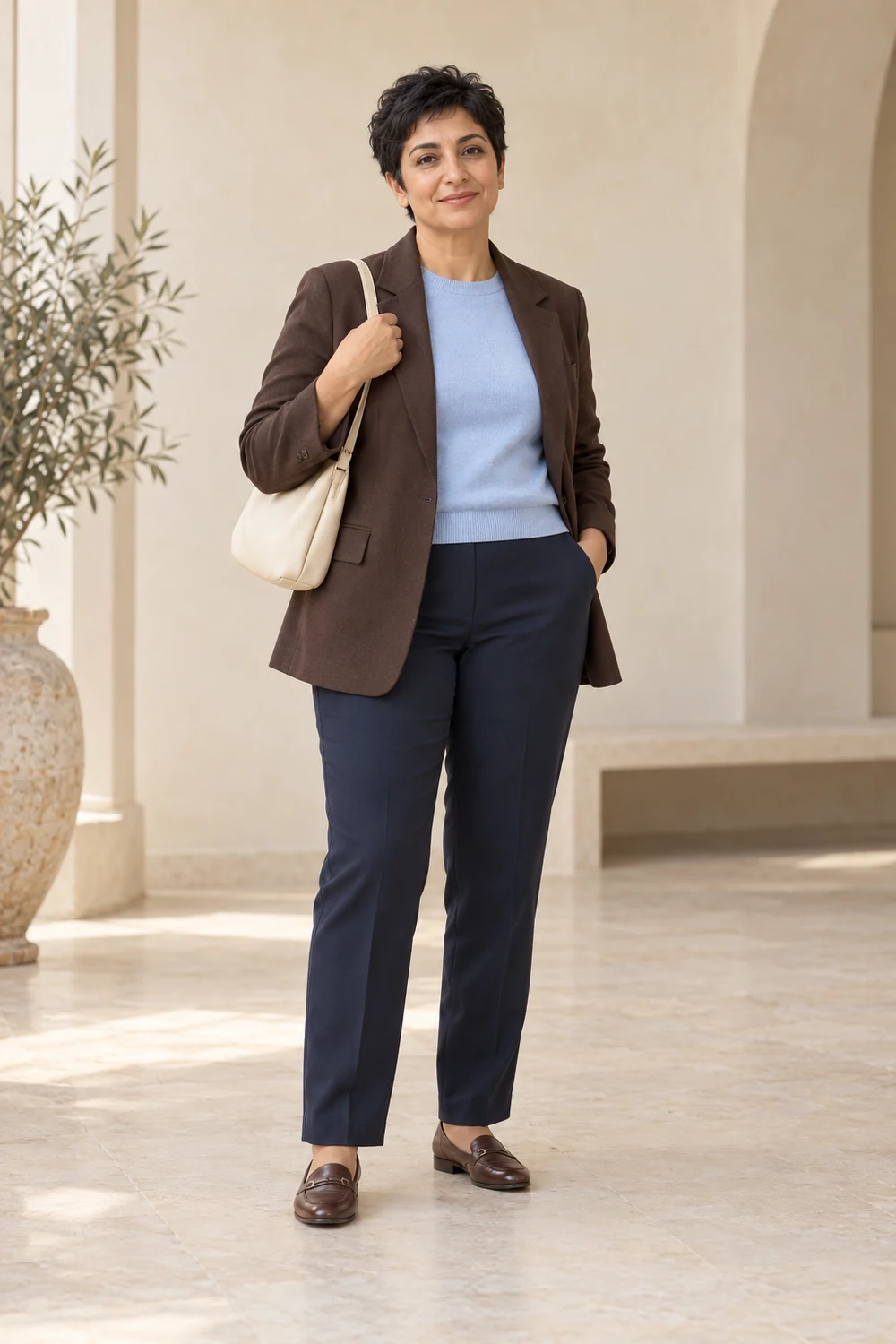
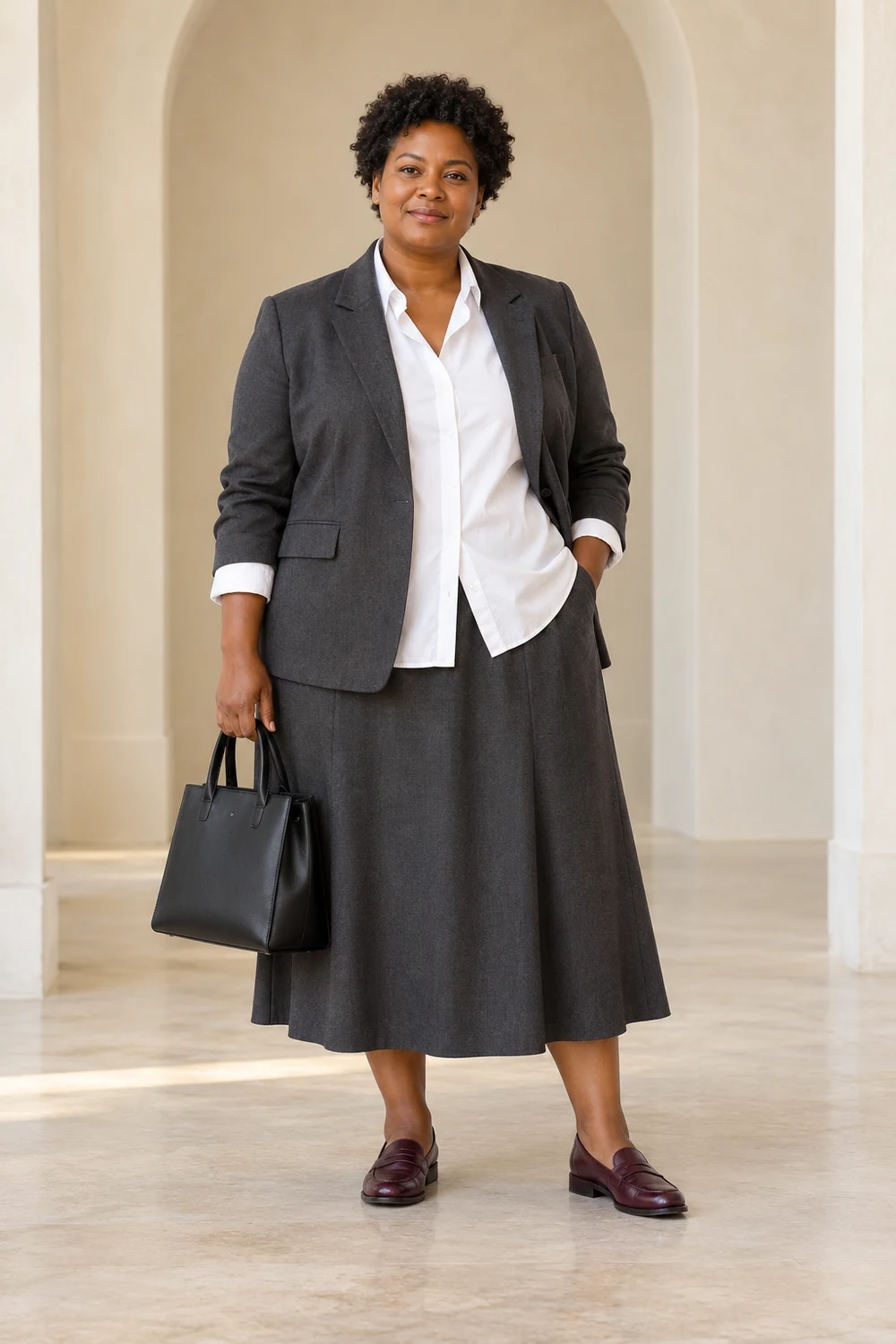
A relaxed skirt suit for work
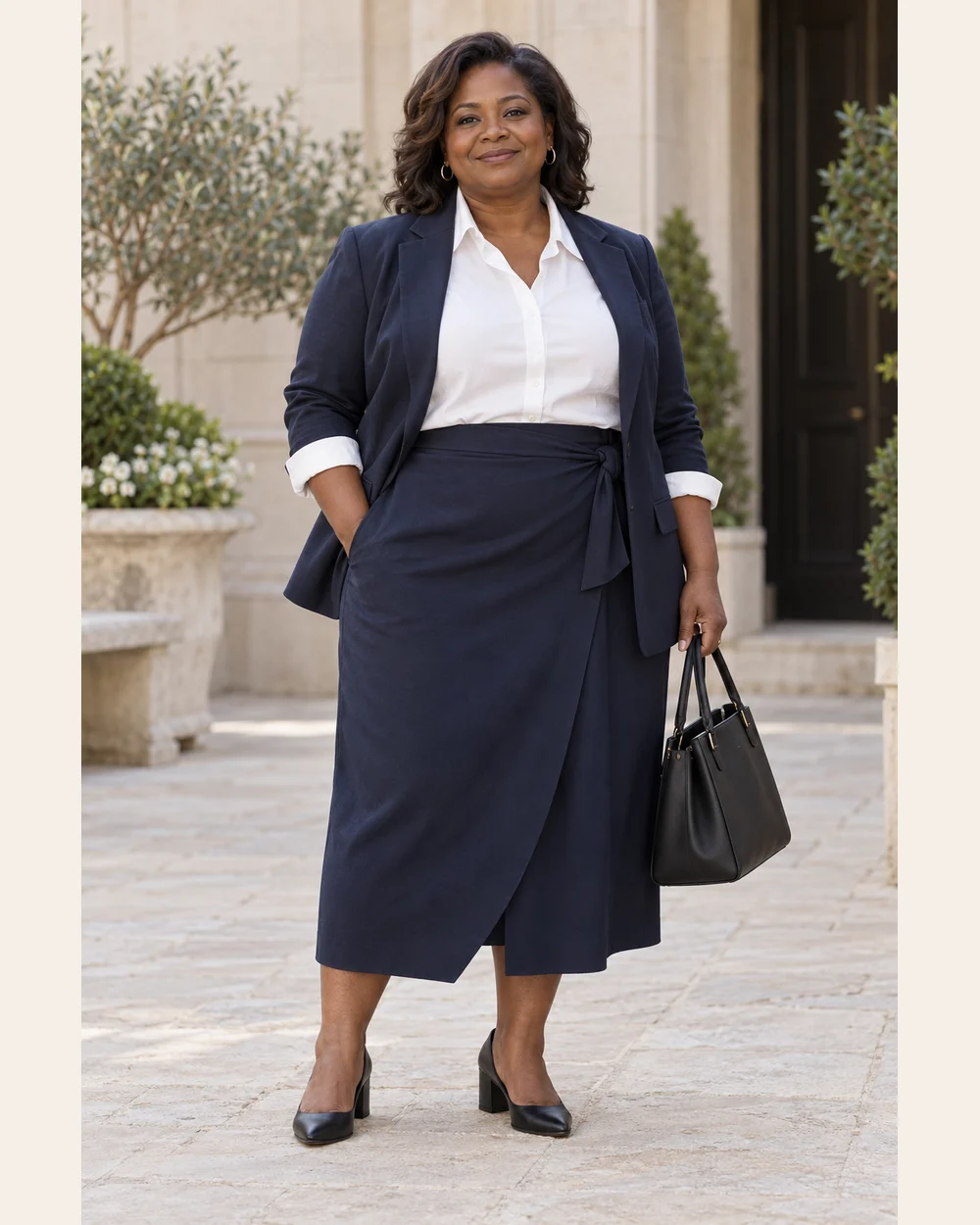
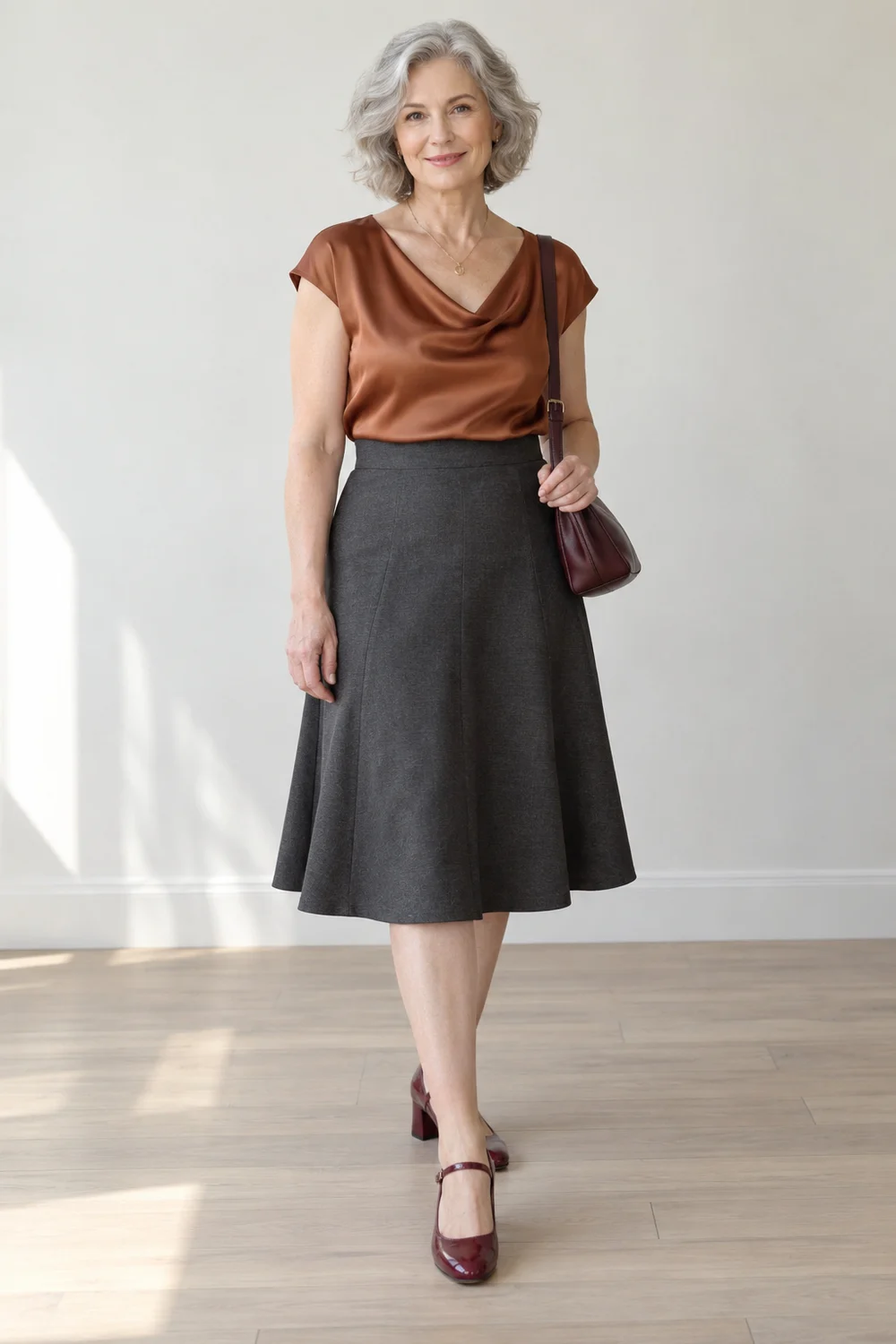
Start with a relaxed jacket, a skirt you can stride in and an untucked shirt.
Outfit guide
THE KNOWN BEAUTY LIBRARY
Women's and men's outfit formulas with each piece explained: clothing, shoes, bags and accessories. Explore plus-size and petite fit choices, then adapt the pieces to your own wardrobe.
Start with a relaxed jacket, a skirt you can stride in and an untucked shirt.
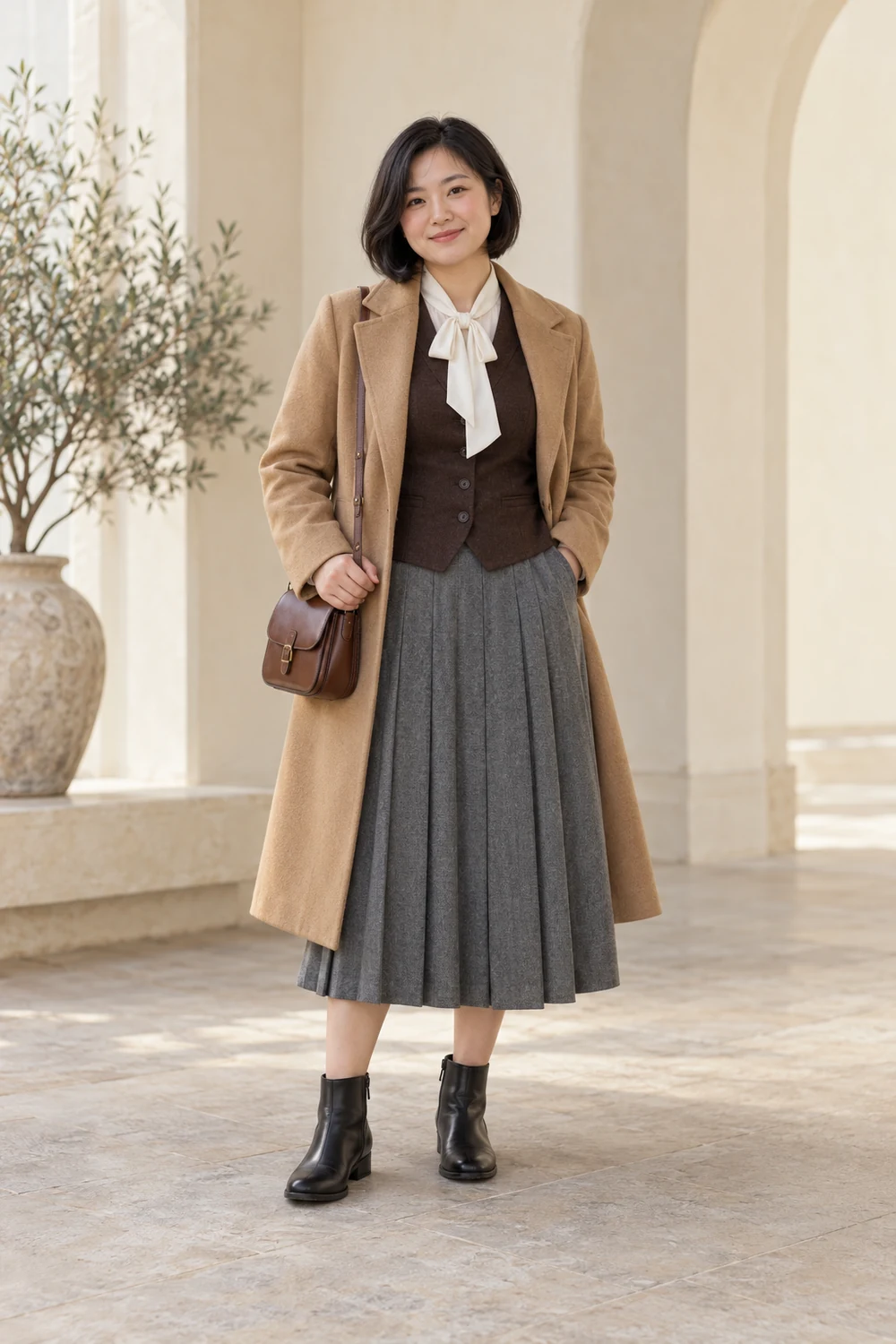
Use one romantic detail with ordinary layers: an ivory tie-neck blouse, a brown waistcoat and a grey skirt.
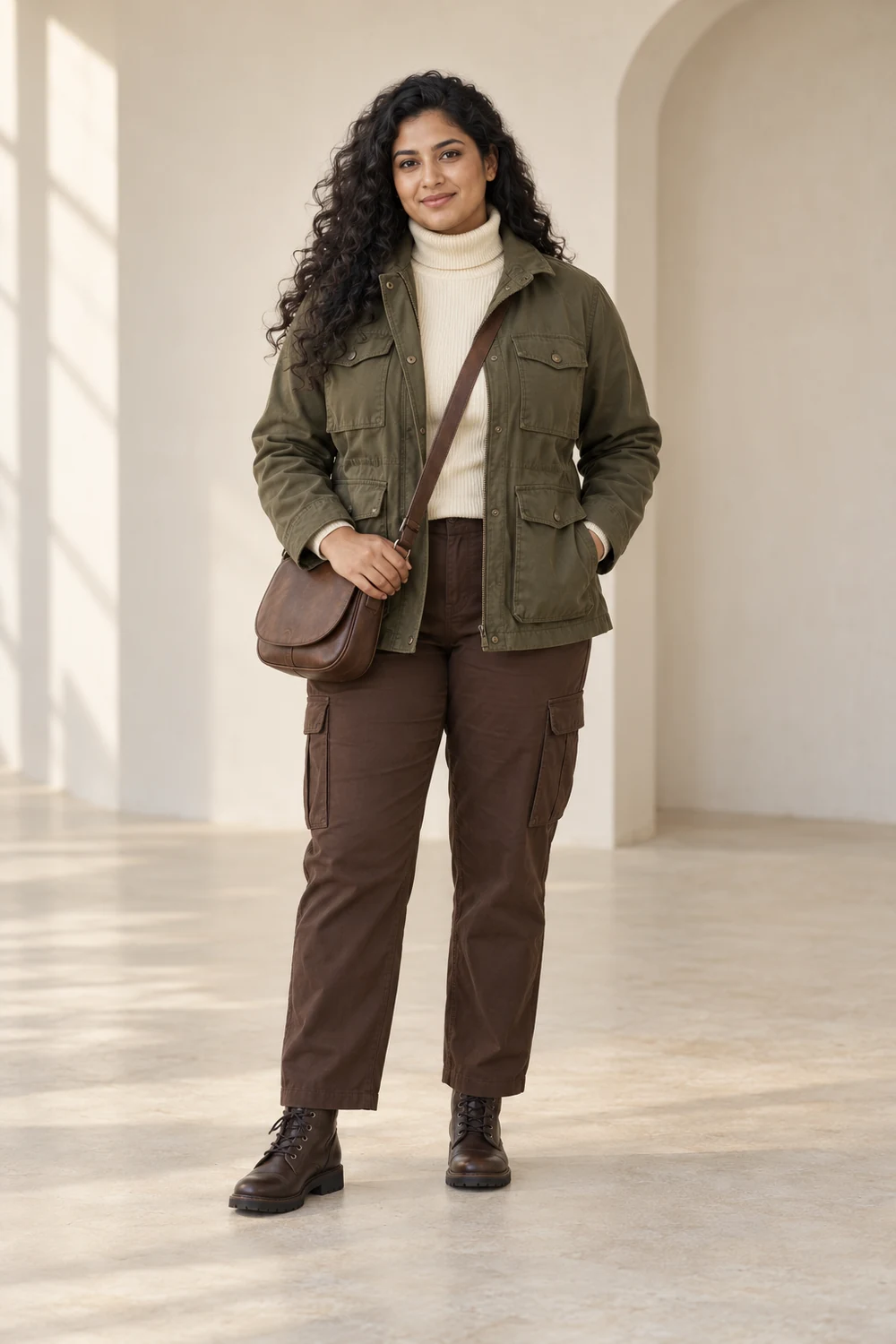
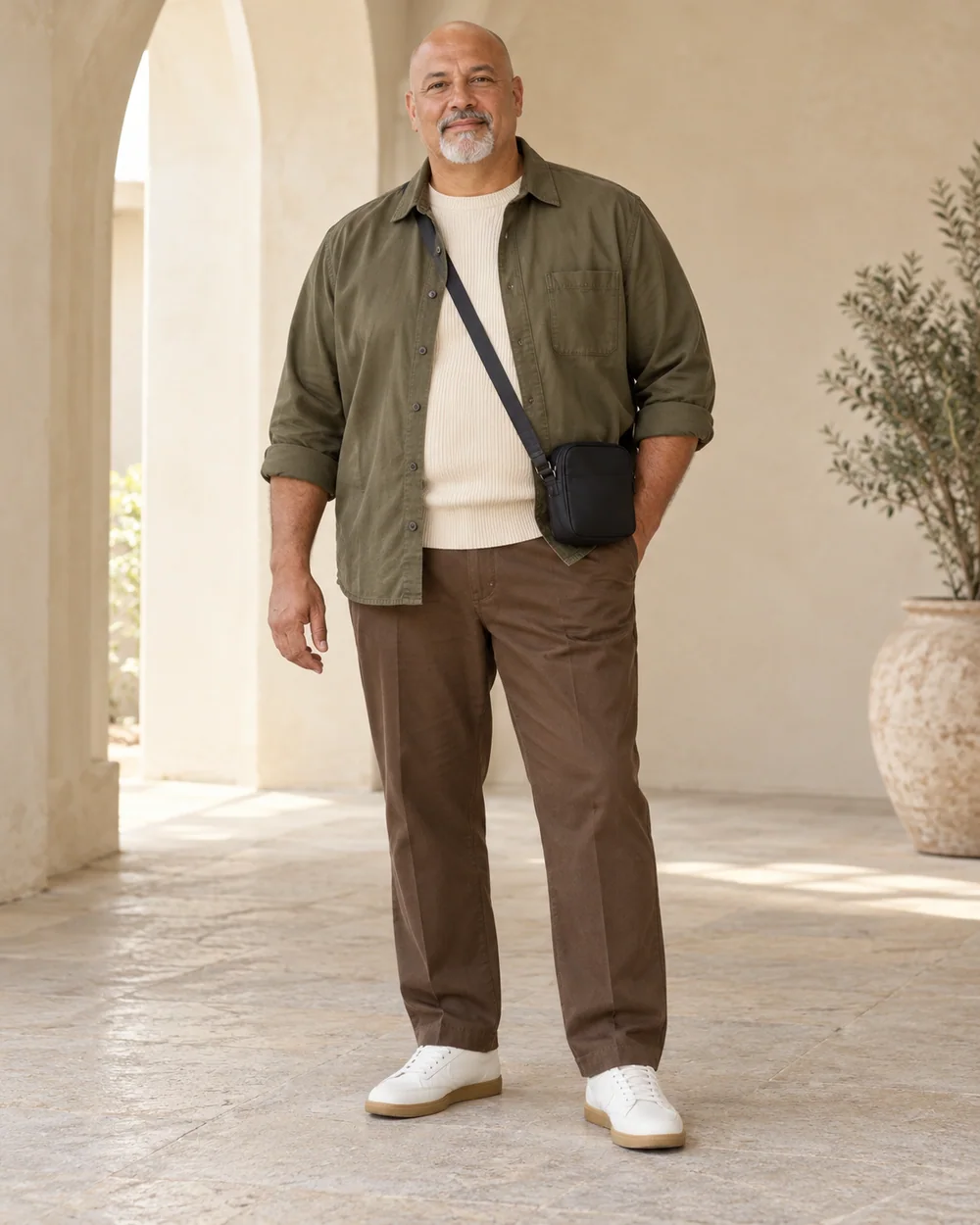
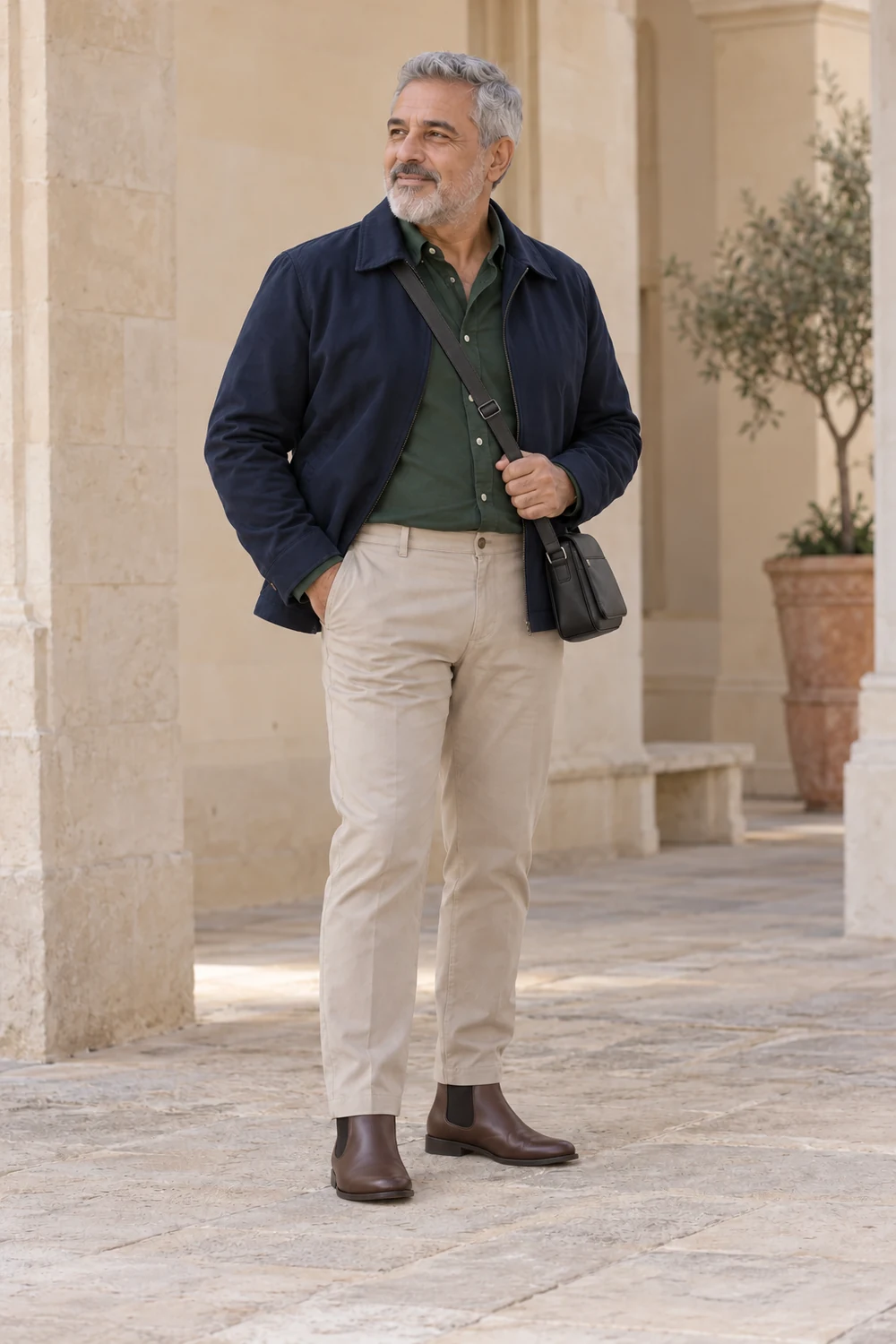
Use an olive field jacket, a light knit and comfortable cargo trousers, then choose boots for the actual route.
Give pale blue the largest outer layer, navy the centre and grey the lower half.
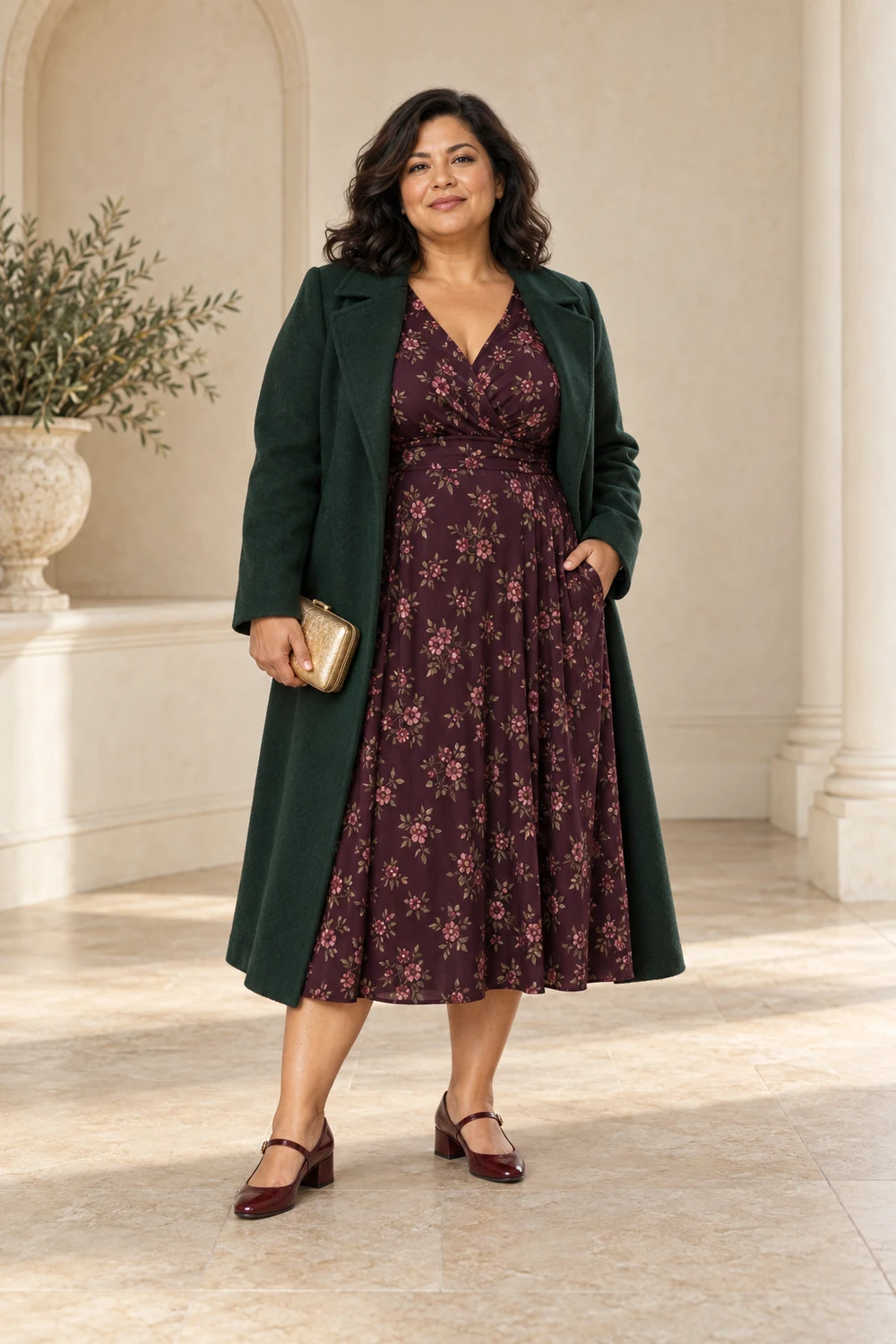
Plan a dark floral dress and a warm outer layer as two complete parts of the day.
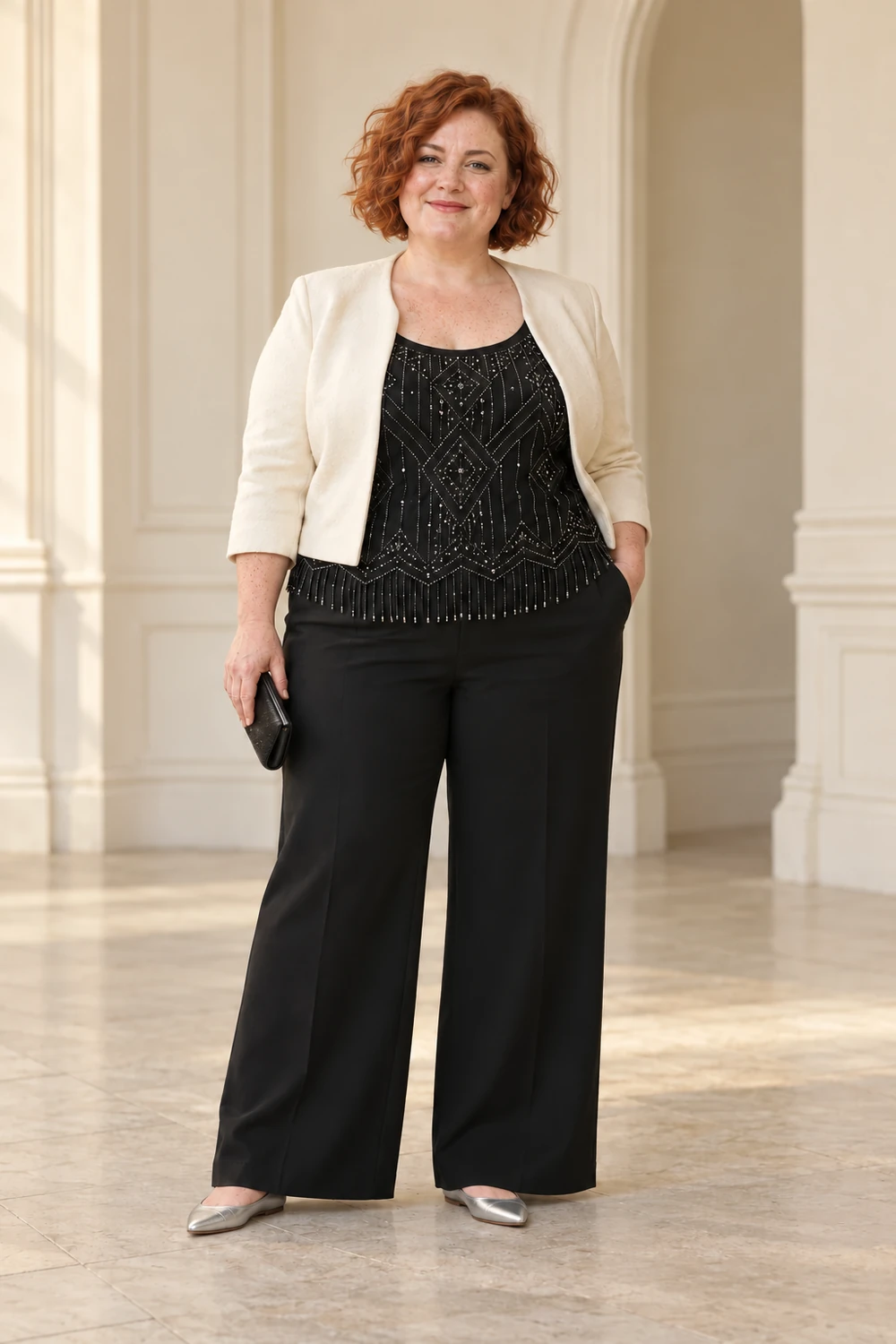
Keep one Art Deco reference in the top, then use plain trousers, a short jacket and flats.
Change one layer at a time when two knits feel crowded.
Check rise, pocket position and leg shaping before paying for a shorter hem.
Try the coat over your actual blazer and inner layer, then reach, sit and fasten it.
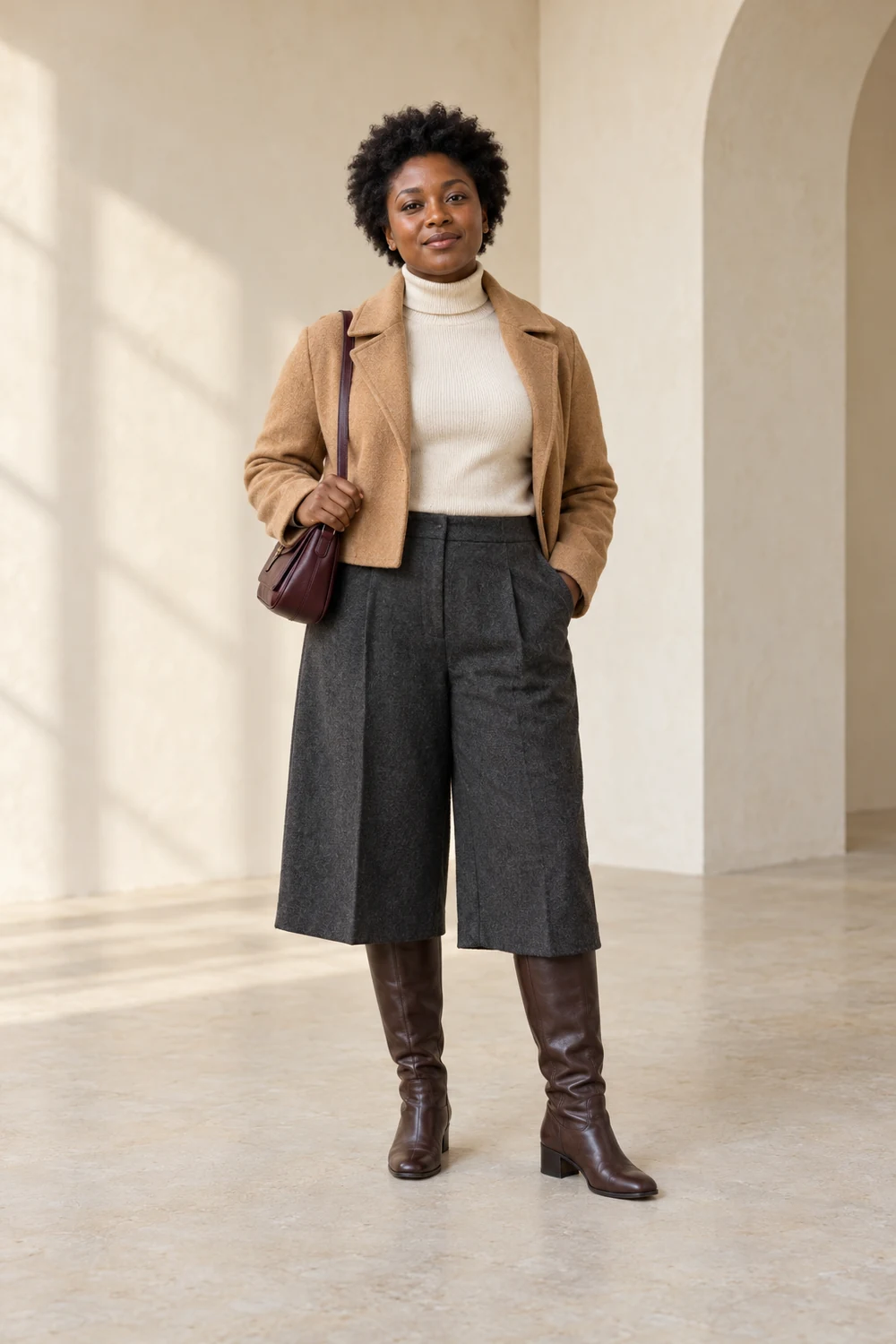
Choose the culotte hem and boot shaft together.
Build the week around one jacket, two tops and two lower halves, then add a coat, shoes and a useful bag.
If a satin skirt clings or rides, check fit, lining and the layers touching it before trying a new treatment.
Choose a complete travel outfit first, then pack a small set of tops and one extra lower half that work with it.
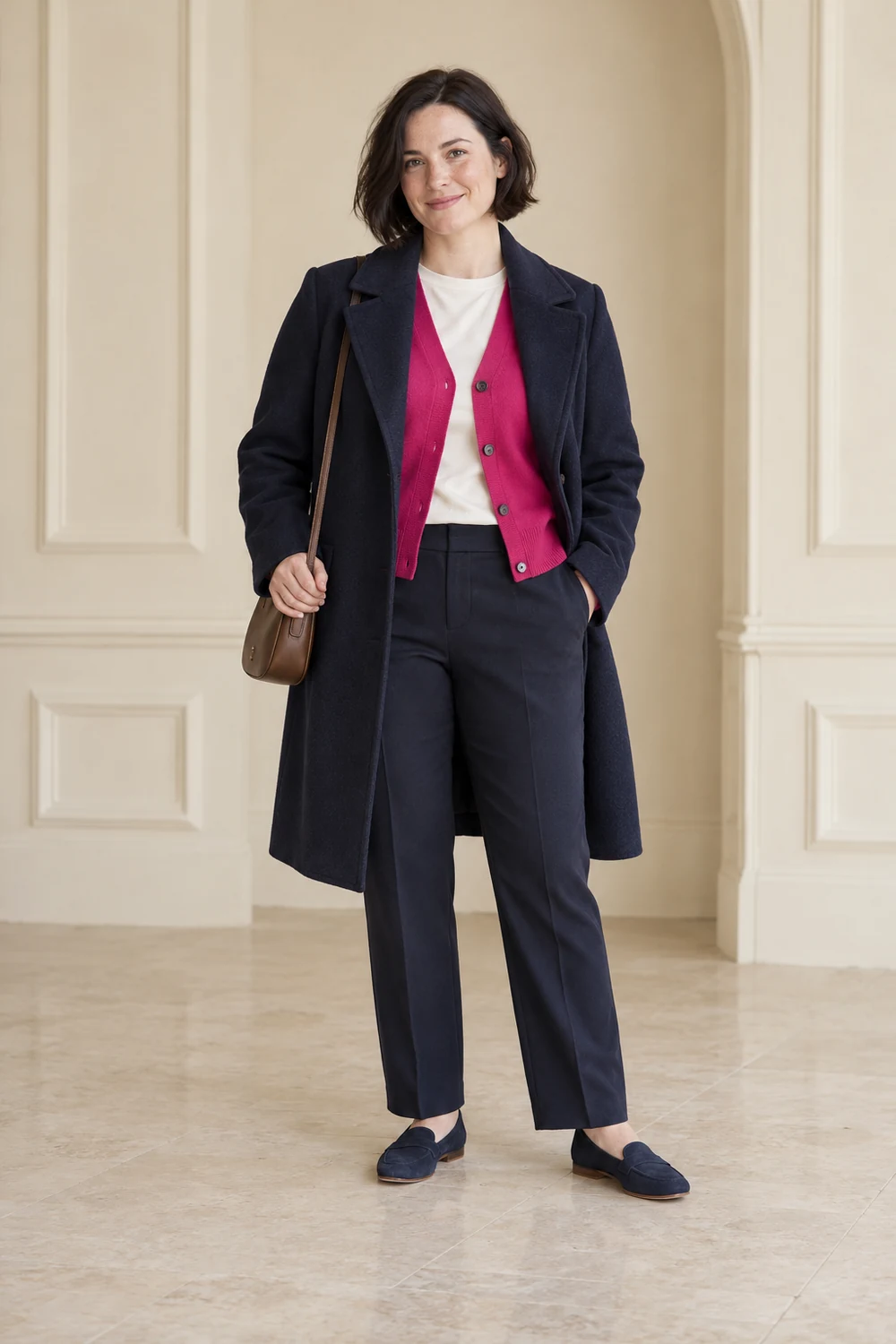
Use fuchsia in one cardigan, scarf or bag and let familiar navy and ivory carry the rest.
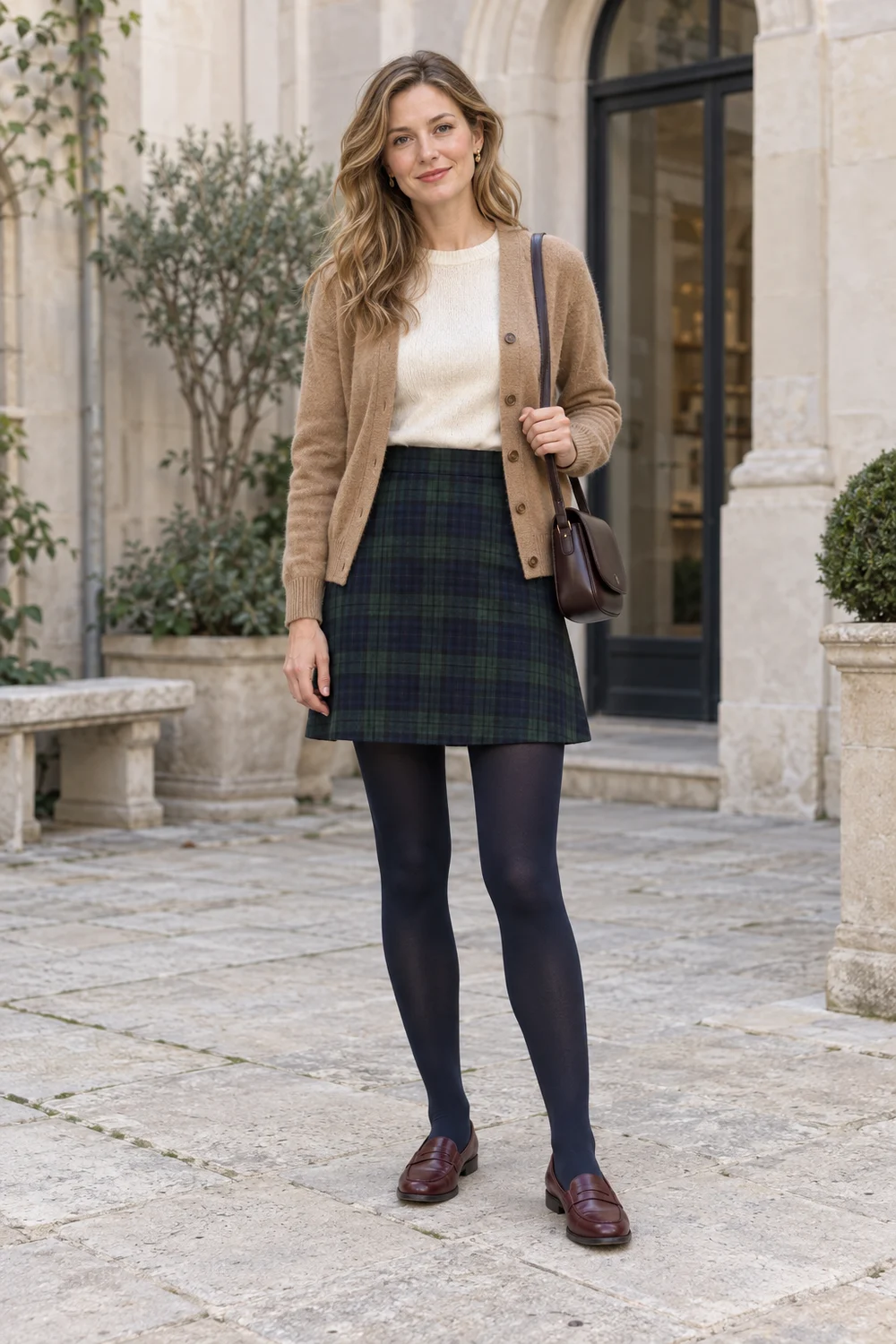
Build a checked outfit around a simple knit, flat shoes and one small colour accent.
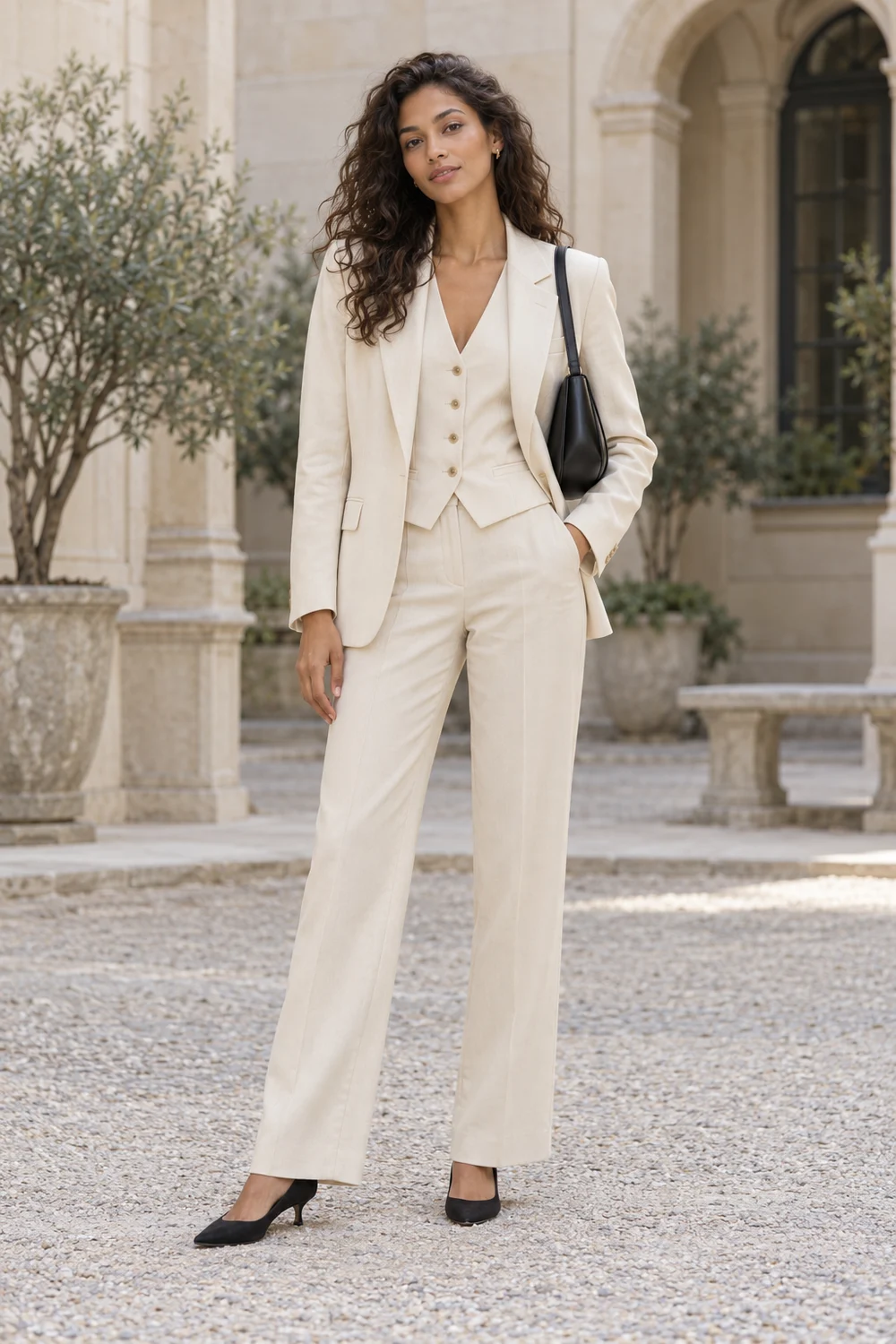
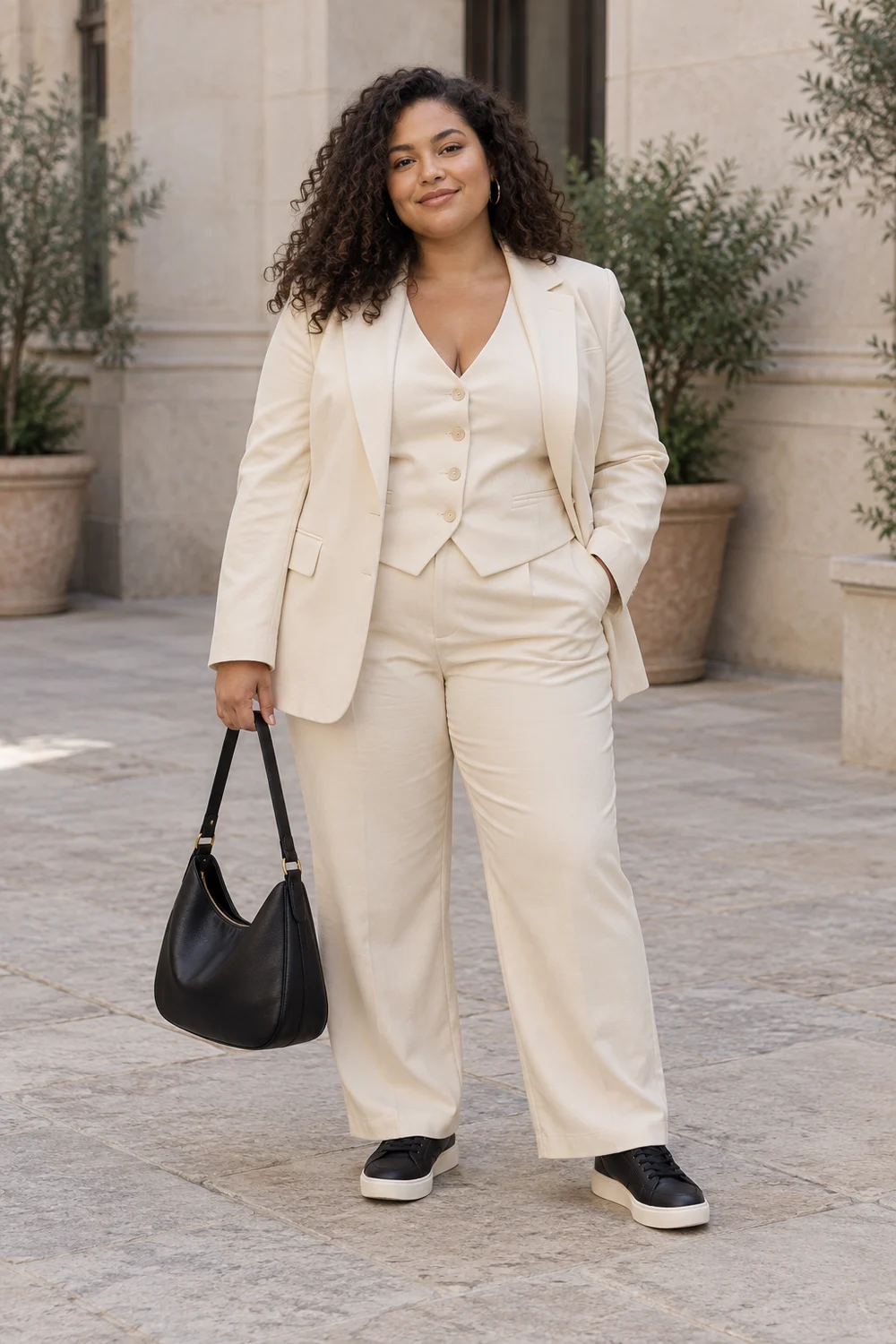
Adapt a pale three-piece tailoring idea with a clear trouser line, simple layers and deliberate accessories.
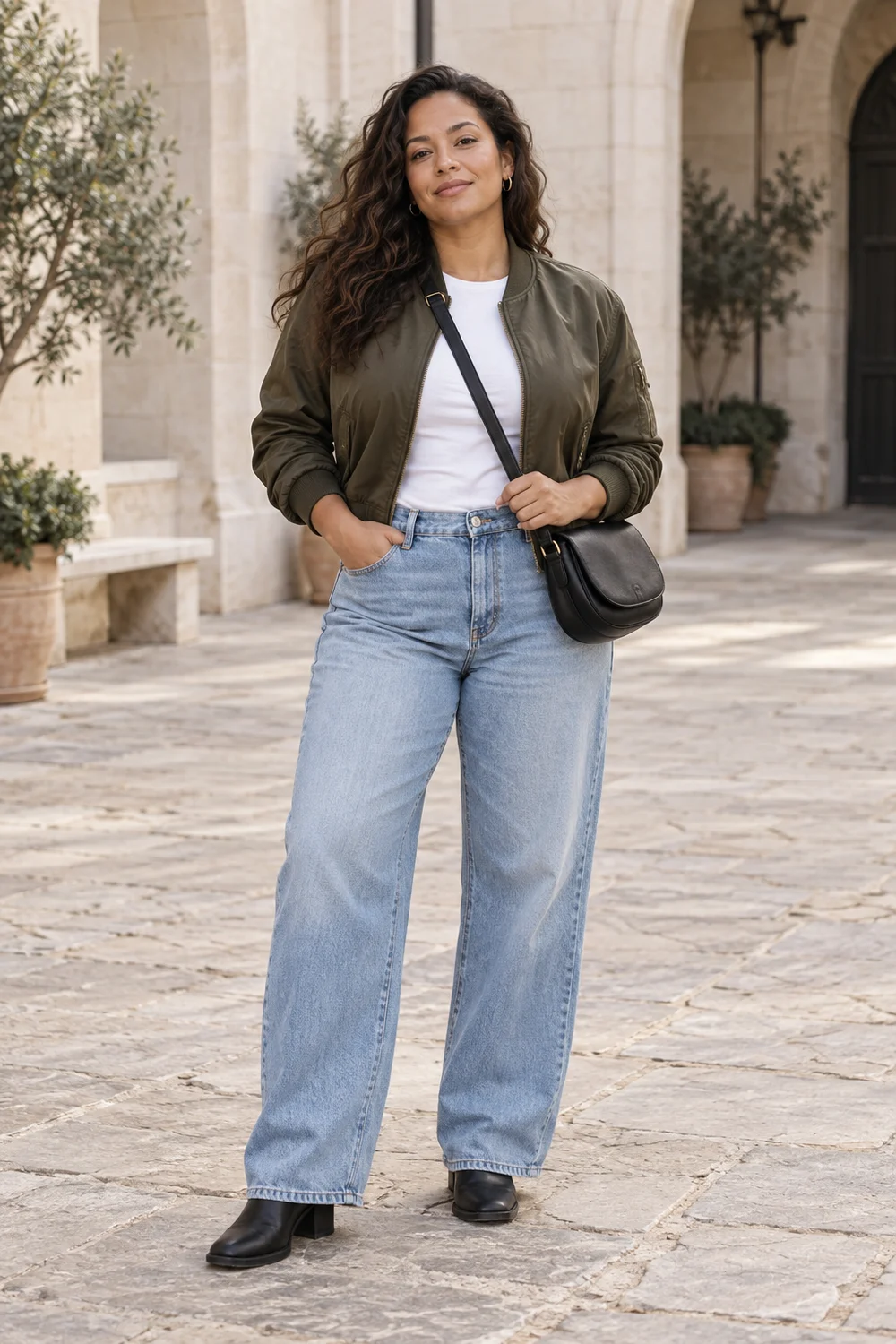
Balance generous denim and a roomy bomber with a clear centre and one deliberate finishing detail.
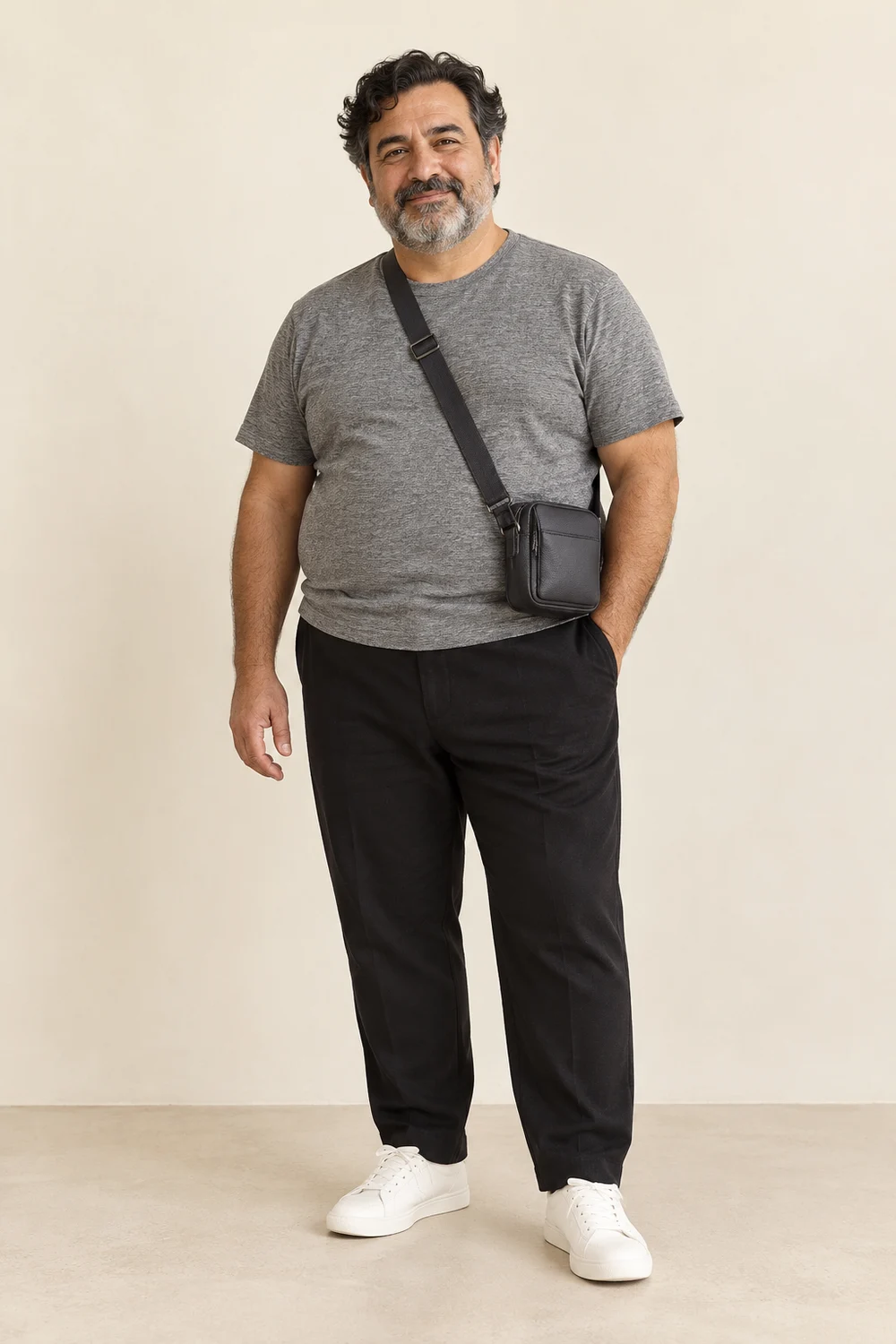
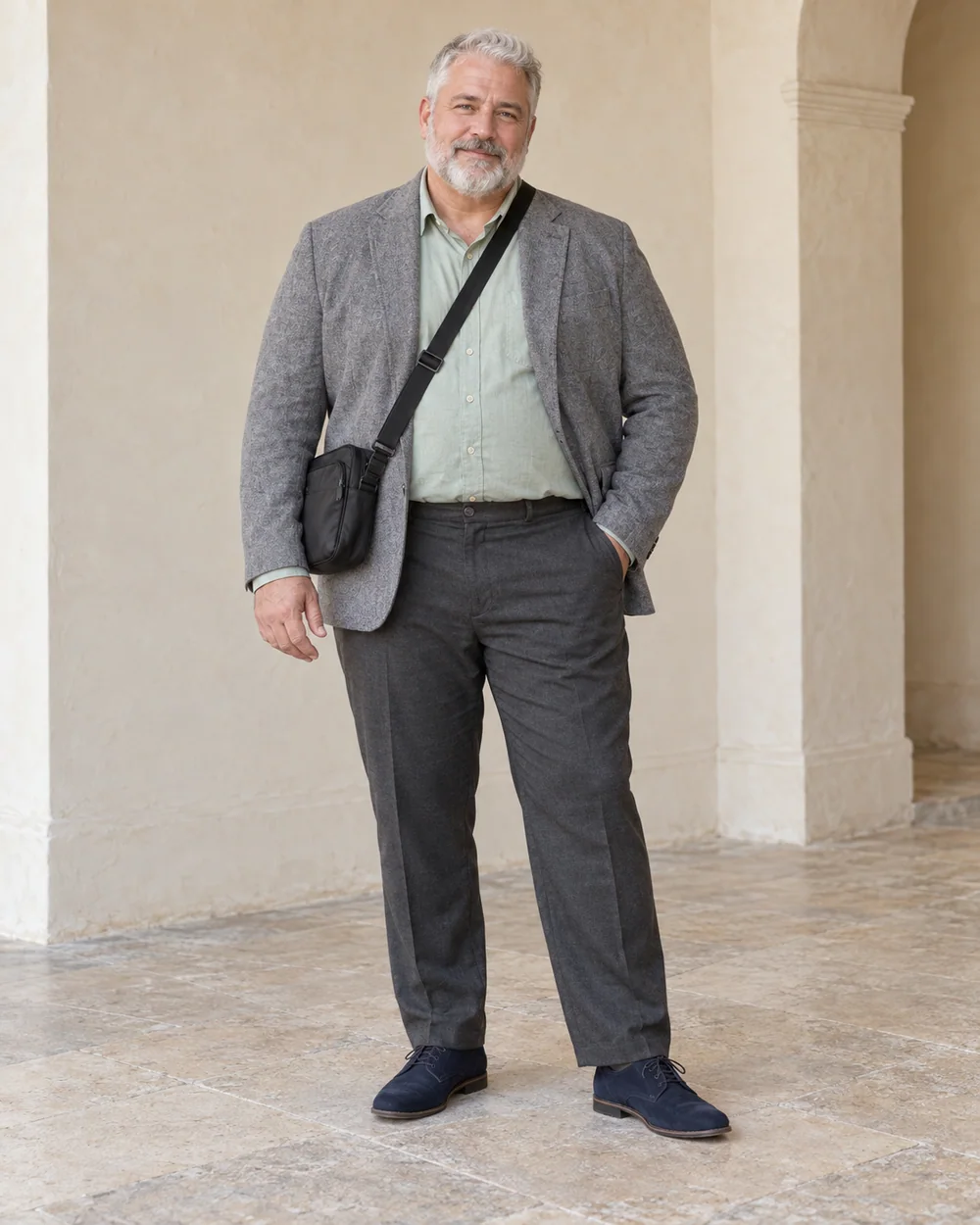
Use a quiet neutral palette, one tailored shape and shoes that suit the trouser line.
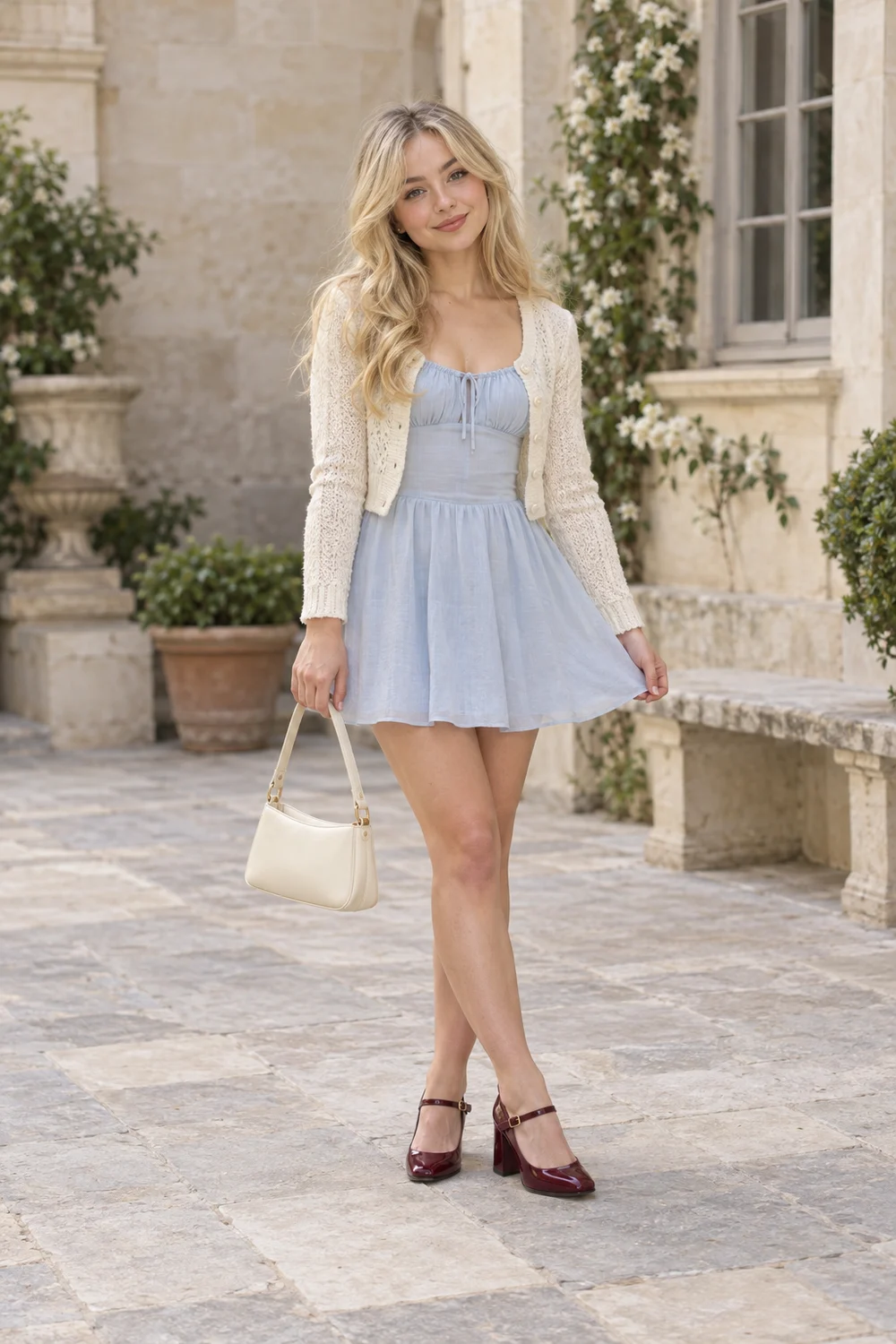
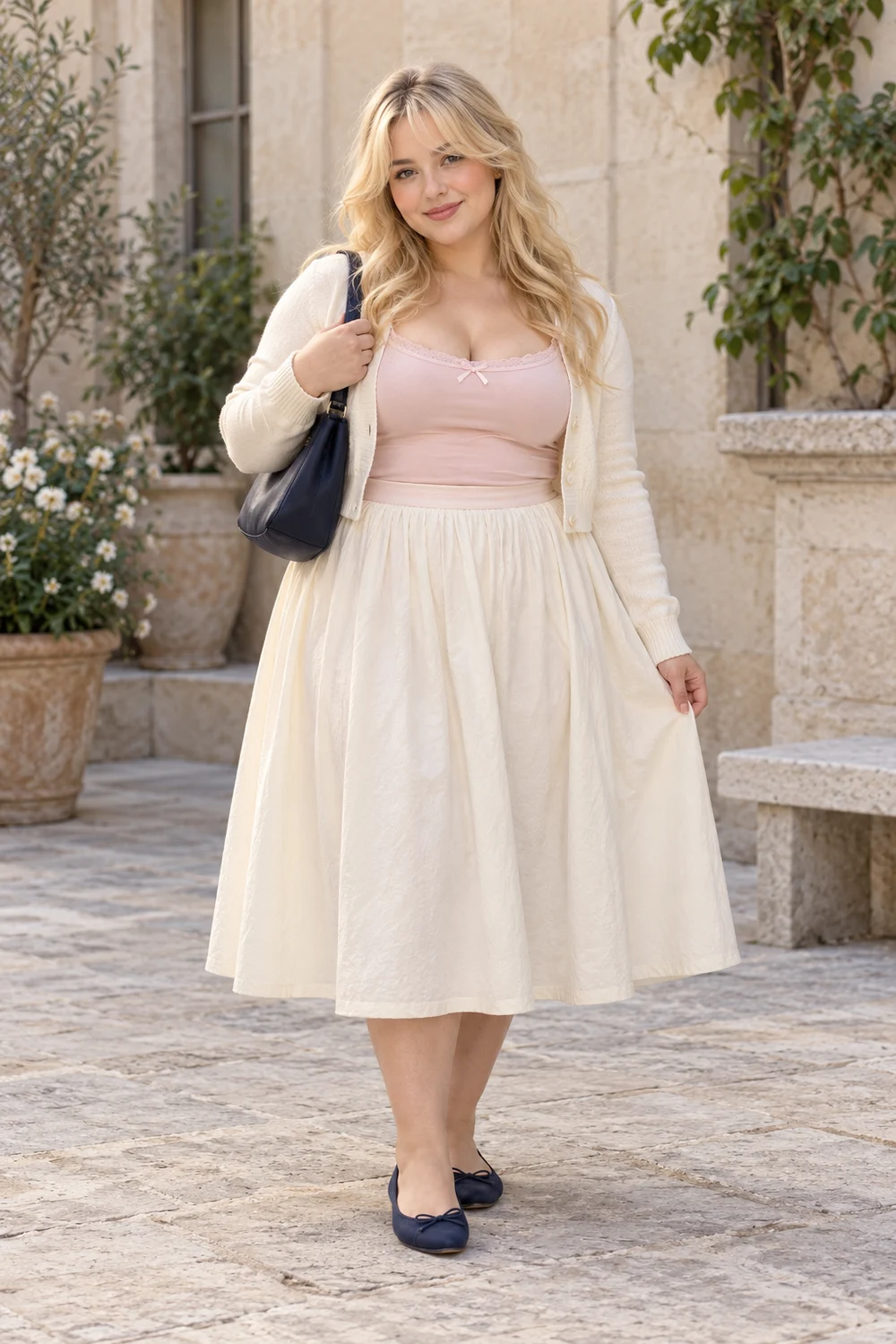
Build a playful pastel outfit around a defined-and-fuller silhouette with one deliberate retro detail.
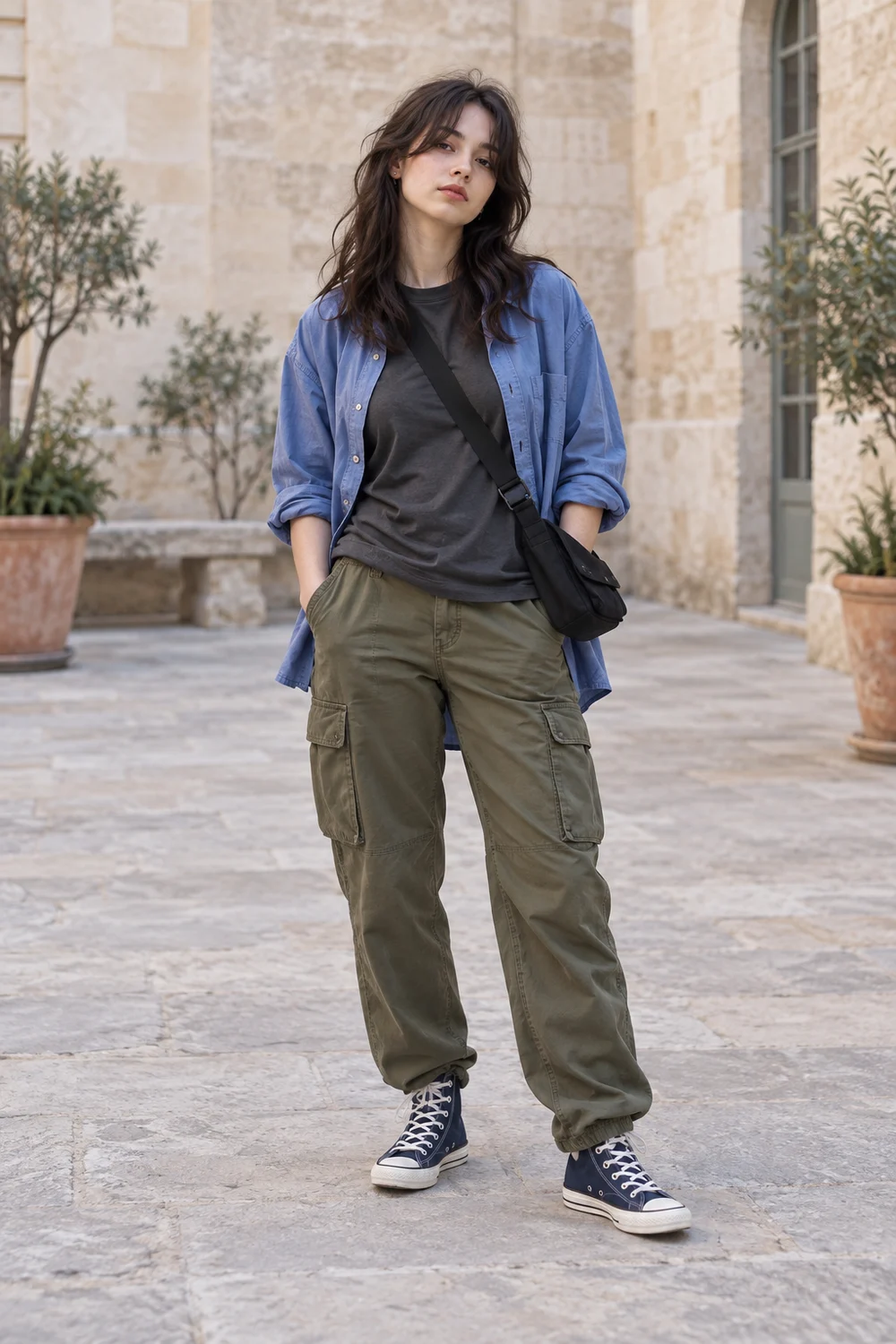
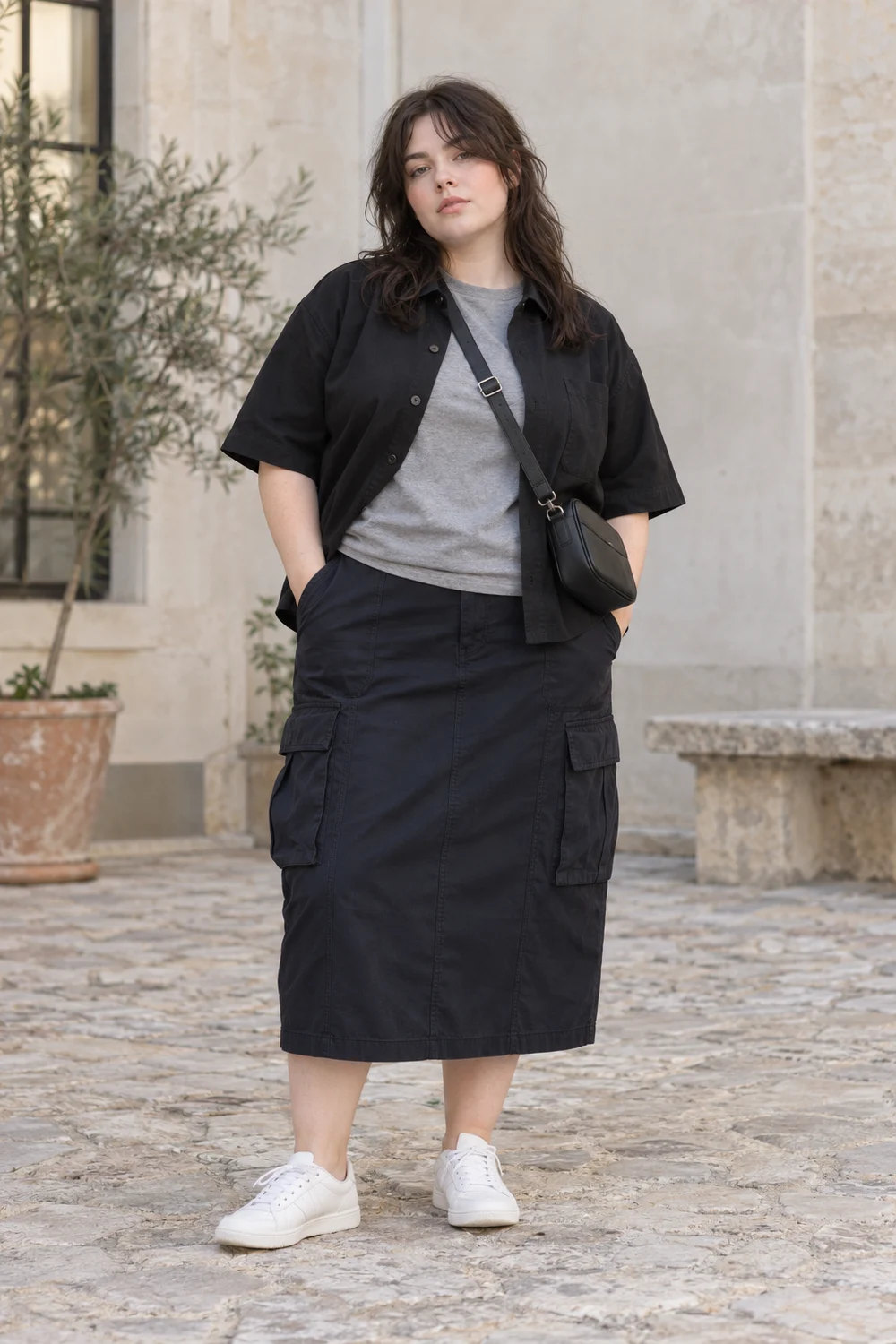
Build sporty volume from loose cargos, an oversized tee, a simple layer and practical trainers.
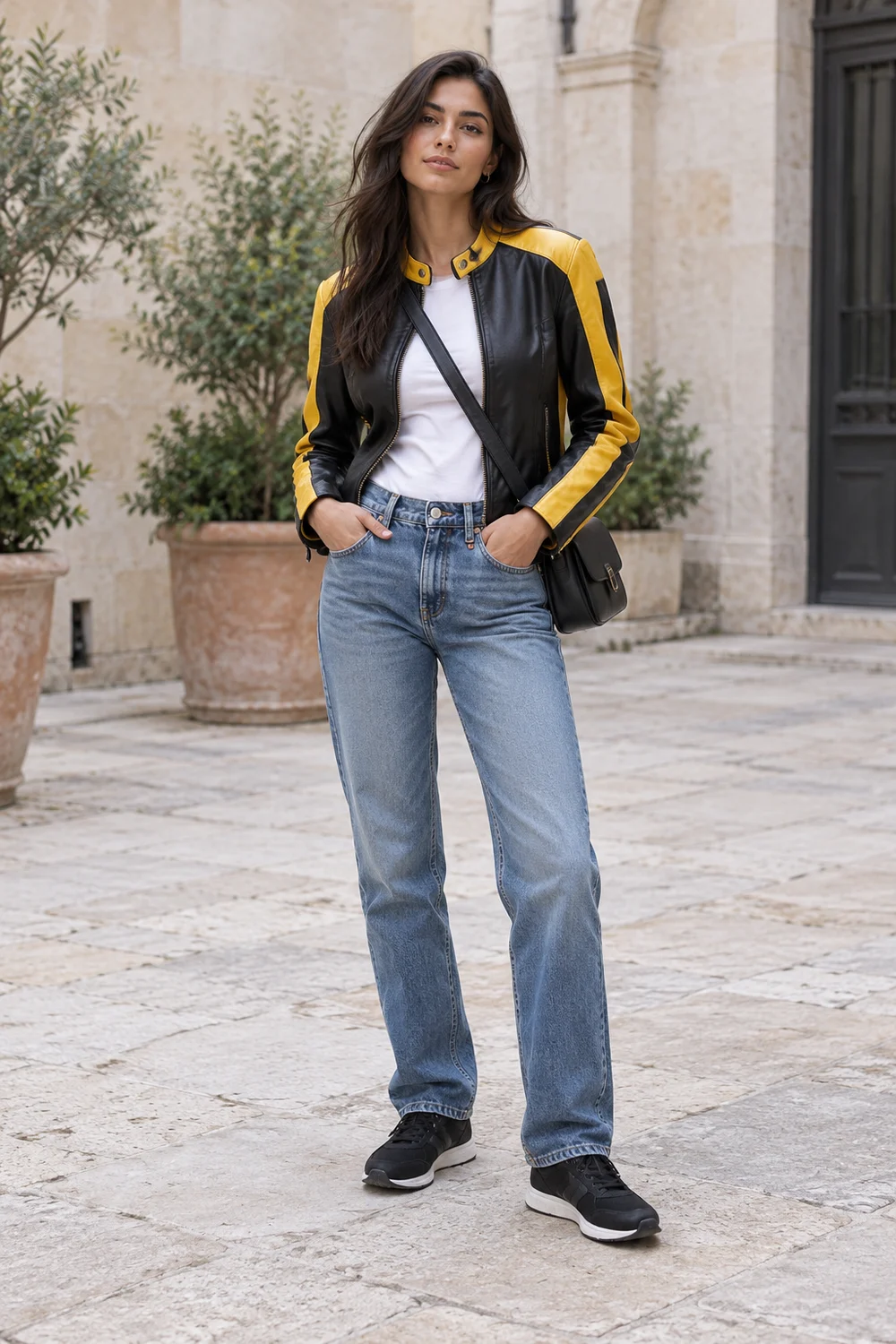
Use a sporty moto jacket as the focal piece, with a plain T-shirt, straight jeans and shoes you can walk in.
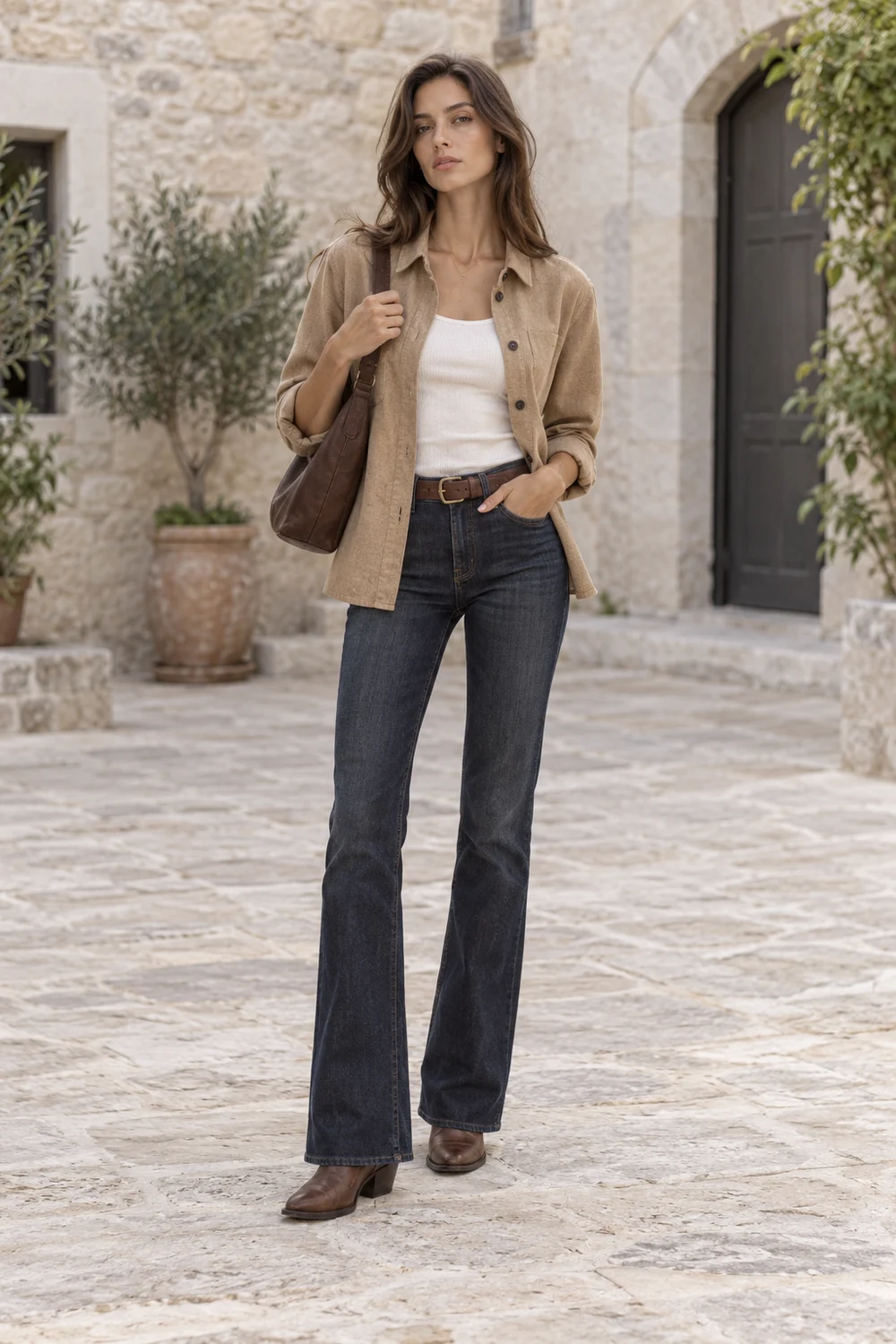
Start with bootcut denim and low western boots, then keep the top half simple enough for daily wear.
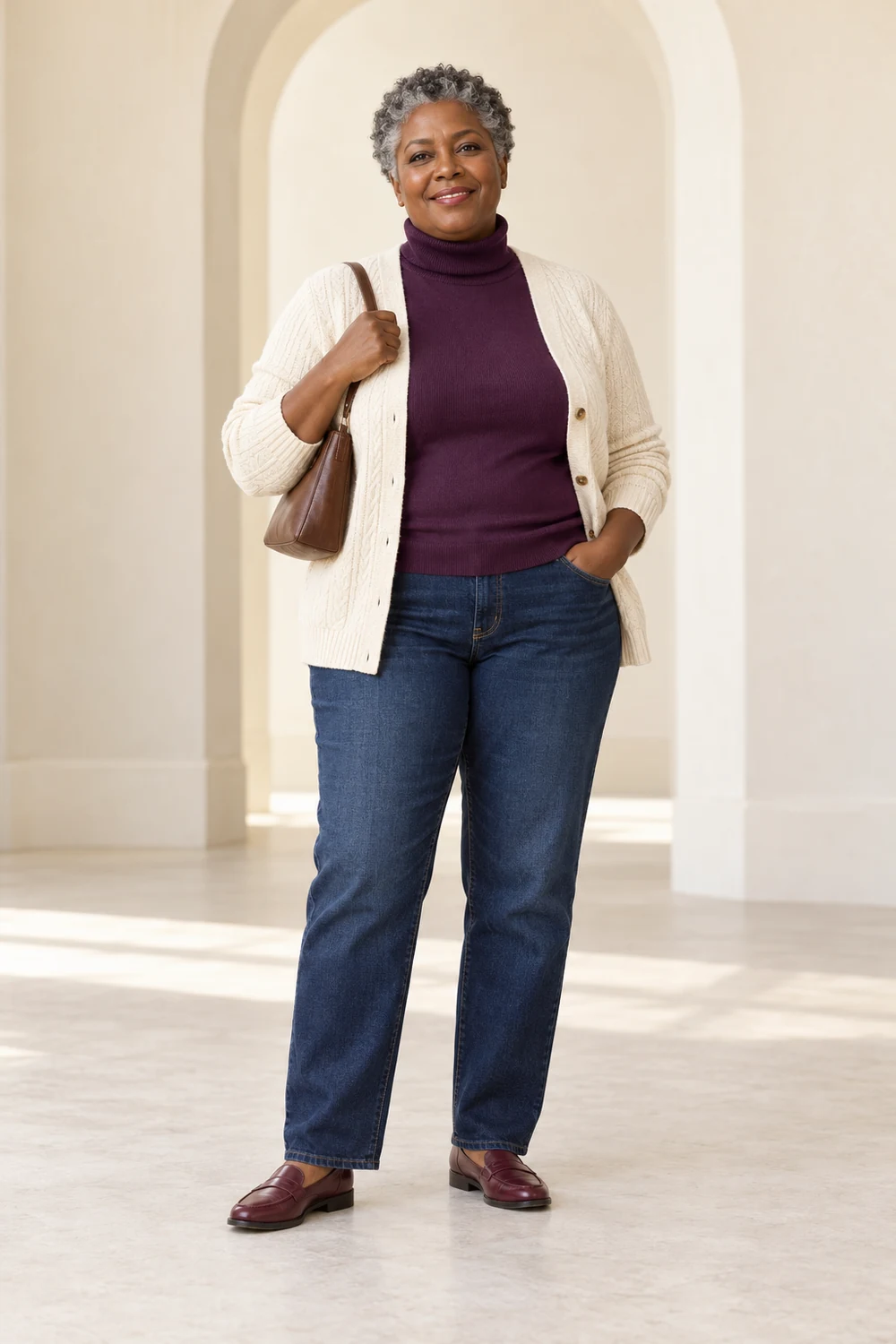
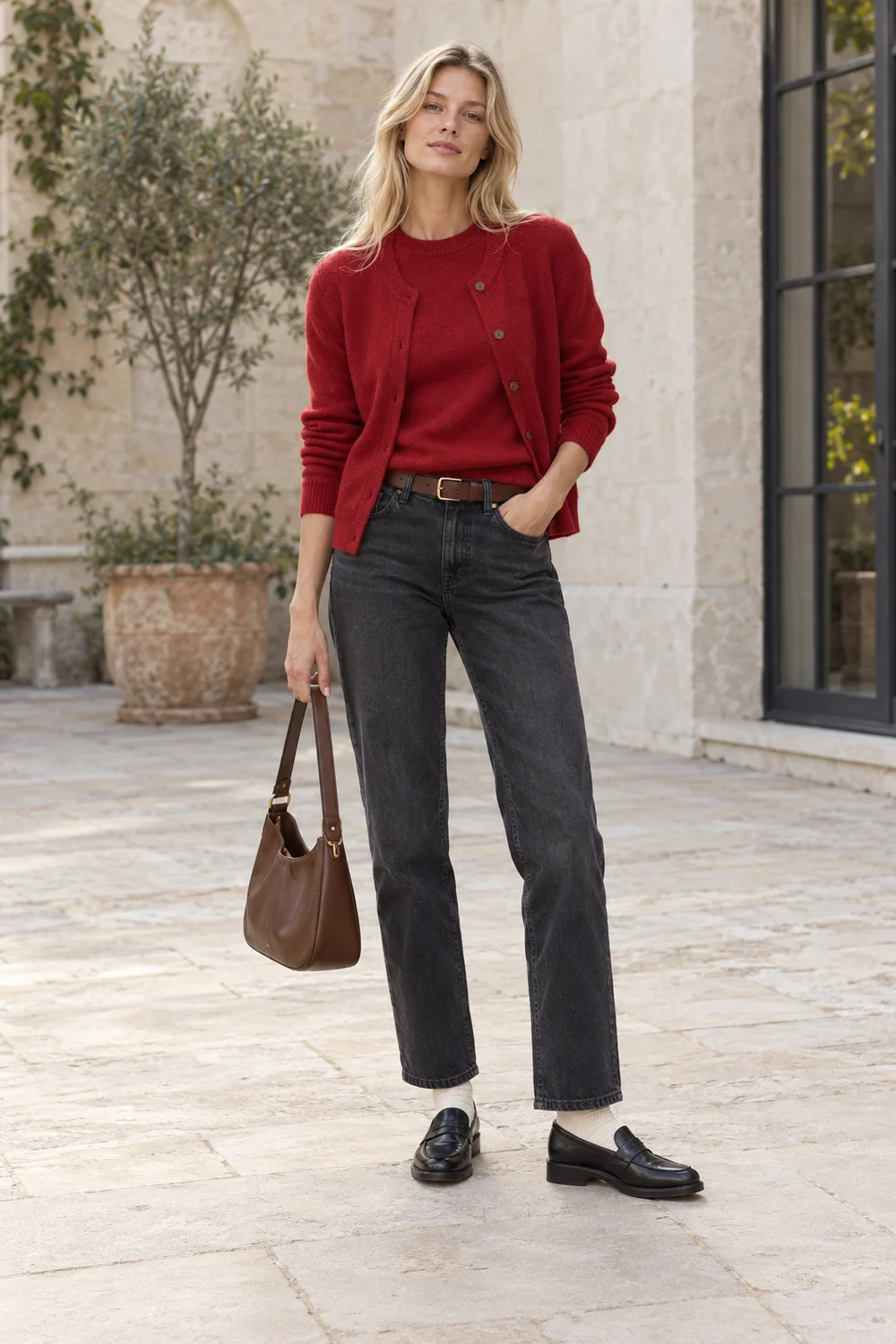
Let a red knit layer supply the colour, with charcoal denim, comfortable loafers and a simple brown bag.
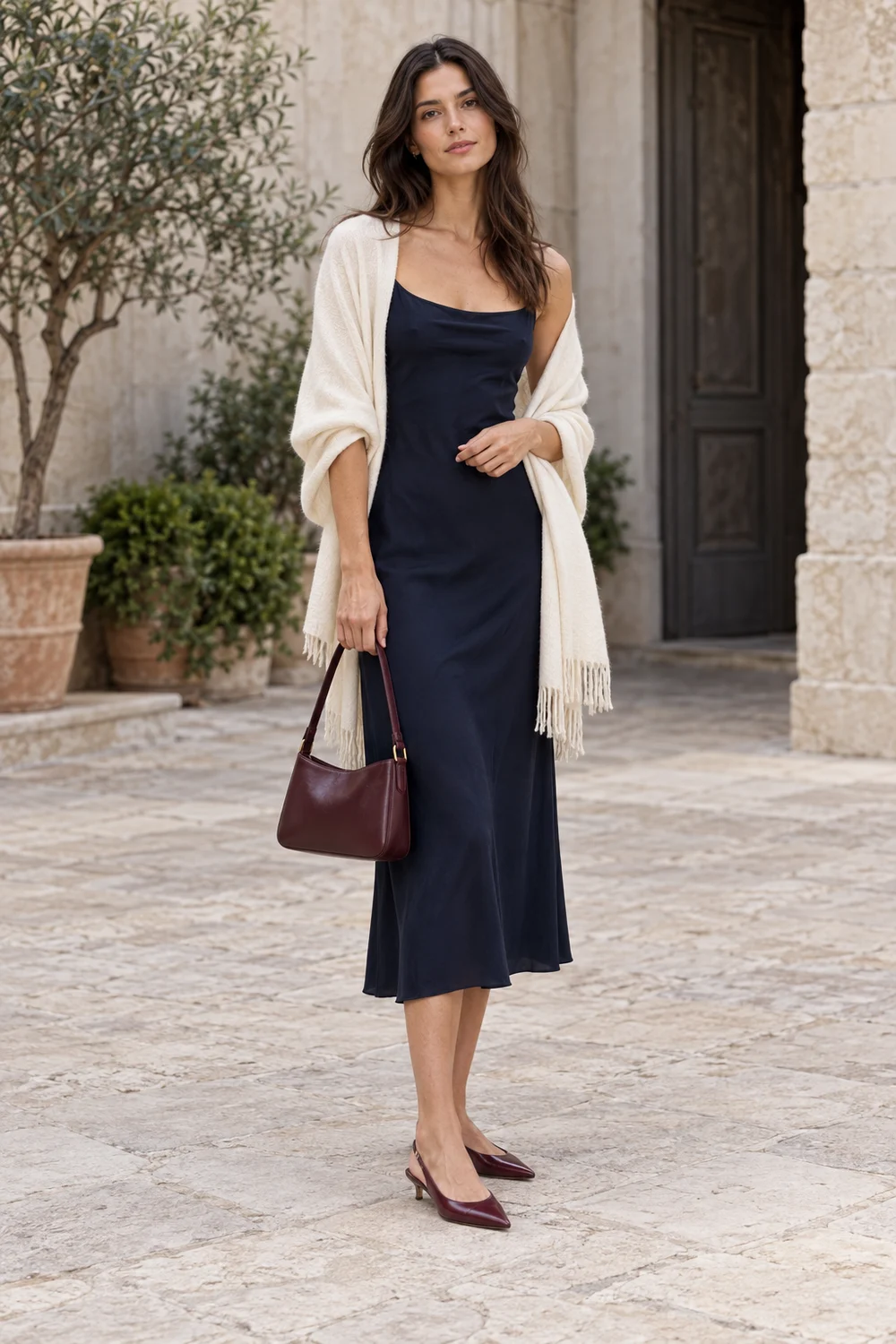
Give a navy midi dress an easy evening finish with a draped shawl and burgundy shoes or bag.
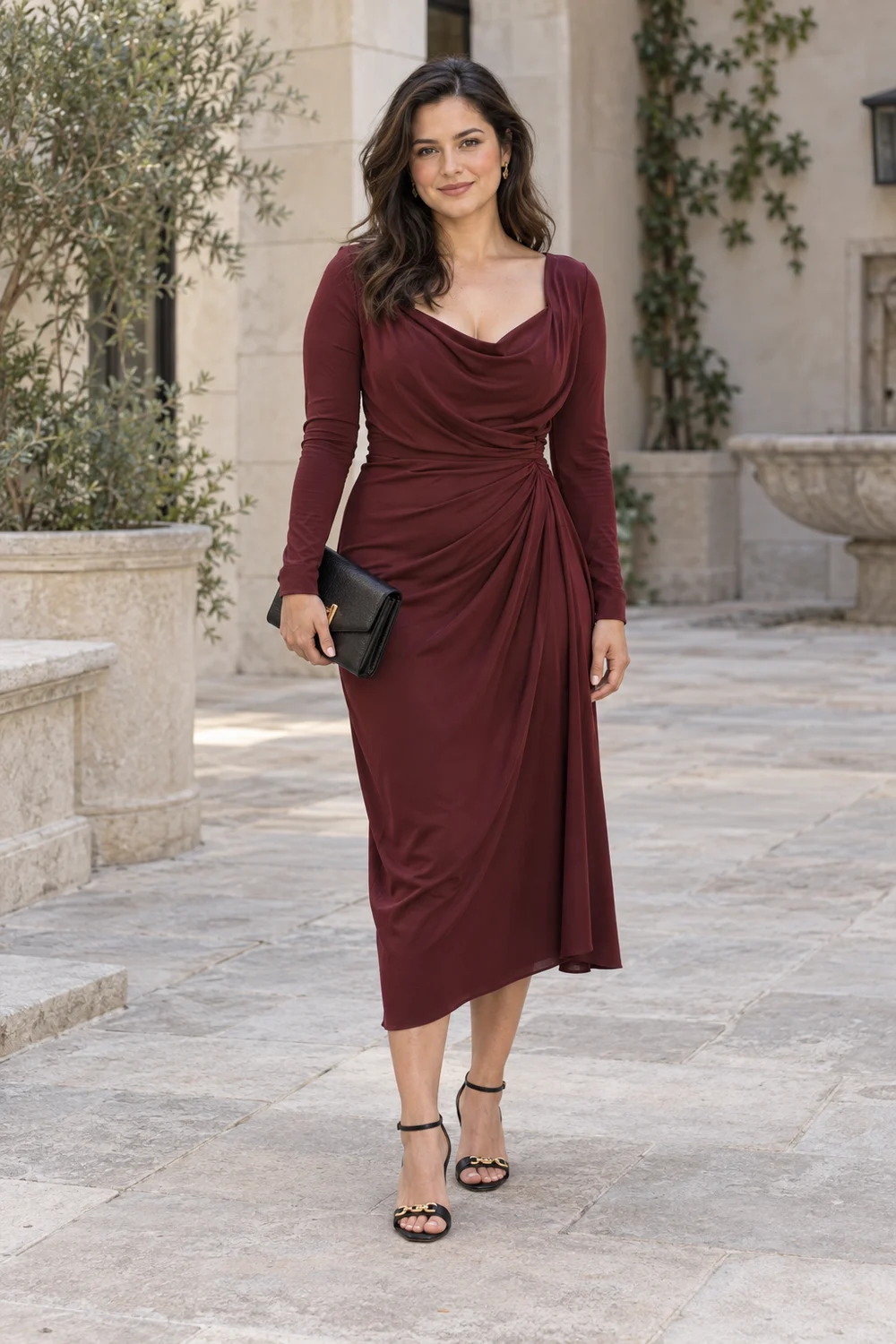
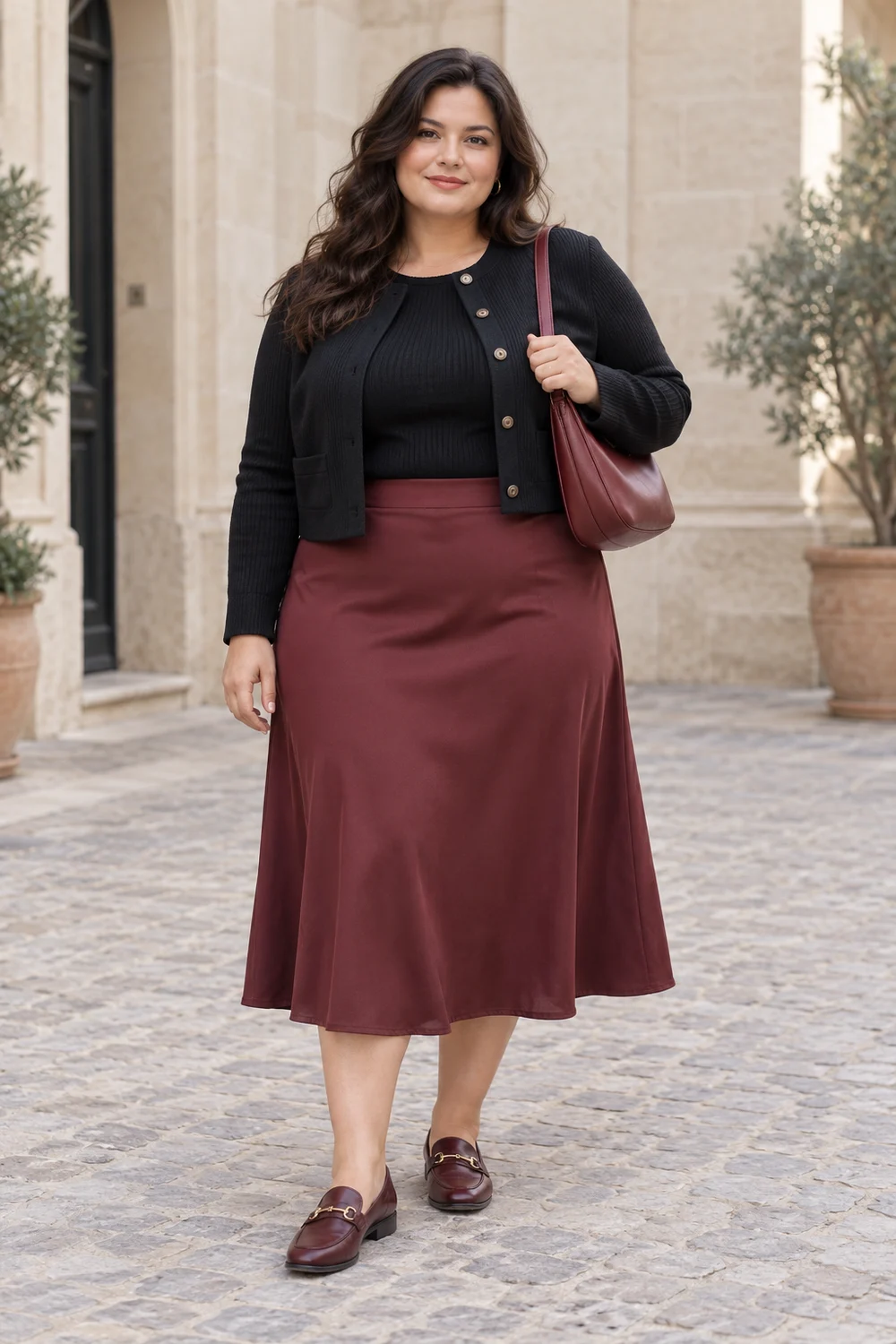
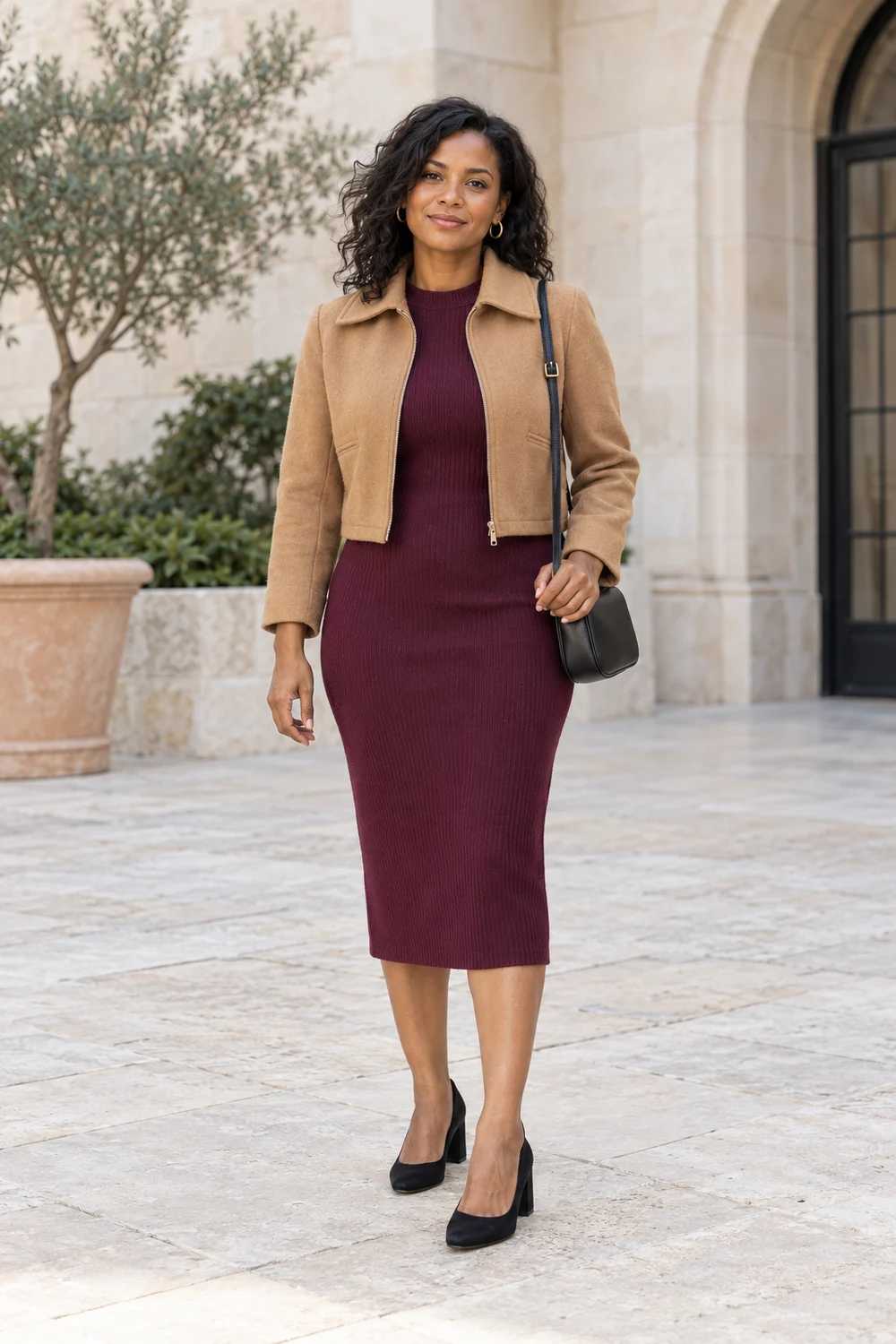
Build occasionwear around a burgundy midi dress, then make the shoes, bag and sitting comfort work together.
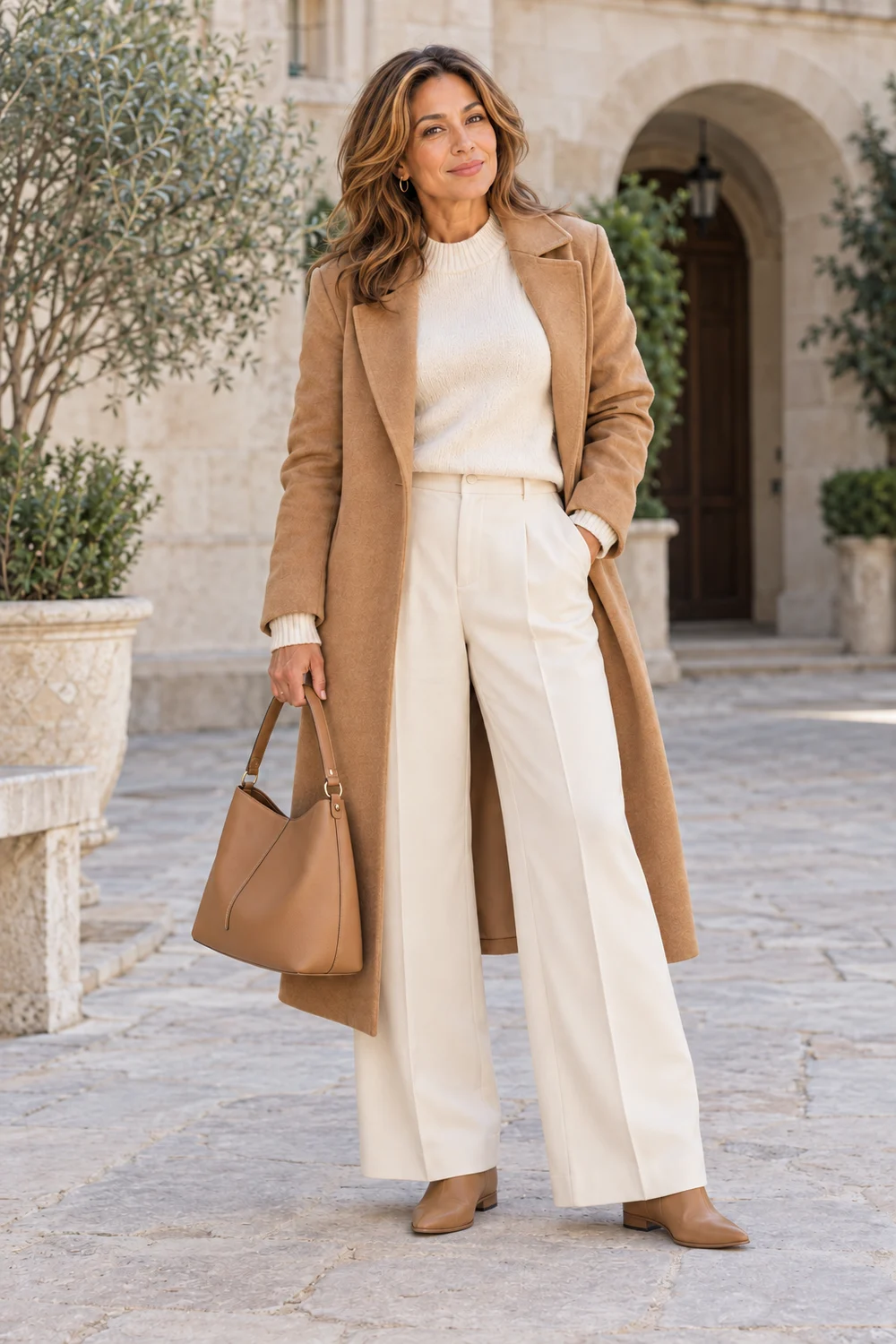
Use an open camel coat to frame cream separates, with trousers hemmed for your actual city shoes.
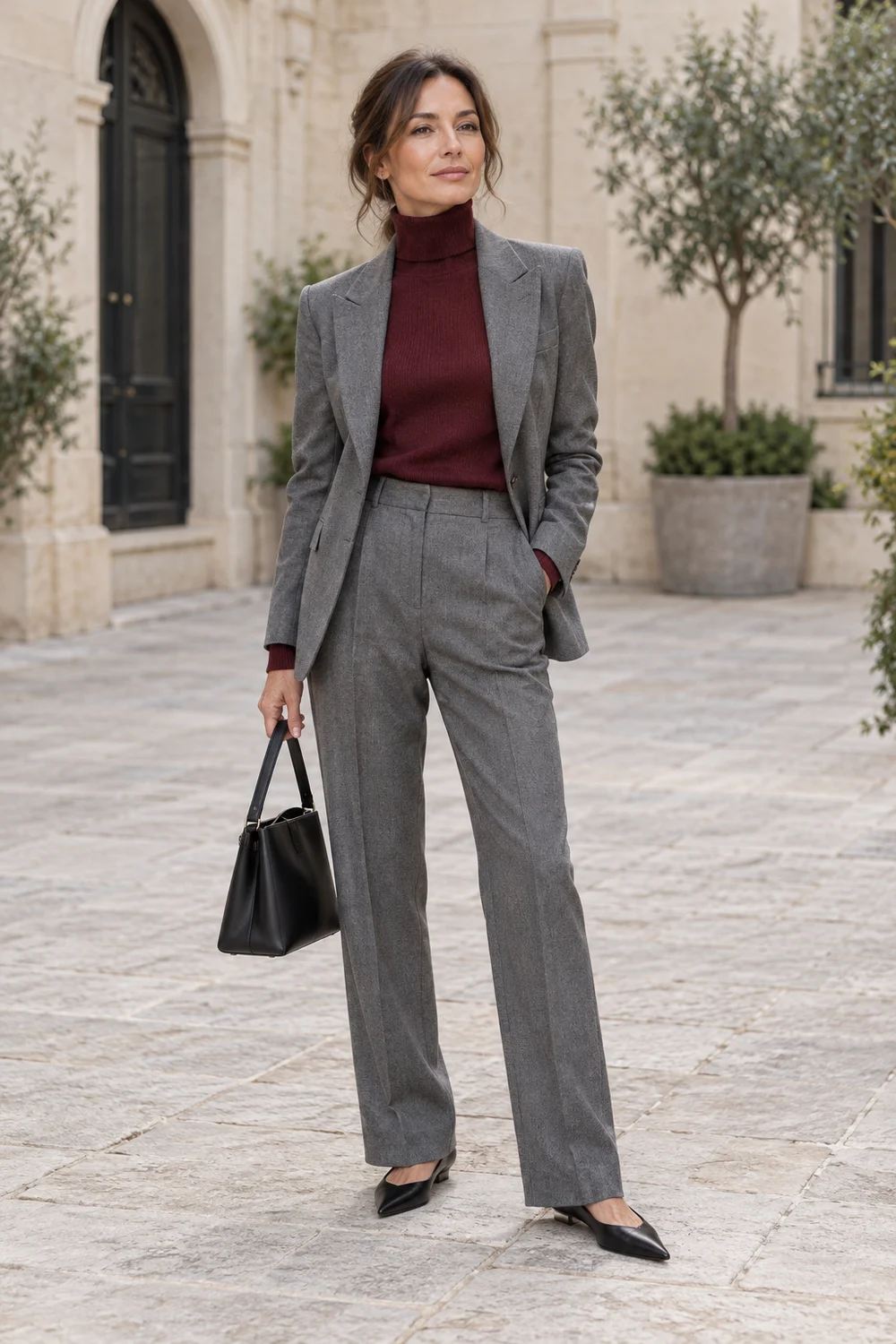
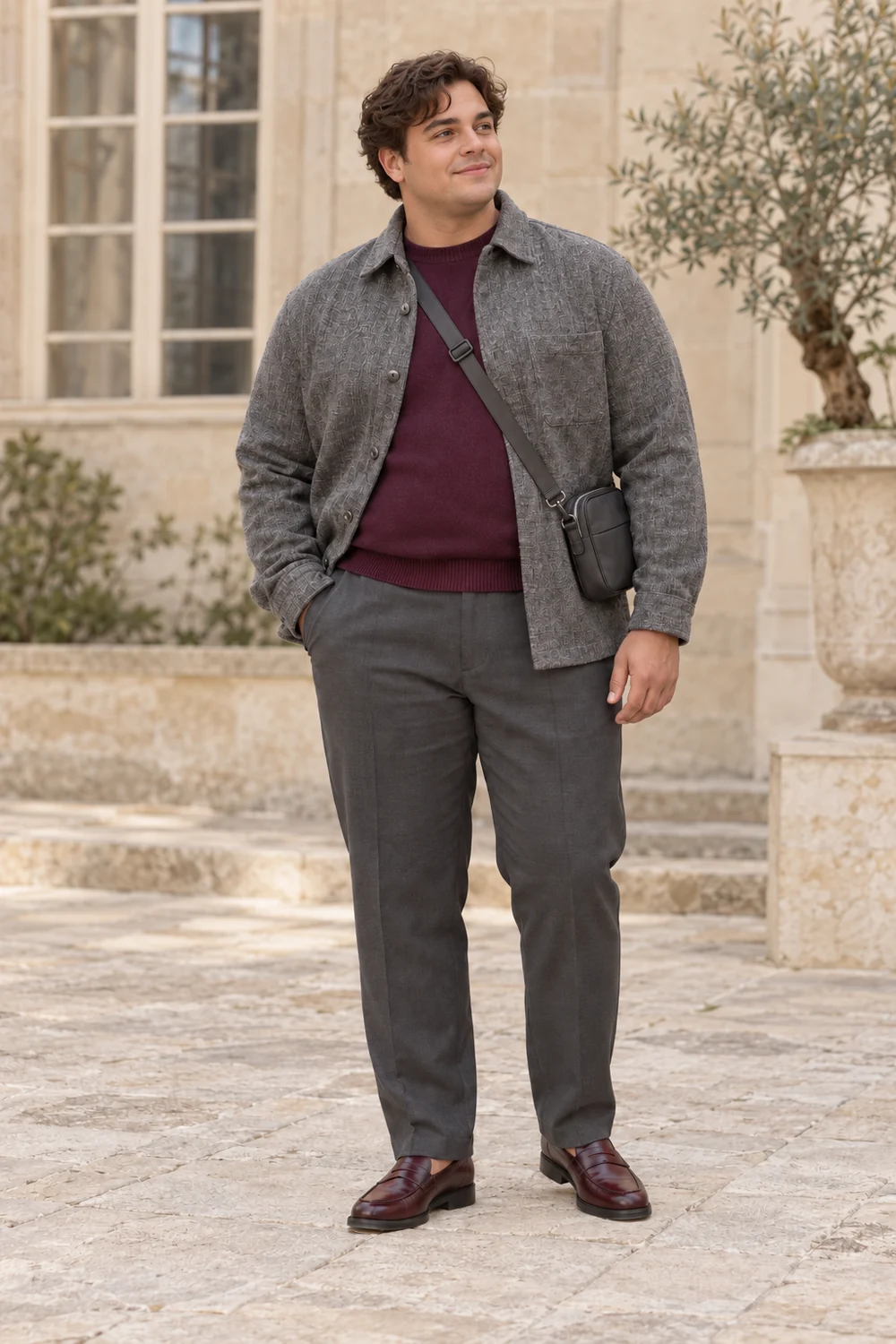
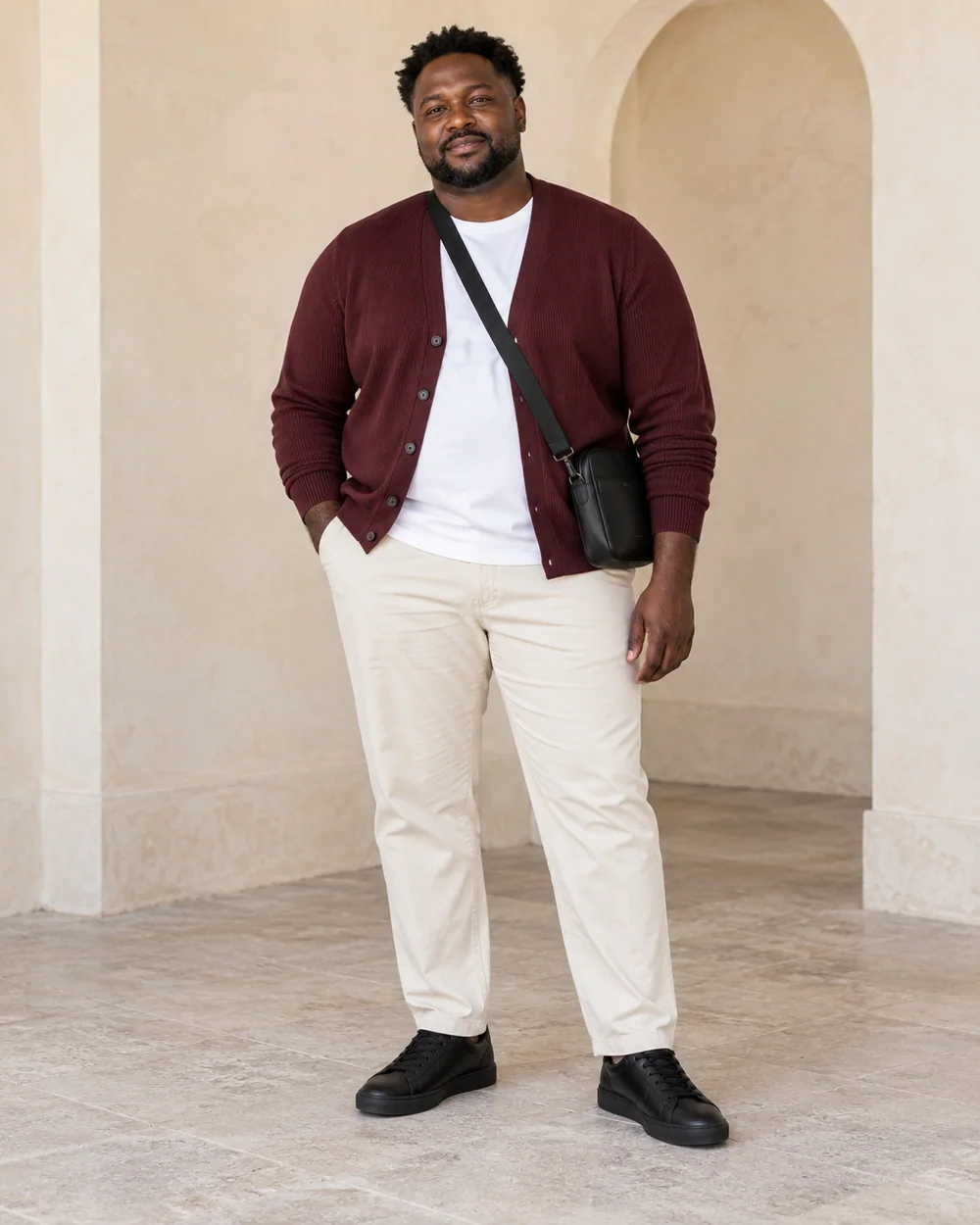
Give relaxed grey tailoring a clear colour anchor with a burgundy knit and understated black accessories.
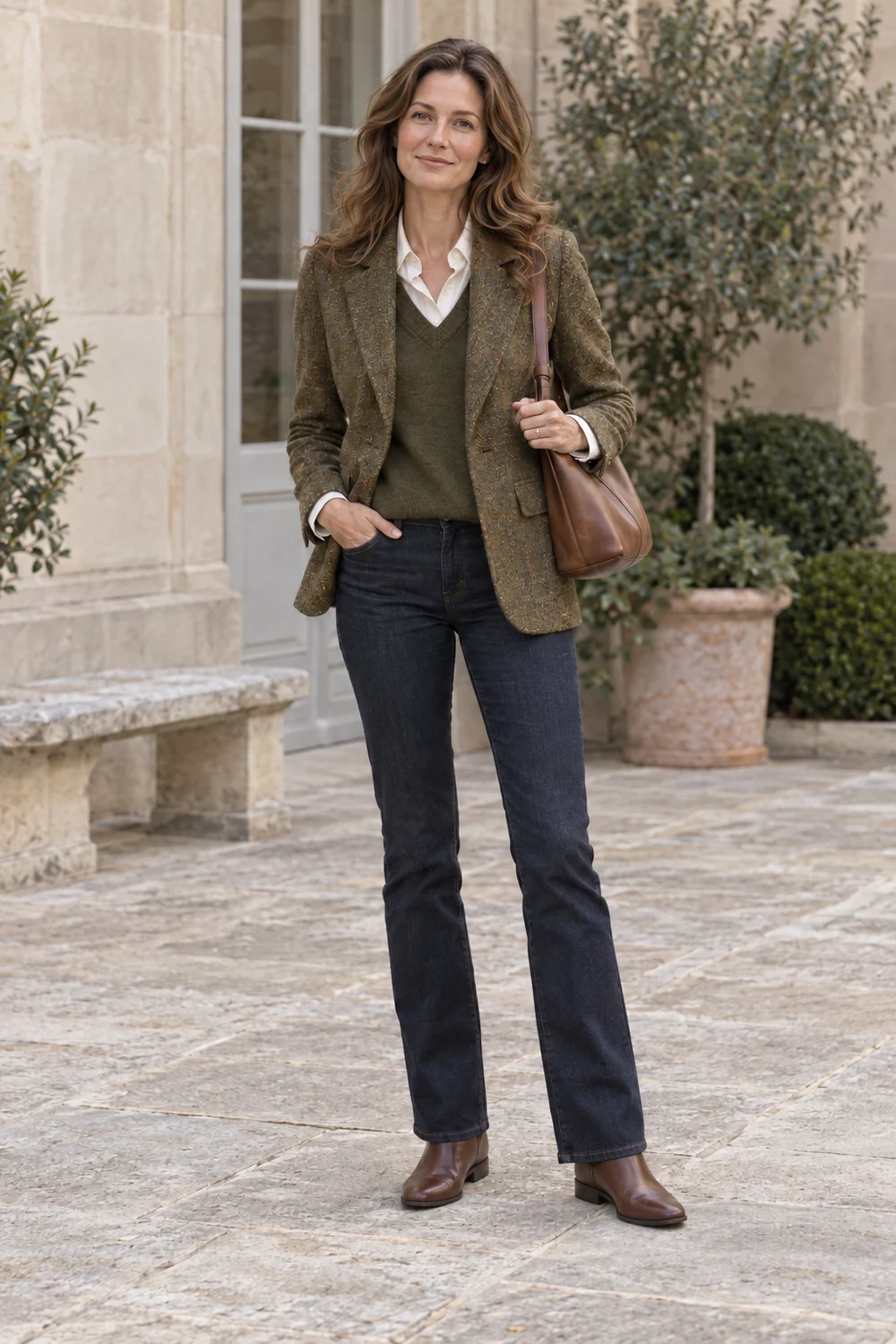
Layer a tweed blazer over a light blouse and fine knit, with dark jeans and boots suited to the ground.
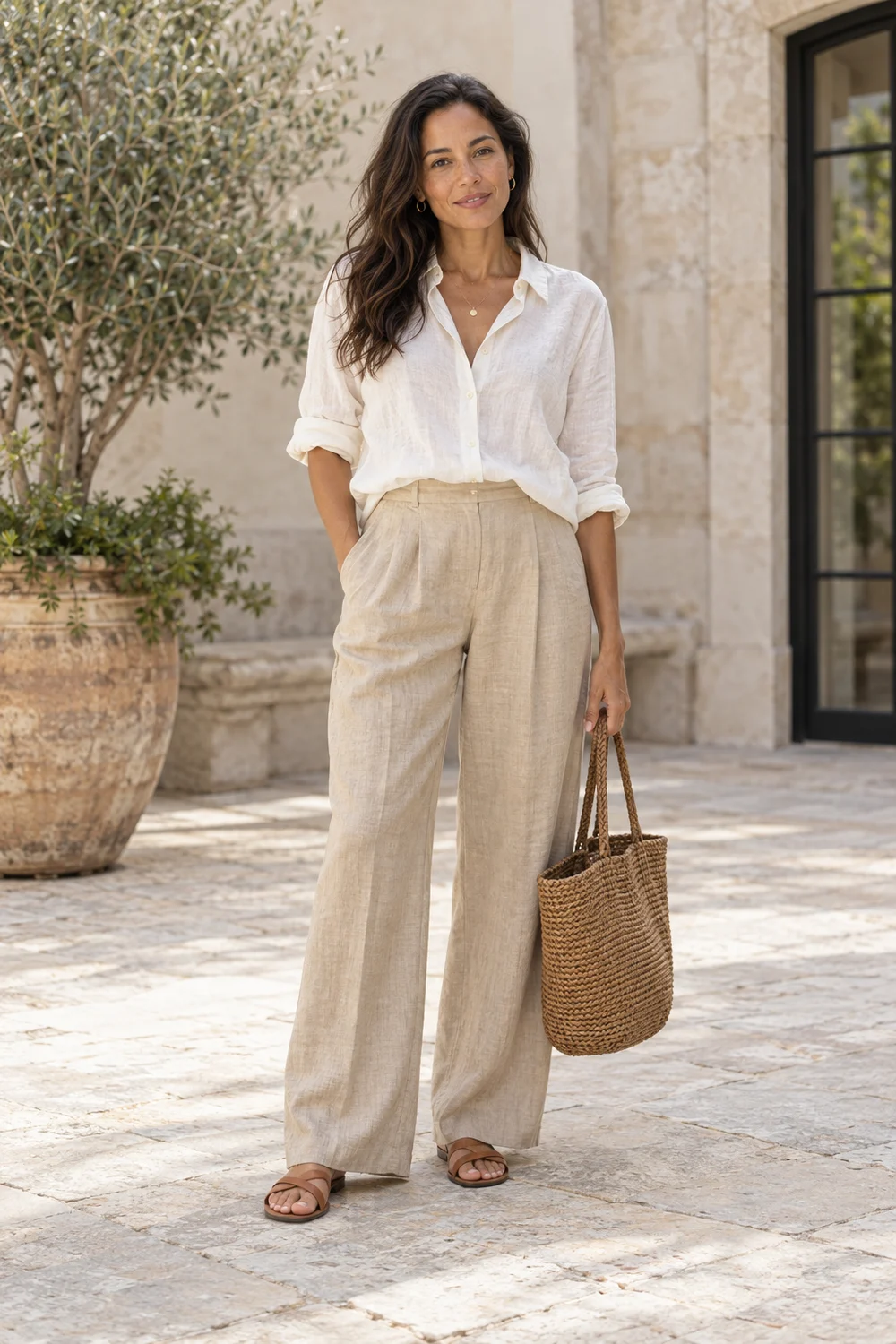
Keep a linen lunch outfit simple: an ivory shirt, sand trousers, familiar flat sandals and a woven everyday bag.
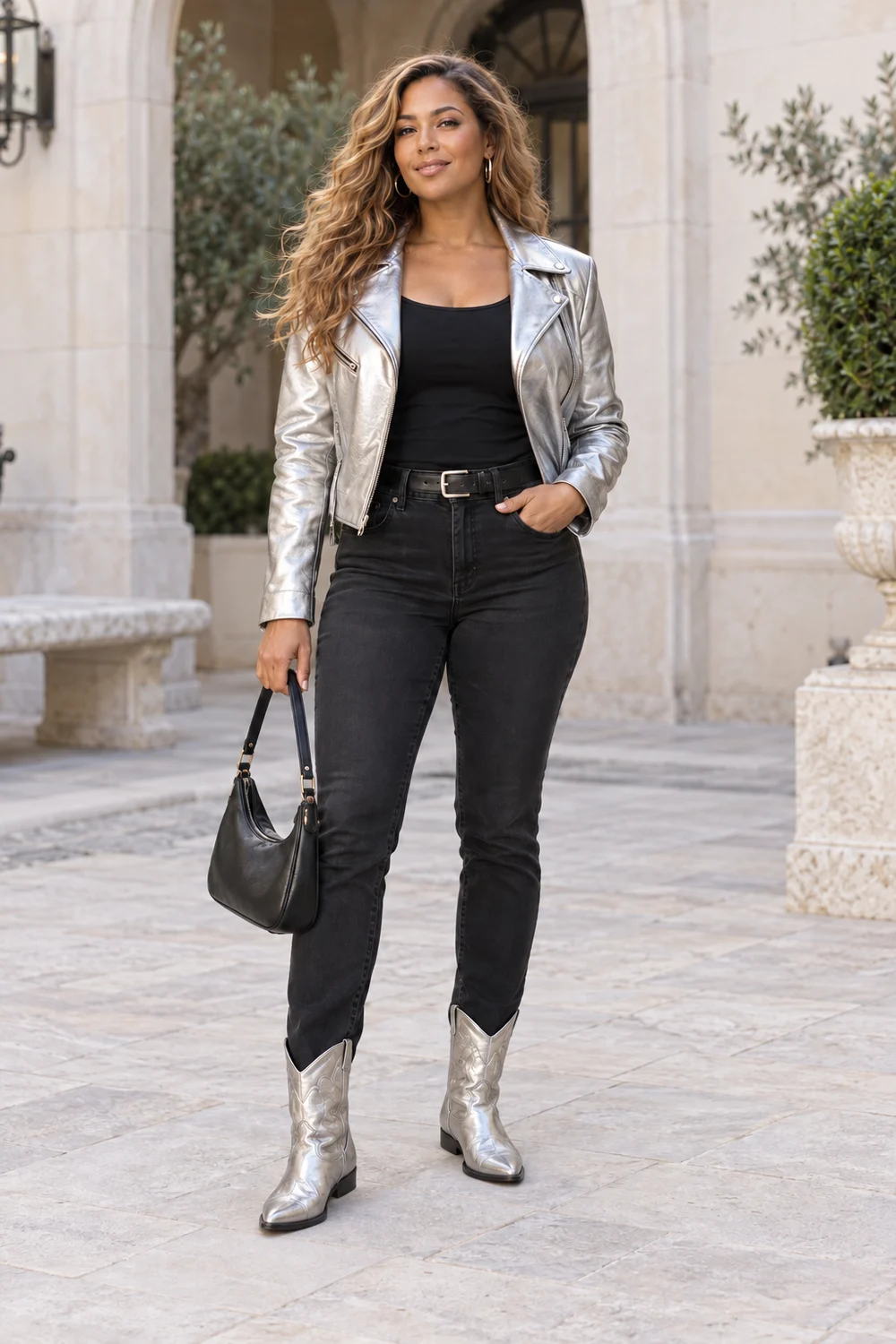
Use silver as the evening accent, supported by a black base and low western boots that you can comfortably stand in.
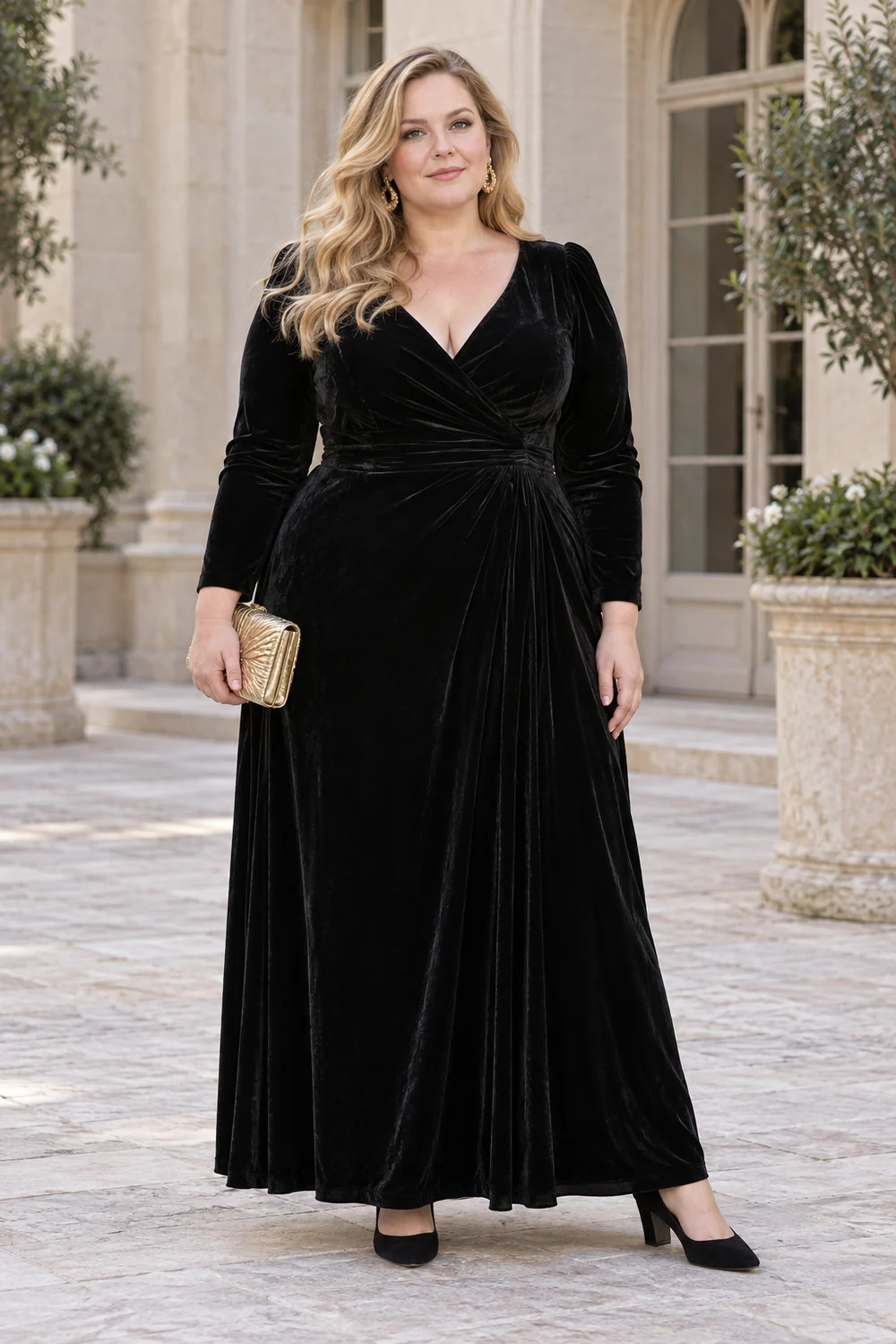
Build an occasion outfit around a comfortable black velvet column dress, low shoes and two small gold accessories.
Use a lime blazer and wide-leg trousers as one colour block, then add a pink tee and white trainers.
Pair a pale-blue A-line midi dress with a cropped ivory cardigan, flat silver Mary Janes and a navy bag.
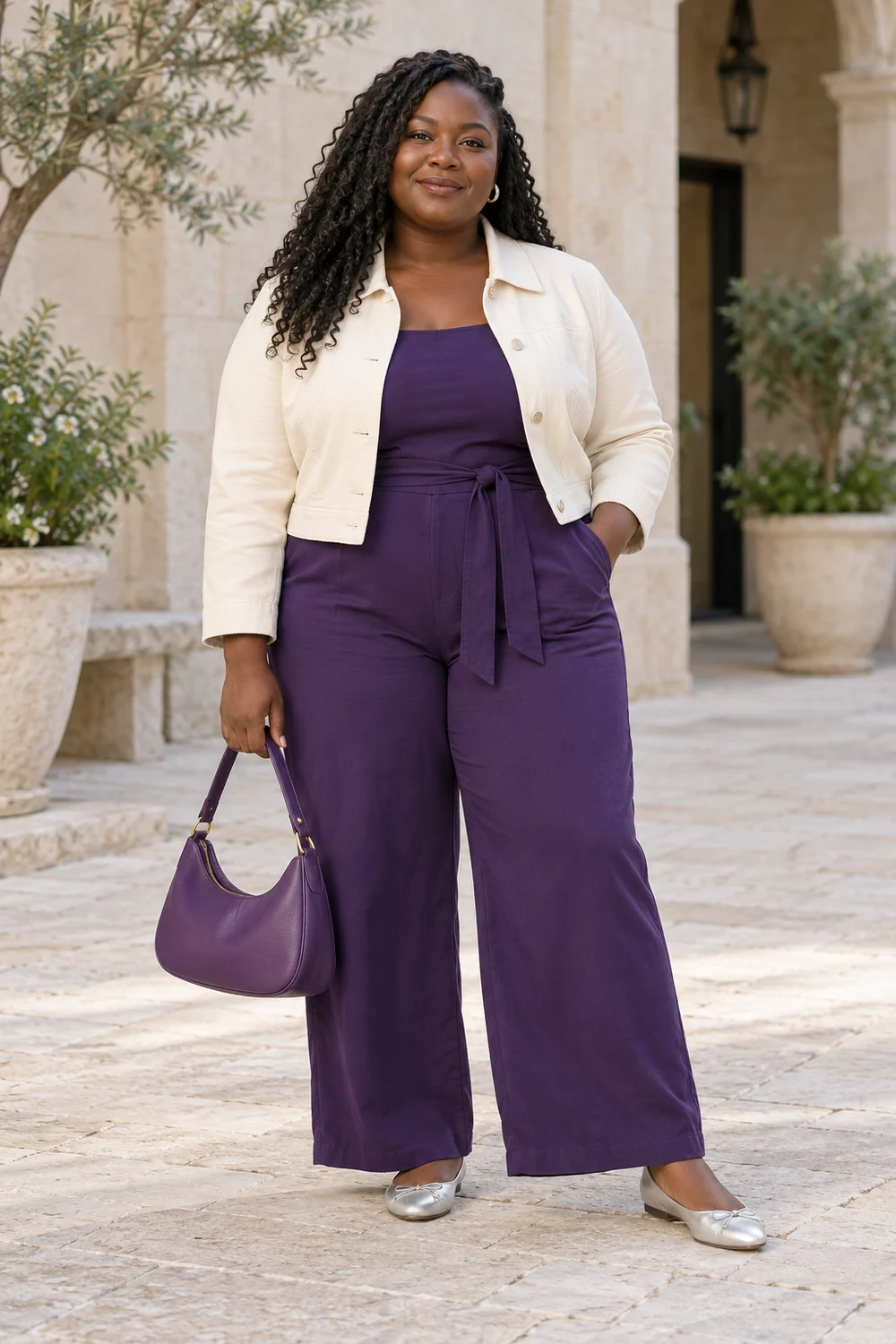
Build a practical occasion outfit from a purple wide-leg jumpsuit, a cropped cream jacket and silver flats.
Use a camel trench, black top and indigo straight jeans as a repeatable everyday outfit.
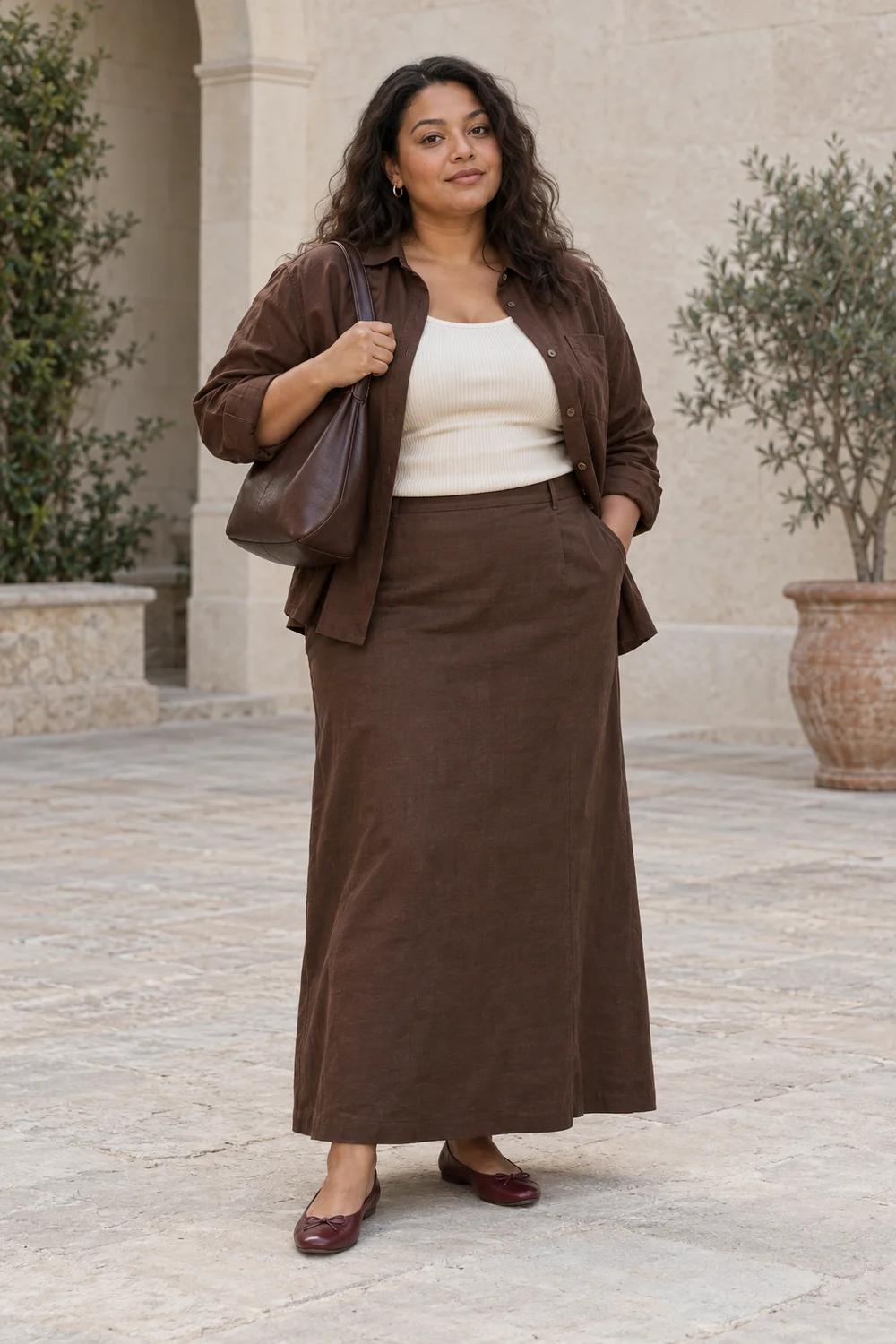
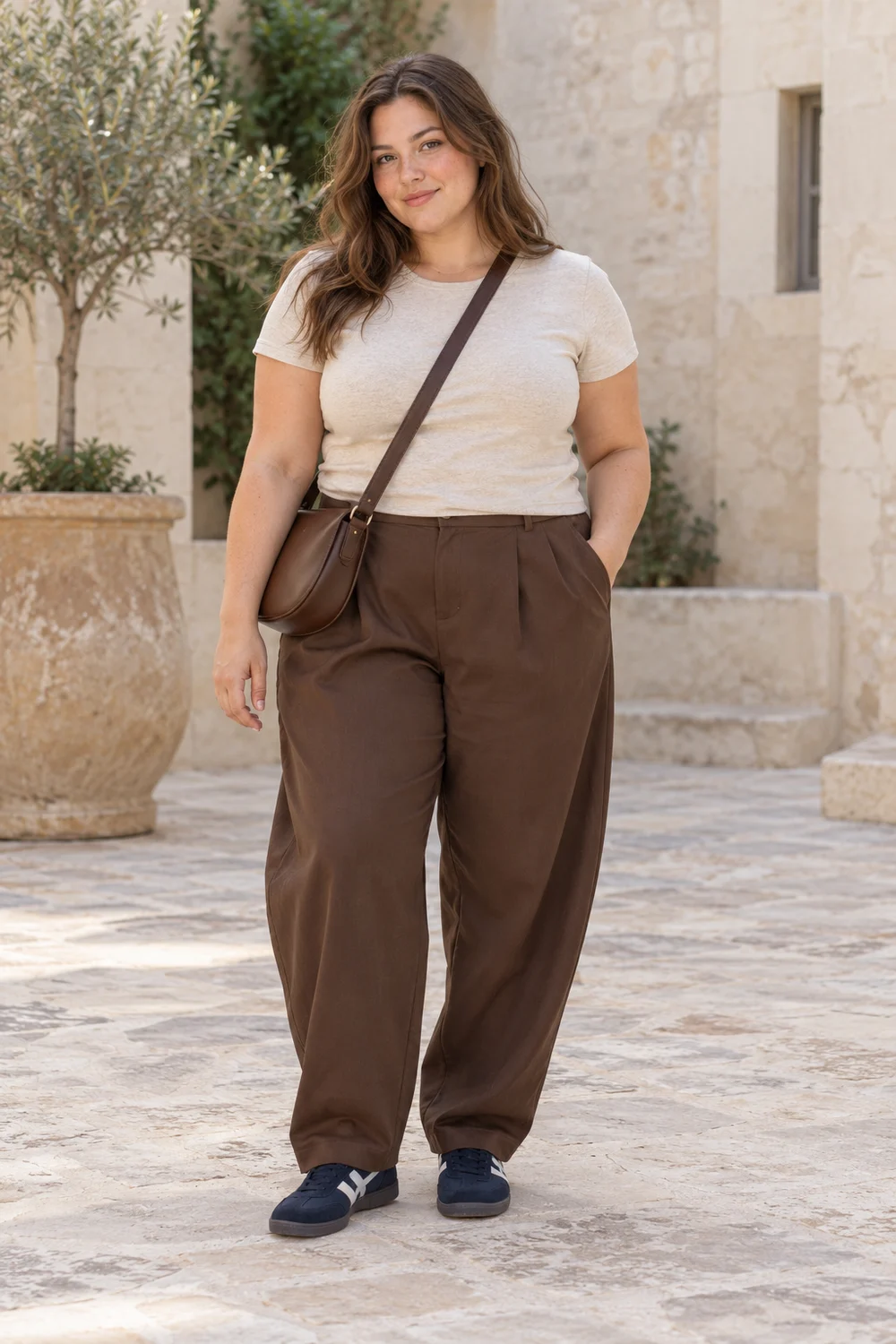
Combine a chocolate maxi skirt, cream ribbed top and open brown overshirt, then add burgundy flats.
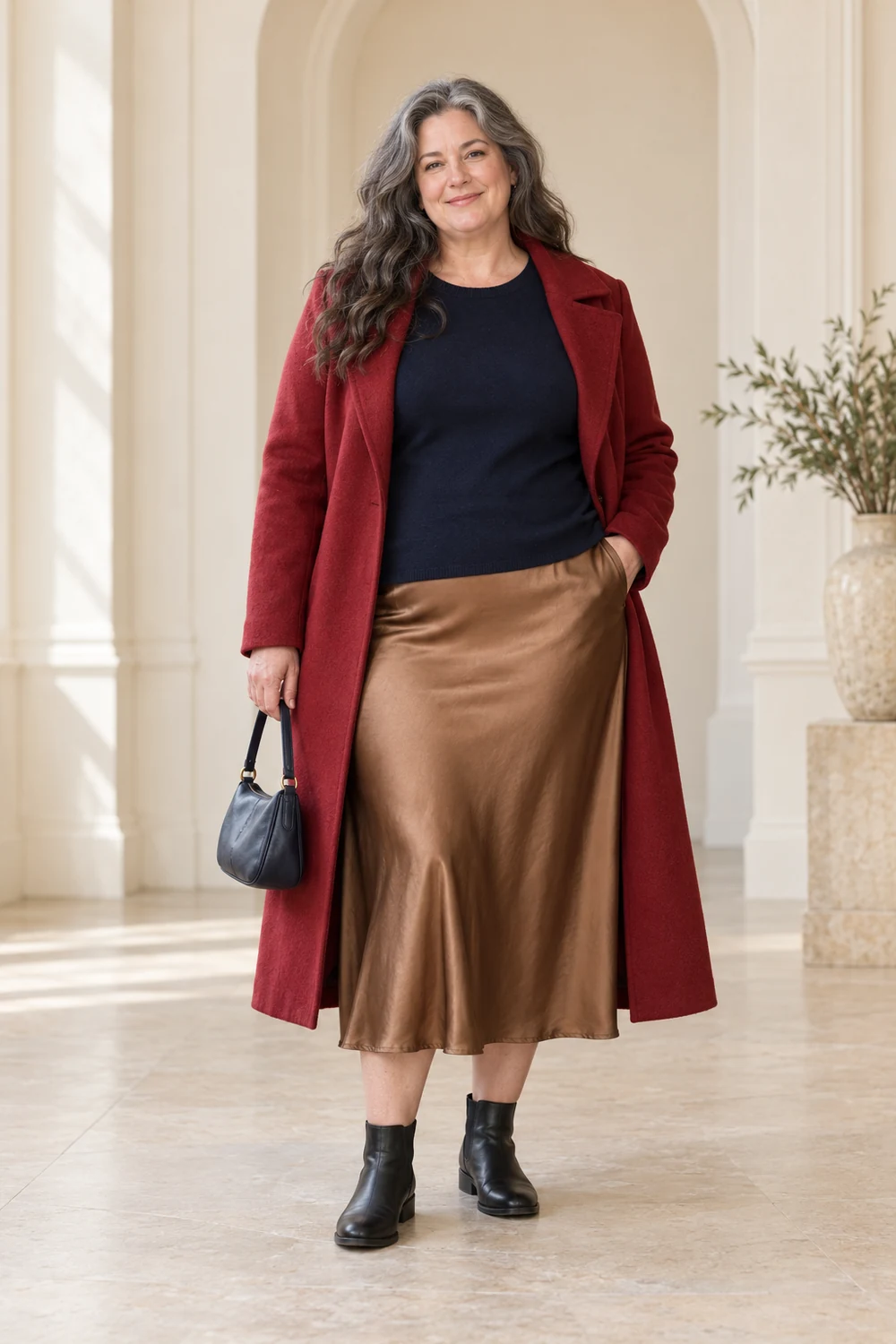
Use a bronze velvet wrap-style midi dress, low black ankle boots and a simple black clutch.
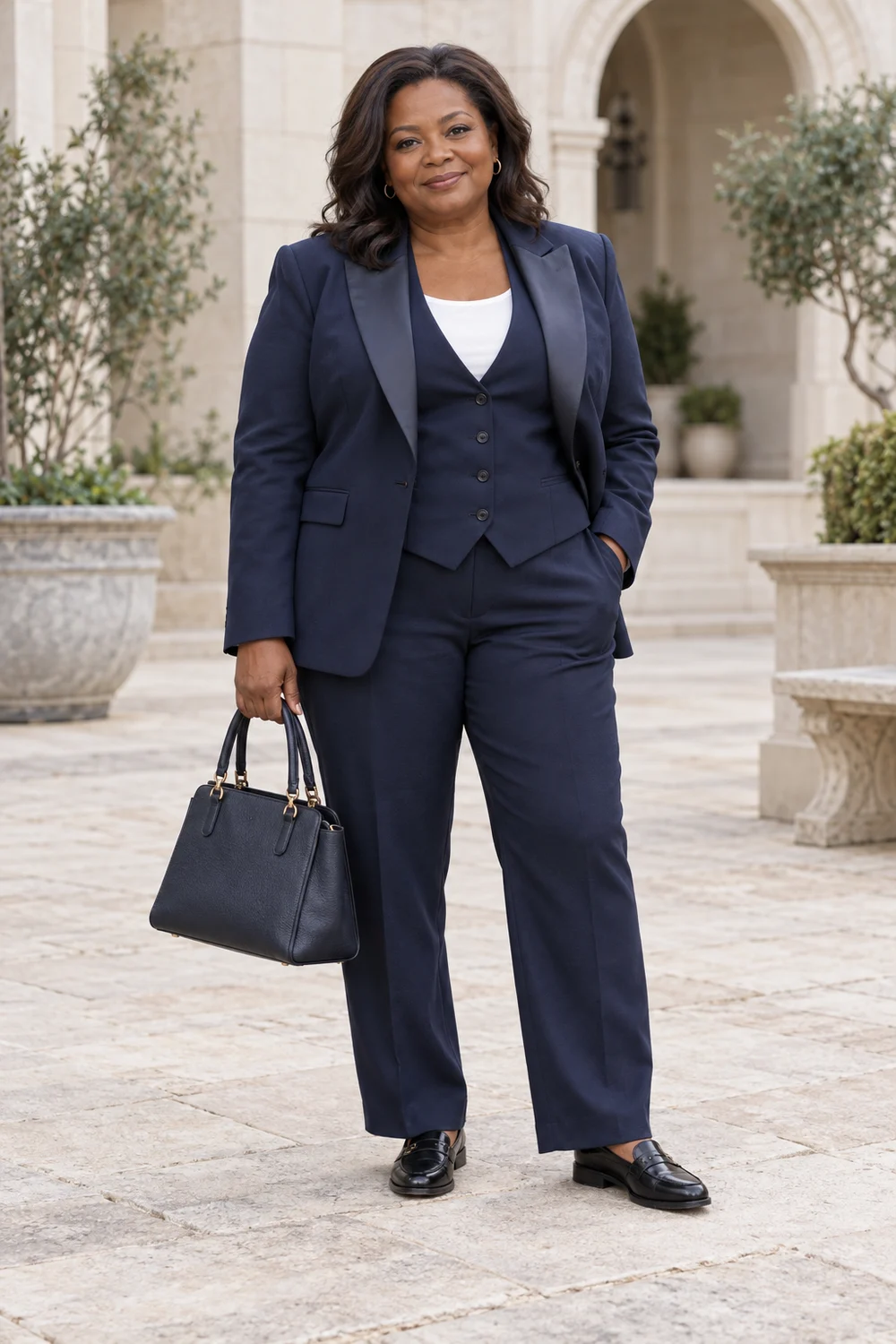
Try a navy blazer, waistcoat and straight trousers with a white shell and black loafers.
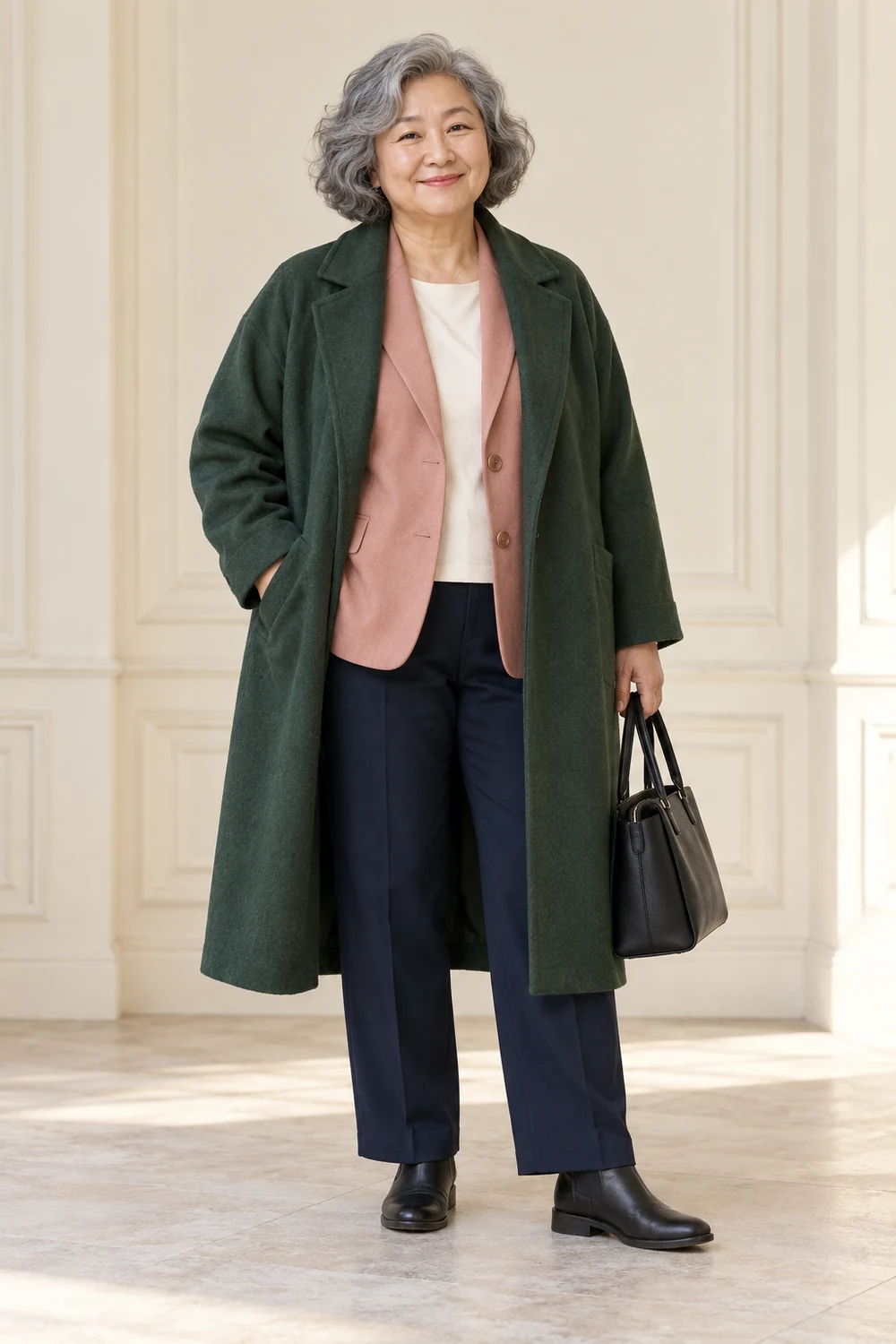
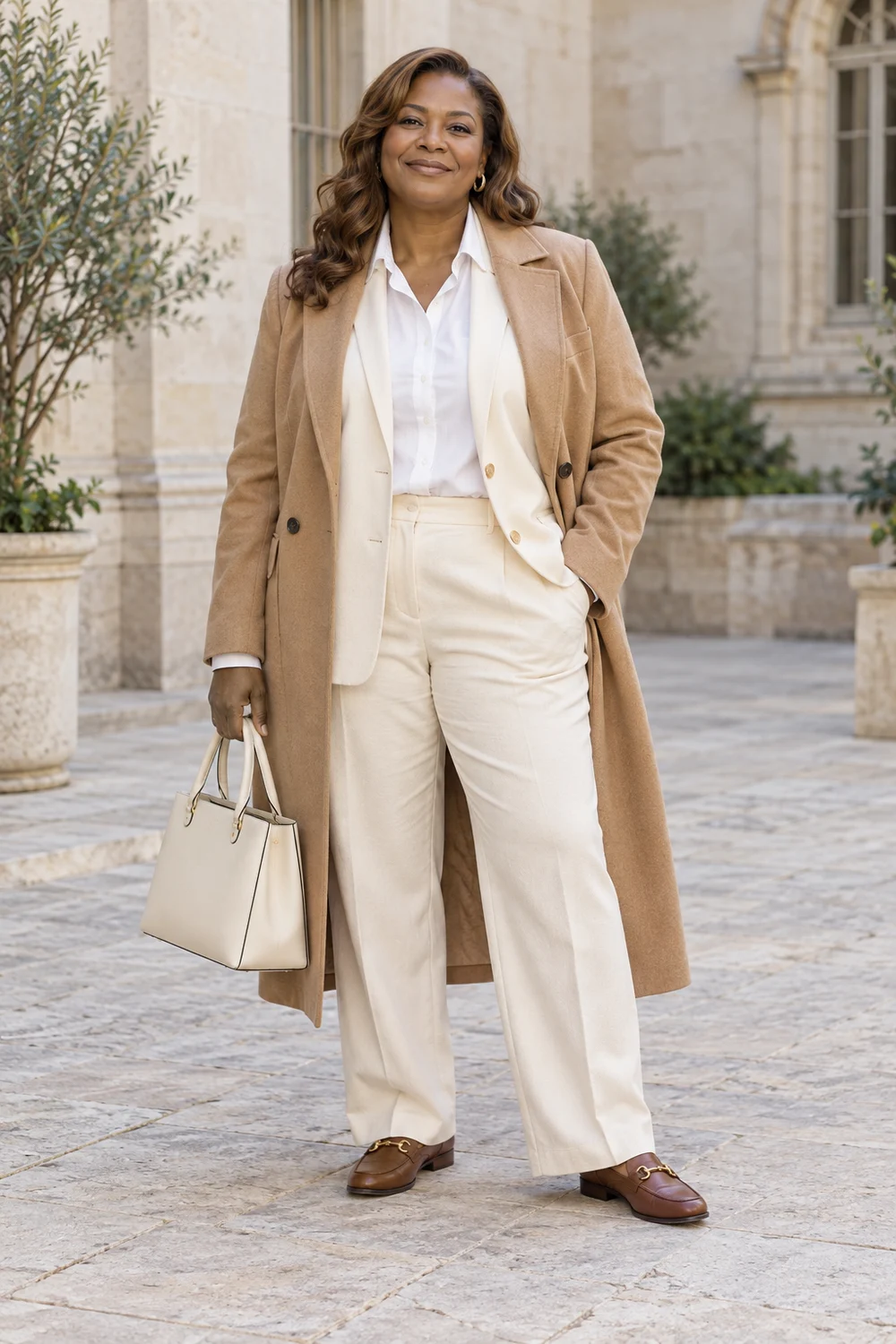
Layer a tan coat over cream tailoring and a white shirt, with brown loafers and a structured bag.
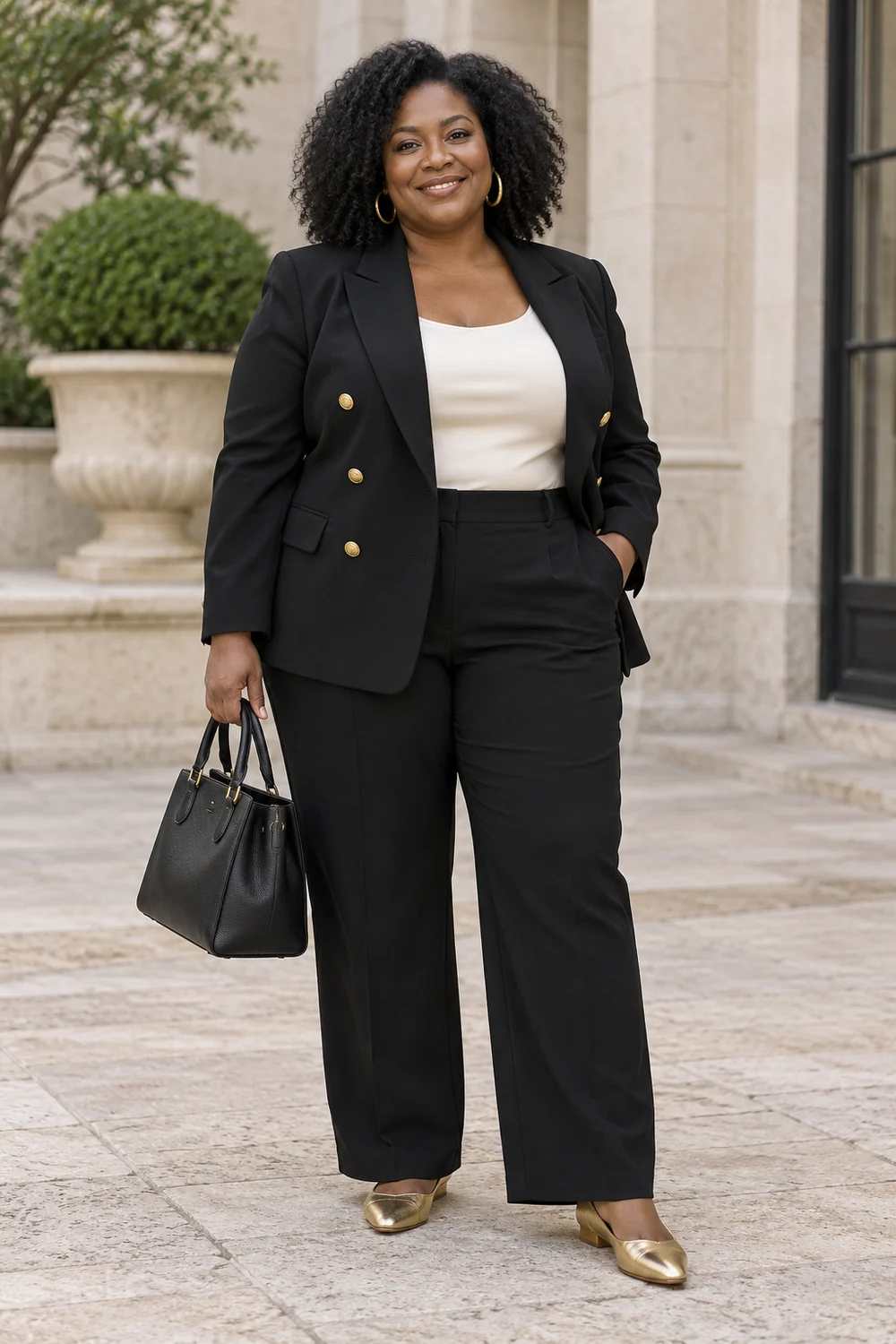
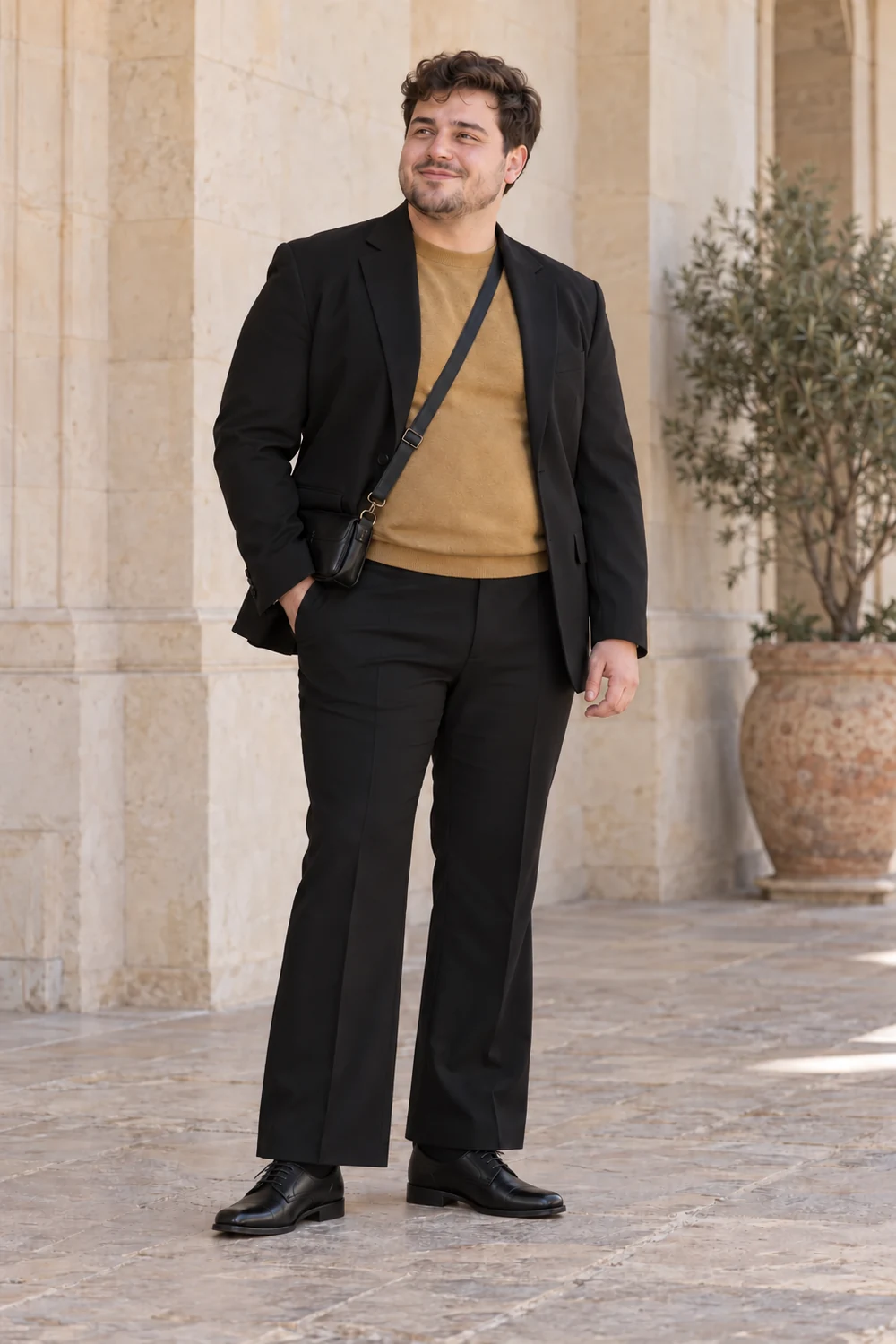
Pair a relaxed black suit with a cream high-neck top, low gold flats and a black bag.
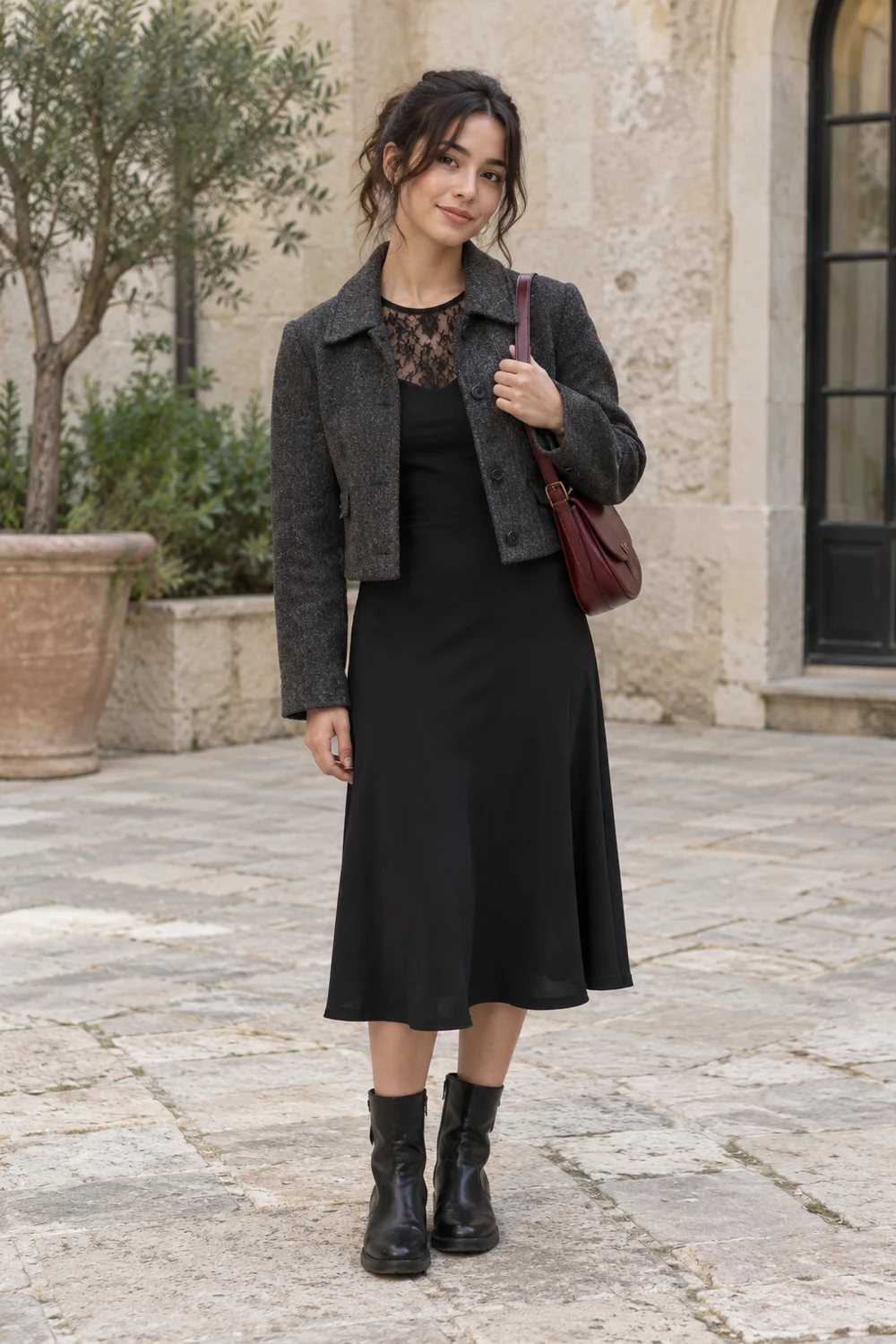
Build this outfit around an opaque black midi dress, a short charcoal jacket and comfortable flat ankle boots. Check the dress waist, sleeve length and walking space before choosing accessories.
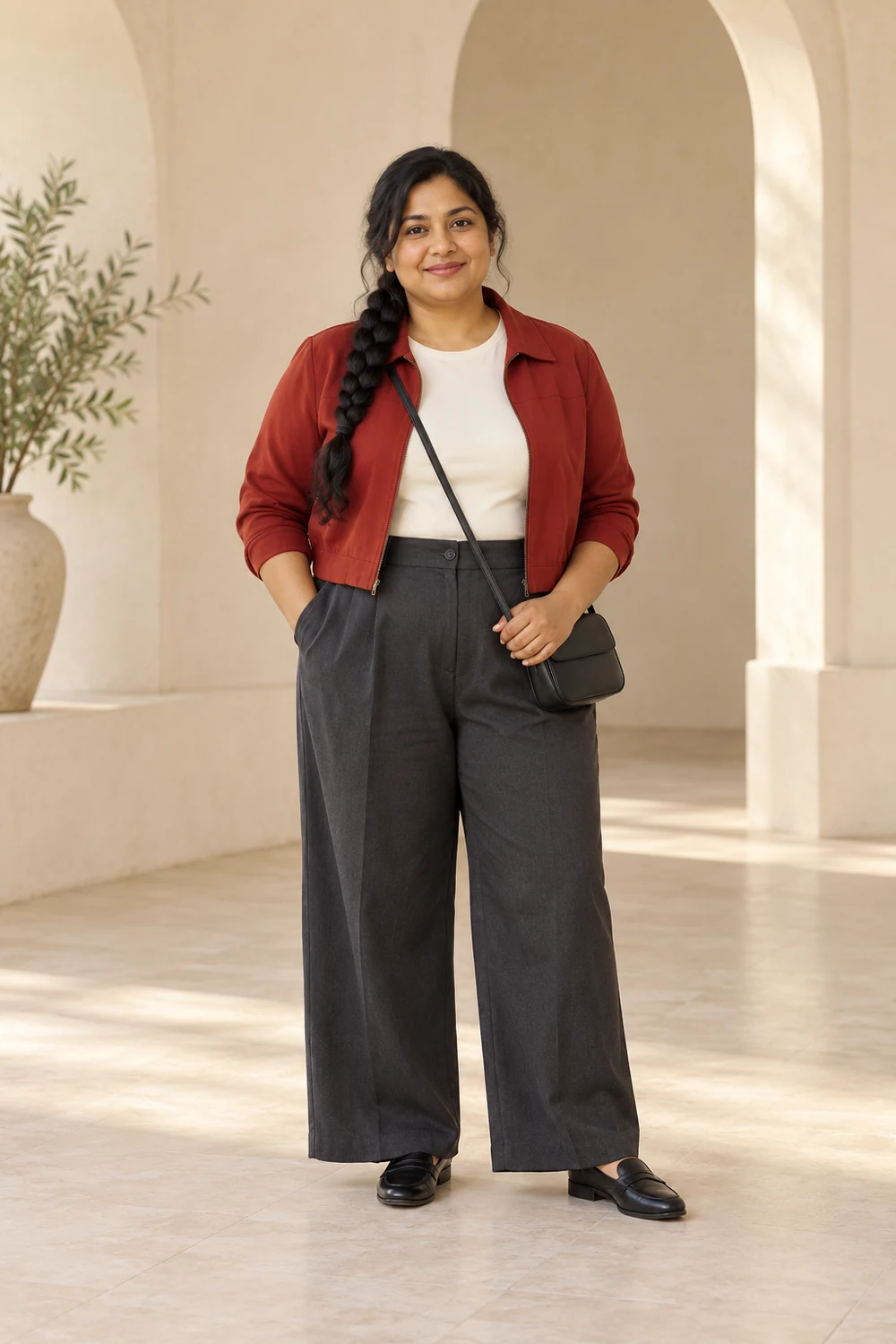
Pair straight charcoal trousers with an ivory blouse and a short collarless jacket. Fit the rise and knee position before shortening the hem, then check the outfit with flat Mary Janes.
Choose a blue-and-white cotton shirtdress with a comfortable waist tie, then add white low trainers and a useful ivory bag. Check button spacing and the position of the waist before altering the length.
Build a sand waistcoat-and-trouser outfit over a fine ivory top, then add dark-brown loafers and a bag. Check the waistcoat buttons, trouser rise and knee position while sitting and moving.
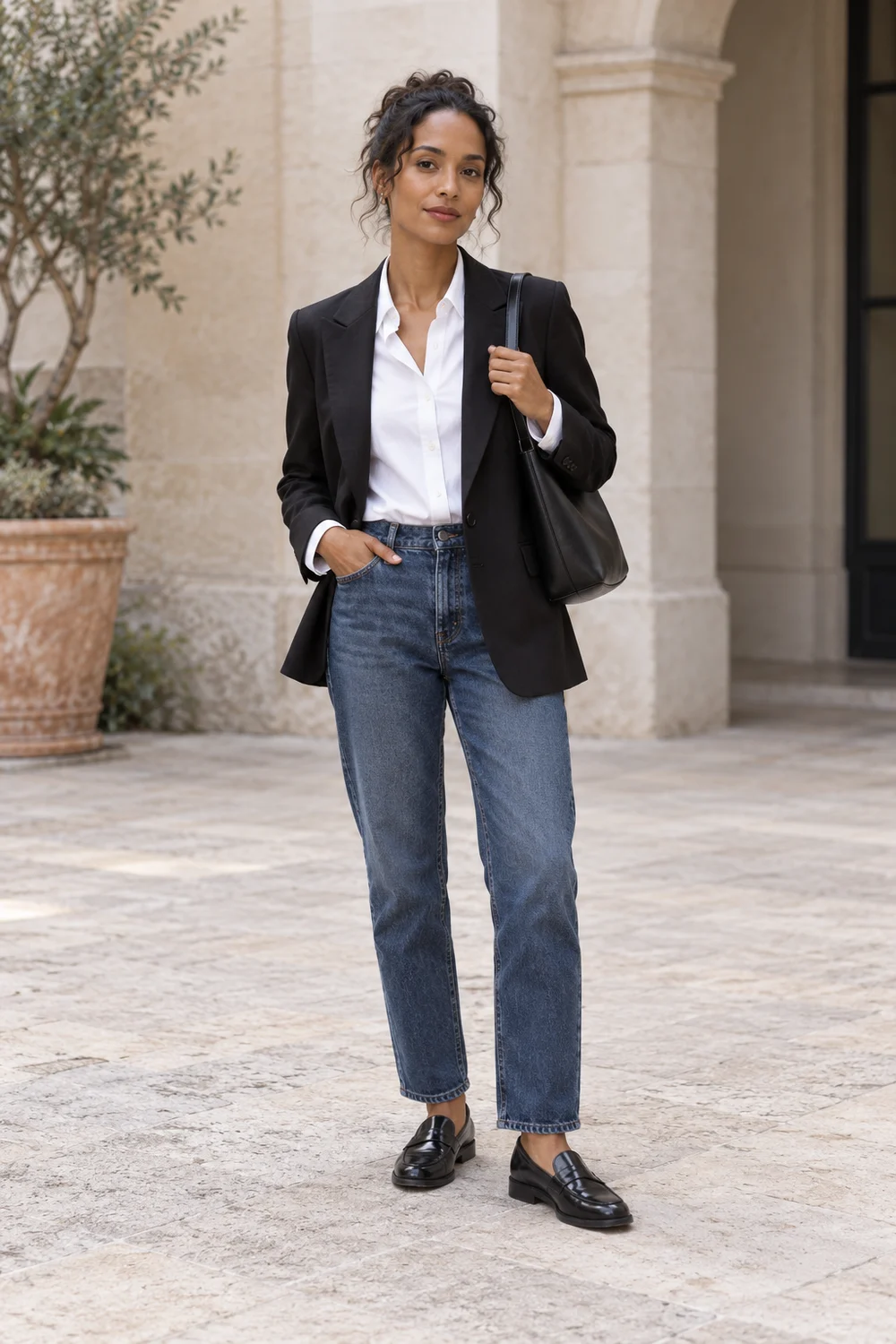
Combine a white Oxford shirt, straight indigo jeans, a short black blazer and flat loafers. Fit the shirt and denim separately, then check the jacket shoulder and hem over both.
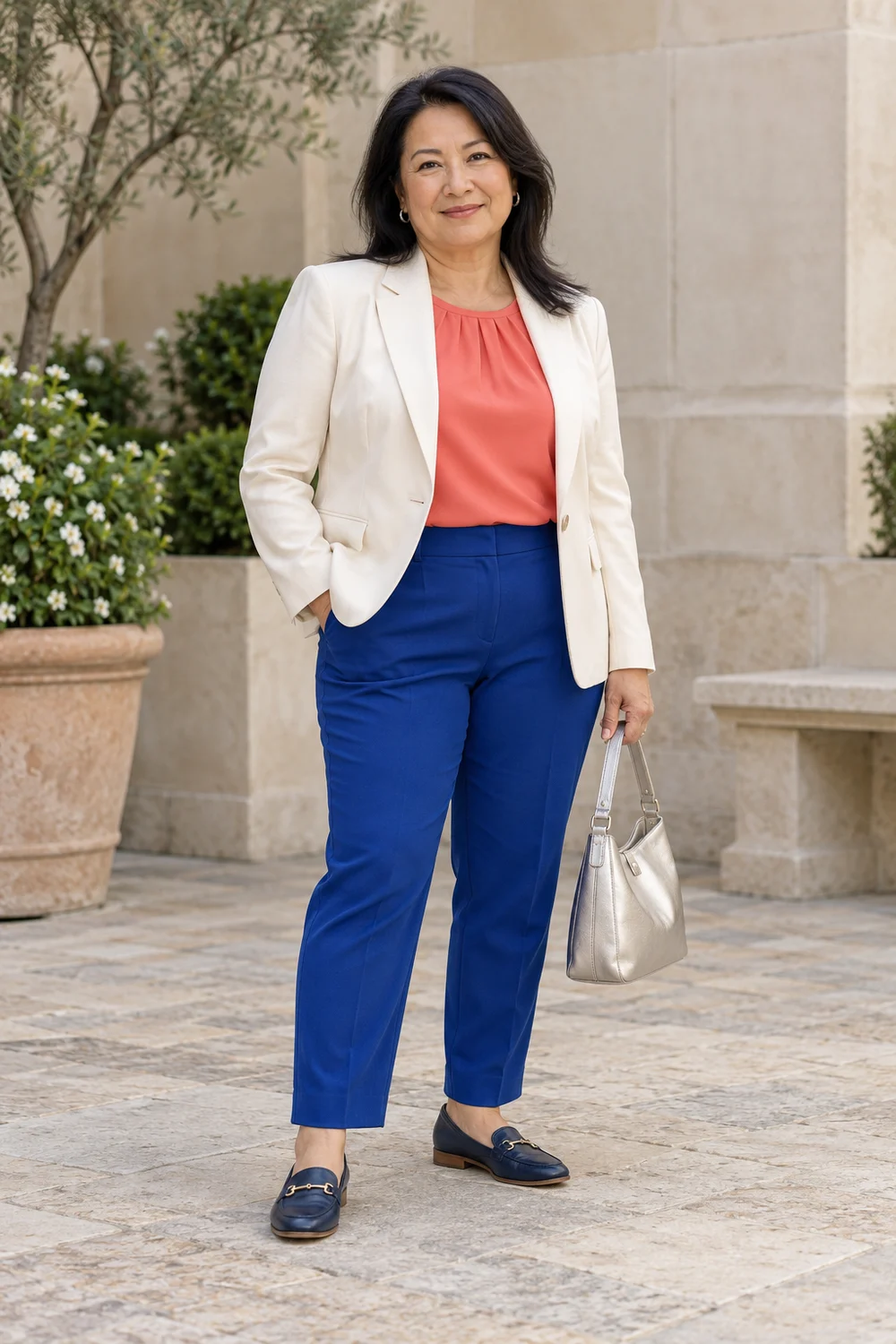
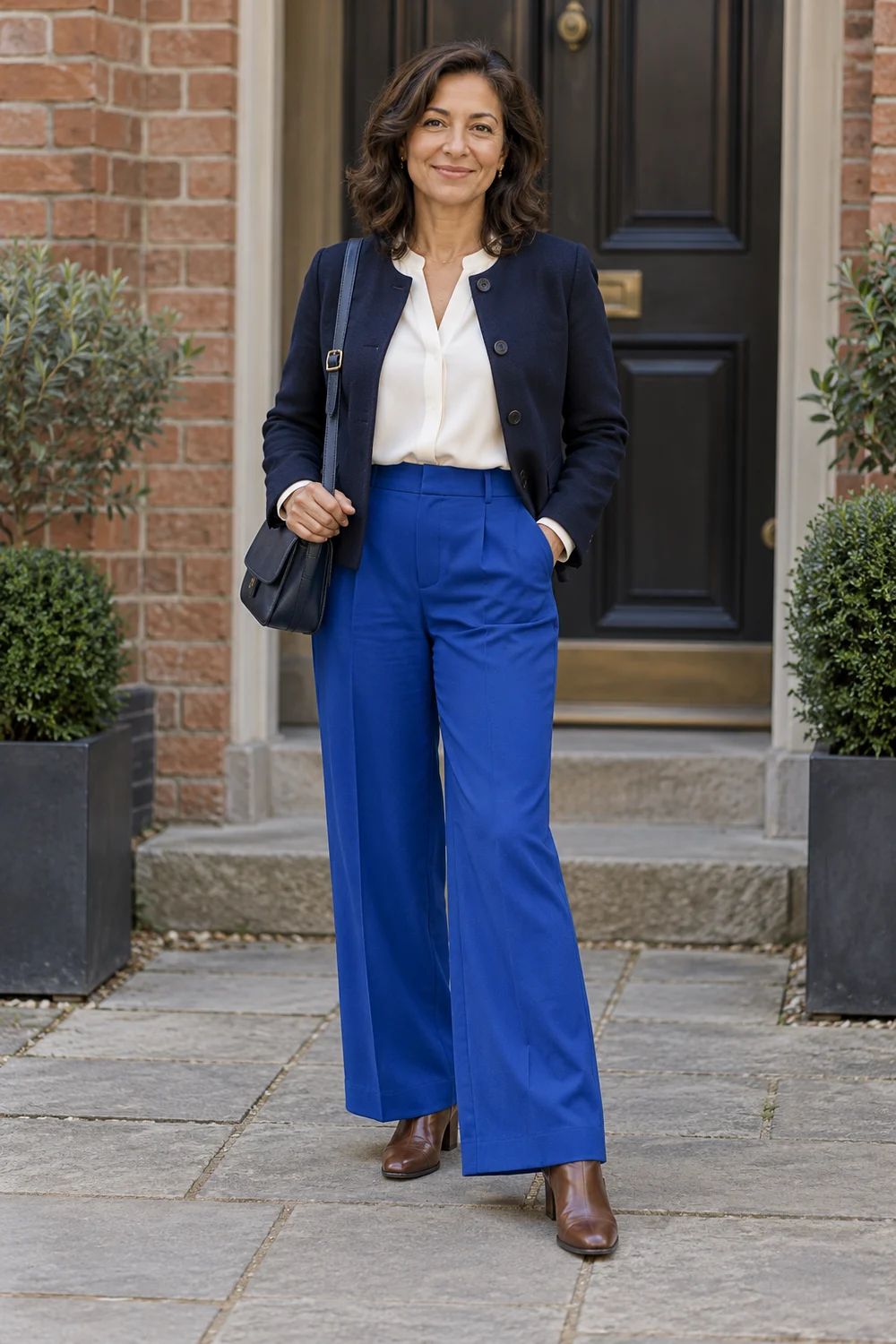
Pair a fluid coral blouse with cobalt straight trousers and an open ivory blazer. Fit the blouse and trousers for sitting comfort, then choose a hem that clears your navy flats.
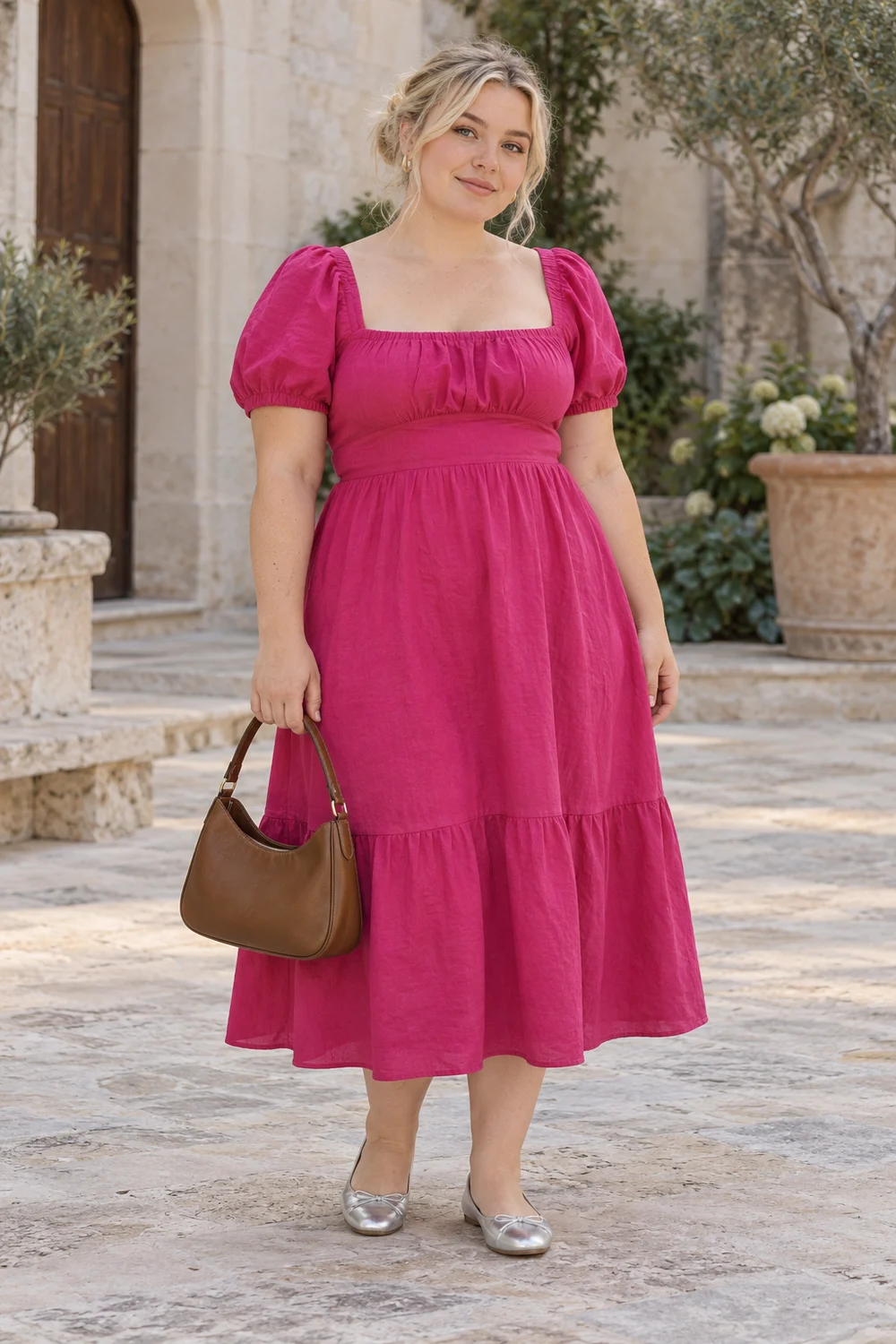
Let one fuchsia midi dress lead the outfit, with silver flats and a useful compact bag. Fit the bust, shoulder and waist seam first, then choose the hem while wearing your actual shoes.
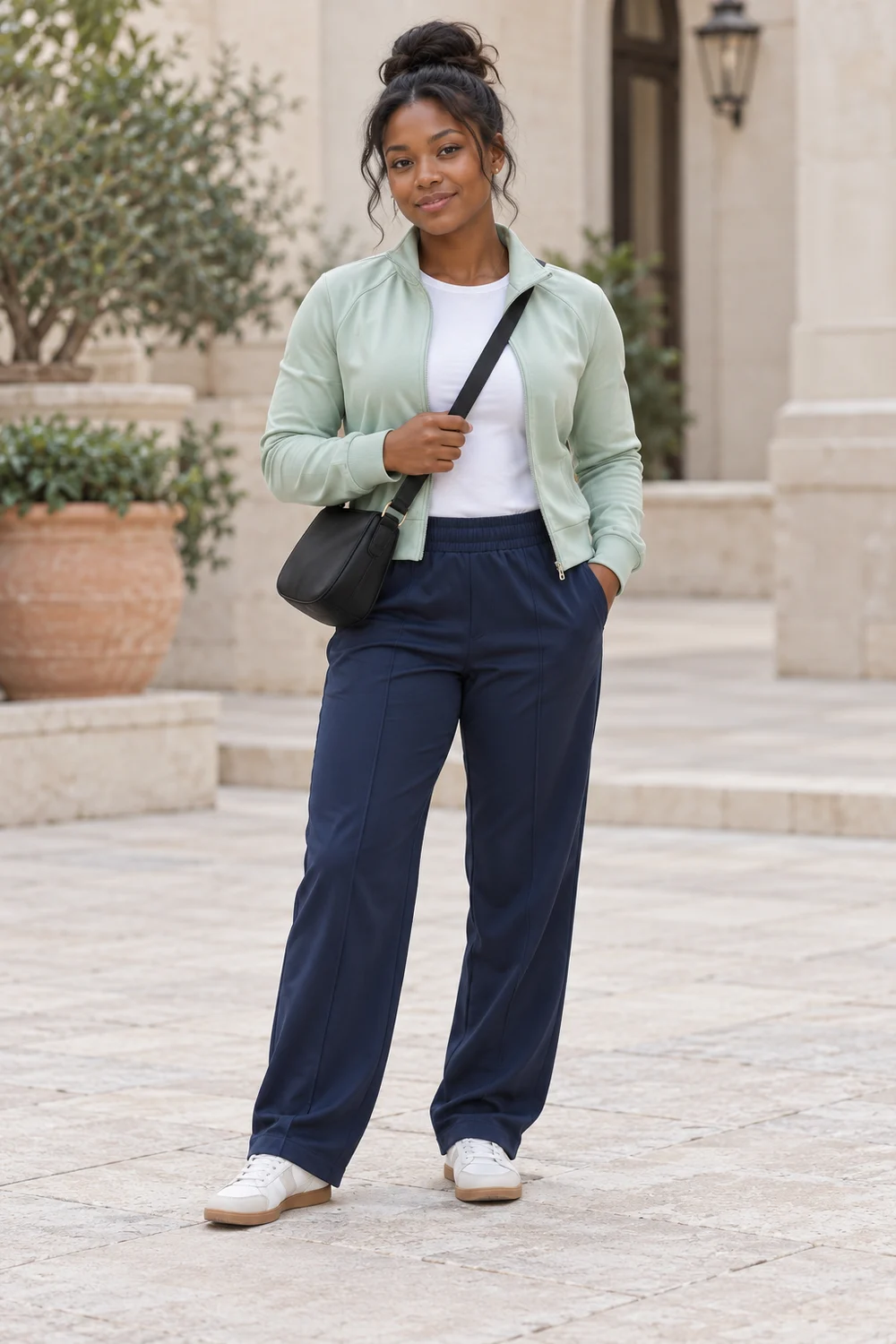
Wear a mint zip jacket over a plain white T-shirt, add ink straight track trousers and comfortable trainers, then test the waistband, knee position and hem through normal movement.
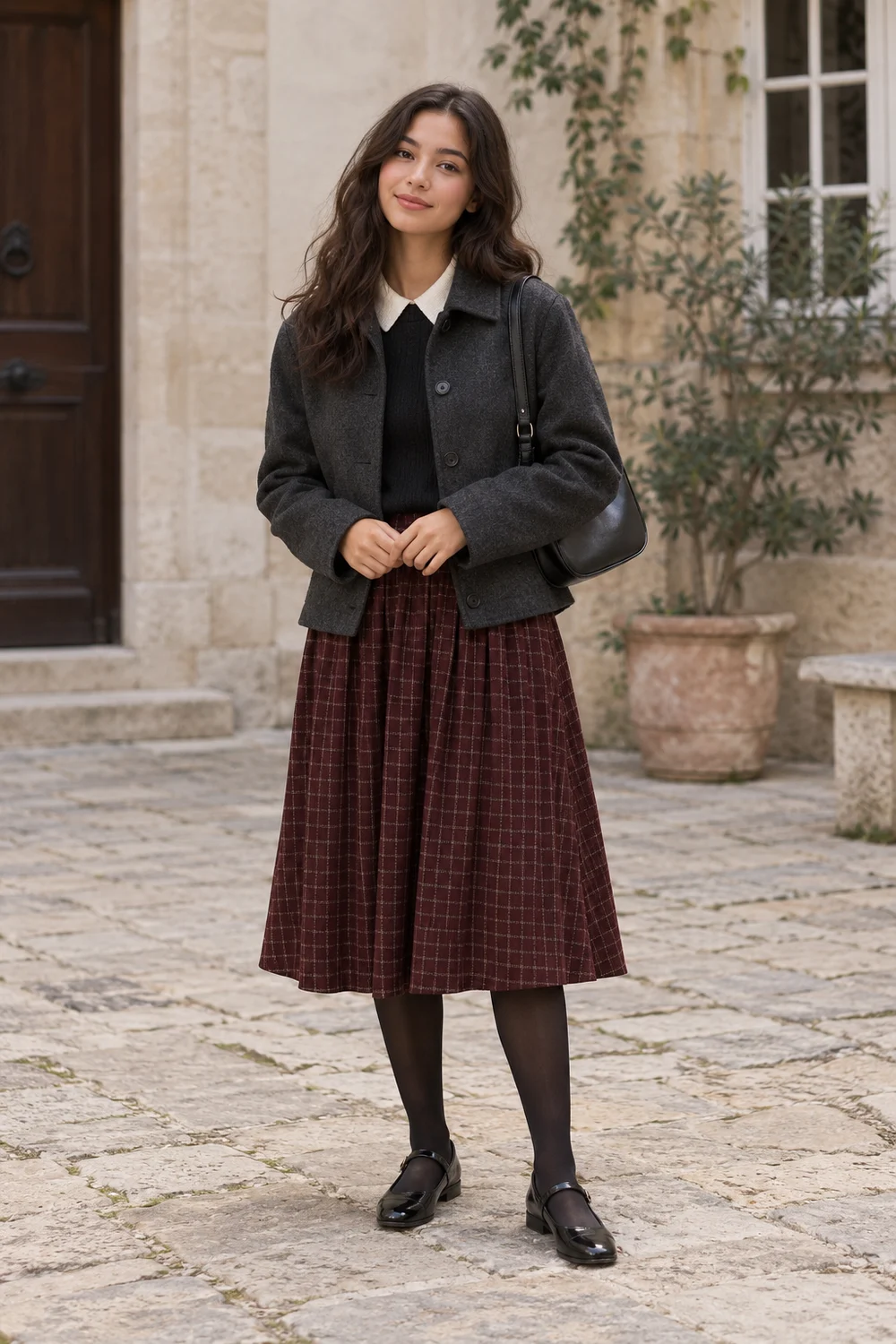
Let an oxblood-and-black checked skirt lead, with a black knit, small cream collar and flat Mary Janes. Fit the skirt waistband and jacket separately, then check the hem with the tights and shoes you will wear.
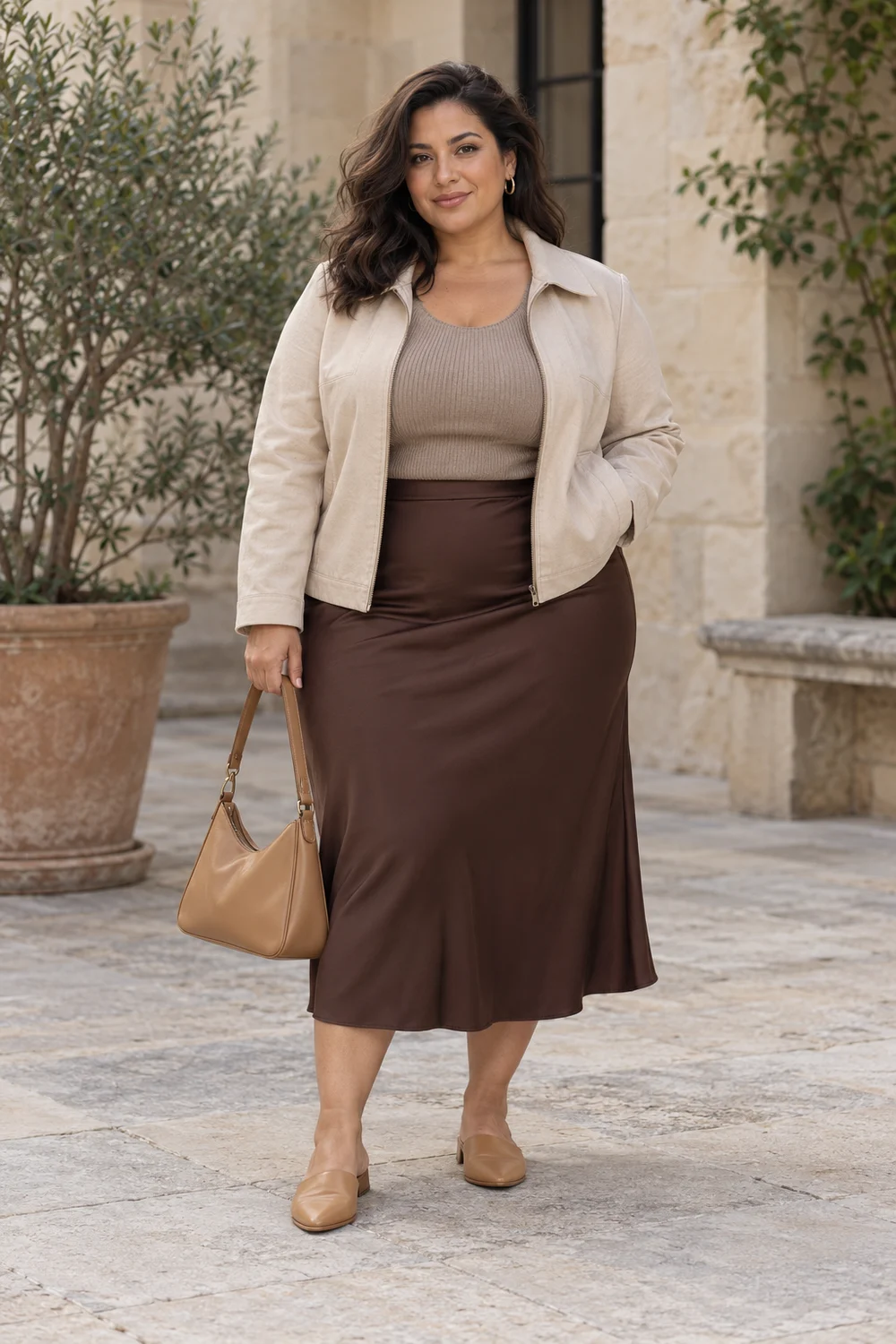
Pair a taupe knit T-shirt with a chocolate midi skirt and a stone jacket. Fit the skirt for sitting and walking, then check the waistband, vent and hem with your comfortable tan flats.
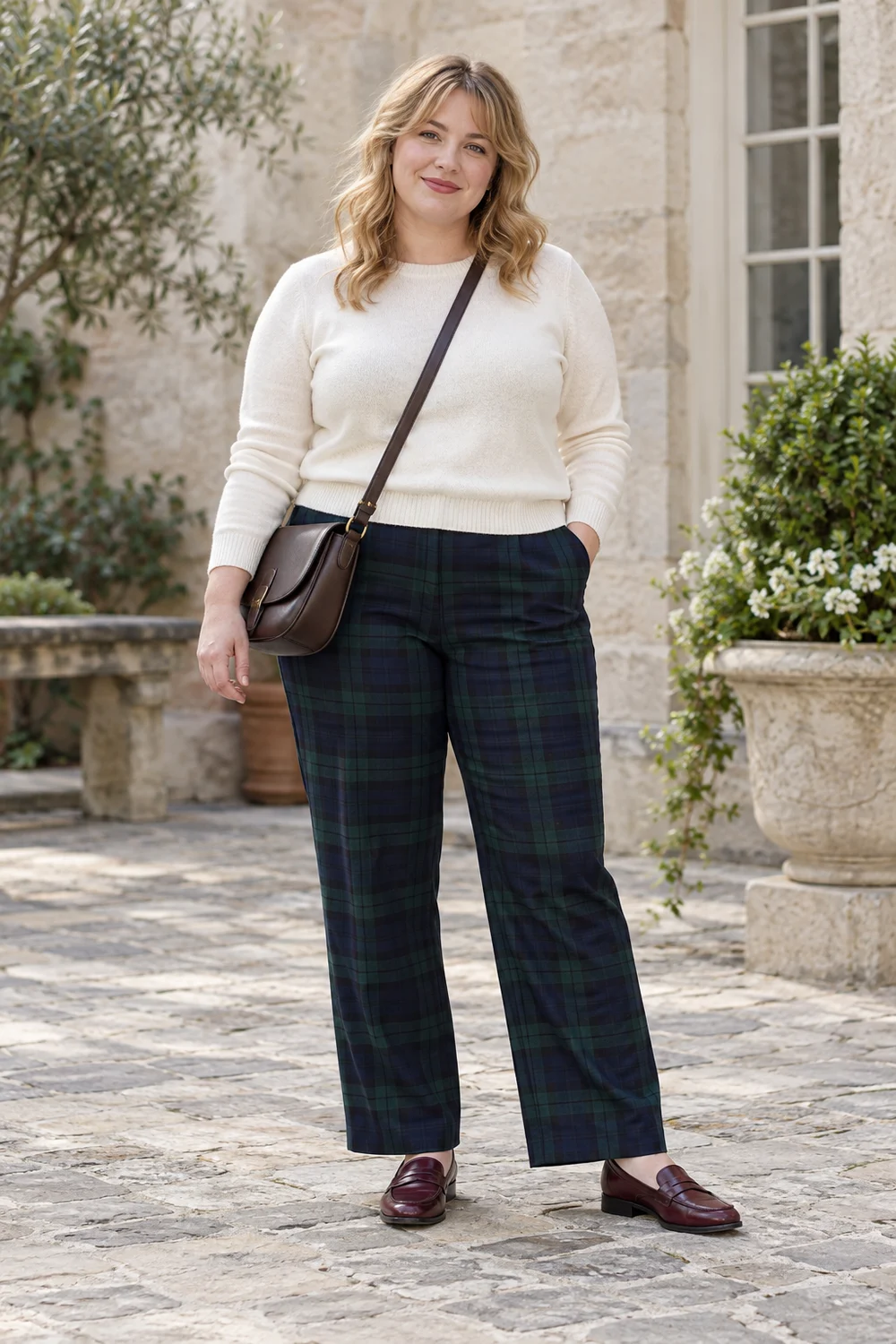
Build around checked trousers and an ivory knit, then choose a camel layer and either loafers or trainers after checking the actual rise and hem.
Let cream carry the main shape and black give it a clear base; compare the waistcoat alone with its blazer, then choose flats or low trainers.
Choose the denim skirt for seated room and a normal stride, then decide whether a tan mule or cream trainer serves the day better.
Let chocolate and stone create the calm centre, then use a taupe blazer or a small silver shoe accent to change its purpose.
Edit a pastel skirt outfit around comfortable fullness, a short optional cardigan and two clearly different shoe routes.
Keep a cargo skirt and boxy tee relaxed by fixing pocket bulk, hem collisions and overshirt fit one at a time.
Rehearse the jacket sleeve and skirt movement, then choose a black Mary Jane or trainer finish for the actual invitation.
Set dark bootcut jeans for the lower of your two actual soles, then add an ivory vest and an optional tan overshirt.
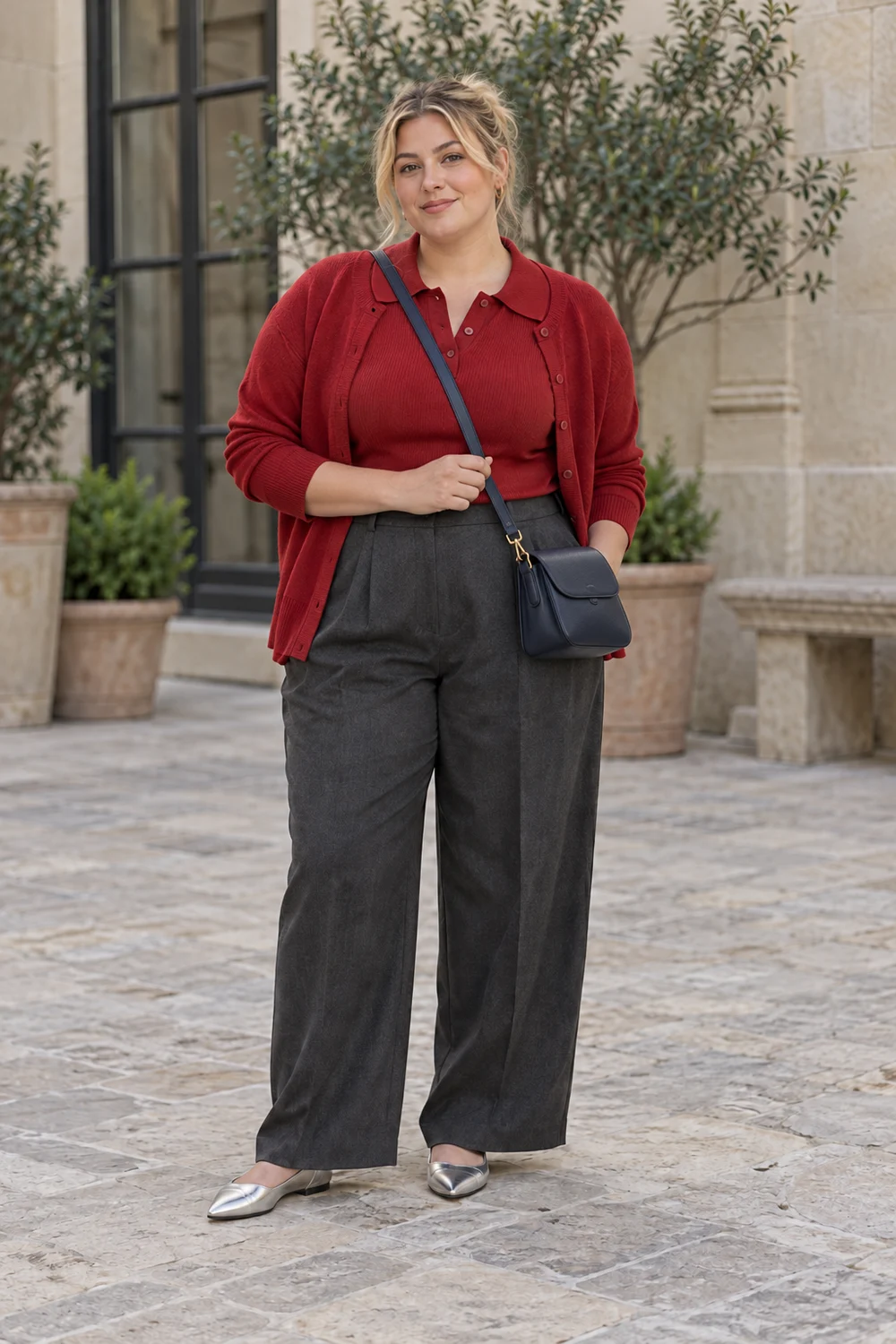
Give a red knit polo and charcoal pleats a clear shape, then choose silver flats or navy trainers without losing the trouser line.
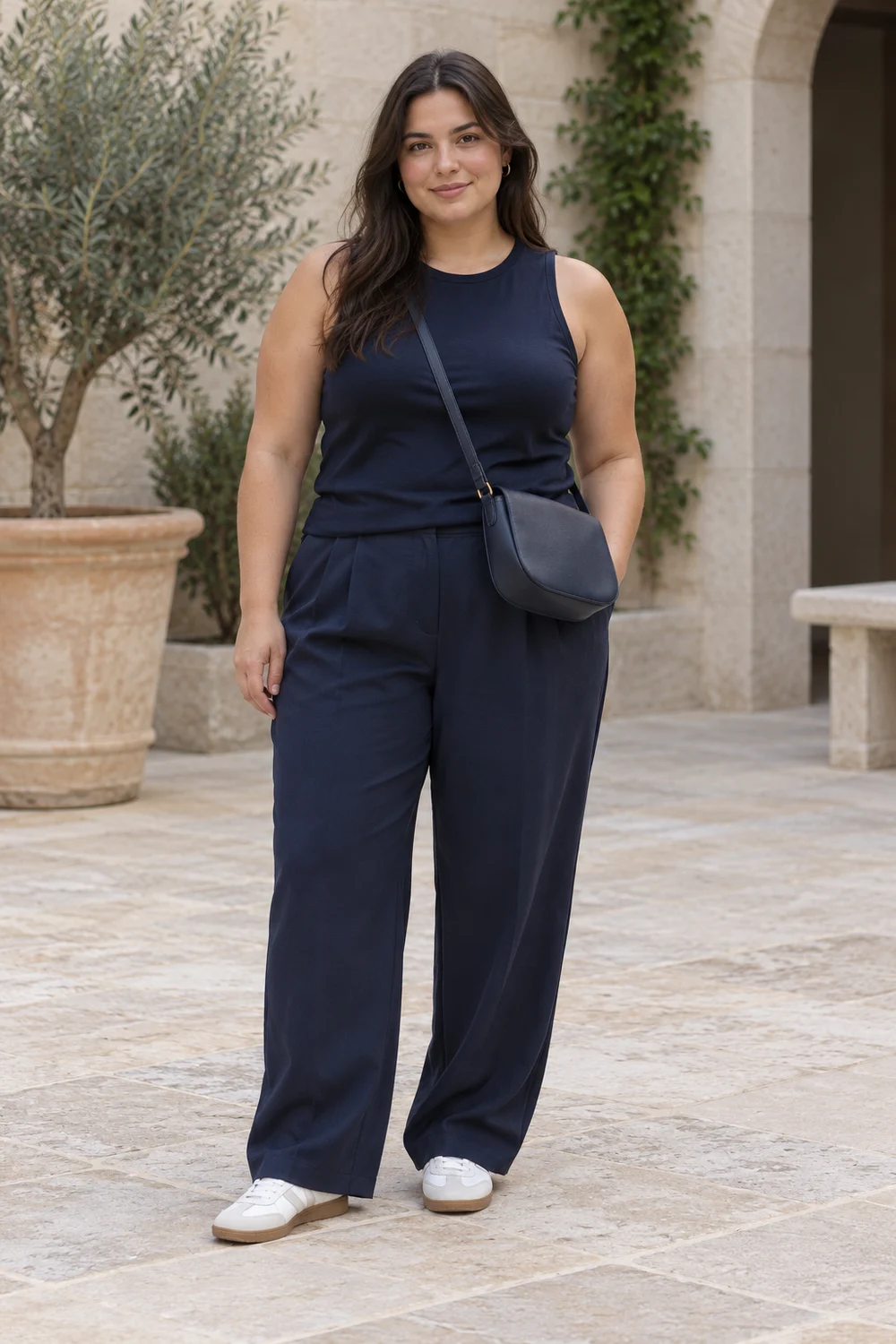
Let navy carry the main shape and cream mark the optional layer, with ballet flats or white trainers changing the lower contrast.
Choose between a burgundy loafer finish and a white trainer finish after checking how the lined bias skirt moves over your underlayers.
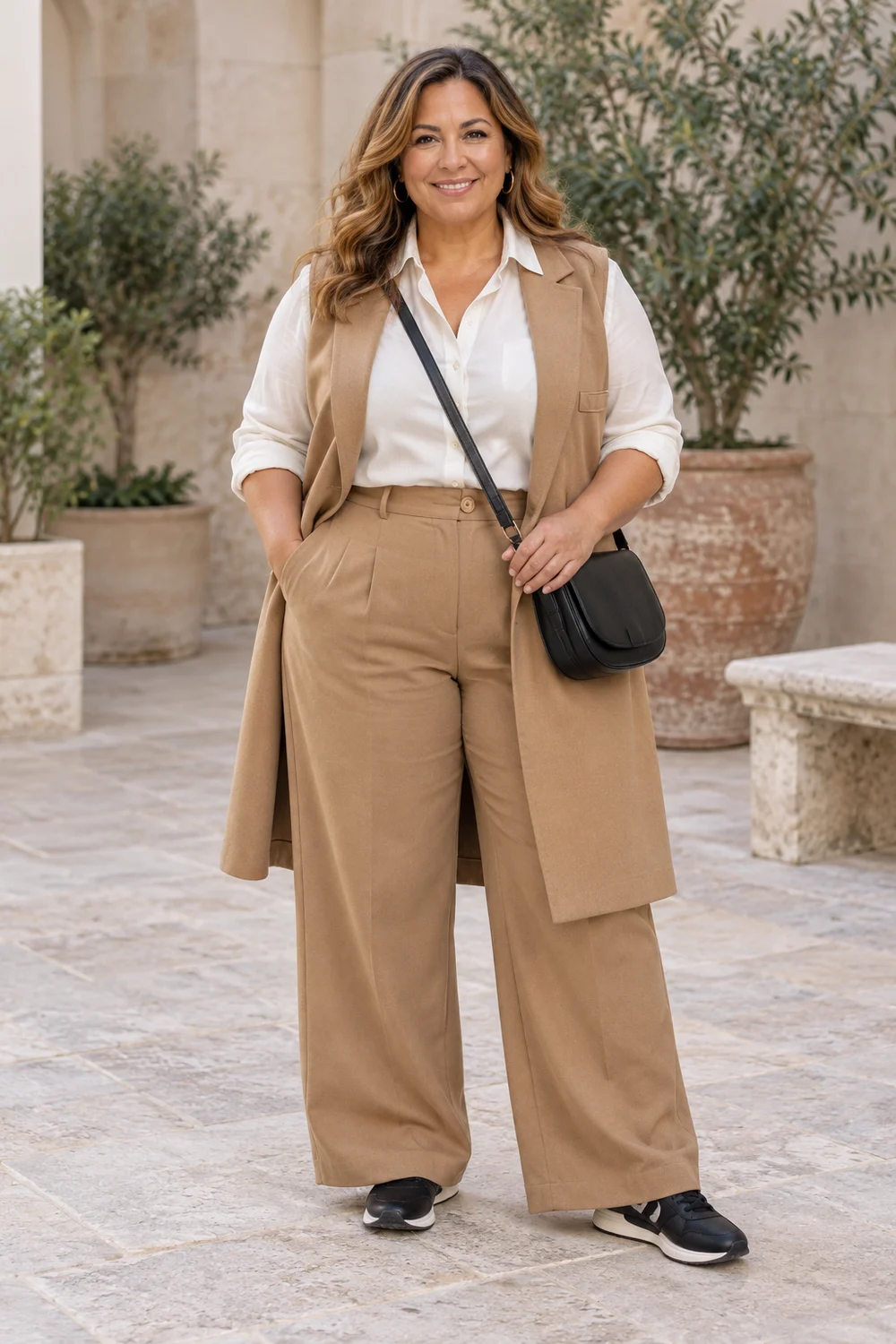
Use an ivory shirt to separate camel trousers from a long optional waistcoat, with black shoes anchoring either version.
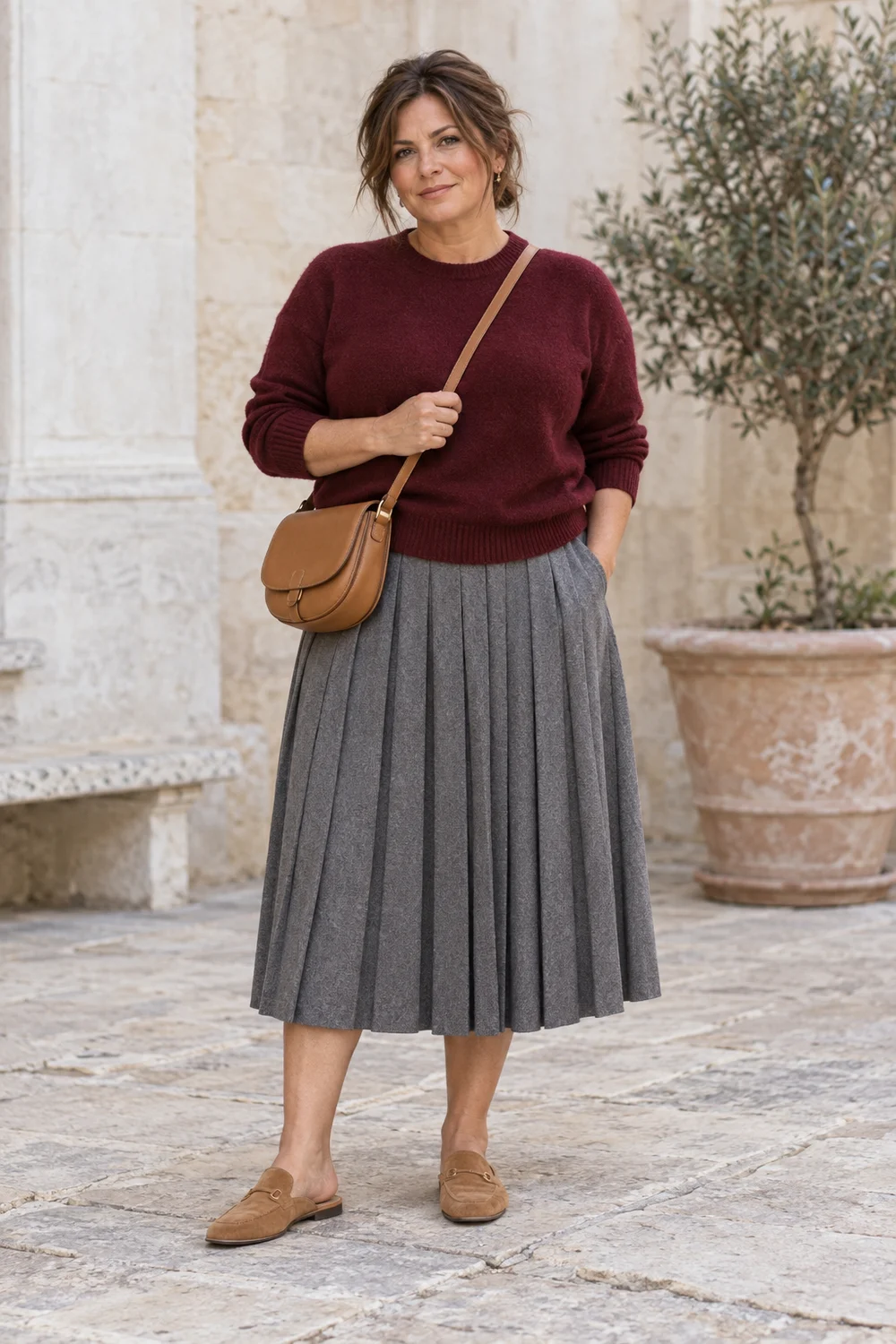
Prioritise the pleated skirt, fine burgundy knit and one secure shoe before adding a grey blazer or a second pair.
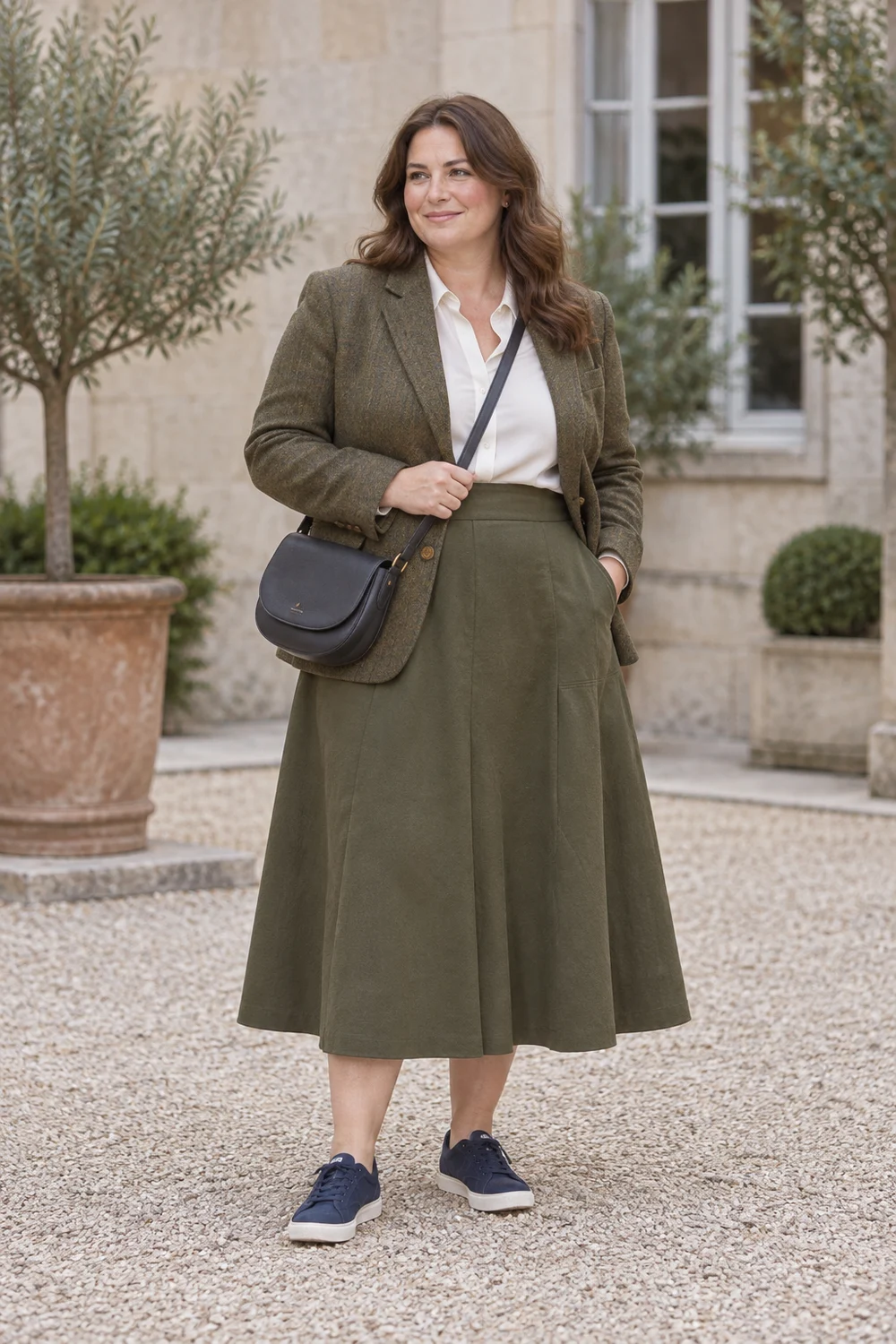
Separate a tweed sleeve problem from a blouse or skirt problem, then finish the olive outfit with silver flats or navy trainers.
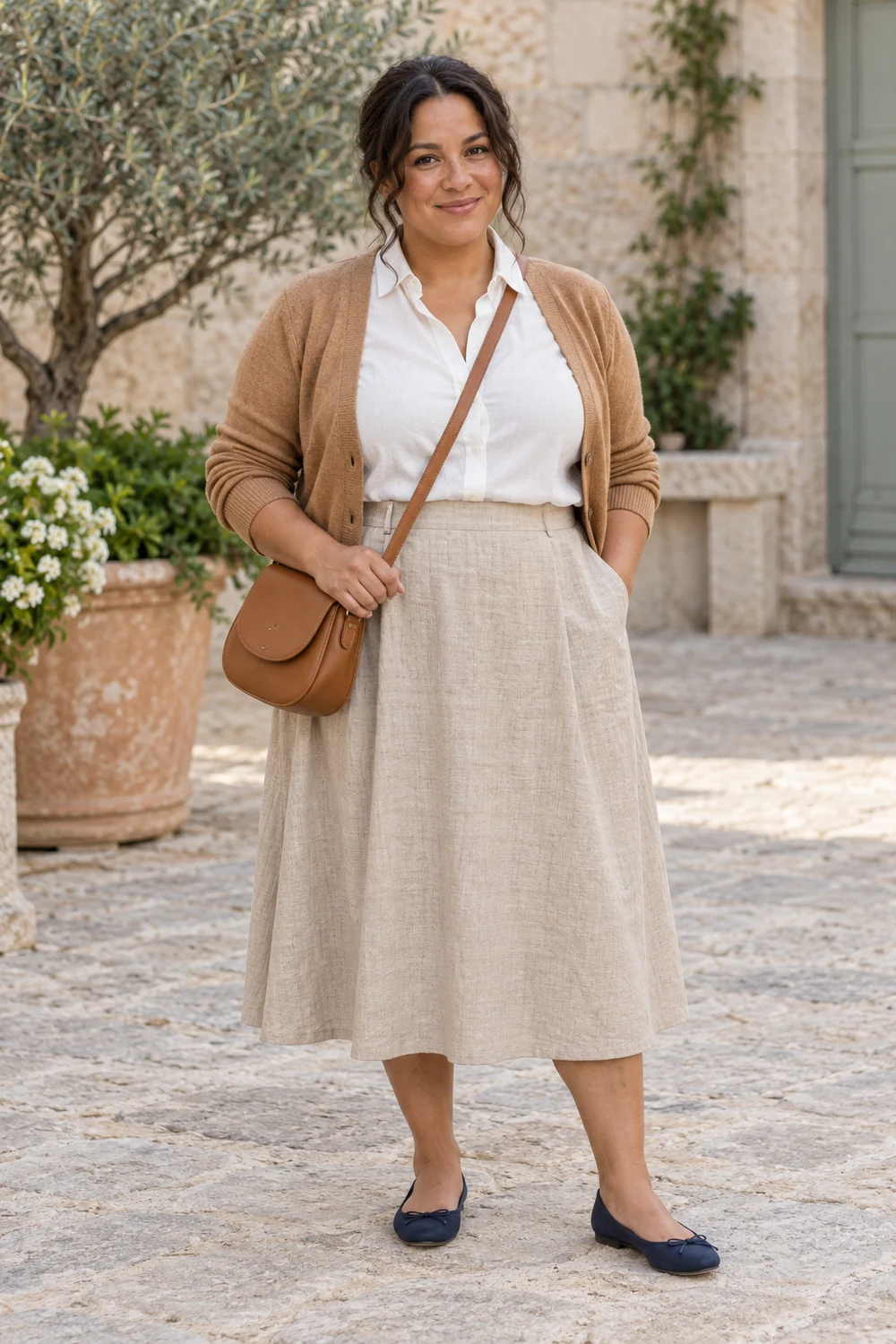
Practise one stable shirt hem with a sand linen skirt, then repeat the check with the cardigan and both shoe routes.
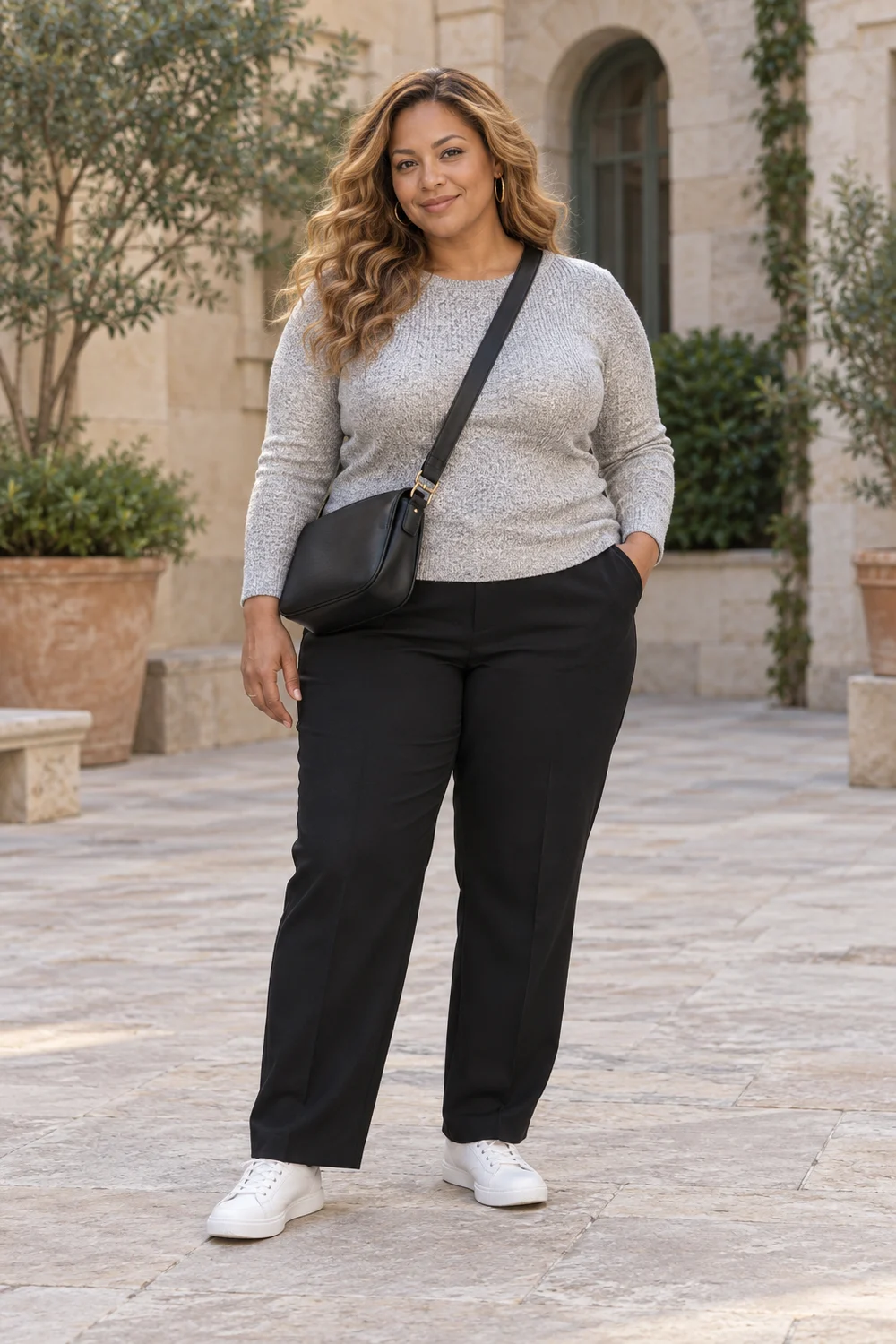
Keep silver to one knit top, ground it with black trousers and choose burgundy loafers or white trainers before adding the cropped jacket.
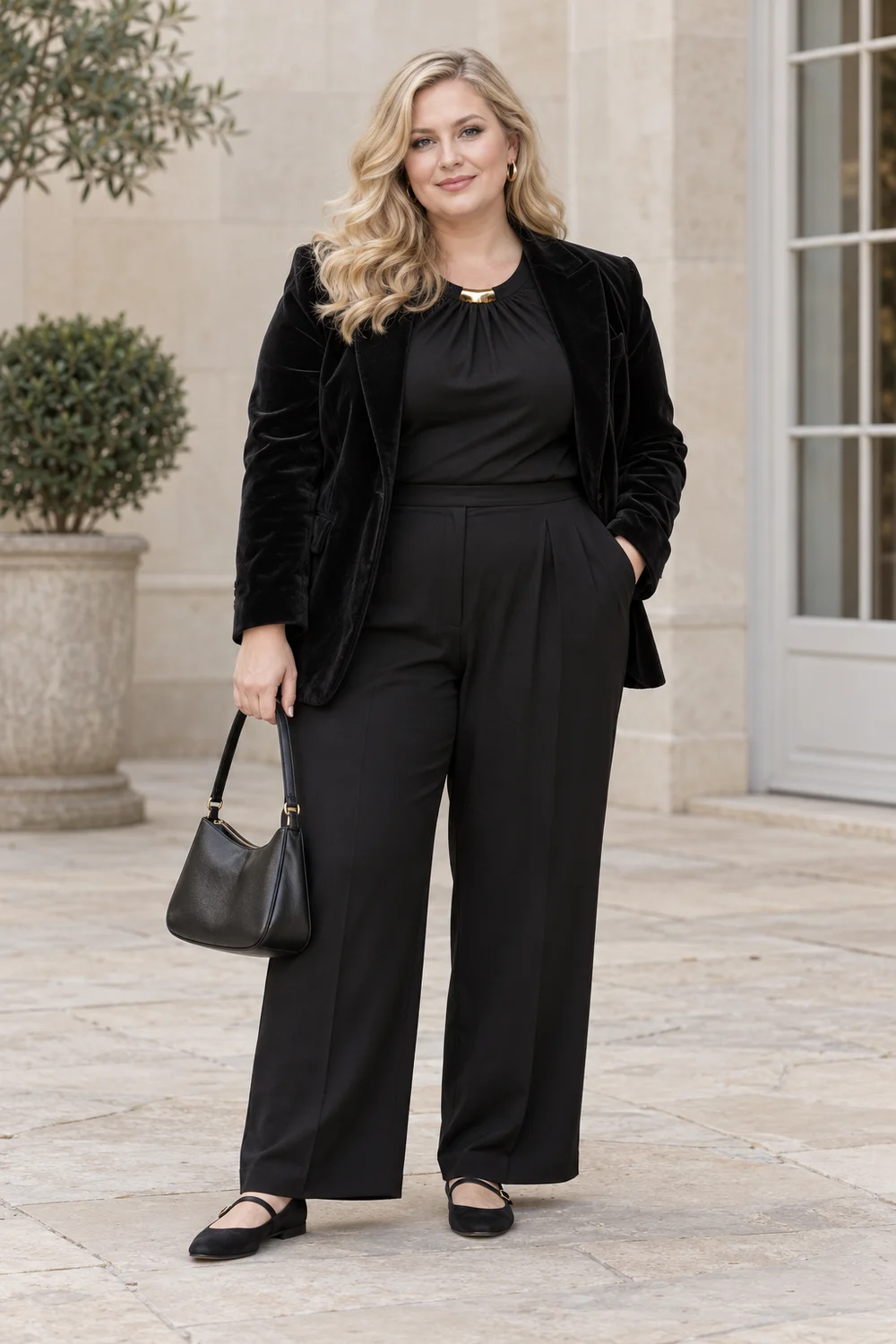
Build a comfortable black trouser outfit around one gold neckline detail, keeping the velvet jacket optional and the hem clear in both shoes.
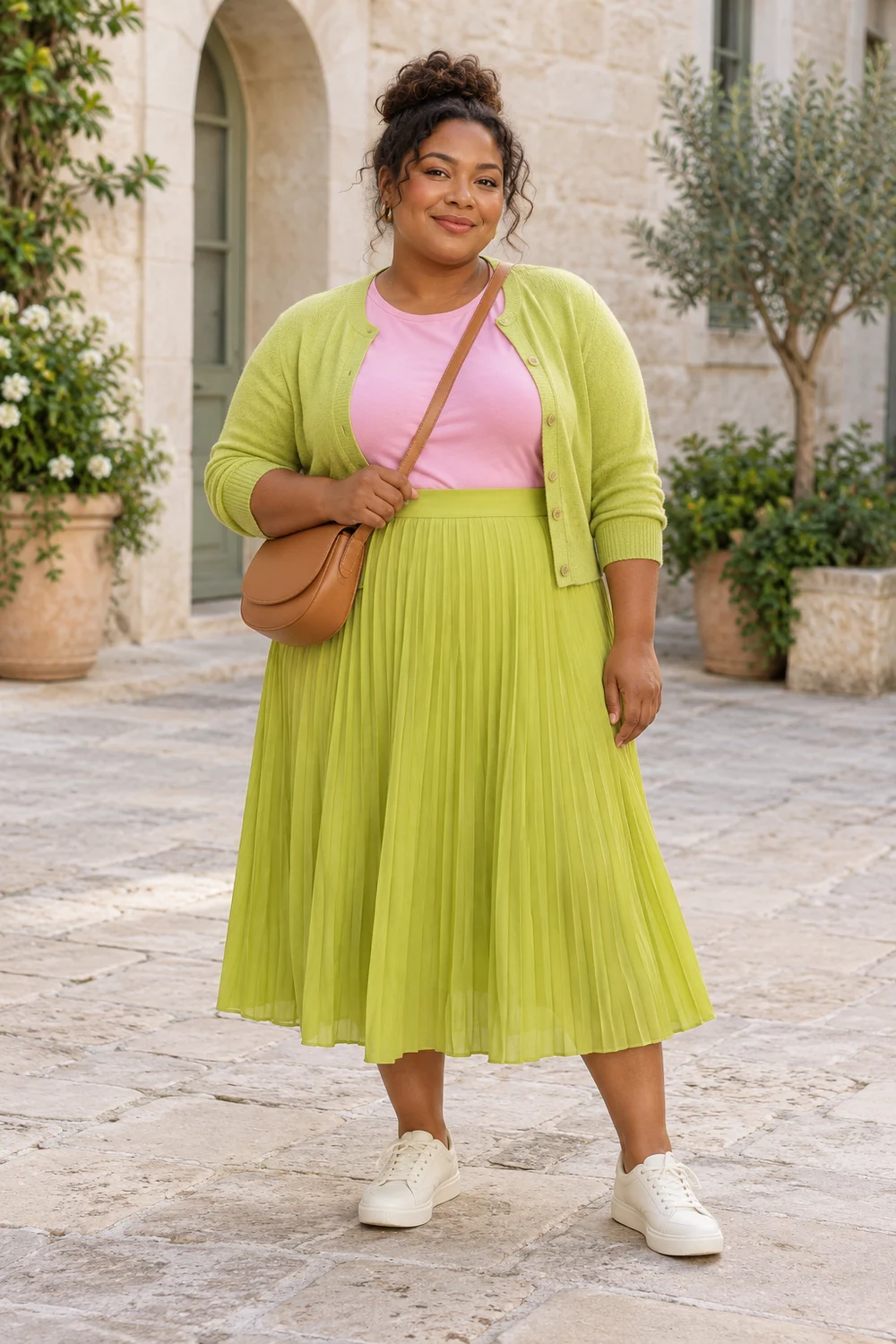
Use lime as the main colour and pink as its clear interruption, then choose tan mules or cream trainers to change the finish.
Choose the jumpsuit only after testing torso length, fastening access and both shoes; the rust shirt is a separate optional layer.
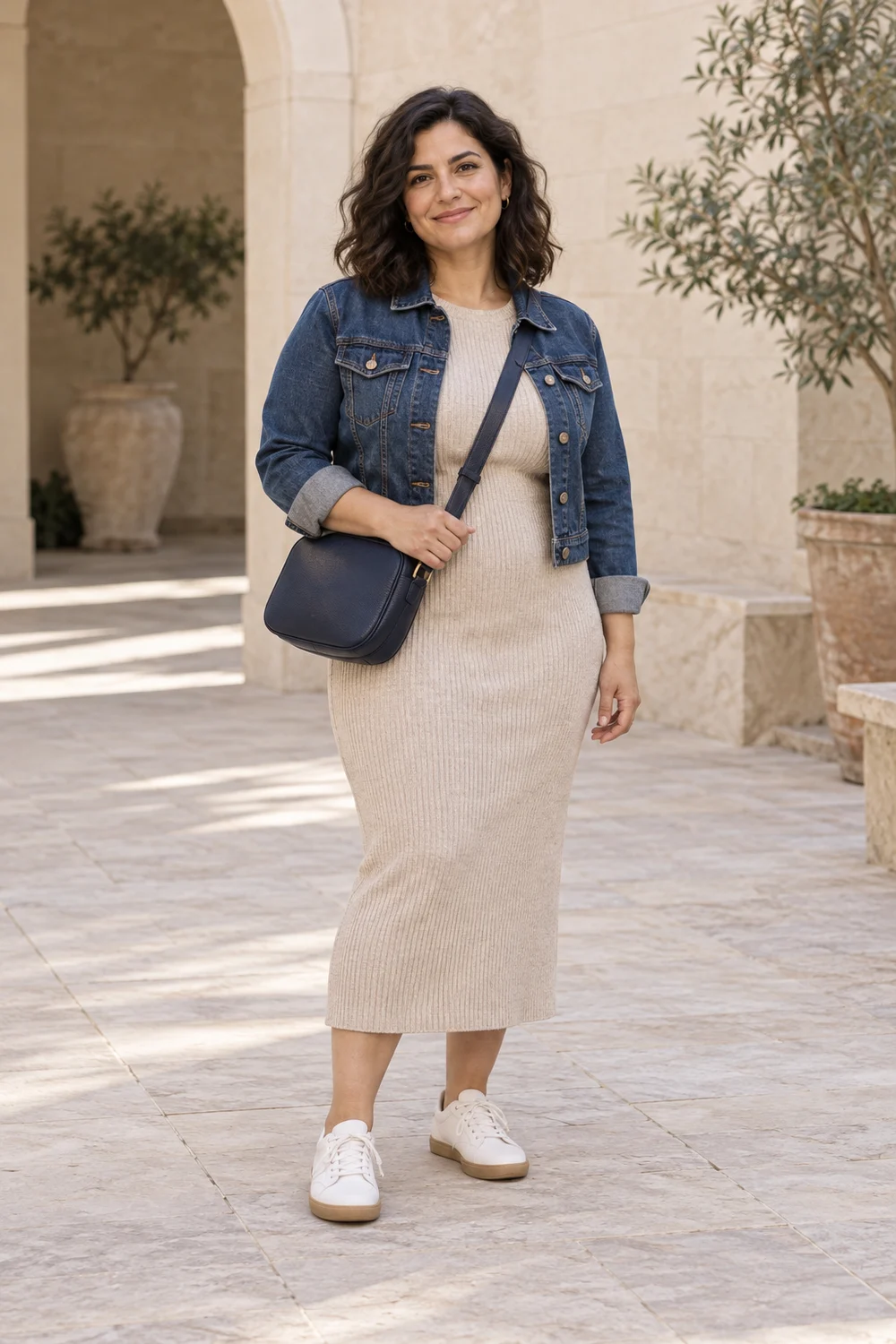
Let an oatmeal knit dress provide the complete base, with indigo denim and two shoe routes changing the weight around it.
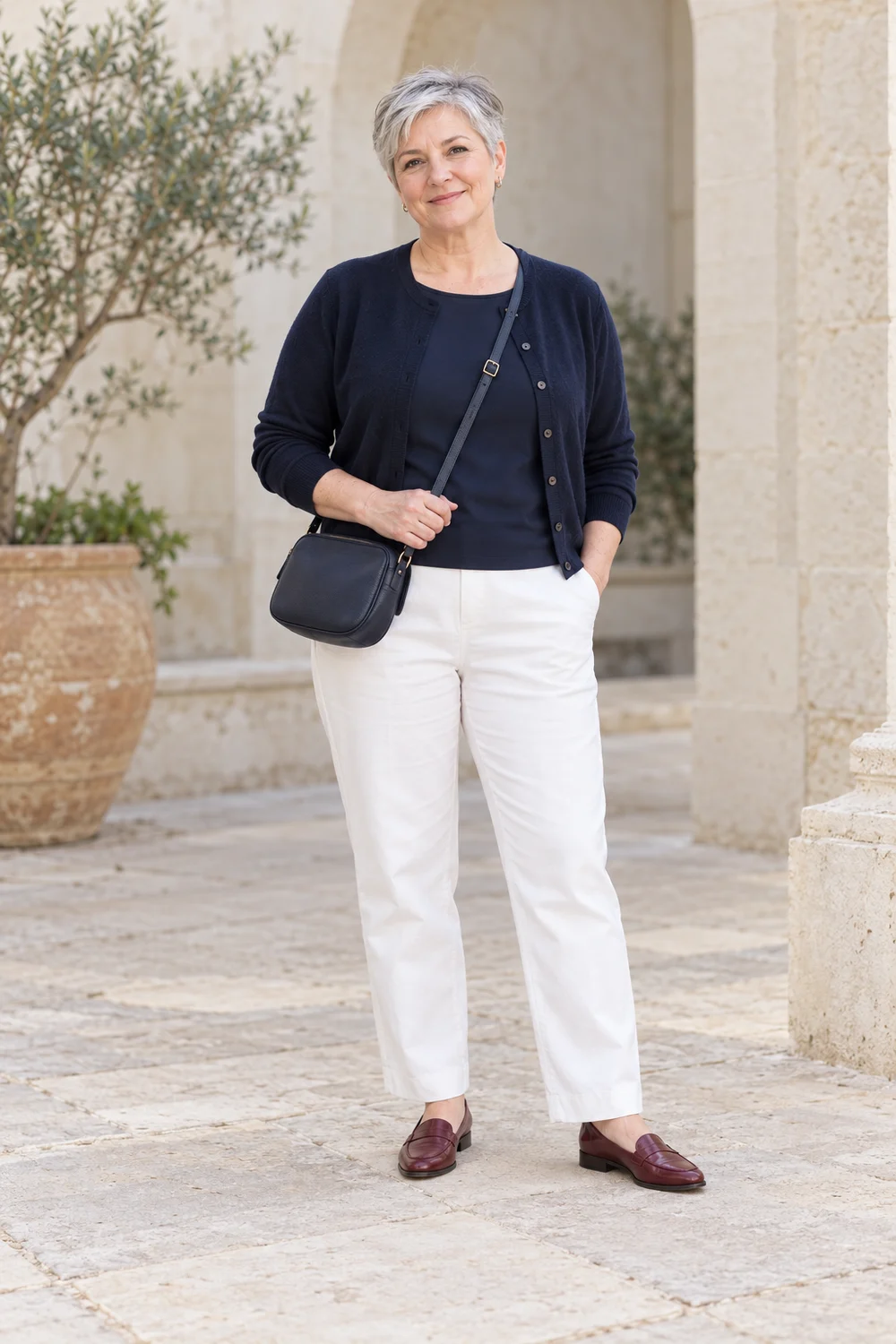
Make white-trouser opacity and seated fit the priorities, then use a navy shell, optional cardigan and one secure shoe route.
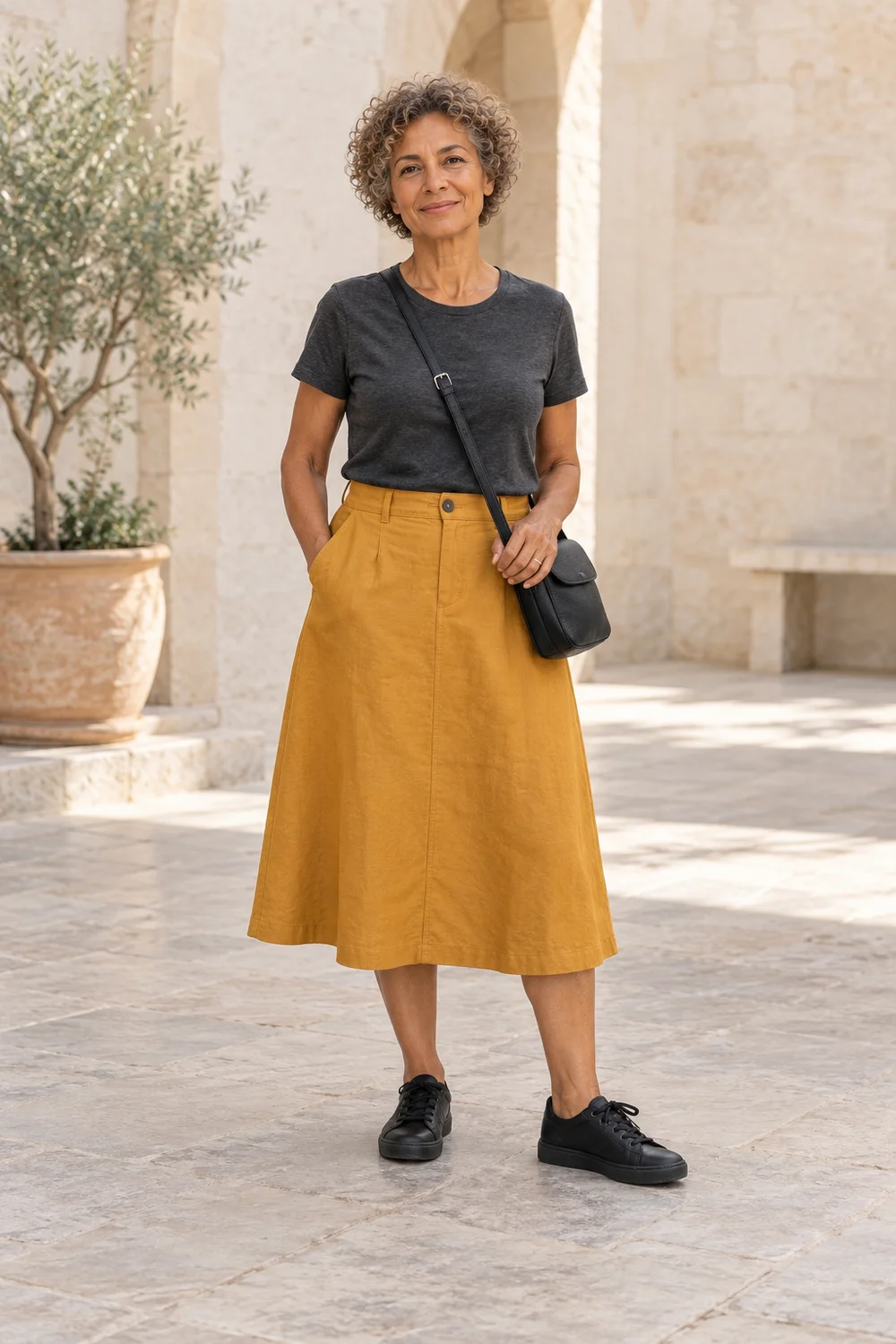
Fix the meeting point of a charcoal tee and saffron skirt before adding a collarless jacket or changing the shoe.
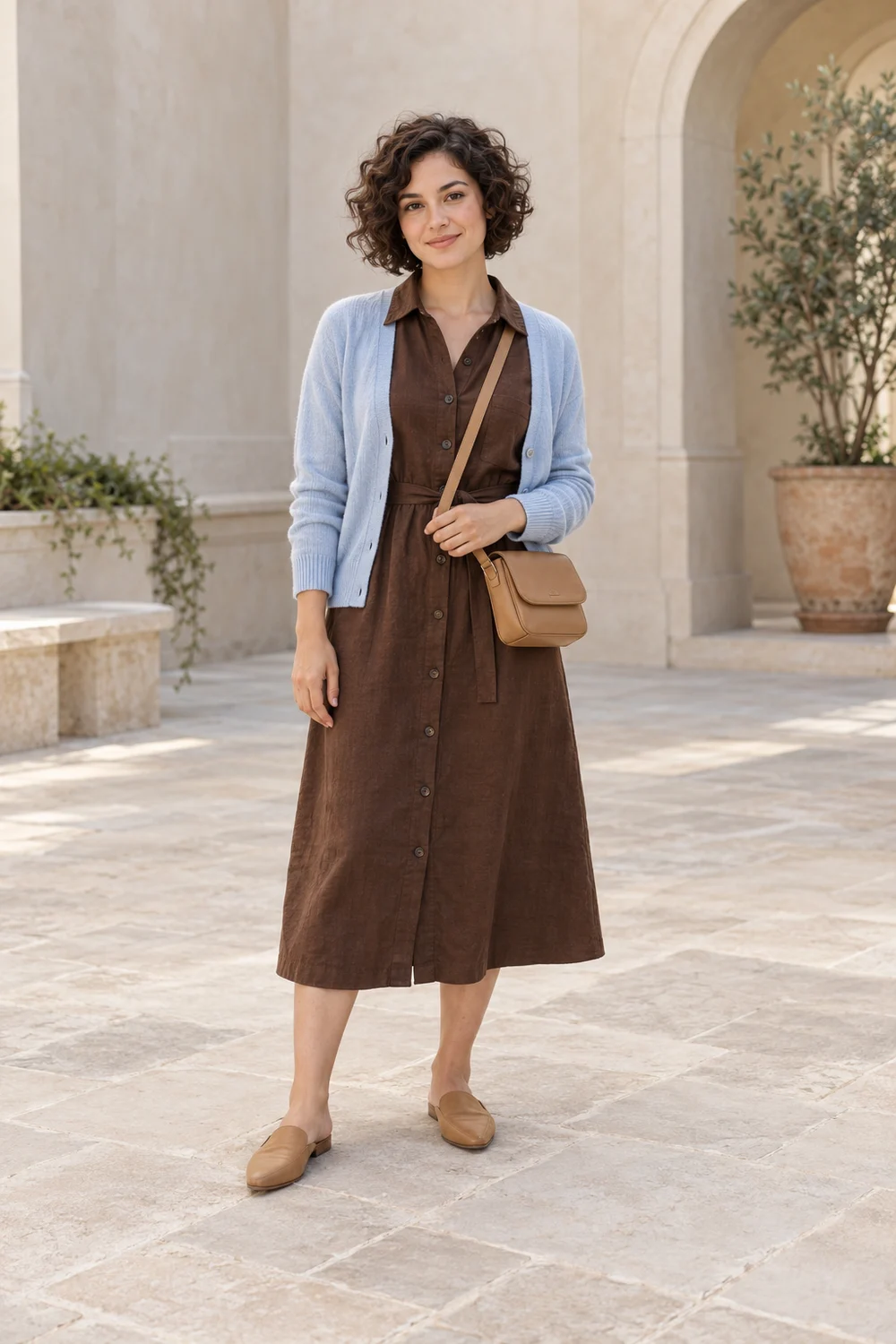
Rehearse a shirt dress through sitting, reaching and walking before deciding whether to add the pale-blue cardigan or switch shoes.
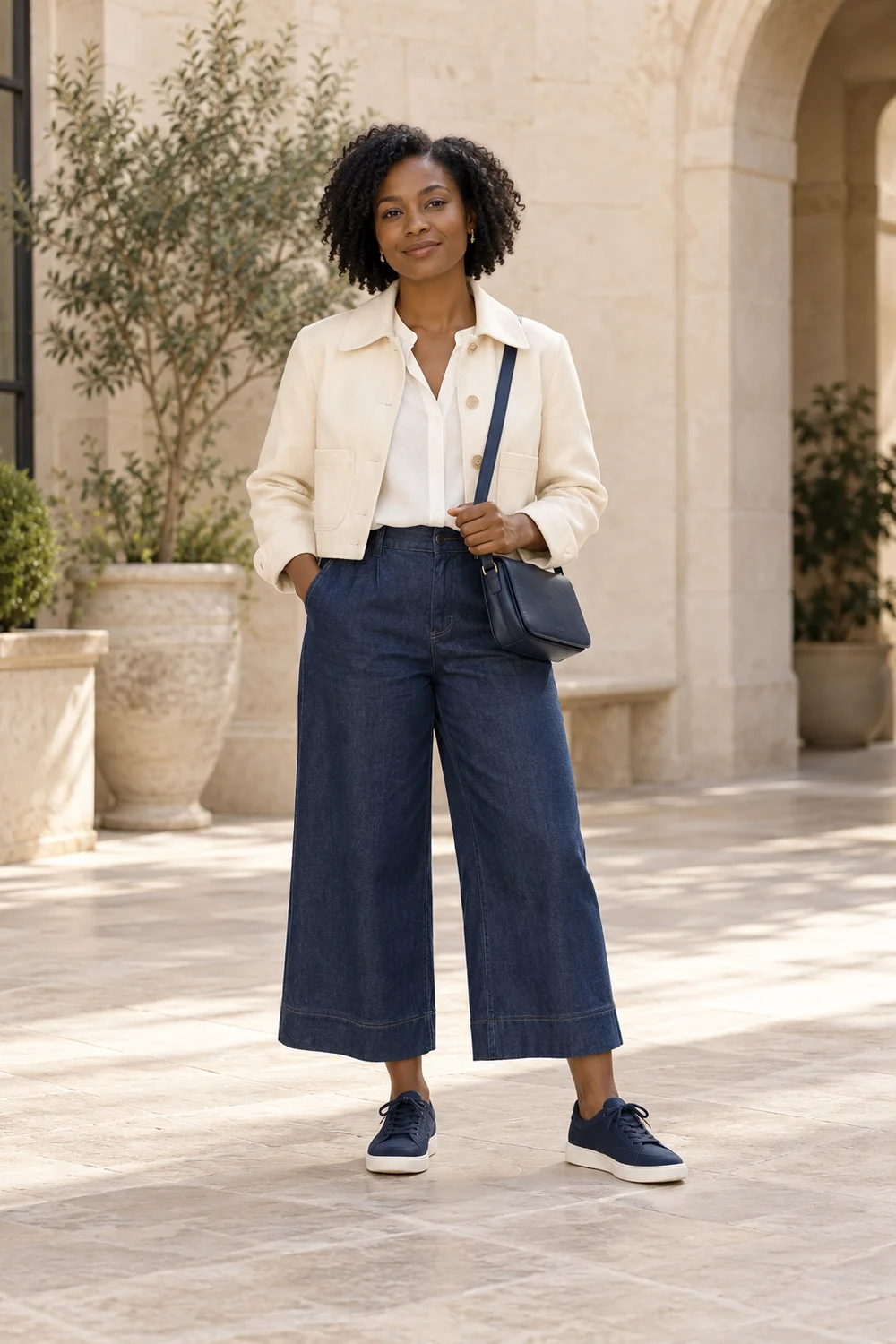
Choose culotte length with the actual shoe collar in view, then keep cream on the blouse and optional short jacket.
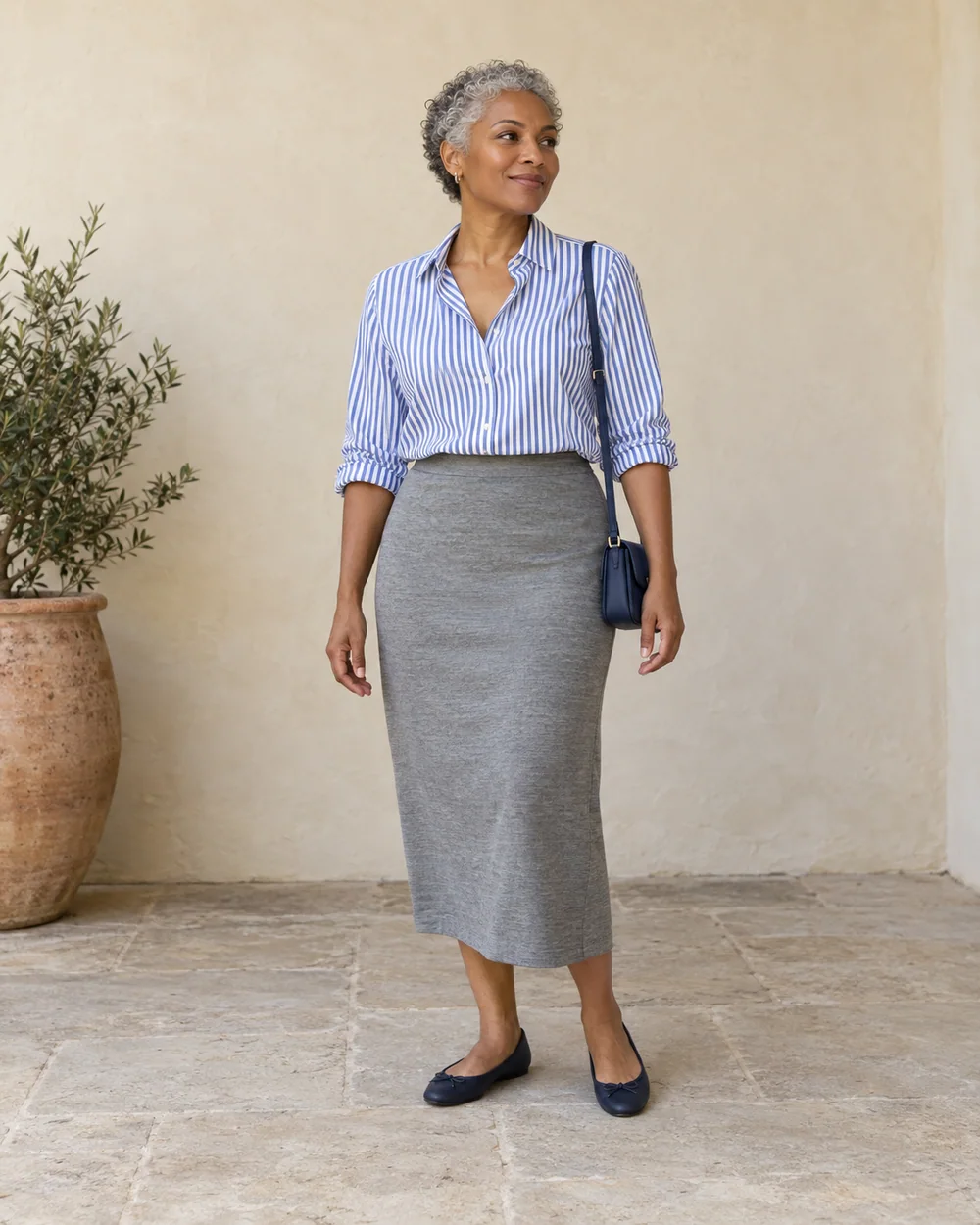
A striped shirt, grey jersey midi skirt and navy flats make the light version; a knitted jacket and trainers offer two deliberate changes.
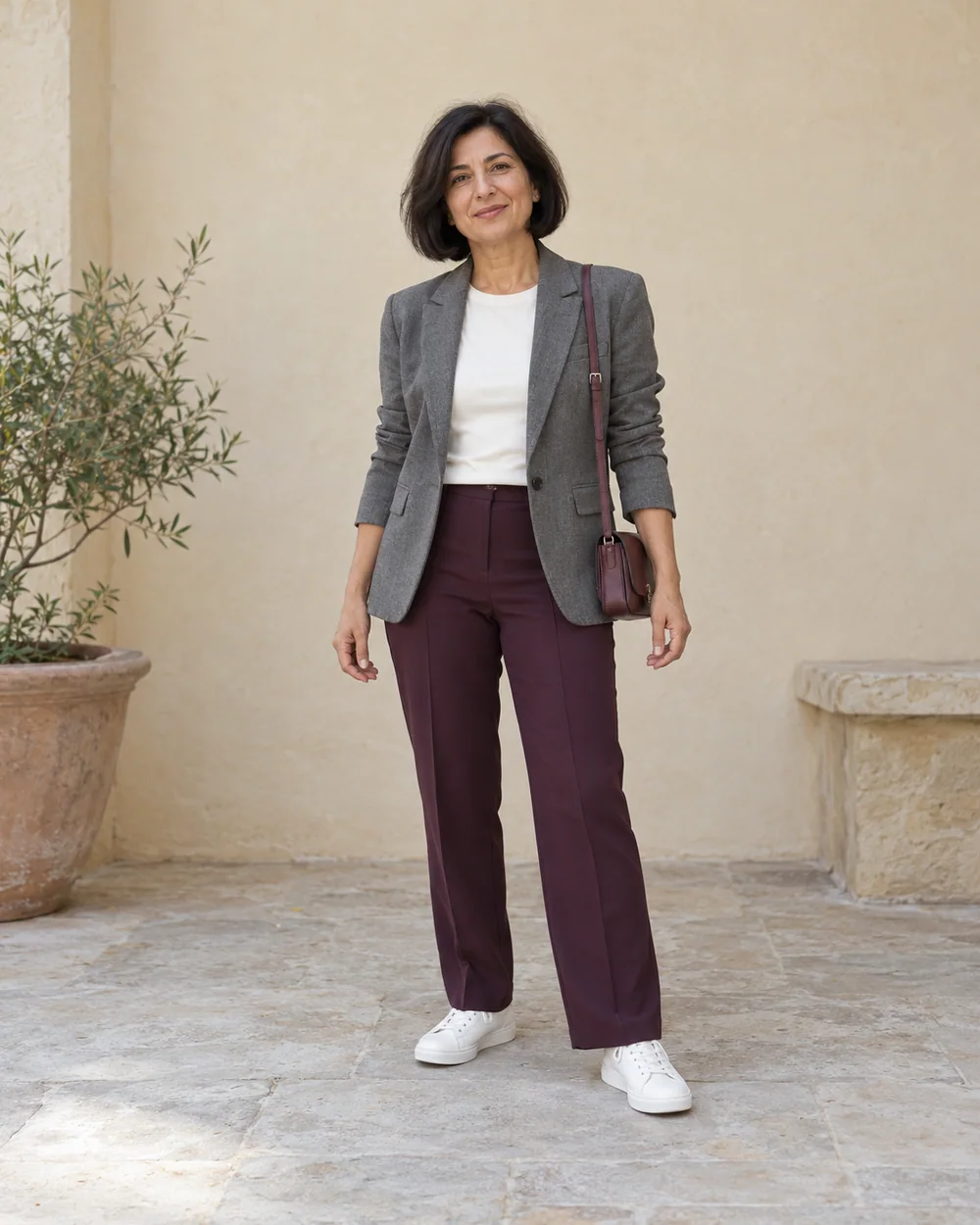
Plum trousers carry the colour, while ivory, grey and two shoe routes change how the outfit reads.
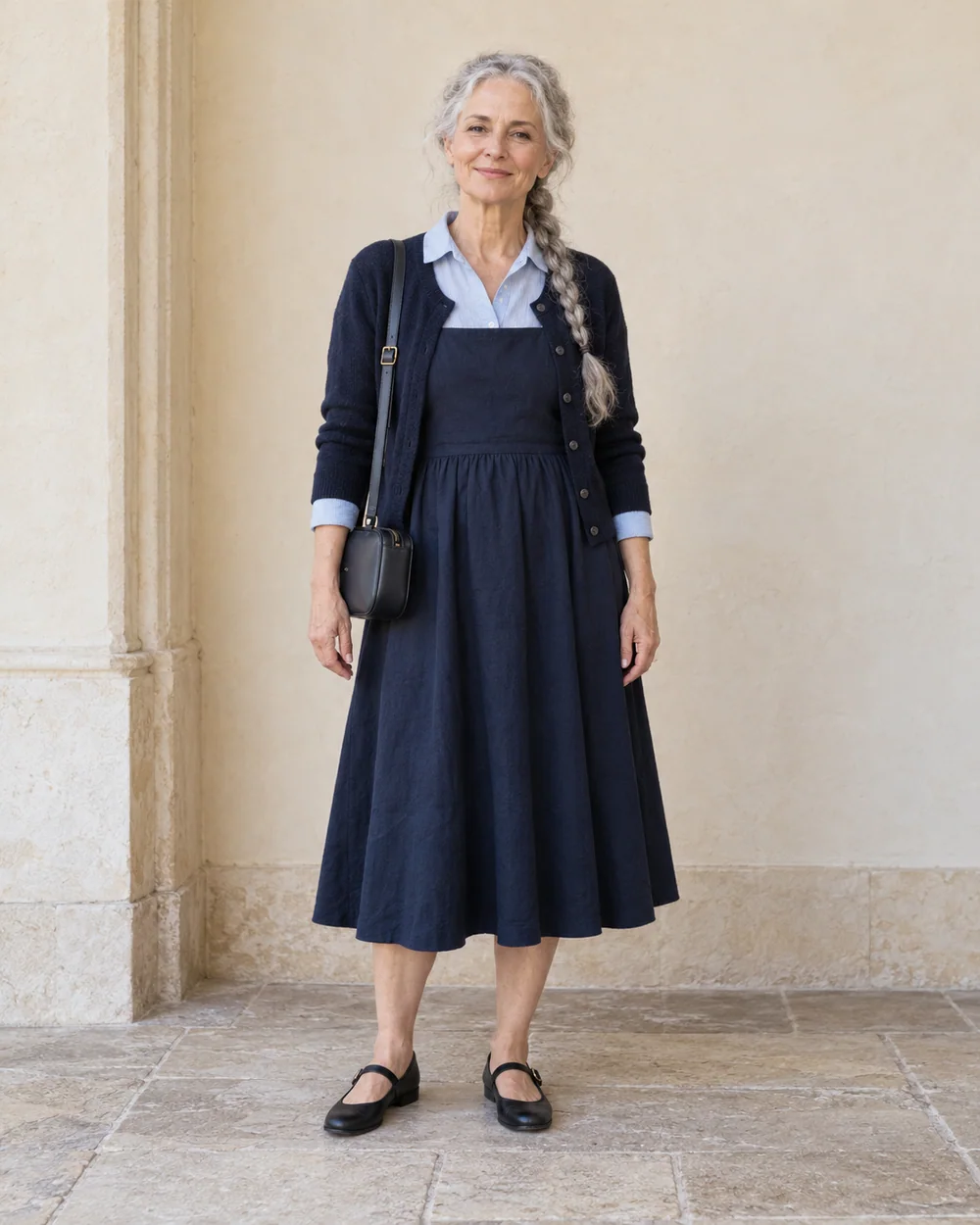
Choose a light pinafore-and-shirt outfit or add the short navy cardigan, then compare Mary Janes with low trainers.
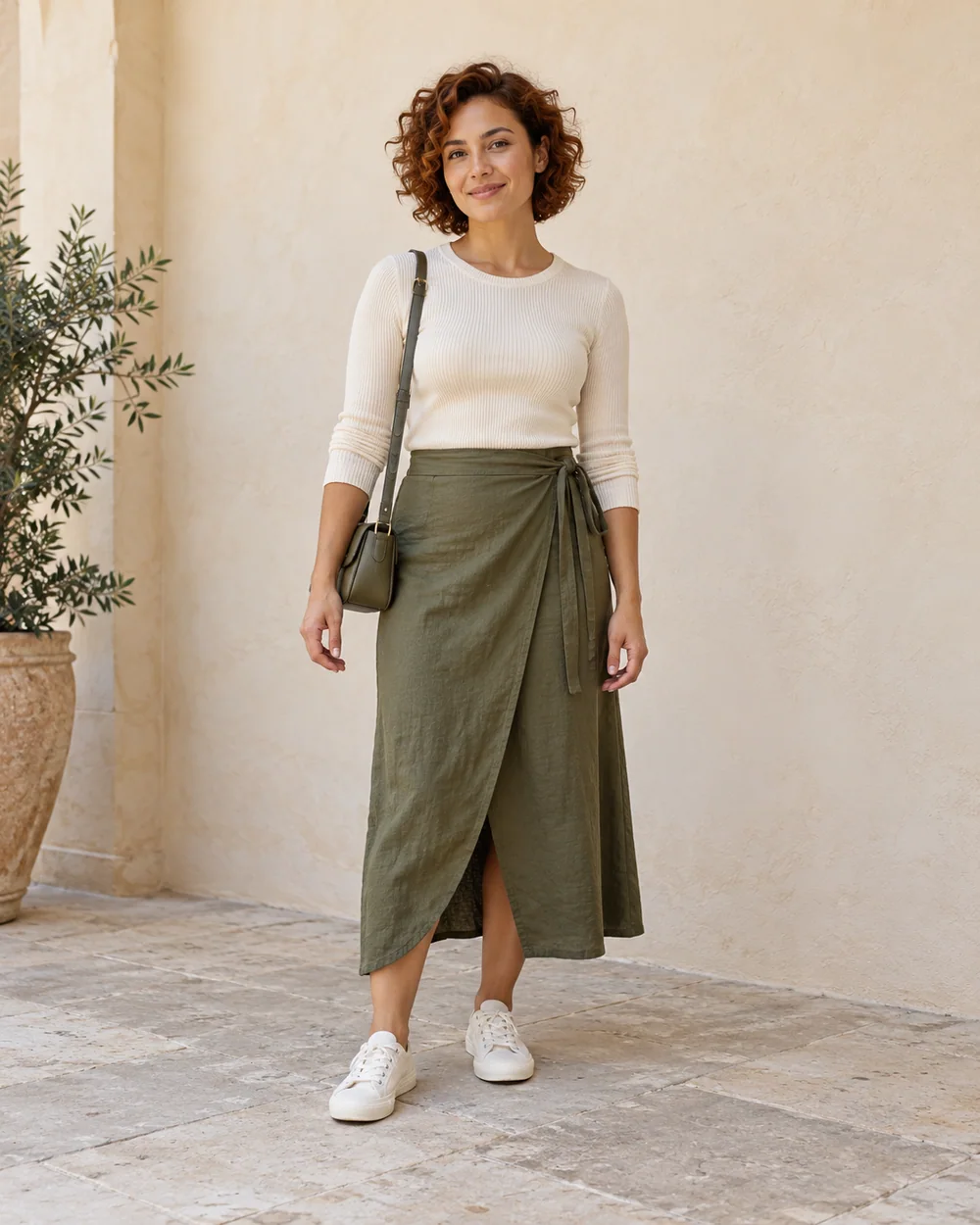
Olive and cream keep a wrap skirt expressive, with overlap and footwear checked as carefully as colour.
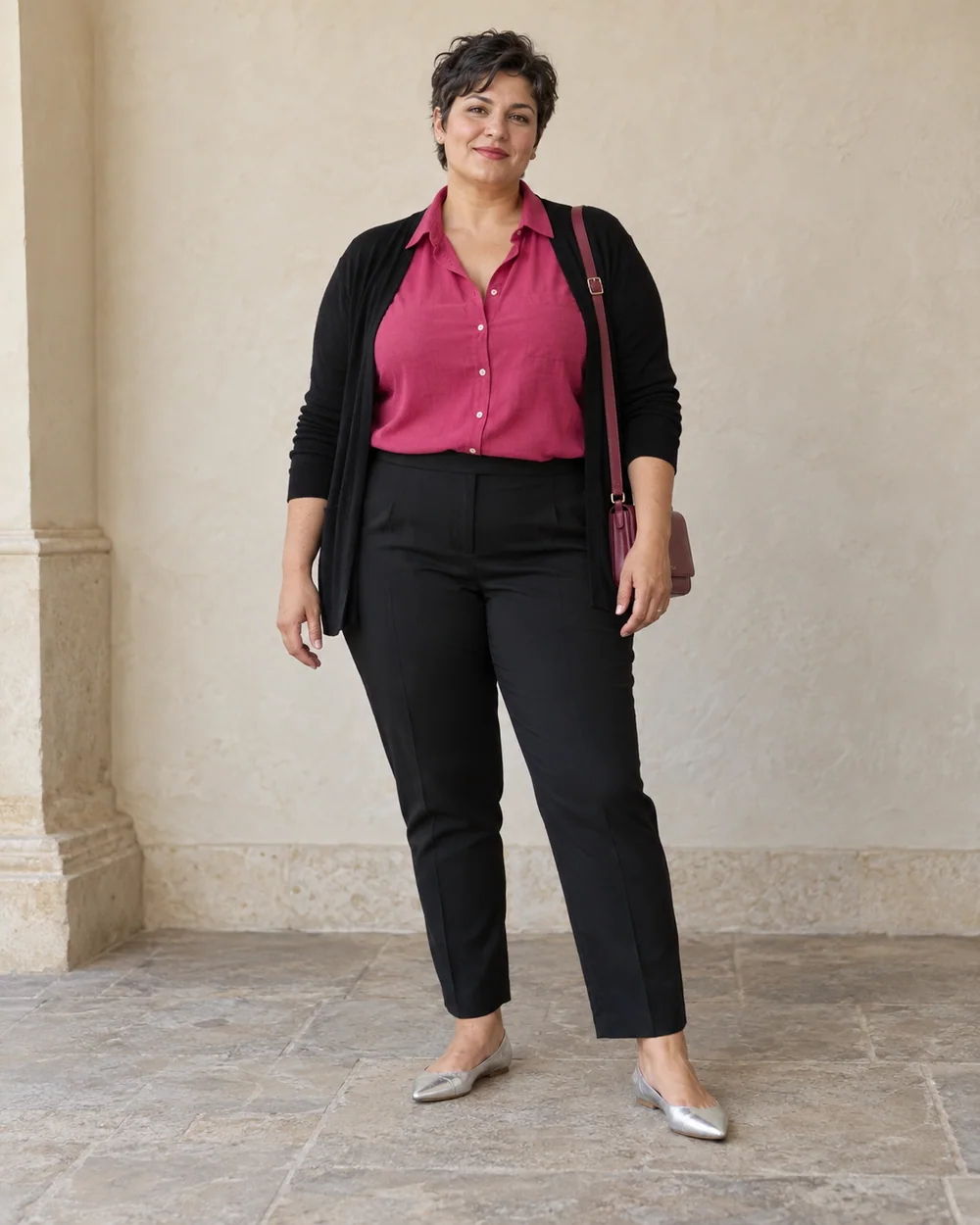
A raspberry shirt earns the colour job; black trousers, one useful cardigan and two shoe routes keep the kit focused.
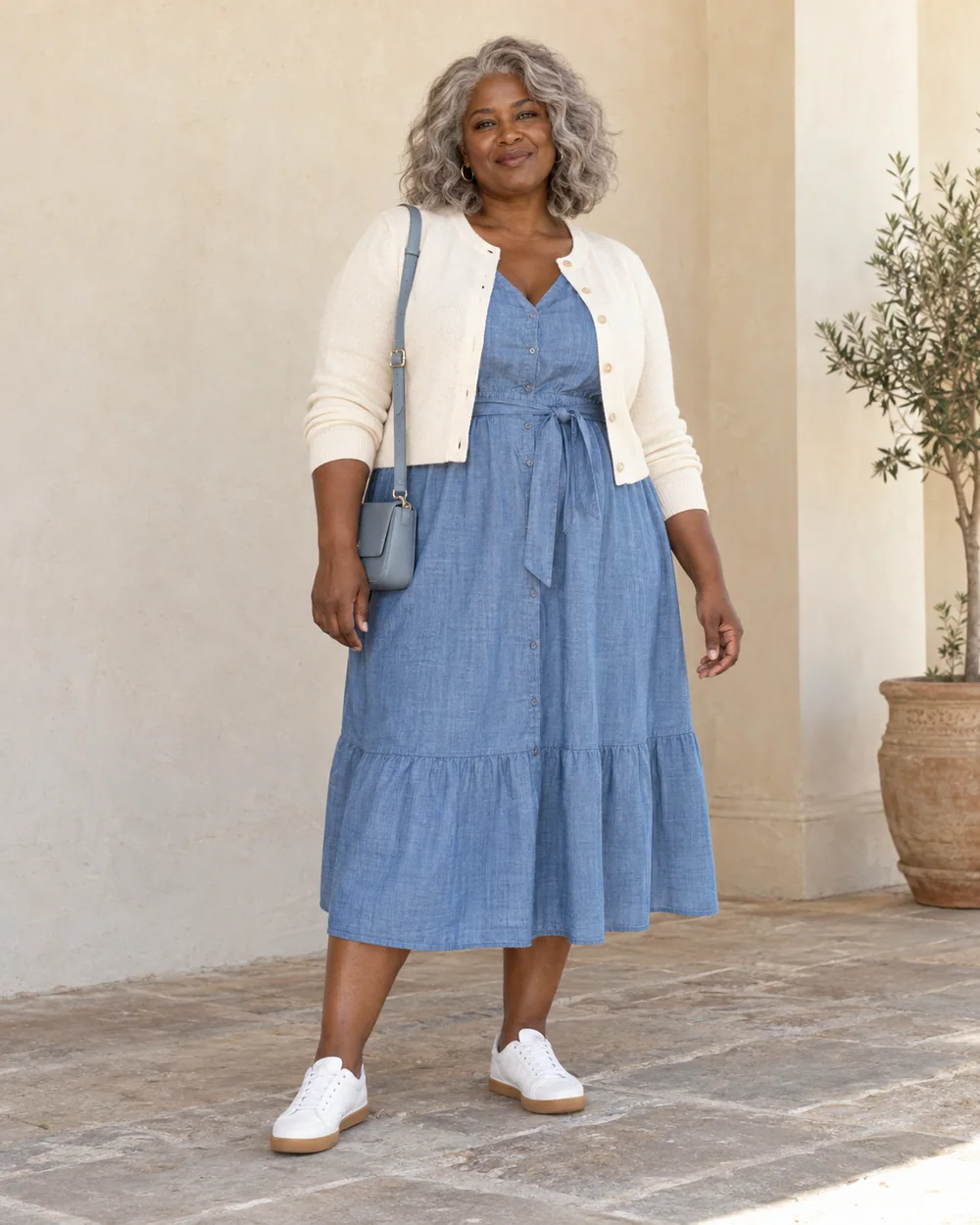
If a chambray dress pulls or a cropped cardigan bunches, fix the specific garment relationship before changing the whole outfit.
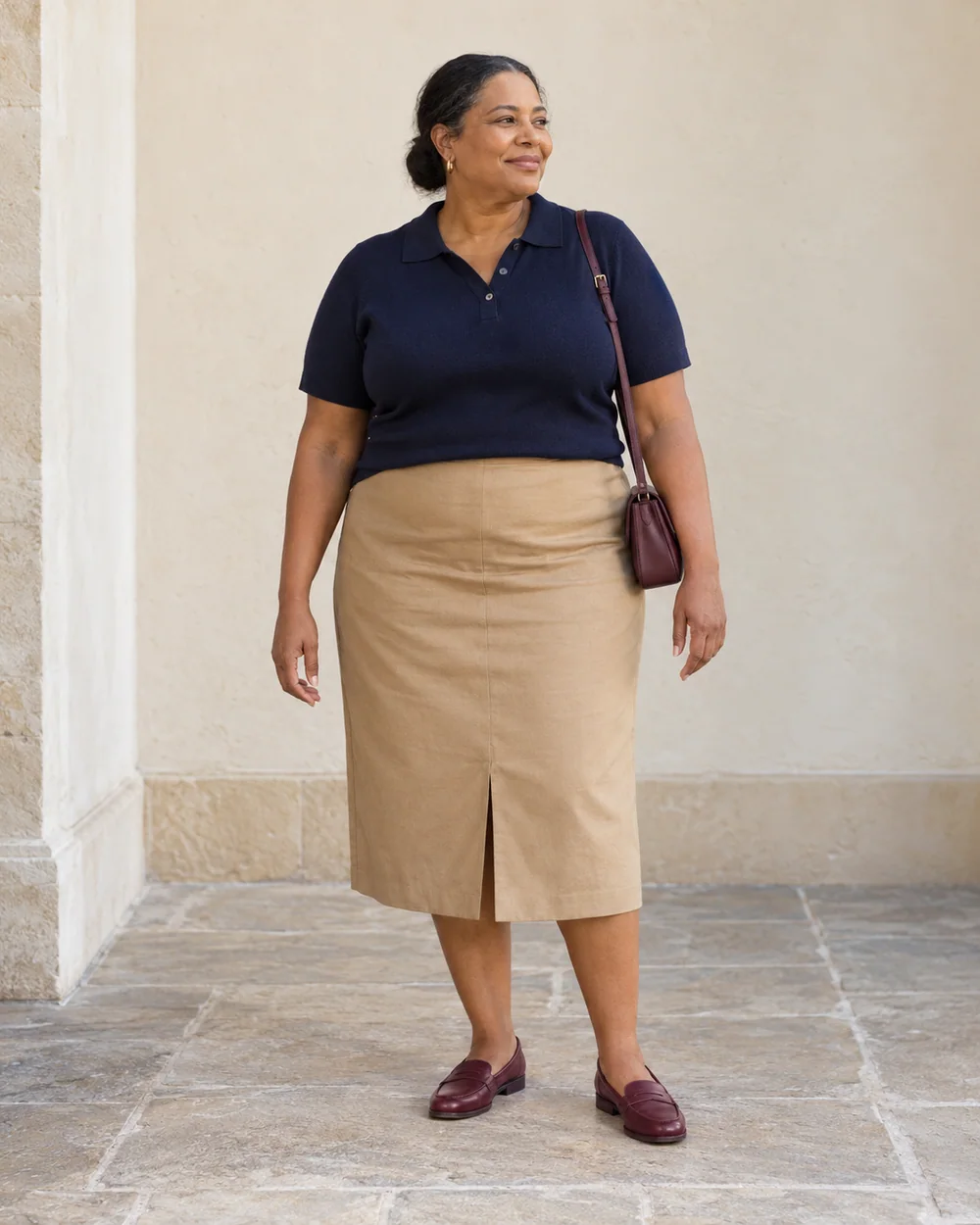
Practise the skirt's walking vent and the polo's waistband relationship before choosing loafers or trainers.
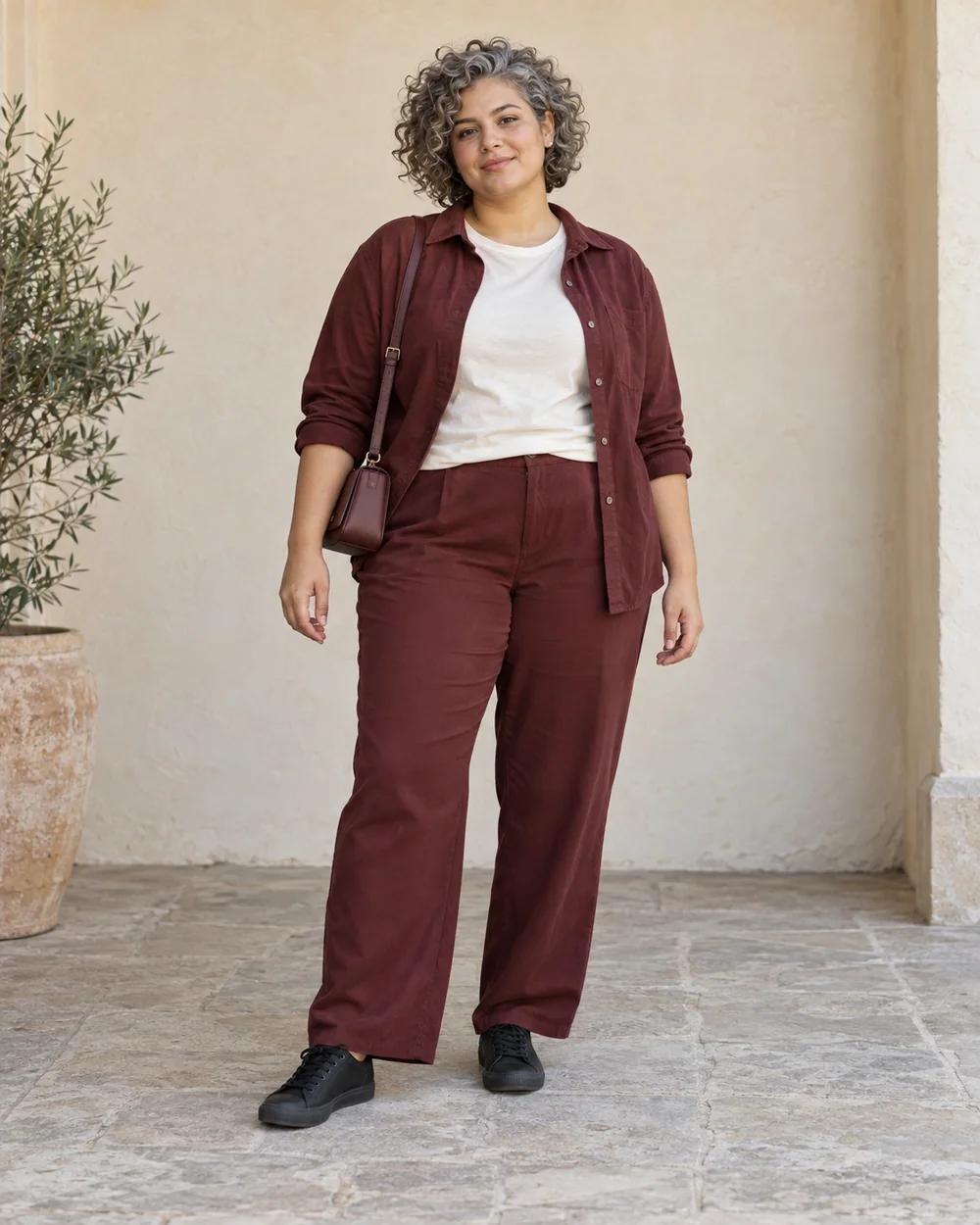
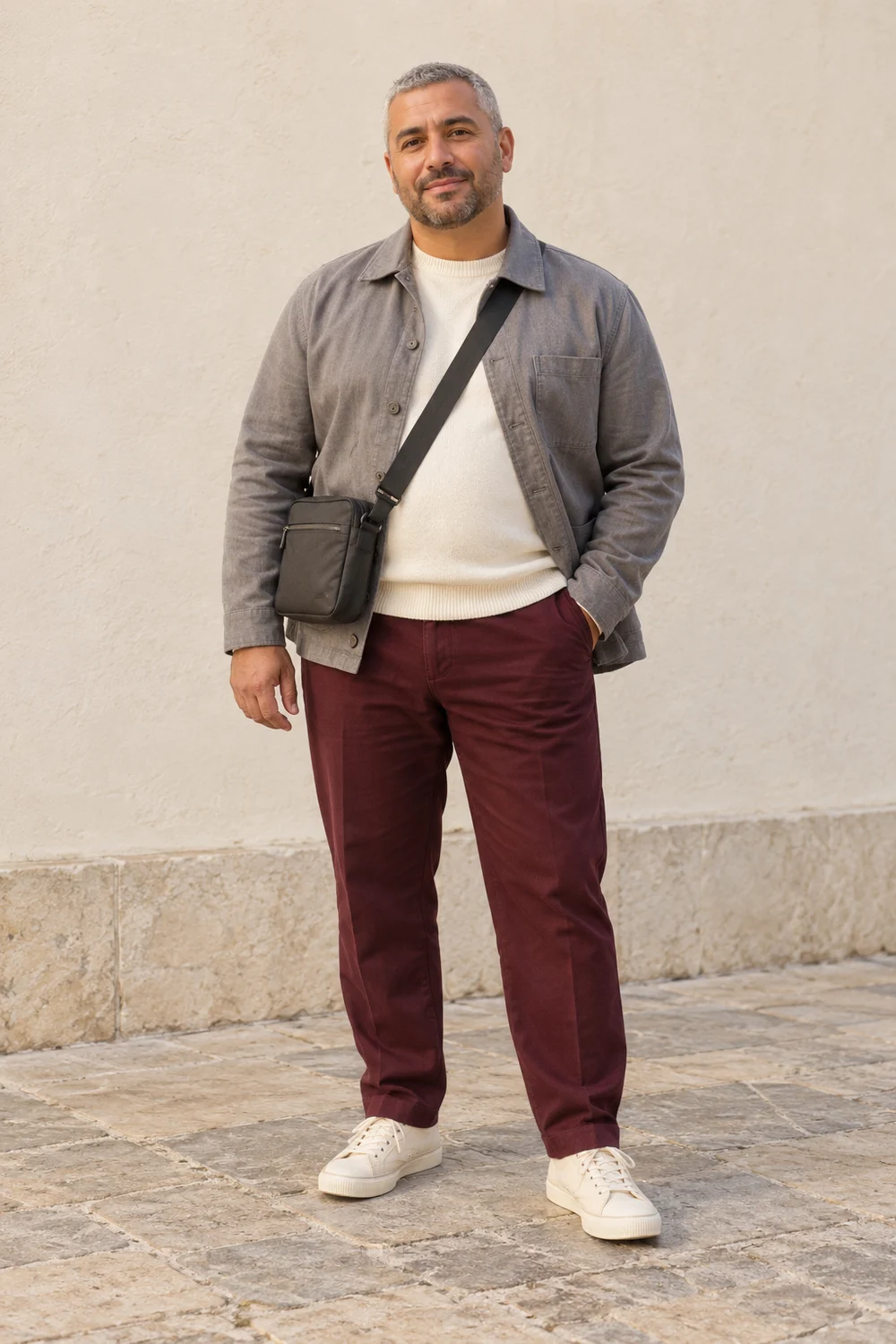
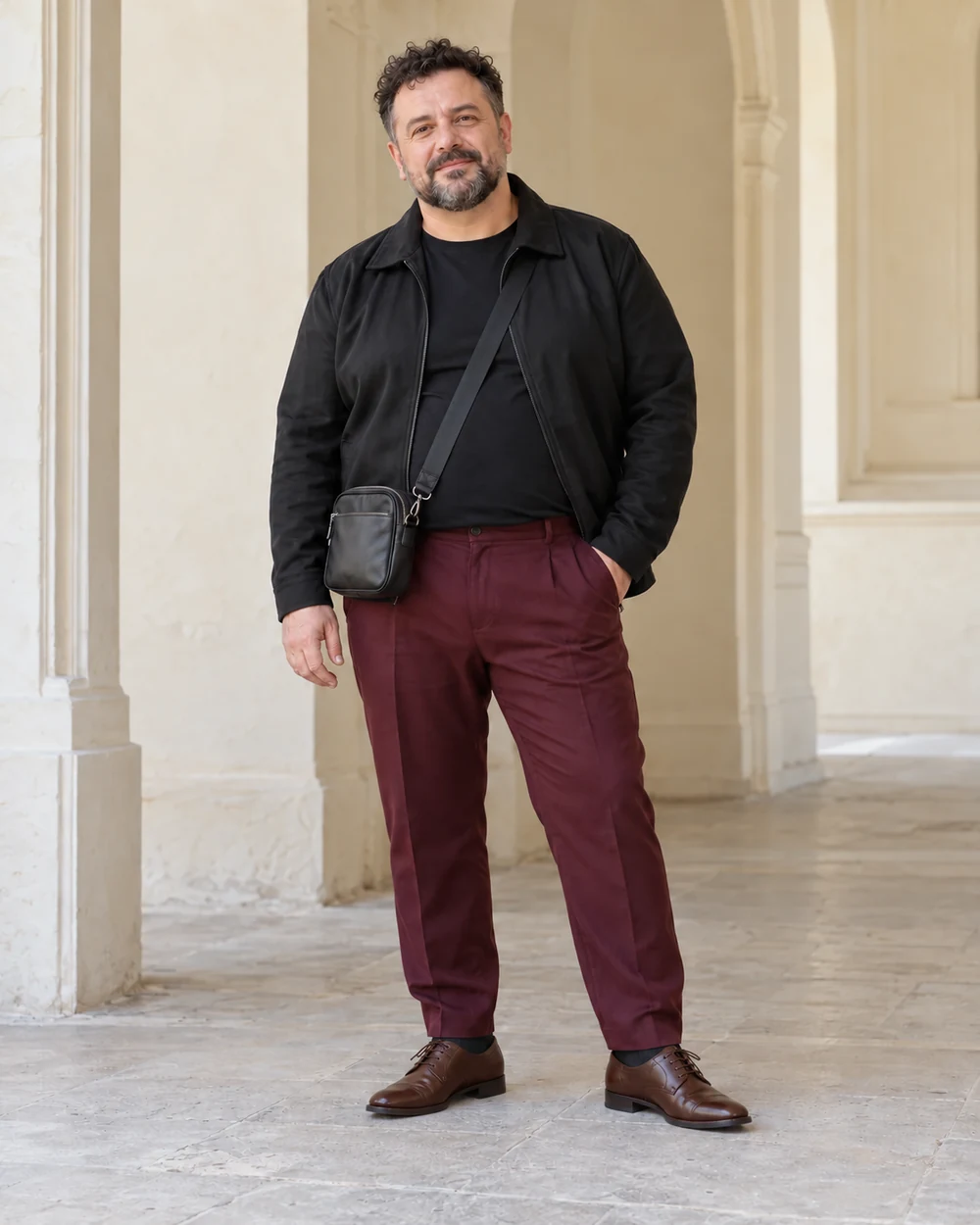
Pair burgundy trousers with an ivory tee, then use the matching overshirt only when you want the layer.
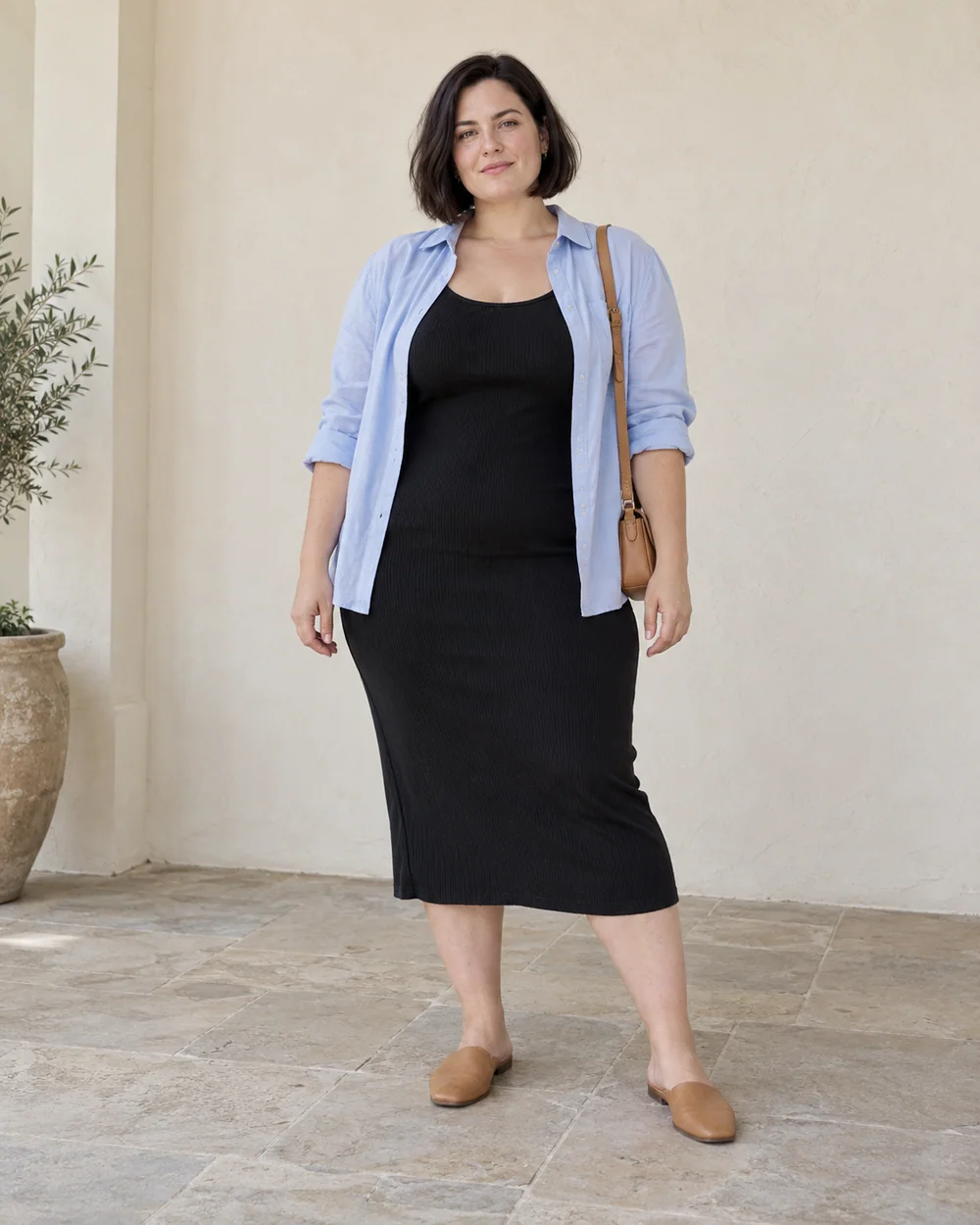
A black knit dress anchors the outfit; a pale-blue open shirt and either mules or trainers give it different daily uses.
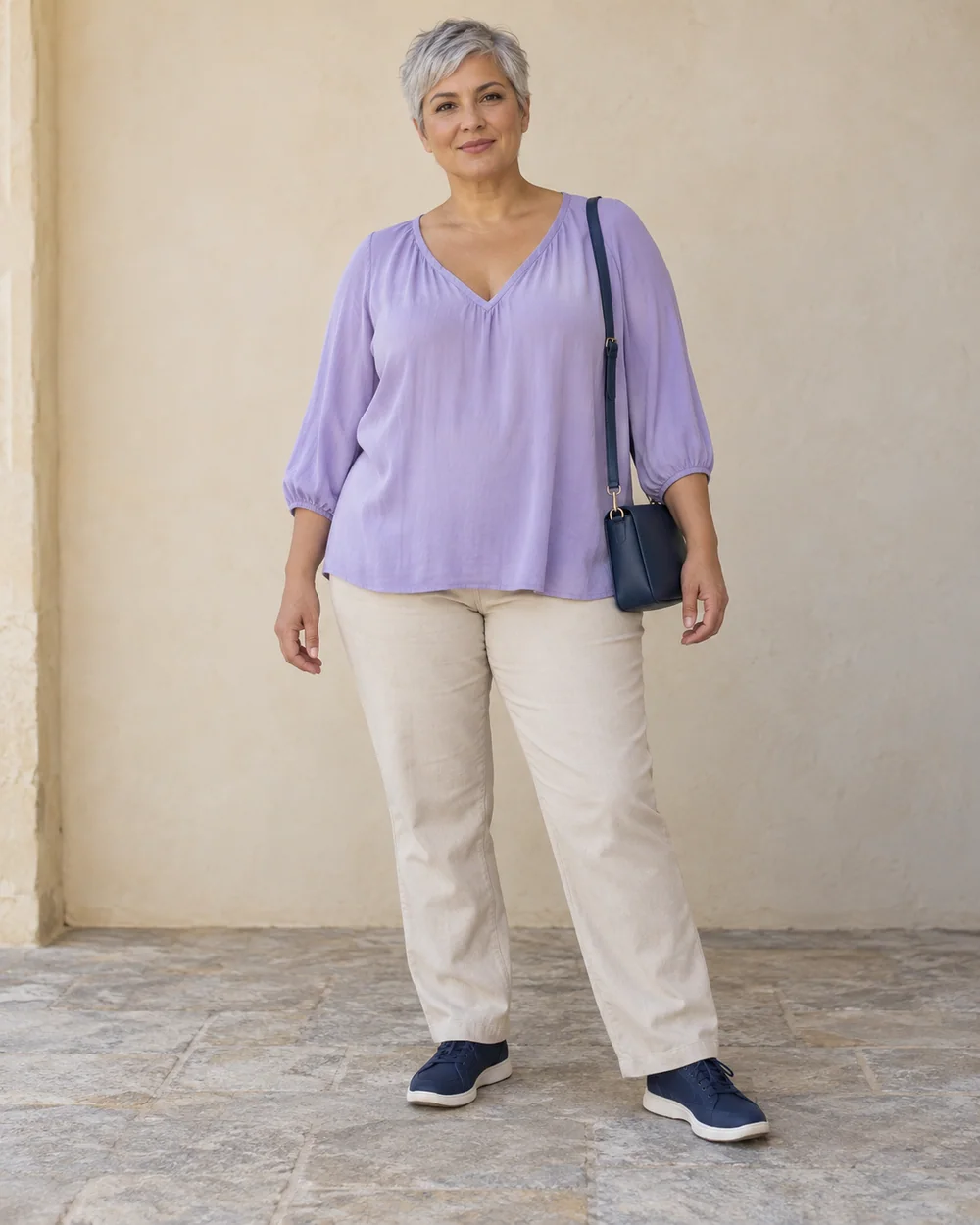
Lilac supplies the colour between stone pieces, with silver flats or navy trainers giving two distinct finishes.
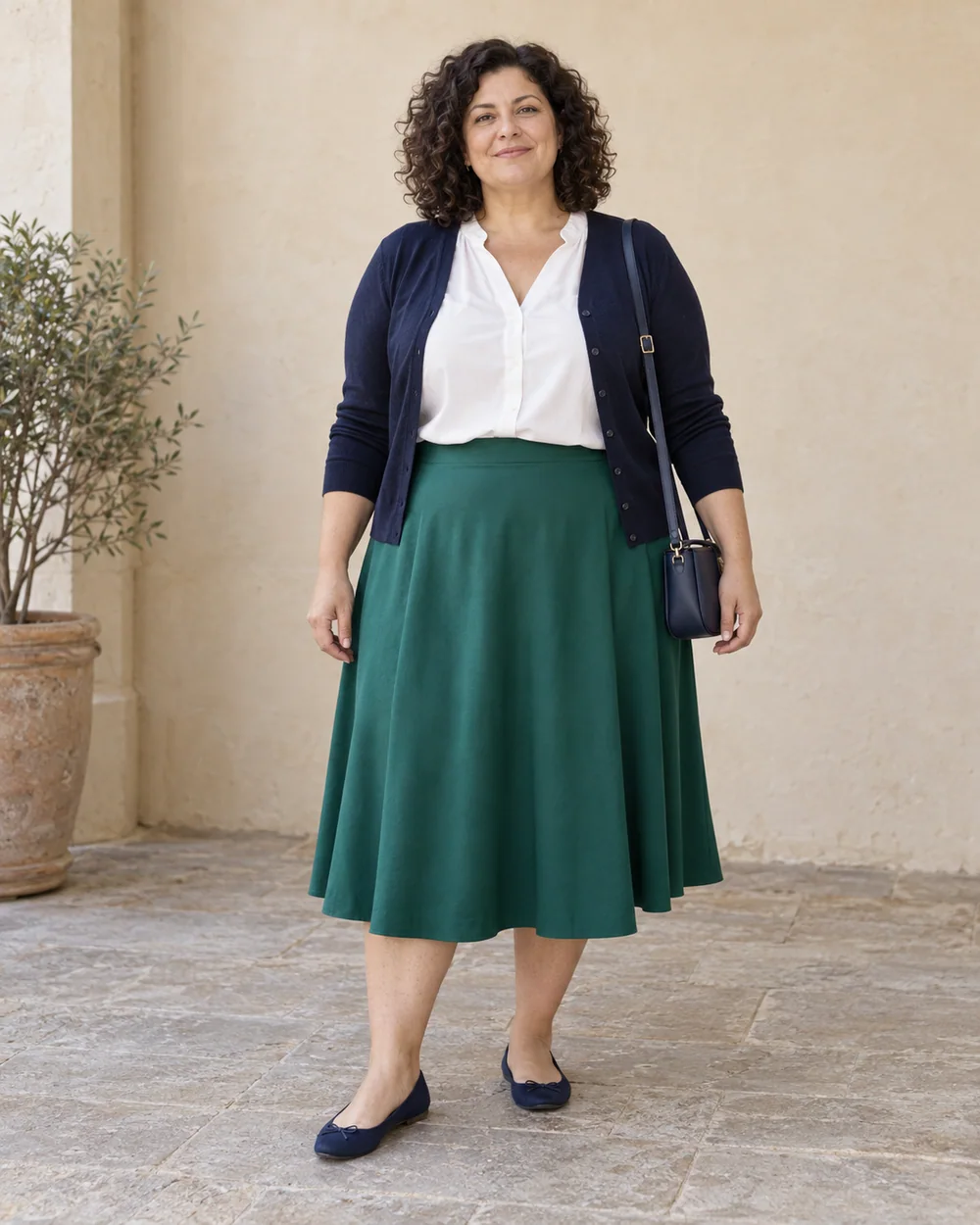
Choose whether navy frames an emerald skirt or stays only at the shoes, while keeping both shoe routes practical.
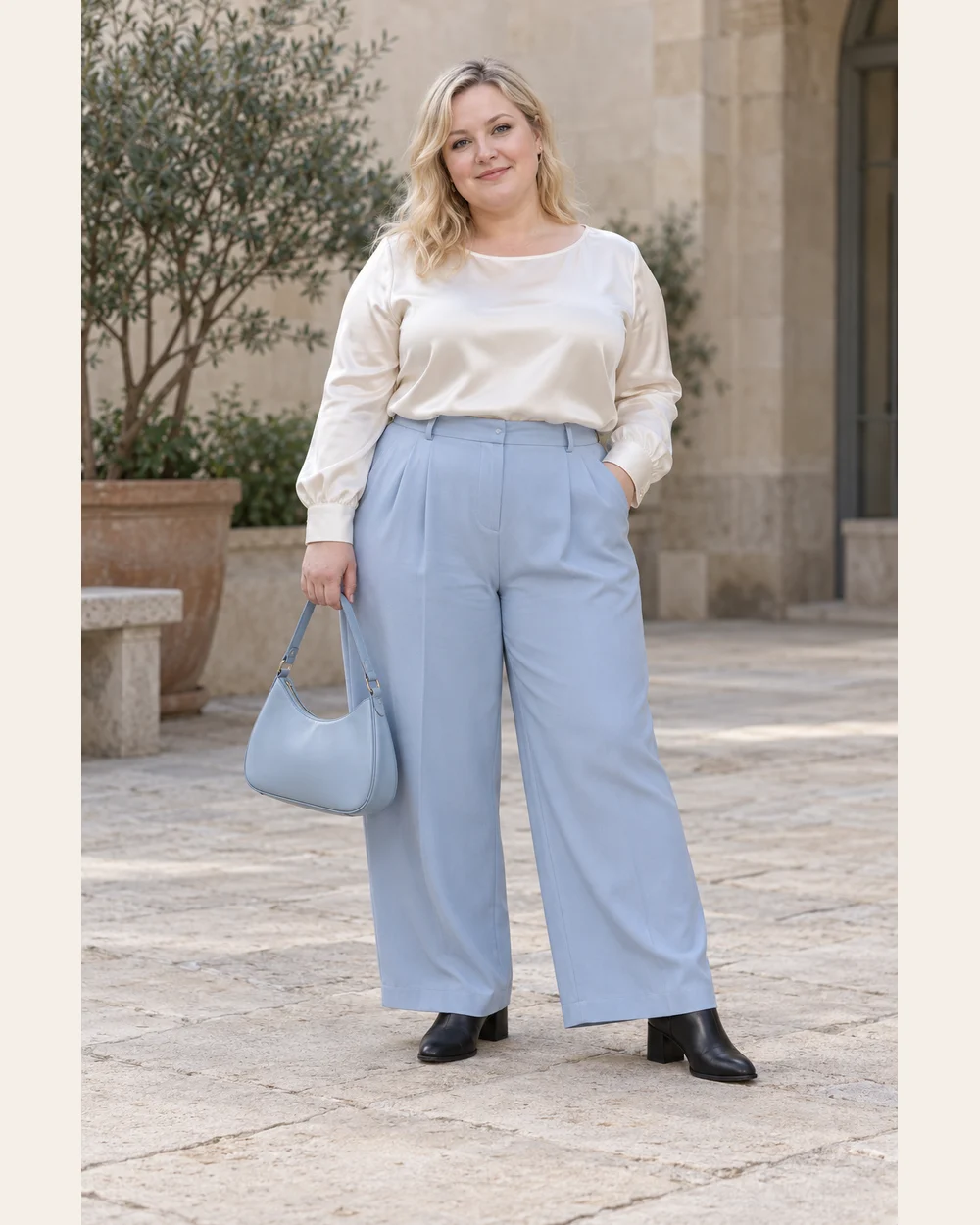
Pale-blue trousers and ivory satin provide a new soft-colour interpretation, with boots or pumps and an optional longline jacket.
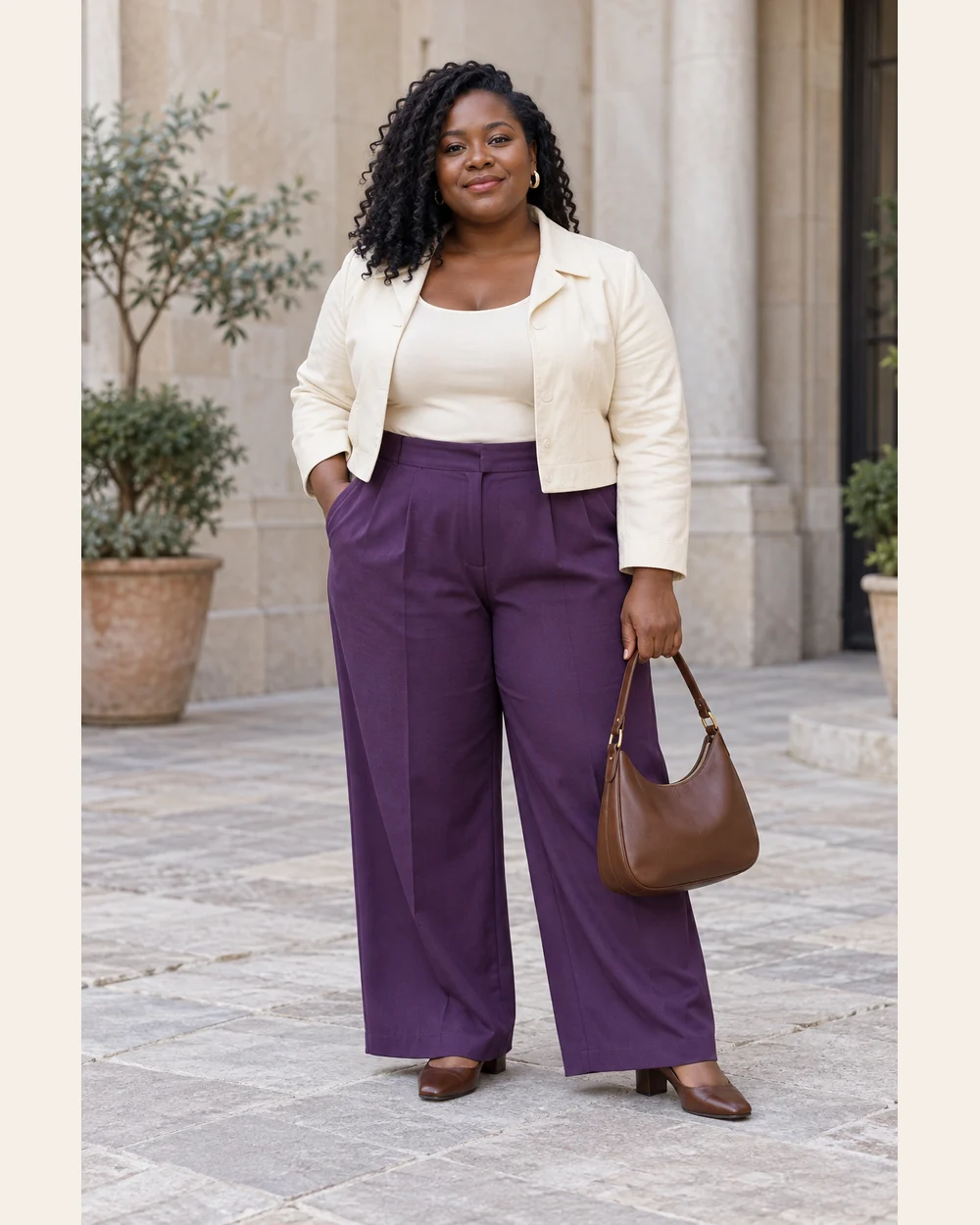
Purple trousers carry the occasion colour; a cream shell and short jacket make a small, purposeful outfit kit.
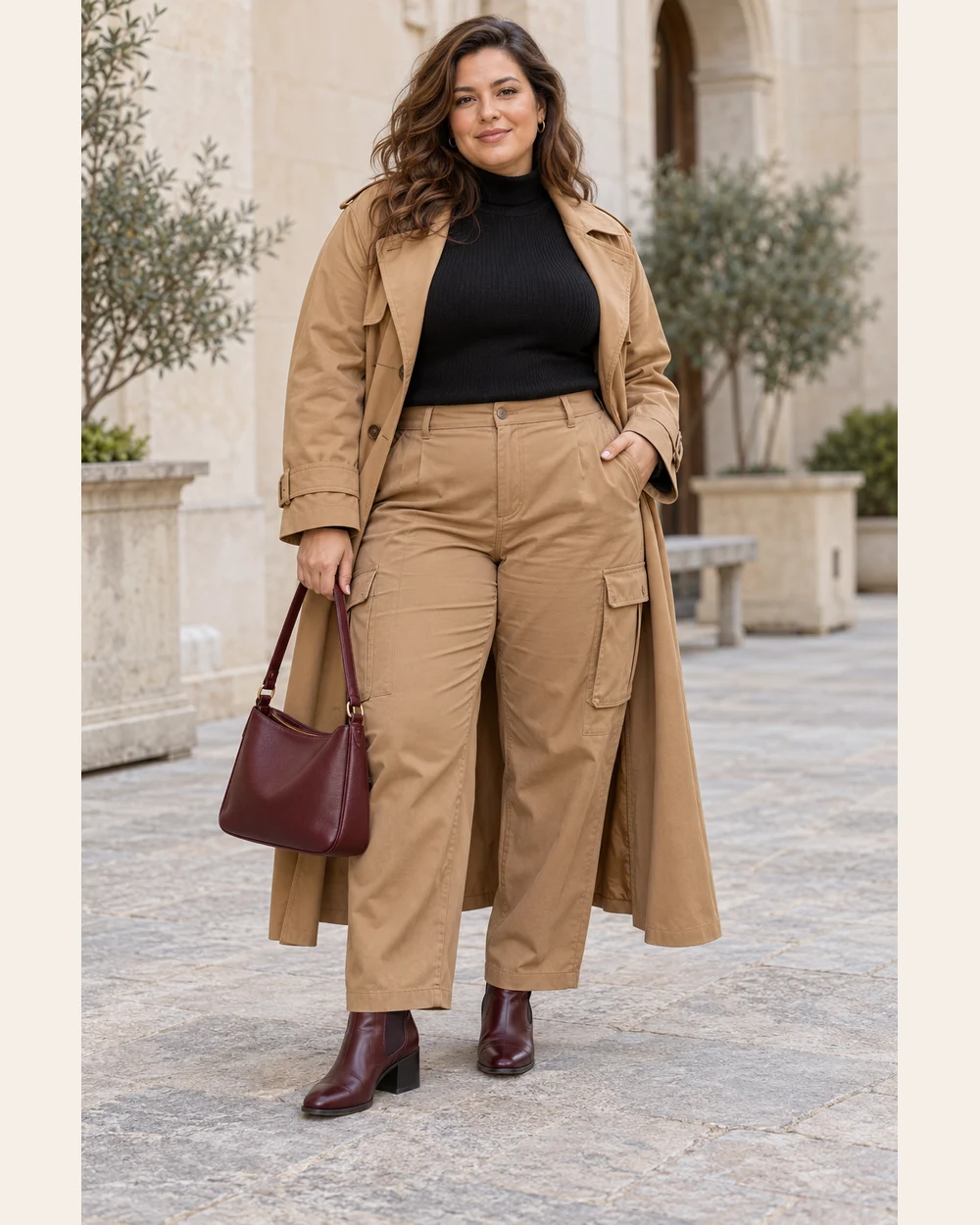
Separate a cargo-trouser fit problem from a trench-layer problem, keeping camel and black as the deliberate palette.
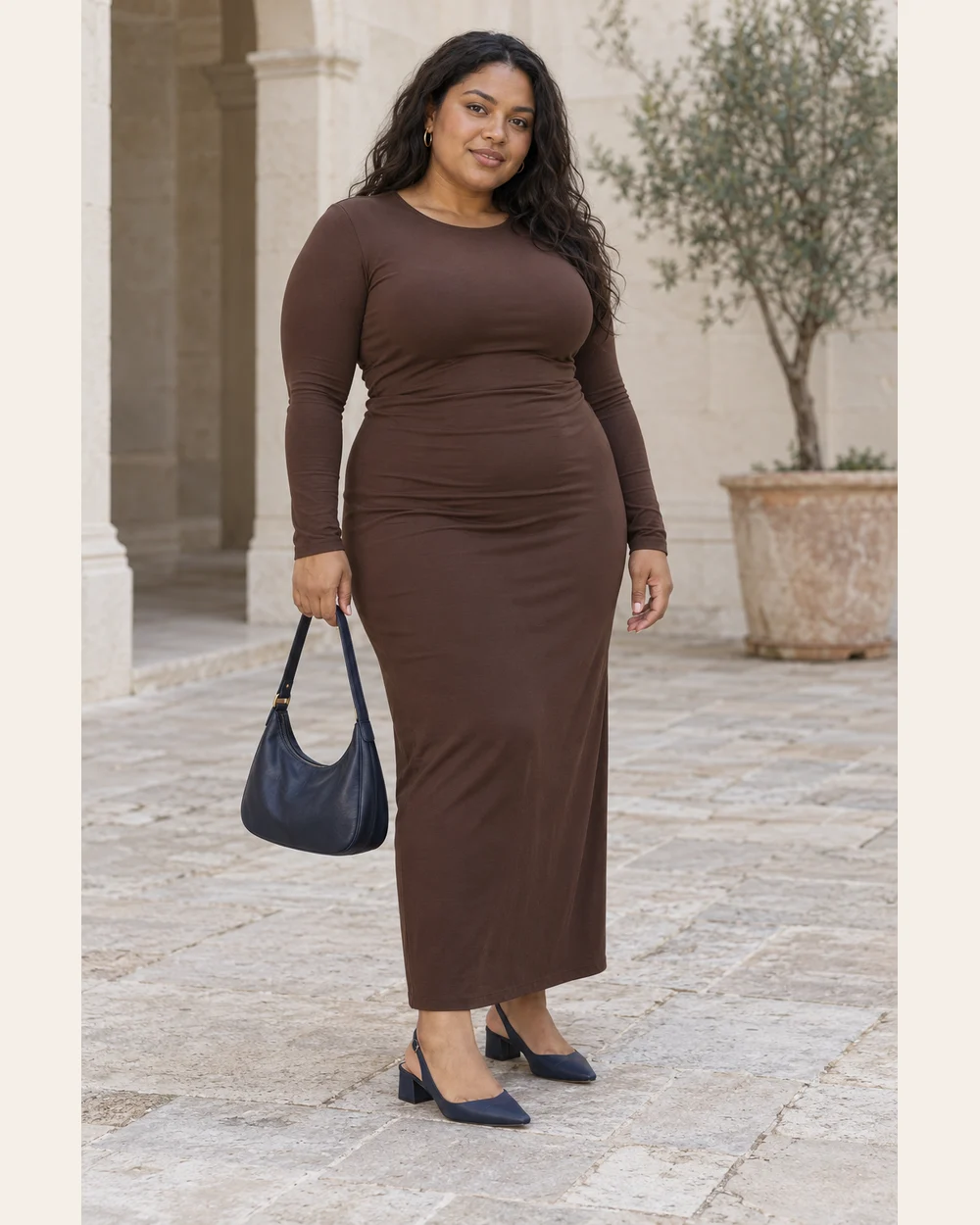
Practise the chocolate dress on its own, then add the ivory waistcoat and test either navy shoe route.
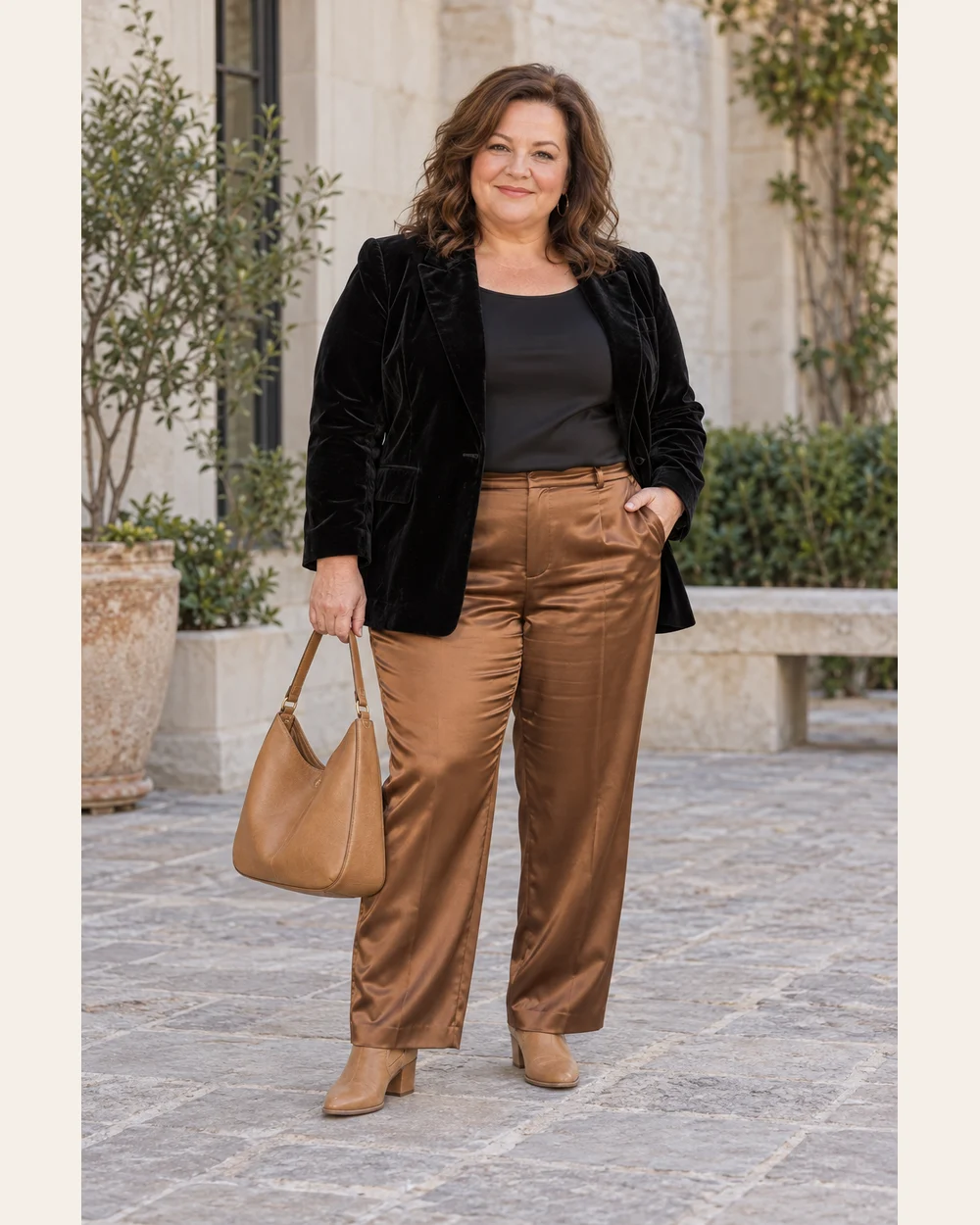
Bronze satin trousers and a black top form the base; velvet and two tan shoe options give the finish.
A navy wrap skirt, white shirt and relaxed blazer create a new tailored formula, with boots or pumps checked separately.
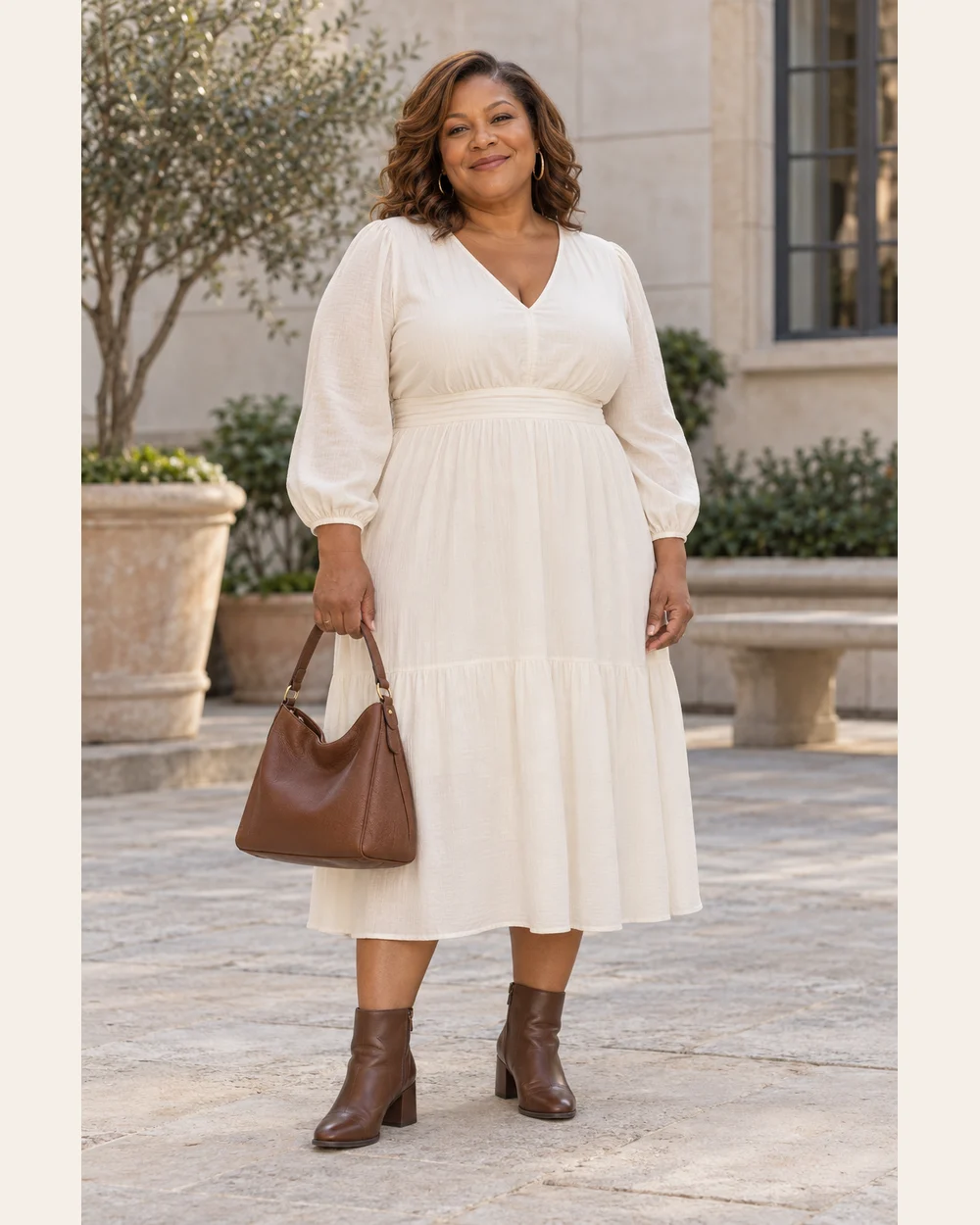
Ivory and cream form a pale tonal outfit with brown shoes; use the wedding variation only when the hosts explicitly request the palette.
Choose how much cream to show between a black rib top and relaxed jacket, with two burgundy-toned shoe options.
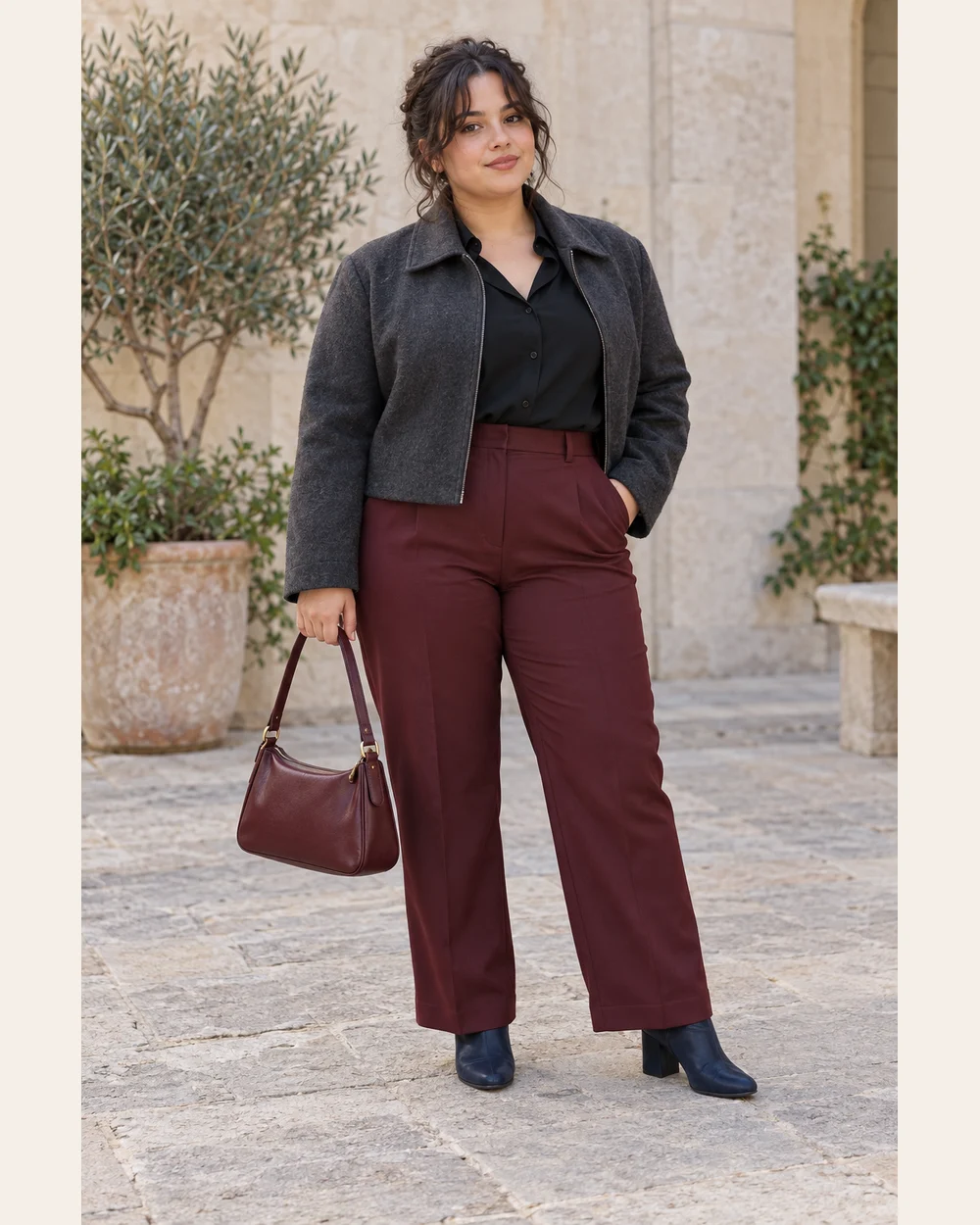
Oxblood trousers give a dark palette colour, with a black blouse, charcoal jacket and navy shoe alternatives.
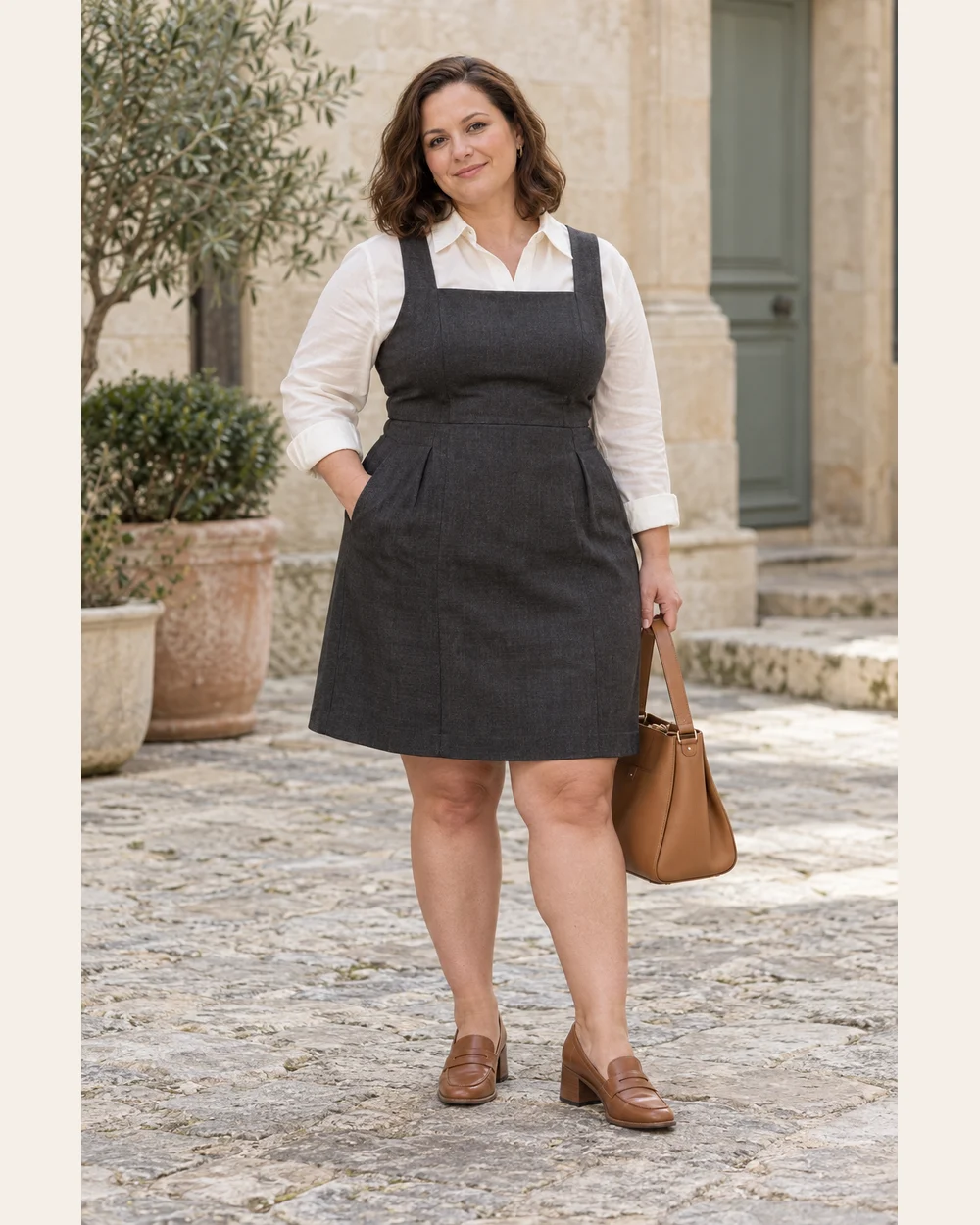
Fit a charcoal pinafore over its actual ivory shirt before adding a collarless jacket or choosing between tan shoes.
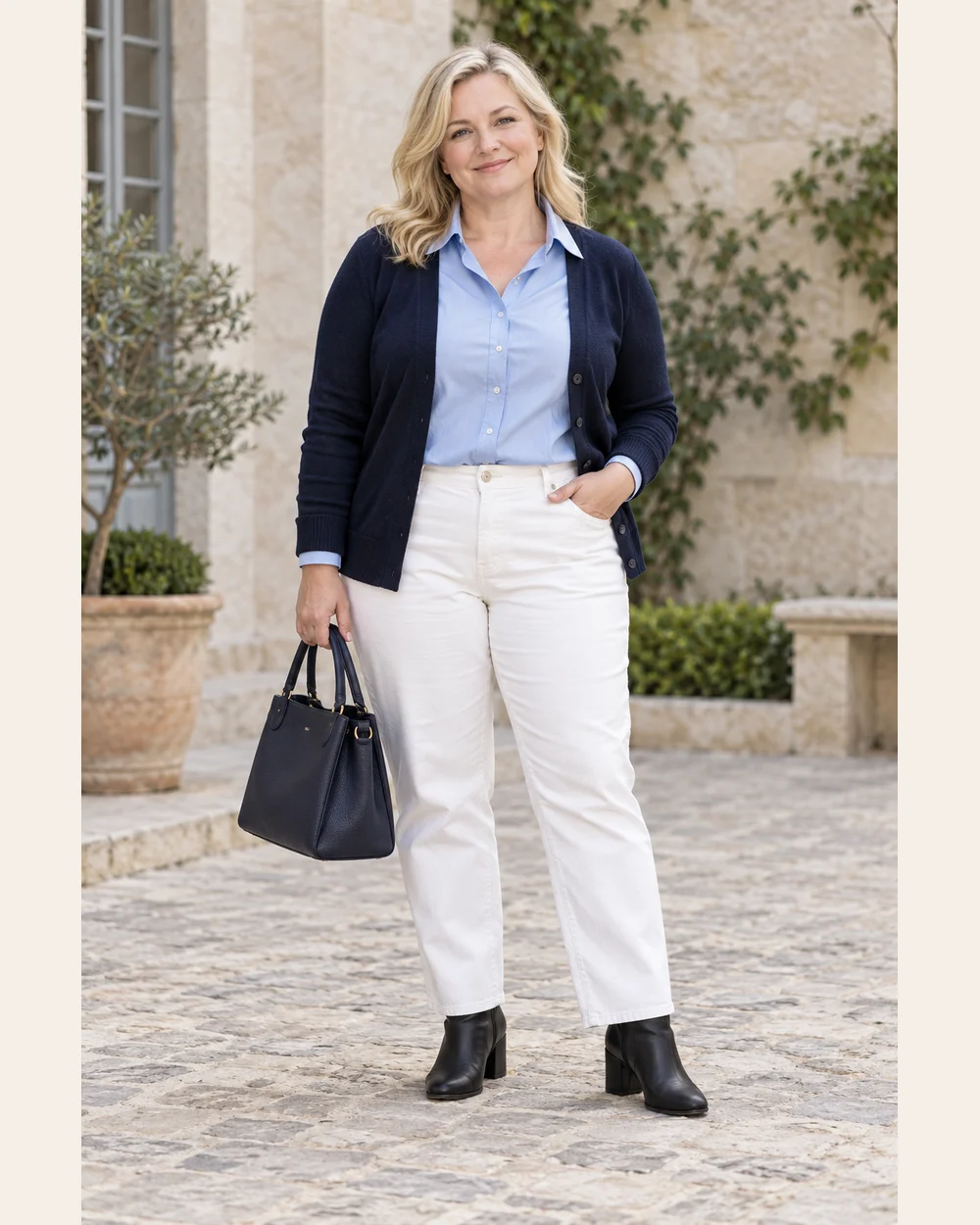
Solve white-trouser opacity and blouse collar space separately, then test a navy cardigan and both black shoe routes.
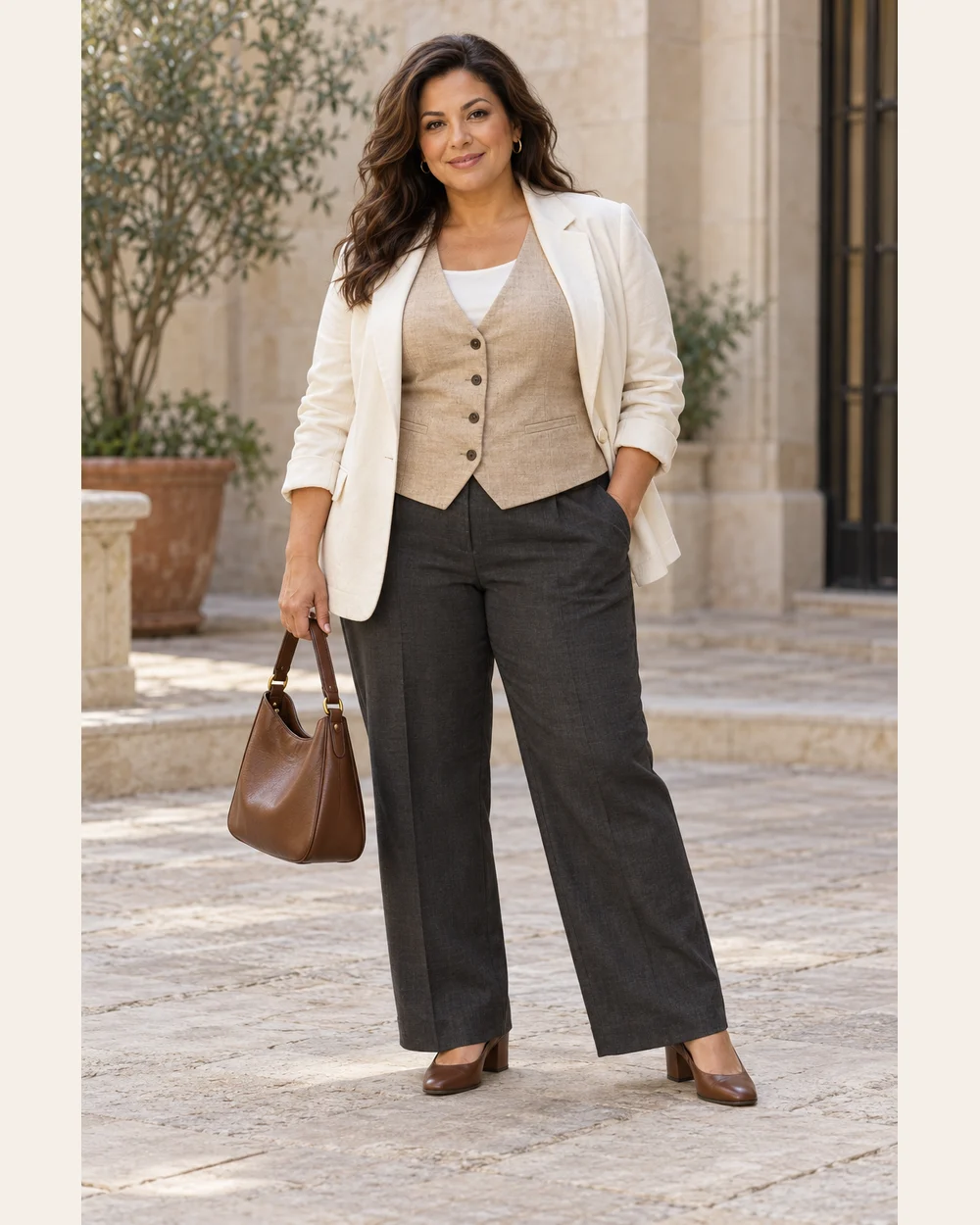
Practise waistcoat closure, trouser movement and the ivory jacket as three separate checks, with two brown shoe routes.
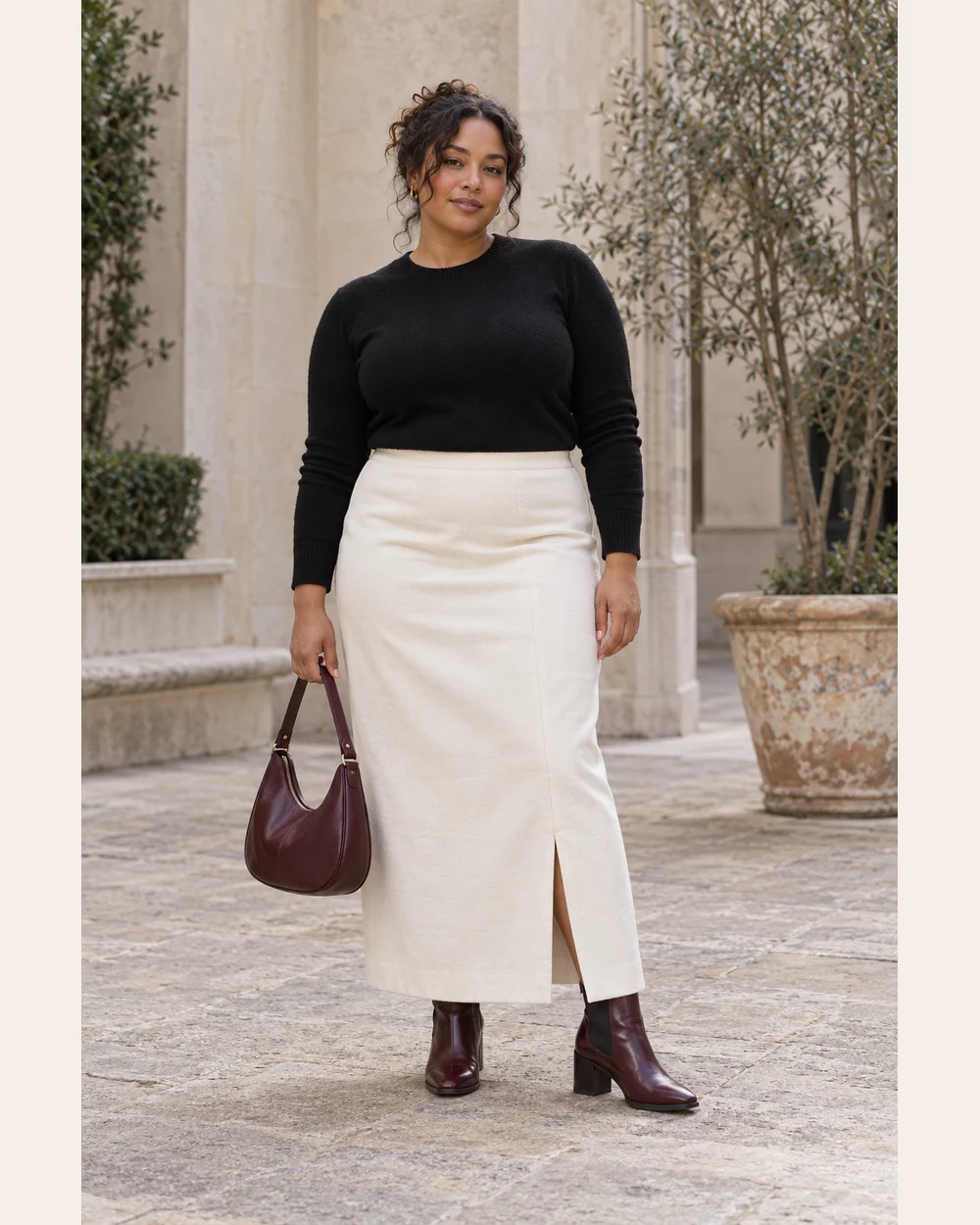
Check the ivory column skirt's walking vent and the volume of an optional white shirt, then choose oxblood boots or burgundy Mary Janes.
A coral wrap dress, cobalt short jacket and two navy shoe routes, with neckline and overlap checks for petite plus-size fit.
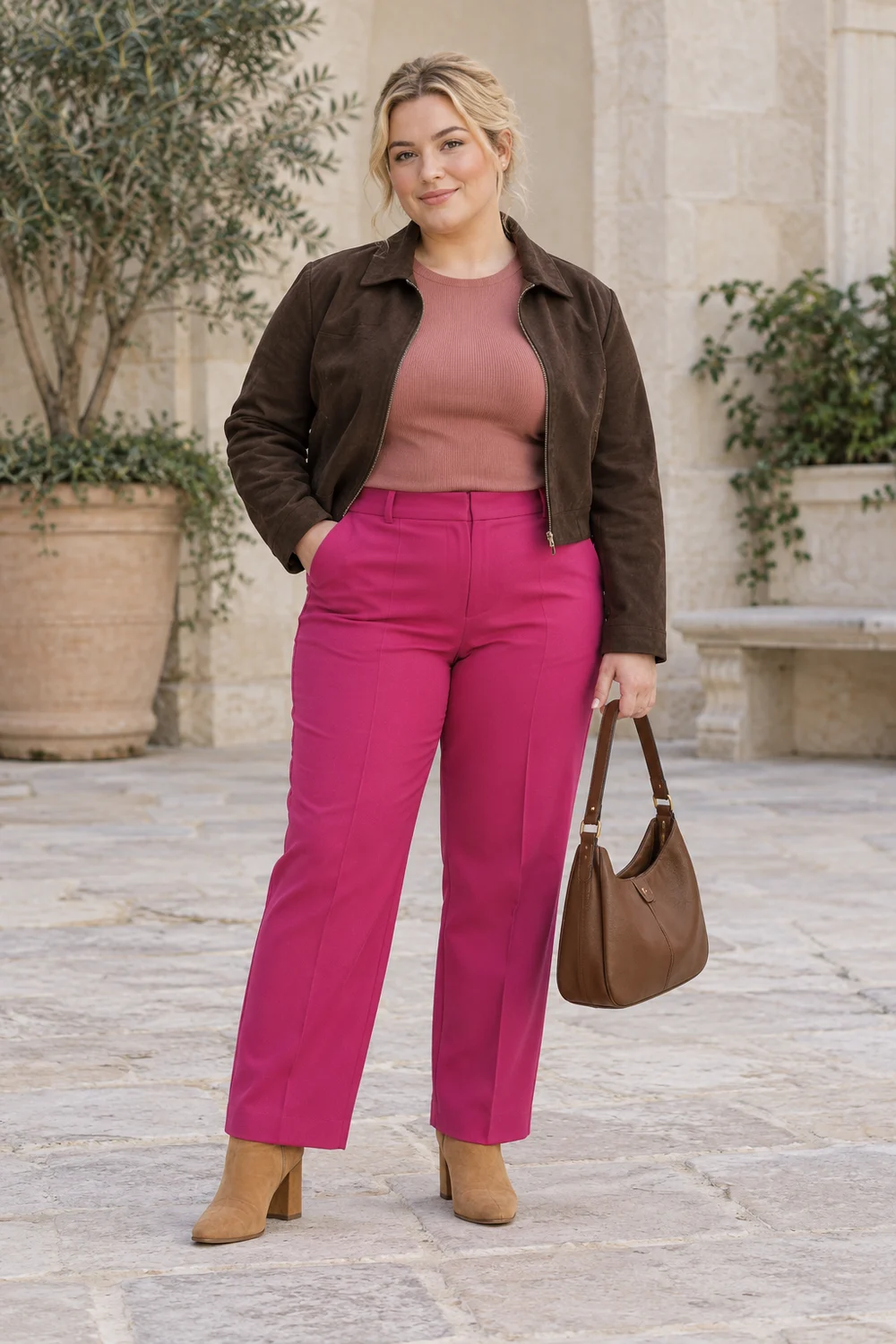
Fuchsia trousers and a muted rose top share the colour work; brown and tan give two complete shoe and layer routes.
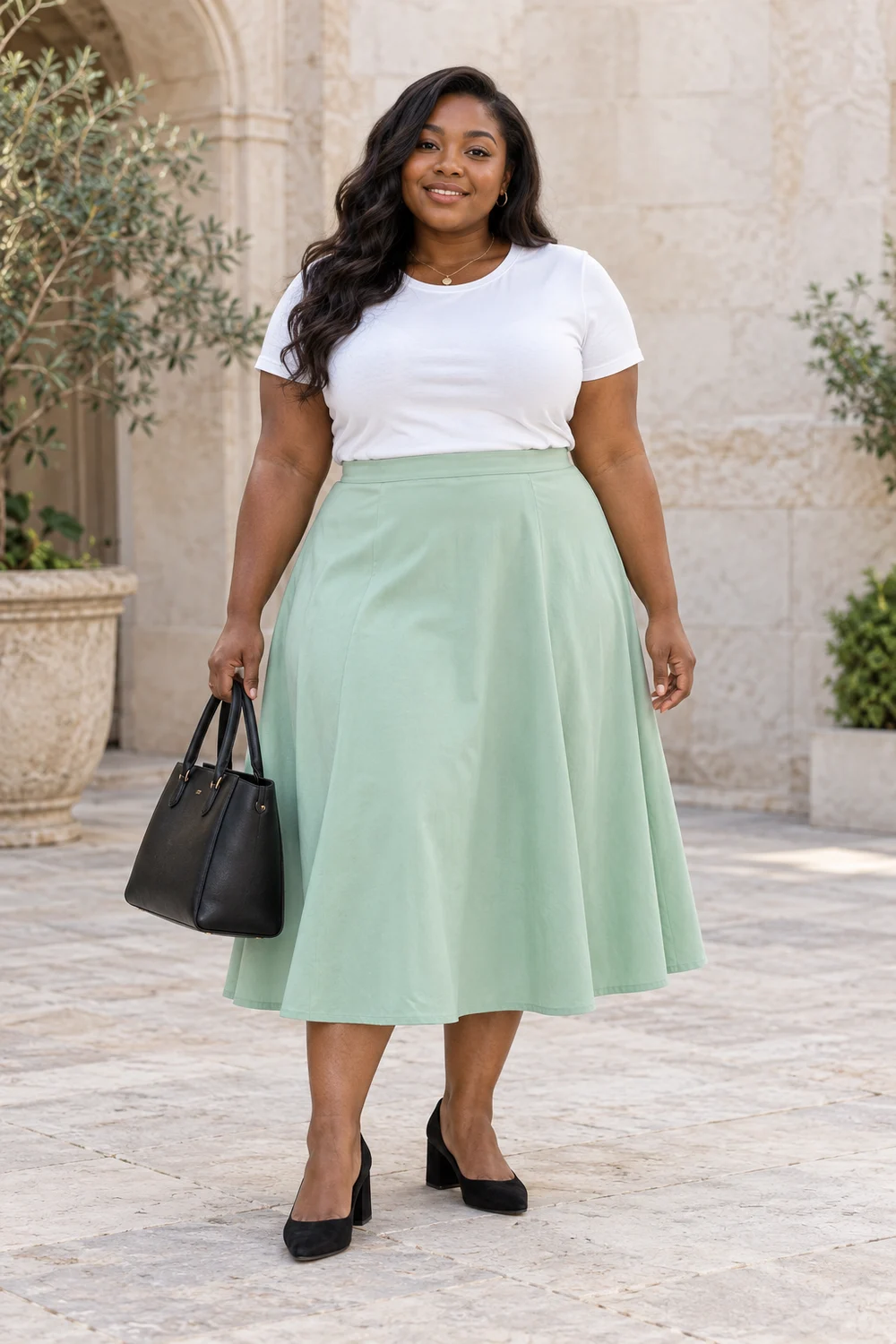
Choose how much sport detail to keep around a mint midi skirt, with a complete light base and two black shoe options.
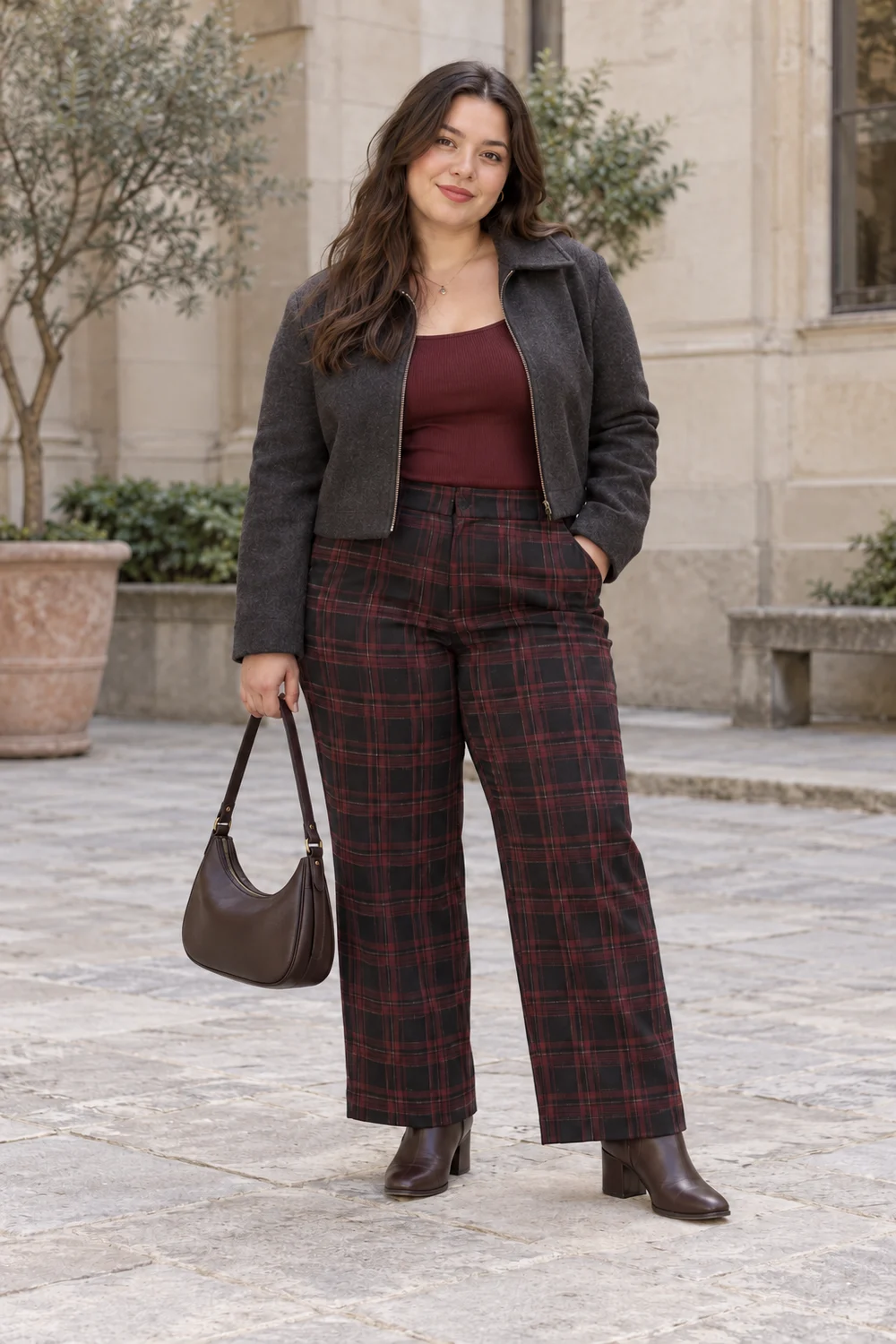
Checked trousers carry the pattern while an oxblood top and charcoal short jacket keep the outfit grounded.
An opaque chocolate knit dress can stand alone; add the stone jacket and choose between oxblood boots and burgundy Mary Janes.
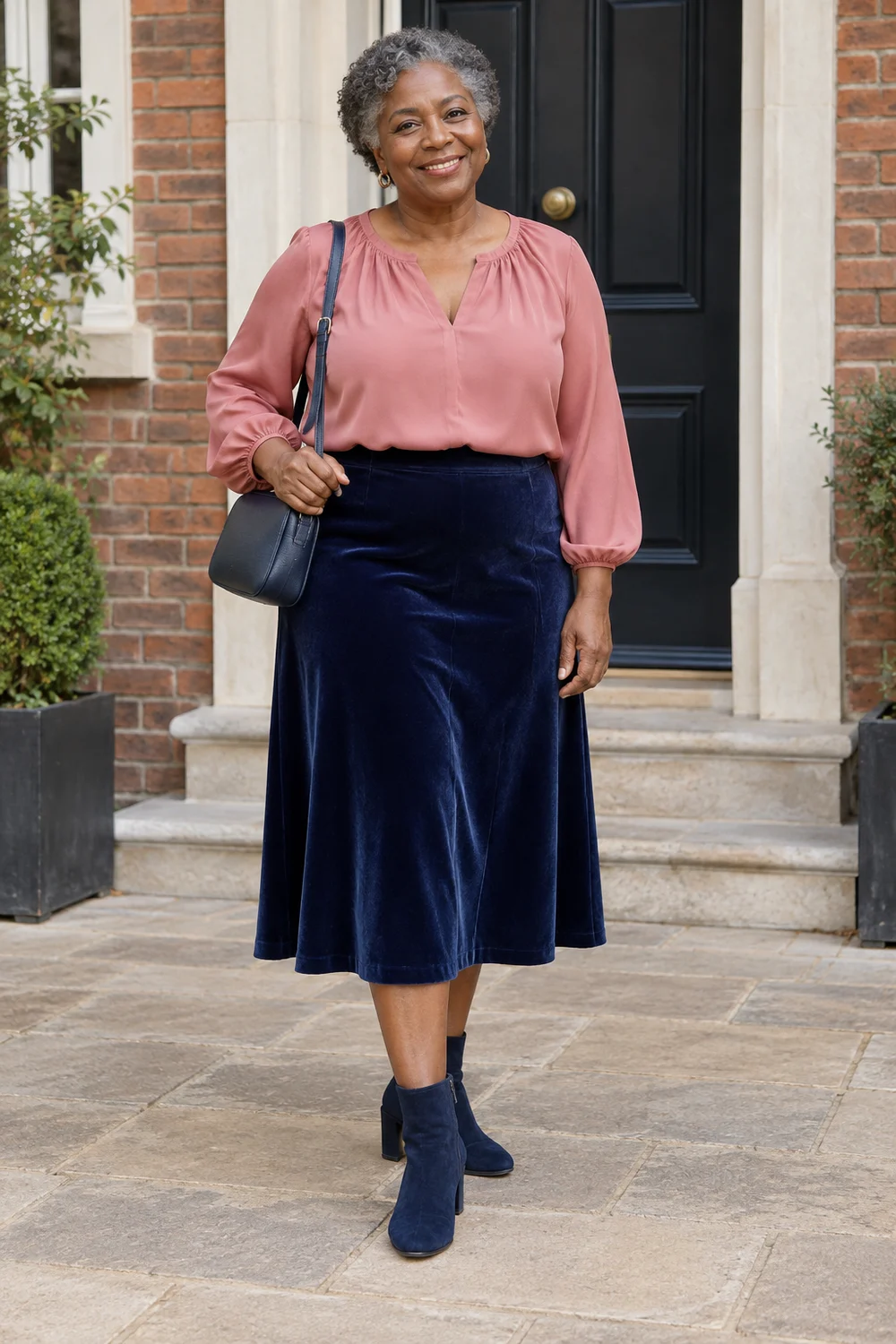
If a velvet skirt looks uneven or catches a layer, inspect the actual surface, lining and fit before changing the outfit.
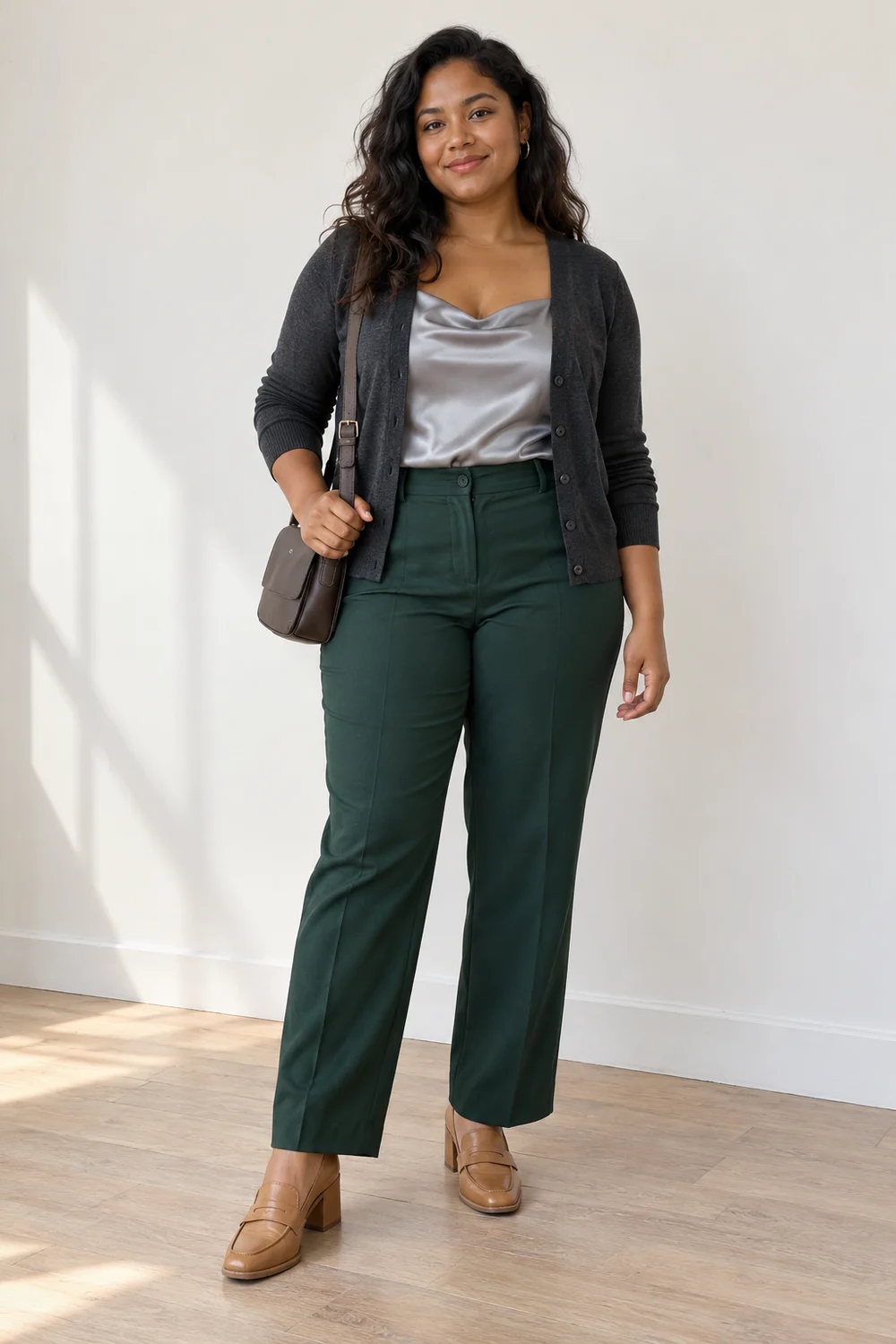
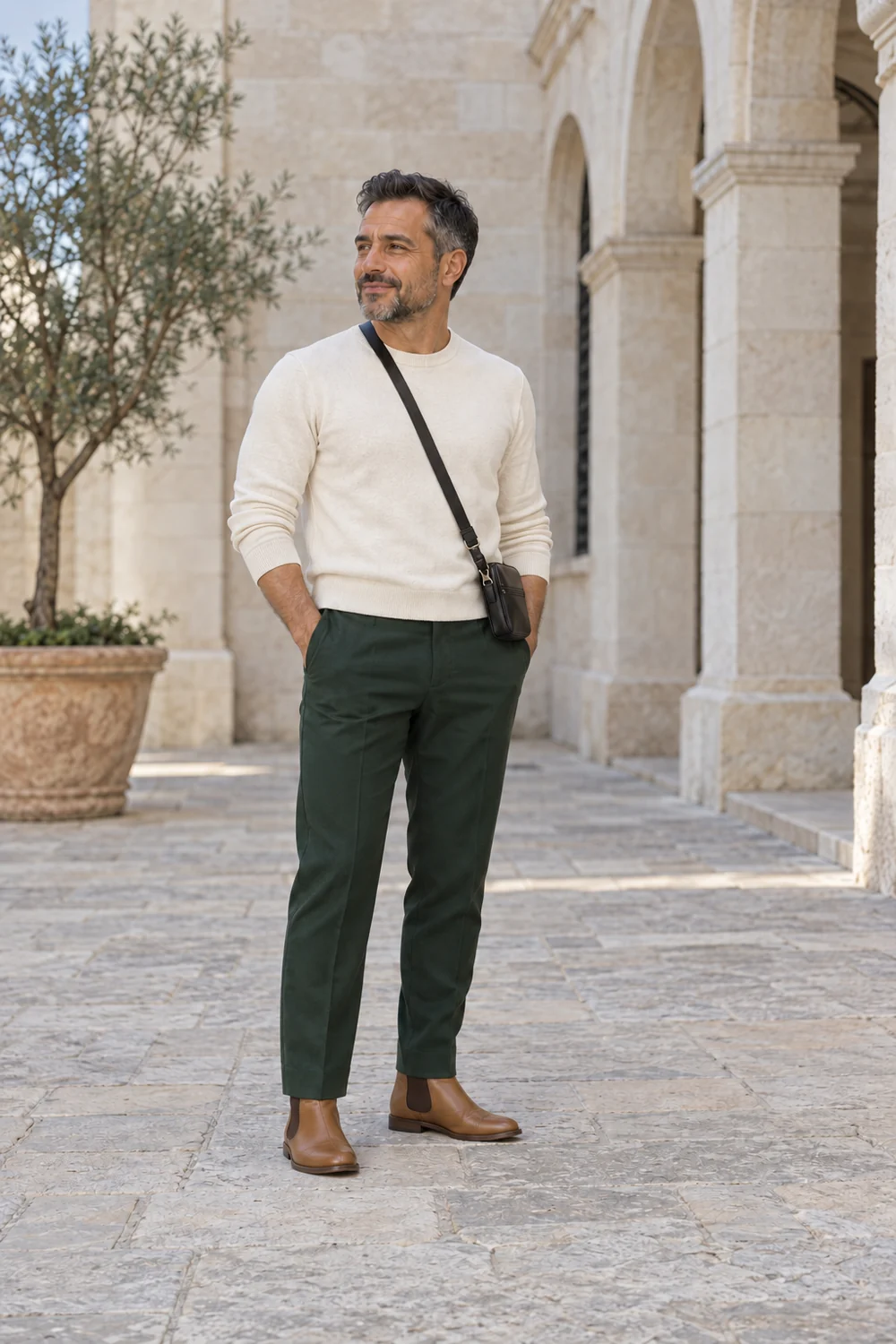
Practise one useful comparison: keep the silver-grey neckline visible, then add a charcoal cardigan without changing the forest trousers.
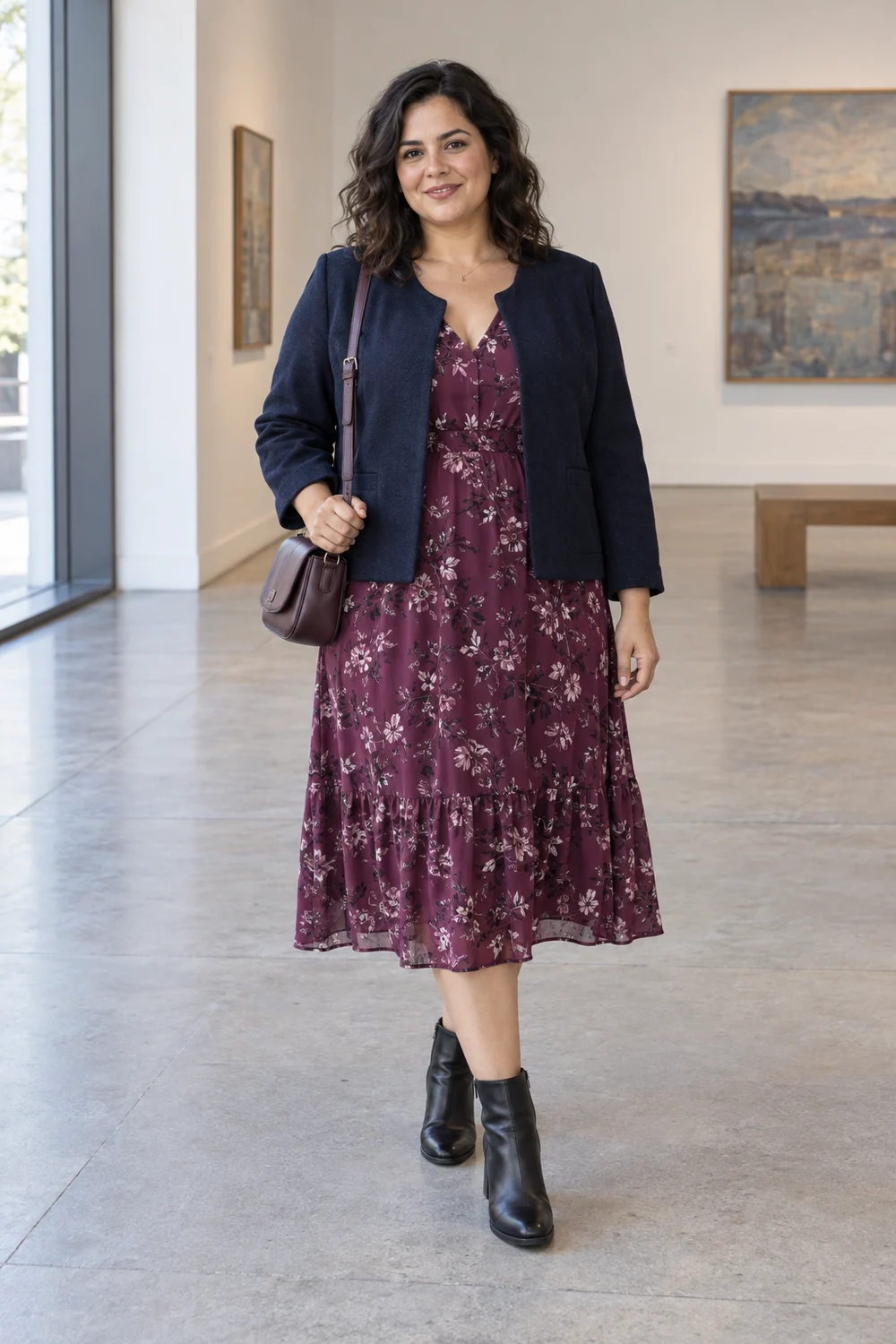
A plum printed dress can be a complete light outfit; add an ink collarless jacket and choose boots or pumps without changing the print.
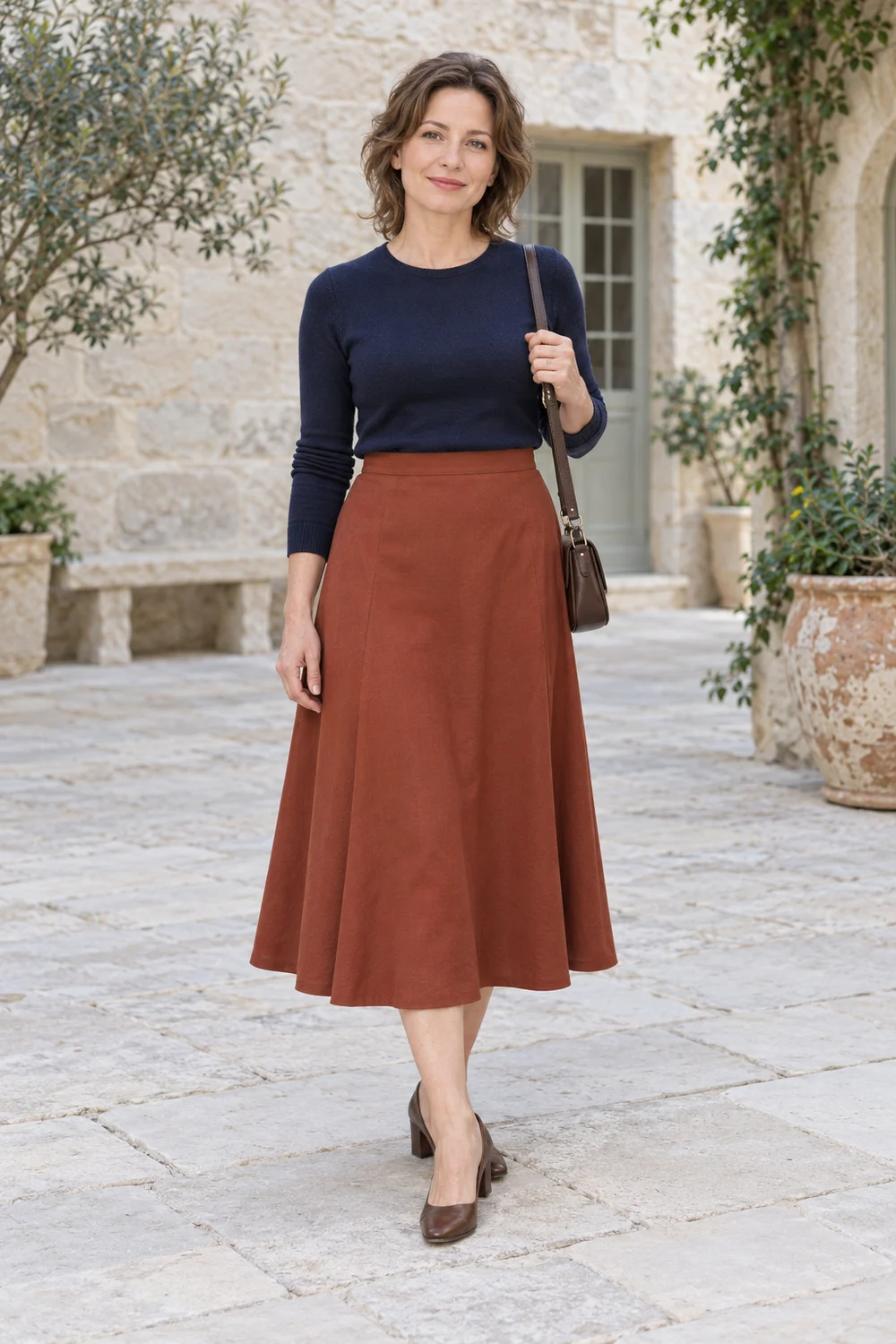
A rust A-line midi, navy fine knit and two brown shoe routes, with a practical hem comparison before alterations.
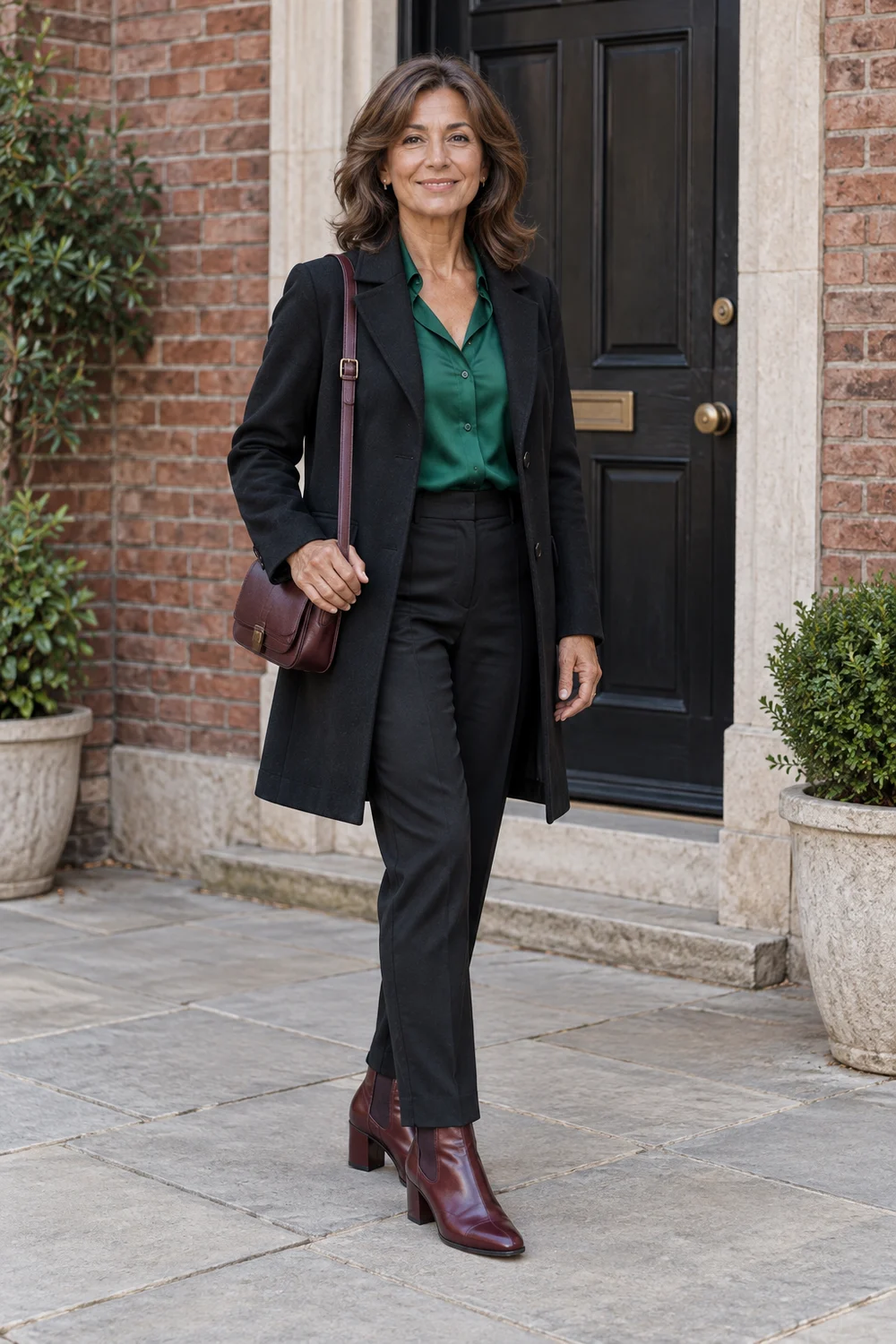
Emerald gives black trousers a focal colour; oxblood boots or burgundy Mary Janes change the foot shape while the light coat stays optional.
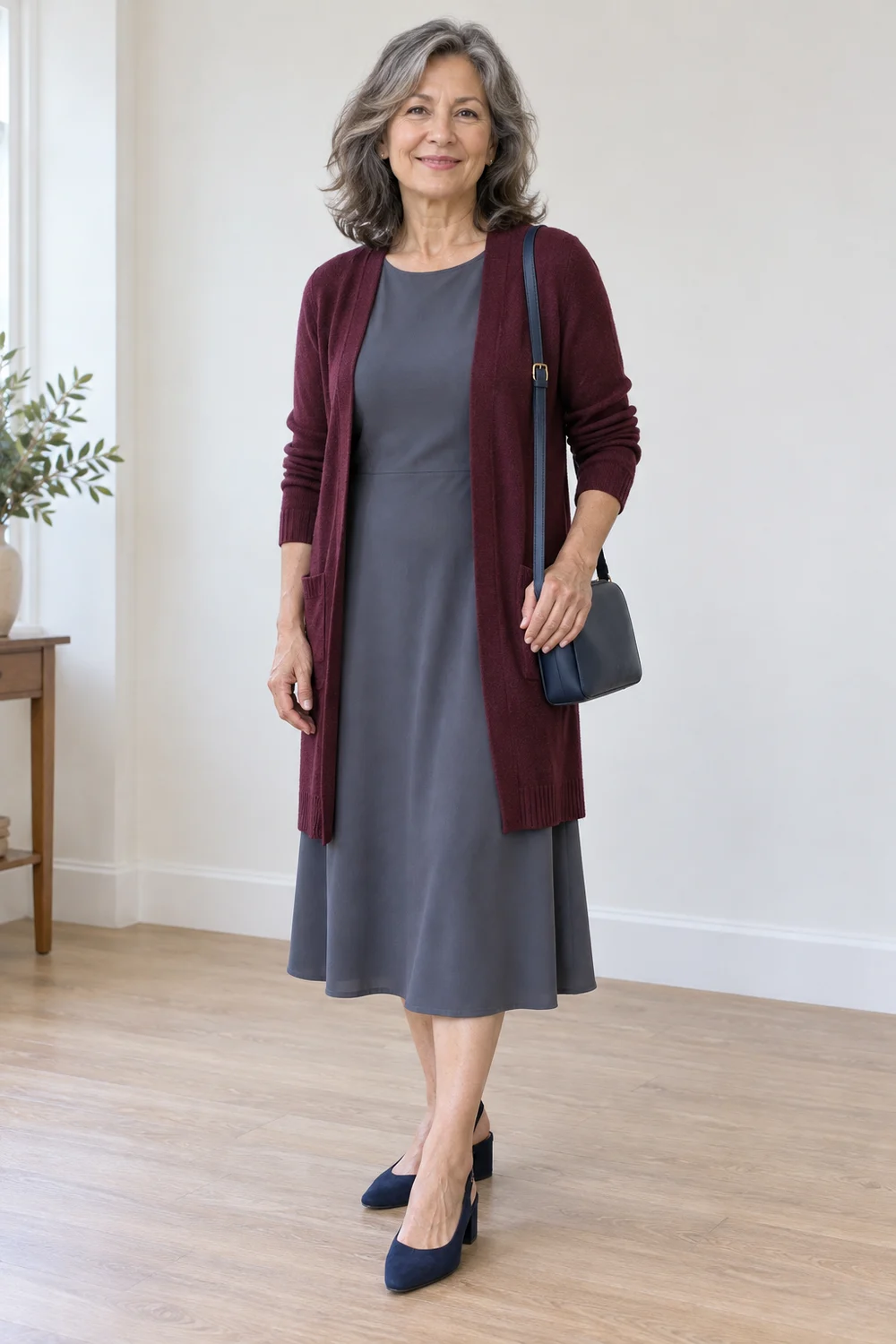
Choose whether a slate dress needs the burgundy cardigan, then compare navy boots with slingbacks before adding a belt.
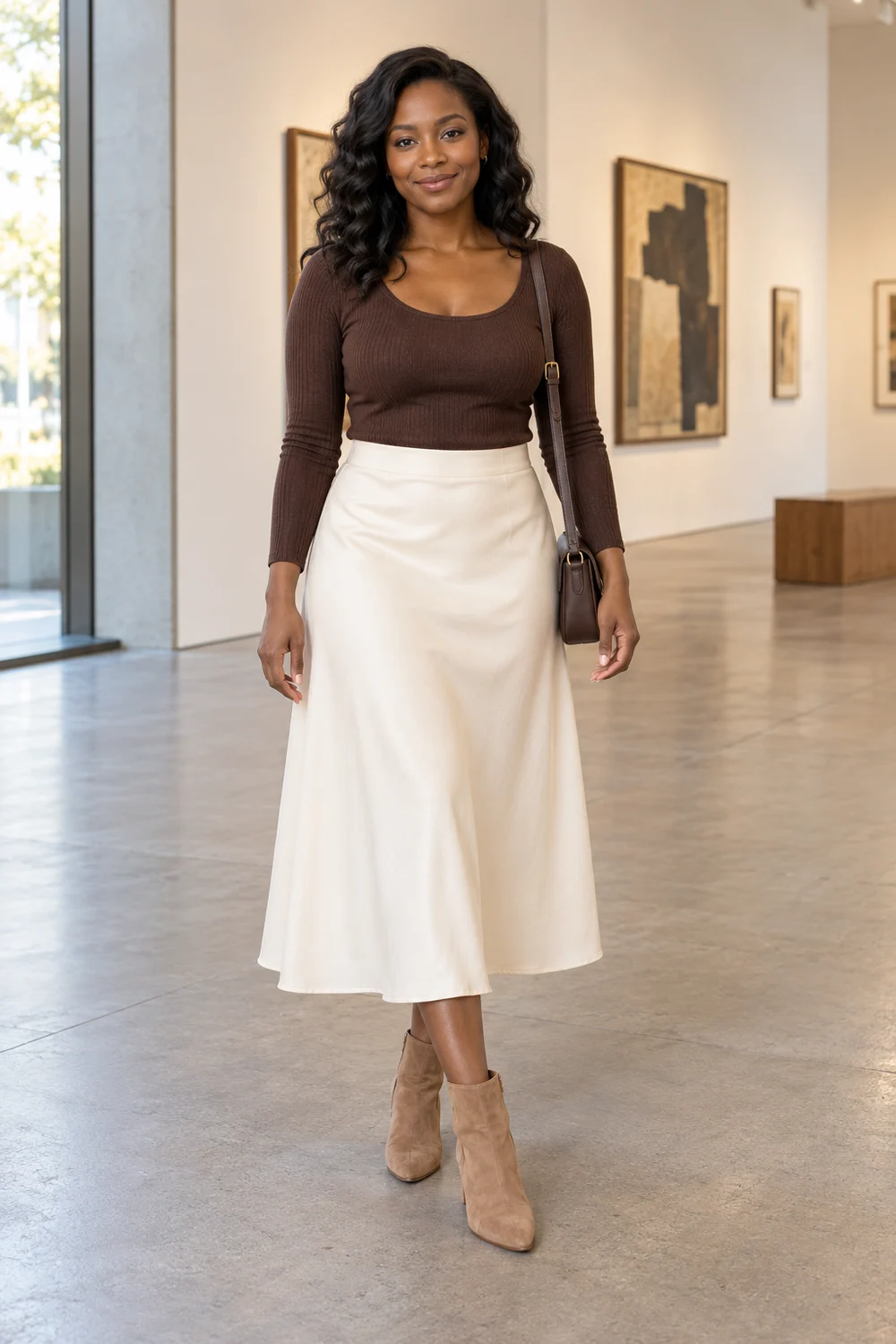
A cream skirt and chocolate top can stand alone; the relaxed cream blazer makes a second version without making fit a matching-size exercise.
Keep the berry dress that works seated, then decide whether a camel cropped jacket and either black shoe solve a real outfit job.
When cobalt wide legs catch the shoe or drag, separate rise, stride and each heel-specific hem before altering.
Practise keeping copper at the neckline while a charcoal A-line skirt and grey cardigan supply two complete versions.
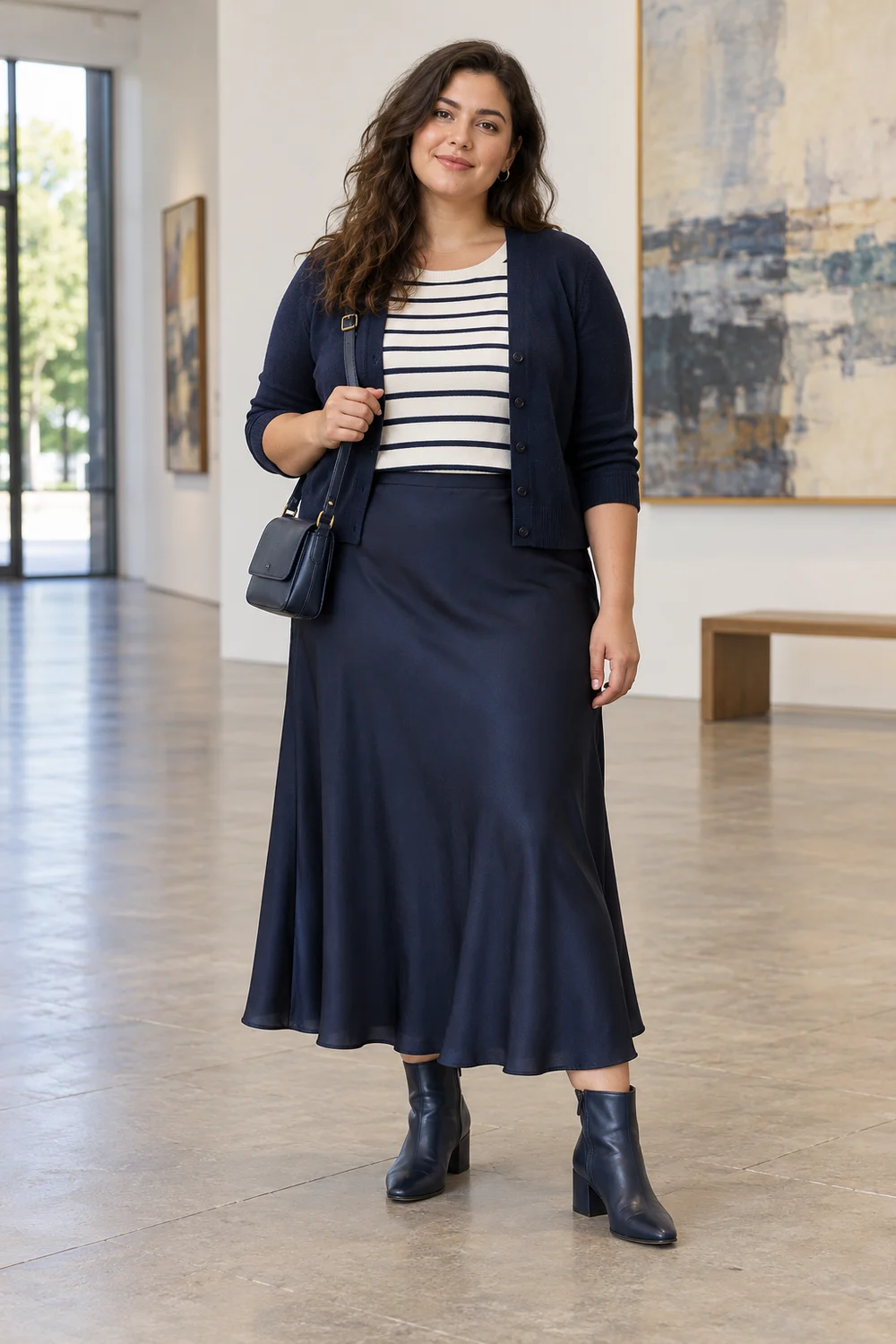
Use a navy lined bias-cut skirt with an opaque striped top, then compare a short cardigan, ankle boots and slingbacks.
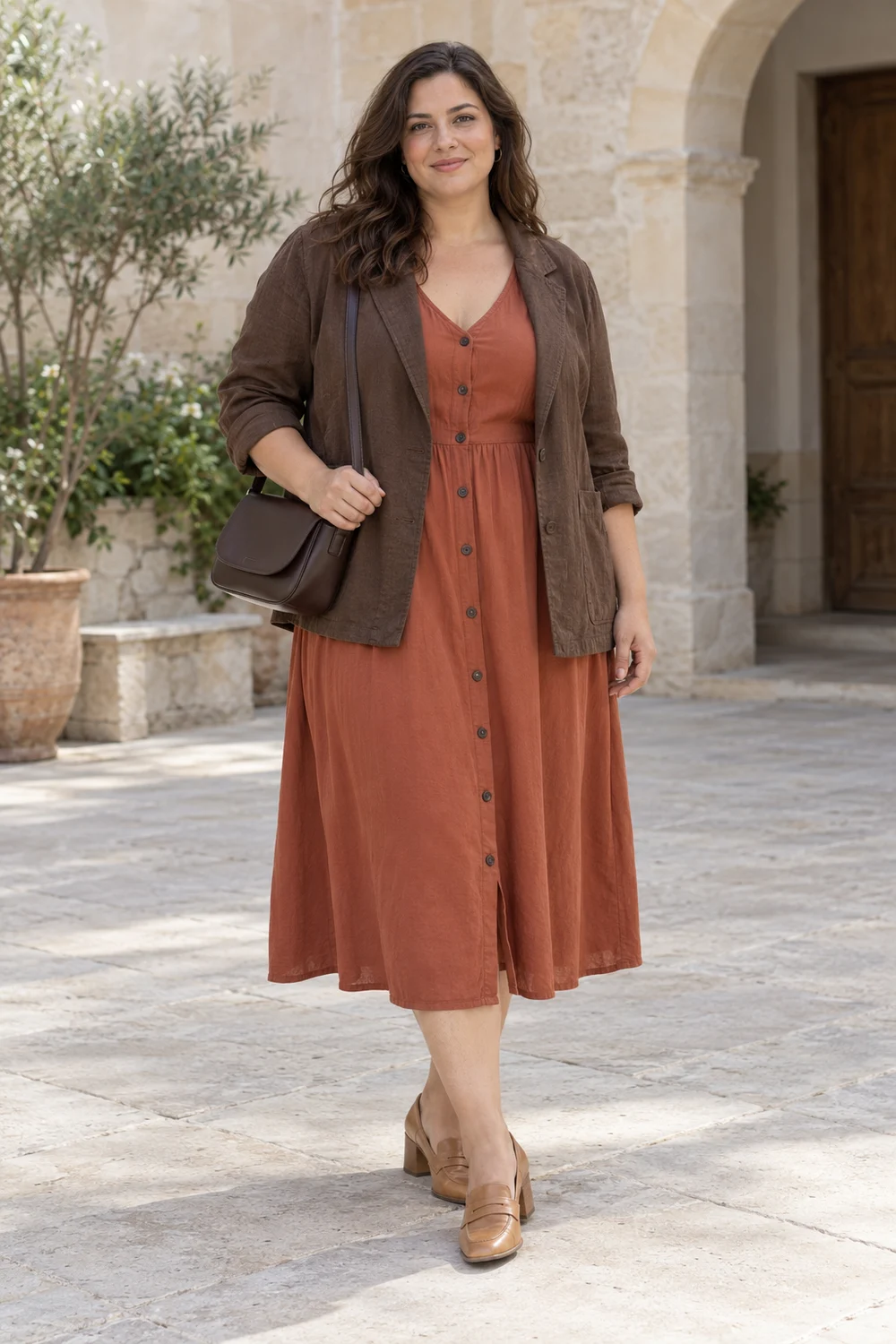
A terracotta button-front dress, brown unstructured jacket and two tan shoe choices, with button and seated-fit checks.
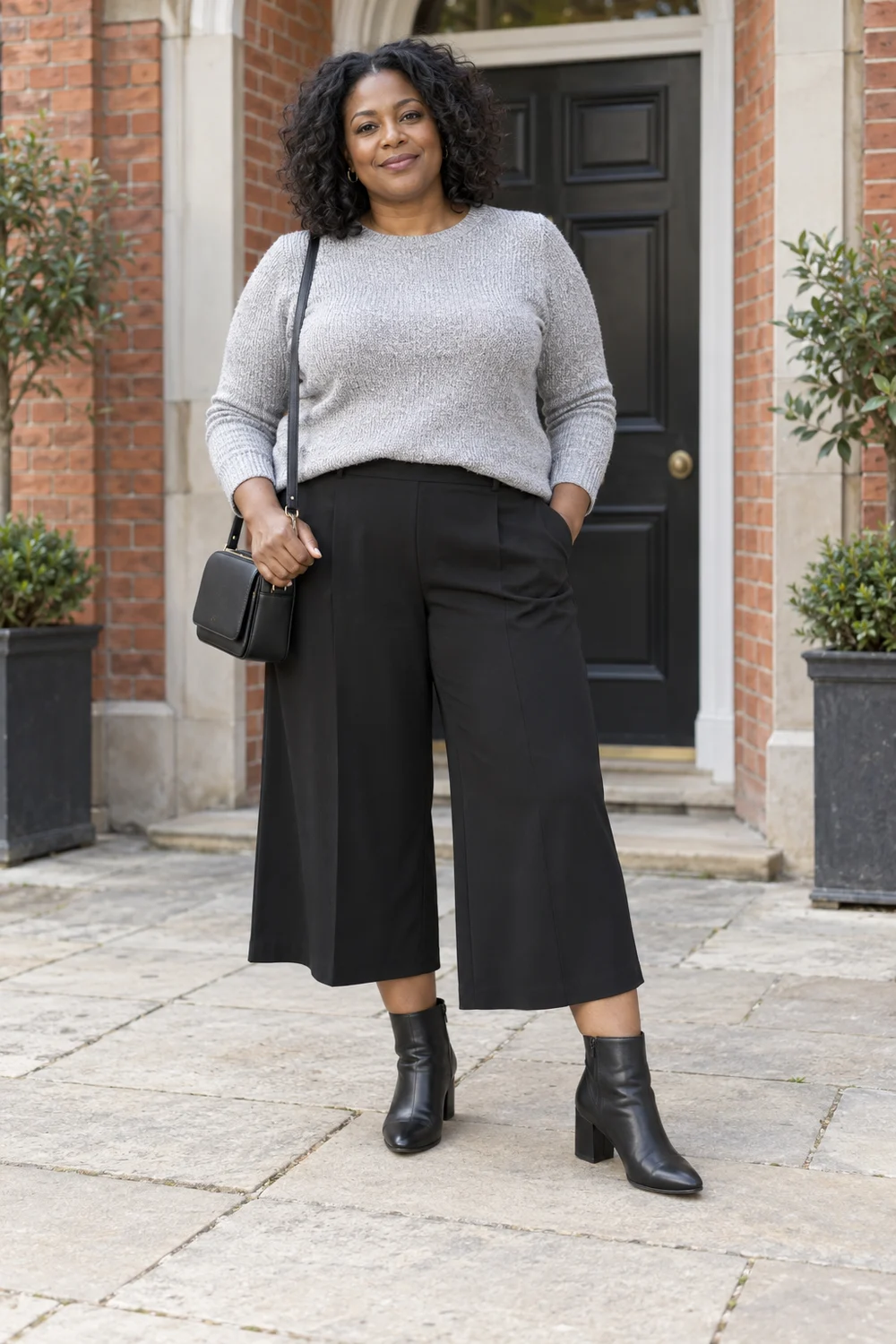
Silver at the top and black culottes make a complete light outfit; a longline waistcoat changes the outline around the same colours.
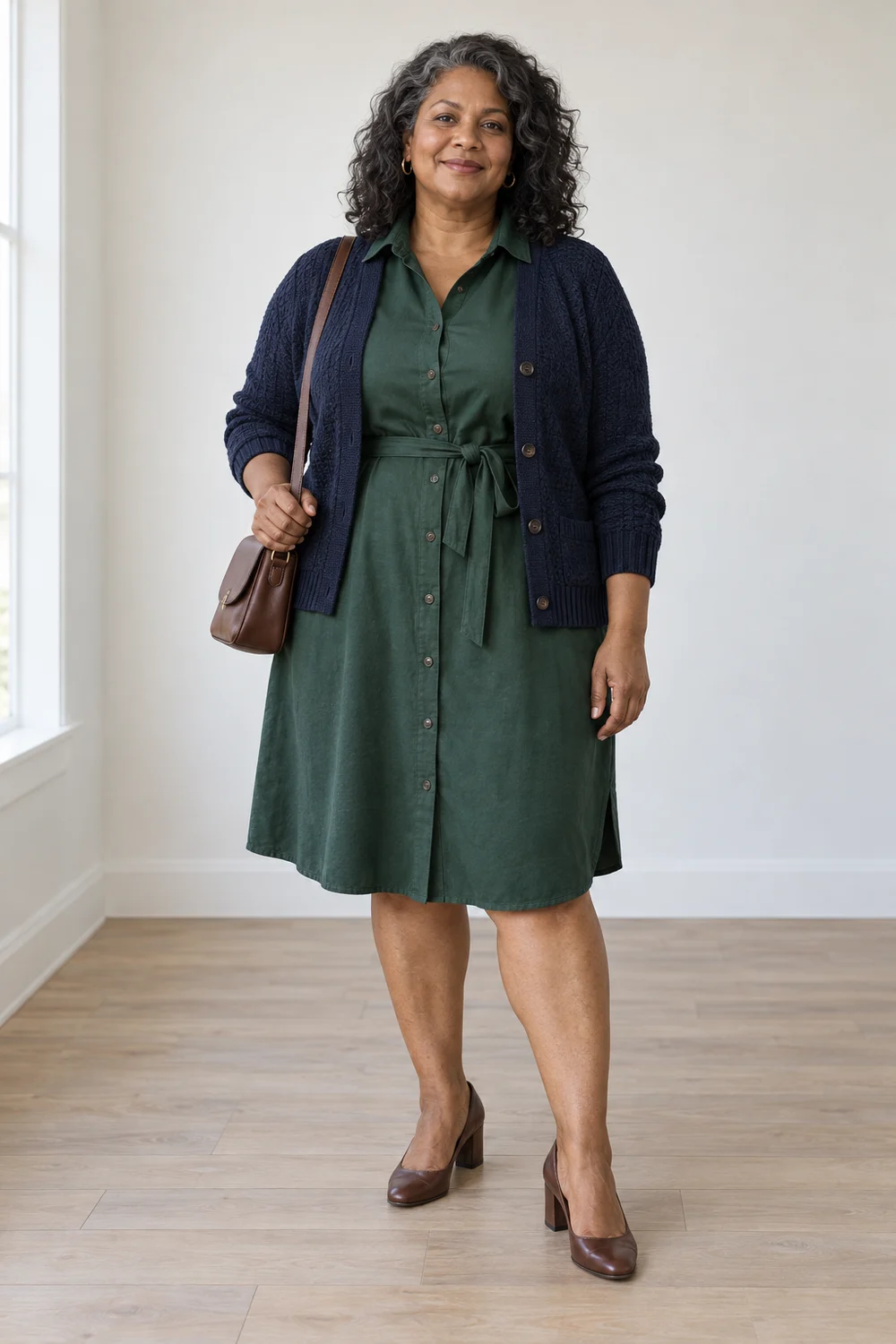
Choose whether the forest shirt dress needs its tie, then compare a navy knitted jacket and two brown shoes without changing the base.
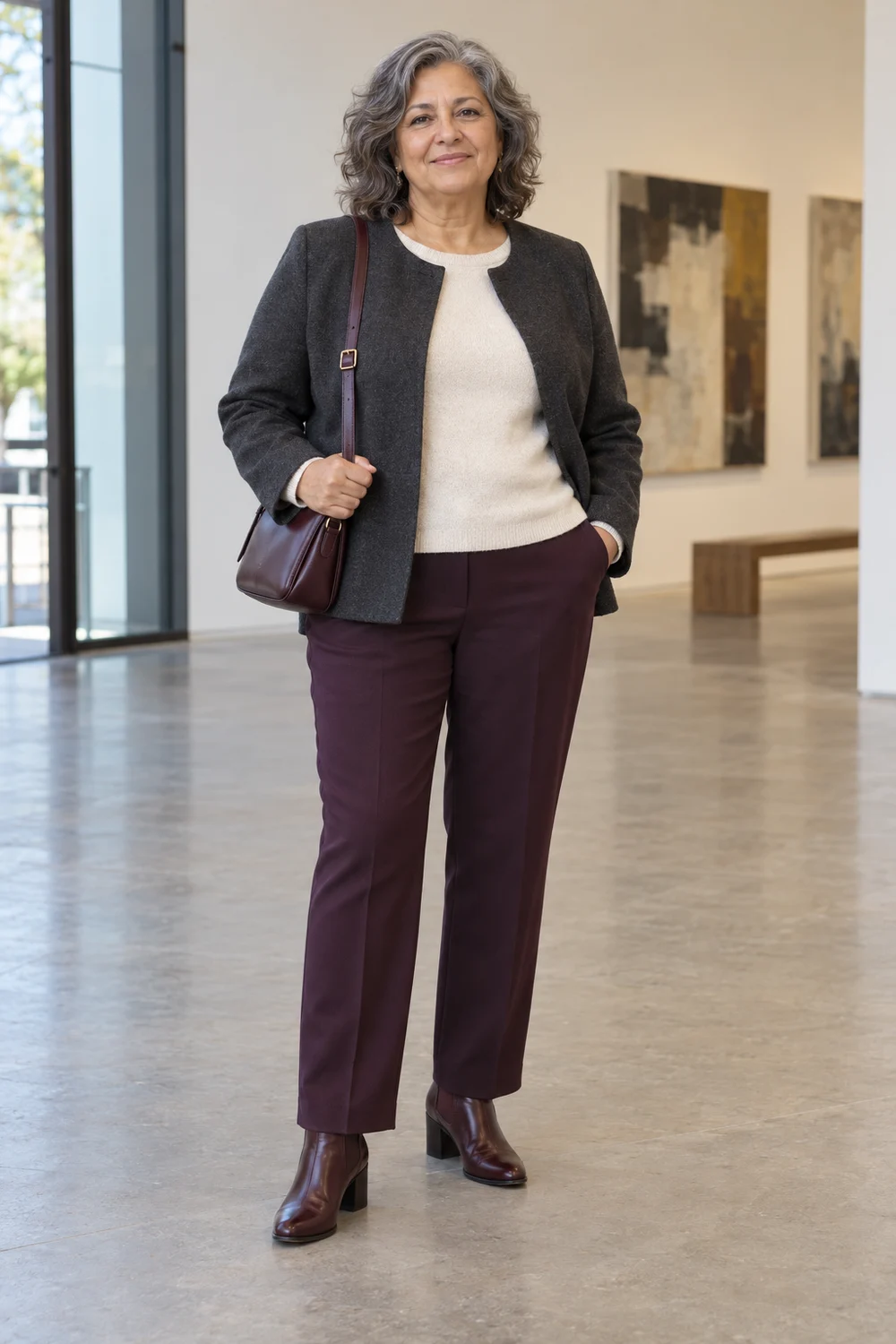
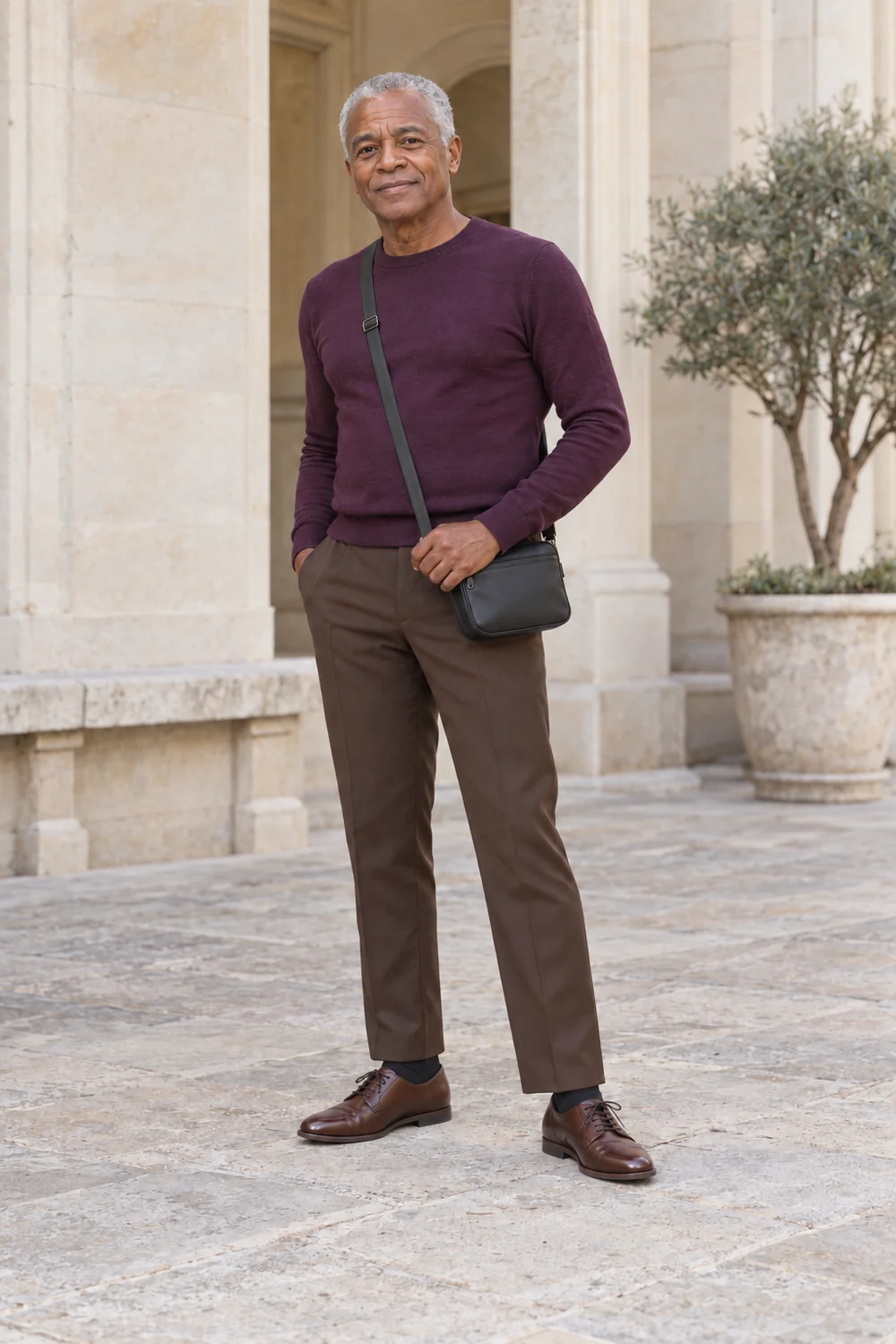
Aubergine trousers put quiet colour below a cream knit; charcoal and burgundy-family shoes add two complete routes around it.
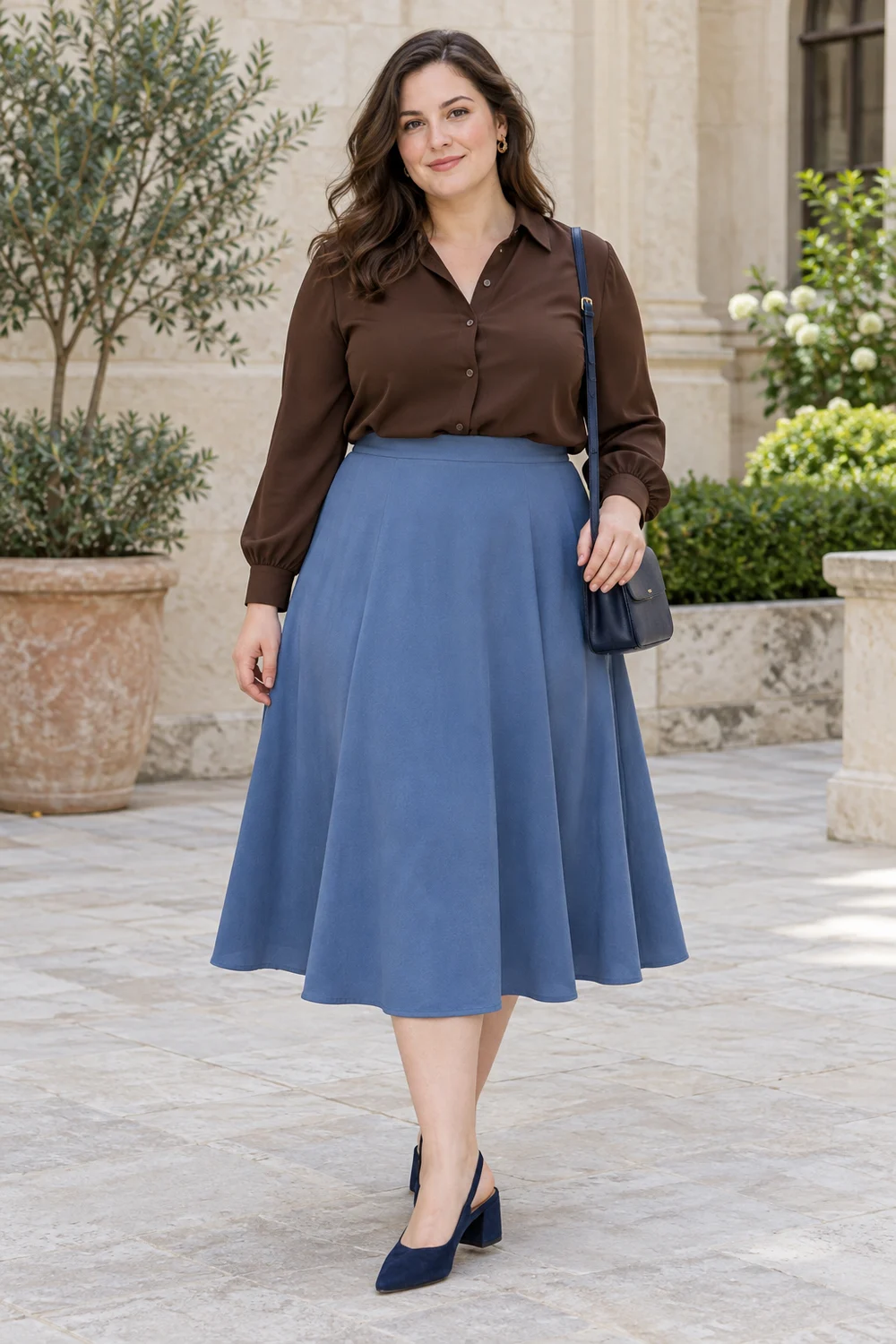
Keep a blue A-line skirt and chocolate blouse useful alone, then decide whether the matching blue jacket and either navy shoe earn space.
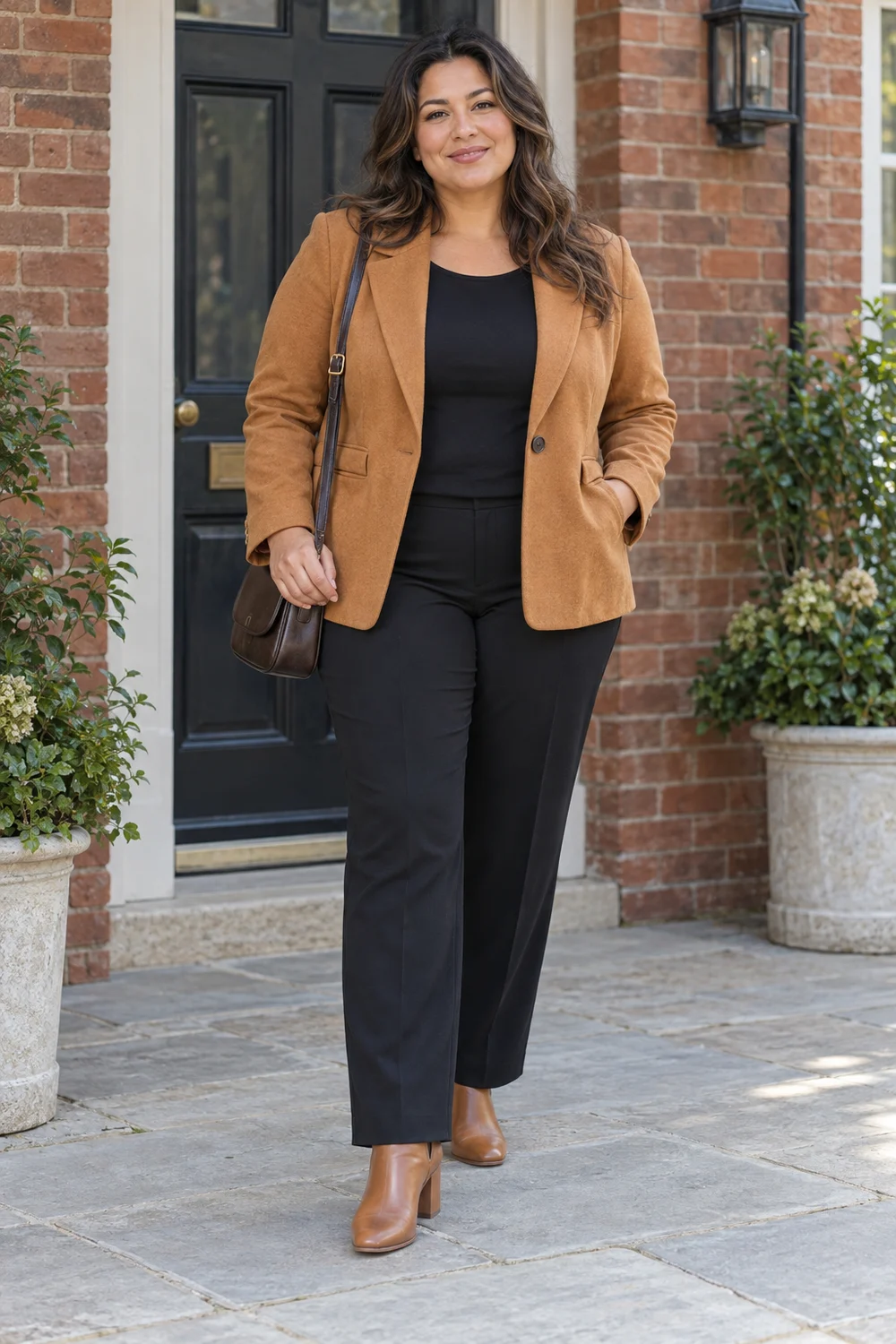
If an amber jacket is the only thing making the outfit feel finished, check the black shell and trousers as a complete base first.
Practise with the coat laid flat: choose a supported area of lapel, secure the brooch according to its fastening and check it with your bag strap.
Let a green velvet blazer be the texture, then use a fine black roll-neck, charcoal trousers and comfortable black shoes.
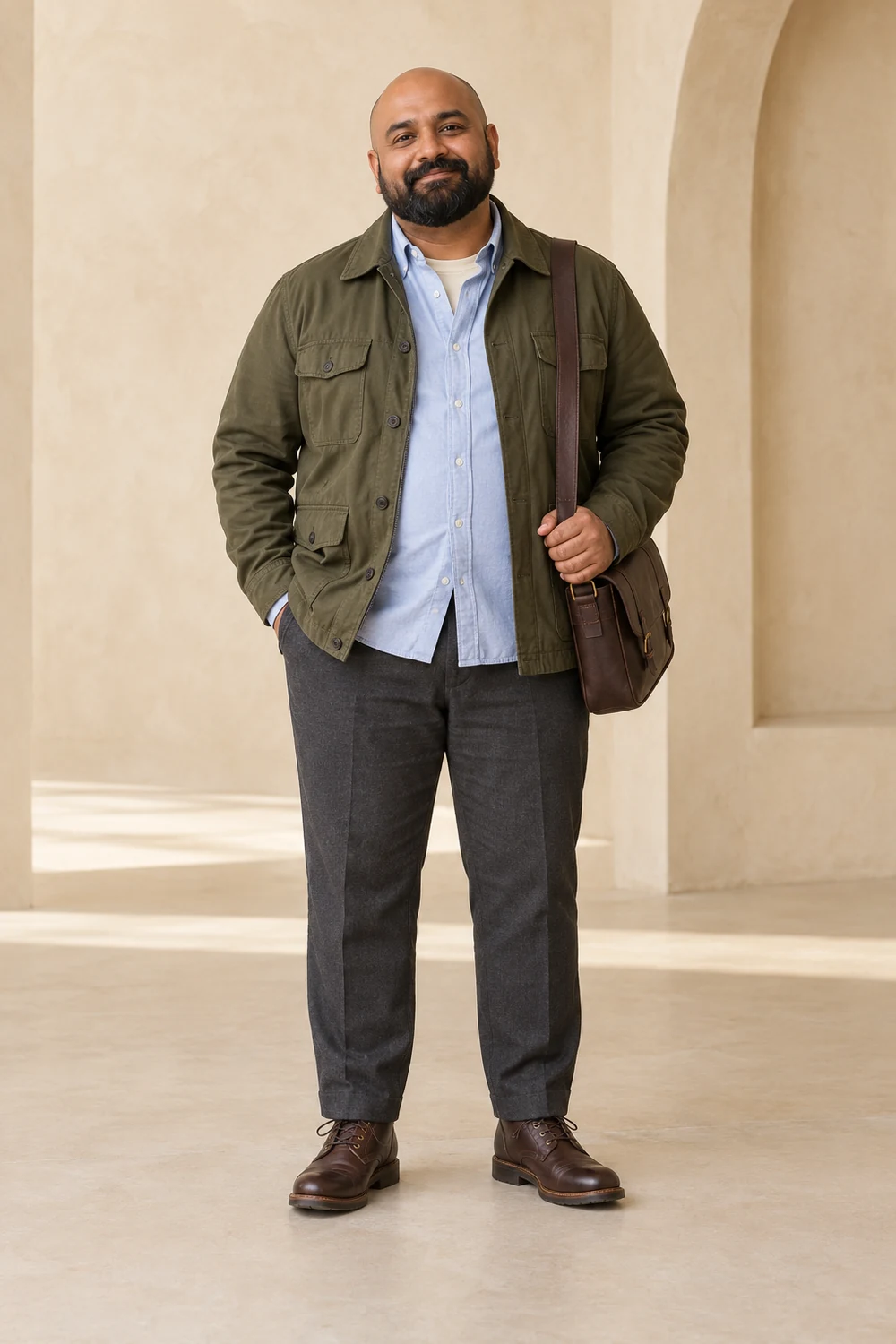
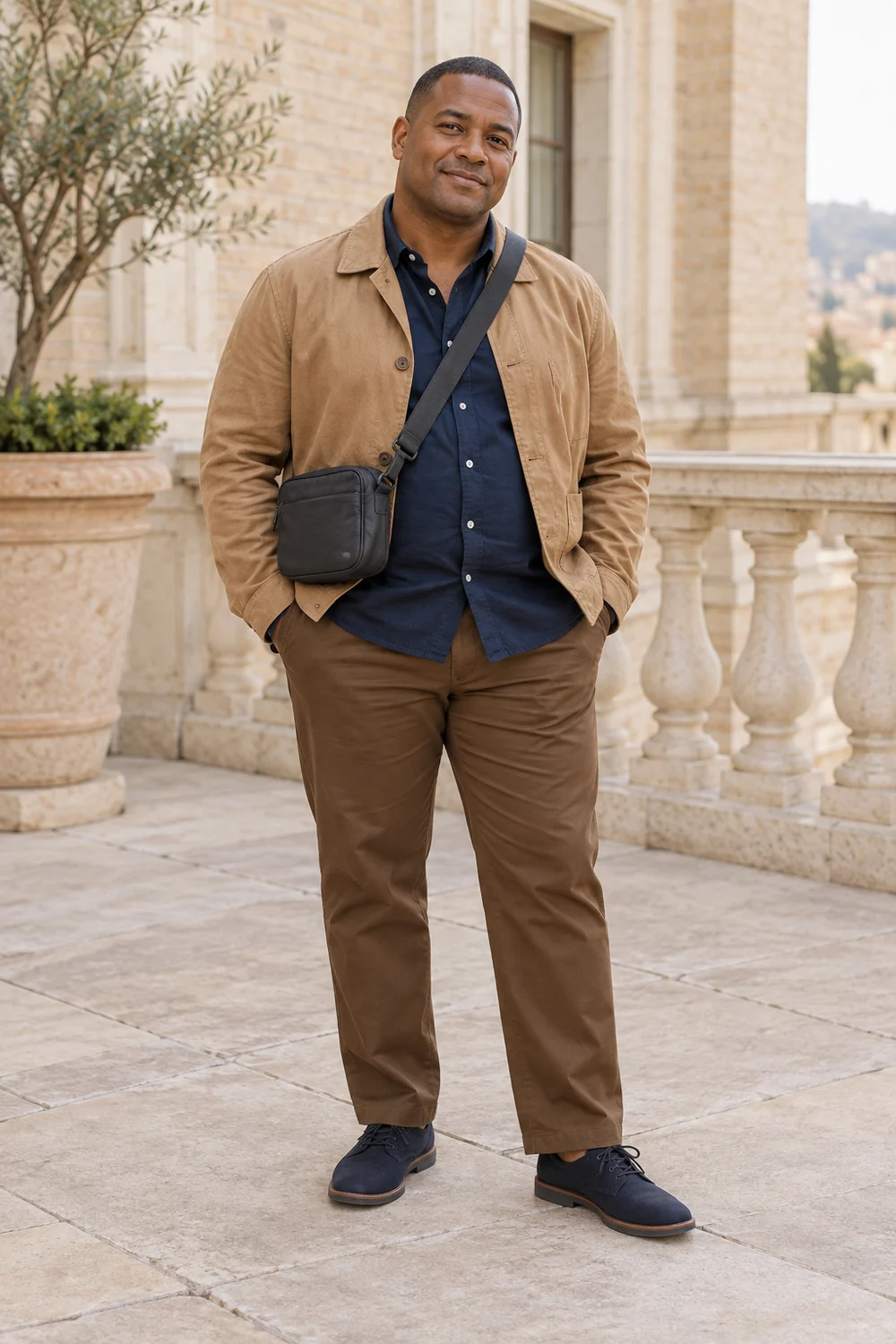
Use the field jacket as a practical outer layer over a light shirt, with charcoal trousers and brown boots.
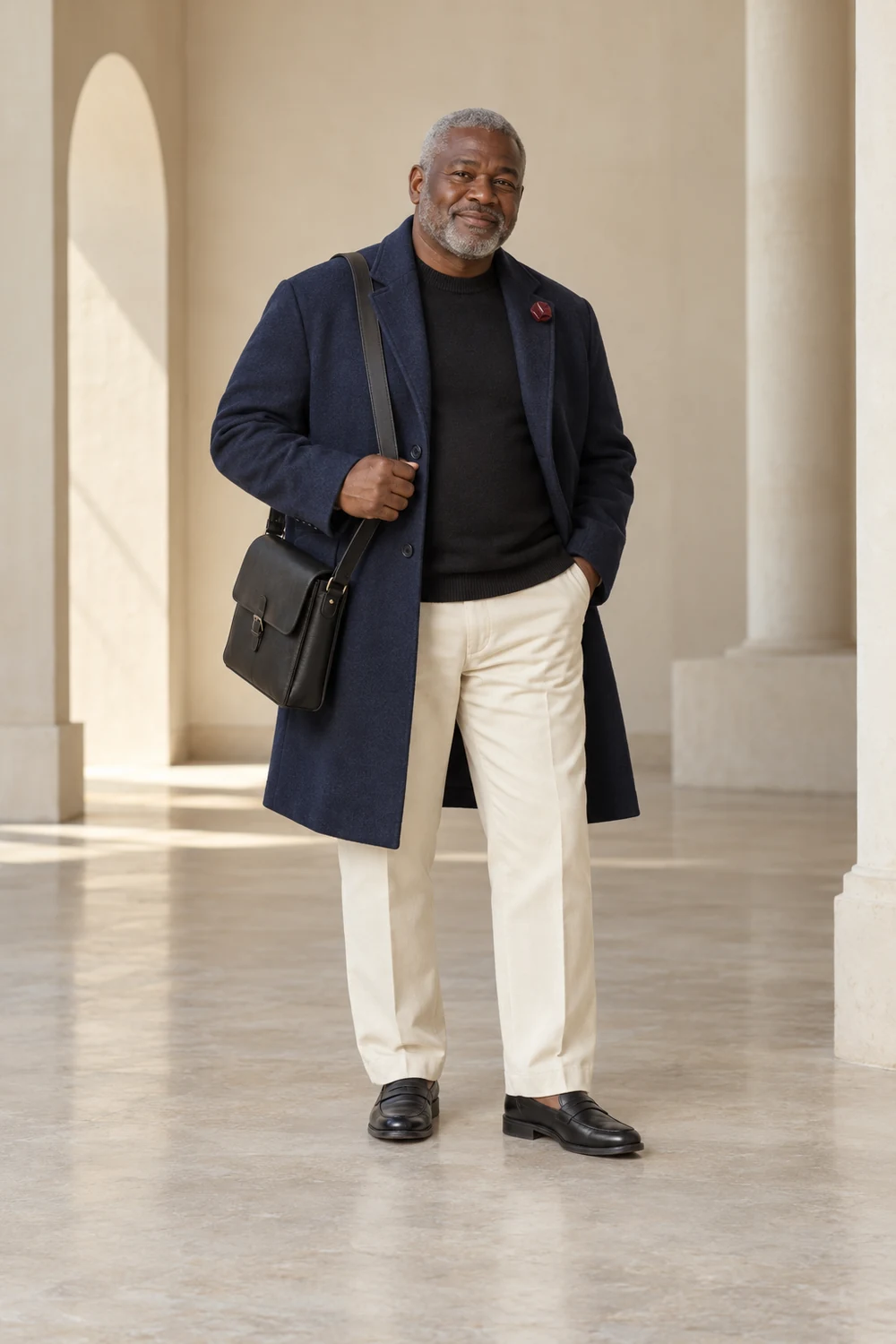
Choose coat length around your actual journey: sitting, stairs, bag access and weather.
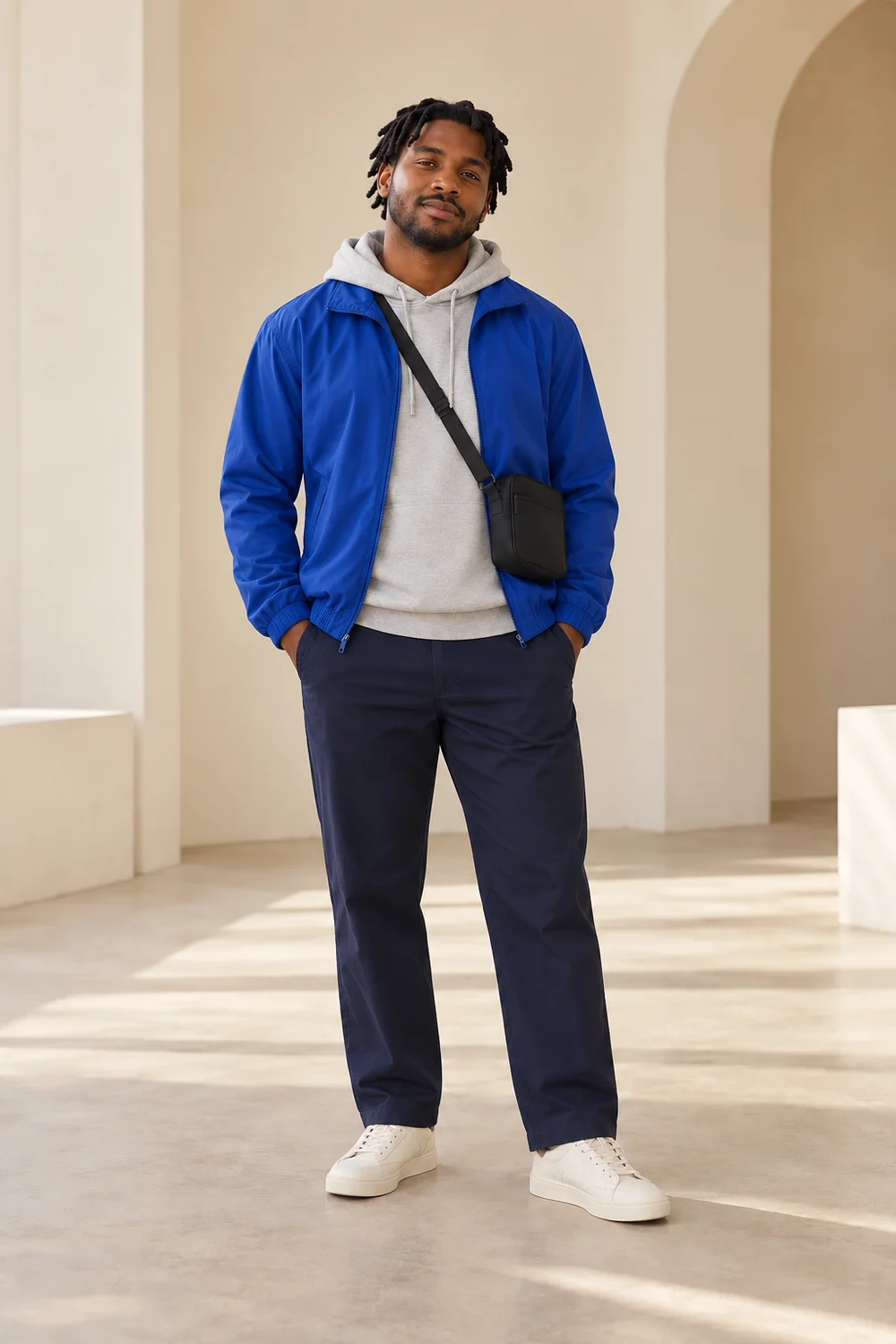
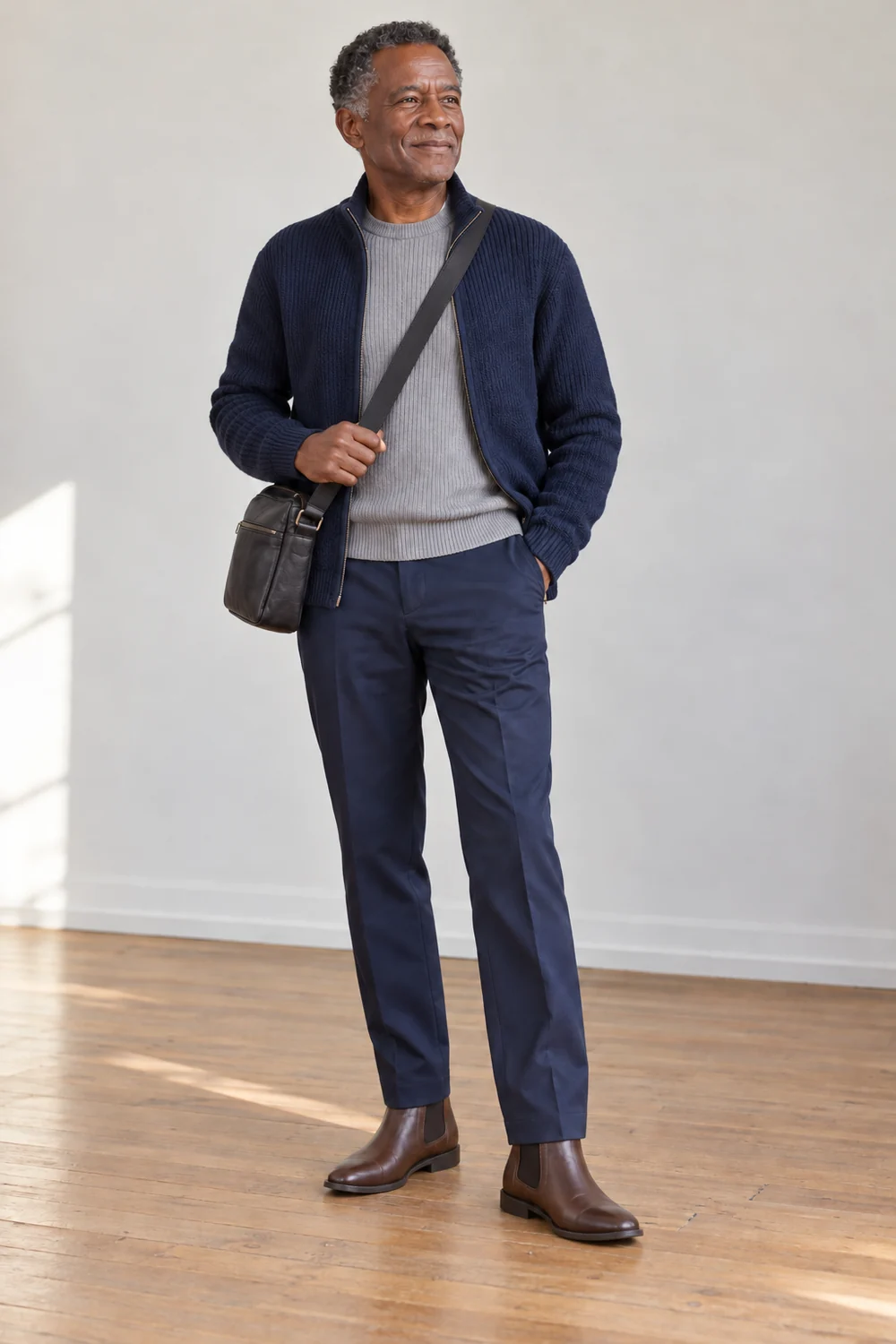
Make cobalt the outer layer and keep grey, navy and cream underneath.
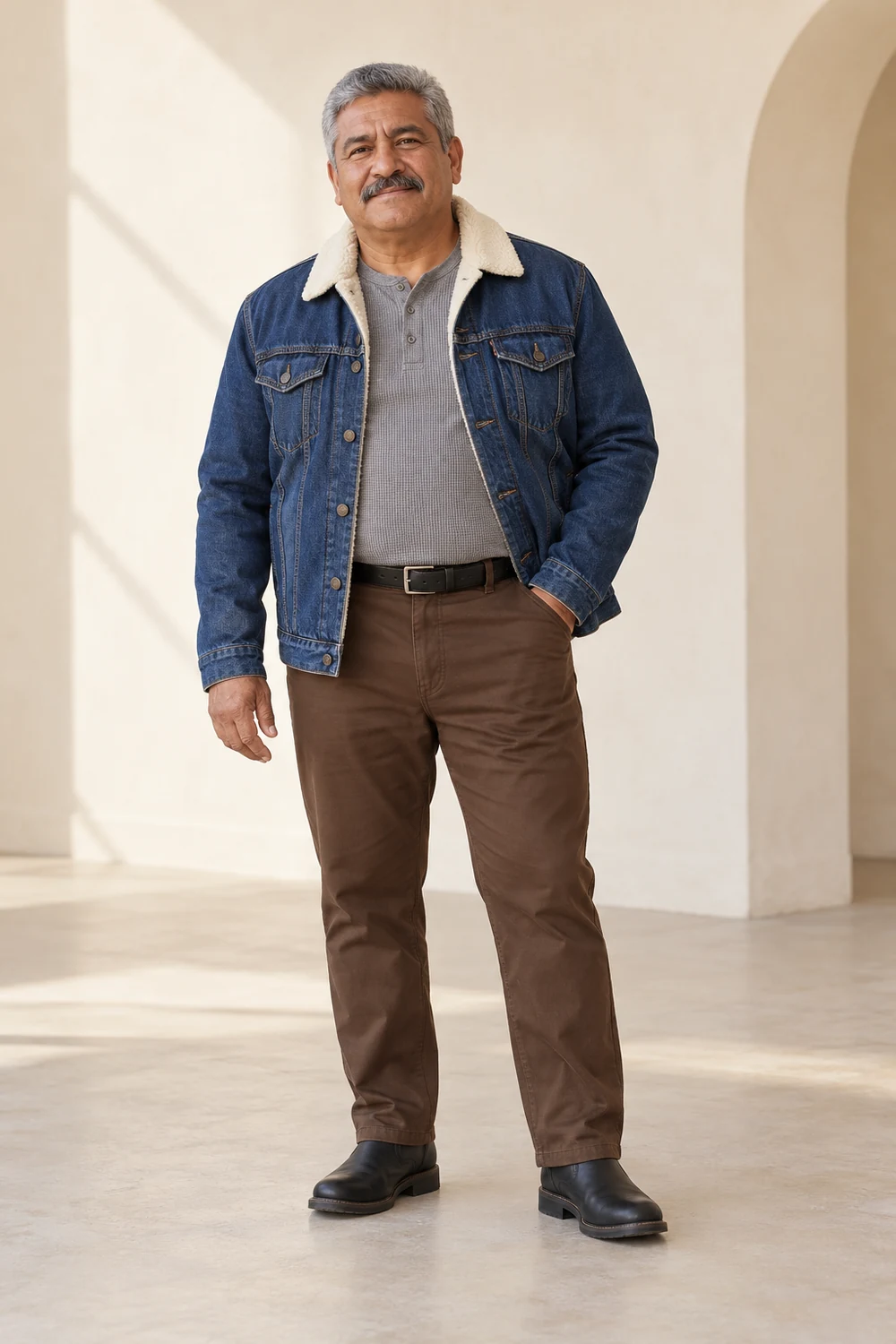
If a lined denim jacket feels cramped, compare the lining, sleeve room and inner-layer thickness separately.
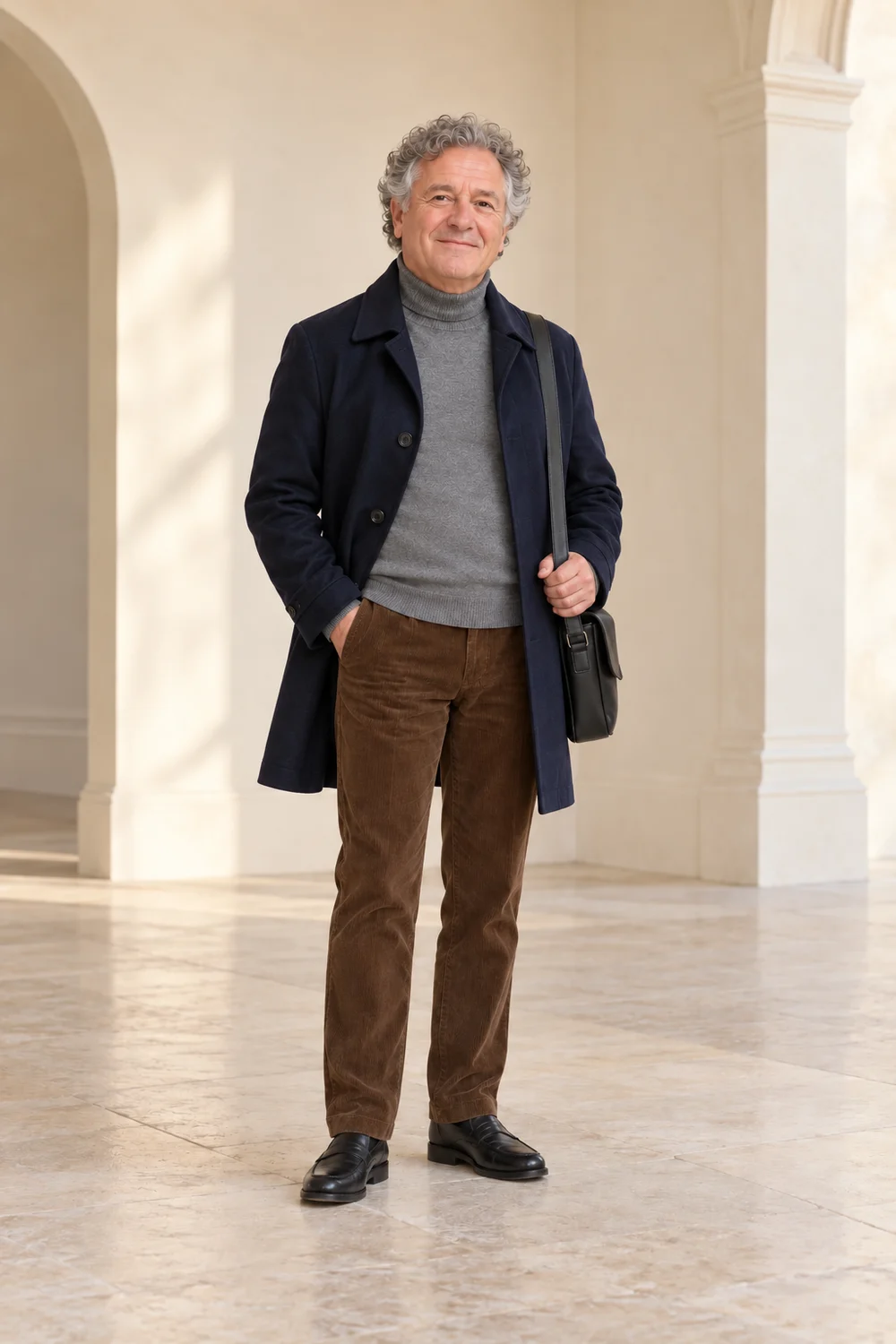
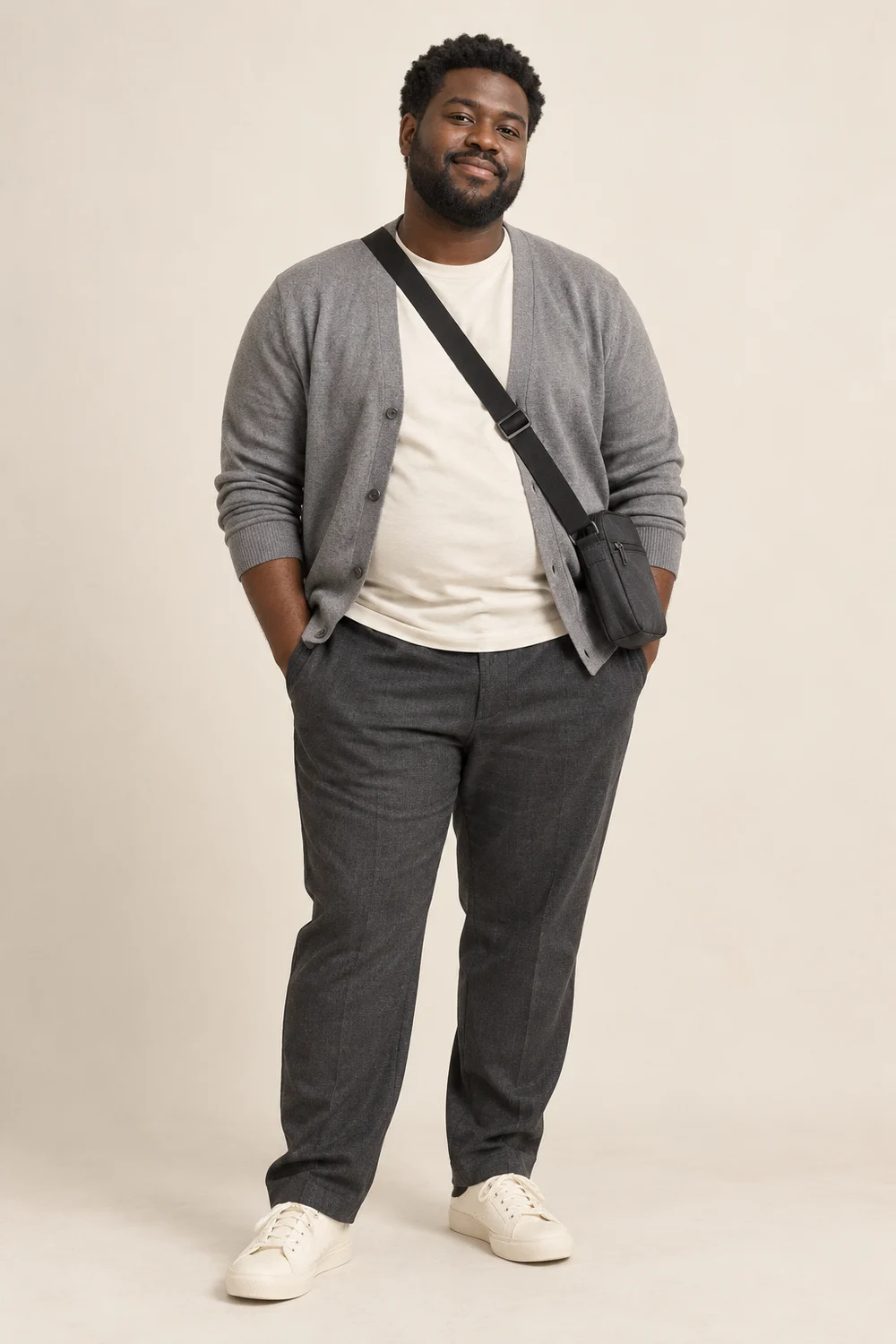
Start with a coat, fine knit, shirt, comfortable trousers and dependable shoes.
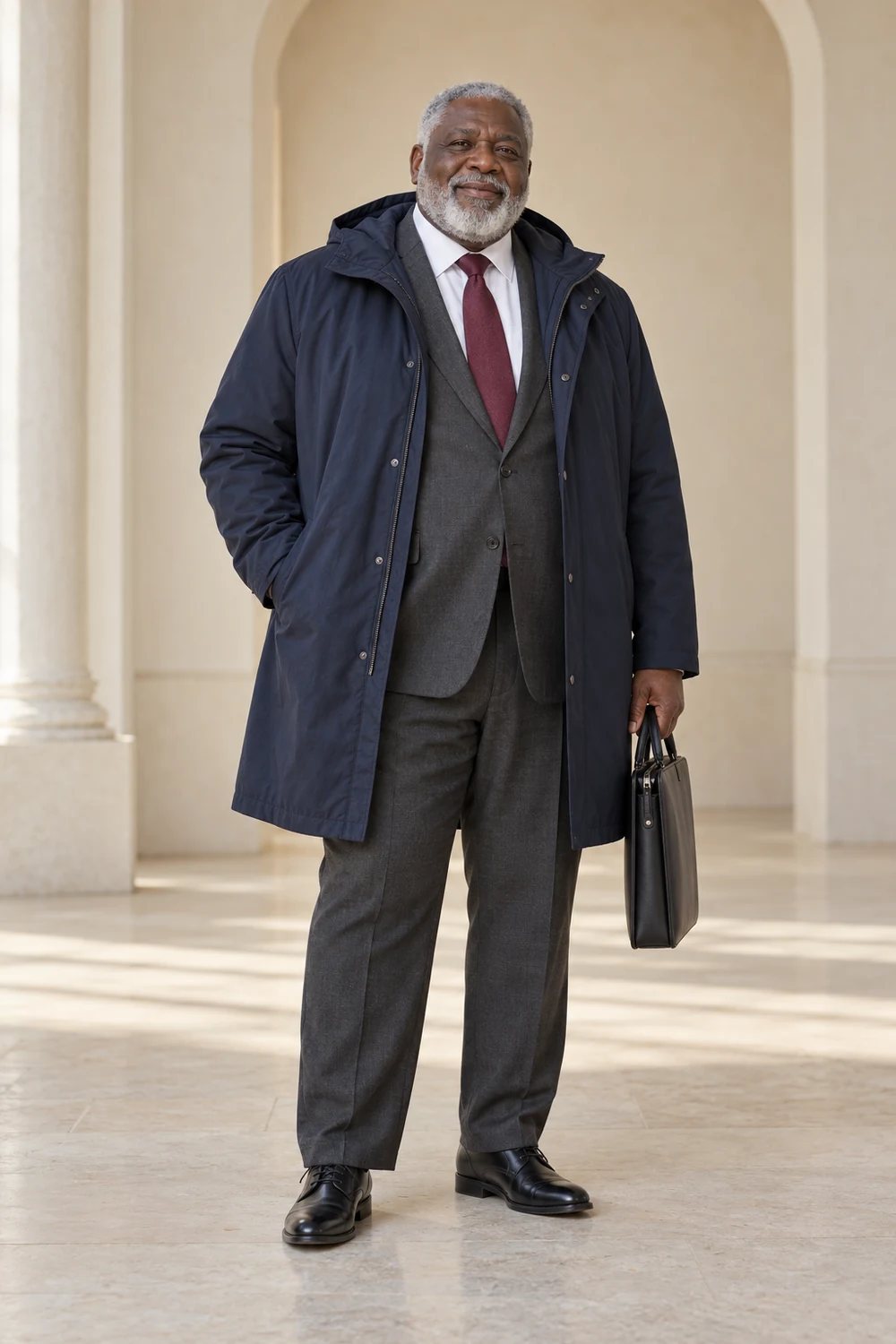
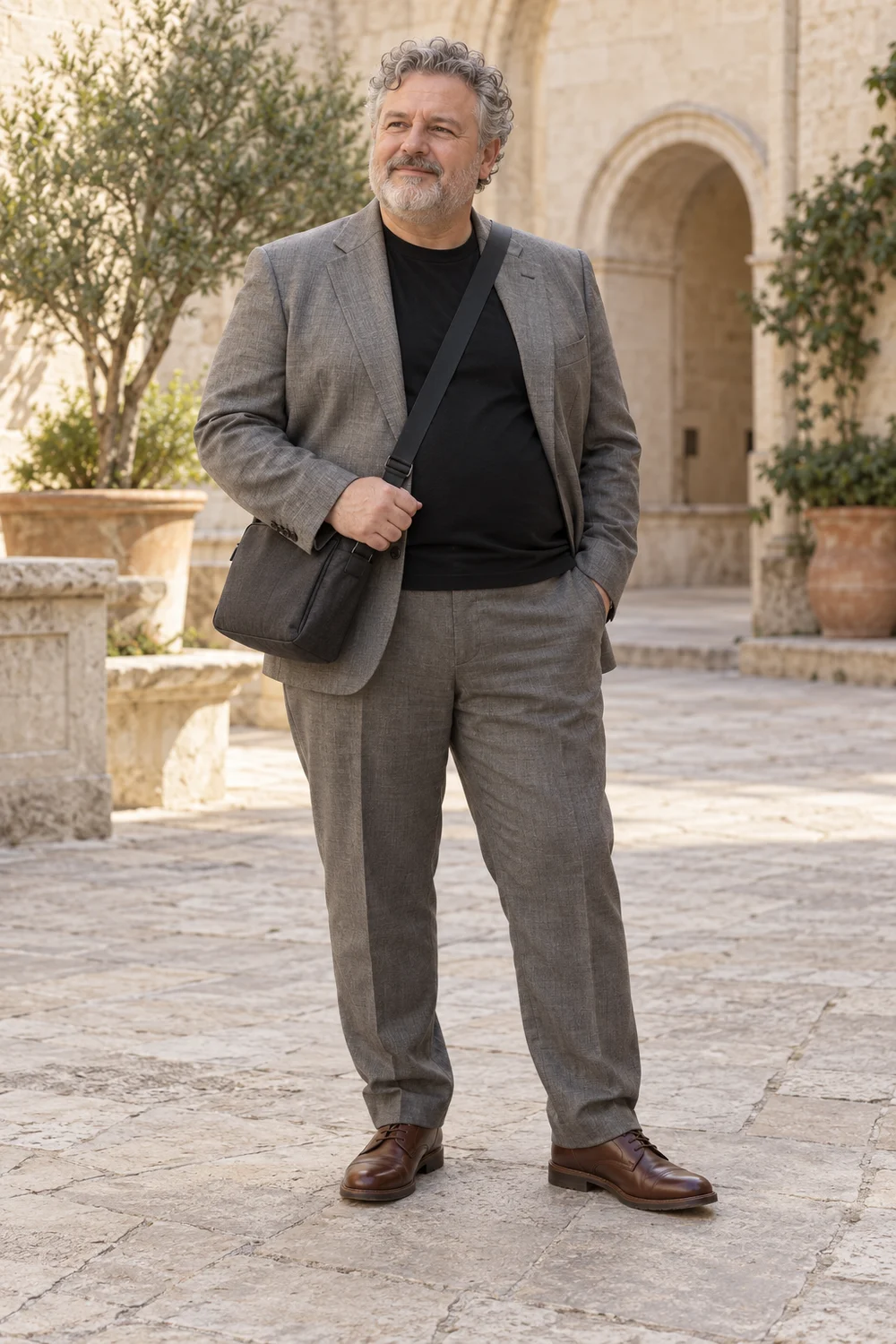
Choose an outer layer that fits over the complete suit and suits the forecast, then check the event’s expectations.
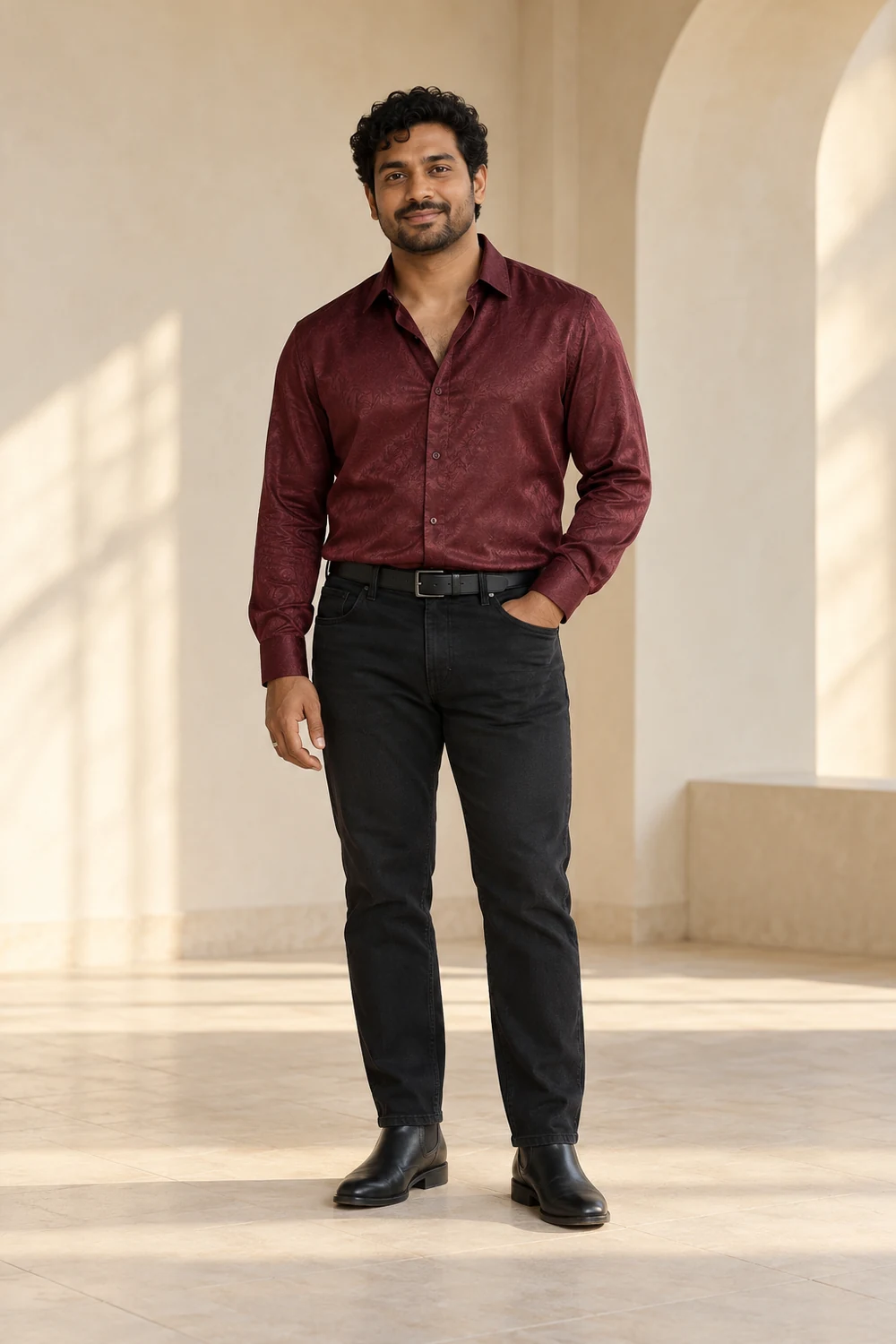
Choose one textured shirt and keep the trousers and shoes plain.
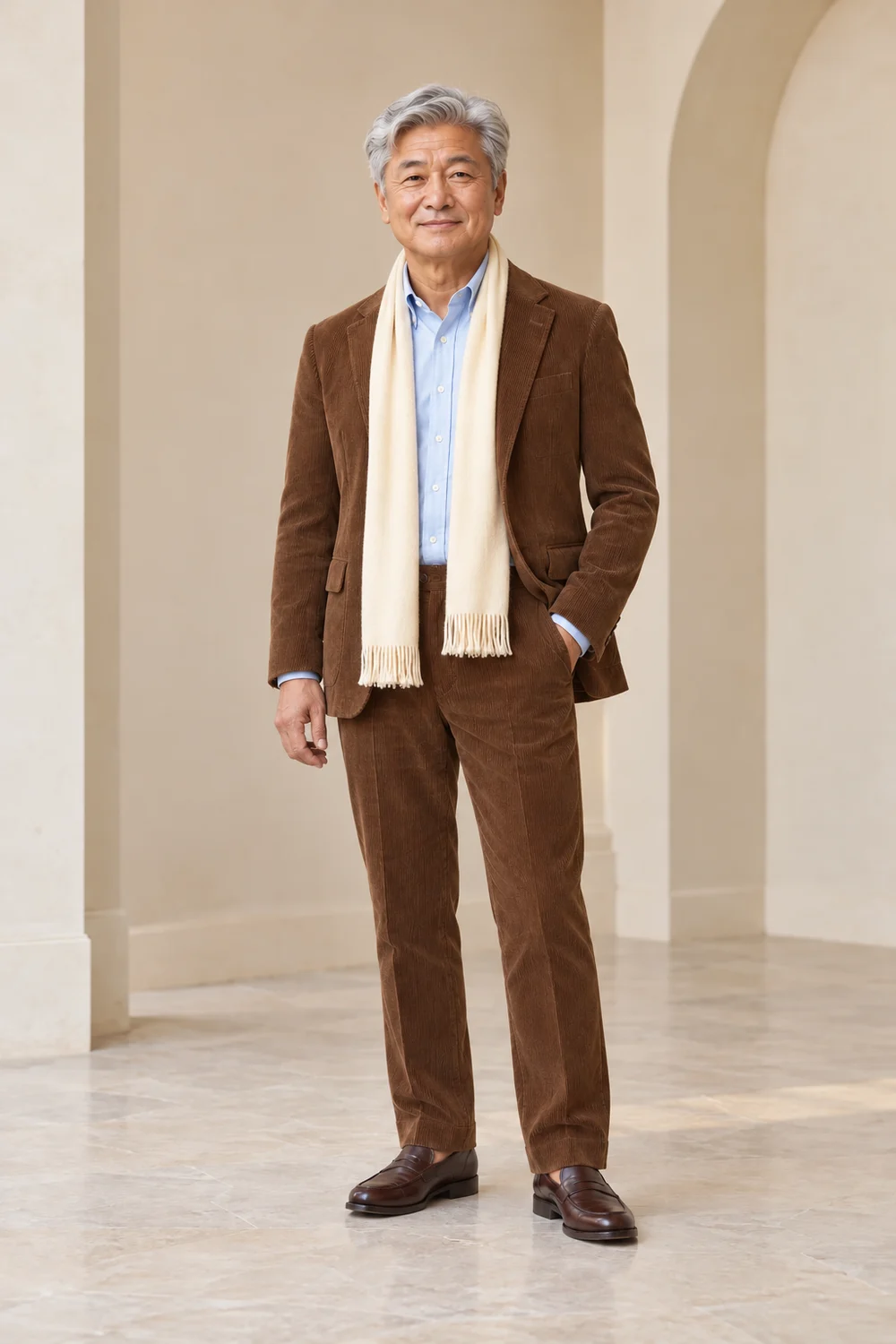
Test a corduroy jacket and trousers as separate garments before treating them as a suit.
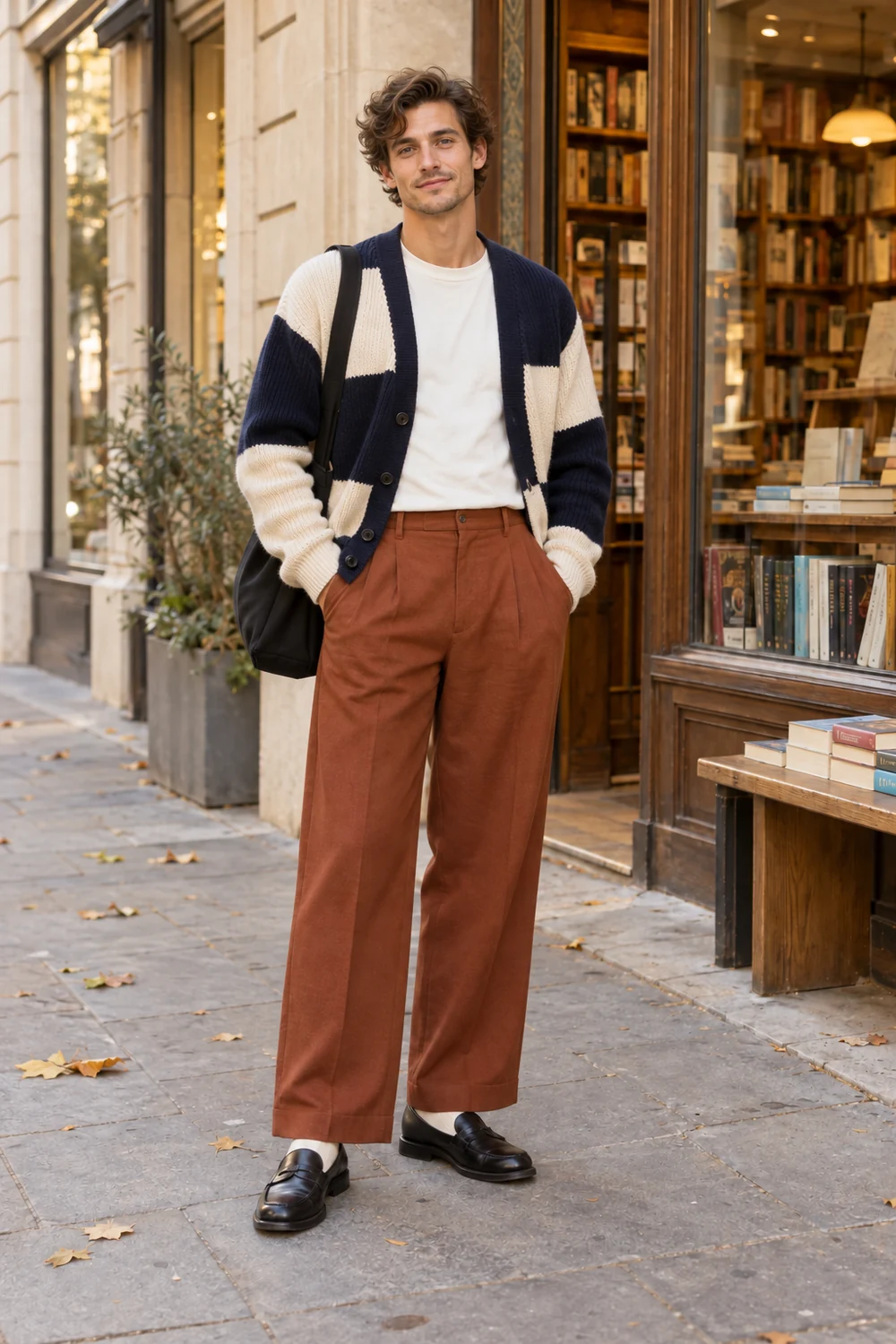
Build a playful knitwear outfit with a colour-block cardigan, rust trousers and grounded flat shoes.
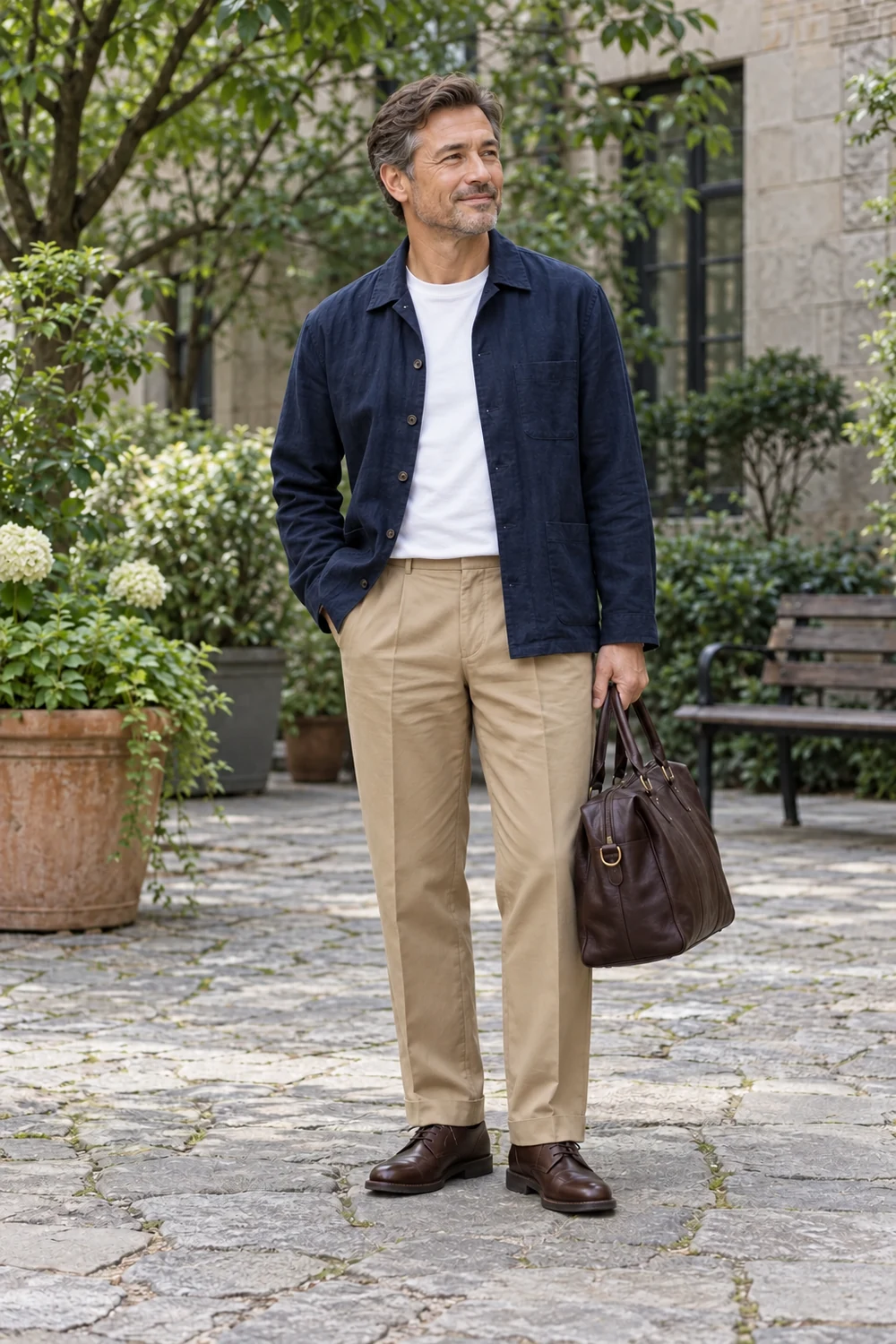
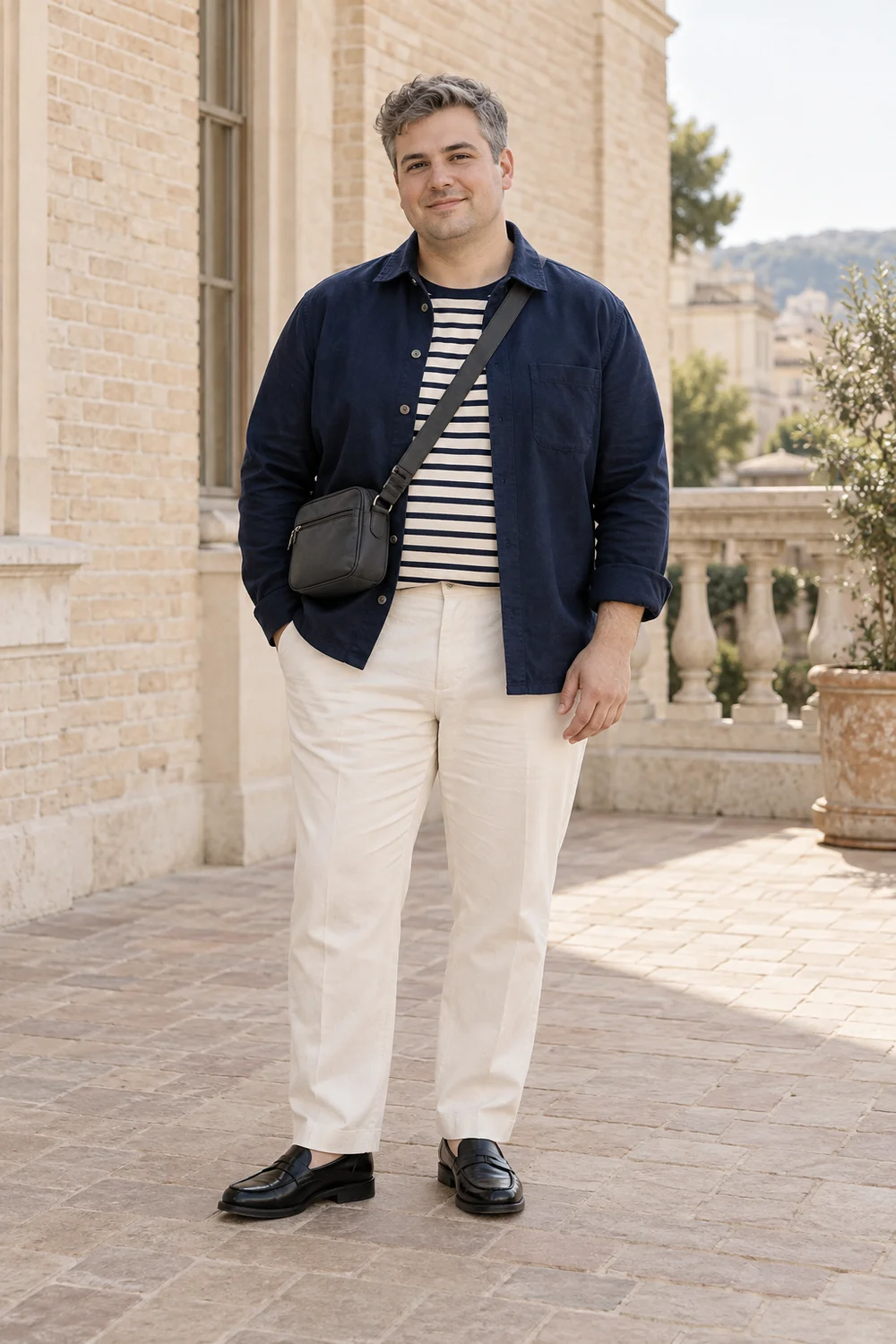
Use a navy overshirt, white T-shirt and khaki trousers for an easy alternative to a blazer.
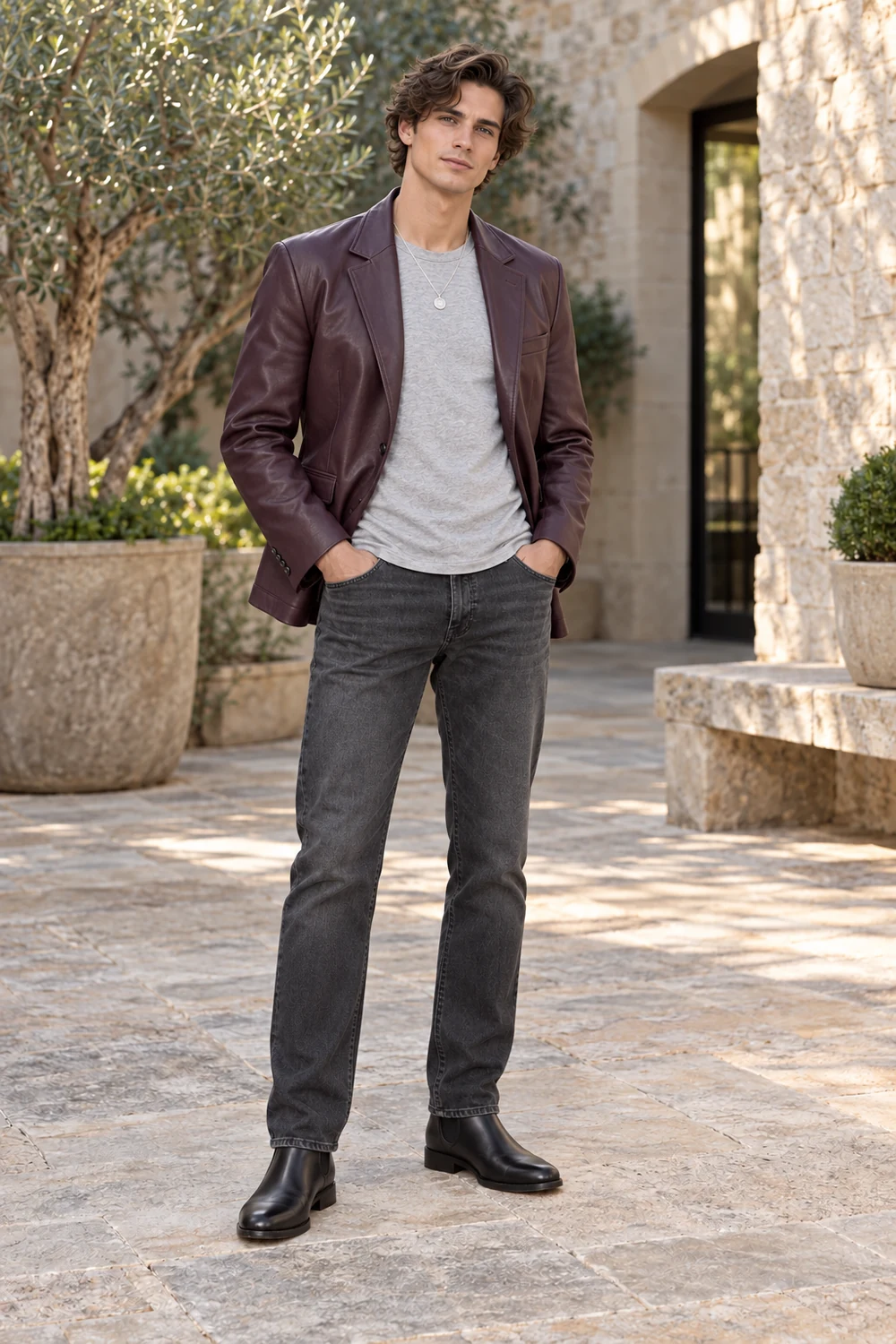
Try one plum leather-look jacket with a grey T-shirt, charcoal denim and black boots.
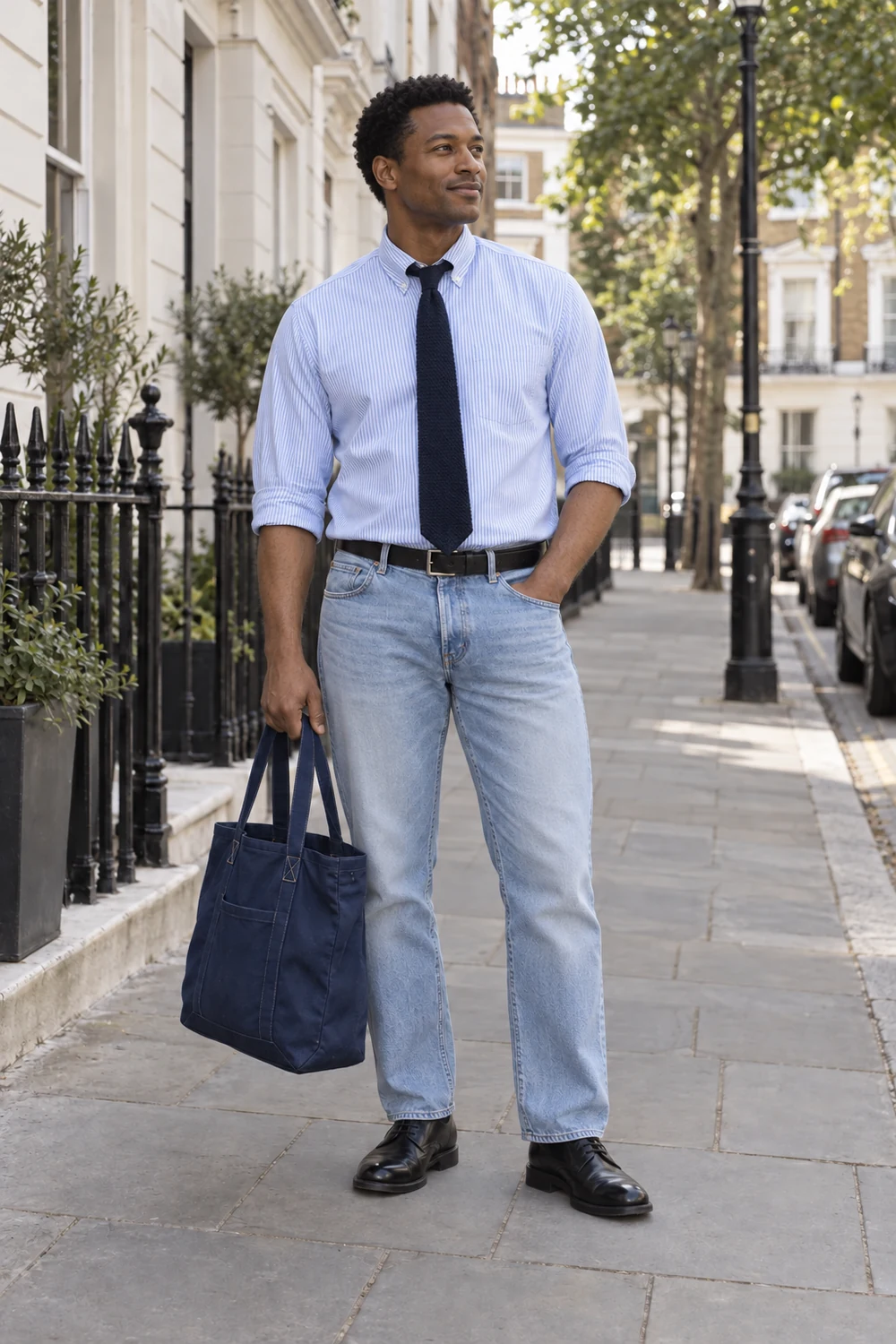
Mix a striped Oxford shirt and knitted tie with straight denim and sturdy black lace-ups.
Bring a navy suit into a relaxed setting with a fine knit and simple white trainers.
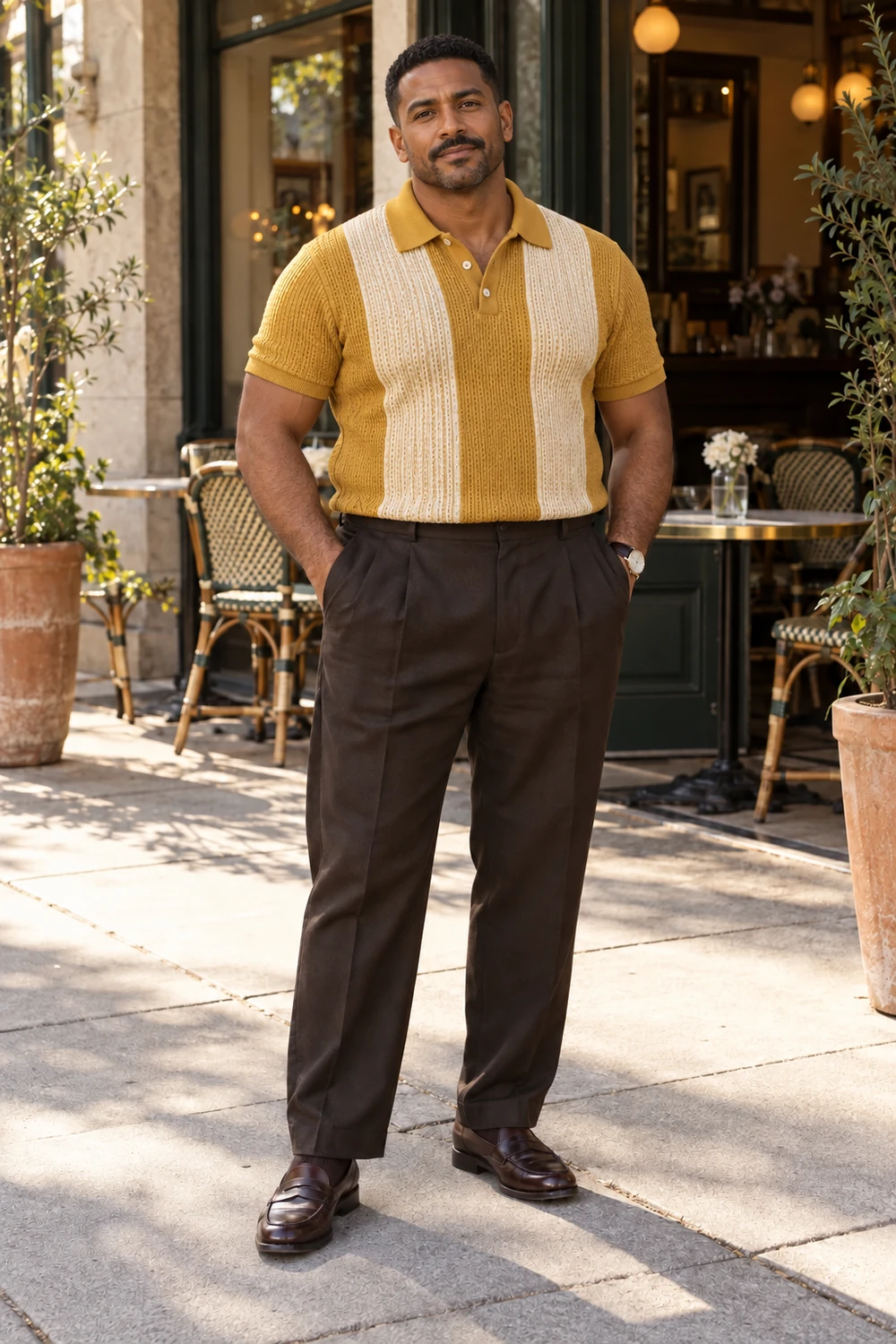
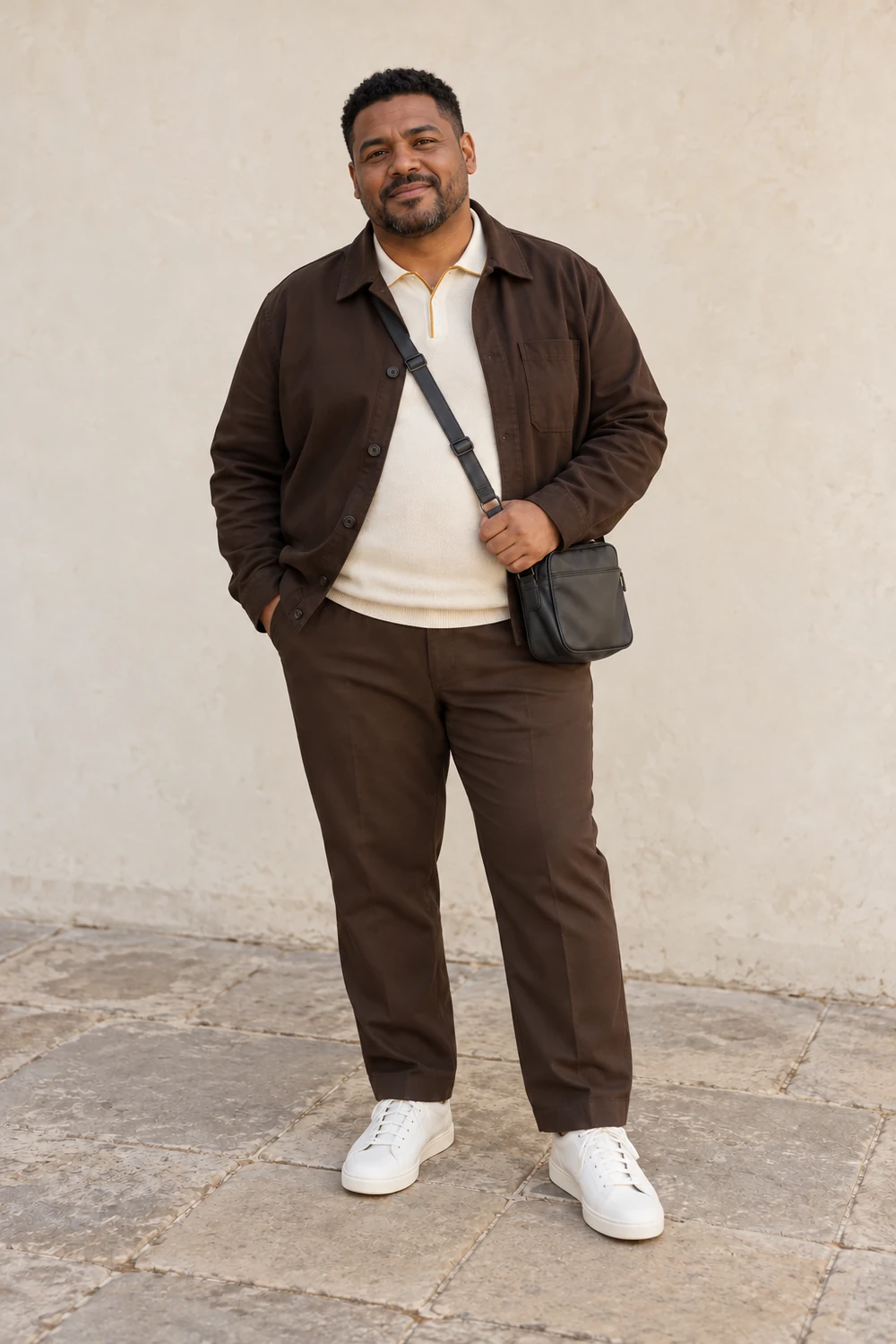
Use a textured mustard-and-cream polo with chocolate trousers for a relaxed dinner outfit.
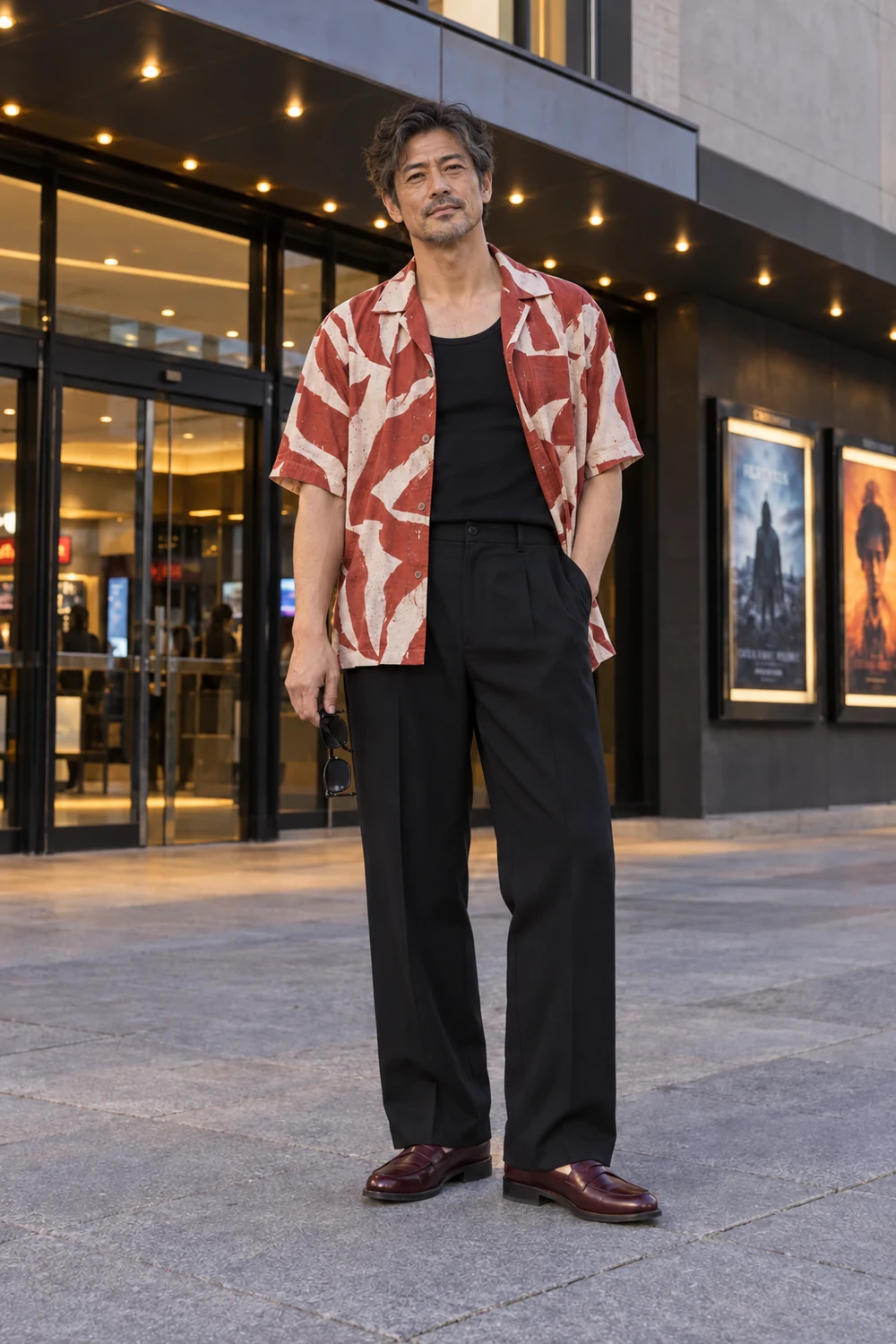
Give a brick-and-cream printed shirt space to stand out against a black base and burgundy loafers.
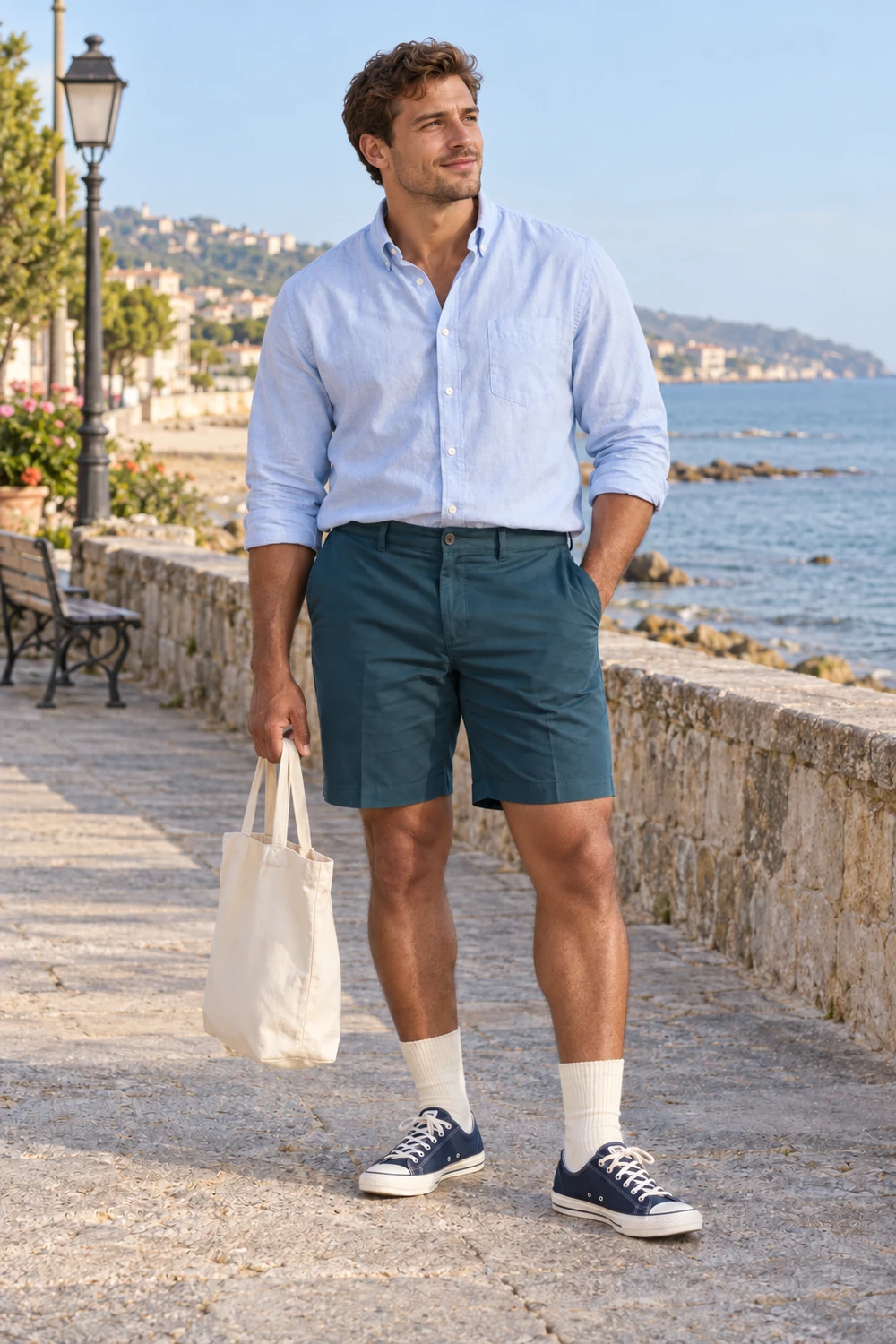
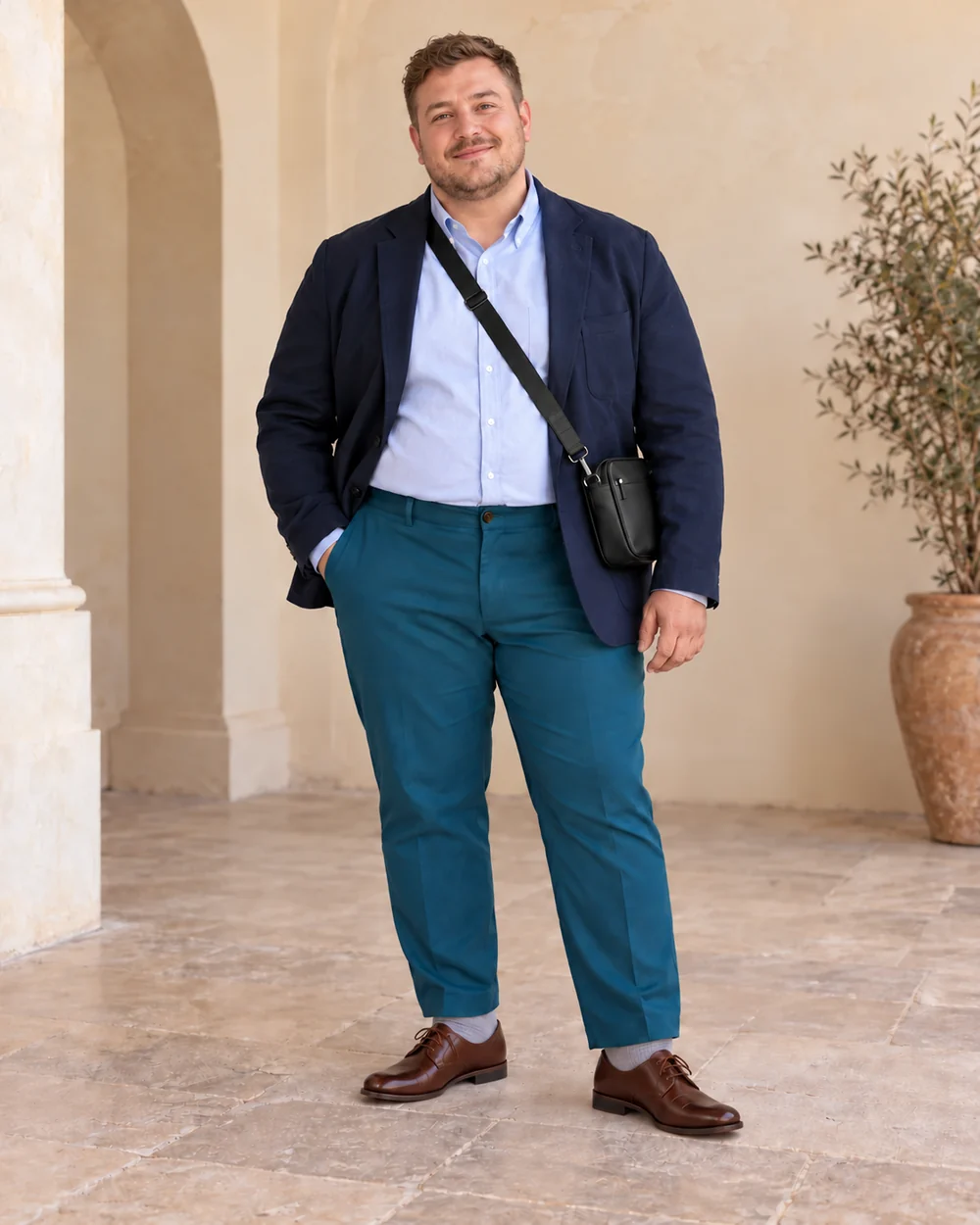
Combine a pale Oxford shirt, teal shorts and canvas trainers, choosing the inseam for your comfort.
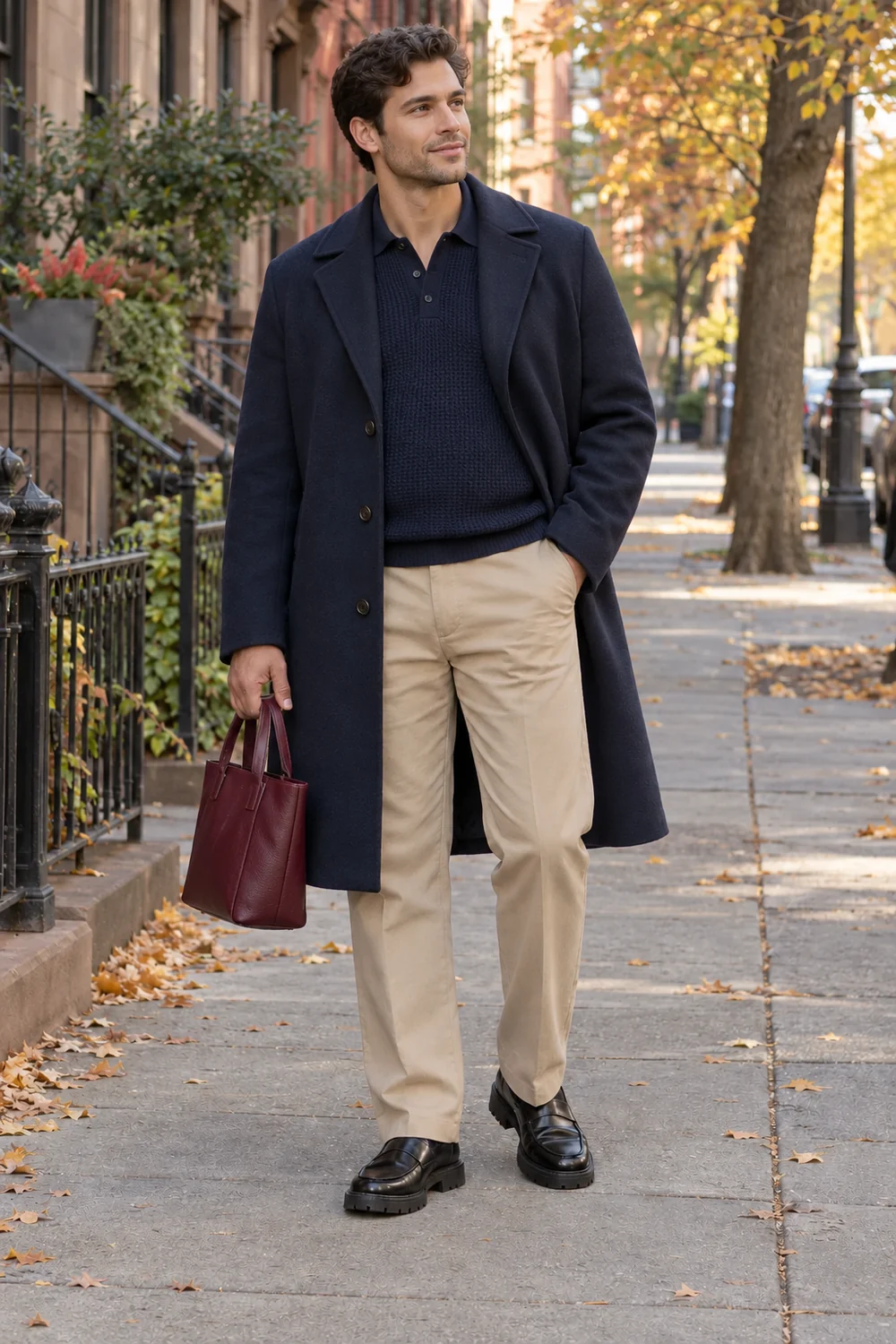
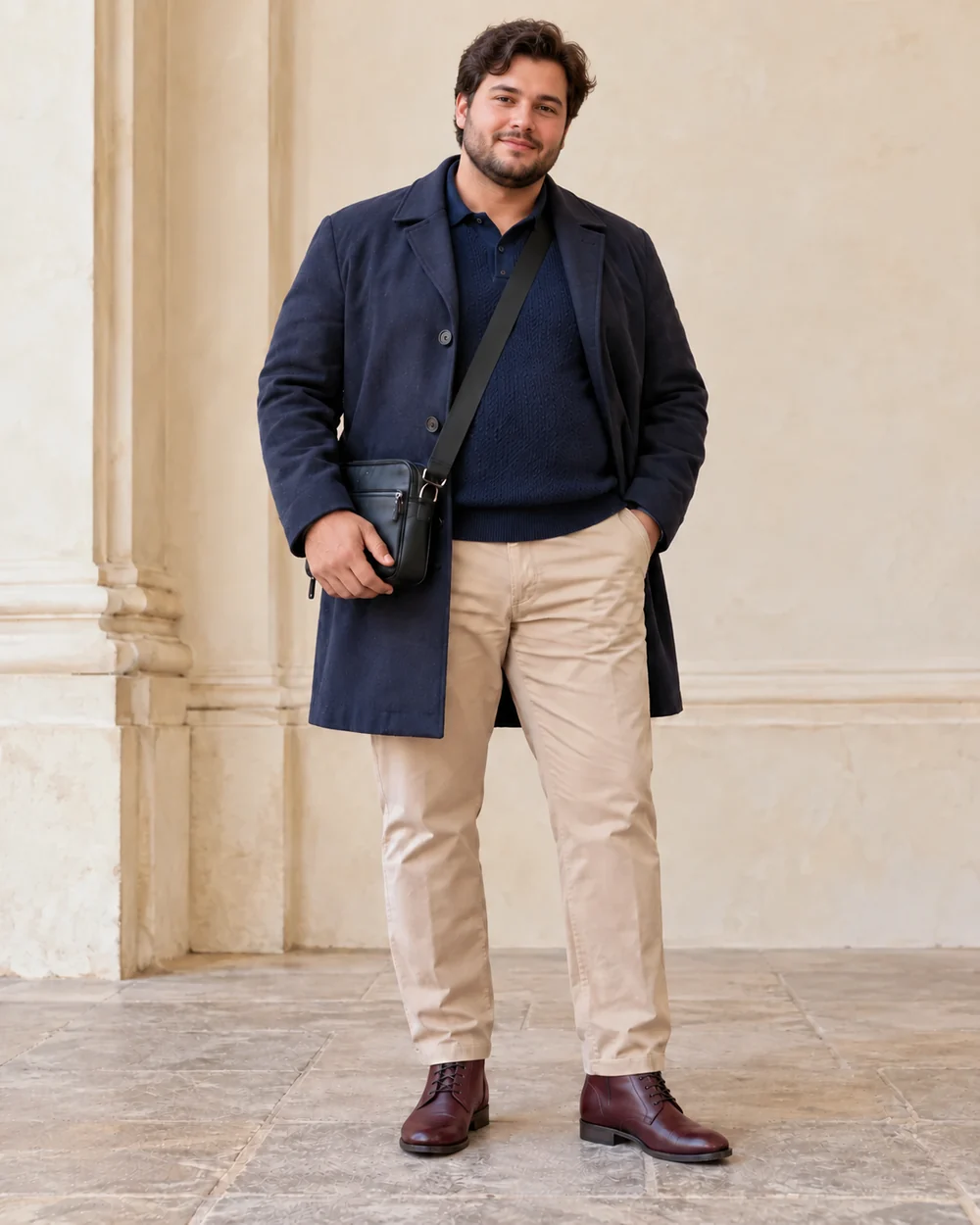
Layer a textured navy polo beneath a roomy city coat, with sand trousers and substantial loafers.
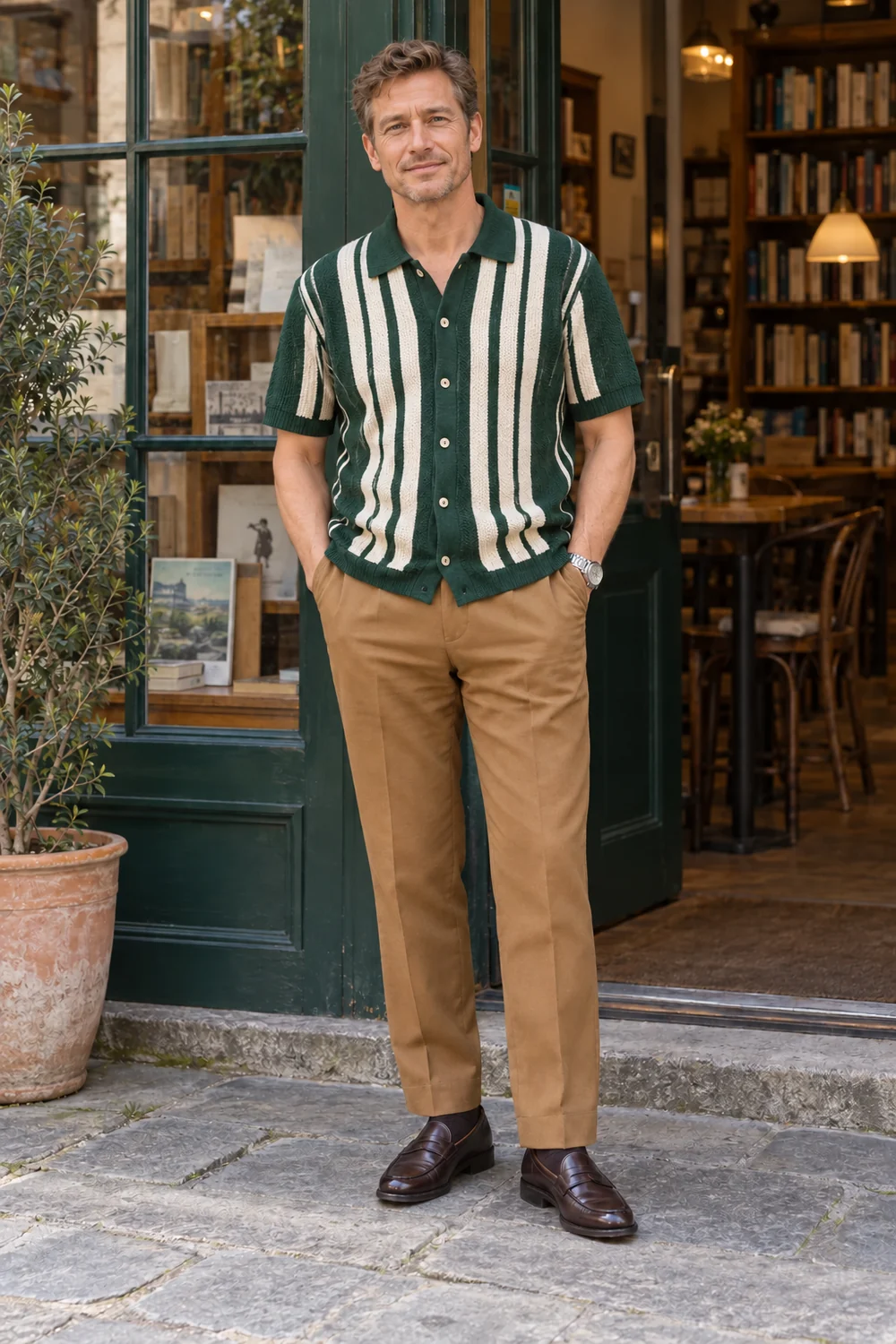
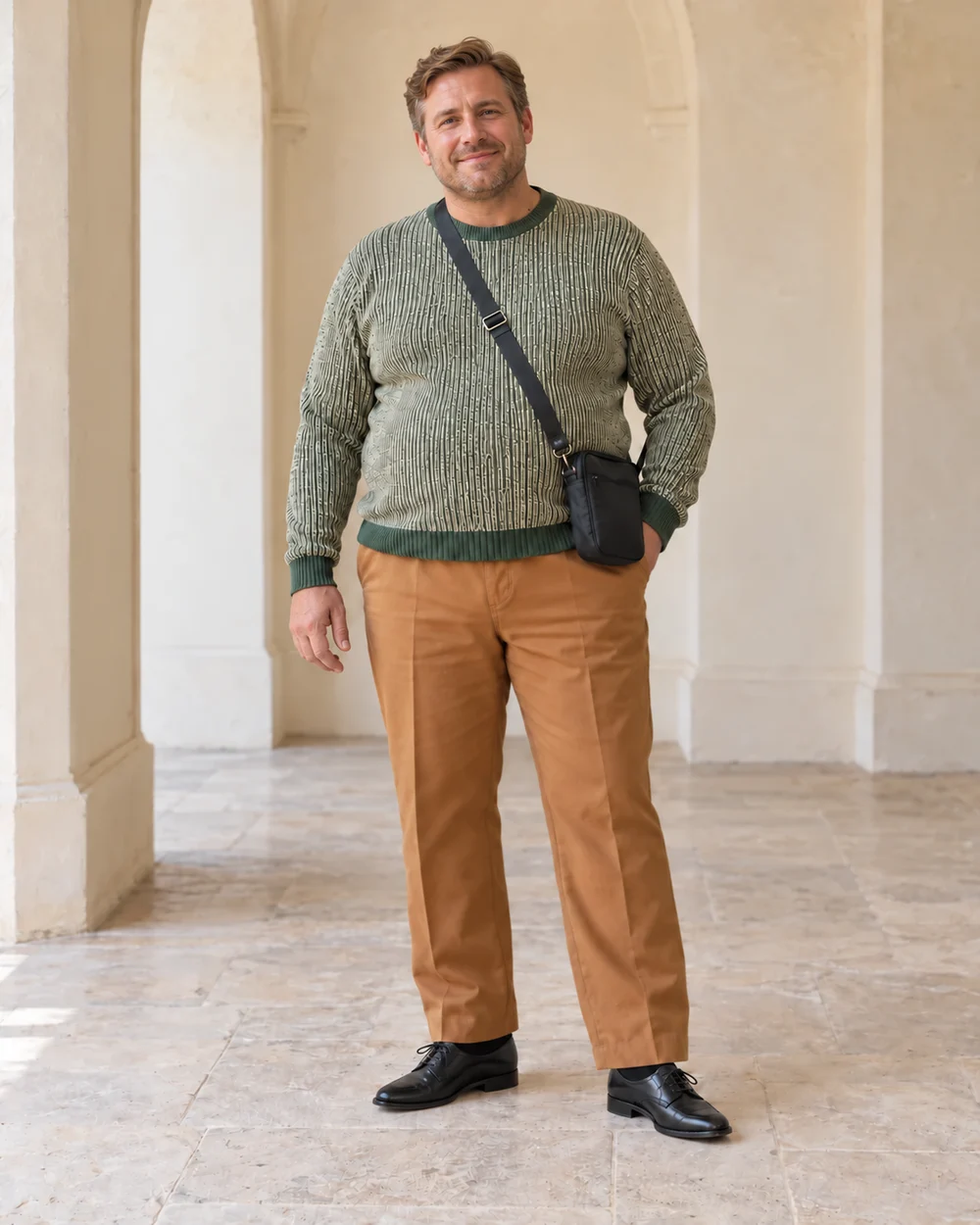
Give a full-button green-and-cream knit a relaxed finish with caramel trousers and brown loafers.
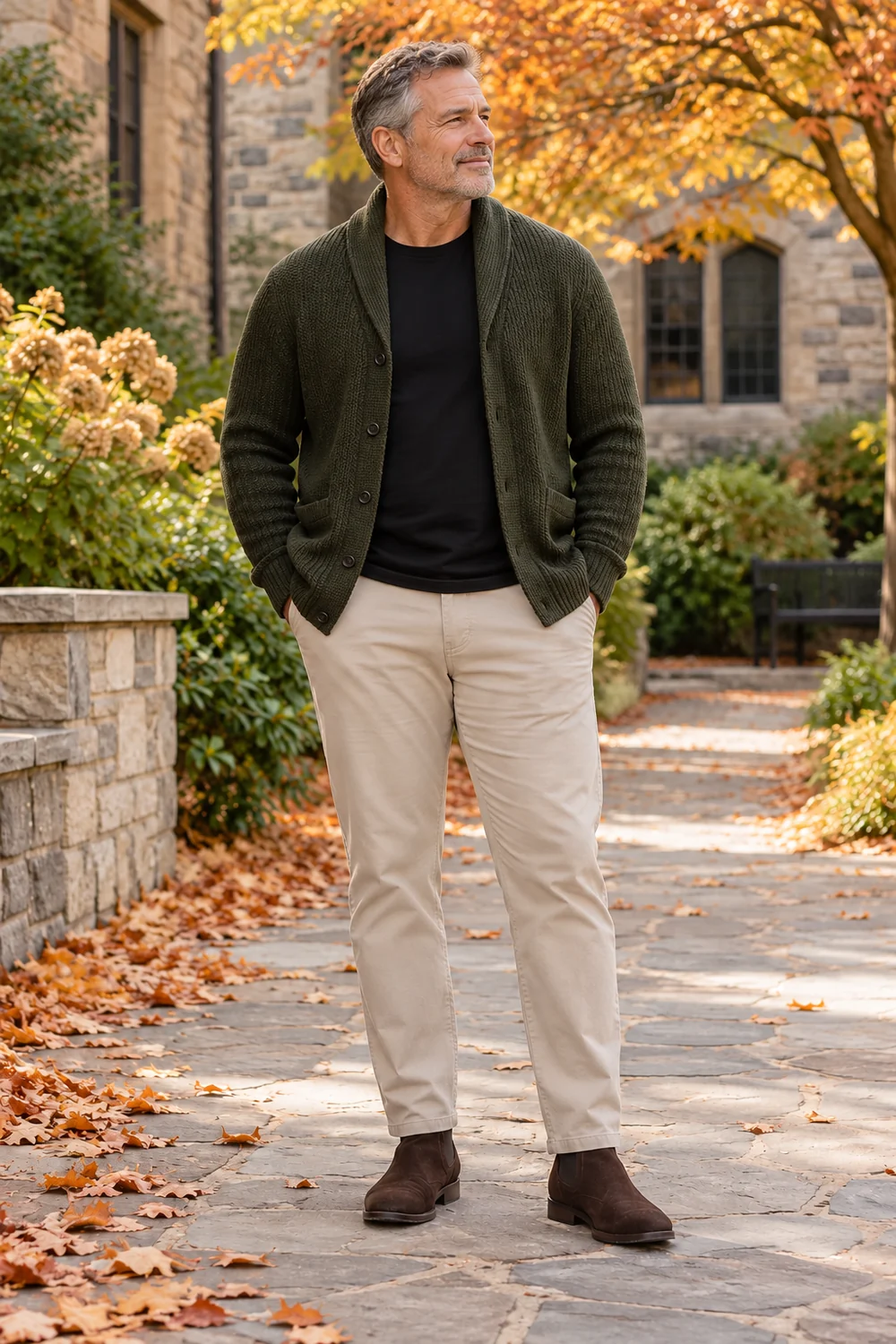
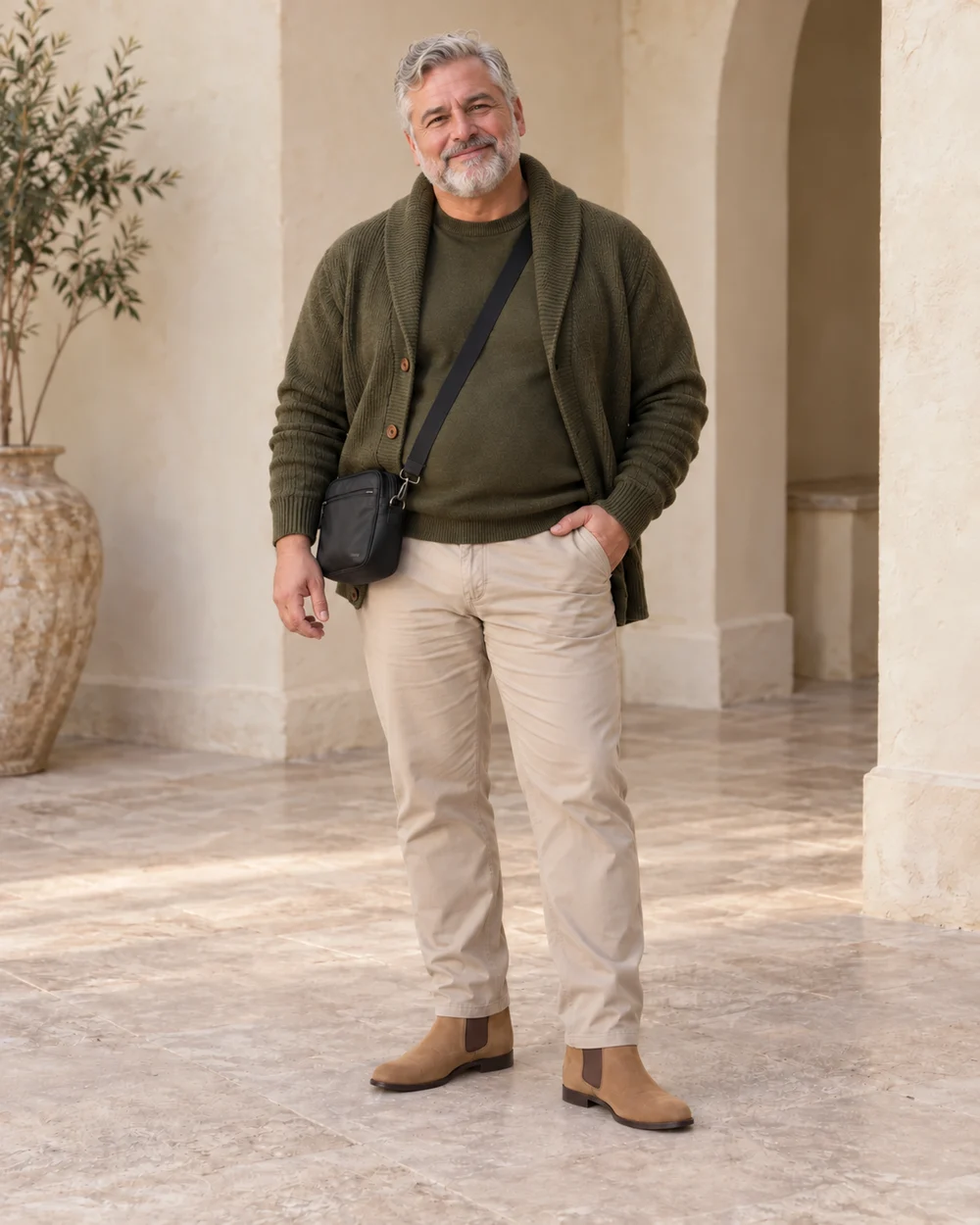
Use a dark olive shawl cardigan over black, with stone chinos and brown ankle boots.
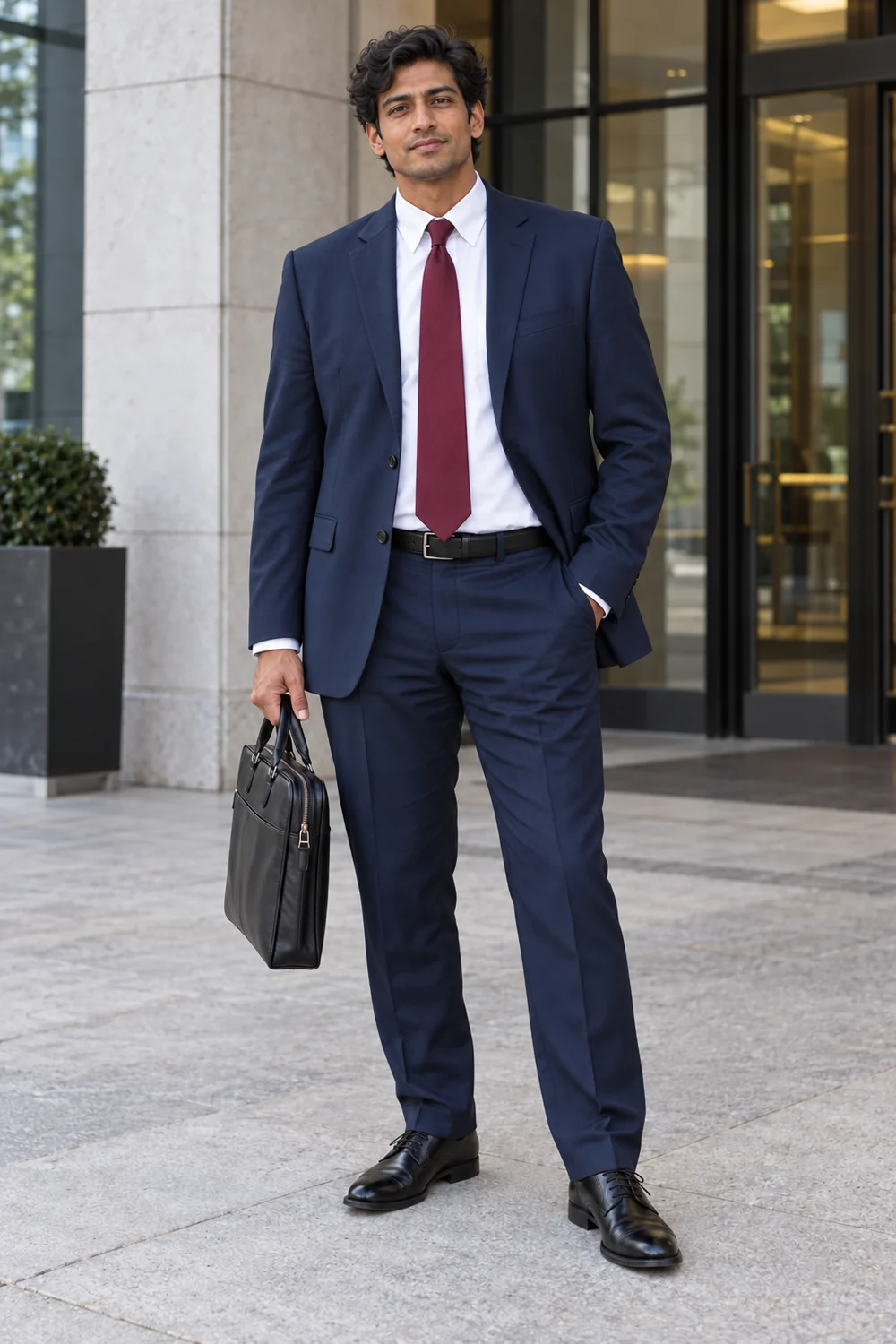
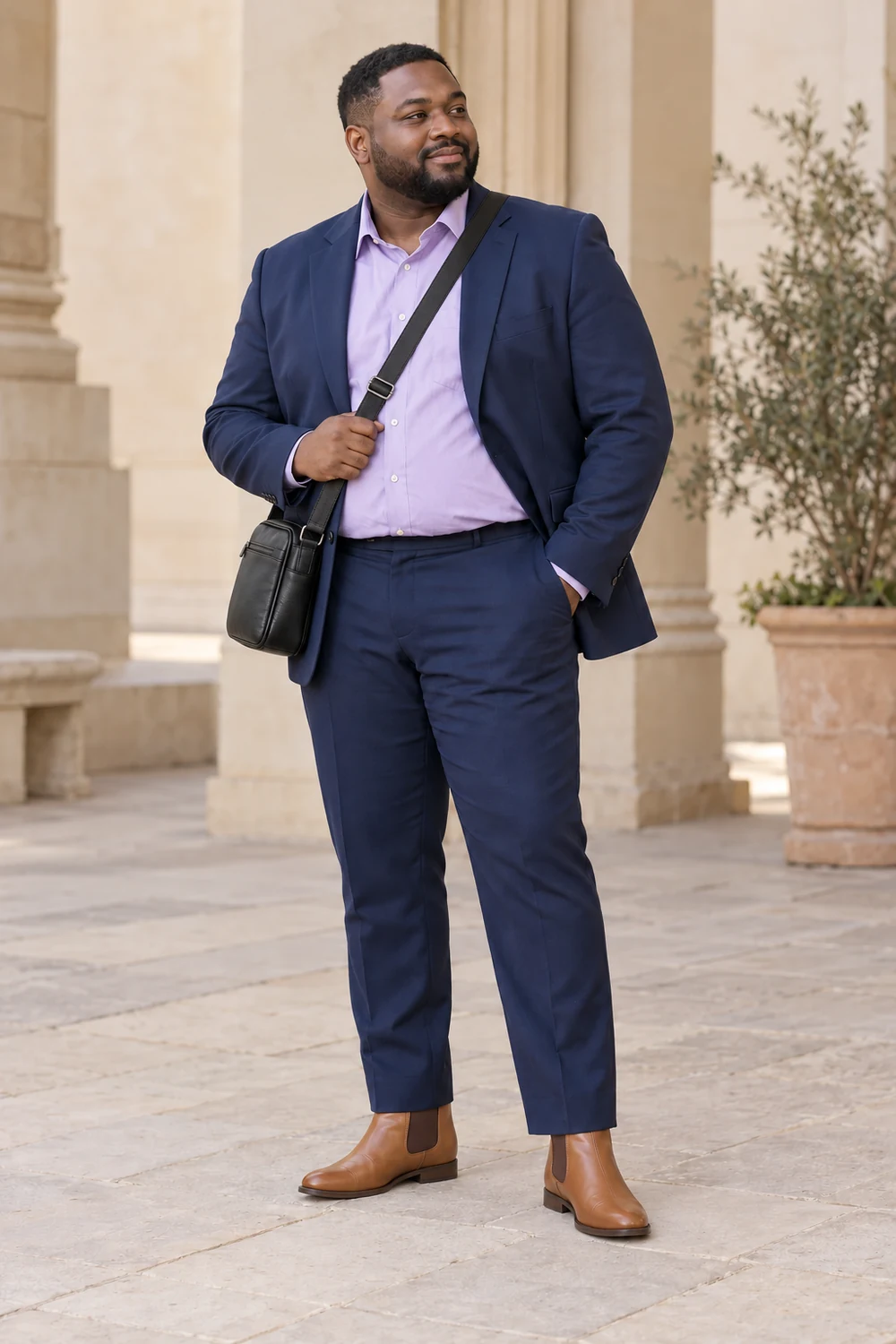
Build a considered work outfit around a navy suit, white shirt and burgundy tie, with fit checked seated and moving.
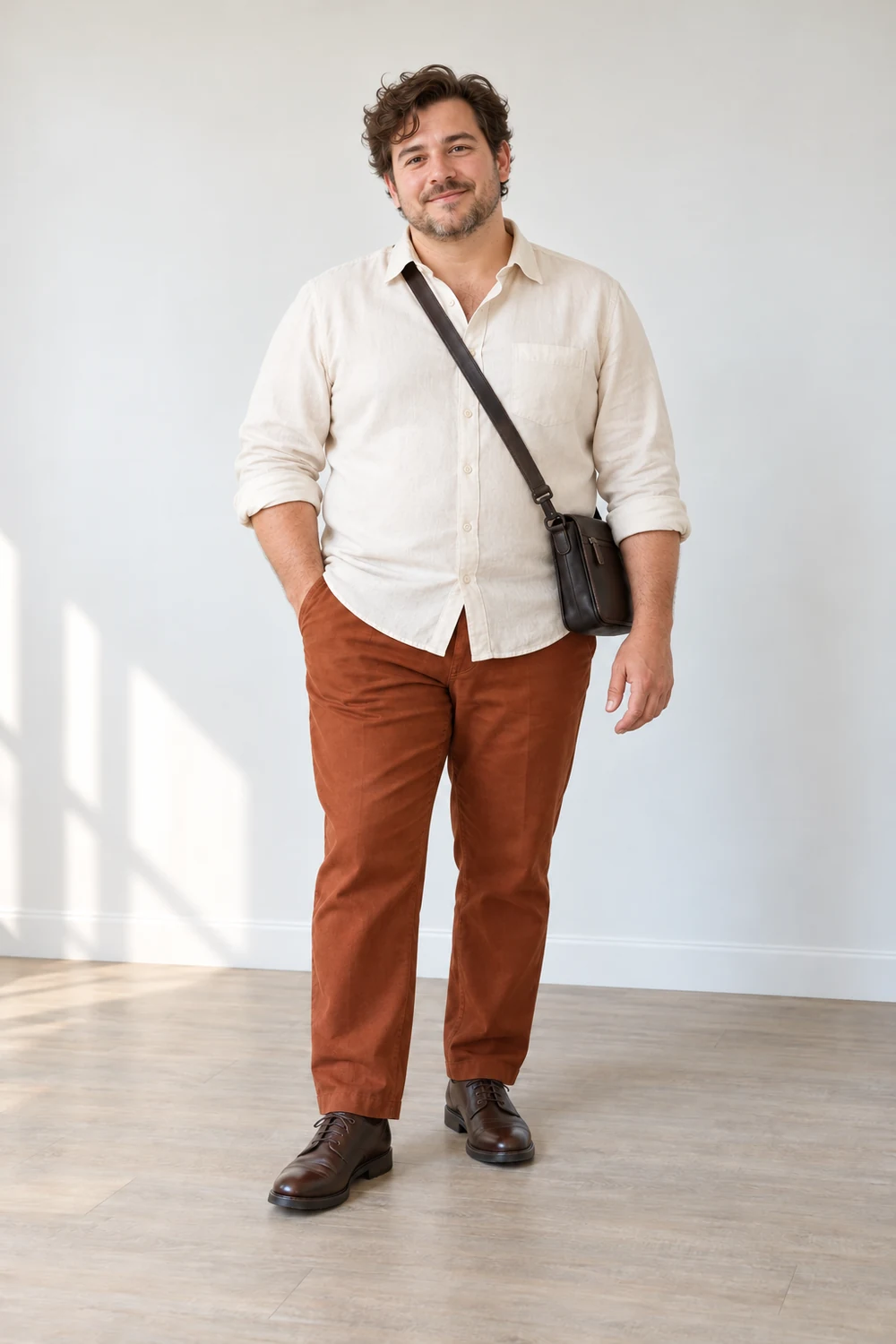
Choose the ivory-and-rust light outfit or its colour-block cardigan version, then compare Derby shoes and white trainers for the actual invitation.
Navy and khaki keep their relaxed relationship in a knit polo outfit, with an overshirt and two black footwear routes.
Keep one plum knit and charcoal trousers useful across a trip, adding the grey overshirt only when it serves a real job.
Find whether a striped shirt problem comes from the collar, sleeve or waistband before adding the navy cardigan or changing shoes.
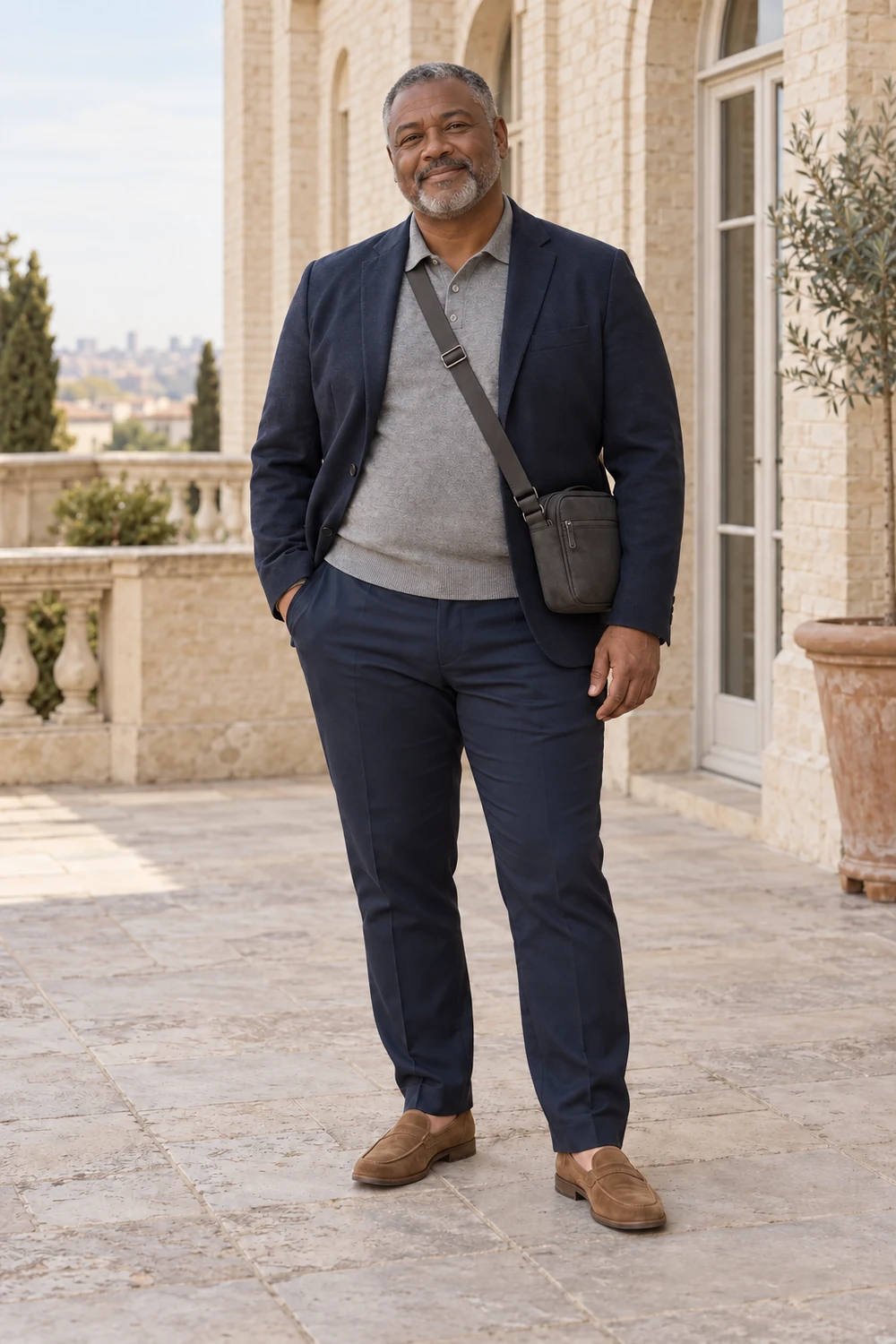
Practise reaching in a navy blazer over the grey polo, then compare loafer and trainer hems without changing the base.
Let the cream polo supply one mustard detail, then set chocolate trouser length with both Derby shoes and white trainers.
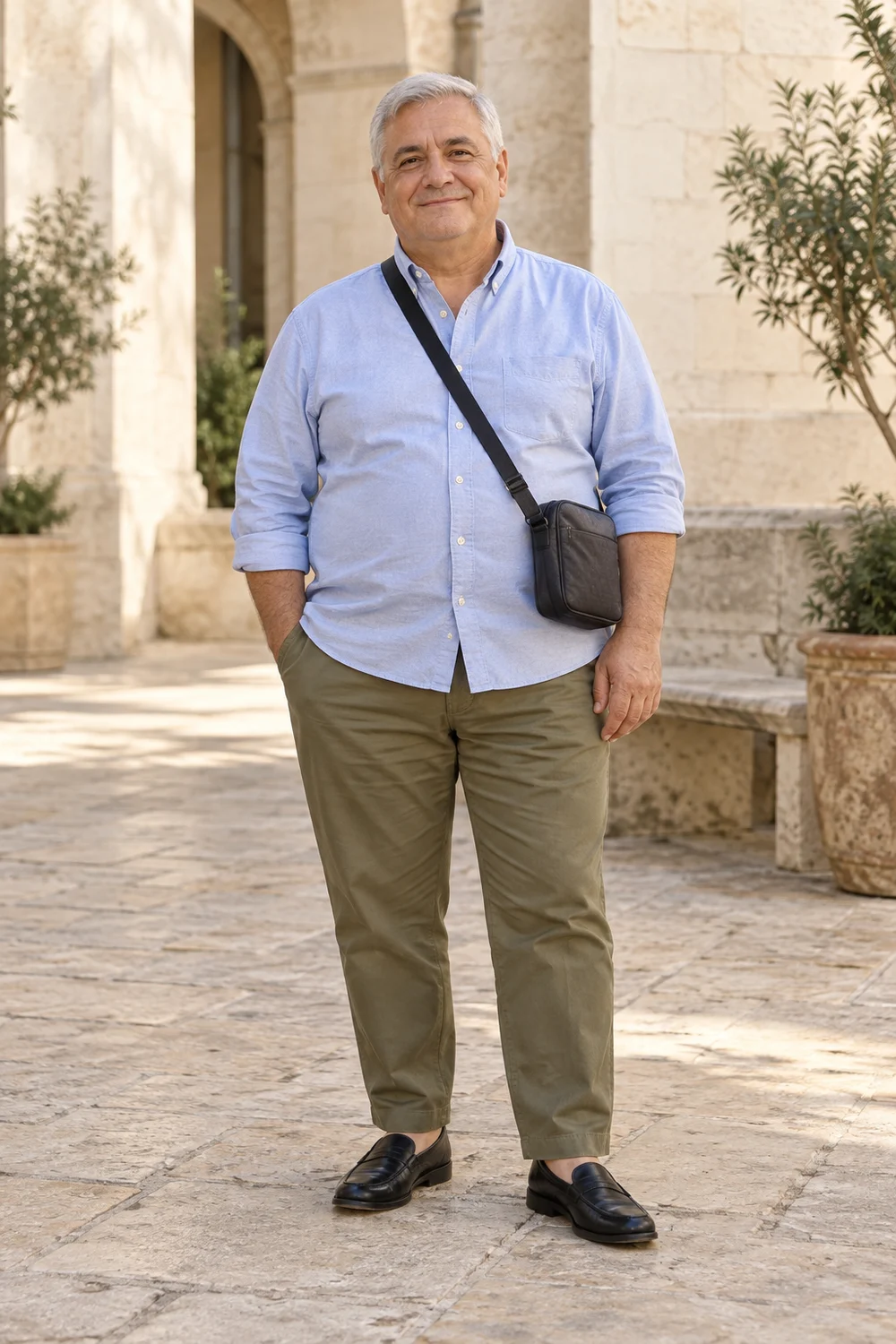
Build around olive chinos, a pale-blue Oxford and a secure black shoe, with the navy jacket as a separate optional frame.
Give charcoal flannel a clear ivory centre, then choose burgundy loafers or cream trainers before adding the grey cardigan.
Choose the navy shoe for the actual route, then decide whether a tan jacket adds something useful to tobacco trousers and a navy shirt.
Let burgundy sit clearly above pale stone trousers, with tan loafers or white trainers and a separate navy overshirt option.
Keep the grey tailoring only if it serves both the black-tee base and the optional jacket version, then choose one useful shoe route.
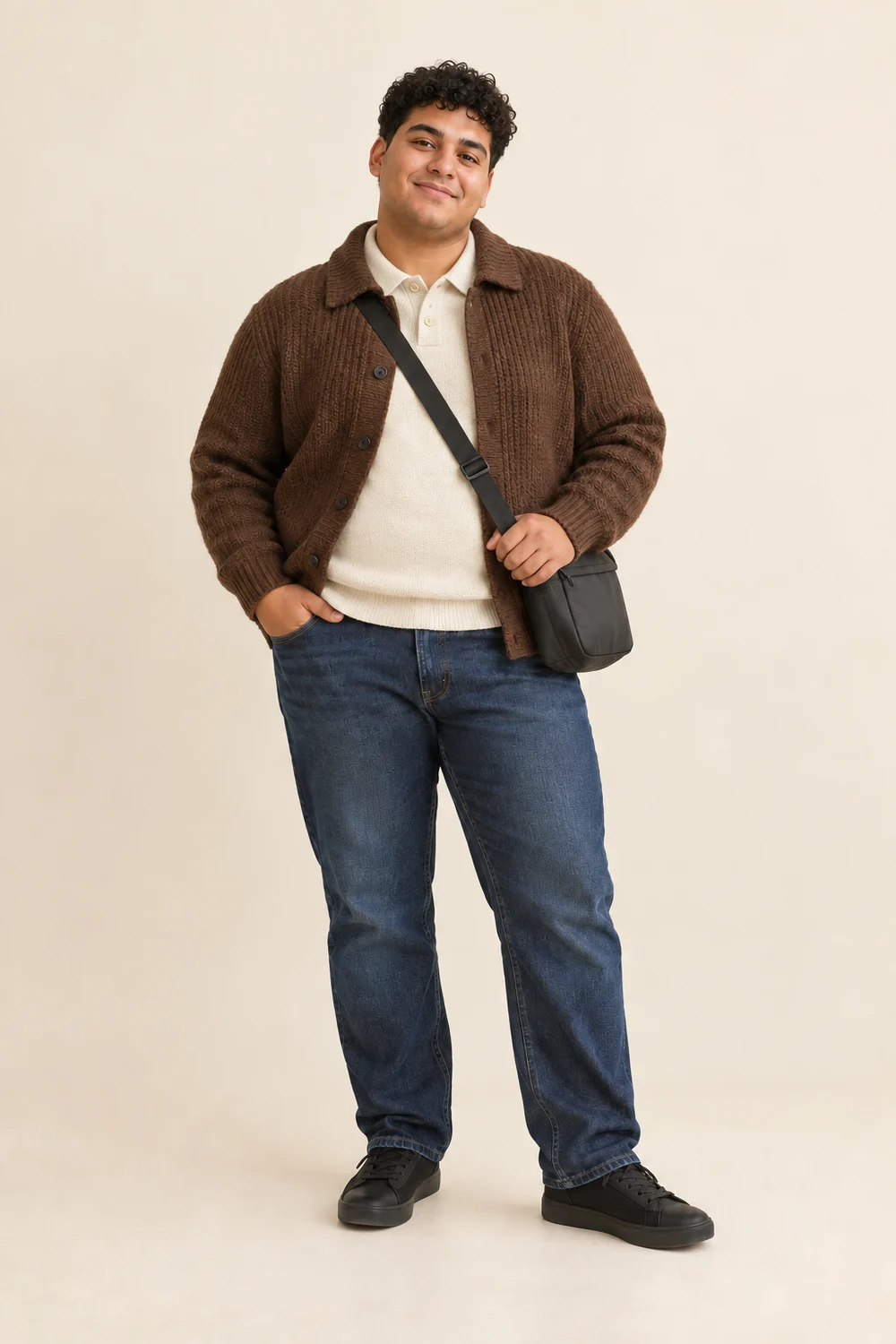
Separate collar crowding from sleeve restriction when layering a cream collared knit and brown knitted jacket over indigo jeans.
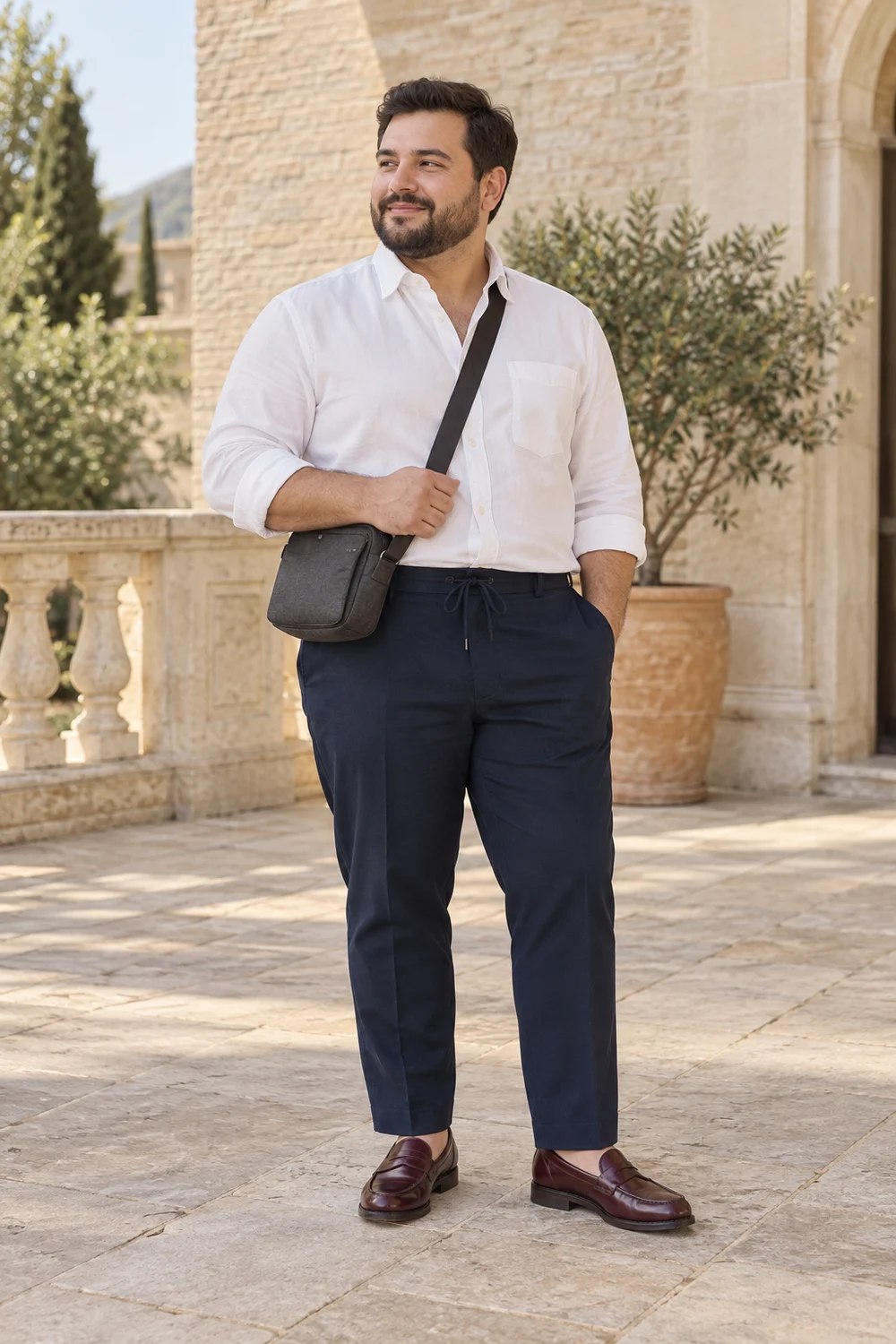
Practise one comfortable drawstring setting before arranging the white shirt, adding the olive overshirt or comparing shoes.
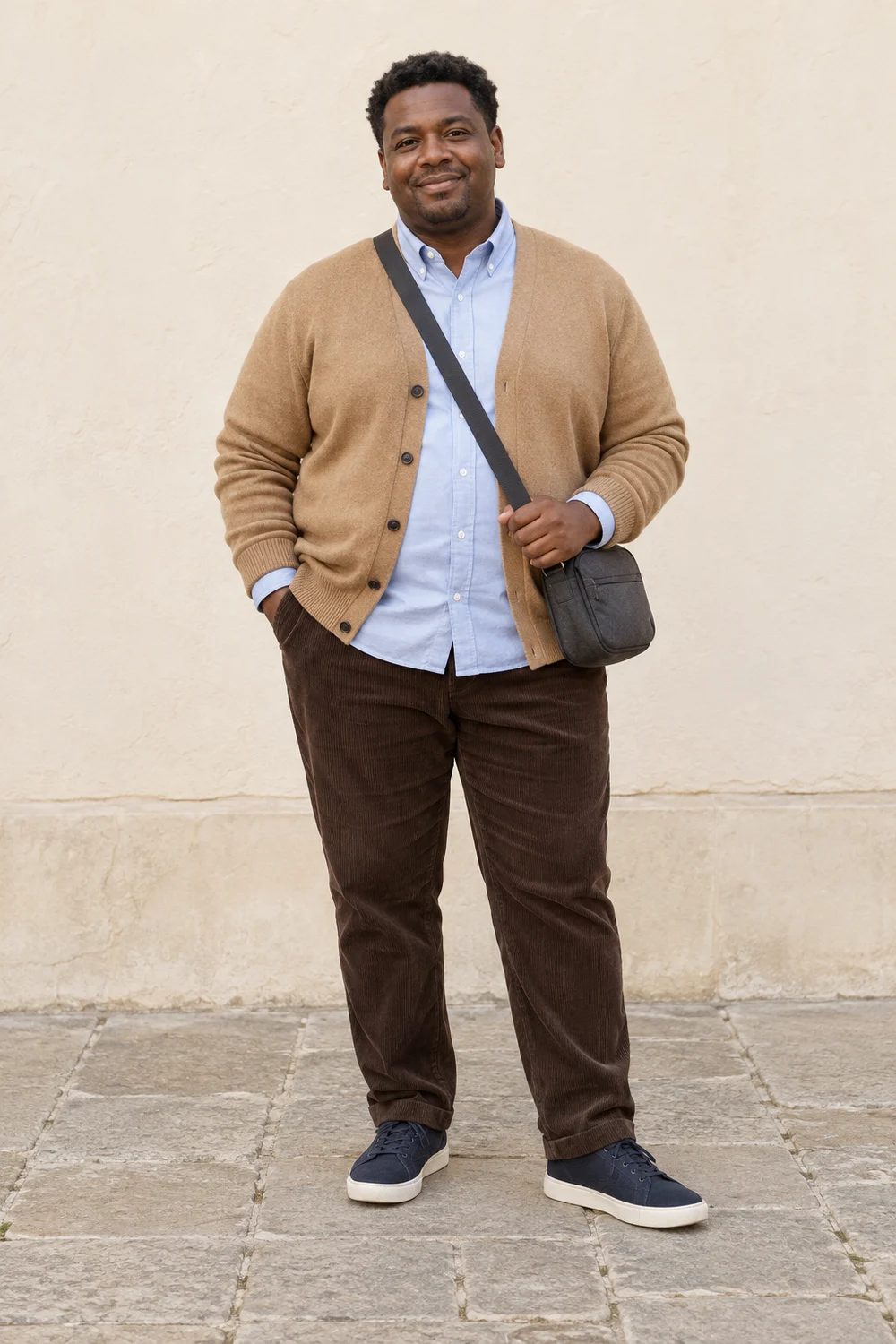
Check corduroy trousers seated and in both actual shoes, then let pale blue and an optional camel cardigan finish the outfit.
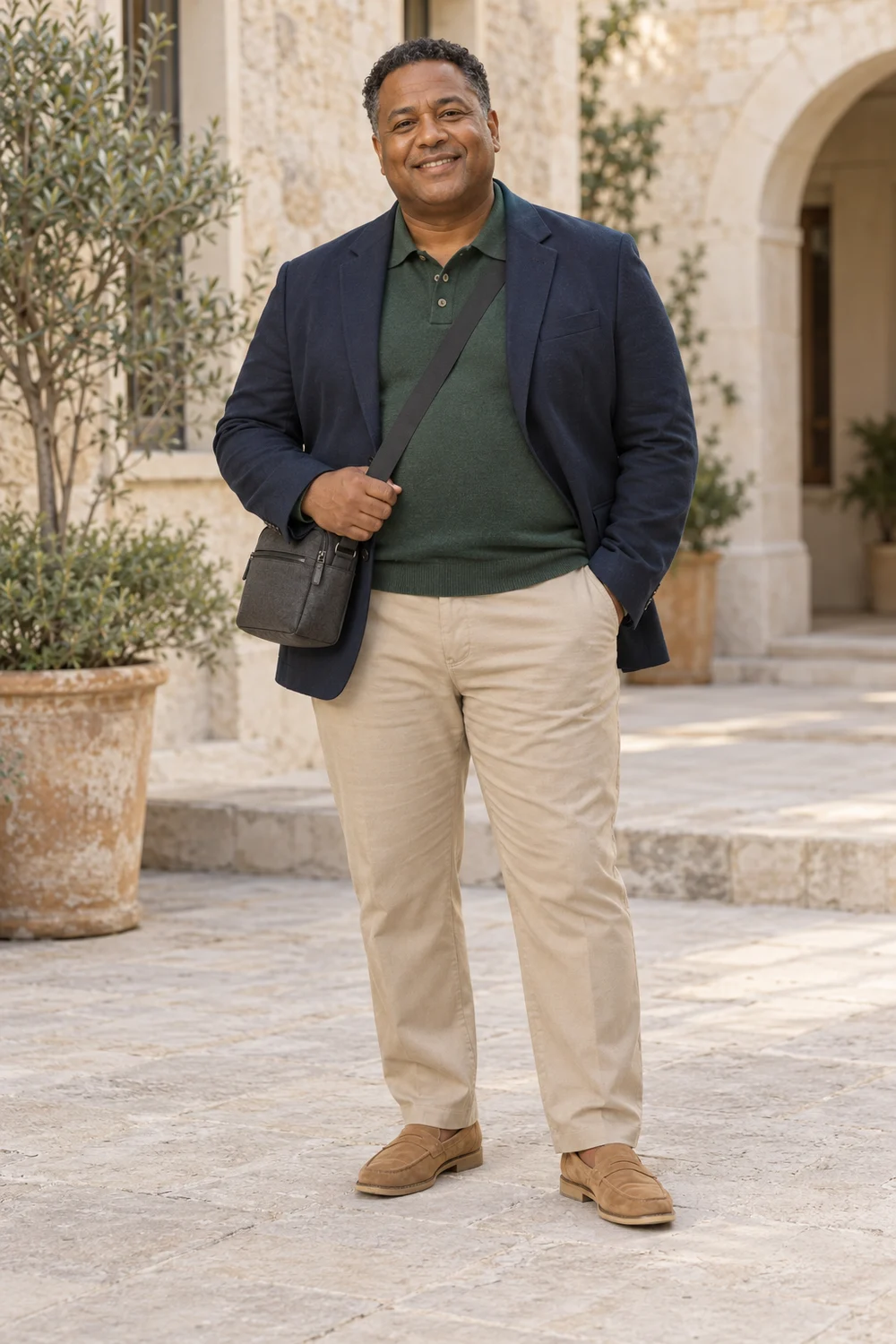
Use sand trousers, forest green and a secure shoe as the anchors, then give the navy blazer its own movement check.
Use grey texture as the quiet centre of black trousers, with brown Derbies adding warmth or white trainers adding light.
Choose cream trousers for actual coverage and comfort, then compare black loafers and trainers without changing the navy-striped base.
Put burgundy on the trousers and leave ivory and grey quiet above it, with loafers or cream trainers deciding the lower finish.
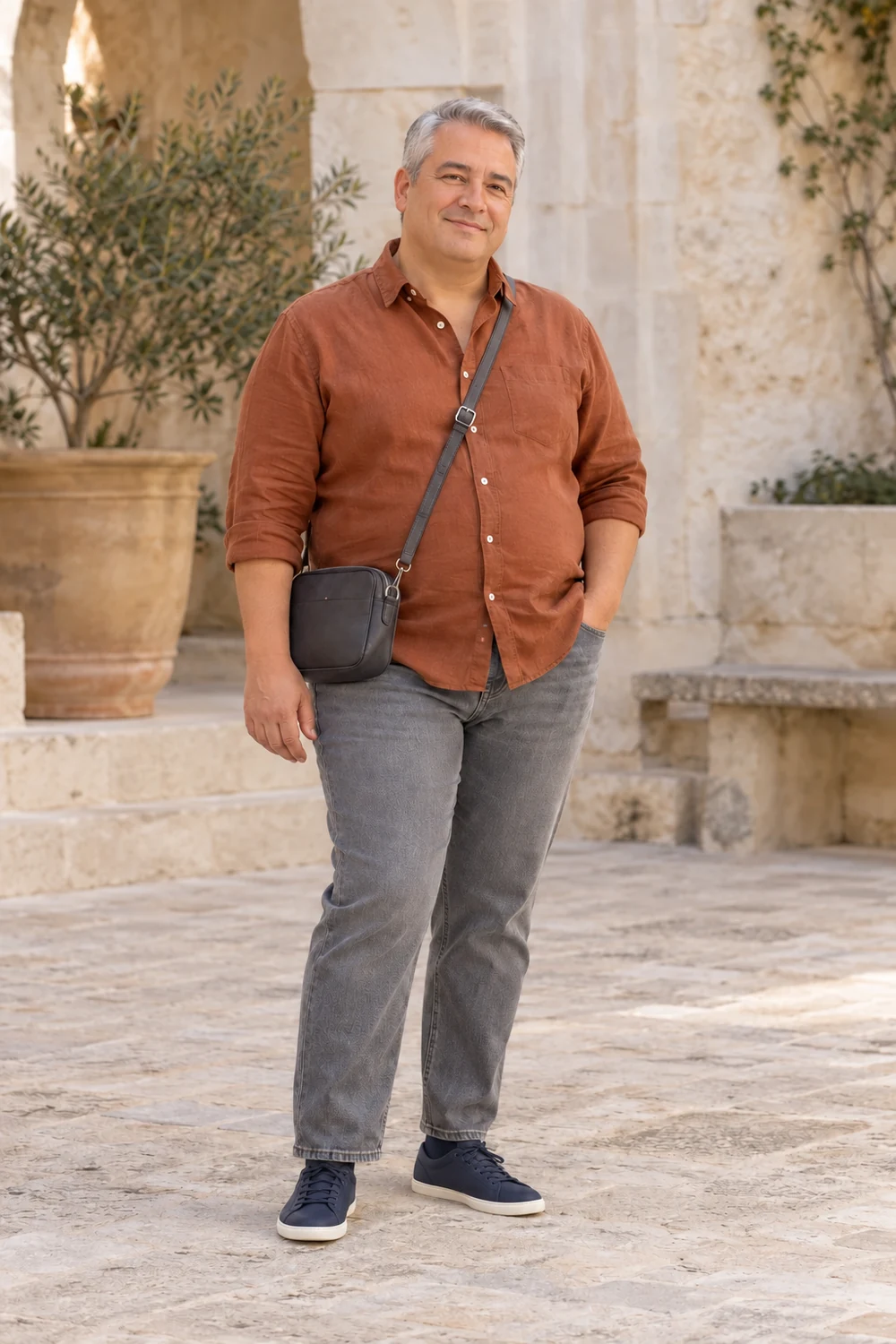
Let grey denim and a rust shirt do the main work, adding the charcoal knit jacket and a second navy shoe only for a named job.
Find whether lilac-shirt pulling comes from the placket, sleeves or cardigan before changing the navy trouser outfit.
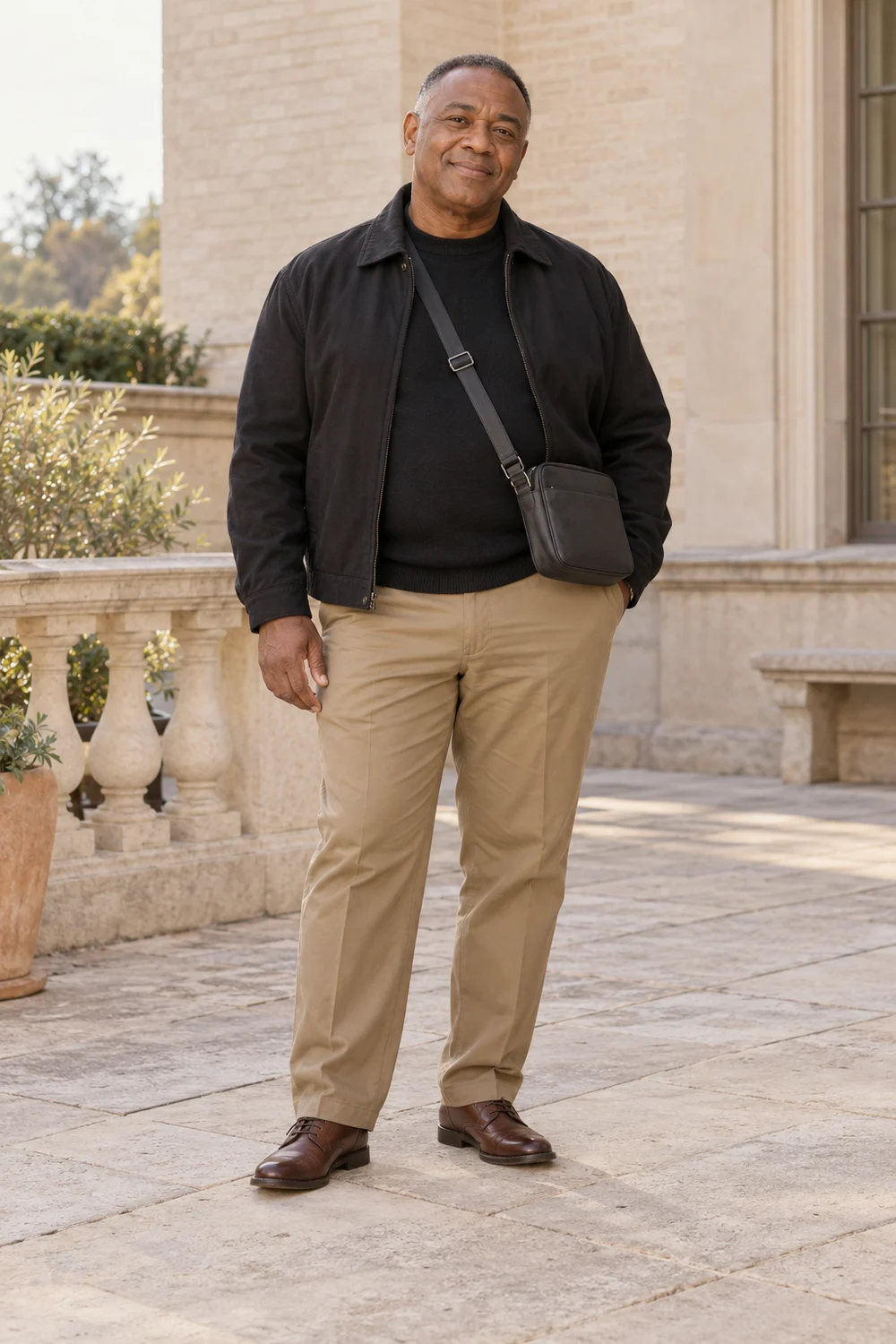
Rehearse sitting and reaching in the short black jacket over a crew knit, then compare brown Derbies and white trainers under khaki trousers.
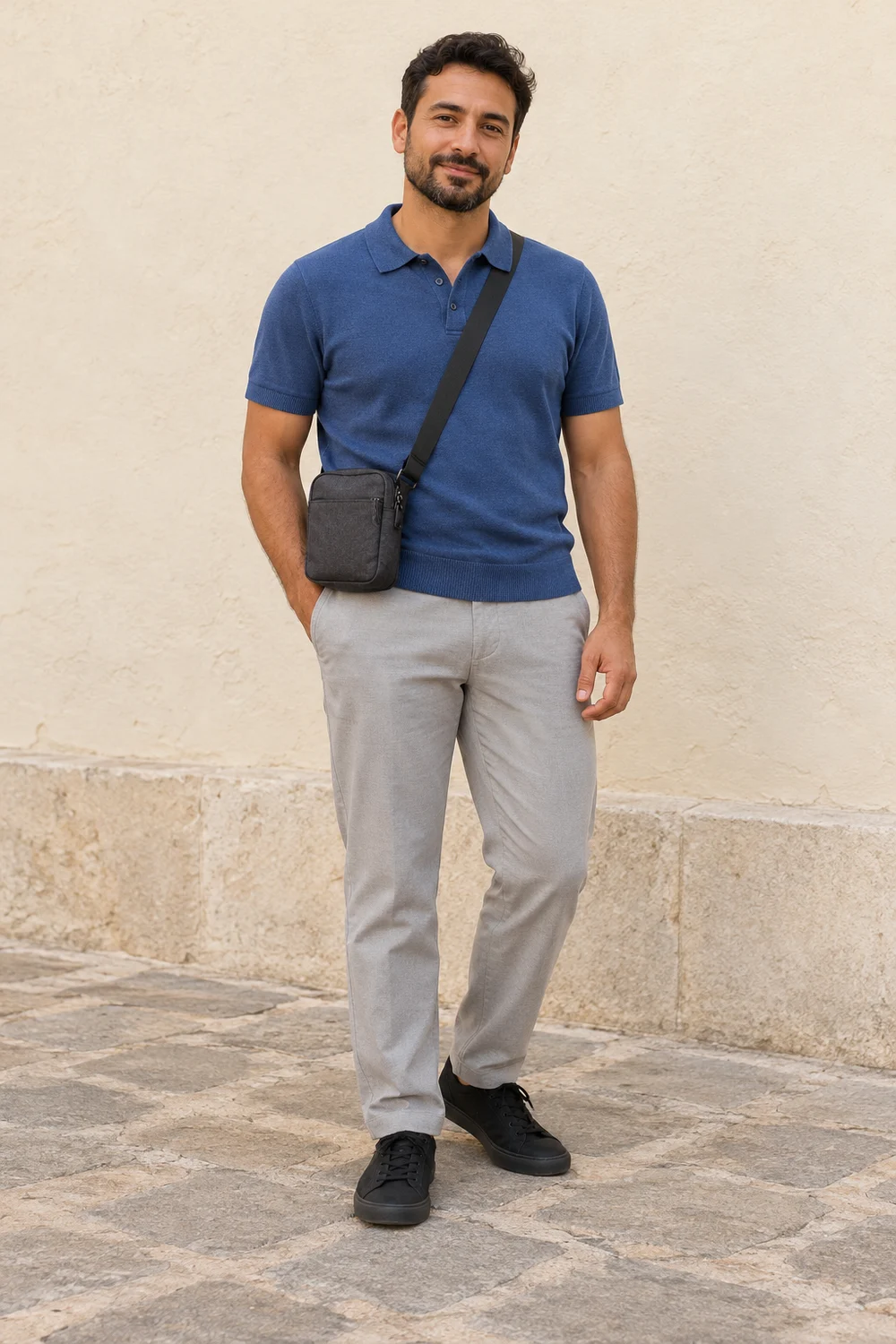
Start with the light-grey trouser rise and blue polo fit, then compare black loafers and trainers before adding the navy blazer.
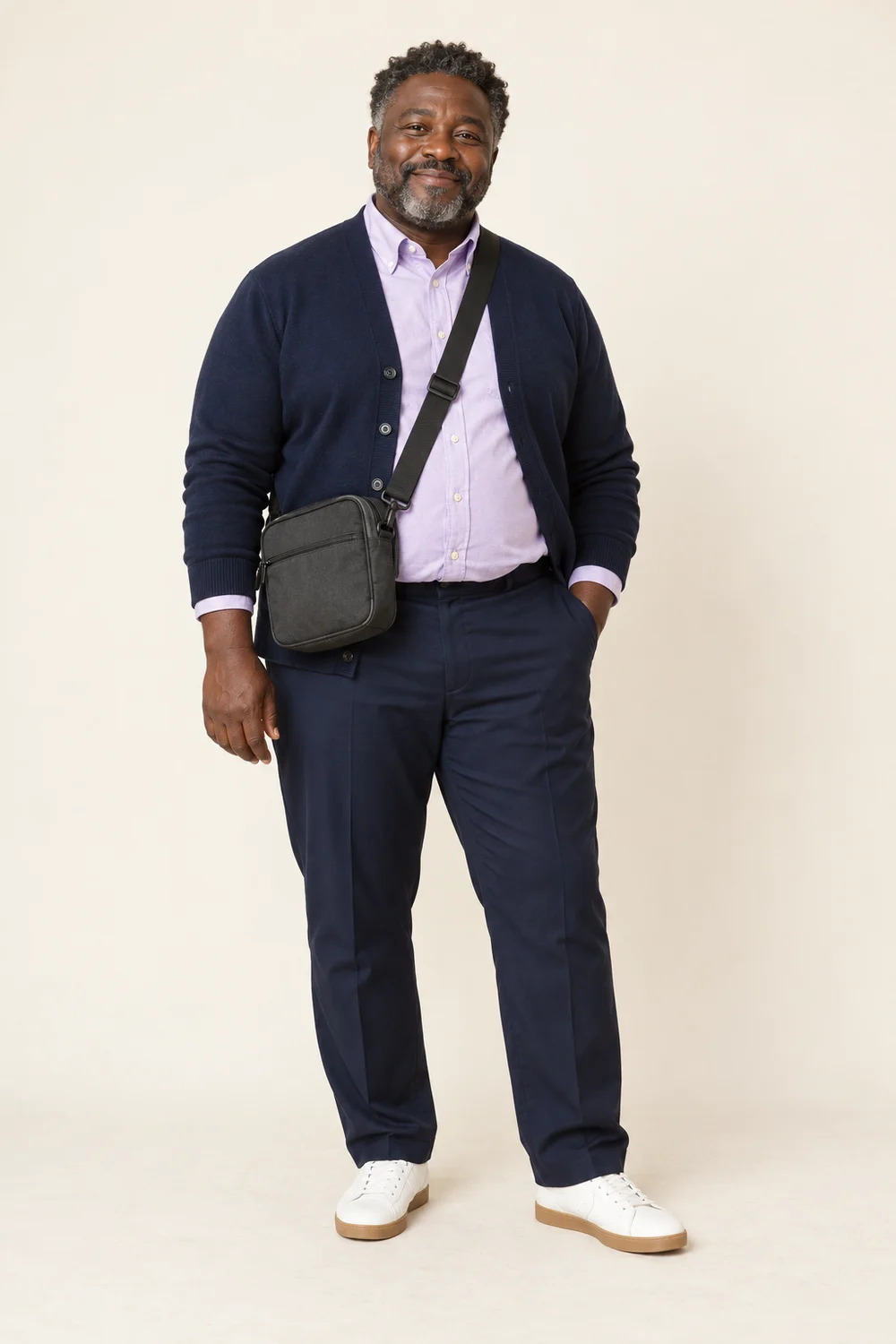
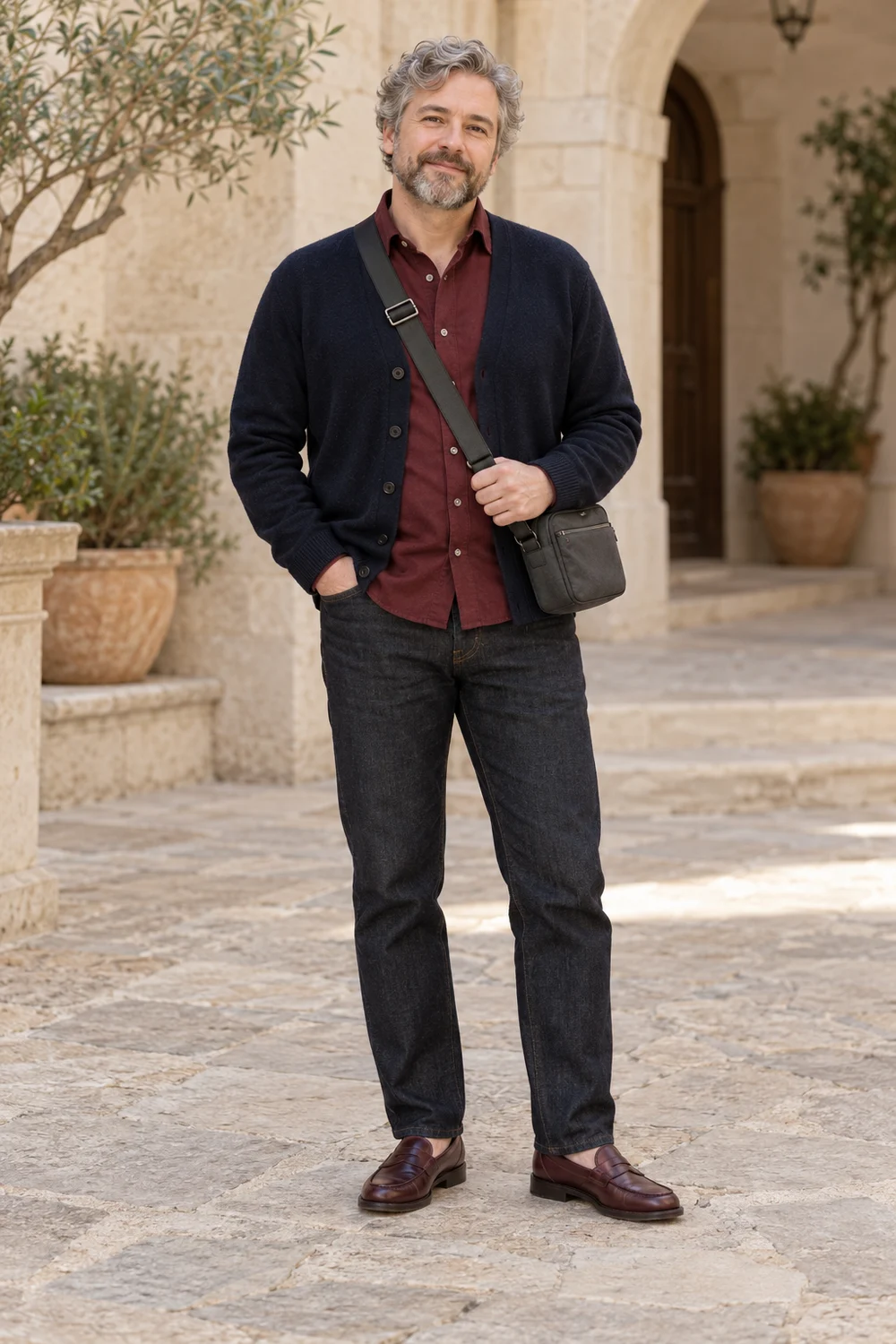
Use dark straight jeans, a burgundy shirt and one secure shoe as the anchors, then add navy only if the cardigan earns its place.
Let cream sit between olive trousers and a brown overshirt, checking the vest armholes before building the full layered palette.
Choose the shoe and jacket by their actual jobs, keeping stone chinos and a charcoal polo as the unchanged comparison.
Use the surface of blue chambray beside an ivory shirt, then let a navy knitted jacket and two shoe routes change the frame.
Keep copper at the centre of a black trouser outfit, with the overshirt and both shoe routes given separate jobs.
Separate a navy-coat reach problem from tan-polo fit, then check loafers and canvas trainers at the chino hem.
Practise mint-shirt opacity and upper-arm room separately before adding the grey blazer and choosing a navy shoe route.
Brown trousers and ivory rib make the light base; an olive overshirt and two shoe choices complete the options.
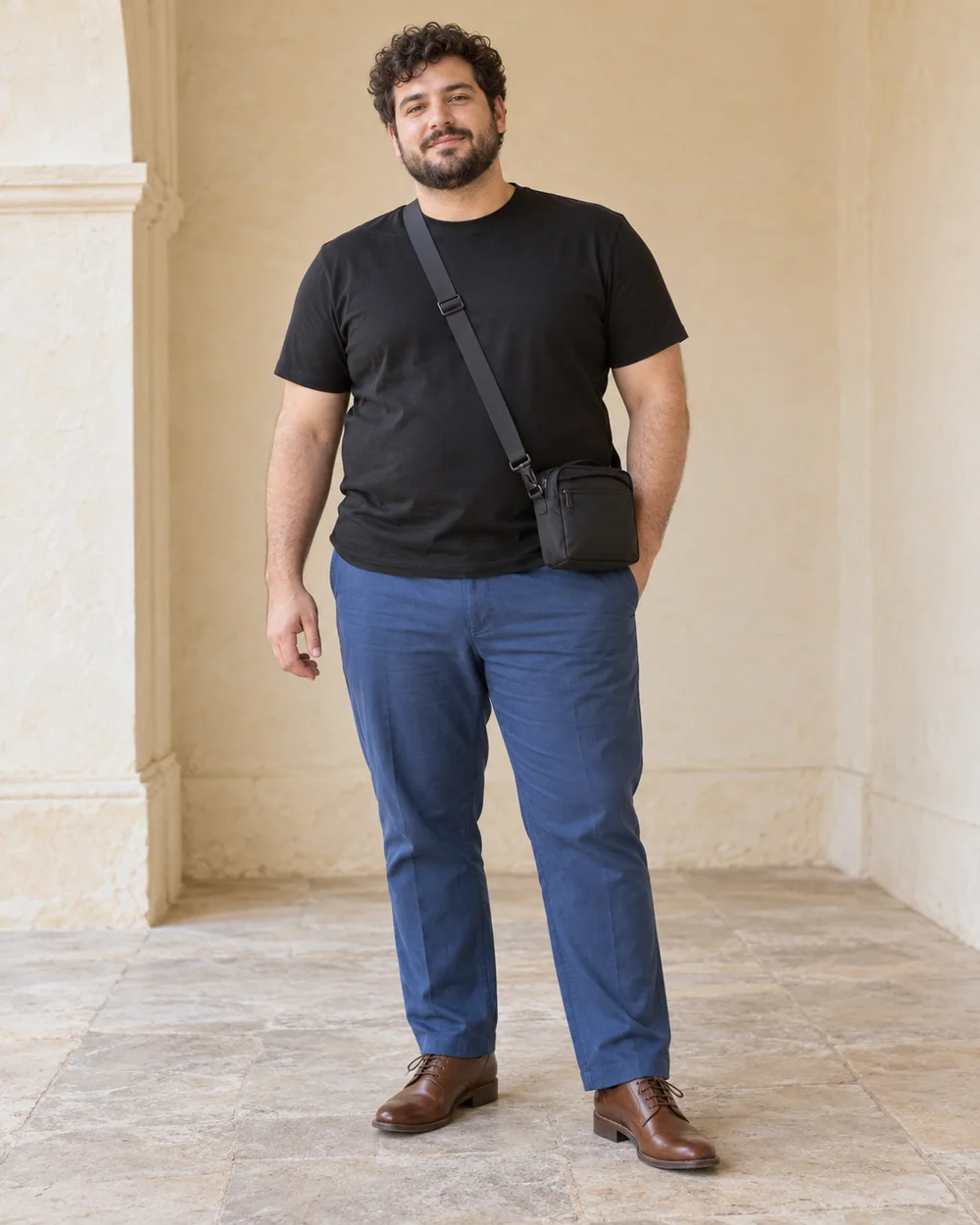
Blue trousers lead a simple black-top formula, with Derby shoes or white trainers and a removable black jacket.
White and cream make the light base; burgundy supplies an optional darker frame, with two black shoe routes.
Choose a navy short-sleeved shirt alone or framed by the relaxed blazer, checking the sleeve join before either shoe route.
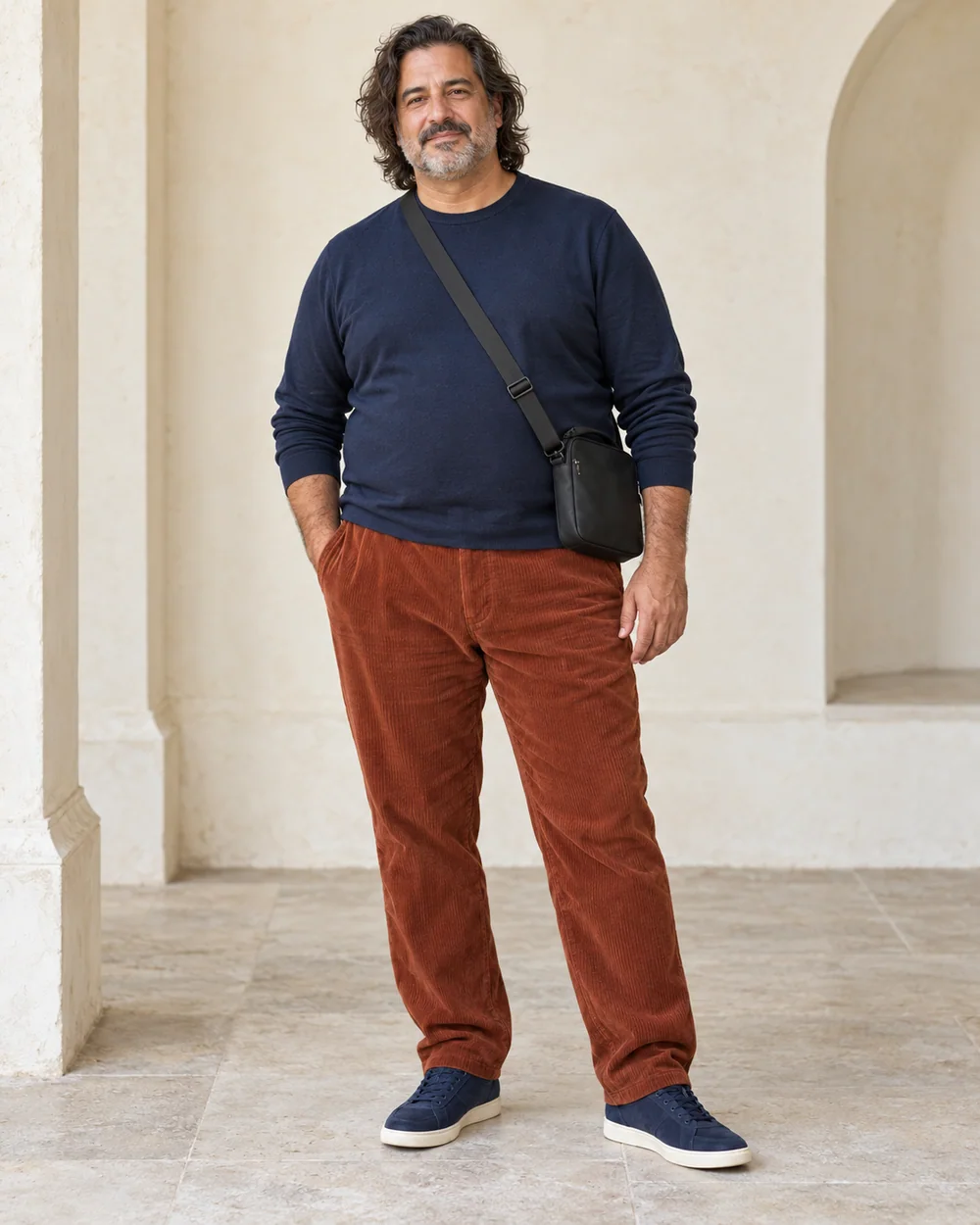
Rust corduroy supplies the texture while a smooth navy top and optional knitted jacket keep the upper half quieter.
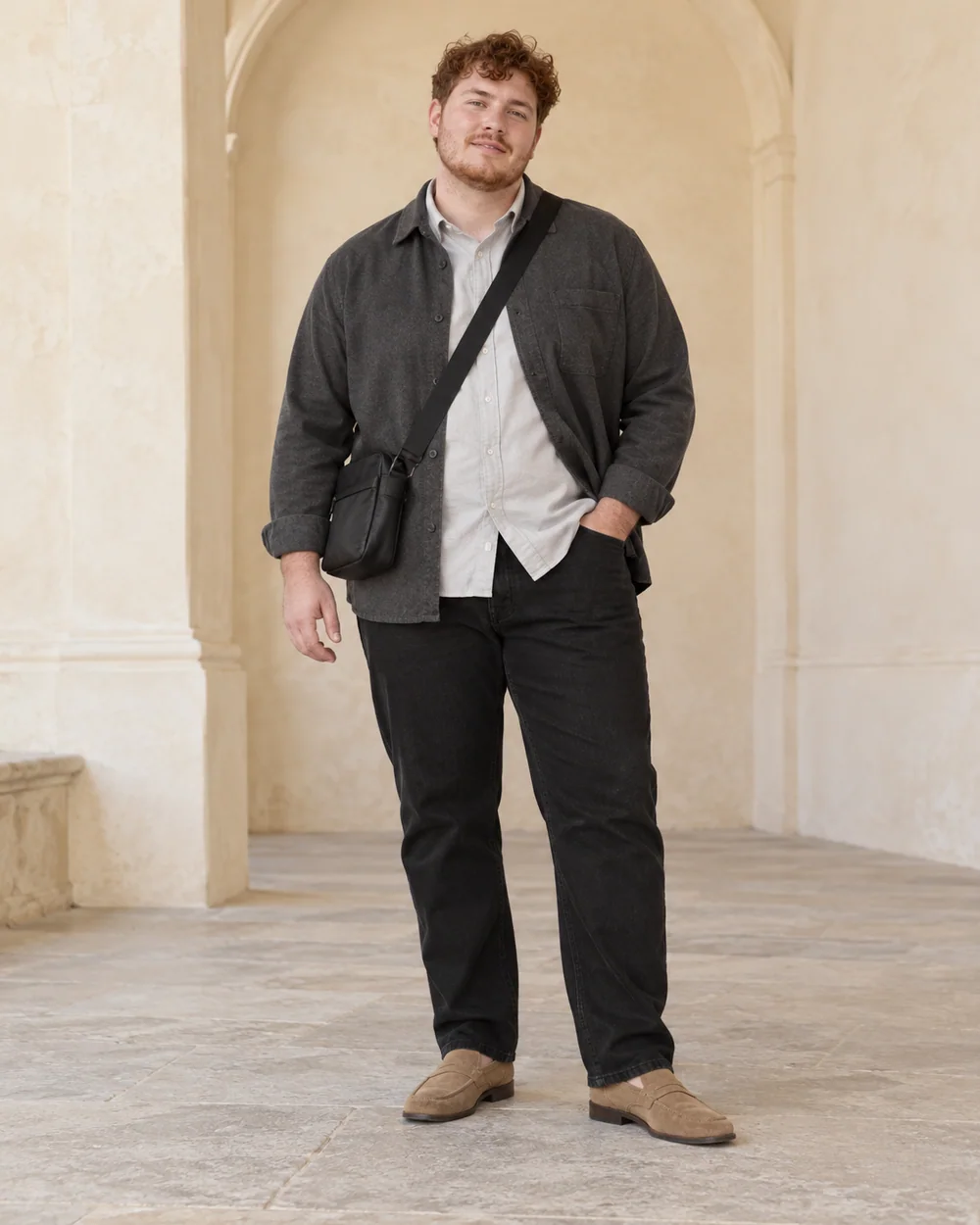
Keep black jeans, a stone Oxford shirt and one charcoal layer useful by fitting collar, cuffs and rise independently.
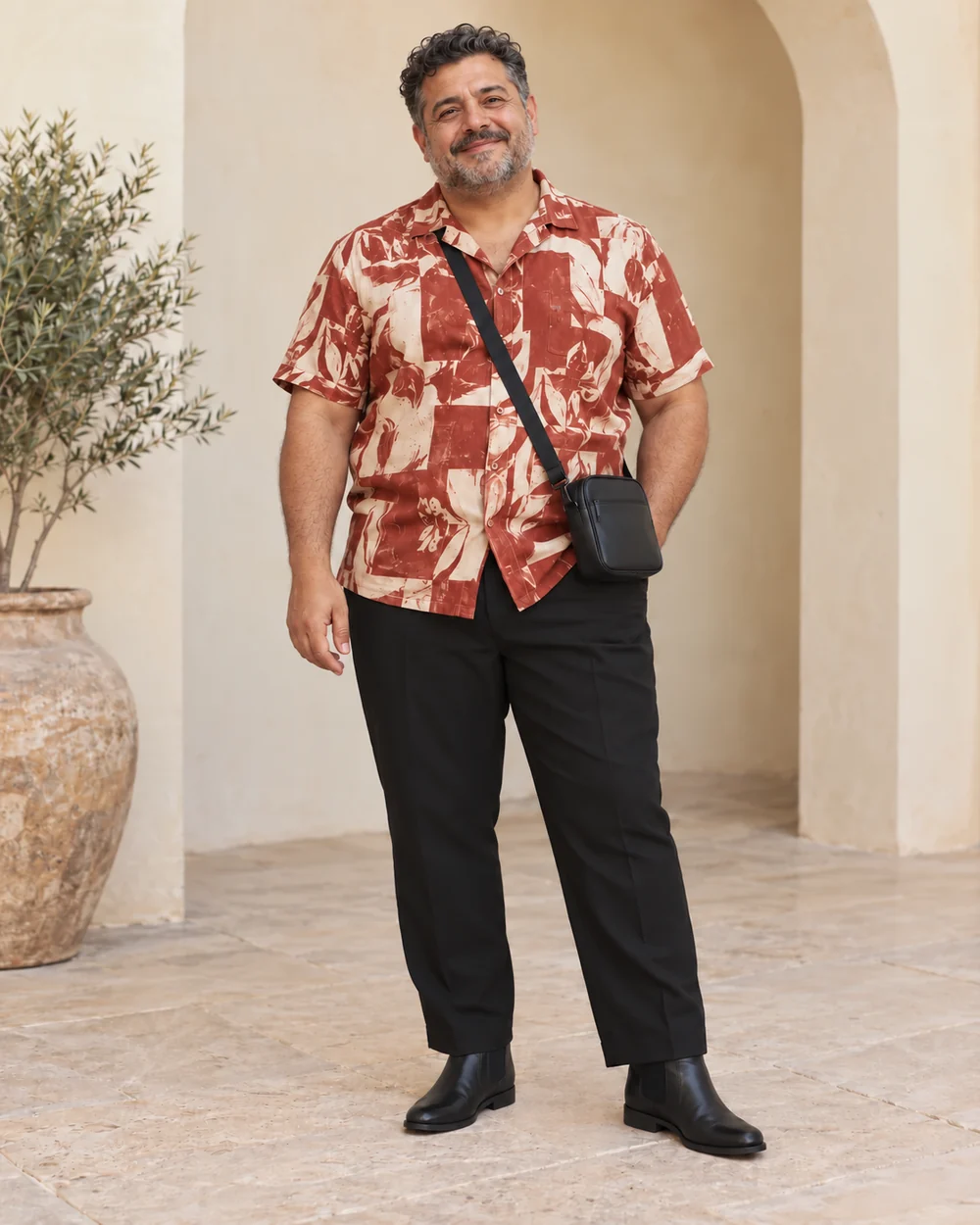
Keep a brick-and-cream print readable beside black trousers while checking shirt fit and two different shoe openings.
Practise a full-length teal trouser proportion with a pale-blue Oxford shirt, navy jacket and two low-profile routes.
Keep navy texture above sand trousers, then add the city coat and compare burgundy boots with Derby shoes.
Green and cream lead above caramel trousers, with a navy jacket and two black shoe shapes.
Olive occupies the indoor base and optional shawl cardigan, while stone trousers and tan footwear keep the palette distinct.
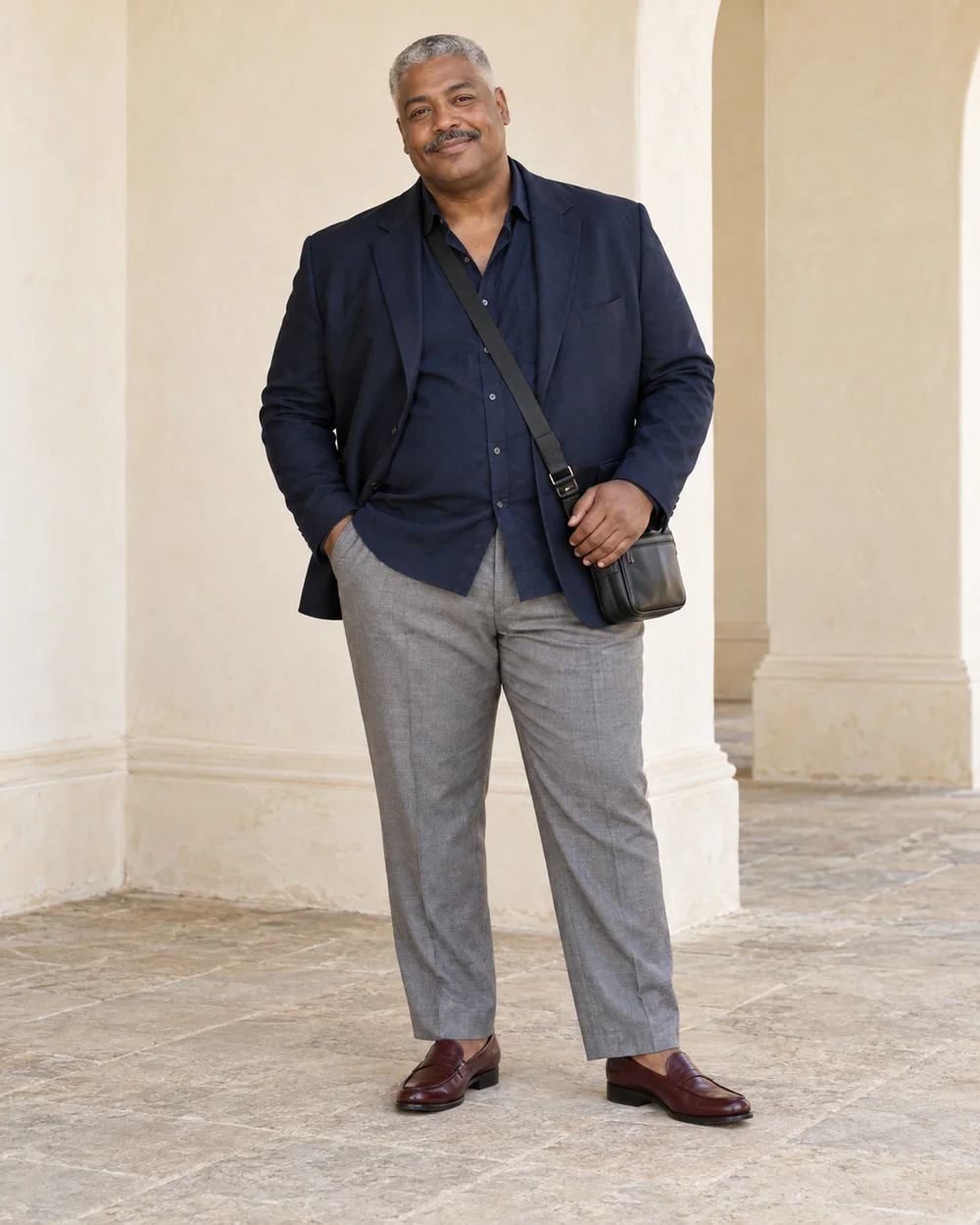
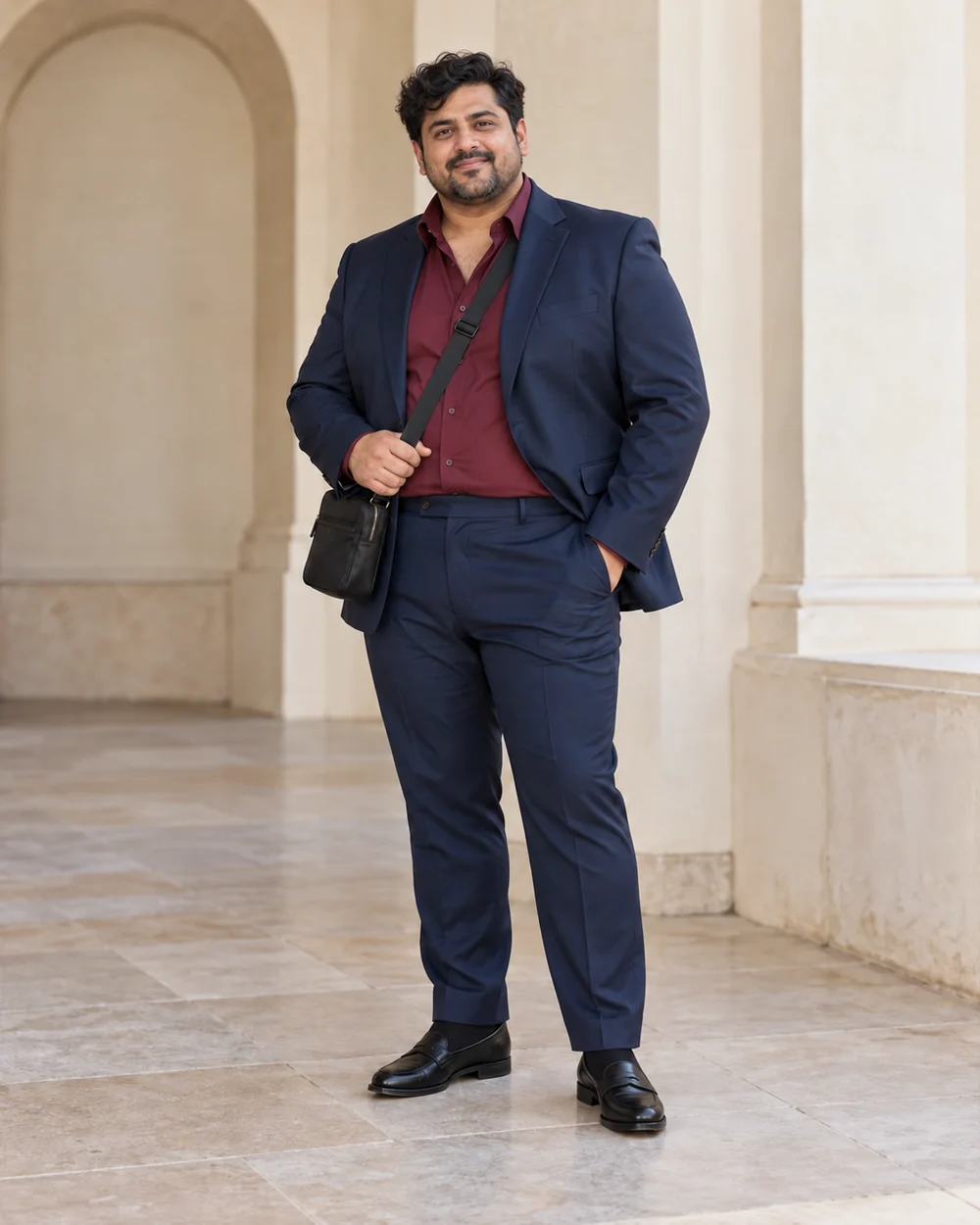
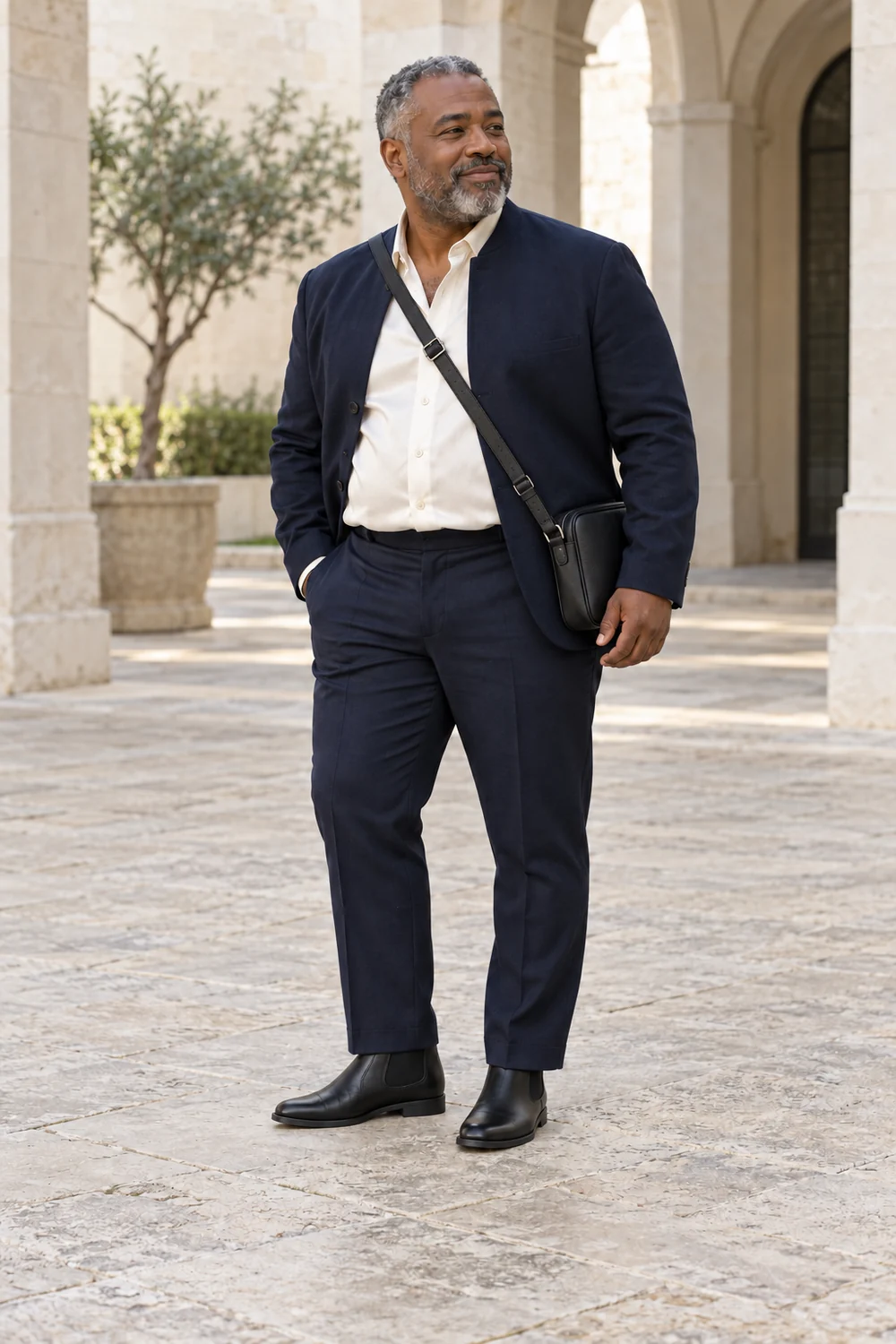
Choose an open burgundy neckline inside or outside a navy suit jacket, with penny loafers or Chelsea boots.
A silver-grey top supplies a quiet surface inside charcoal tailoring, with two brown low-profile finishes.
A plum shirt provides the colour inside black wide-leg trousers and optional velvet, with two burgundy-toned footwear routes.
Separate copper-shirt opacity and cuff crowding before changing the shine, then test two black footwear routes.
Practise distinguishing chocolate from black through the actual surfaces, then add the jacket and compare tan shoe shapes.
An ivory band-collar shirt and grey trousers form the base, with a charcoal collarless jacket and two black footwear routes.
Burgundy trousers, a black tee and a removable short jacket make the anchors, with two brown low-profile routes.
Olive and cream form the light outfit, with an optional brown jacket and two burgundy footwear routes.
Compare a ankle boot and a low-cut Derby shoe below gently flared black trousers, then decide how much gold to frame.
Lilac makes navy tailoring less uniform, with separate collar, cuff, knee and shoe checks for a shorter fuller frame.
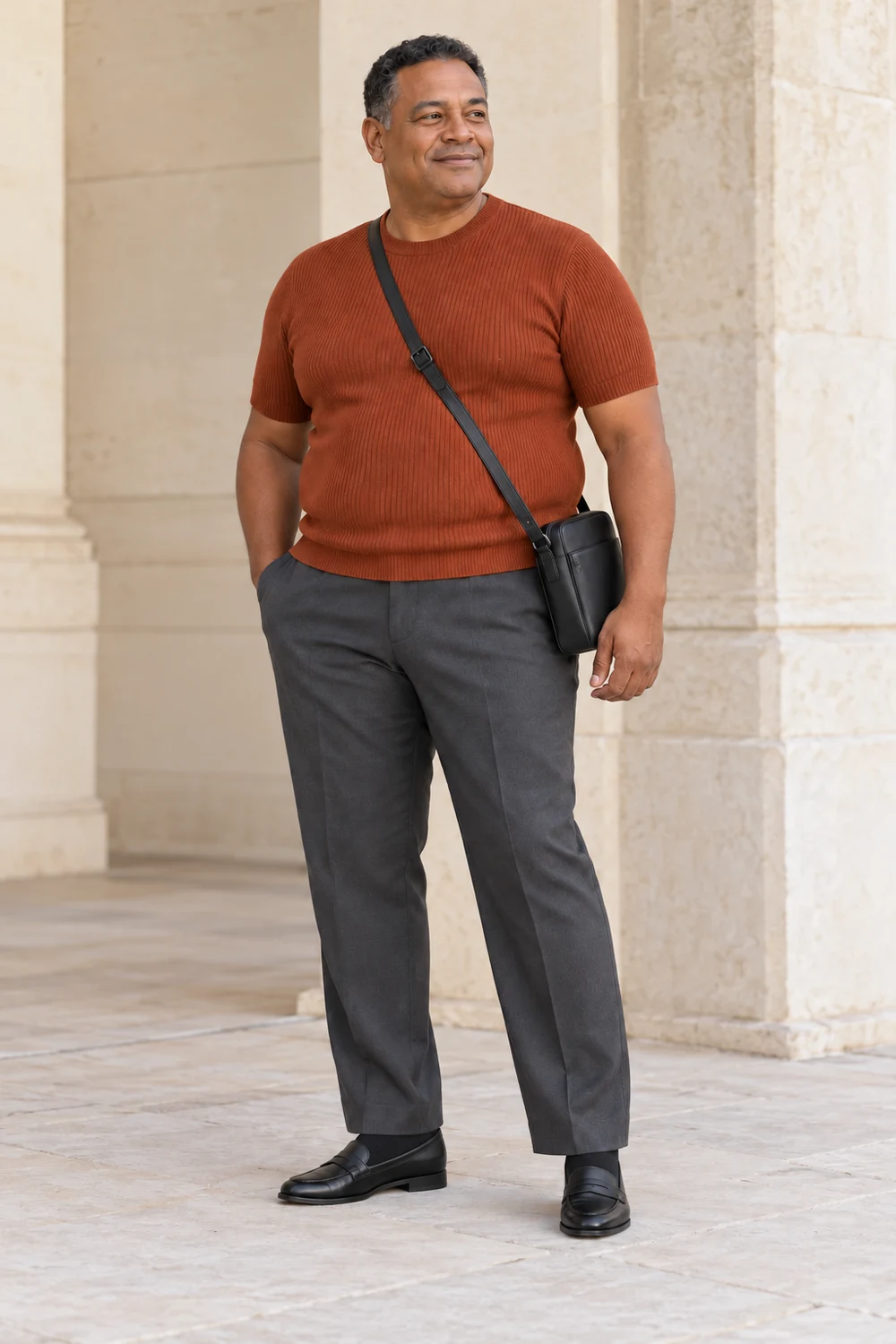
A rust fine-rib top and charcoal trousers can do the colour work alone; add a grey knitted jacket only for a use you can name.
If the navy jacket restricts a forest shirt, test the shirt alone before changing the whole outfit size.
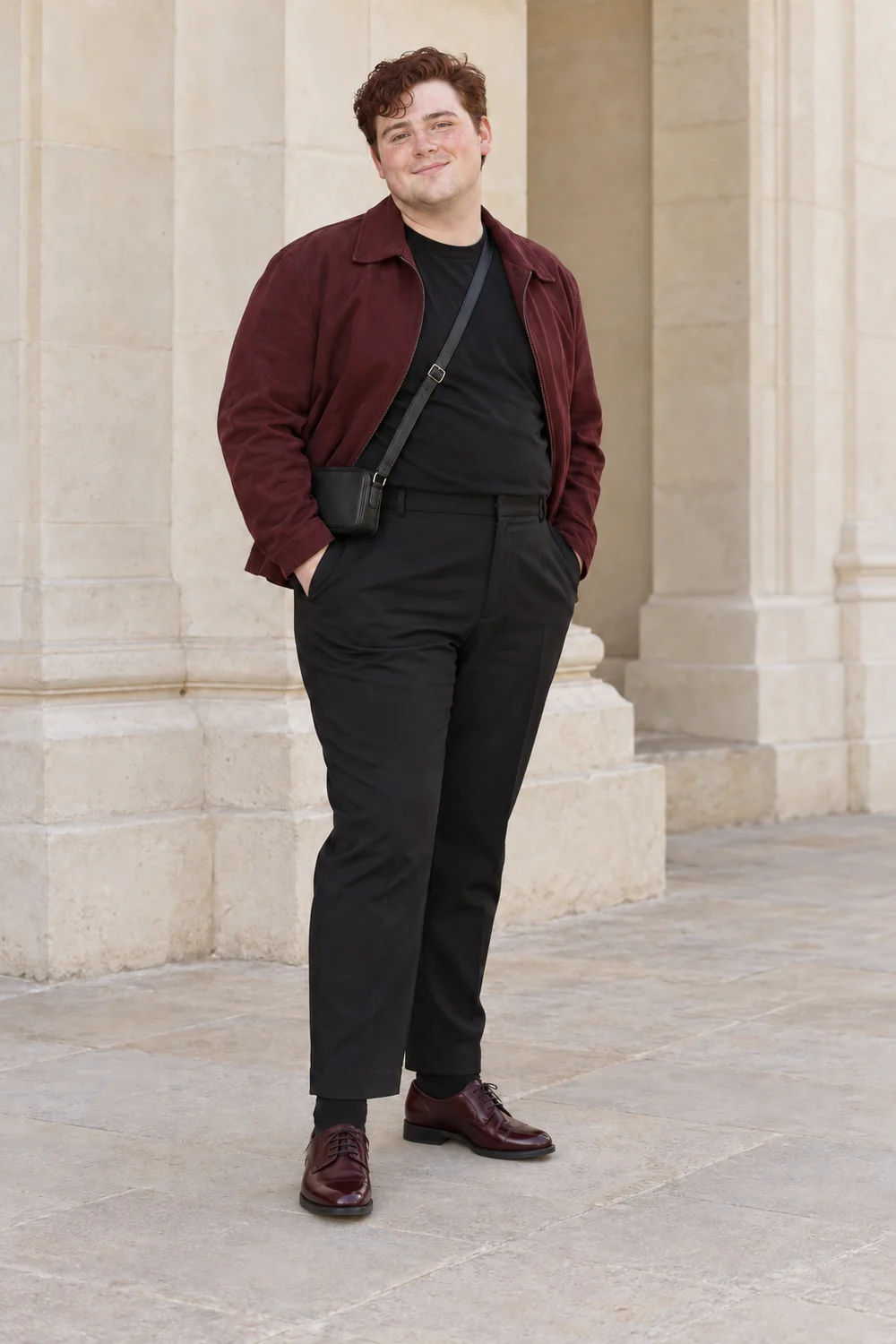
Practise removing the burgundy jacket without making the black tee-and-trouser base feel incomplete, then compare two burgundy shoe shapes.
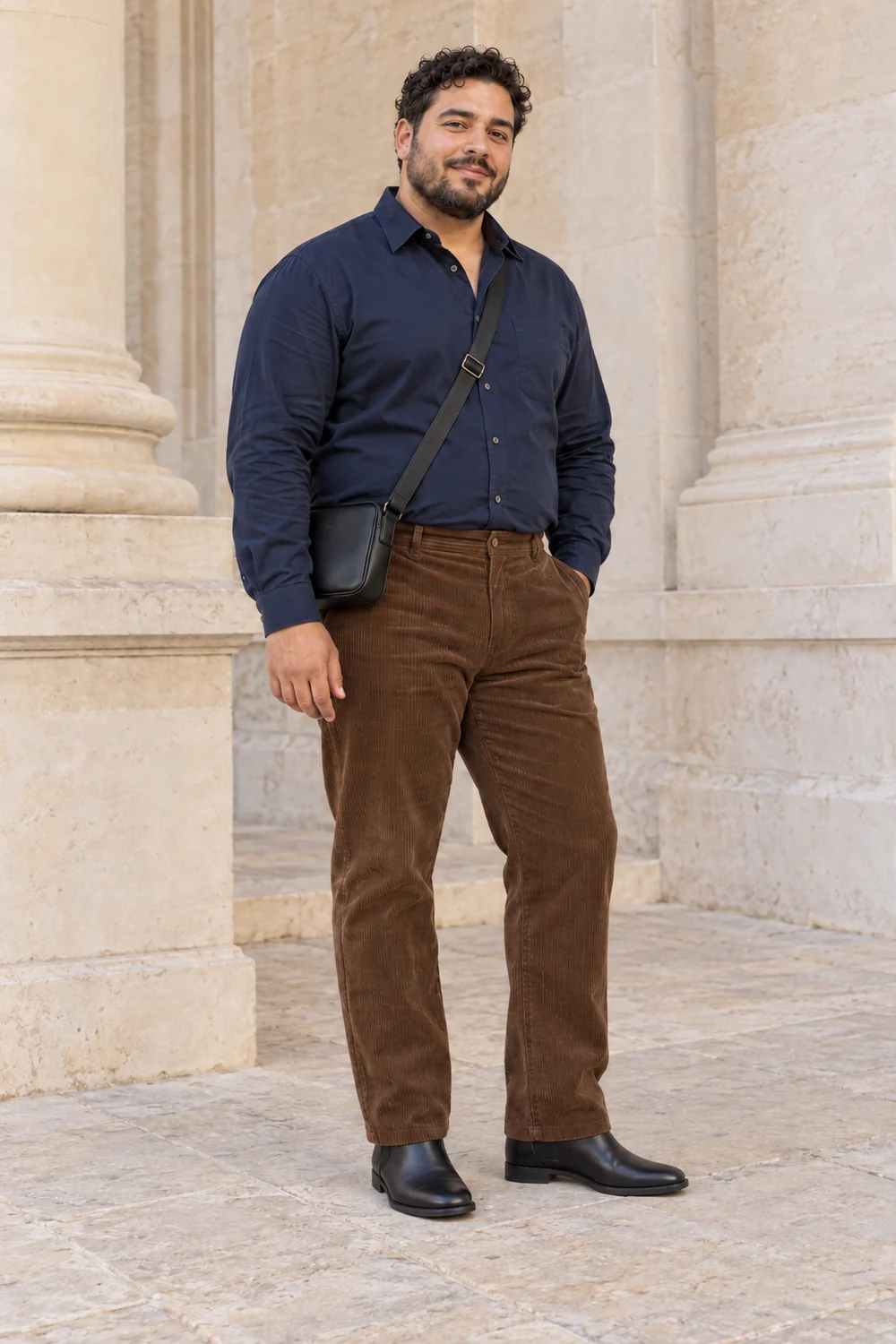
Check brown cords seated and their care needs, then use a navy shirt with an optional camel cardigan and two distinct black footwear routes.
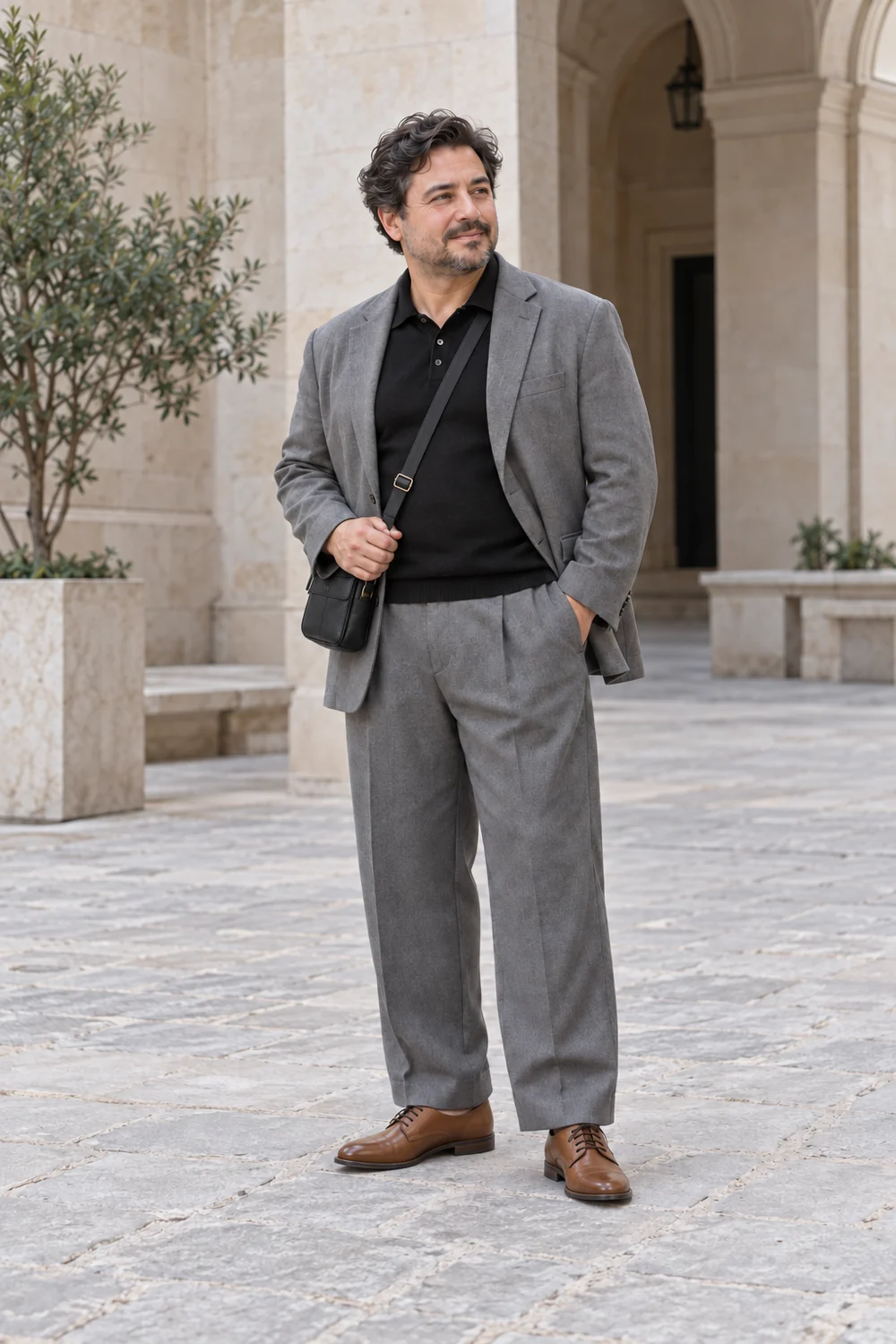
A black knit polo, grey wide-leg trousers and tan shoes form the base; fit the knee and each hem before adding the grey blazer.
Ivory reflection sits inside a quieter indigo-and-navy frame, with black Chelsea boots or penny loafers finishing the same palette.
Choose the chocolate coat for usable closure and reach, then compare brown boots and Derby shoes around the same plum-knit base.
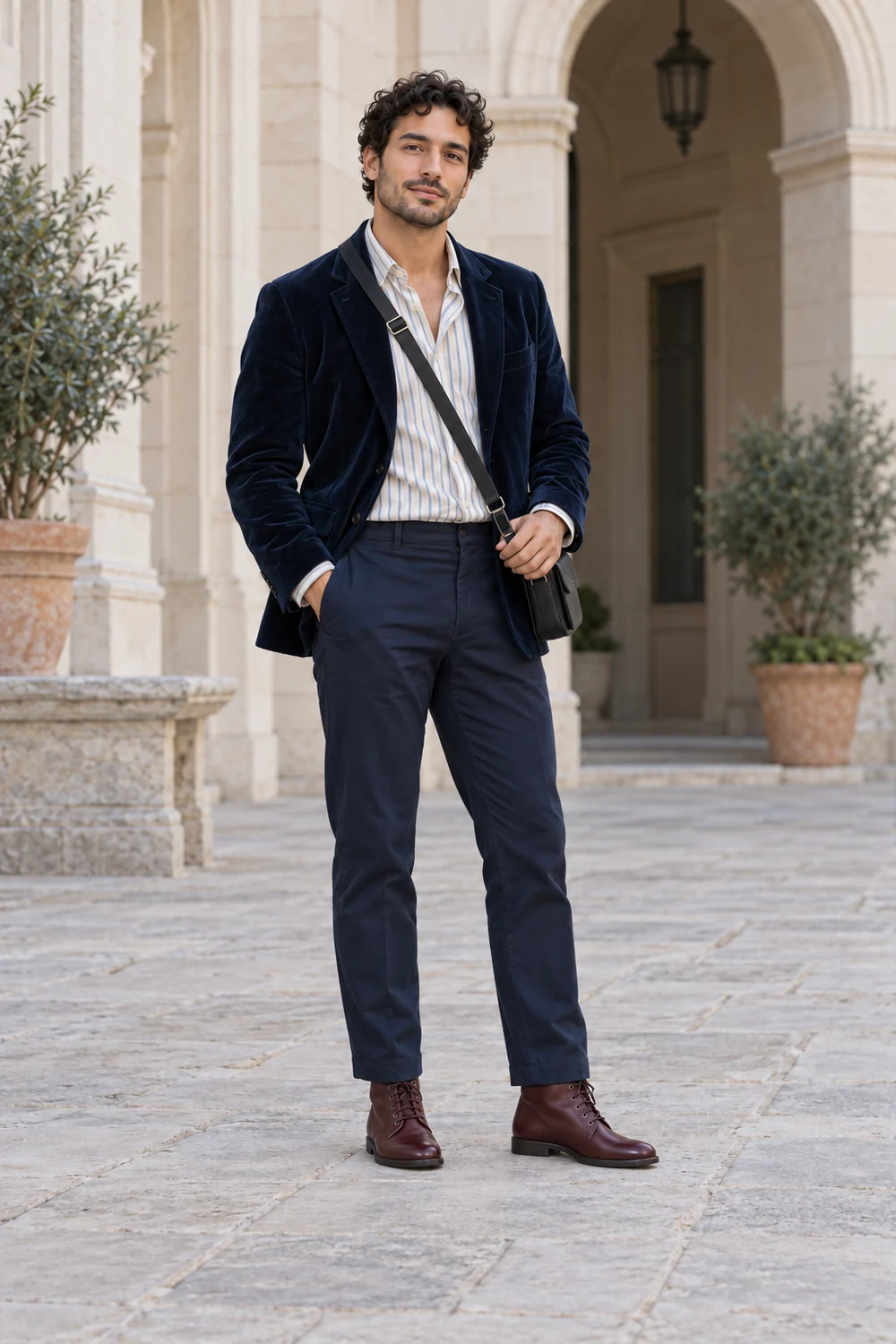
Soft stripes keep a navy velvet jacket connected to an ordinary shirt, with burgundy boots or Derby shoes changing the lower detail.
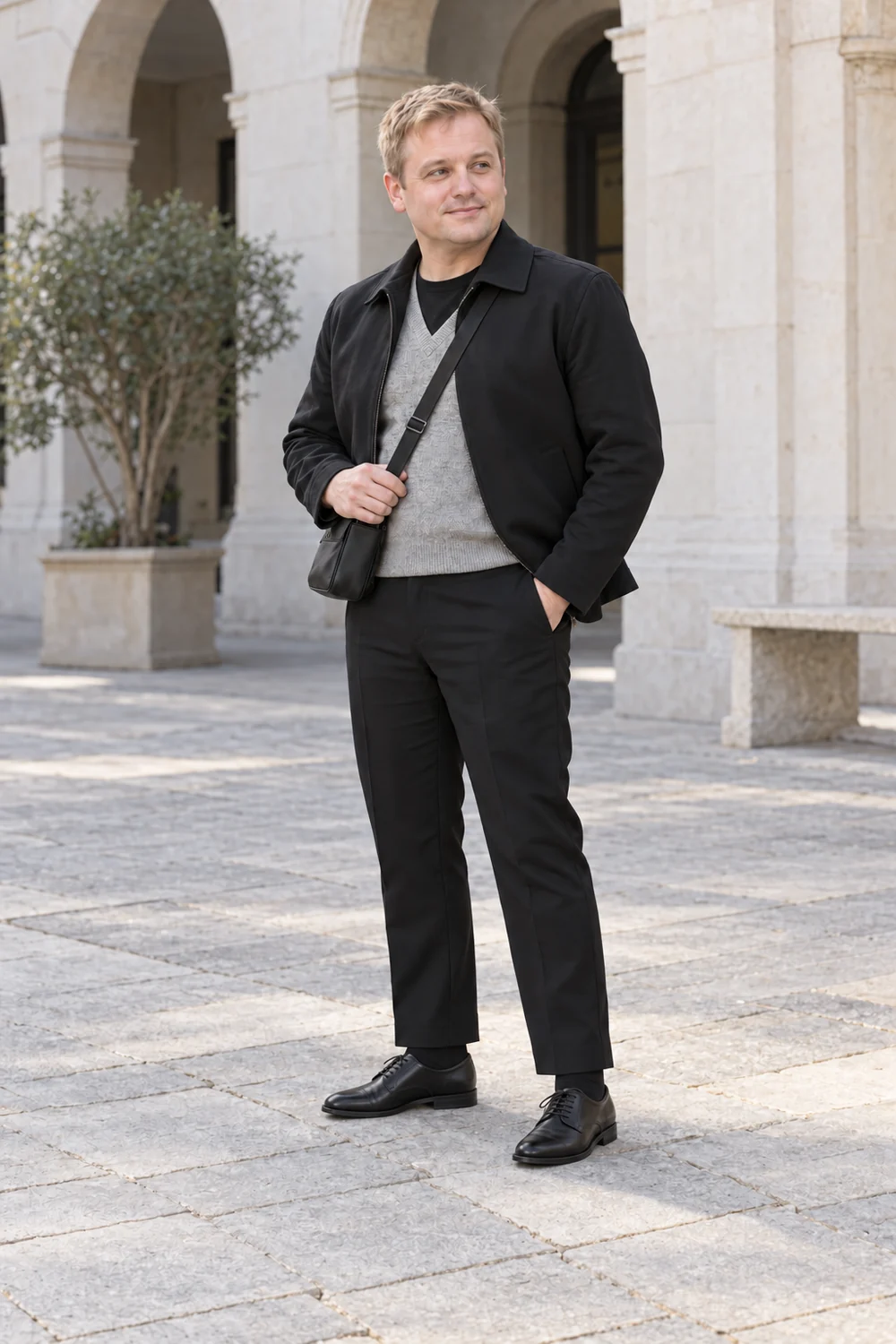
A black tee and silver knitted vest form the light base; add the short jacket only after the armholes and sleeves work together.
If changing from tan boots to Derby shoes disturbs the trouser line, compare the actual opening and hem before changing the whole outfit.
Practise one fit decision at a time: rust trouser rise, charcoal shirt buttons, then the blazer sleeve and black footwear route.
Keep the warm-grey rib top complete without its navy knit layer, then compare brown Chelsea boots and Derby shoes.
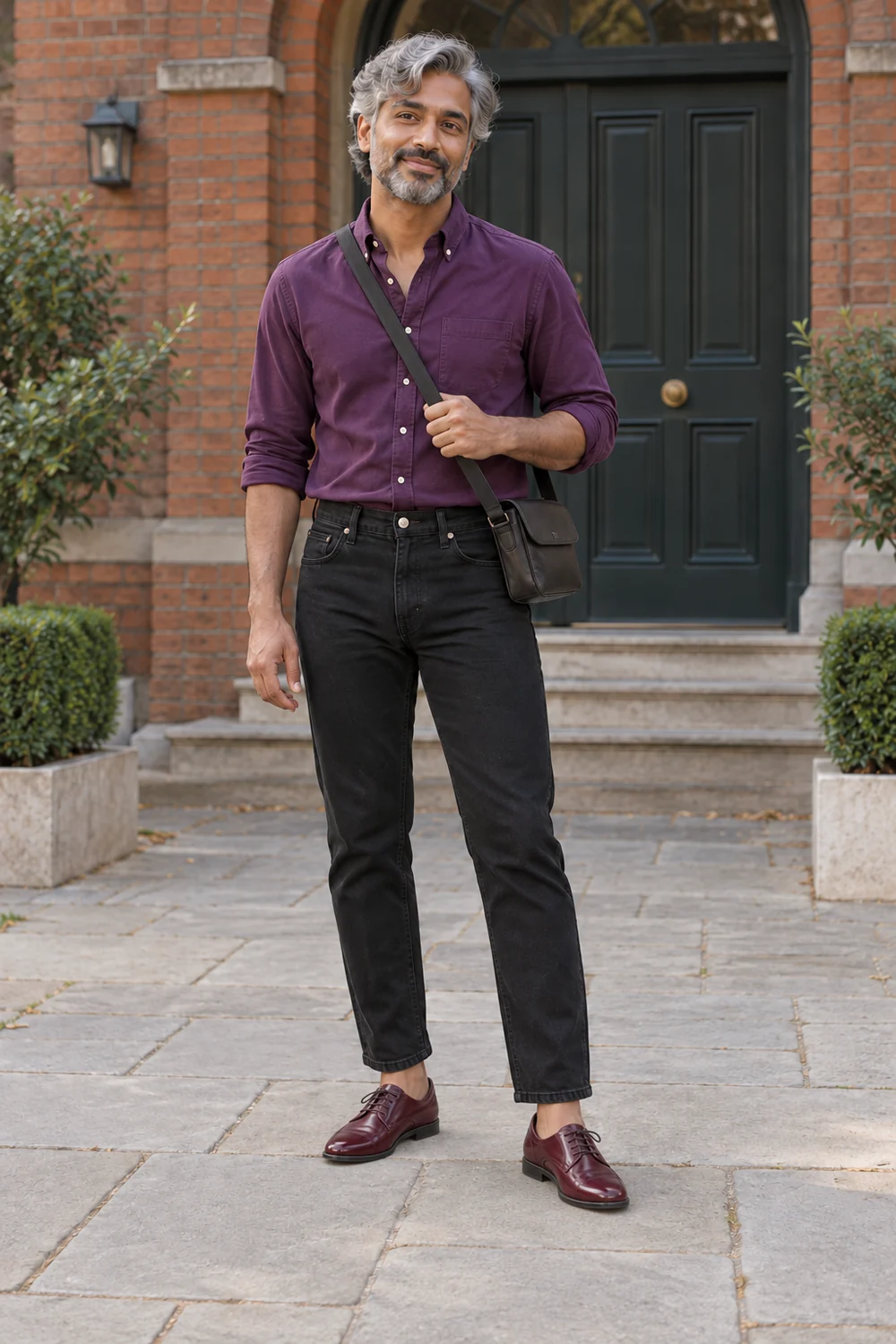
Black straight jeans, a plum Oxford and burgundy shoes make the base; an unstructured black jacket adds a separate version.
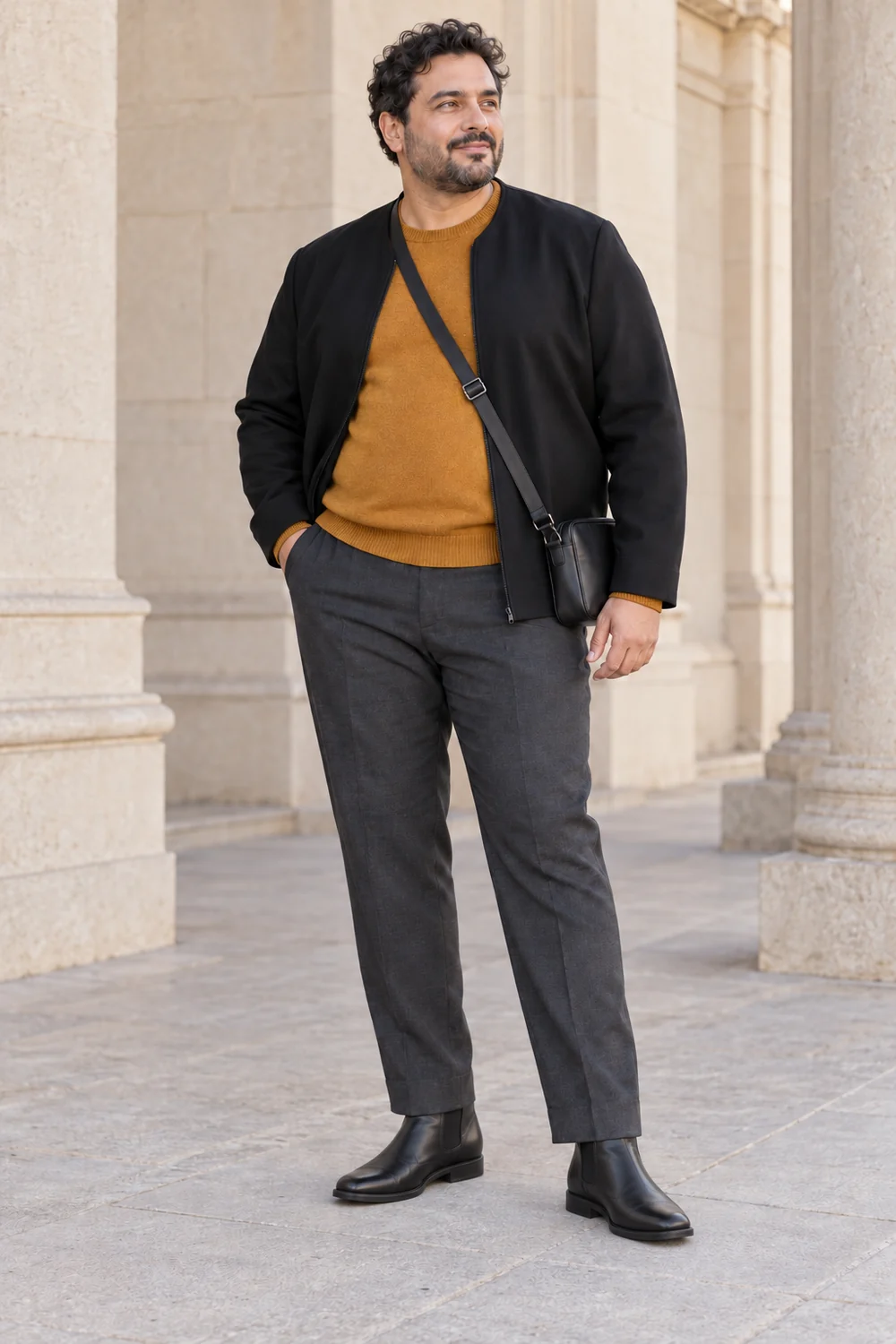
One amber centre warms charcoal trousers and a black frame, with two complete black footwear routes.
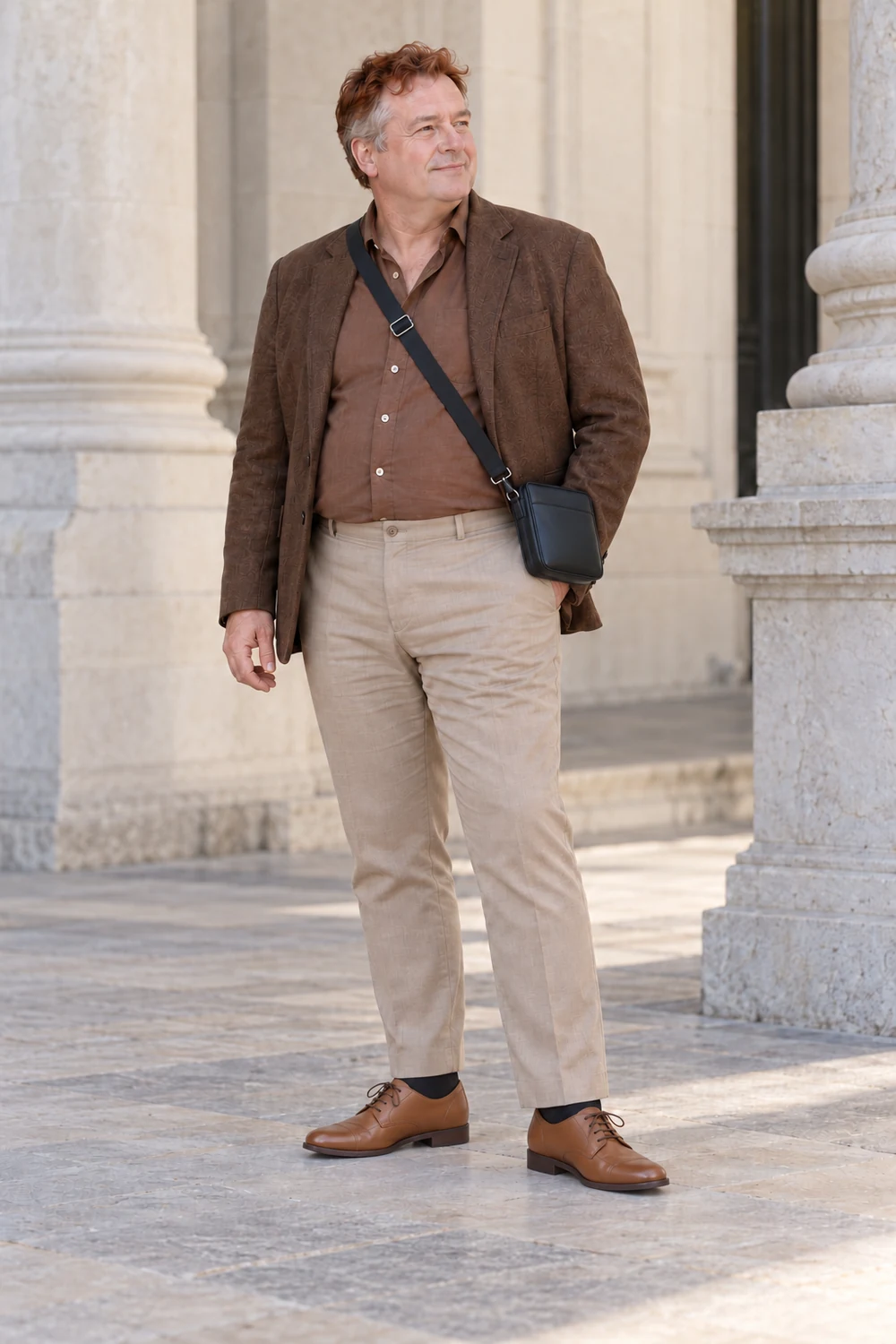
Choose the amount of brown above pale stone trousers, then compare tan ankle boots with low-cut Derby shoes.
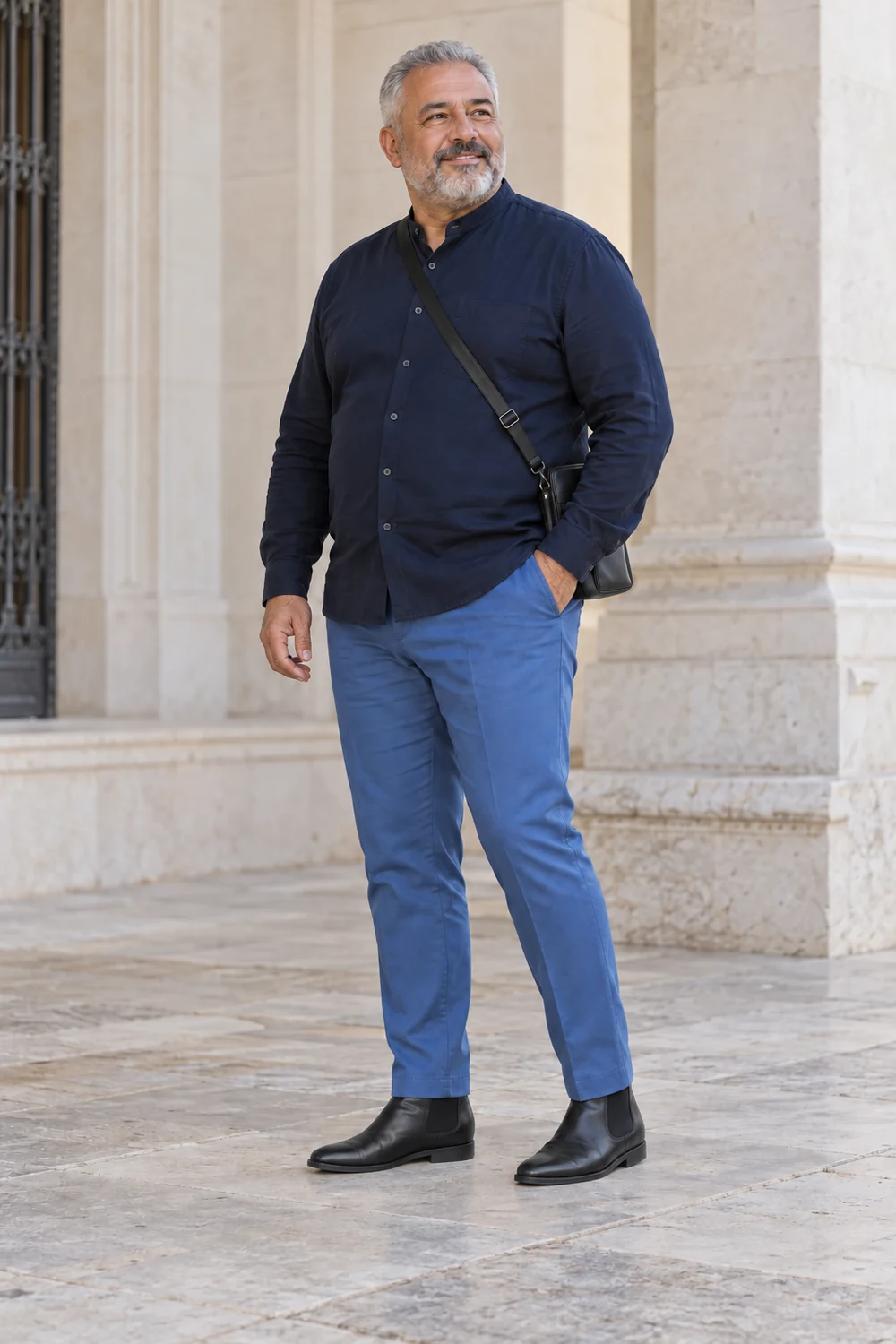
Two blues stay distinct through depth: a navy band collar above blue trousers, with an optional short jacket and two black footwear routes.
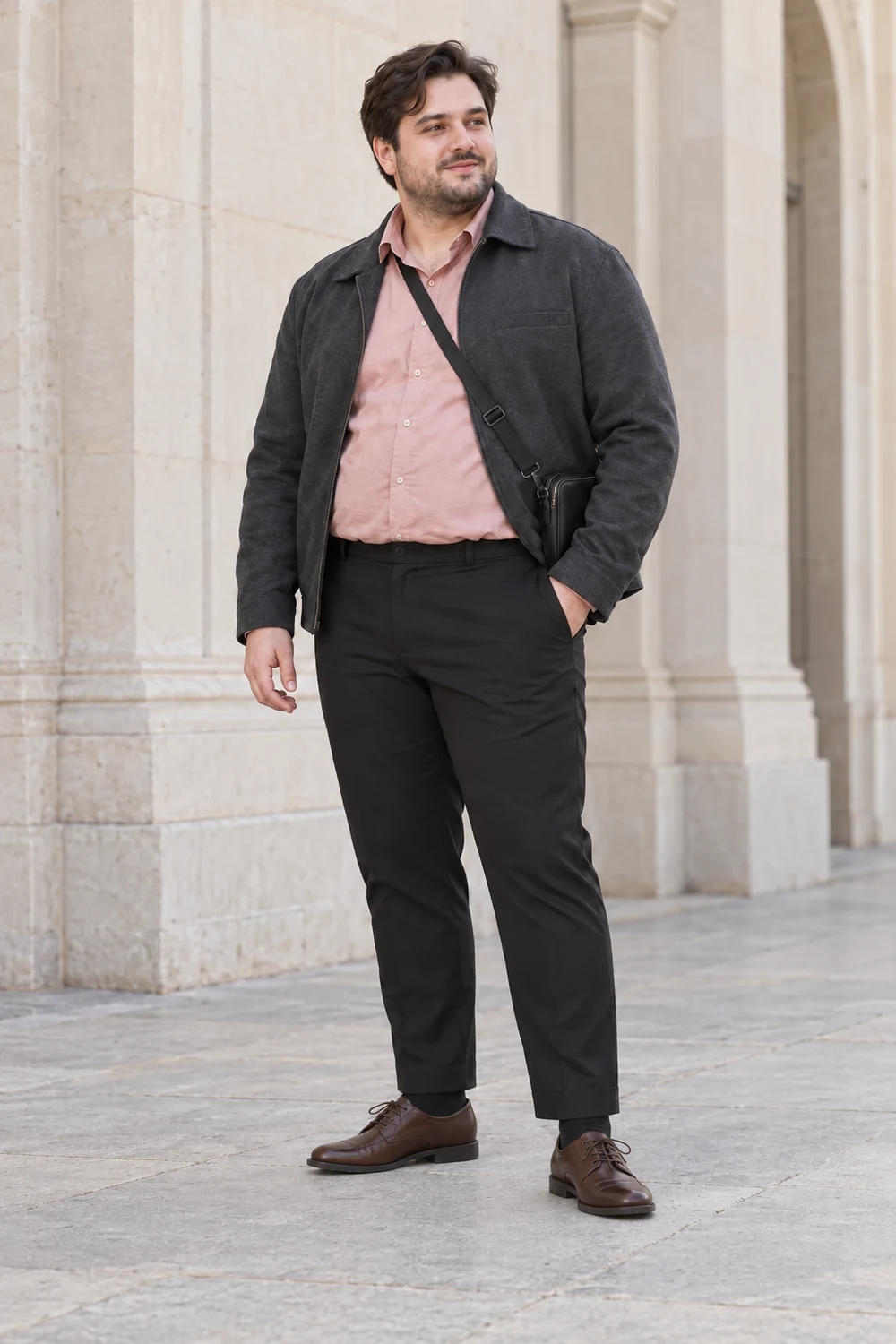
Check muted rose beside the actual charcoal jacket before adding another shirt; brown shoes finish the complete black-trouser base.
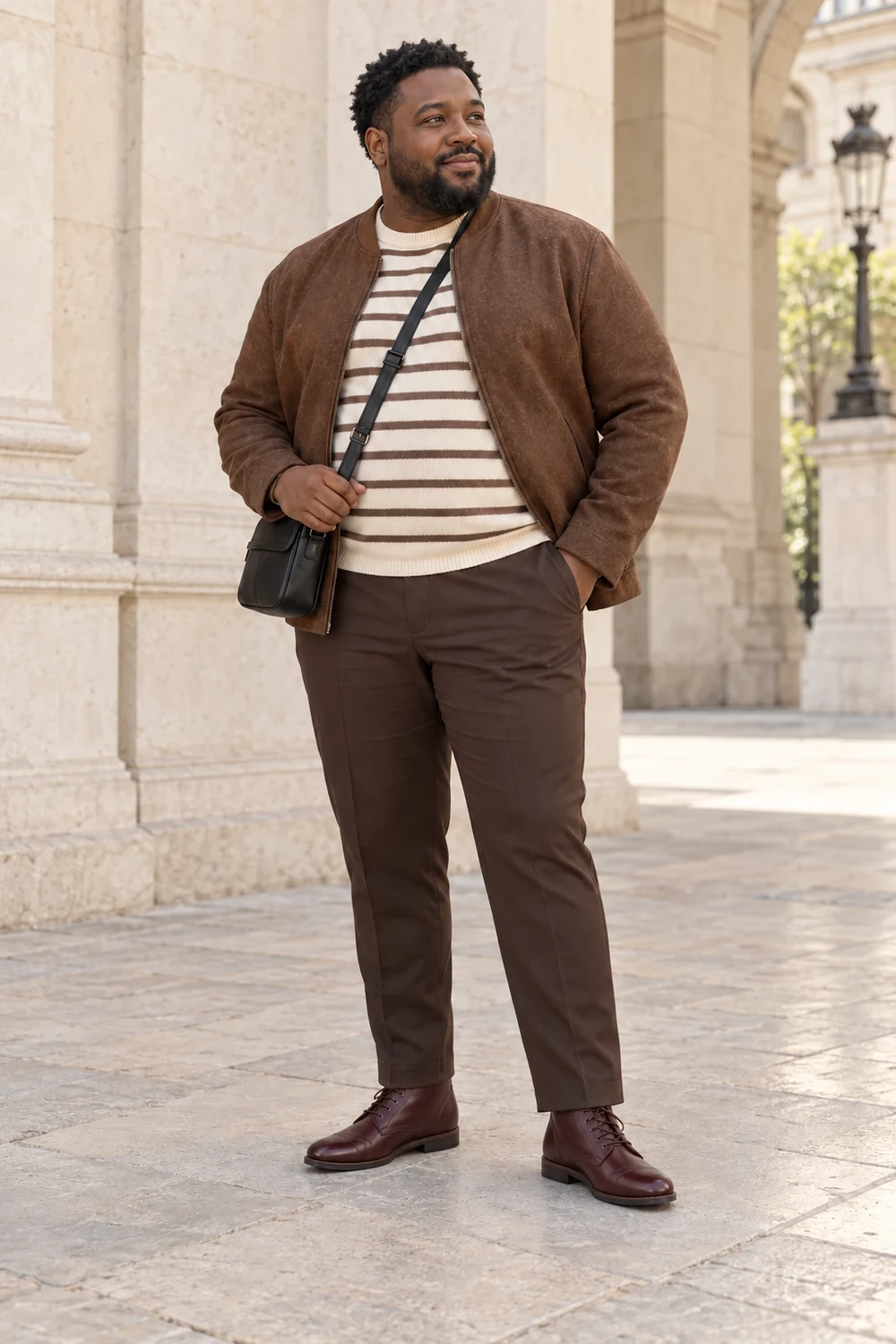
If a striped knit pulls under the brown jacket, separate pattern preference from the sleeve construction that needs changing.
Practise keeping bronze as the main reflective area, with navy trousers, an optional velvet jacket and two black footwear routes.
Keep the burgundy polo collar free inside the charcoal blazer, then compare tan boots and low-cut Derby shoes under grey trousers.
Try a shorter phrase or clear a filter to see more guides.