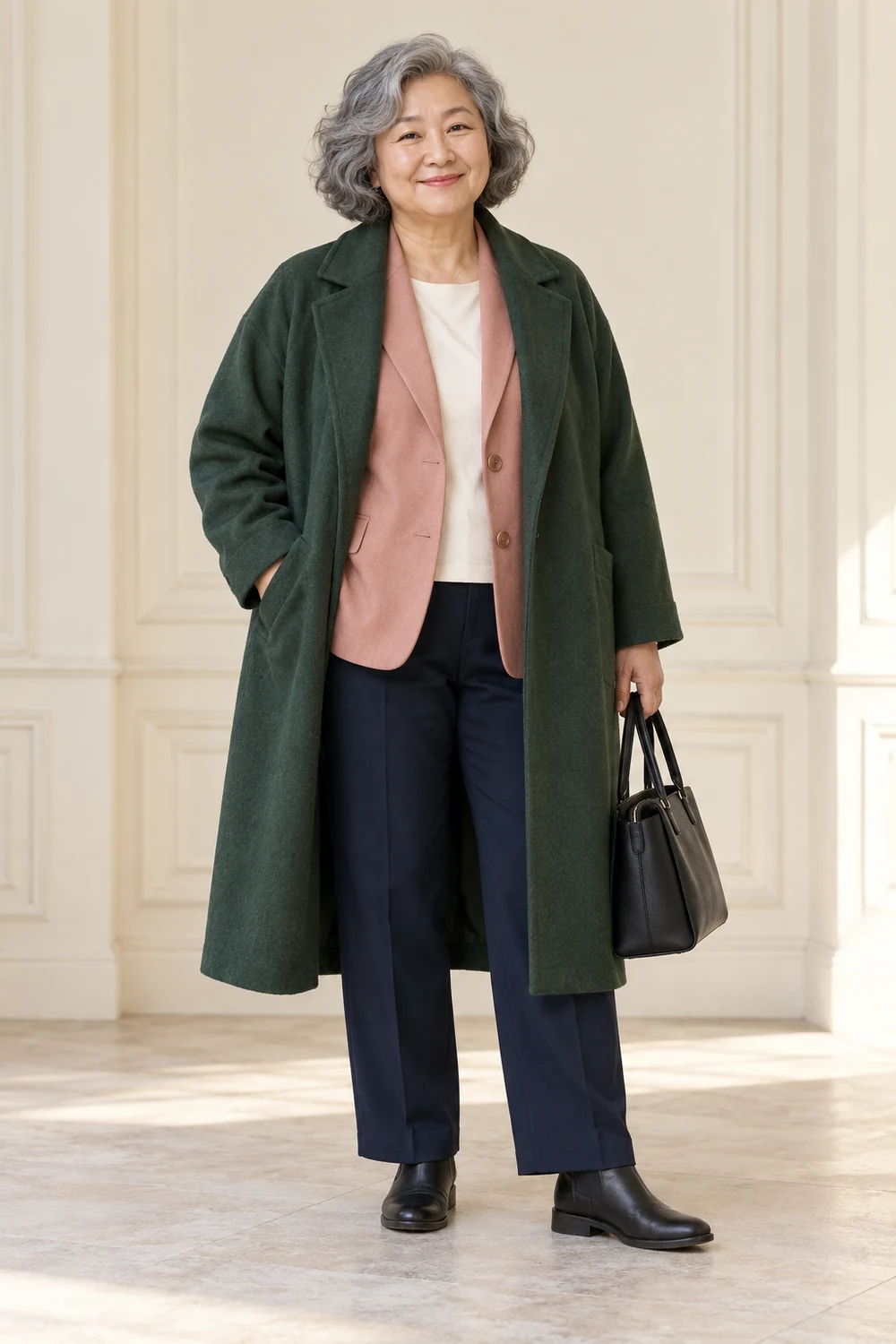
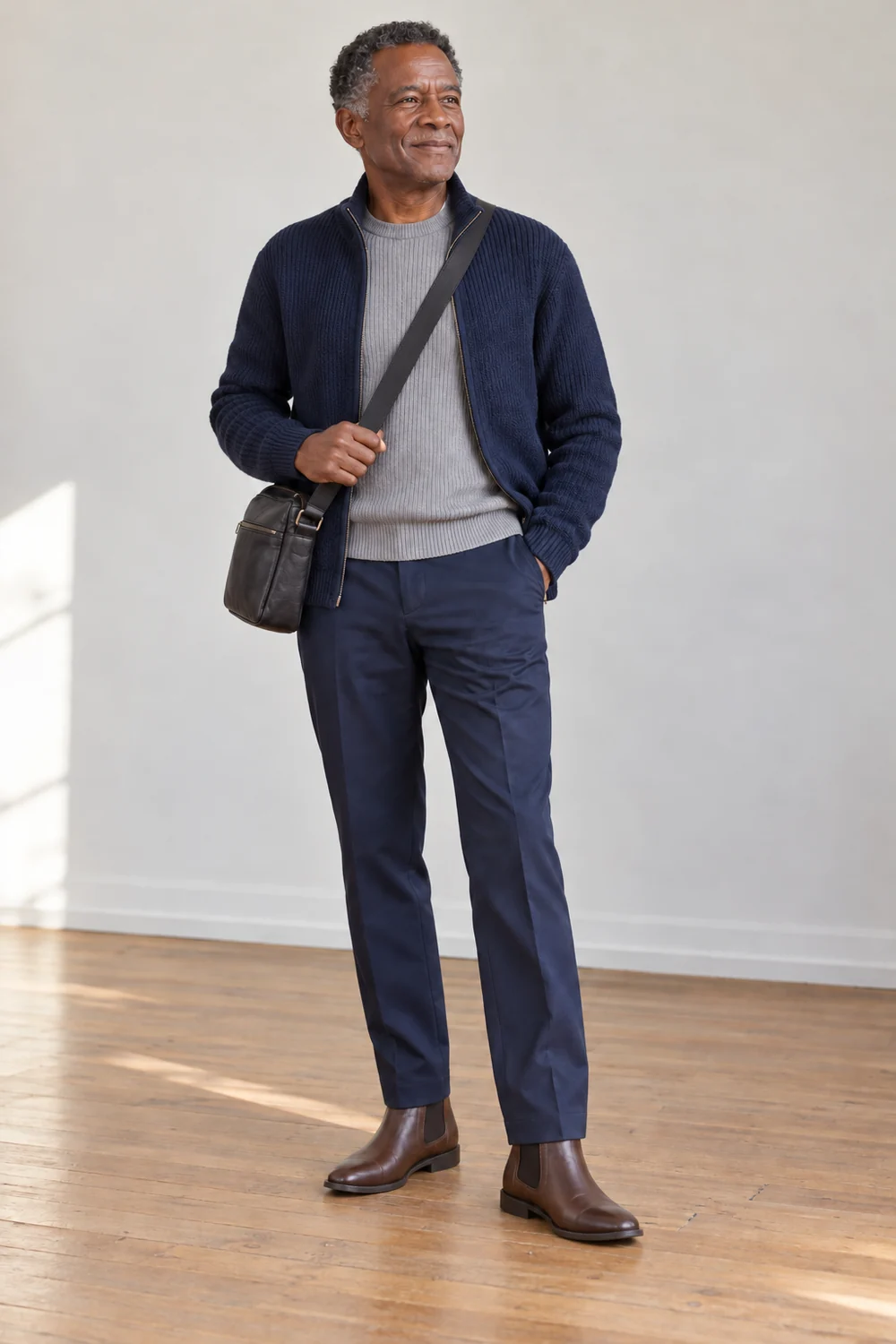
Practise one fit decision at a time, beginning with the rust trousers’ rise. Charcoal at the shirt and blazer can stay while you compare the position that needs attention. The skill is noticing which garment interrupts a movement, rather than changing every size and hem at once.
Round one: sit before pinning
Try the rust tailored trousers with your intended underlayers. Sit, stand and take a full stride. Check waist, rise and seat room, then thigh and knee placement. On a petite frame, shorter length is only one question; taking up the bottom will not move an uncomfortable rise or knee. If the upper fit works, move to the hem. If not, compare another cut before making an alteration.
Add the charcoal soft shirt and reach forward. Check the buttons across the torso, shoulder and upper-arm room, then the collar and cuffs. Try a tuck or untucked hem that works with the actual waist. If the shirt pulls before another layer is added, it needs its own comparison. A tighter tuck does not create ease.
Round two: add the real sleeve
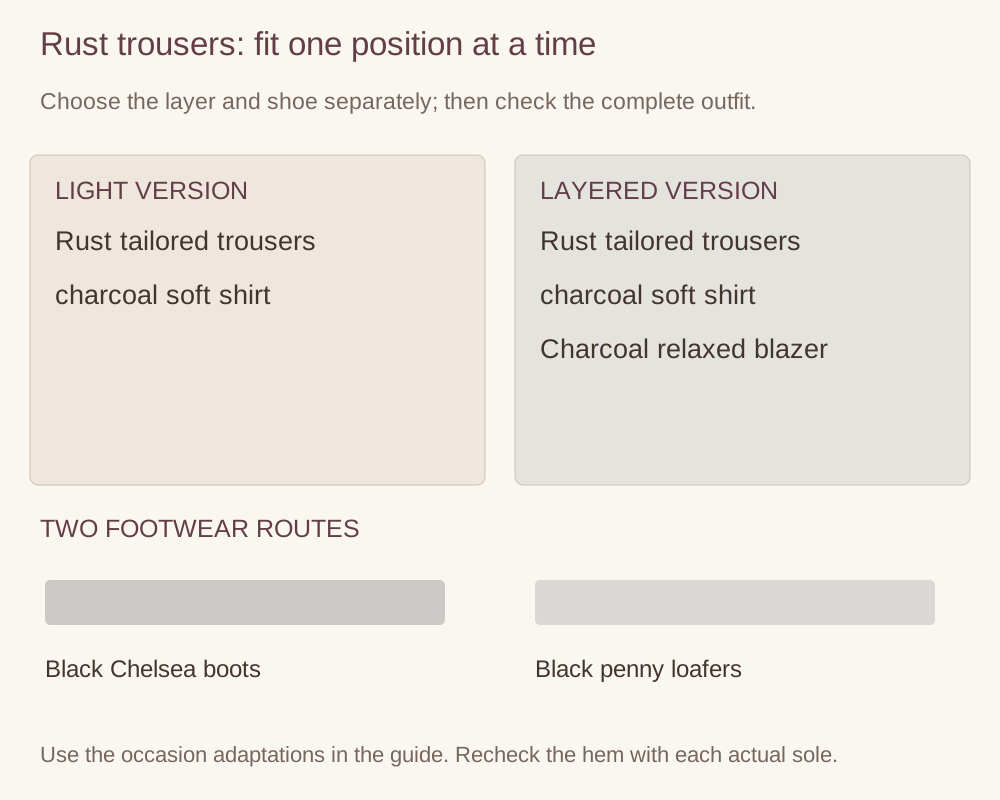
The light version is shirt, rust trousers, black shoes and dark practical bag. Check the shirt’s own opacity and neckline without the blazer. For the layered version, put the charcoal relaxed blazer over those actual sleeves and repeat sitting and reaching, open and closed if wanted. Compare the back and upper arms before cuff length. A shorter cuff is not a repair for a restrictive sleeve higher up.
Test the loaded bag strap too, then remove the blazer. The shirt base should remain complete, with the collar settled. Keep the arrangement you can repeat without pulling the shirt back into place.
Round three: change the shoe alone
Black Chelsea boots put an ankle shaft inside the trouser leg. Check the elastic opening, toe room and ankle movement, then whether the cloth falls back after a stride. Black penny loafers give the lower opening: check the instep, toe space and heel grip while walking. Use ordinary low-profile soles and a conventional low broad heel in either pair. Compare the real rear hem over both soles; a loafer and a boot need their own clearance. Keep the same complete base, optional layer and dark bag with either pair. Check intended socks inside the actual shoe before settling its fit.
Work: for a relaxed workplace accepting the shirt, tailoring and chosen shoes, use the blazer for meetings and the light base at the desk. Loafers and boots are separate options within the actual dress rules. Repeat the seated waist and bag-access checks.
Celebration: for an informal birthday supper, let rust supply the colour with the blazer open or removed. Choose the lower loafer or boot shaft according to the invitation, floor and actual walking route.
Holiday: for a city-break dinner, pack the complete shirt base with one tested shoe route and the blazer only if wanted. Recheck either the loafer sole or boot shaft with the hem; choose clothing for actual destination conditions separately.
Five minutes estimates assembly after fitting. First practice takes longer. Repeat the fit that freed the movement before changing another variable.
Use the outfit as a starting point. Adjust the fit, coverage and footwear to your preferences and plans.