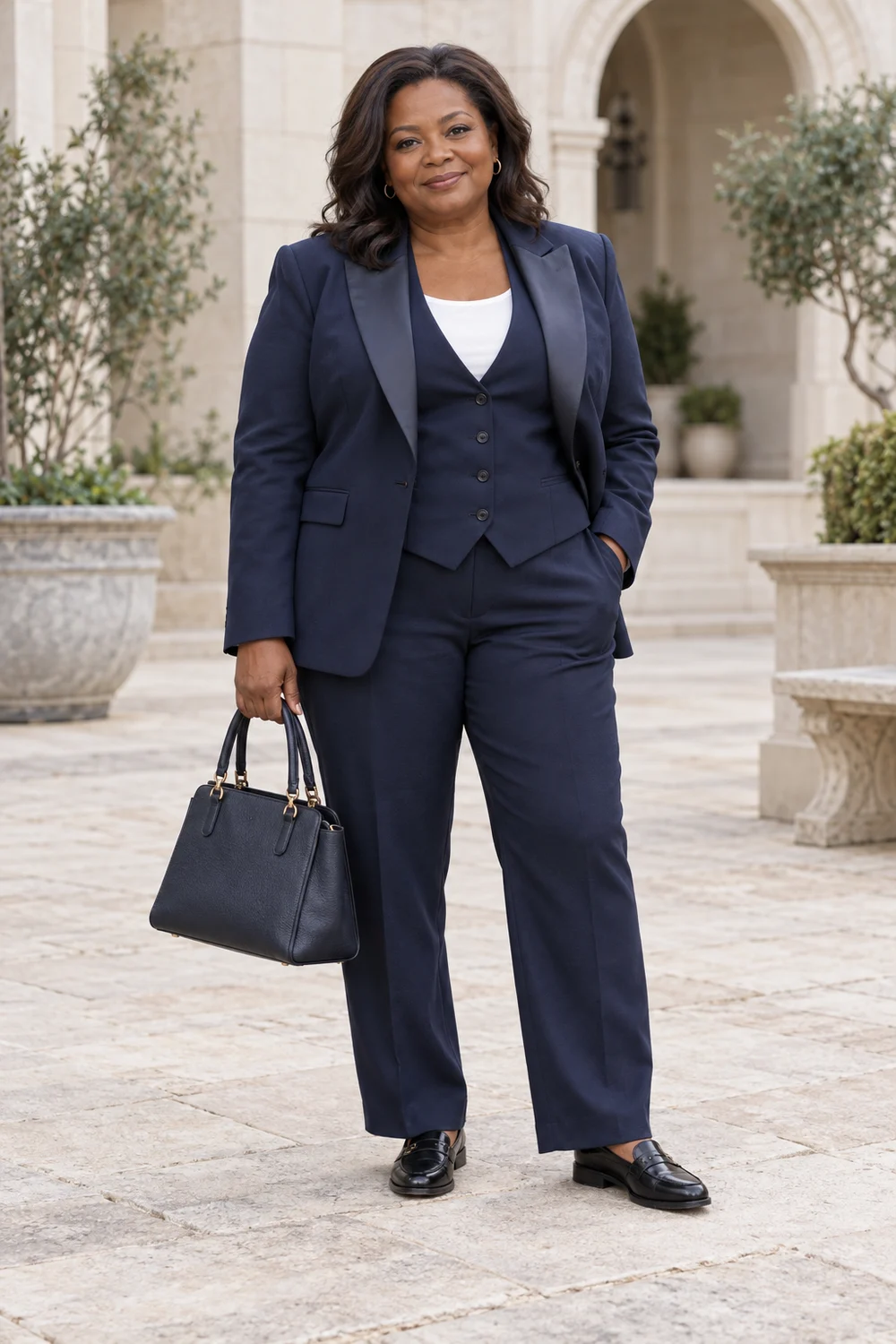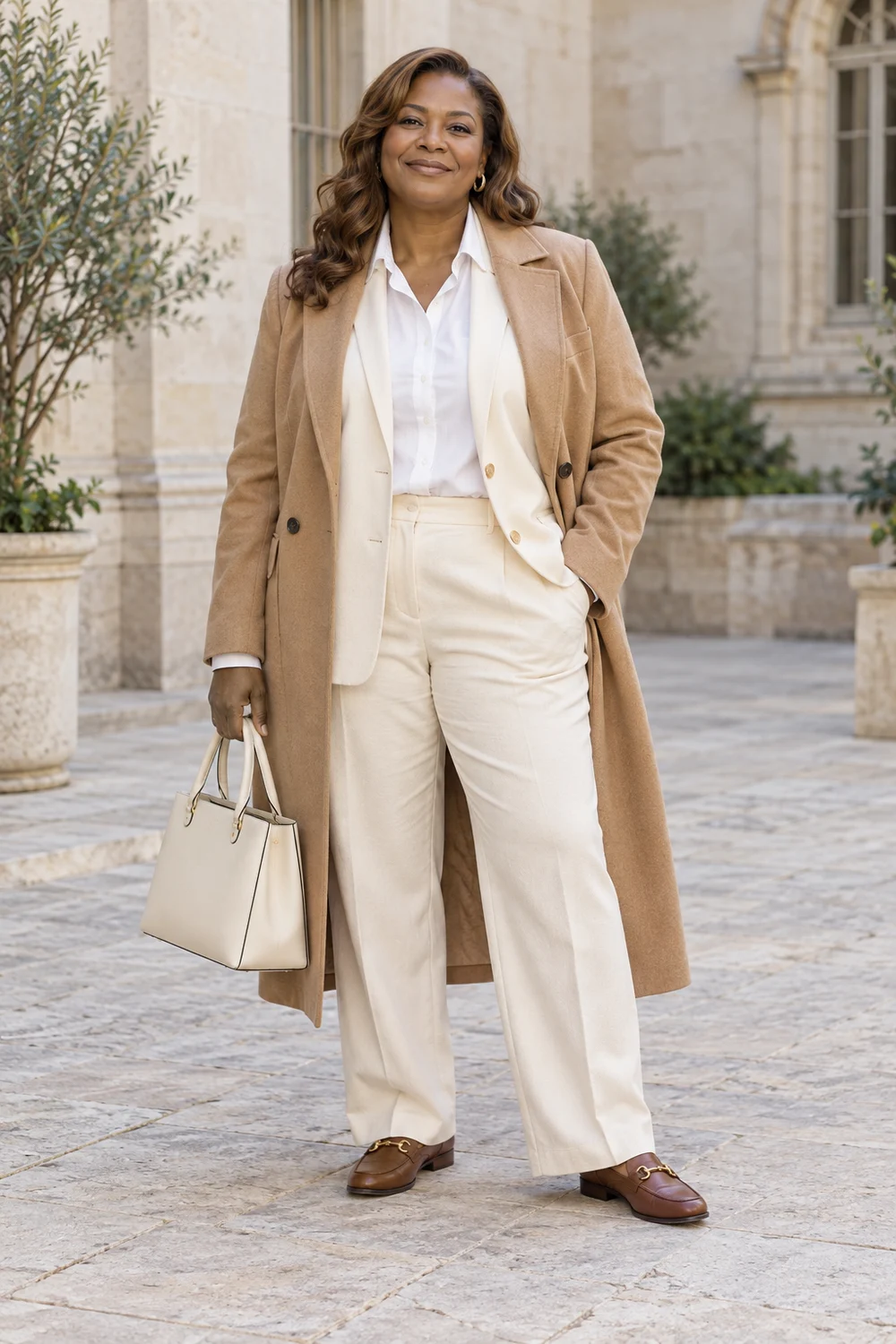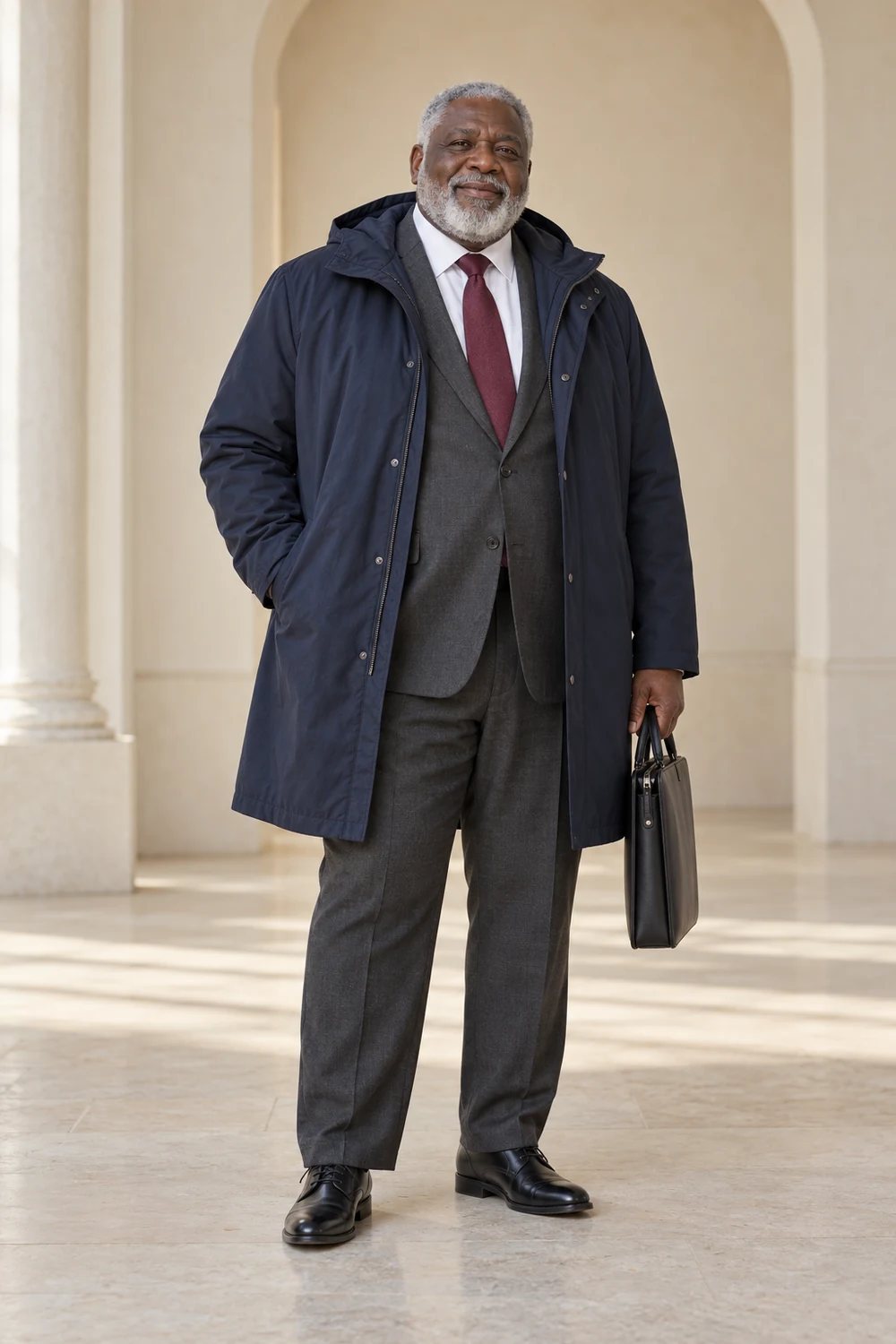
Try the coat over your actual blazer and inner layer, then reach, sit and fasten it. Compare armhole and back room rather than simply buying a longer overall size.
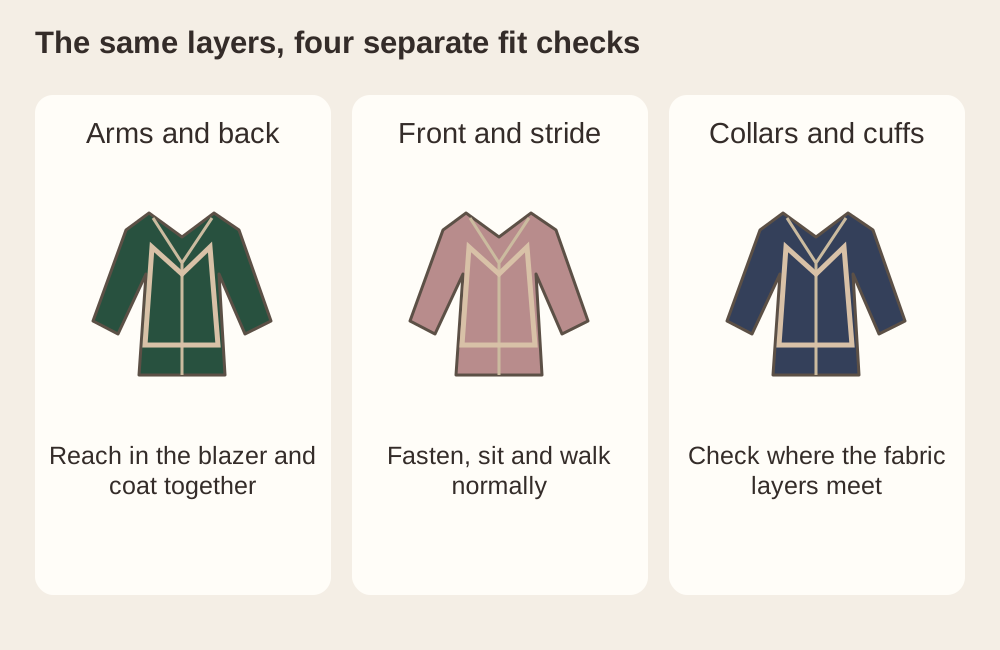
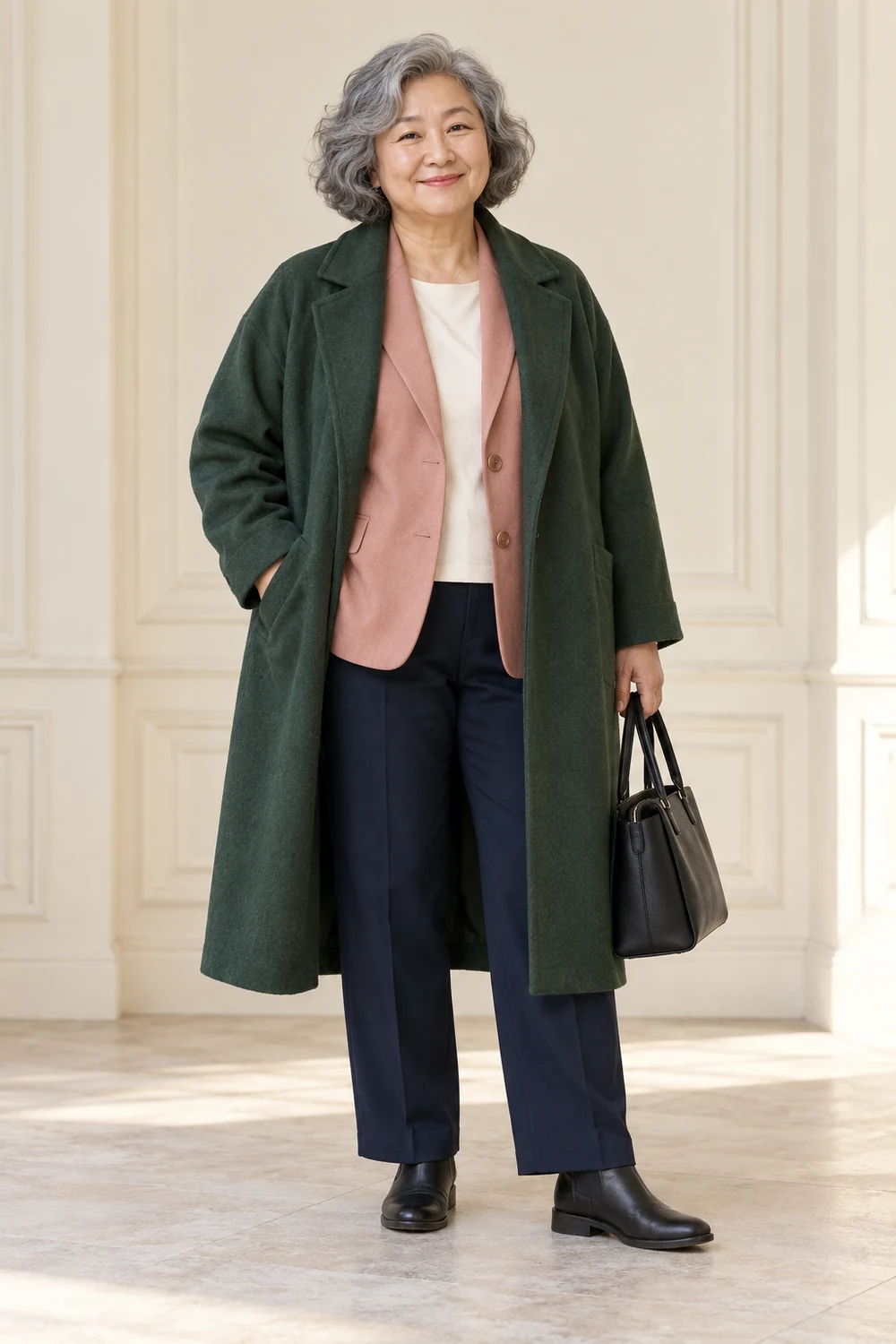
A coat that fits perfectly over a tee may be uncomfortable over tailoring. AW26 outerwear reporting and PORTER’s layering edit provide the seasonal context, but the useful question is specific: can the coat accommodate your actual blazer? The illustrated green coat, pink jacket and navy trousers form an original combination on a fictional plus-size adult.
Bring the whole inner outfit
Try the blazer and shell together before the coat. Fasten the jacket if that is how you will wear it, sit and reach forward. If it already restricts movement, a roomier coat will not fix the underlying fit. Once the inner layers are comfortable, add the coat and let its collar and shoulders settle without repeatedly pulling them into place.
Compare the fit problem, not just the size label
| What feels crowded | Compare next |
|---|---|
| Upper arms or elbows | The coat’s sleeve width and armhole over the blazer. Another sleeve construction may be more useful than a larger body with overly long cuffs. |
| Upper back when reaching | Shoulder and back ease with both arms forward. Check whether the blazer bunches underneath and try another cut. |
| Front when seated | Bust, waist and hip room with the intended fastening closed. Choose room for breathing and sitting rather than relying on wearing a tight coat permanently open. |
| Neck and cuffs | How the coat collar, blazer lapels and inner neckline meet, plus whether the two sleeve ends catch or rub. |
Build a useful colour combination
Bottle green gives the outer layer a clear role; a dusty-pink blazer adds a softer area underneath. Navy straight trousers and black ankle boots keep the lower half familiar. You can use your own navy, grey or camel coat instead. The fit test works independently of colour and does not require buying coordinated outerwear and tailoring from one brand.
Check the coat opening over the trouser pockets and bag. Reach for your phone, use the handles or shoulder strap and sit as you would on transport. A longer coat may need a different fastening position for a comfortable stride. A shorter coat can be easier for some journeys; length should follow your route and preferences, not a rule for a plus-size body.
Separate warmth from appearance
Read the actual fabric, lining, weather and care information. A thick-looking coat is not automatically suitable for heavy rain, and a light-looking one may have construction you cannot judge from a photograph. Decide what the garment must do before choosing between a tailored coat, an insulated layer or existing weather-appropriate outerwear.
Before committing, remove the coat and check that the blazer and trousers still make the indoor outfit you want. Then put it back on once without a prolonged sleeve-adjustment routine. If one change to cut or inner fabric weight gives comfortable reaching and sitting, you have identified a useful buying question instead of simply accumulating a bigger coat.
Use the outfit as a starting point. Adjust the fit, coverage and footwear to your preferences and plans.