Choose an outer layer that fits over the complete suit and suits the forecast, then check the event’s expectations. A parka and an overcoat can each work in the right setting.
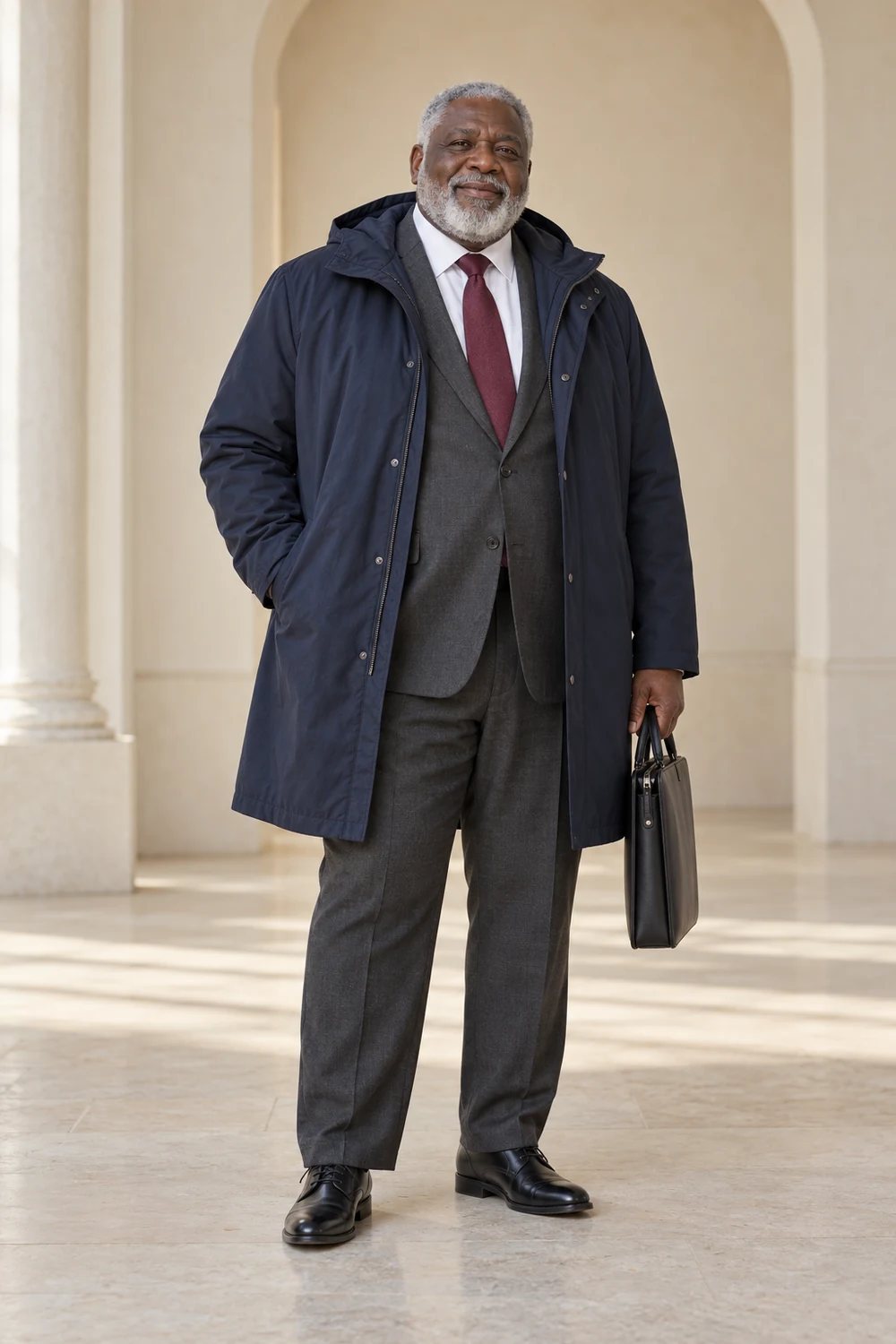
A suit still has to make the journey. GQ’s AW26 runway report includes parkas over tailoring. This guide uses that broad idea to compare two useful outer-layer choices, with an original charcoal suit on a fictional plus-size adult. The choice depends on weather, access, storage and the setting; a runway combination does not establish a universal dress-code rule.
Choose the job before the coat
| Parka route | Overcoat route |
|---|---|
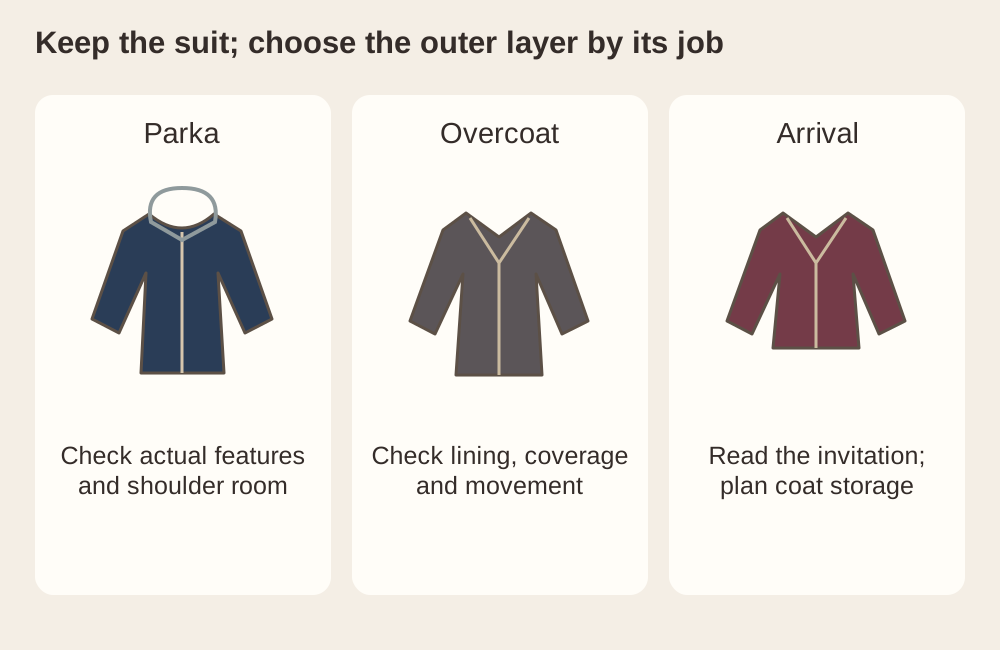
| Useful when you want the specific hood, fastening or other weather features of a particular parka. Check those actual specifications and whether the garment has room for the suit shoulders and sleeves. A sporty appearance alone does not establish protection. | Useful when you enjoy a quieter tailored outline or the setting calls for that finish. Check the actual fabric, lining and weather information. Length and formality do not automatically tell you how warm or rain-resistant it will be. |
Fit the suit without the outer layer
Try the charcoal jacket, white shirt and trousers together. Fasten the collar comfortably before adding the burgundy tie, then reach forward and sit. Check jacket shoulder and upper-back room and the trousers’ waist, rise and seat. A restrictive suit will still be restrictive beneath a generous parka. Fit the pieces independently rather than assuming one numerical size works for all of them.
Make the outer-layer comparison real
Put each candidate coat on over the complete suit, with pockets carrying only what you normally need. Check whether the jacket shoulders bunch, the sleeve ends catch or the collar presses against the tie knot. Fasten the coat and sit on an ordinary chair. A roomier armhole or different shoulder construction may be more useful than simply adding body length.
Walk and step up, checking both coat and trouser hems. Set the trousers with your intended black shoes and socks rather than assuming a dressier sole will be more comfortable. A briefcase or familiar bag can keep bulky objects out of jacket pockets. Try its handles and strap while wearing the outer layer; access should not depend on unfastening several awkward closures.
Plan what happens when you arrive
Check whether the venue has somewhere to leave the coat, and assess the suit as the complete indoor outfit. For a wedding or other formal event, read the invitation and ask the host when its expectations are unclear. This charcoal suit formula is not automatically black tie, and changing the outer layer does not turn it into a different required form of dress.
Follow each garment’s care information, including any finish-specific instructions on the parka and cleaning needs of the suit. Before buying outerwear for a single occasion, try an existing appropriate layer over the actual suit. Choose the version that works through travel, sitting and arrival; the most useful answer may already be in your wardrobe.
Use the outfit as a starting point. Adjust the fit, coverage and footwear to your preferences and plans.