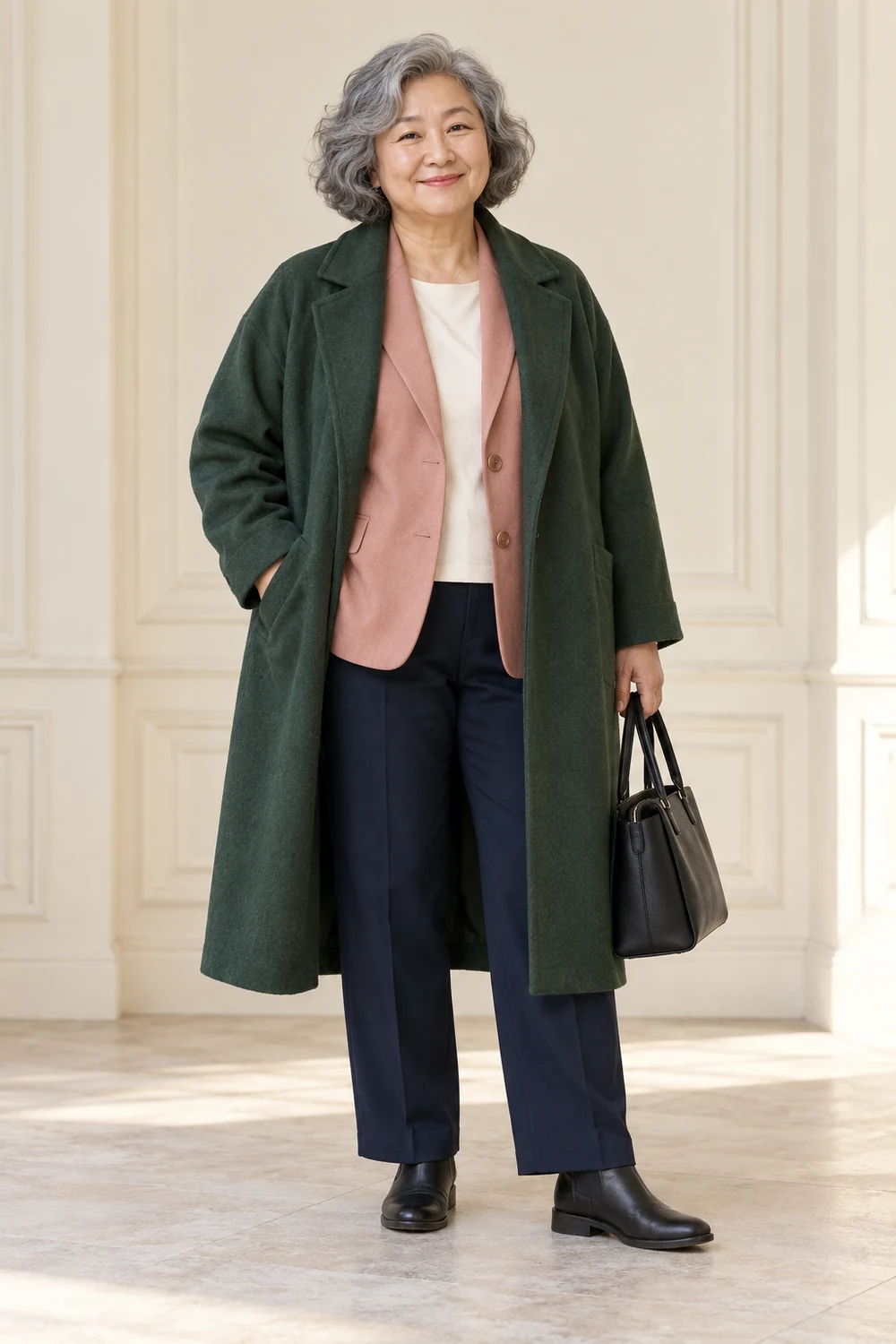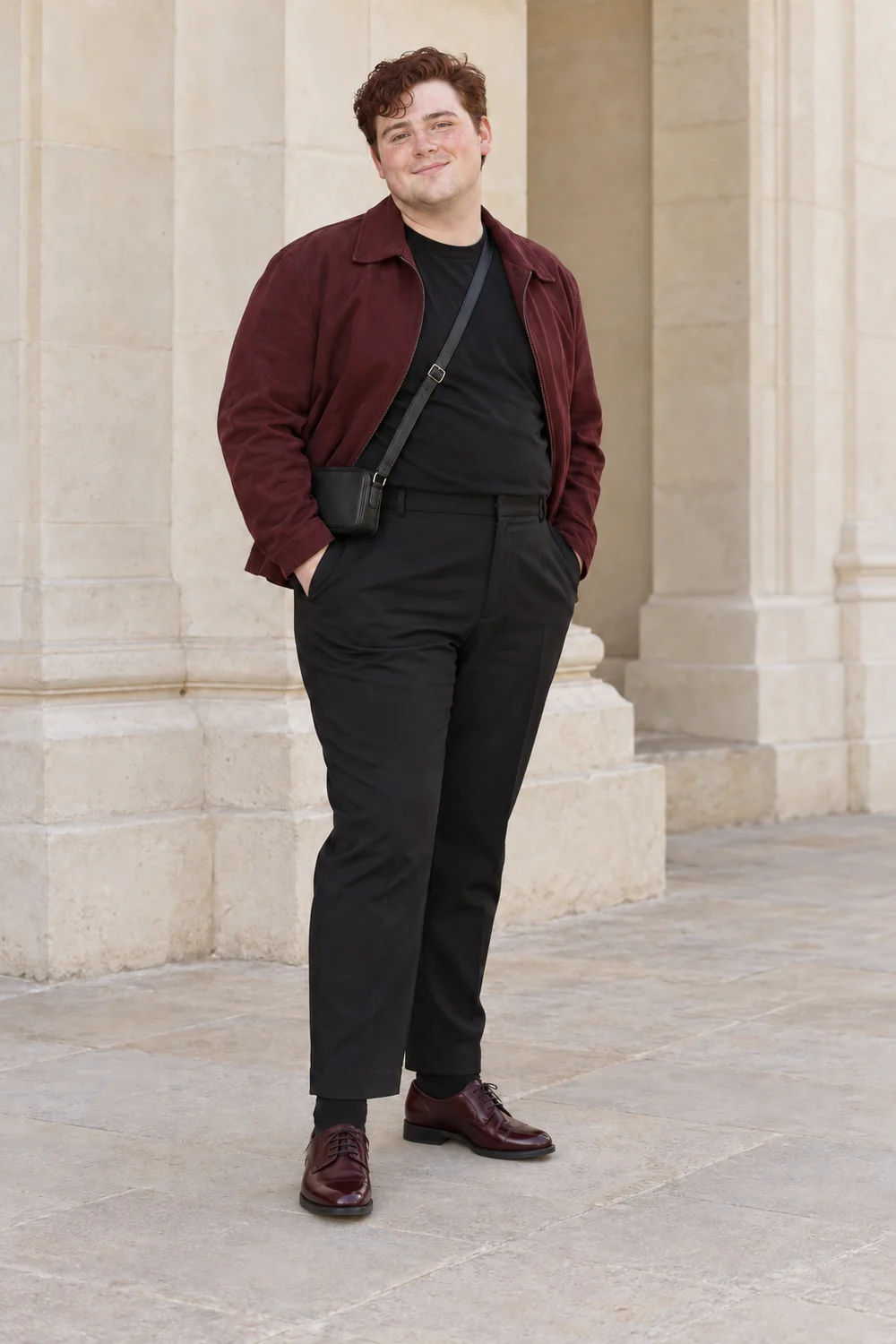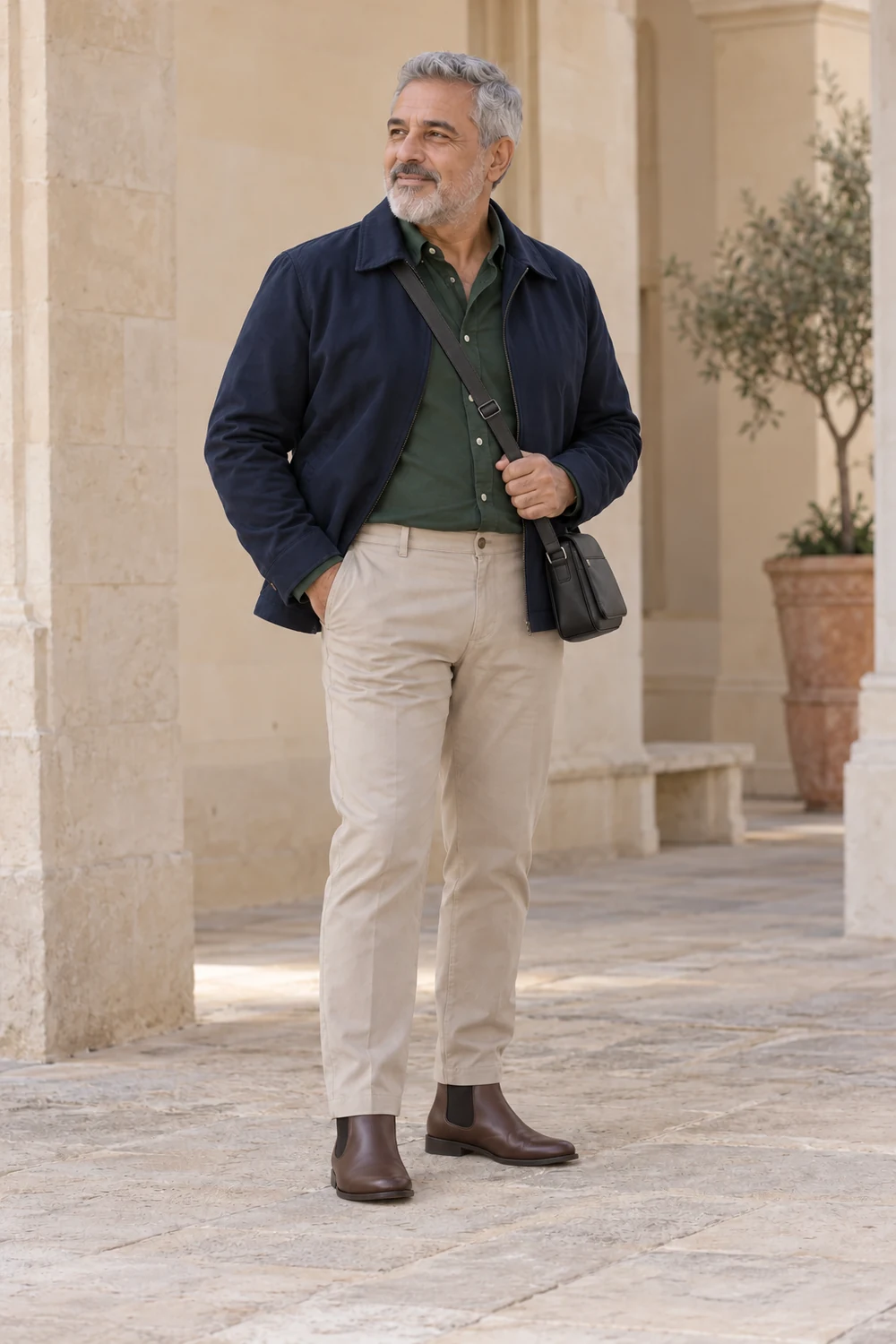
If the forest shirt moves well until the navy jacket goes on, the first comparison belongs to the jacket. A shorter cuff or tighter shirt will not create room across its back. Keep the stone trousers and brown shoes steady while you isolate the seam that restricts the movement.
The shirt pulls on its own
Try the forest-green soft shirt with your intended underlayers, without the jacket. Sit and reach, checking collar, button line, shoulders and upper arms. If the front or sleeve already restricts you, compare another cut with room there. A cardigan or jacket over the strain will not add that room. If only the hem moves, compare shirt length and your chosen tuck separately.
Check the stone tailored trousers seated as well as standing. For a shorter, fuller frame, circumference and vertical placement can need different adjustments. Check rise and seat before the knee and hem. Inspect the actual pale cloth’s opacity with your underlayers; stone is a colour name, not a coverage guarantee.
Only the second sleeve creates resistance
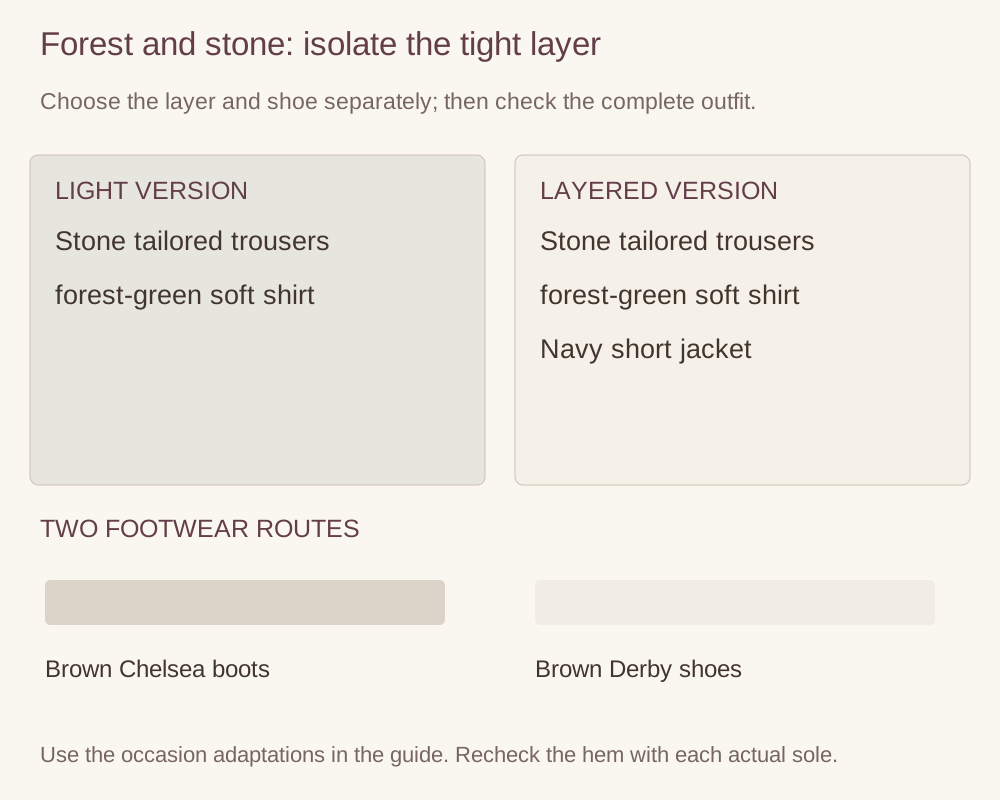
The complete light version is the comfortable forest shirt, stone trousers, brown shoes and dark practical bag. Add the navy short jacket over that actual shirt. Test reaching open and fastened if you want closure. If only the jacket stops the movement, compare its shoulder, back and upper-arm cut rather than sacrificing shirt ease.
Then look at the short jacket hem and cuffs. An alteration may change length when the construction permits, but it does not automatically create room elsewhere. Remove the layer and make sure the base still works. Check the loaded bag strap too; a collar being pulled by a strap is a different problem from a tight seam.
Compare a Chelsea boot with a Derby shoe
Brown Chelsea boots give a covered ankle; check the shaft opening and ankle movement with the intended socks, then the trouser clearance. Brown Derby shoes have a low lace-up opening. Adjust the lacing without tightening across the toes, check heel grip, and walk before comparing the trouser break. Choose ordinary low-profile menswear soles with a conventional low broad heel, then set the hem against the pair you will actually wear. Keep the same complete base, optional layer and dark bag with either pair. Check intended socks inside the actual shoe before settling its fit.
Everyday: for an appointment and lunch, use the light base indoors and add the navy layer when wanted. Choose Derbies for the lower opening or Chelsea boots for the shaft after checking your actual route.
Weekend: for a gallery and cafe plan, test the jacket seated with the loaded bag beside you. Both shoes keep the same colours; choose for the actual floor and walk rather than assuming either shoe type promises comfort.
Holiday: for a city-break supper, pack the complete shirt-and-trouser base with one checked shoe route. Bring the navy jacket only if it earns its space. Compare either boot-shaft or Derby shoe sole clearance again if the trouser hem has changed; choose weather protection separately.
Five minutes estimates assembling familiar fitted clothes. First seam comparisons and alterations need longer. Keep the one change that freed the movement, then leave the other variables alone.
Use the outfit as a starting point. Adjust the fit, coverage and footwear to your preferences and plans.