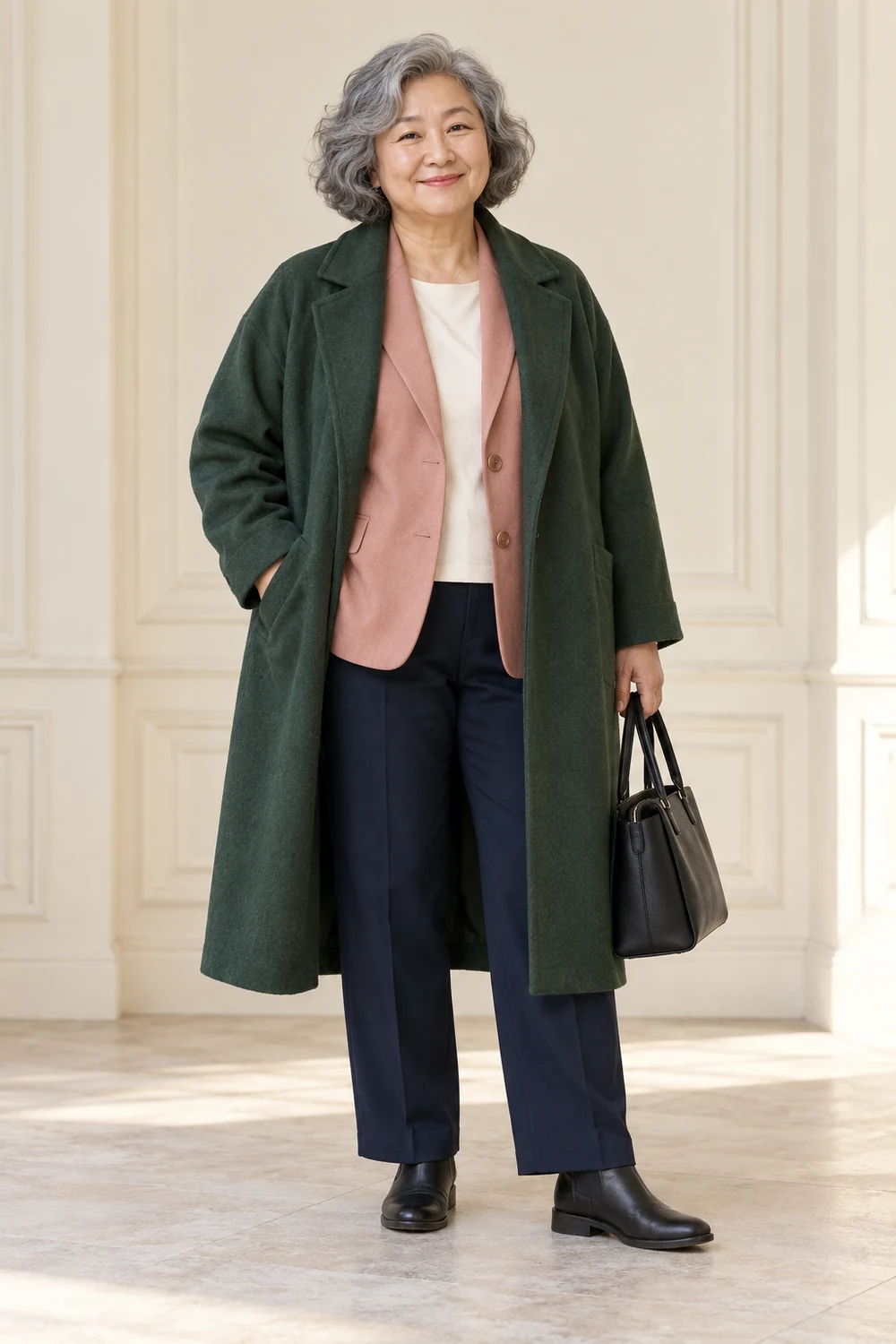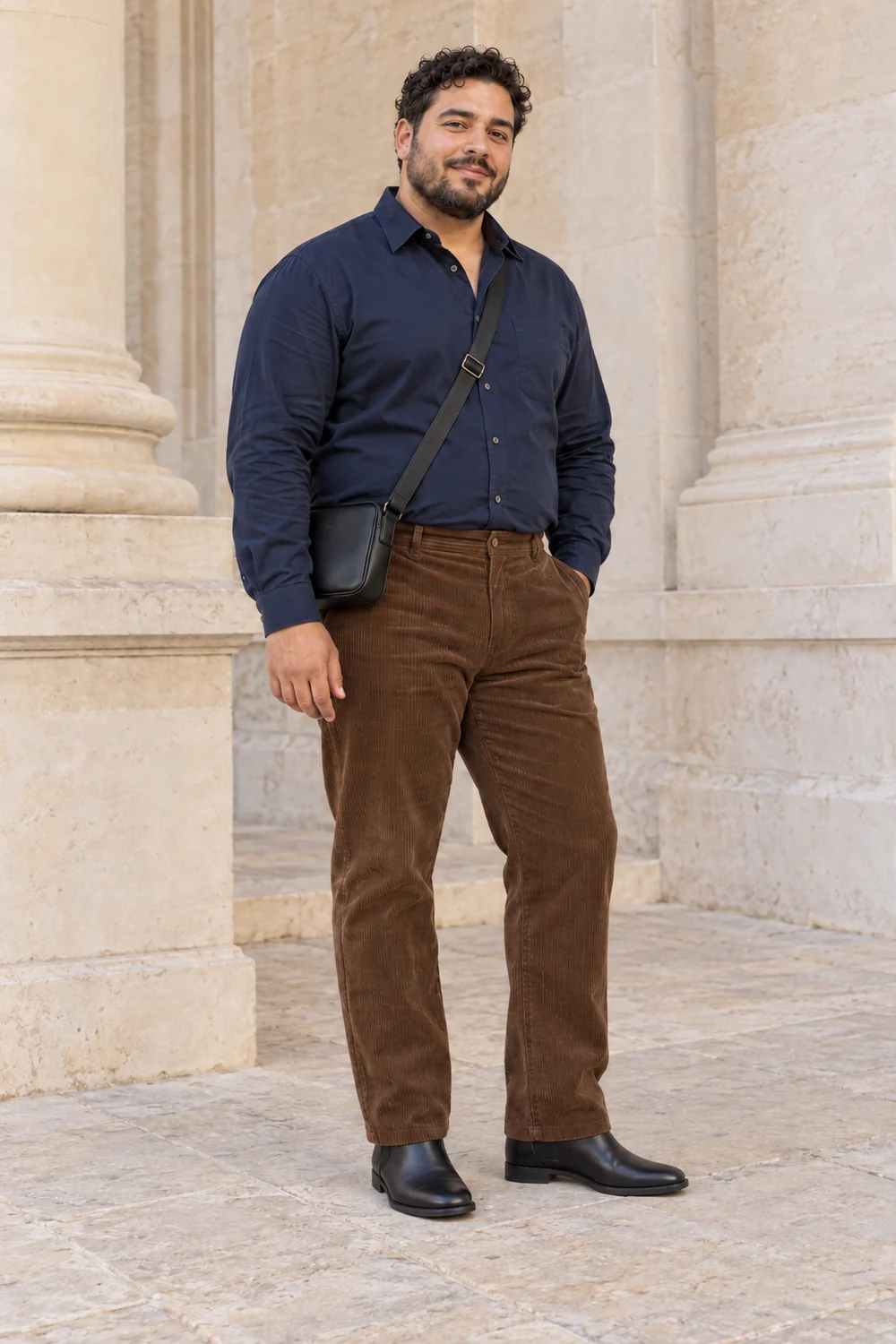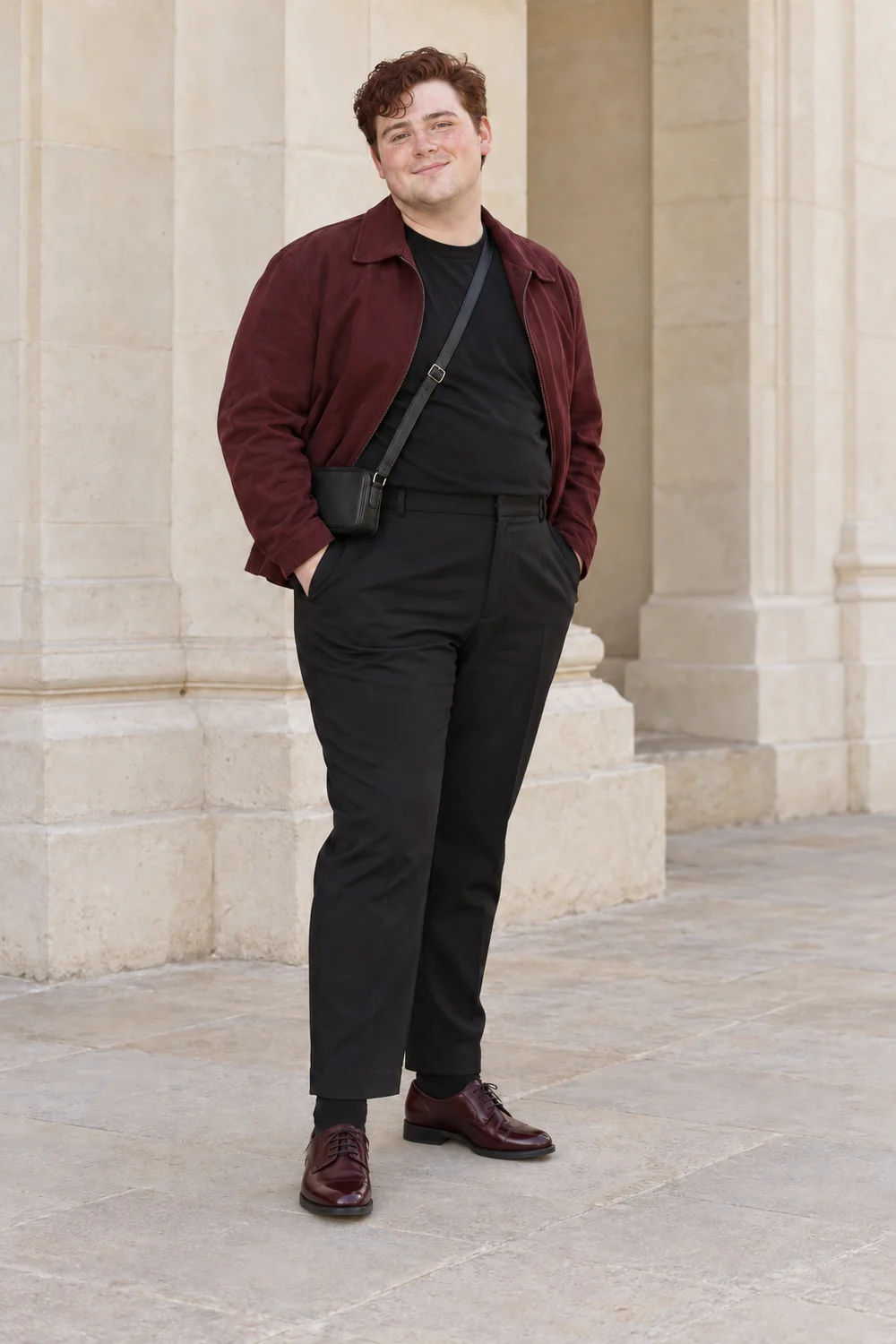
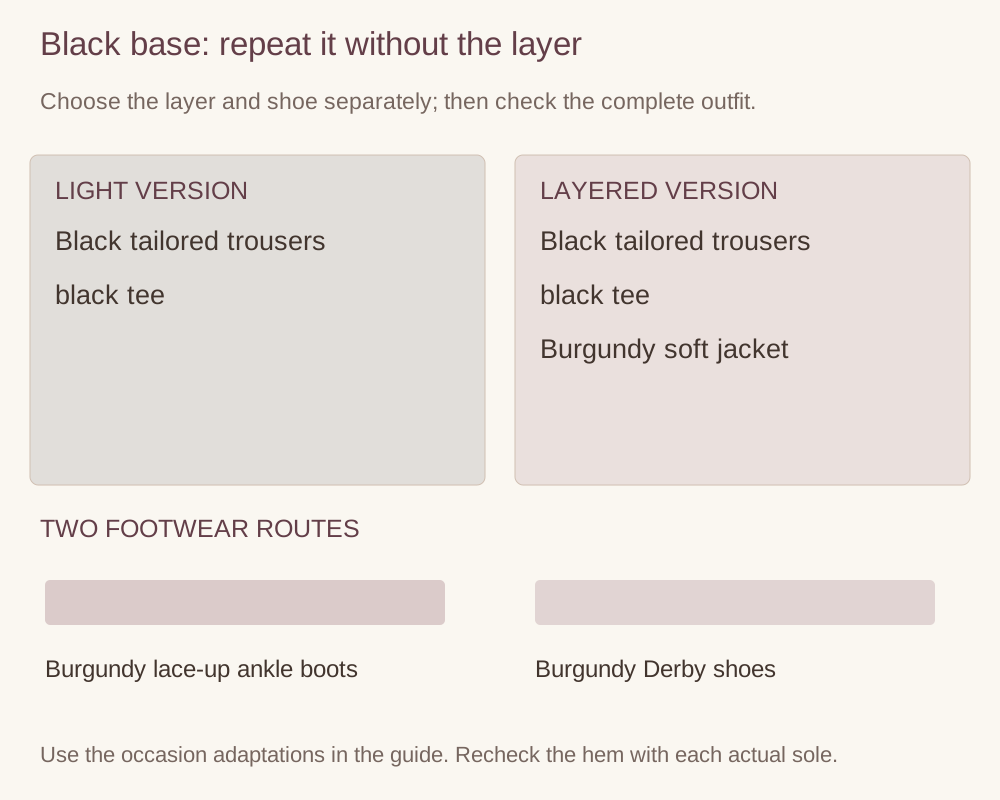
The practice is to remove the burgundy jacket and keep a complete outfit underneath. Black tailored trousers and a black tee can have their own texture and shape, with burgundy footwear as the smaller coloured detail. The layer changes the upper colour block; it does not have to hold the base together.
First round: leave the jacket aside
Try the black tee with your intended underlayers. Check opacity, neckline and sleeve coverage, then sit and reach. Decide whether you prefer its hem out or tucked using the actual waistband and torso length. A shorter, fuller frame can need less length and more room at once; tightening the whole tee is not the only way to shorten the outline.
Sit in the trousers and check rise, waist and seat room before knee position and length. Take a full stride and look at how the cloth settles. The black surfaces can differ in texture or depth without pretending to match exactly. Add the dark compact bag, loaded as it will be used, rather than filling the trouser pockets for this comparison.
Second round: add burgundy, then remove it again
Put the burgundy soft jacket over the actual tee and test reaching, closure and sitting. Check shoulders, back and upper arms before the cuff and hem. Compare where its colour ends with the waistband, then take it off. If the black base suddenly needs tugging or a different top, identify that fit or coverage job instead of declaring the jacket compulsory.
Burgundy lace-up ankle boots supply the covered-ankle route. Adjust the lacing, flex the ankle and check whether the trousers release over the shaft after a step. Burgundy Derby shoes supply the low-cut alternative: adjust their lacing, check toe room and heel grip, then repeat the walk and turn. Both use ordinary low-profile soles and a conventional low broad heel. Compare the rear hem with each actual sole before altering it. Keep the same complete base, optional layer and dark bag with either pair. Check intended socks inside the actual shoe before settling its fit.
Repeat against a real plan
Work: for a creative or relaxed office that permits the tee and selected footwear, use the jacket for a meeting and the complete black base at the desk. The Derby shoe and boot routes are separate options within the actual workplace rules. Test the seated waist and bag access in either.
Evening: for an informal dinner, keep the jacket open on arrival and remove it indoors if wanted. Choose the low-cut Derby shoe or laced boot after checking the venue floor and actual walk, without assuming a heel supplies universal formality.
Weekend: for a matinee followed by lunch, use the light base inside and bring the burgundy layer for its second outline. Both shoe routes keep the same bag and trousers; repeat the hem check with the actual pair before leaving.
The approximate five-minute assembly comes after fitting. First comparisons need longer. Finish when removing the jacket leaves the tee settled and the burgundy shoe still visible as the colour you chose.
Use the outfit as a starting point. Adjust the fit, coverage and footwear to your preferences and plans.