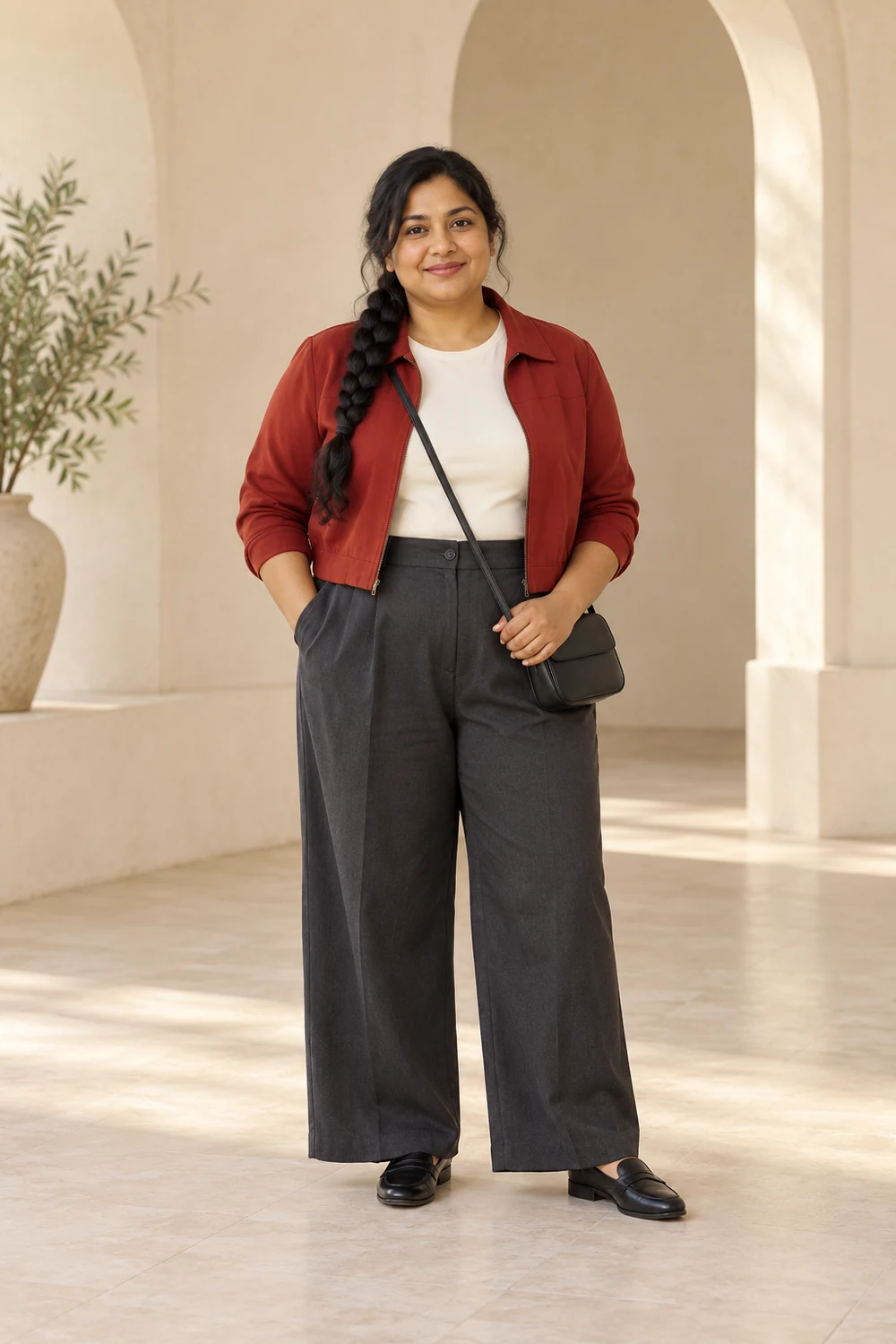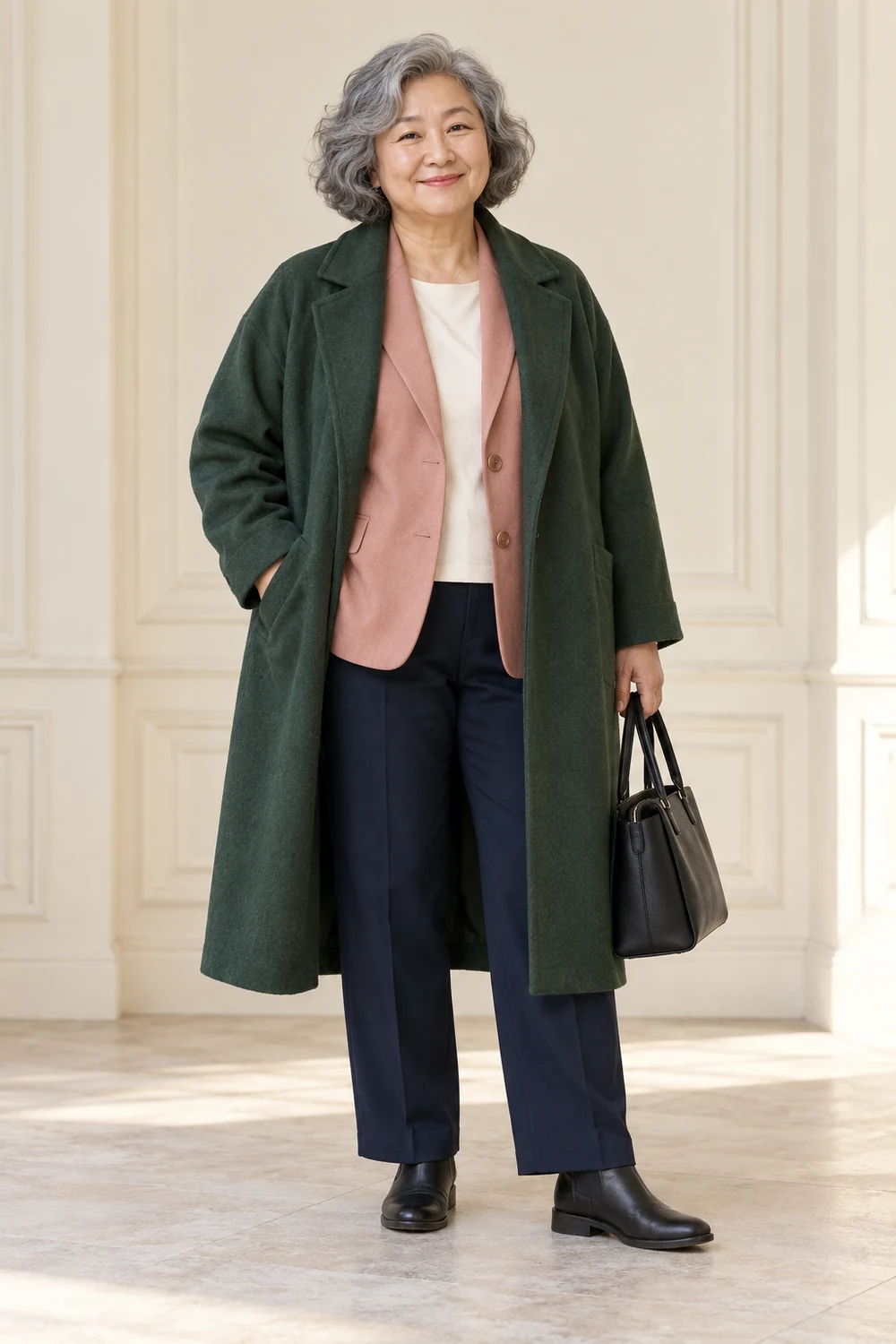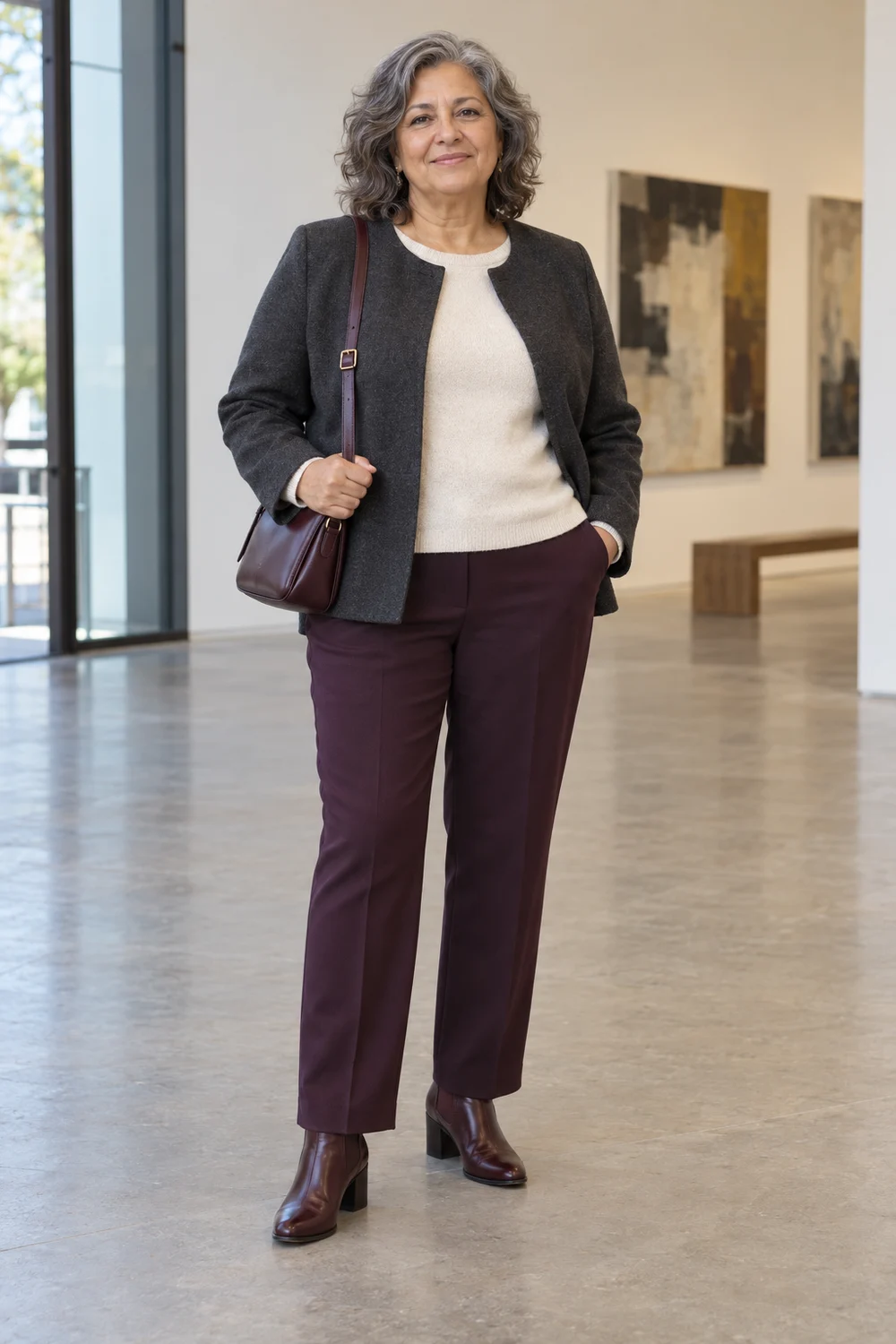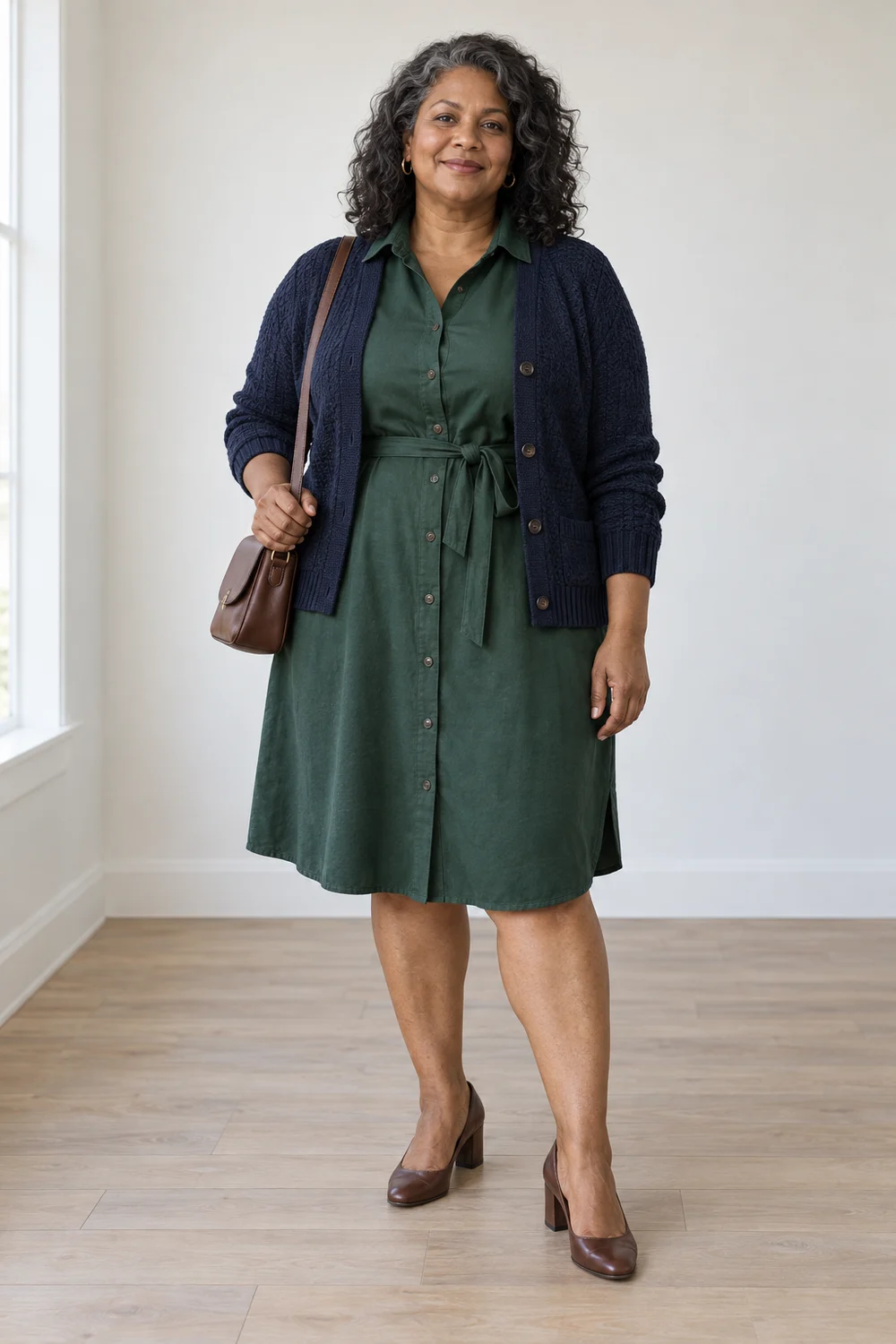
Decide what the tie changes only after the forest-green shirt dress fits without being pulled into place. A loosely defined waist and an untied outline are both plausible routes. Keep the brown shoes and compact bag steady while comparing them, then decide whether the navy knitted jacket adds something you want.
Tie it, or leave the outline alone?
Start with the dress fastened as designed and your intended underlayers in place. Check the collar, bust and seated waist room. For plus-size fit, give each area its own comparison: more room at the bust should not require tightening a waist tie to hold the rest together. Sit, reach and take a full stride before judging the silhouette.
Use the tie when you enjoy the gathered shape and can still sit comfortably. Leave it loose or remove it only if the garment’s construction allows that and you prefer the straighter outline. Neither choice needs to hide a body part. If the front pulls between buttons or the collar keeps shifting, compare a different size or cut before deciding a tighter tie is the solution.
Make the layer a separate decision
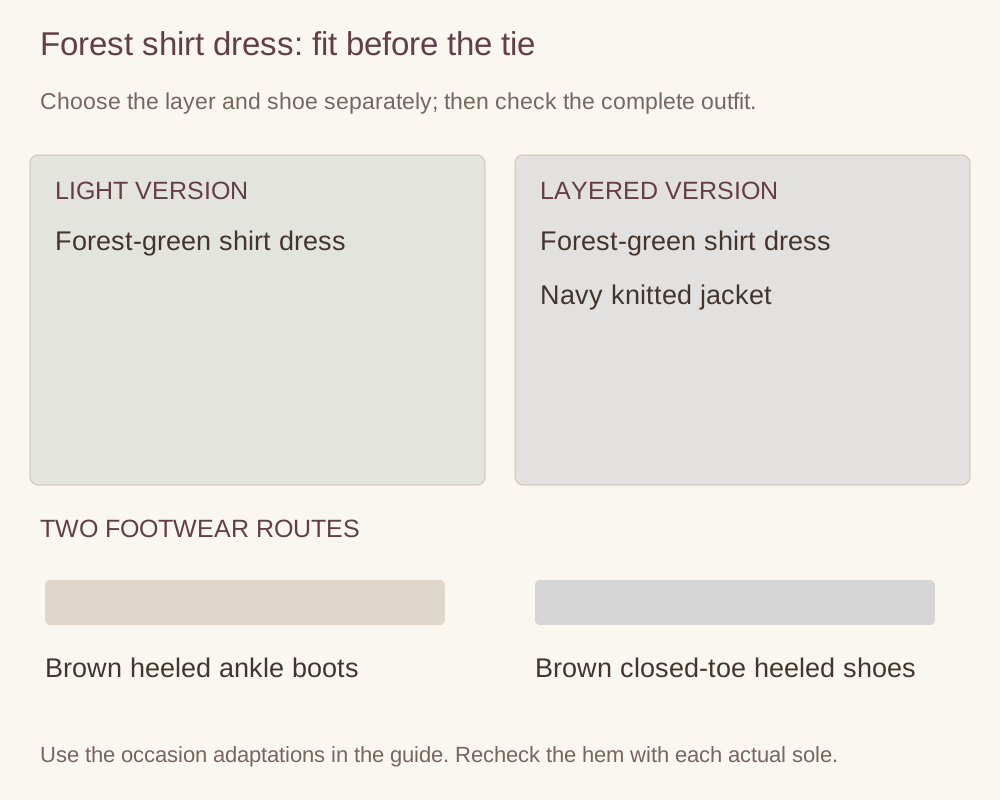
The complete light outfit is the shirt dress, brown shoes and compact brown bag. Check the dress’s own opacity, sleeves and neckline so it remains useful with the jacket removed. For the layered version, try the navy knitted jacket over the real sleeves. Check shoulder and upper-arm room, fastening and its hem while seated. Notice how its opening meets the shirt collar without continually adjusting either.
The pictured brown closed-toe heeled shoes create a lower opening below the dress. Check toe room and heel grip while walking. Brown heeled ankle boots add a shaft, so compare ankle movement and whether the skirt catches the opening during a stride. Keep the same dress, navy jacket option and bag with either route. Recheck actual heel clearance; socks or hosiery are optional and can alter fit inside the pair.
Work: for a workplace permitting a shirt dress and knit layer, use the jacket for a meeting and the complete dress alone at the desk. Boots and closed-toe shoes remain separate routes within the actual office expectations. Sit and reach into the bag without dragging the collar or tie.
Evening: for an informal restaurant meal, choose the tie position before leaving and remove the navy jacket if you want the lighter outline indoors. Either shoe route keeps the same base; test its actual heel and the seated dress rather than assuming more waist definition means more formality.
Weekend: for a gallery visit and lunch, compare the looser tie version with the jacket open. Choose boots for the closed-ankle shape or shoes for the lower opening after checking your walking plan. The jacket supplies an optional outline, not a weather guarantee.
Five minutes estimates assembling familiar fitted pieces; first fit comparisons need longer. Keep the waist choice you can sit in, then leave the tie alone for the day.
Use the outfit as a starting point. Adjust the fit, coverage and footwear to your preferences and plans.