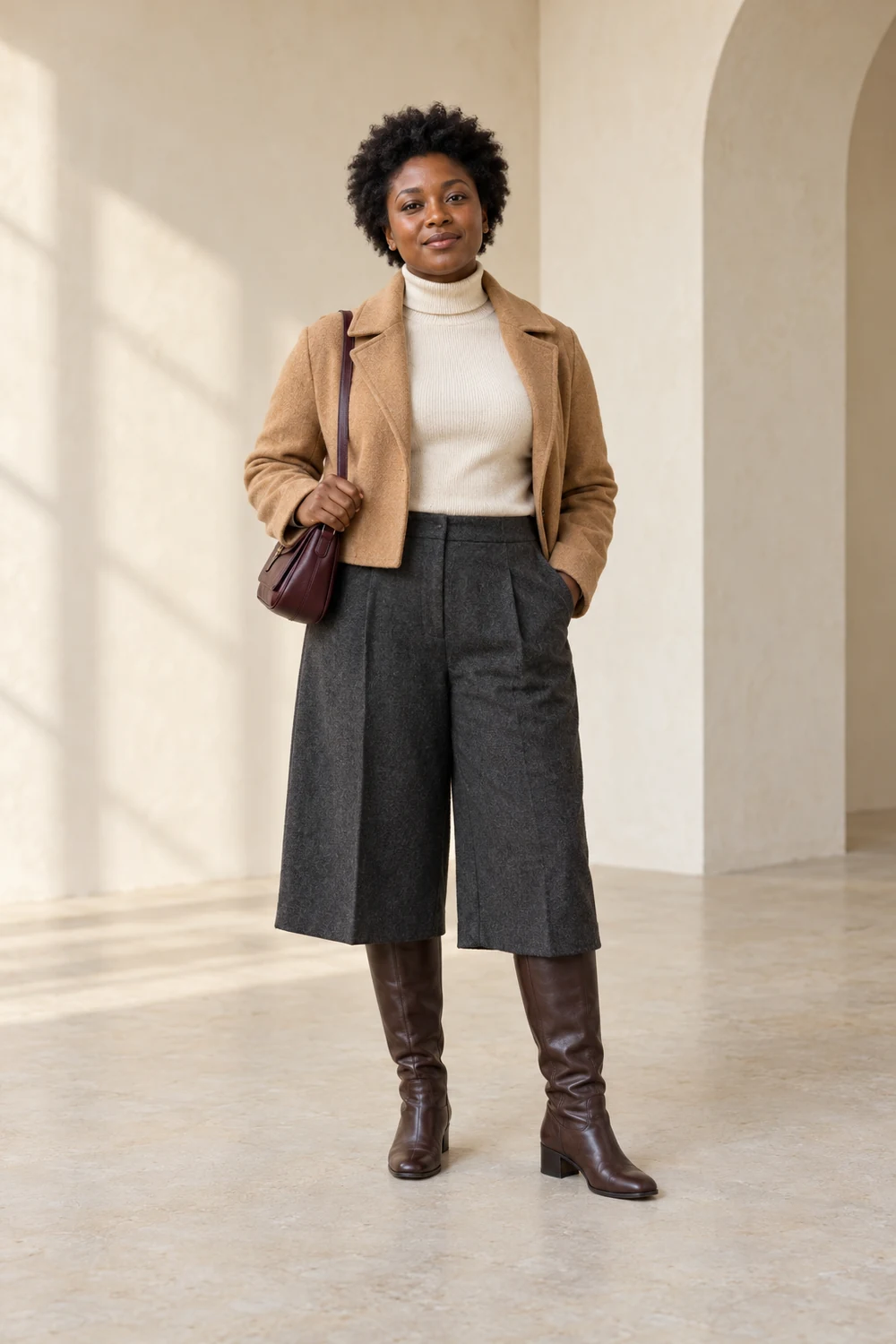
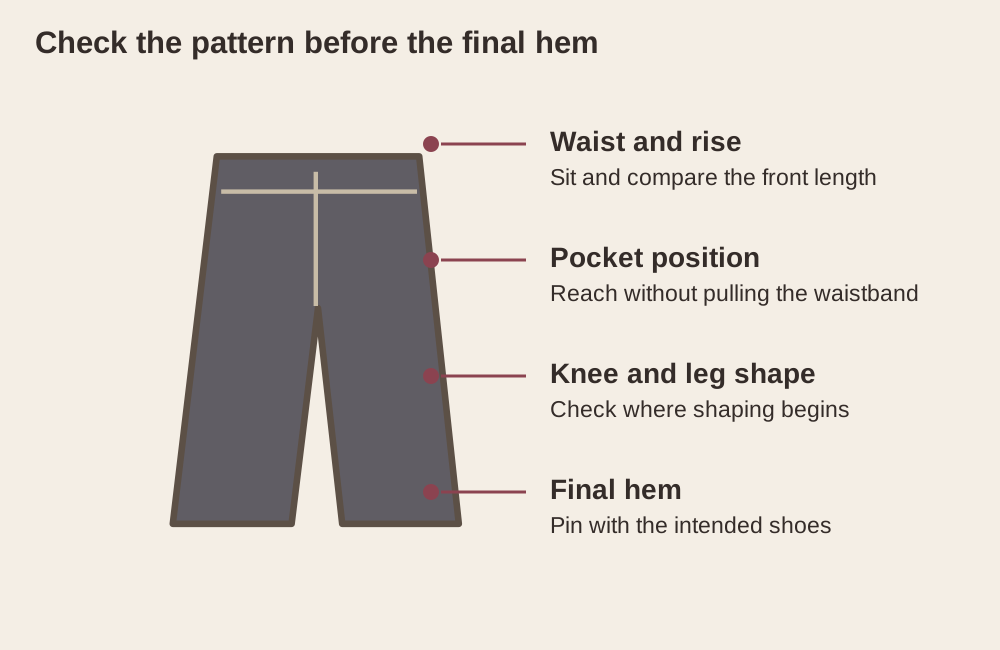
Check rise, pocket position and leg shaping before paying for a shorter hem. A petite trouser pattern can change several positions that hemming alone leaves untouched.
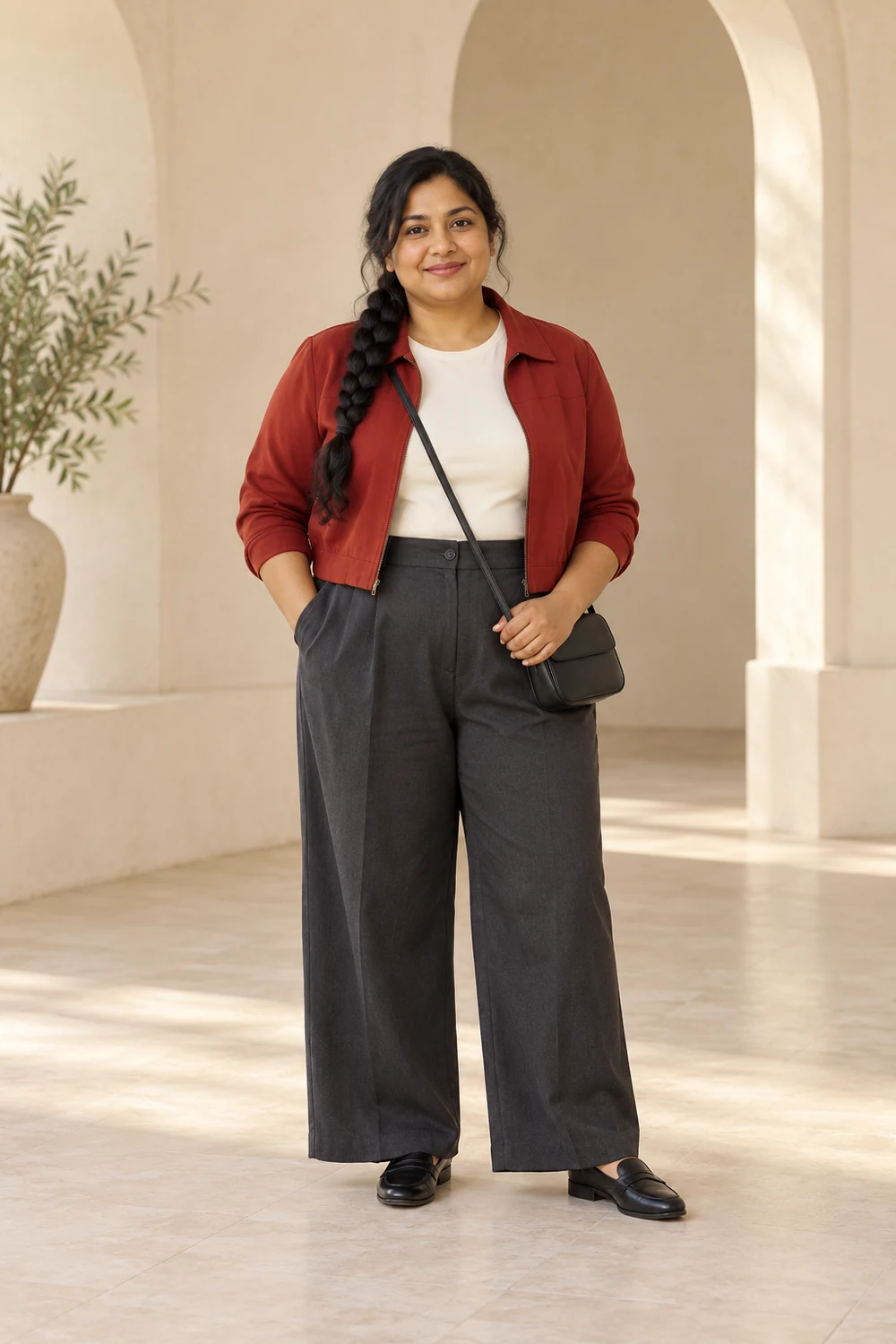
Wide-leg trousers can work on a short frame without a tall heel. The decision is whether an otherwise suitable pair needs hemming or whether the whole pattern needs different proportions. British Vogue’s AW26 proportion reporting offers a seasonal reference; the fit checks below are our editorial method. The photograph shows one version on a fictional petite plus-size adult.
Choose between two routes
| Route | When it is worth trying |
|---|---|
| Hem an otherwise suitable pair | The waist, rise, seat and pockets already feel comfortable. The knee shaping and flare, if present, sit where you want them. You are changing the final length rather than trying to solve pulling at the crotch or a pocket that is difficult to reach. |
| Compare a petite or different pattern | The rise feels too long, the pockets sit low or the leg shaping falls in an awkward place. Check the actual garment measurements: petite is a label, not a guarantee that every brand has the proportions you need. |
Make the first check without the jacket
Put on the trousers with your usual underwear and a simple top. Sit for several minutes, stand and step up. Notice whether the waistband stays comfortable, the seat gives enough room and the front rise feels natural. A tight belt cannot correct every mismatch. Compare another waist-to-hip cut or rise before deciding the wide leg itself is the problem.
Look at pocket access and the position of any knee seam, taper or flare. These details remain in the same place when a tailor shortens the bottom. Take measurements from a pair you enjoy and compare like with like, including how the seller measures the rise. Treat size and height categories as starting information rather than instructions about the shape you should wear.
Build the complete outfit after the fit decision
Our version uses charcoal trousers, an ivory top and a cropped brick-red jacket. The short jacket shows where the layers meet without requiring a fitted waist. Check its sleeve and shoulder room, and try the top tucked and untucked. A longer jacket can also work; choose the relationship you enjoy rather than assuming a petite person must always crop the top half.
Set the hem with flats
Wear the black loafers you intend to use, with the usual socks. Pin several lengths carefully or ask an alteration professional to assess them. Stand normally rather than lifting your heels, then walk and sit. Keep the back hem clear of the floor and check that fabric does not collect under the shoe. A lower or higher sole may need a different hem decision.
A small crossbody bag leaves the trouser pockets free during the check. Before buying or altering, read the fabric and care information; a garment that needs a different cleaning routine may not fit your week even if the proportions work. Choose the pair that lets you move comfortably with the shoes you actually like.
Use the outfit as a starting point. Adjust the fit, coverage and footwear to your preferences and plans.