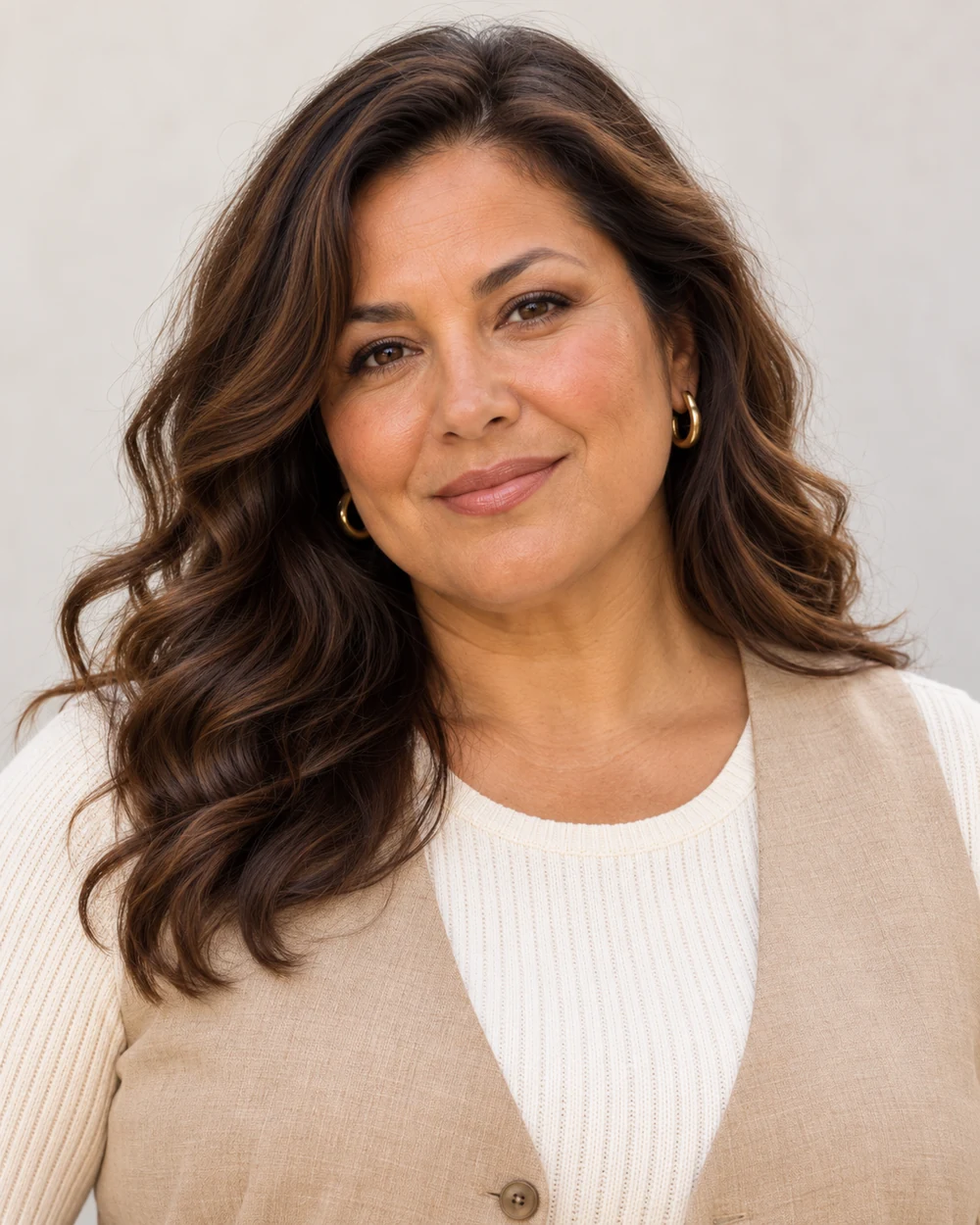
Sand tailoring, an ivory layer and dark-brown accessories make a warm alternative to a black suit. This Eva Longoria-inspired interpretation uses a waistcoat and comfortable straight trousers rather than the oversized blazer and heels in the reference. The fictional petite plus-size model demonstrates an open waistcoat over an ivory knit, an approachable trouser length and flat loafers. If you prefer the waistcoat fastened, use the seated button and front-ease checks below.
The photographs show a fictional adult model.
Build the outfit in six steps
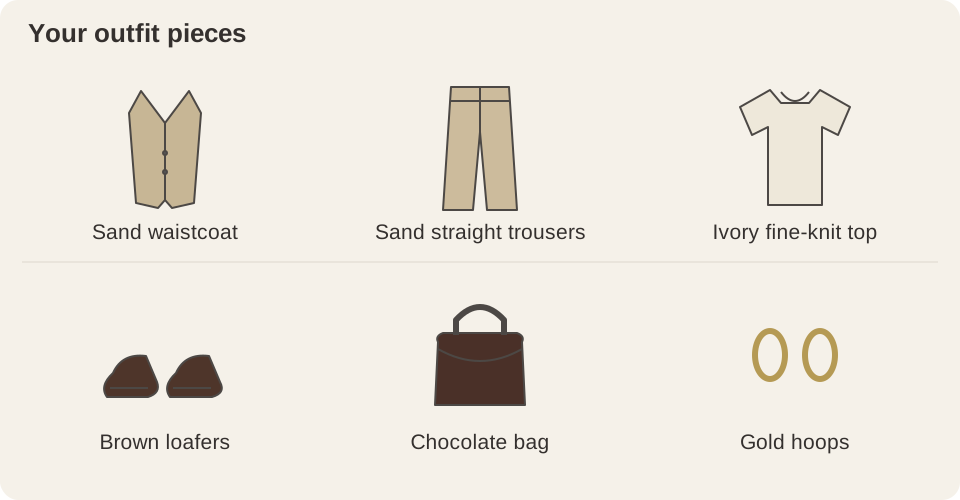
Find a comfortable waistcoat
Try the waistcoat over the thickness of top you intend to wear. It should close smoothly without horizontal pulling or a raised back hem. For a fuller bust, look at the armholes and front length together; a larger label does not always provide the right shaping.
Use a light inner layer
An ivory fine-knit T-shirt gives coverage under the V neckline without a stiff collar. Check that the sleeve seam does not rub inside the waistcoat armhole. A plain woven shell or a softer round-neck top can do the same job if knitwear feels too warm.
Fit the trousers independently
Buy separates in different sizes when that gives a better result. Sit and bend your knees before deciding on the rise, and check that the waistband stays comfortable. A petite-plus cut may improve both width and vertical placement; it still needs a real fitting on your body.
Check where the knee falls
Stand side-on to the mirror and bend one knee. If the trouser shaping or crease seems to hinge well below your knee, compare a shorter-proportioned pattern. Removing fabric only at the ankle will make the trousers shorter but will leave misplaced shaping exactly where it was.
Choose the brown grounding pieces
Dark-brown flat loafers and a chocolate bag give the pale suit a clear finish. Set the trouser hem with those shoes on, keeping it clear of the floor. Choose a bag strap that does not catch the waistcoat armhole or pull the neckline sideways when carried.
Review the seated outfit
Sit, reach forward and walk with the waistcoat fastened. The front should stay comfortable rather than springing open between buttons. Small gold hoops are a useful optional detail. If one piece still needs repeated adjustment, change its cut before buying more accessories to complete the look.
Adapt the fit and pieces
For a short torso, compare waistcoats with fewer buttons or a higher final button, while keeping the neckline coverage you want. For a longer torso on shorter legs, a regular-length waistcoat may suit you better than a petite one. In colder weather, add an open soft coat that clears the waistcoat hem; in heat, choose breathable fabric and a lighter inner layer.
When something feels off
| What you notice | Try this adjustment |
|---|---|
| Waistcoat front rides up | Check bust shaping and front length; do not force the buttons closed. |
| Trouser waist digs in seated | Try a different rise or waistband shape with enough ease. |
| Bag pulls the armhole | Change strap length or carry the bag separately to test the fit. |
Questions before you begin
Do the two sand shades have to match?
A deliberate tonal difference can work. Compare the fabrics together in daylight and repeat a warm brown accessory to connect them. If the almost-match bothers you, use a clearly different cream or taupe waistcoat.
Can I leave the waistcoat open?
Yes. Choose an inner top you feel comfortable showing and let the waistcoat hang naturally. Check that the open front does not swing into your hands or bag. The sand-and-brown palette still carries the outfit.
THE COMPLETE LOOK
Wear it together.
Keep the outfit and its makeup interpretation in one collection, with a combined checklist.
Use the outfit as a starting point. Adjust the fit, coverage and footwear to your preferences and plans.