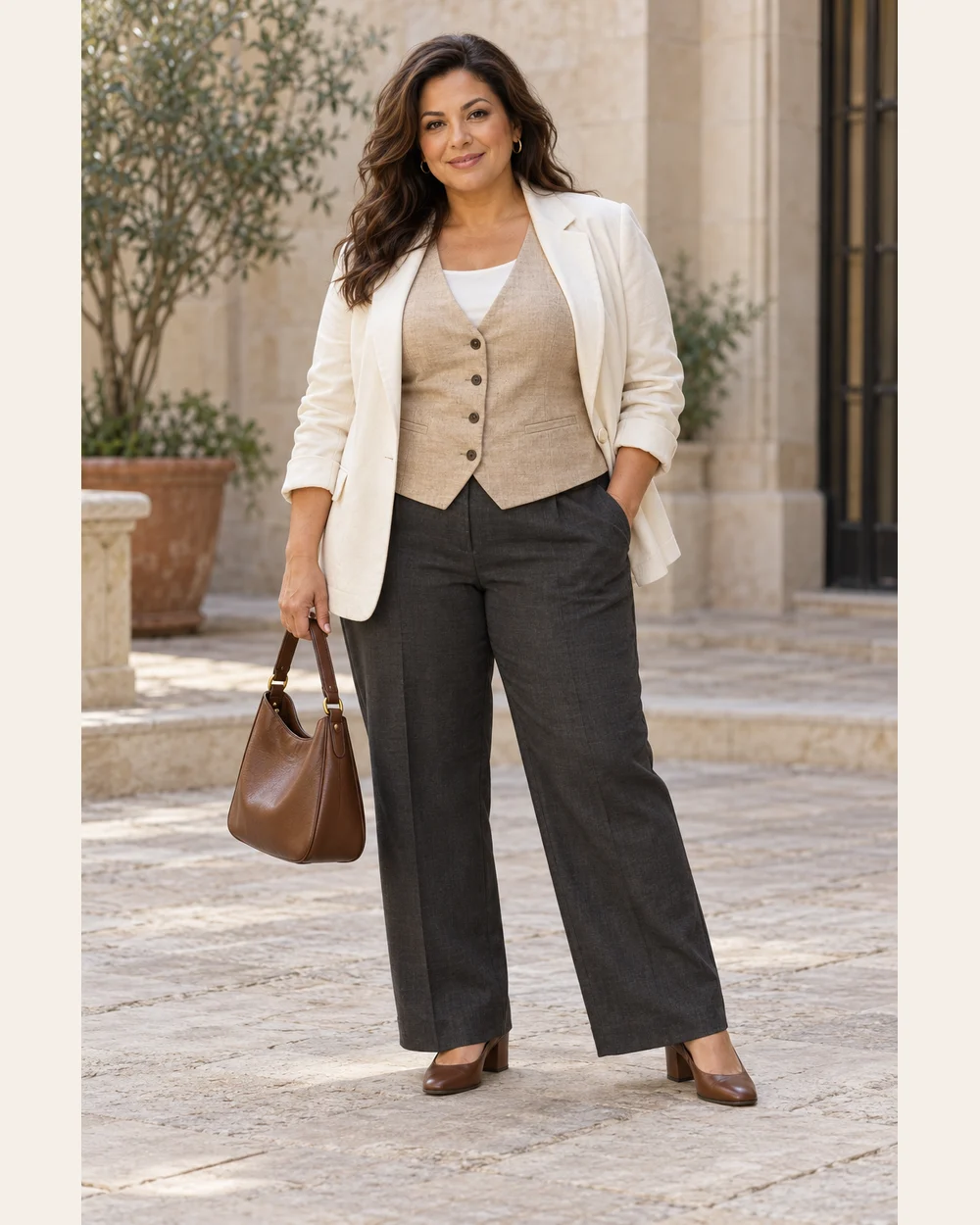
Practise the waistcoat buttons while seated, not only the mirror view while standing. This new combination develops the neutral-tailoring reference in our Eva Longoria-inspired edit: sand at the waistcoat, ivory at the neckline and charcoal below. Each garment gets its own fit check for petite plus-size proportions.
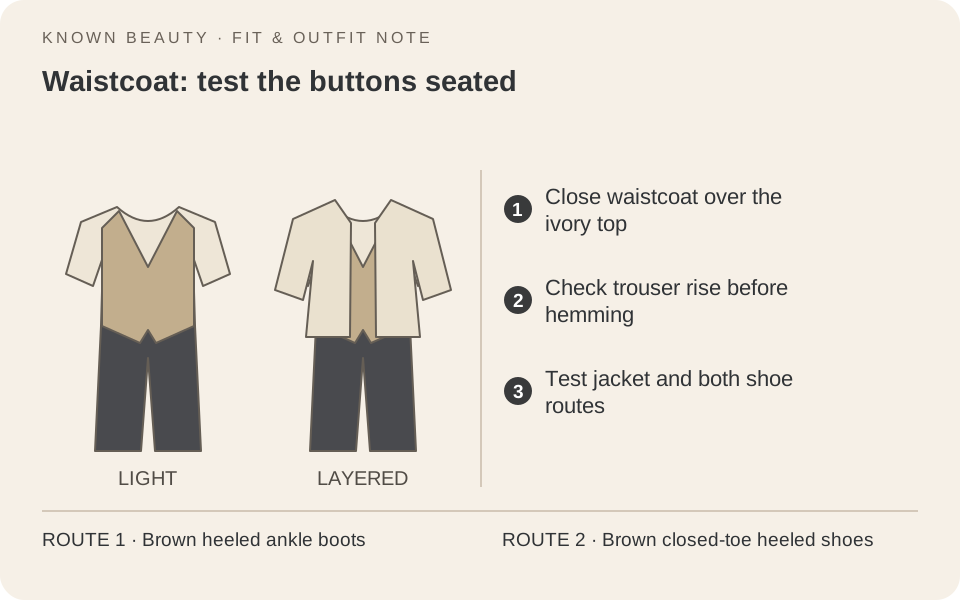
Round one: close the waistcoat over its real base
Put the sand waistcoat over the ivory smooth top and fasten it as intended. Sit, reach forwards and raise the arms enough to test the arm openings. If the buttons pull, compare the waistcoat’s room and shaping rather than choosing the same label as the top automatically. A shorter torso may need a different waist-seam or point position as well as width.
Check the ivory top’s neckline, upper-arm room and opacity over the underlayers you choose. It should remain a useful visible base, not a layer that has to be hidden whenever the waistcoat shifts. If the fabric bunches under the fastening, try a smaller smooth tuck or a different top length before resizing both garments.
Round two: give charcoal its own movement
Add the charcoal trousers and a compact brown bag for the light version. Check the trouser rise, seat, pockets and knee position while seated, then walk. Set the hem only after those proportions are useful. A petite option is a comparison to try, not a guarantee that its waist and hips will also fit.
Look at the waistcoat points above the trouser waistband when you sit. Choose the coverage you enjoy without requiring the two garments to have identical waist seams. The ivory top can remain visible between them if that is the deliberate relationship you prefer.
Round three: add the jacket and change shoes
The pictured layered version adds the ivory unstructured jacket over the top and waistcoat. Test shoulder and upper-arm room over both, then fasten it if intended, reach and sit. Compare its hem with the waistcoat points so the layers do not repeatedly catch. Removing the jacket should return you to the complete light version; no weather performance is established by the pale colour or unstructured shape.
Brown heeled ankle boots supply a shaft to check under the trousers with intended socks. Brown closed-toe heeled shoes remove it; test heel retention and toe room with any hosiery. The picture uses the closed-toe route. Inspect each actual heel and sole, walk, and reset hem clearance for each shoe. The brown bag and ivory jacket stay with both alternatives.
Repeat the check in context
Work: for a workplace accepting tailored separates, use the waistcoat comfortably fastened with closed-toe shoes or boots within its shoe expectations. Add the jacket for meetings if useful. Sit at the desk and retrieve something from the bag to check the two closures together.
Celebration: for a restaurant birthday, keep the sand-and-ivory upper half clear and use closed-toe heels for a more open ankle line. Boots give a covered alternative where the invitation accepts them. Try the jacket open and keep the small brown bag rather than adding a new belt.
Holiday: for a city-break supper, choose brown ankle boots you have assessed for the walk to the venue, or the closed-toe heels for a more open ankle line after their own route check. The light waistcoat version can stand alone indoors; pack the ivory jacket only when its coverage earns the space.
Once the same seated check works twice, assembly can be brief. Keep the fit you found rather than using matching size labels as the next instruction.
THE COMPLETE LOOK
Wear it together.
Keep the outfit and its makeup interpretation in one collection, with a combined checklist.

Use the outfit as a starting point. Adjust the fit, coverage and footwear to your preferences and plans.