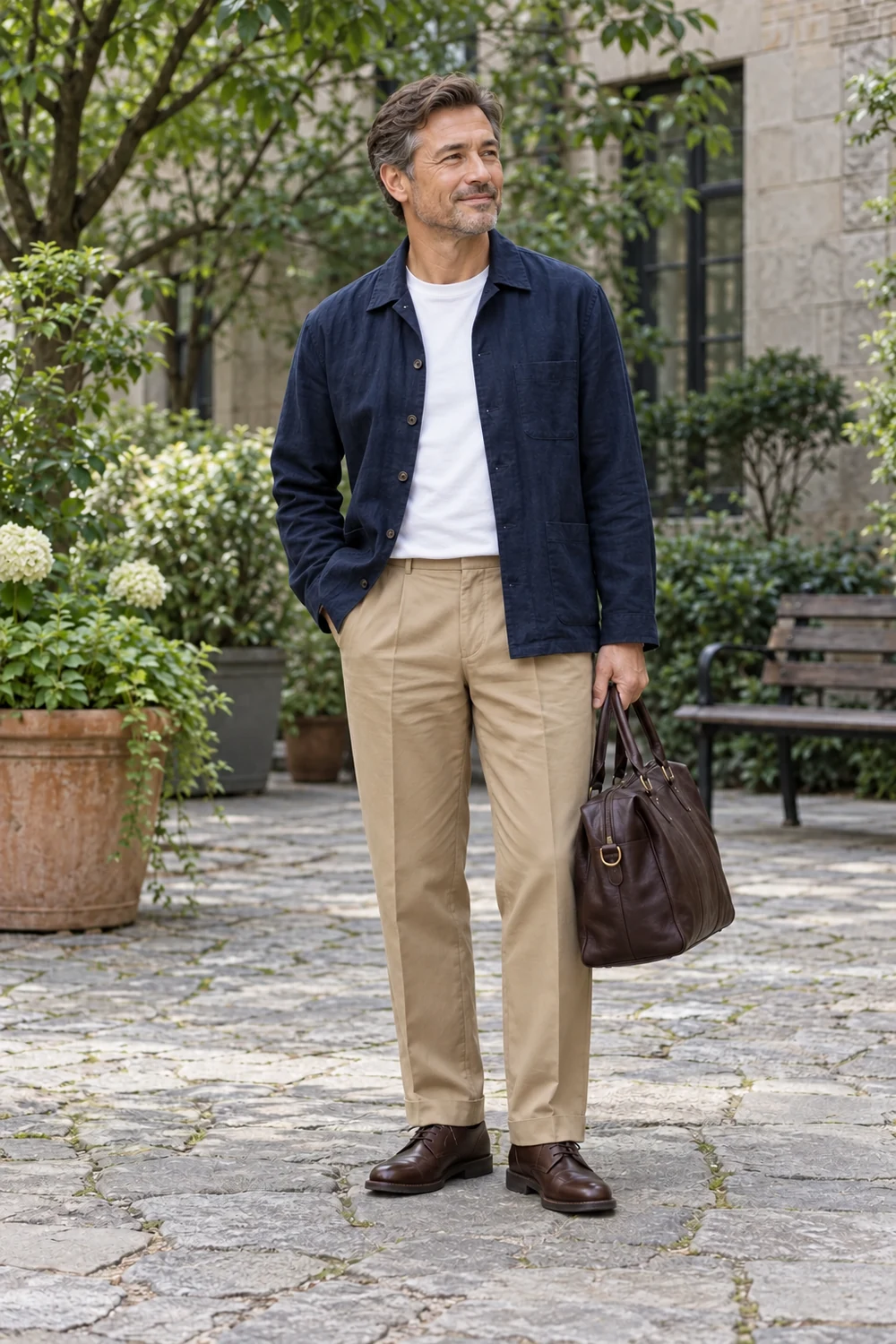
David Beckham’s interview about his Boss collaboration describes an interest in relaxed casualwear alongside tailoring, including navy and khaki linen. This outfit develops that colour relationship into an ordinary weekend-to-informal-work combination. A distinct fictional model wears our interpretation of the pieces. It is a guide to layering and fit rather than a list of exact products from the collaboration.
Build the outfit piece by piece
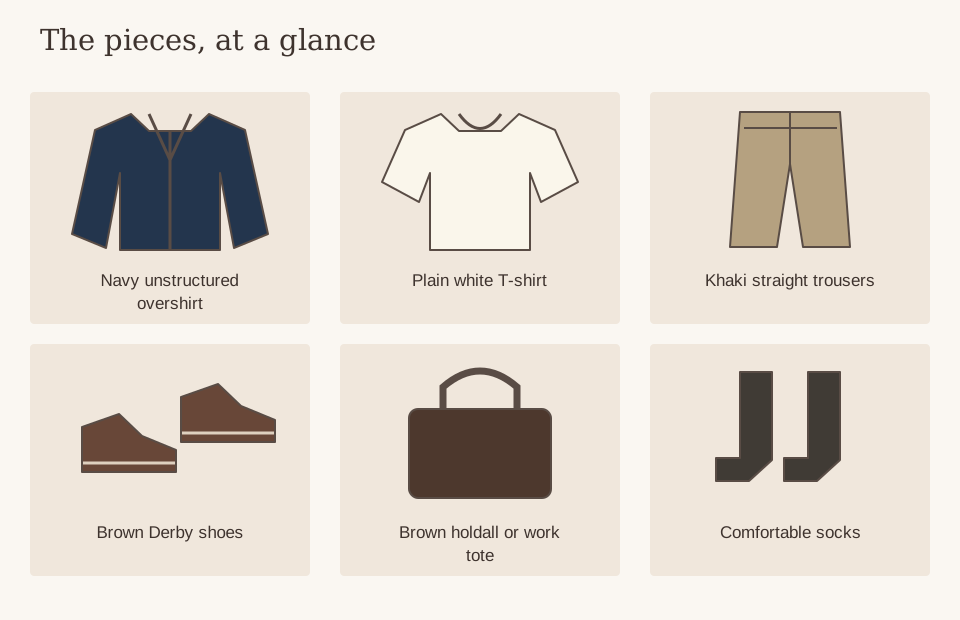
- Find a soft navy outer layer. Choose an overshirt with enough structure to lie flat but enough room to move over a T-shirt. Check the shoulder seam and upper back with both arms forward. Lightweight cotton can replace linen if you prefer less visible creasing.
- Use white to separate the colours. A plain white crew-neck creates a light centre between navy and khaki. Hold the fabric up to daylight and try it beneath the open overshirt to check coverage. Choose a neckline you enjoy rather than stretching a small neck opening into shape.
- Check the khaki trouser rise. Set the waistband where it naturally stays when walking and sitting. Pleats should have room to rest rather than pull open. Straight trousers with a plain front are an equally useful option; the point is comfortable drape, not a compulsory pleat.
- Try the sleeves in both positions. Full-length sleeves keep the outfit neat for work. For a relaxed afternoon, fold the cuffs evenly without making a tight band at the elbow. If rolling them restricts movement, leave them down or choose a properly cut short-sleeved layer.
- Ground the outfit with brown shoes. Brown Derby shoes bridge casual cloth and a more considered finish. Use the shoes you will actually walk in, with socks that suit their fit. Check the trouser break over the laces and shorten a dragging hem before changing the entire trouser shape.
- Match the bag to the day’s job. A dark-brown holdall suits an overnight visit; a work tote may be more useful for a laptop. Pack it before checking how it sits in your hand. The brown can relate to the shoes without being an exact leather or colour match.
Adapt the fit and occasion
For an office with a stricter dress code, replace the T-shirt with an Oxford shirt and check the collar beneath the overshirt. For a day outdoors, use a weather-appropriate coat over the same layers rather than expecting linen to provide warmth. On shorter arms, compare cuff and elbow placement as well as sleeve length. Broad shoulders may need a different overshirt pattern rather than simply a longer size.
Before buying anything
Lay out navy, white and khaki pieces you already own before searching for an overshirt. Choose any missing layer by its weight, pocket placement and washable-care needs. No specific label is necessary to use the palette.
| What you notice | Try this |
|---|---|
| Pleats stay pulled open | Try more room through the waist and seat or another rise. |
| The overshirt catches at the back | Check shoulder and upper-arm ease with arms forward. |
| The outfit feels too formal | Exchange the Derbies for simple trainers and retain the colours. |
Questions you might have
Does navy need to match exactly?
No. The outer layer is the only large navy area here. Small differences in socks or a bag are unlikely to require replacing a useful piece.
Is linen essential?
No. Cotton twill, a soft cotton blend or a light knit layer can carry the same palette. Choose the fabric for the temperature and care you want.
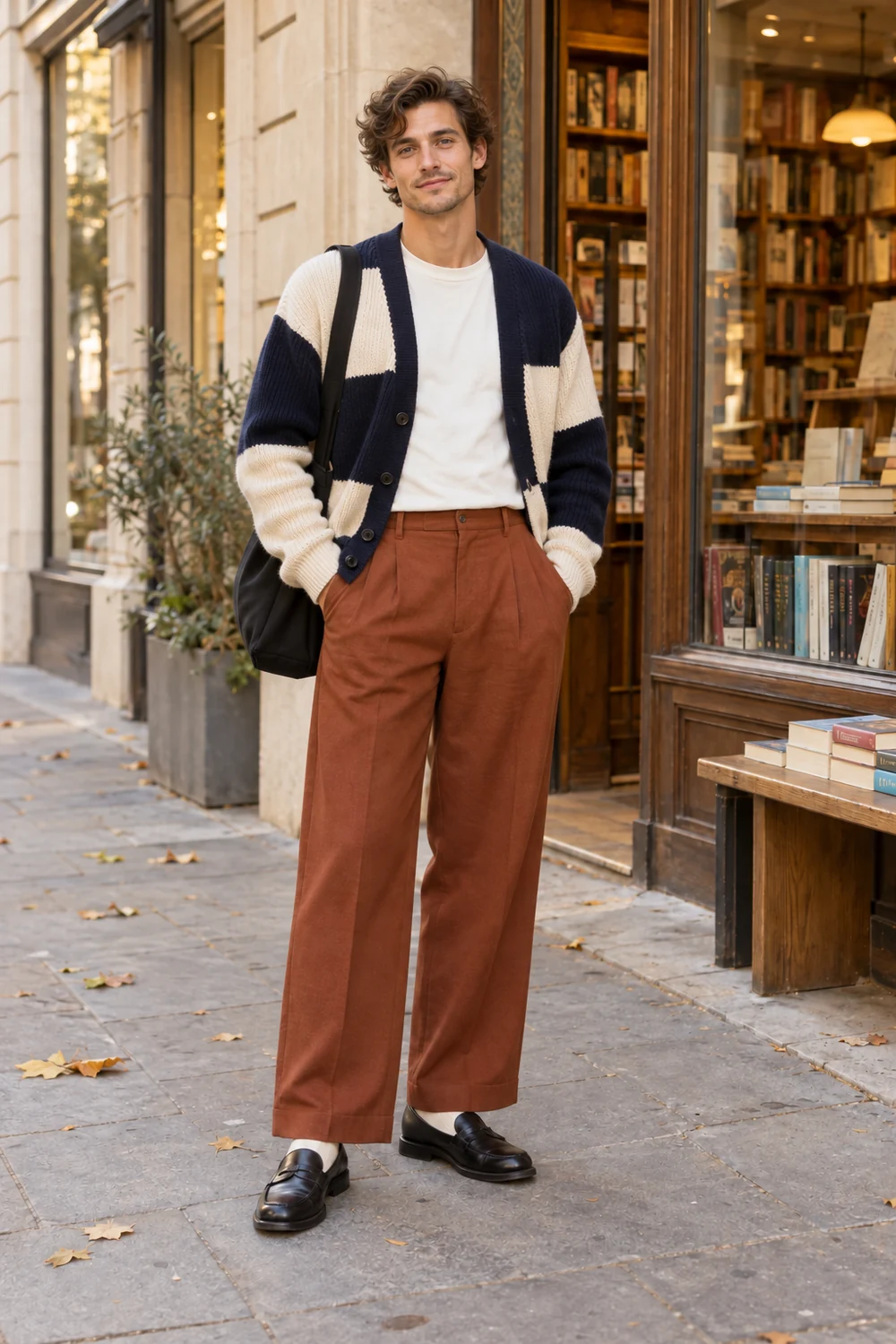
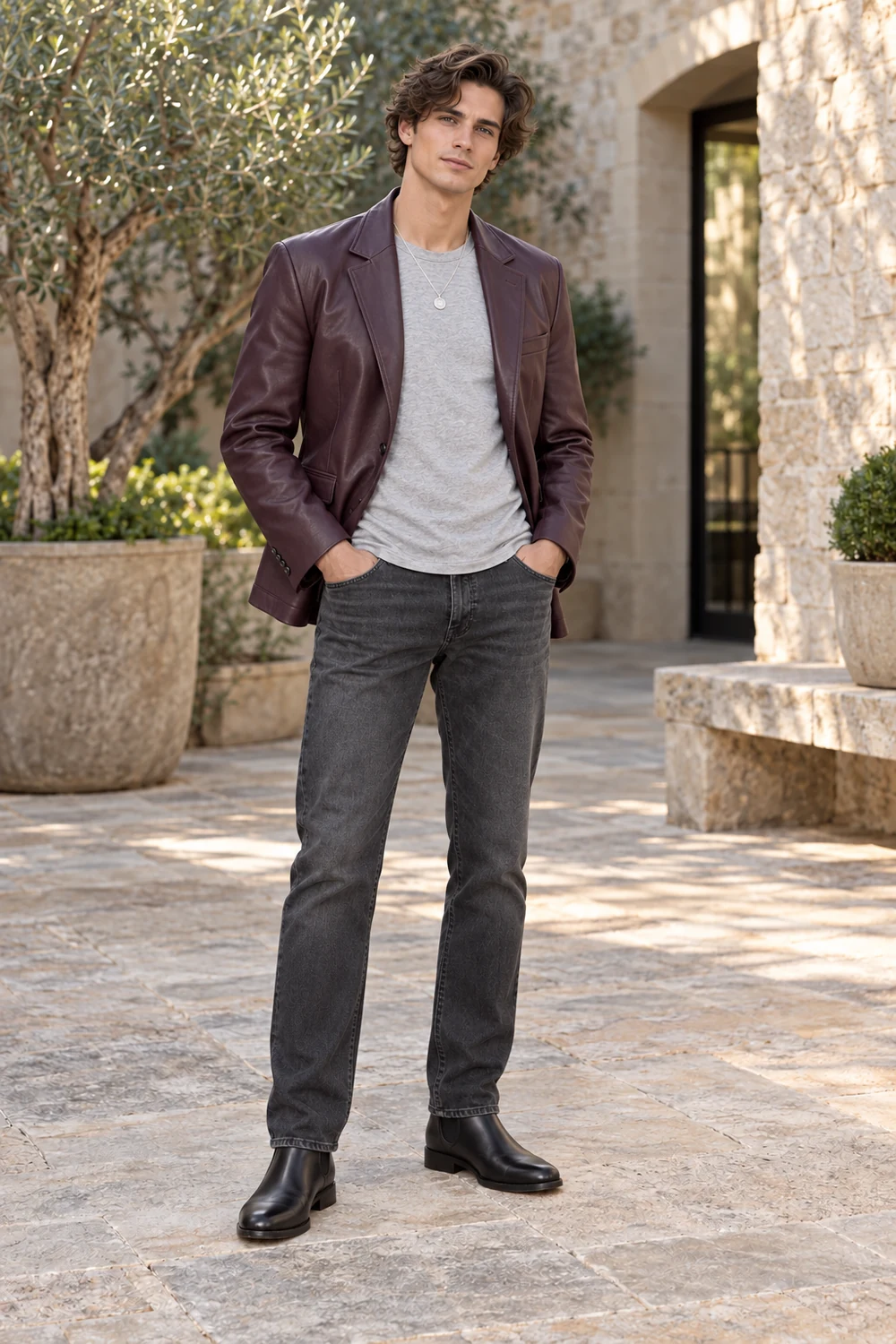
Explore Timothée Chalamet-inspired plum jacket evening outfit, compare Harry Styles-inspired cardigan and wide-leg outfit, or browse all men’s style guides.
Use the outfit as a starting point. Adjust the fit, coverage and footwear to your preferences and plans.