Style · 3 min read
How to add a brooch to a winter outfit
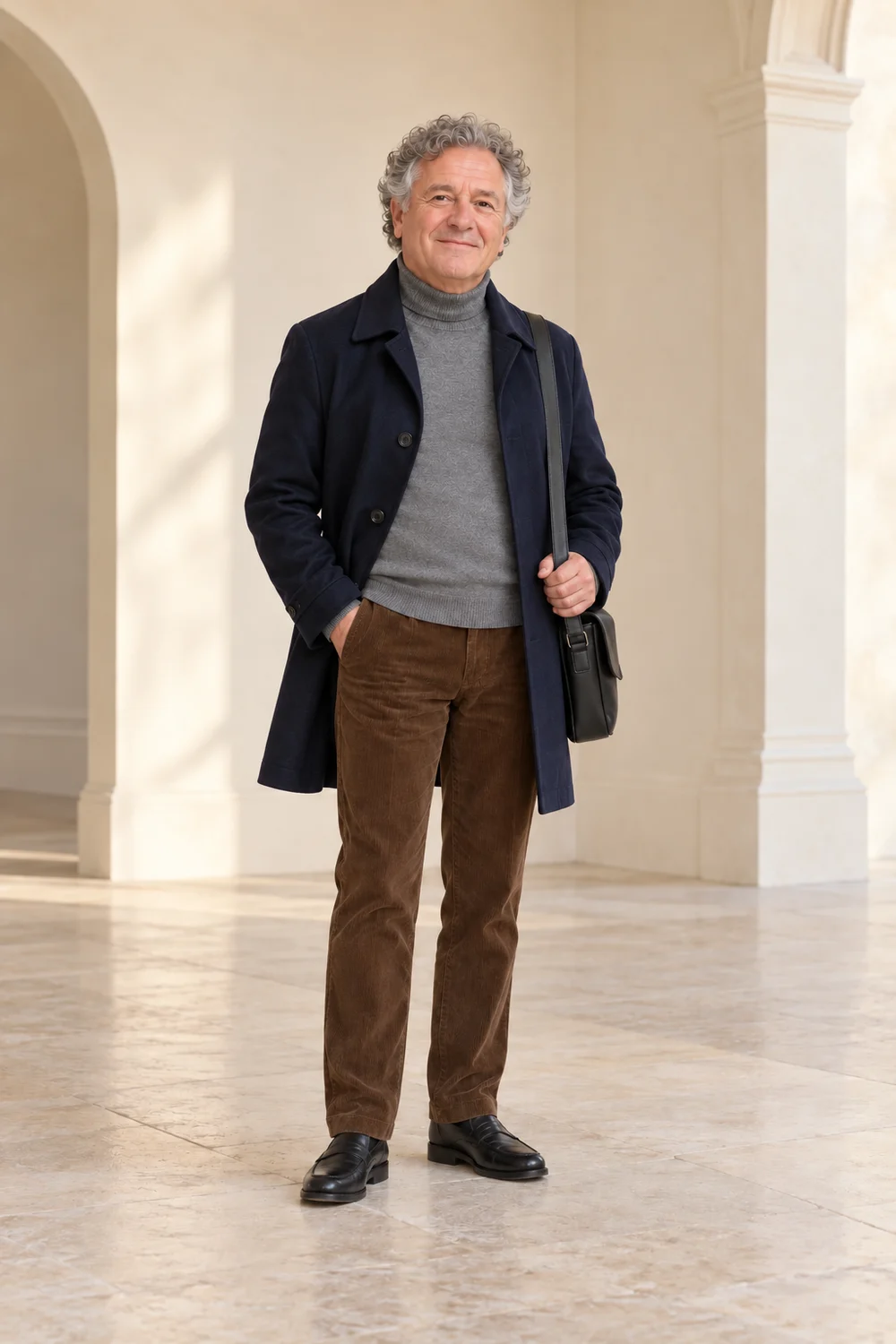
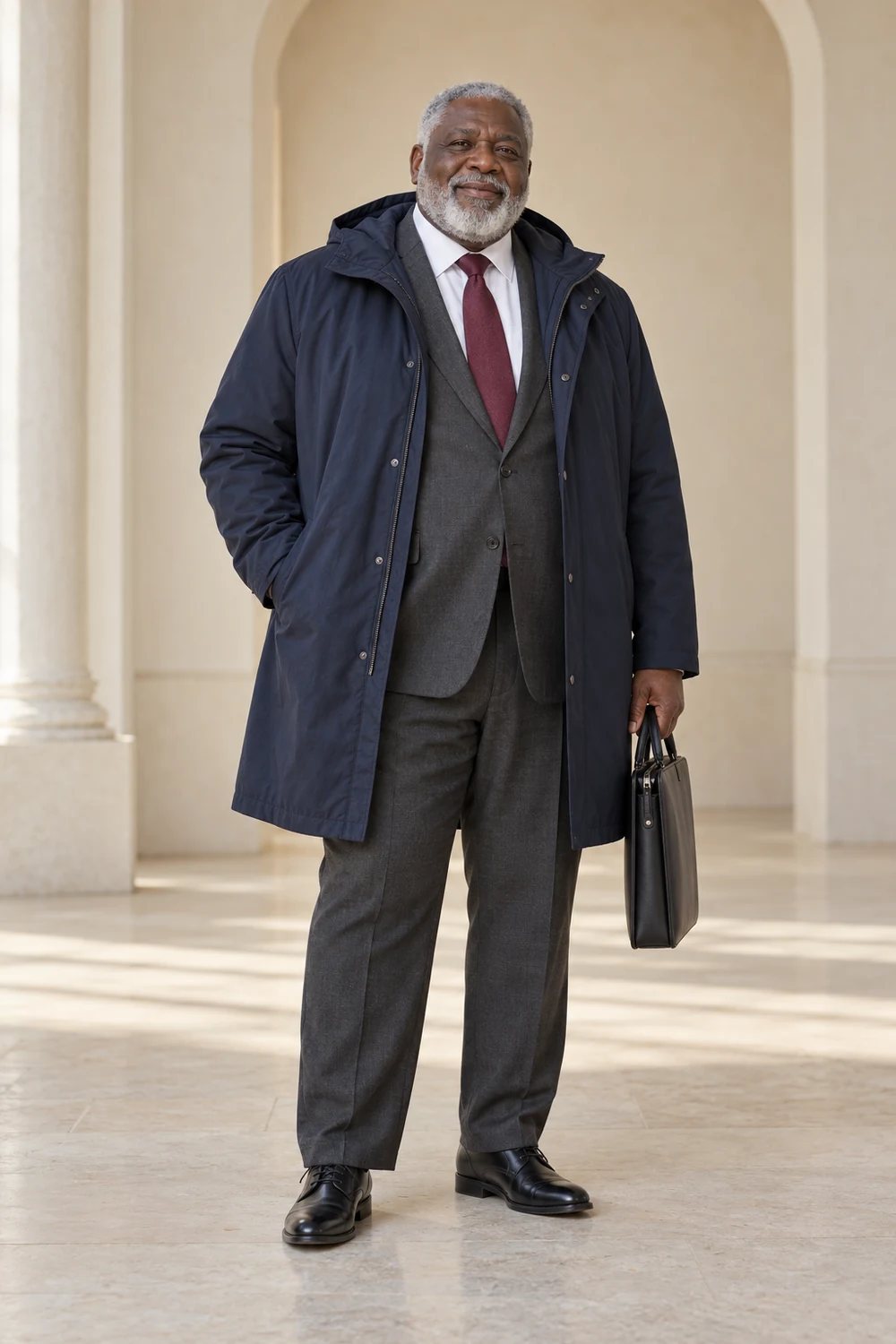
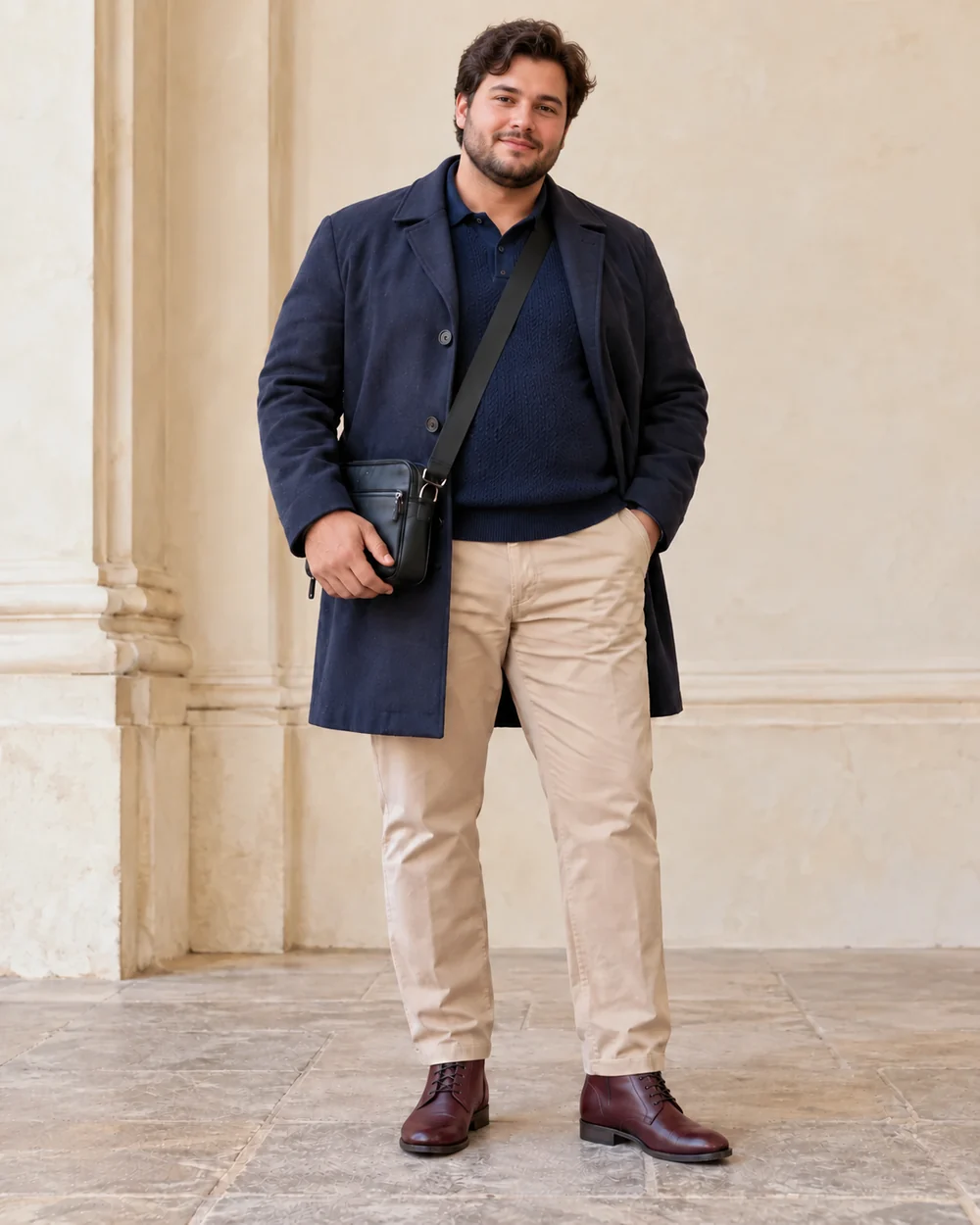
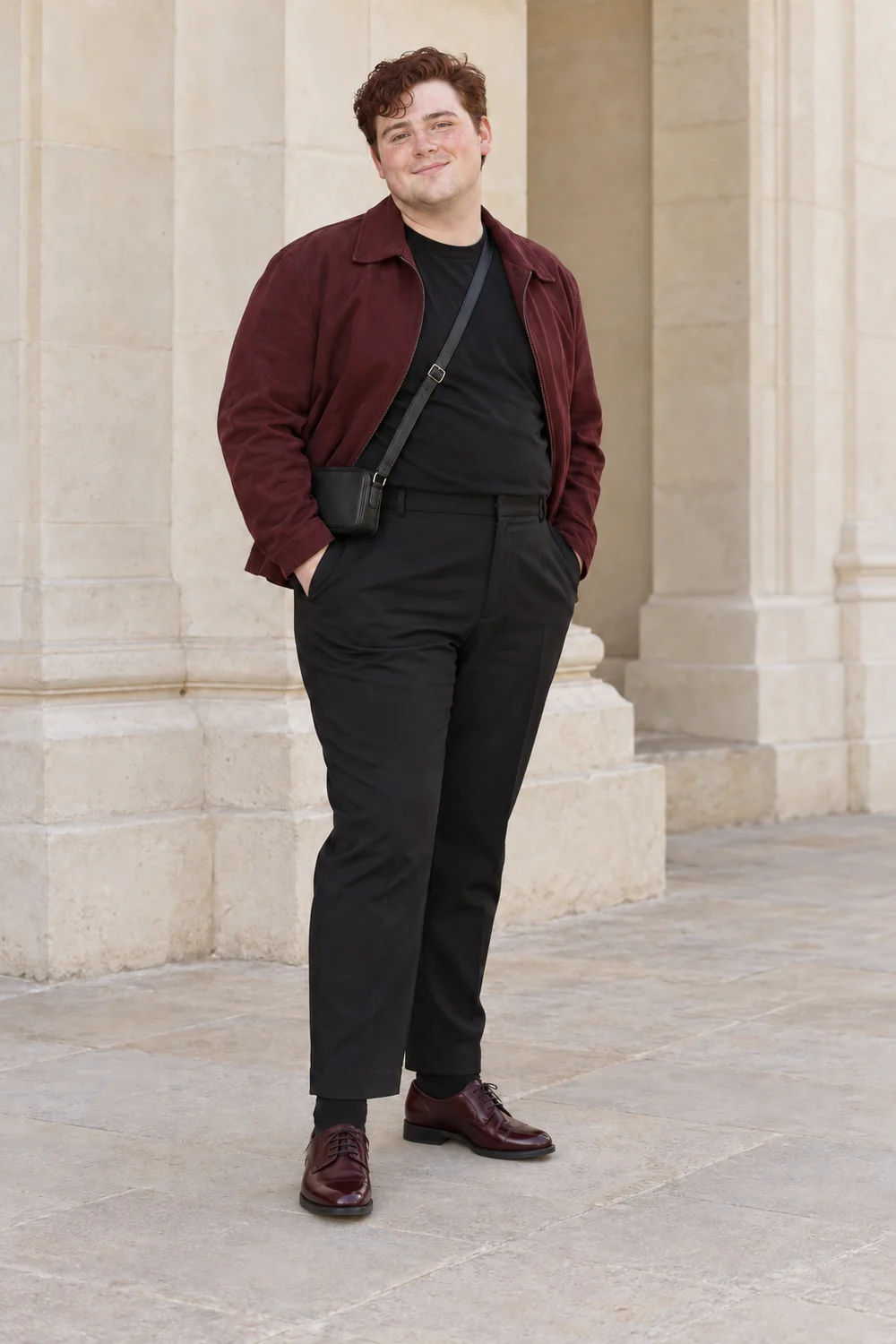
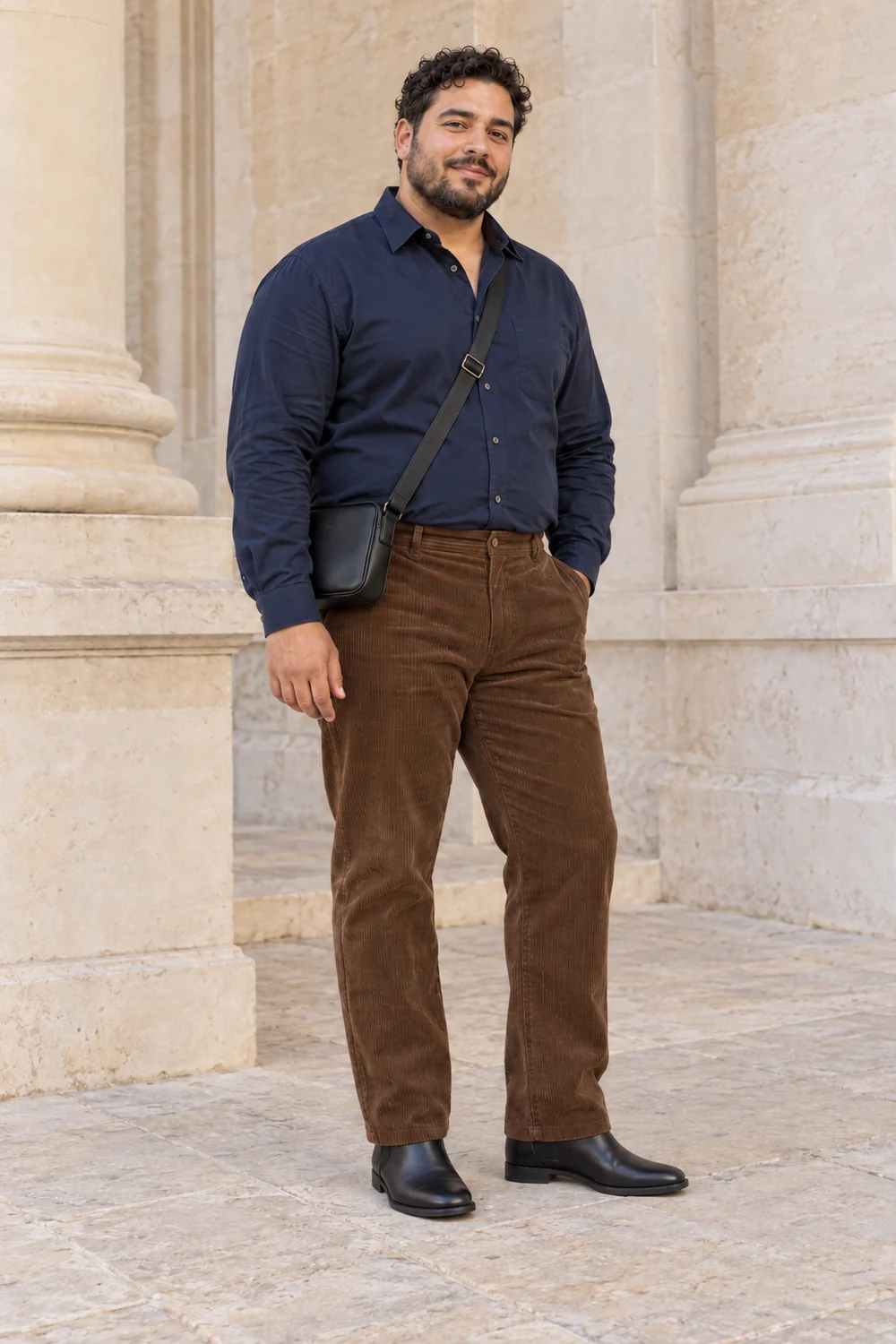
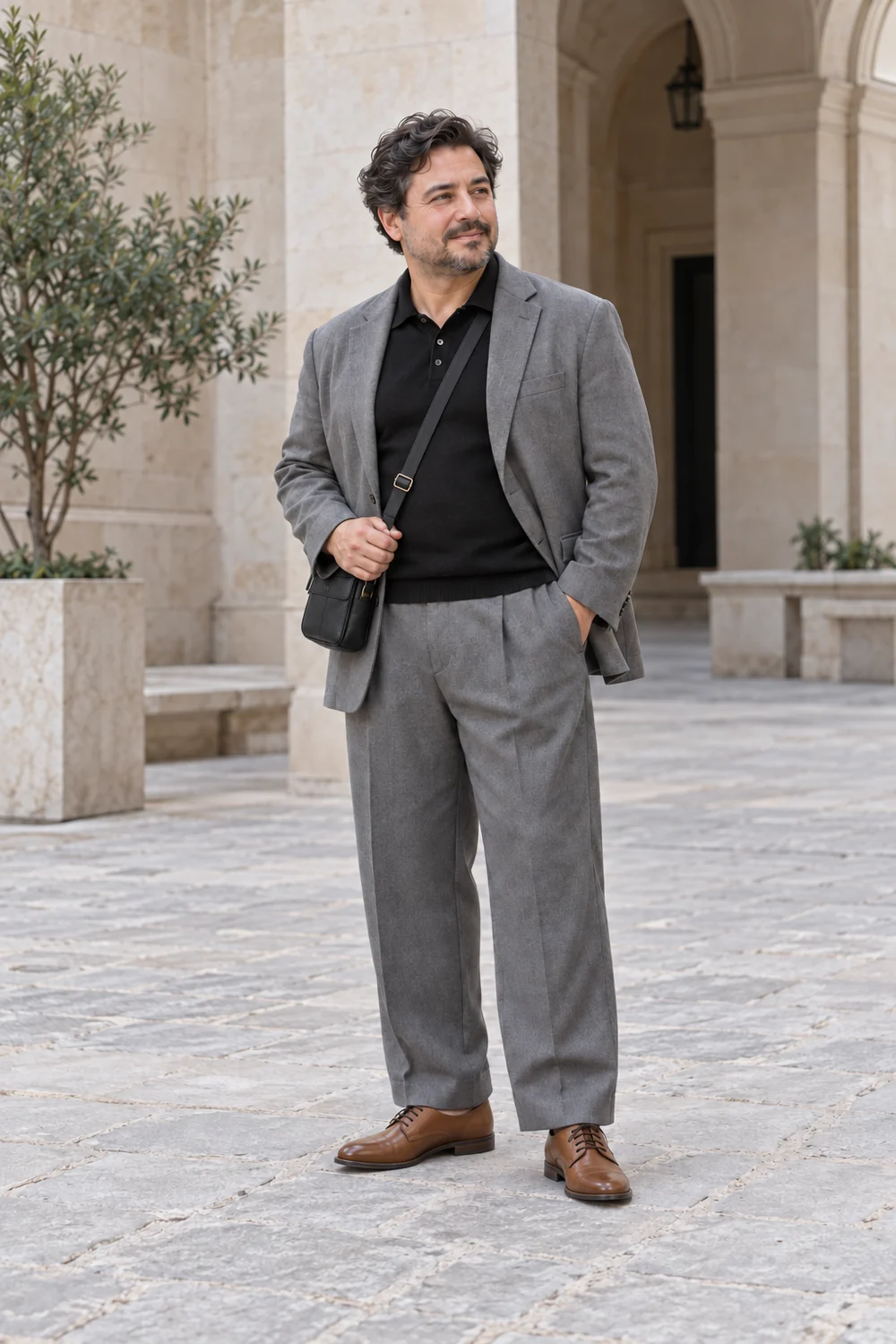
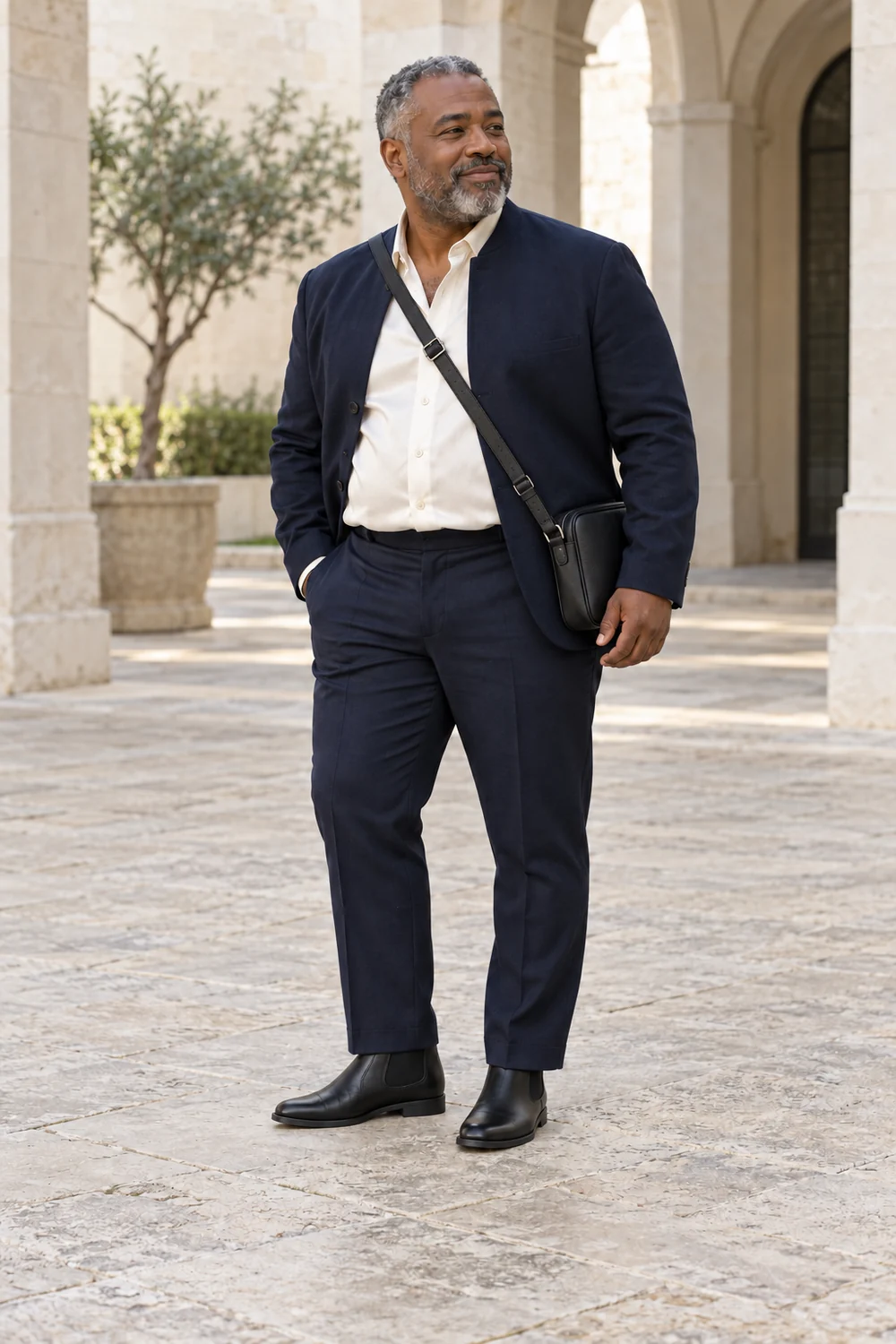
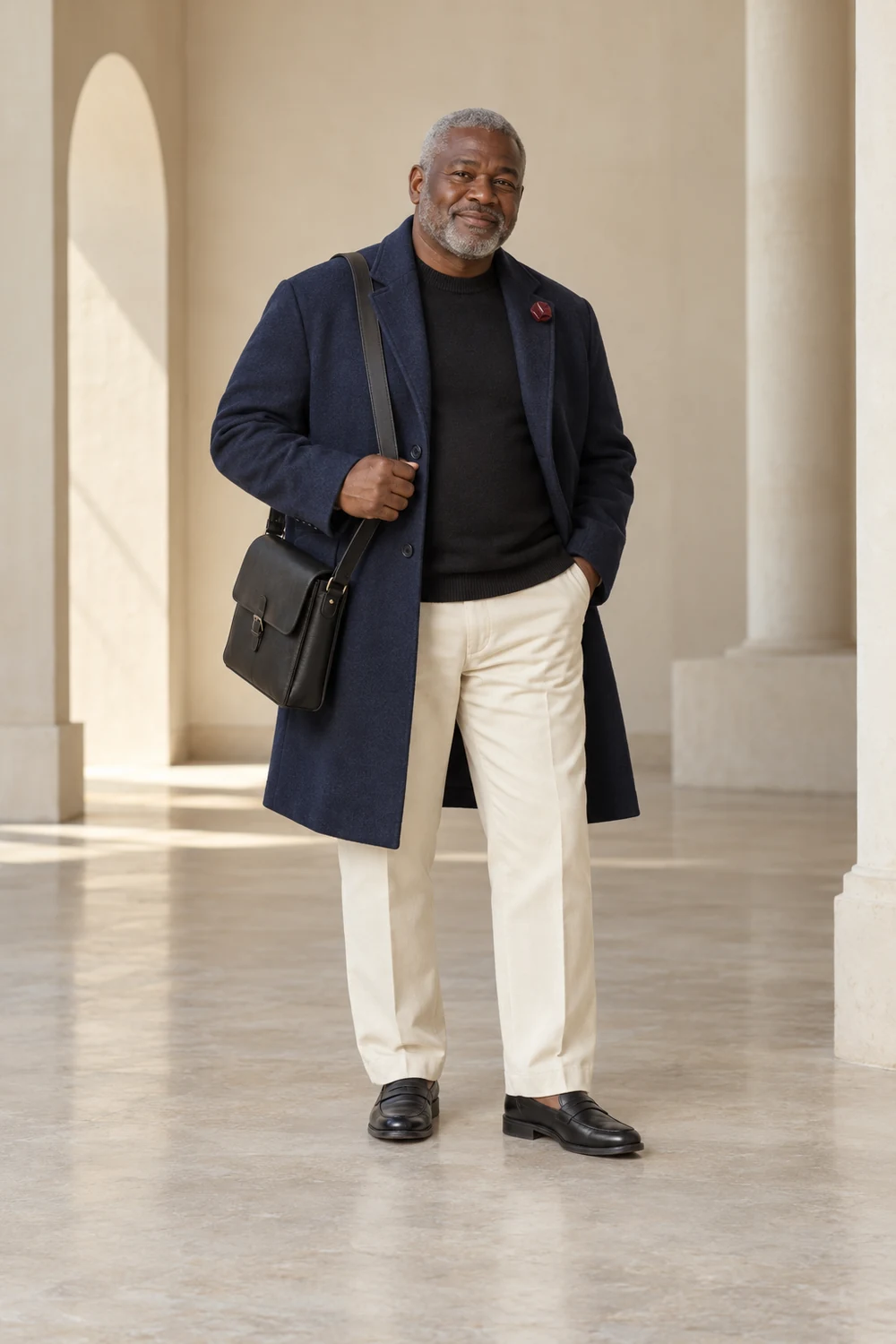
Practise with the coat laid flat: choose a supported area of lapel, secure the brooch according to its fastening and check it with your bag strap.
Outfit guide · Plus-size fit
THE KNOWN BEAUTY LIBRARY
Complete menswear ideas, from knitwear and denim to tailoring, capsules and occasionwear. Browse general, petite and plus-size fit guides, clearly marked on each card. Full-length fictional models show every outfit; choose the fit focus that helps with your own wardrobe.
Practise with the coat laid flat: choose a supported area of lapel, secure the brooch according to its fastening and check it with your bag strap.
Let a green velvet blazer be the texture, then use a fine black roll-neck, charcoal trousers and comfortable black shoes.
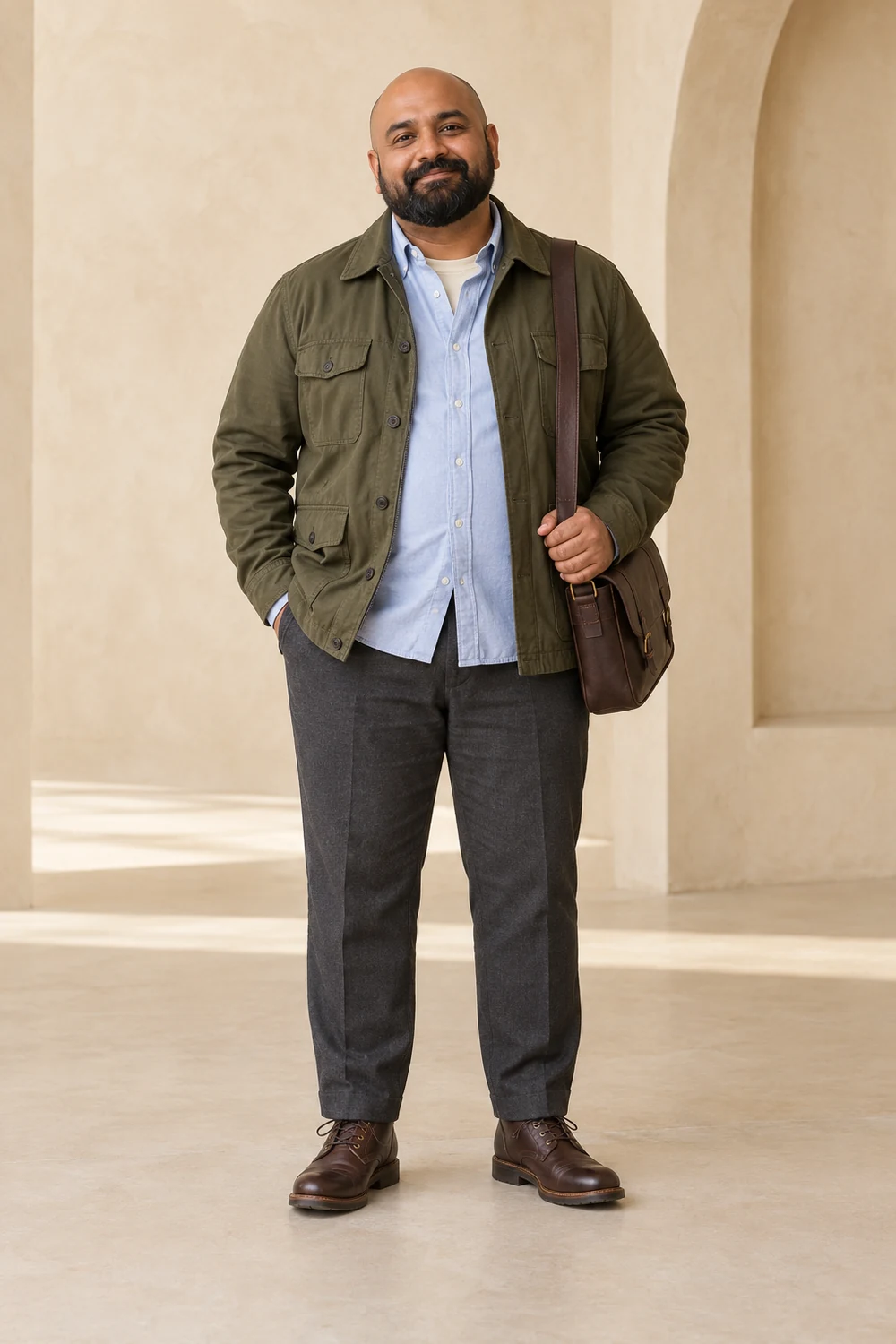
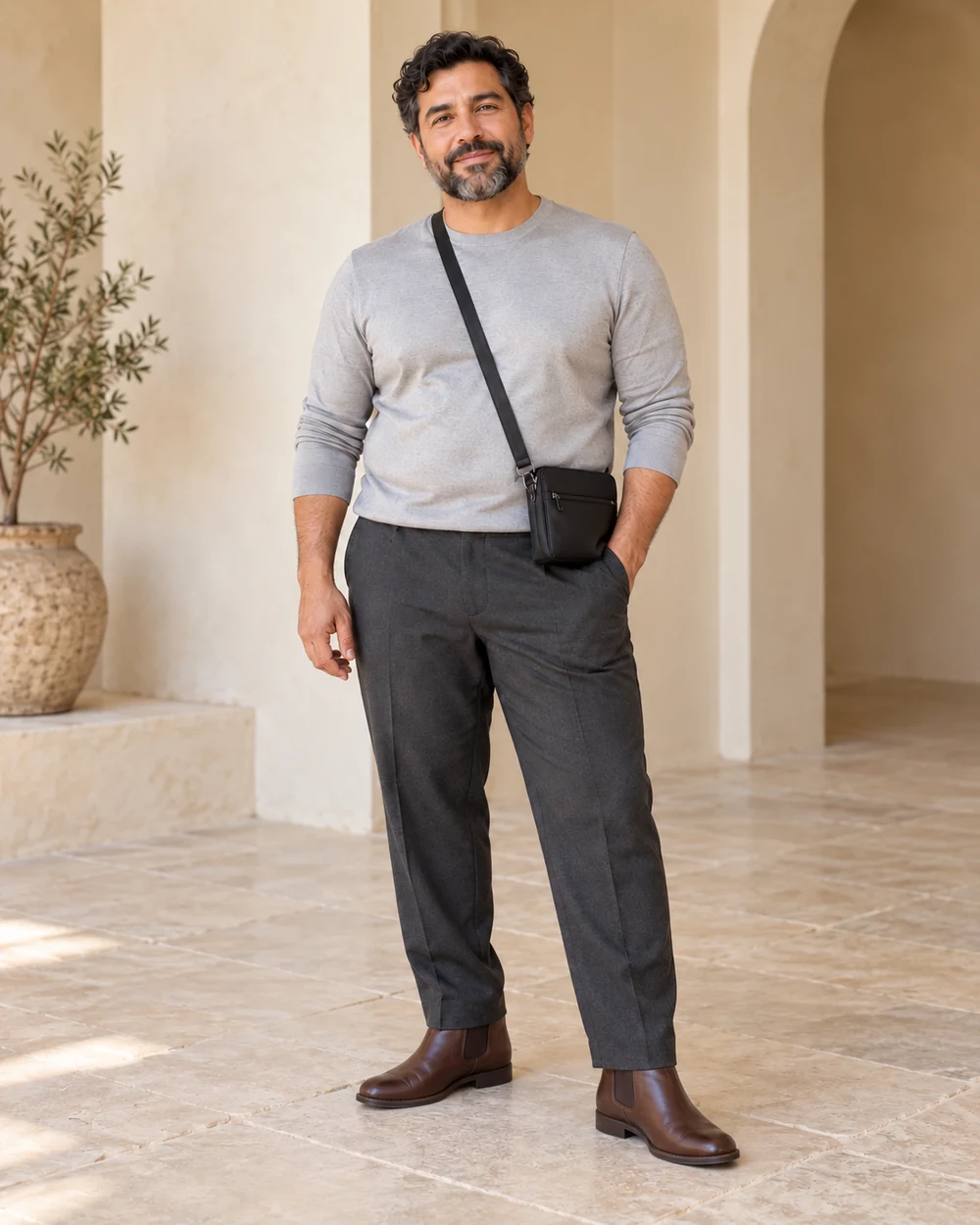
Use the field jacket as a practical outer layer over a light shirt, with charcoal trousers and brown boots.
Choose coat length around your actual journey: sitting, stairs, bag access and weather.
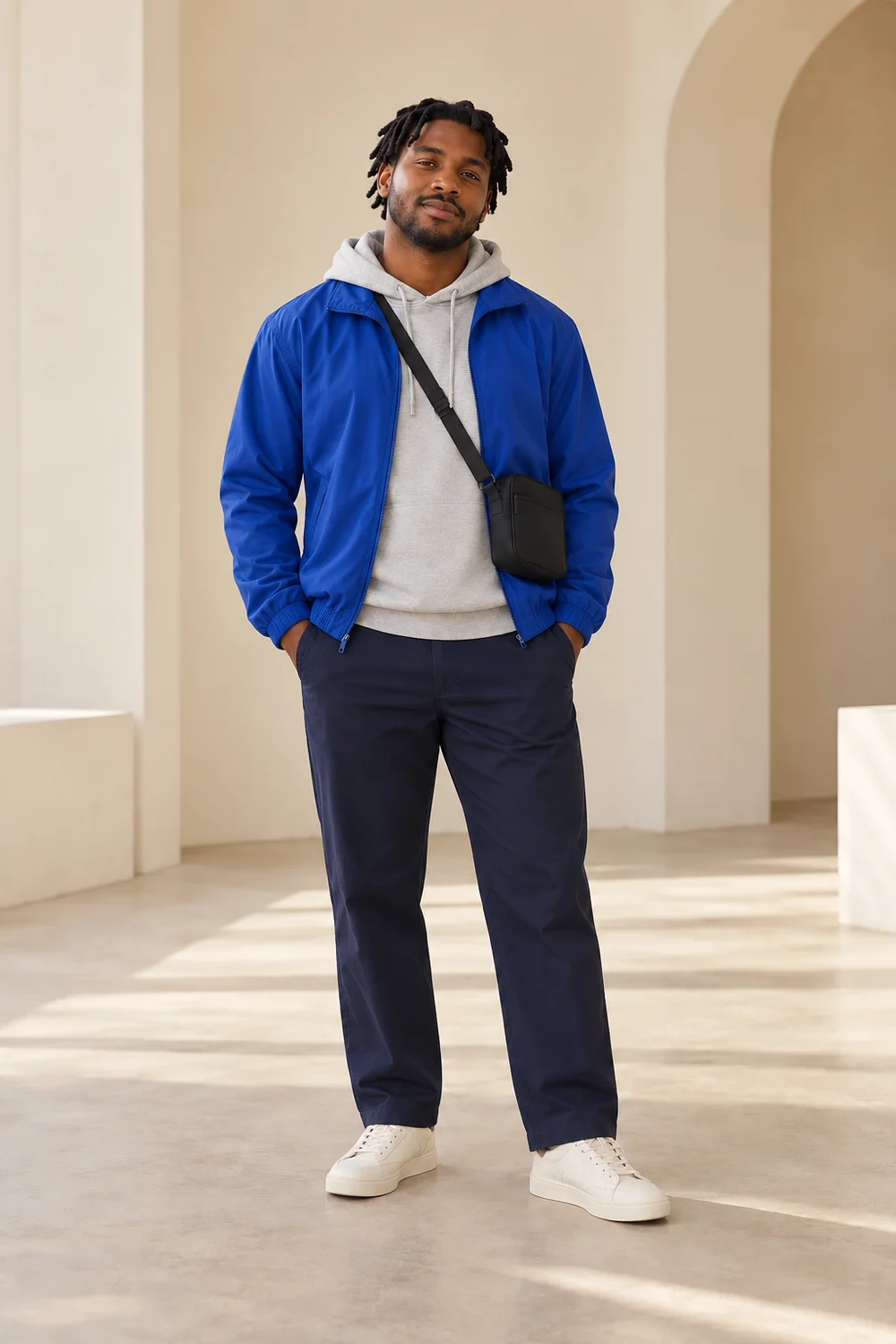
Make cobalt the outer layer and keep grey, navy and cream underneath.
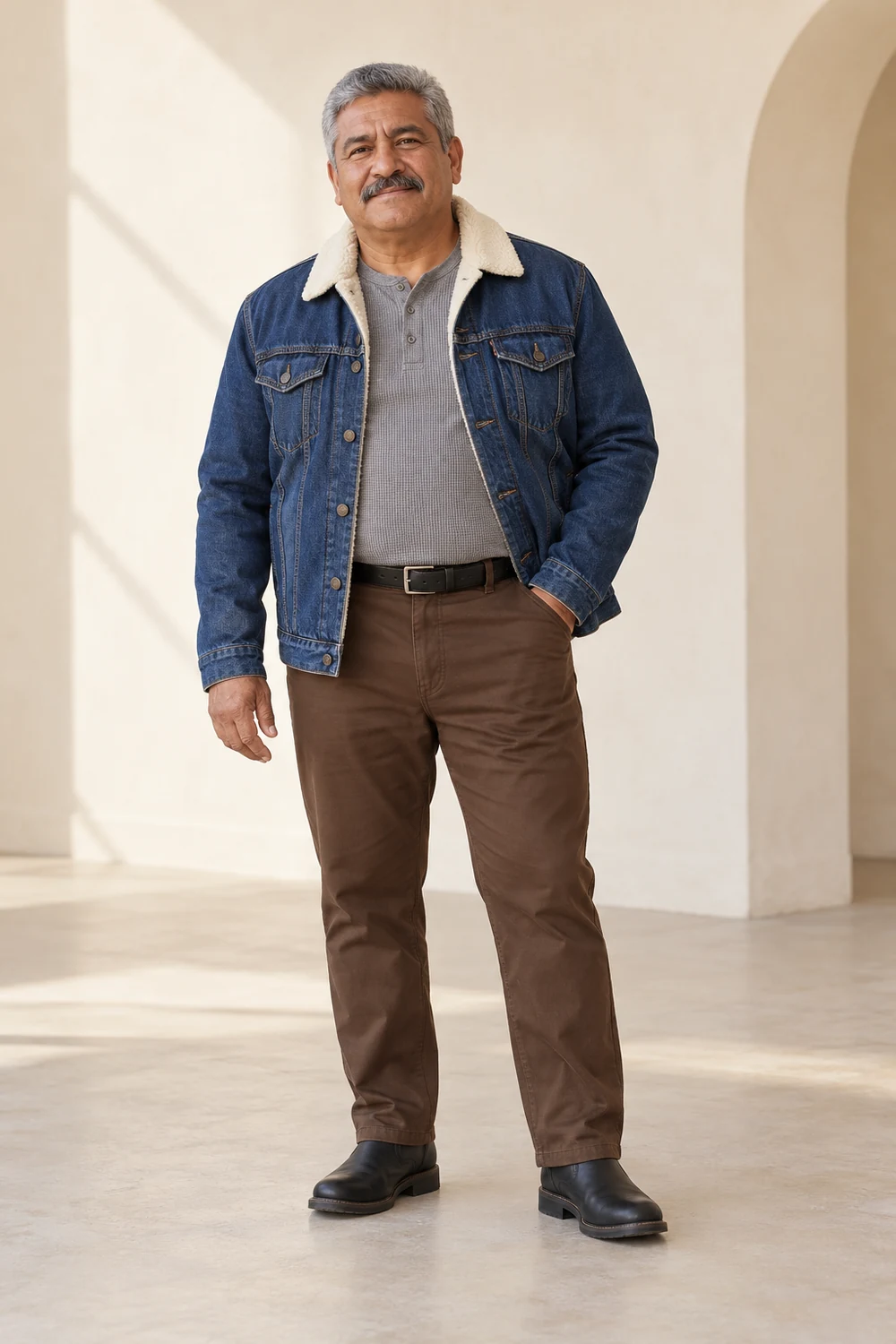
If a lined denim jacket feels cramped, compare the lining, sleeve room and inner-layer thickness separately.
Start with a coat, fine knit, shirt, comfortable trousers and dependable shoes.
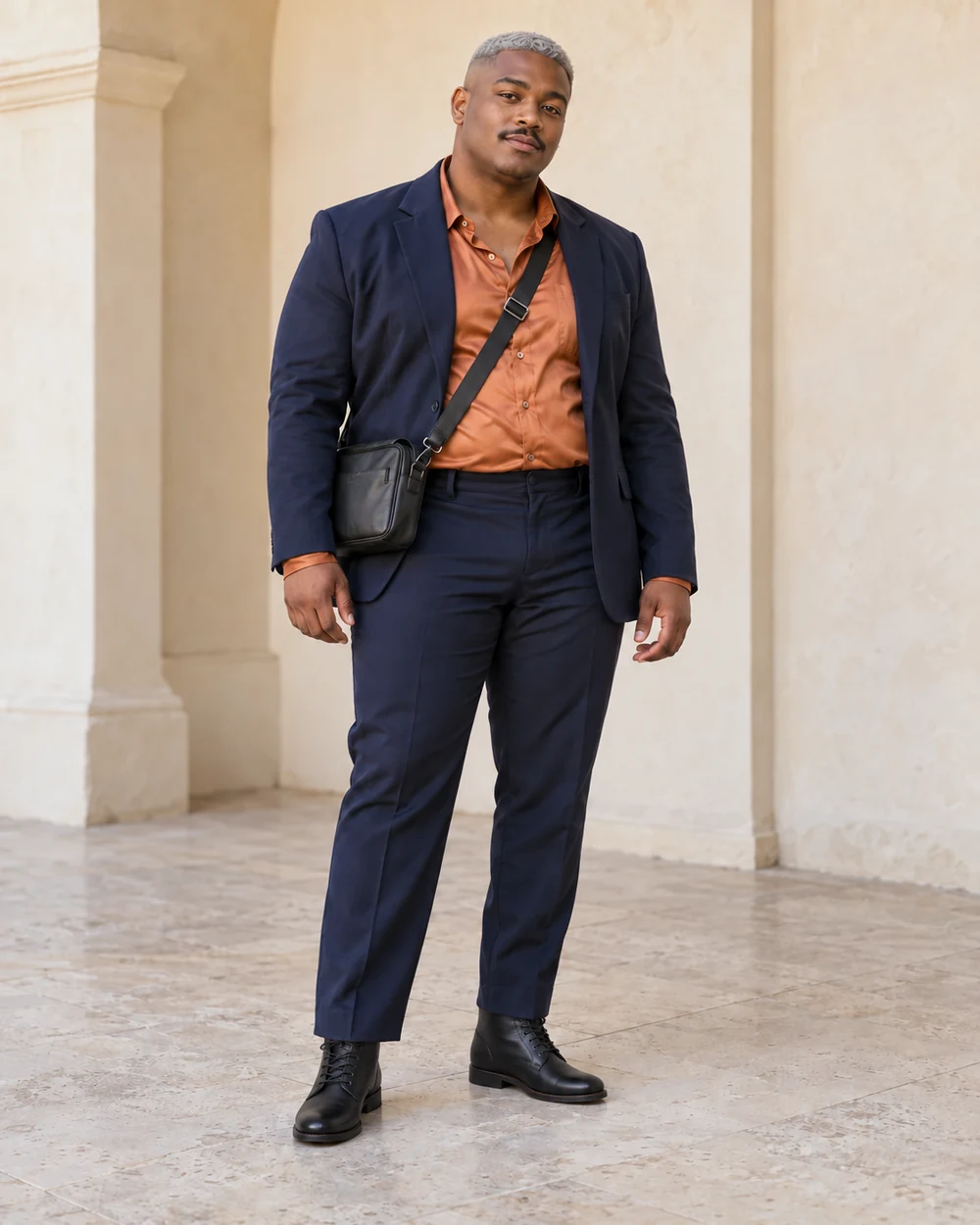
Choose an outer layer that fits over the complete suit and suits the forecast, then check the event’s expectations.
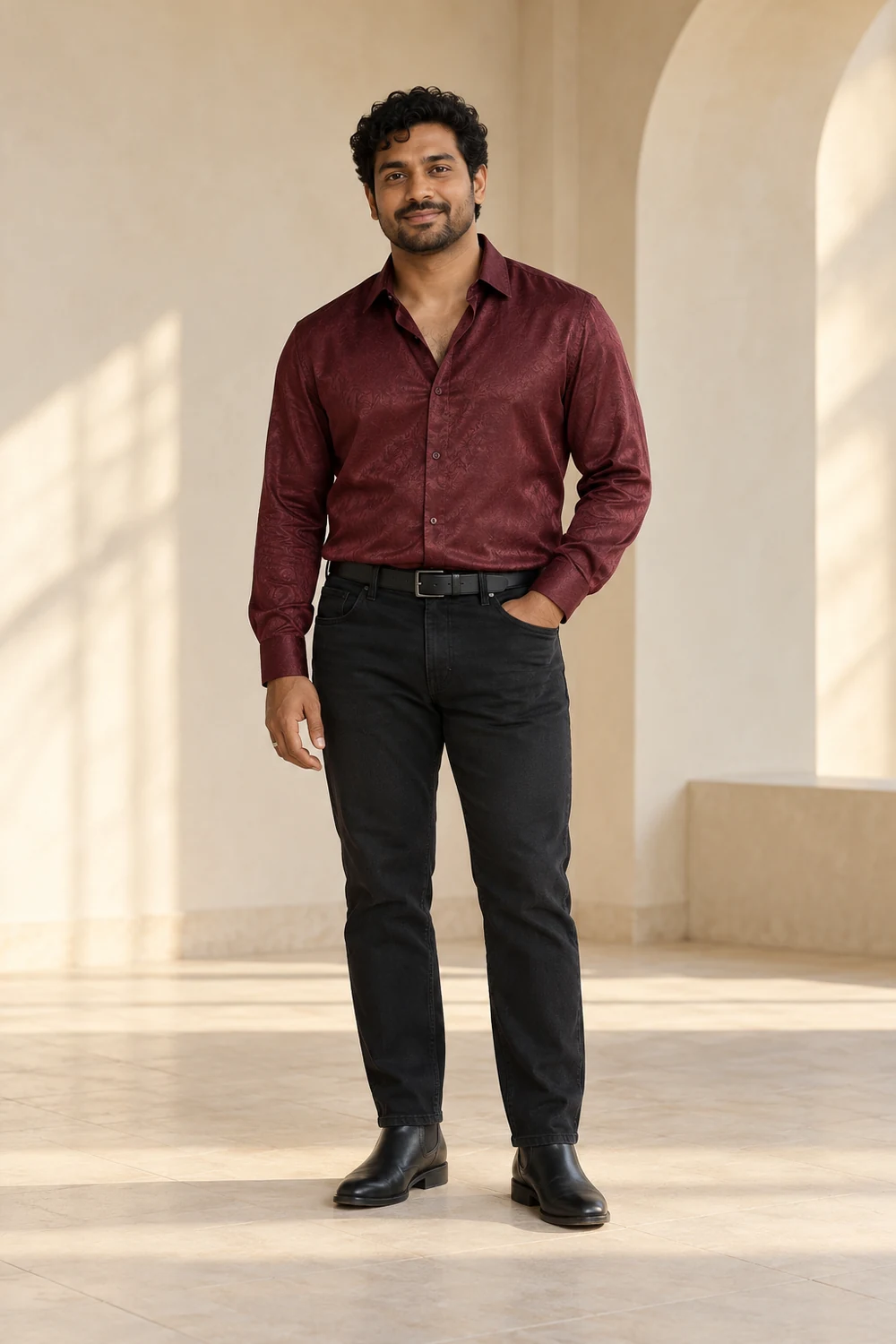
Choose one textured shirt and keep the trousers and shoes plain.
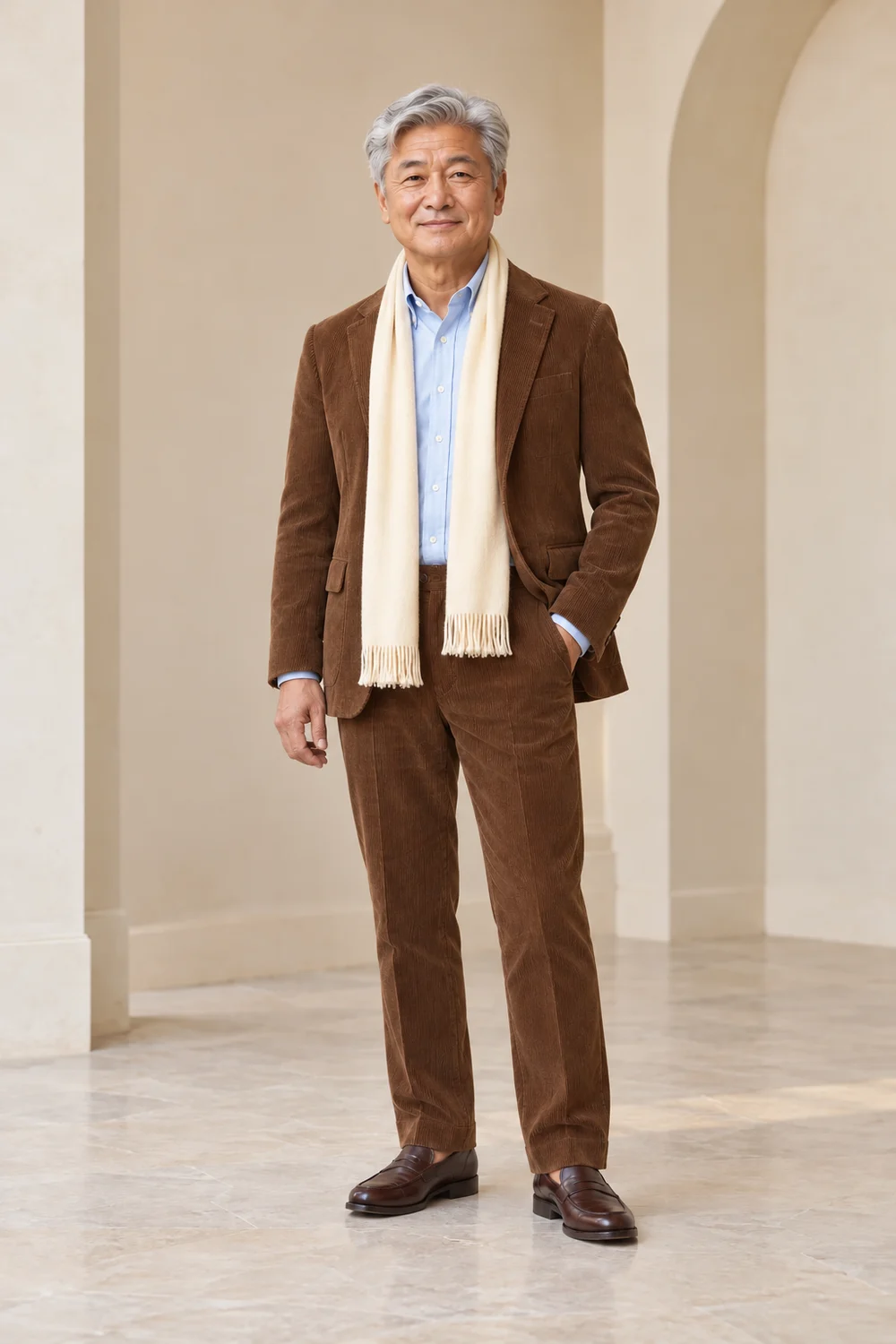
Test a corduroy jacket and trousers as separate garments before treating them as a suit.
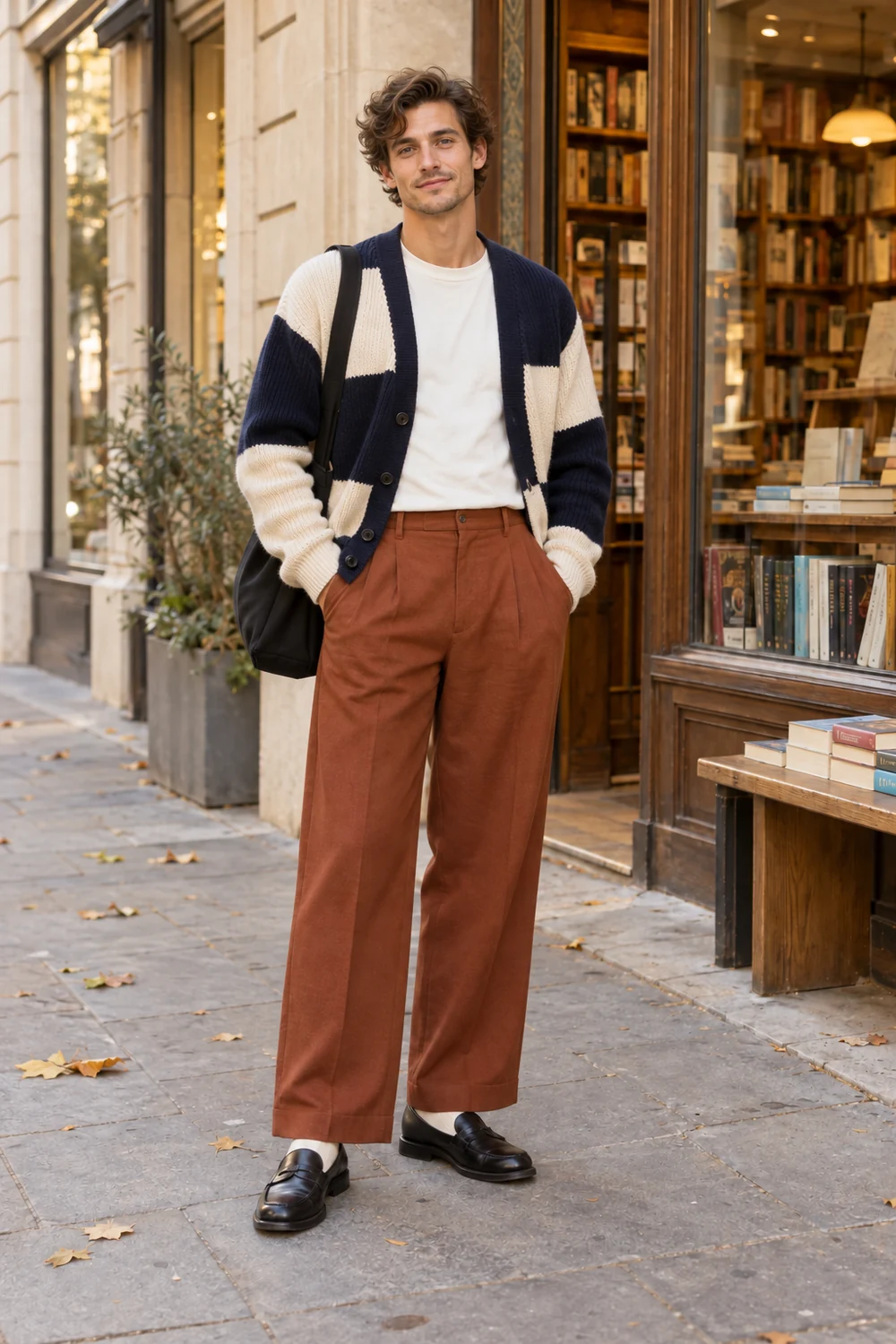
Build a playful knitwear outfit with a colour-block cardigan, rust trousers and grounded flat shoes.
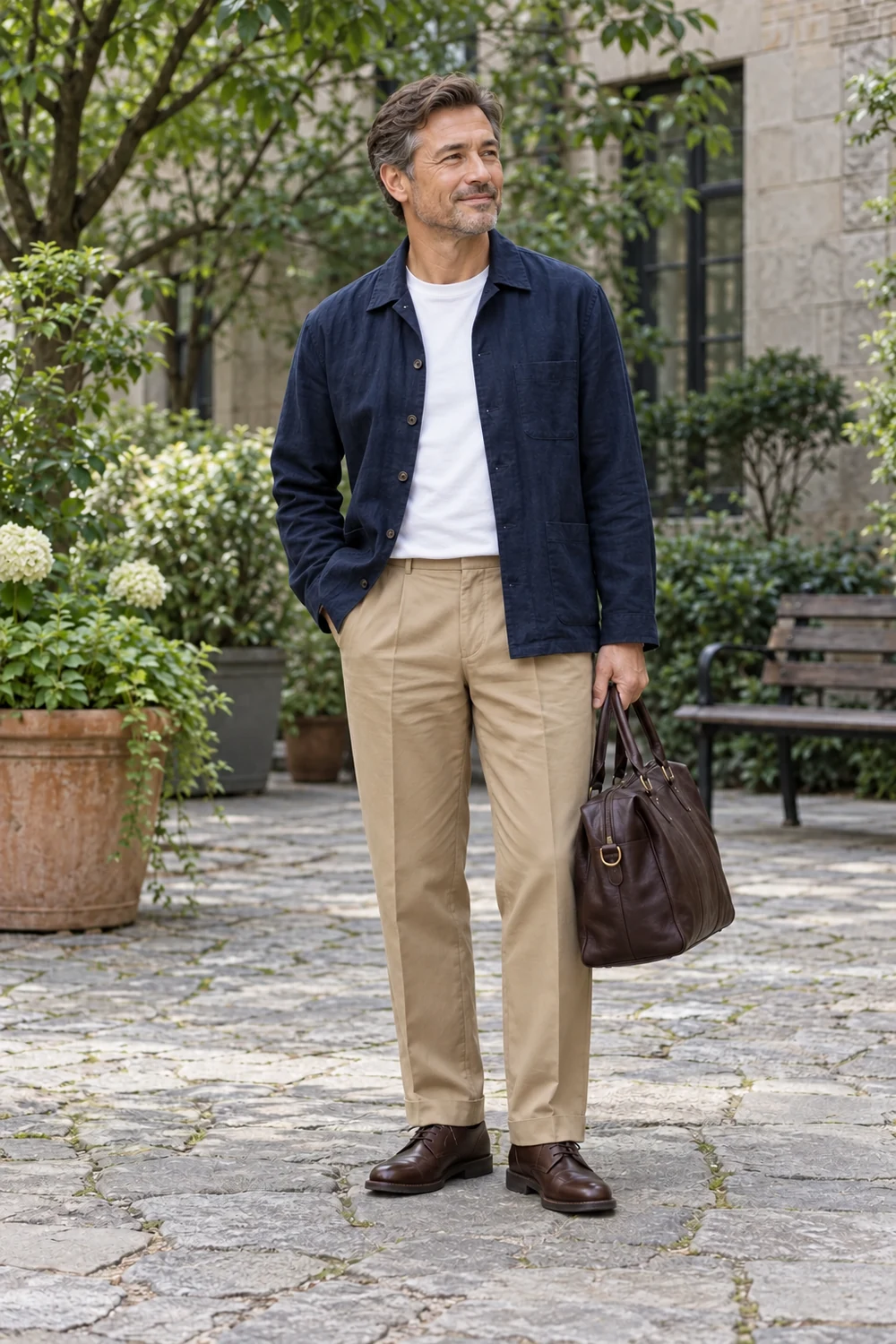
Use a navy overshirt, white T-shirt and khaki trousers for an easy alternative to a blazer.
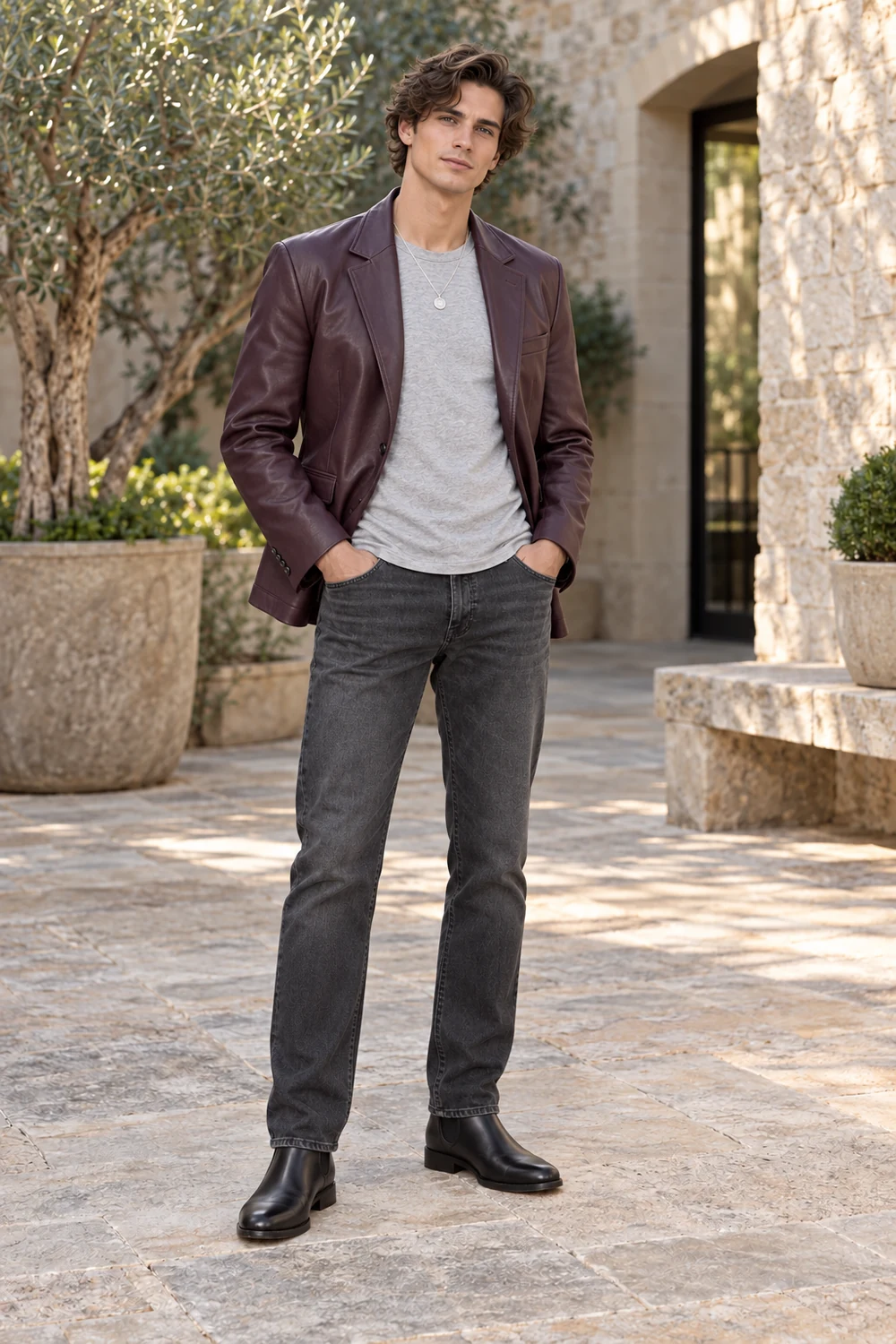
Try one plum leather-look jacket with a grey T-shirt, charcoal denim and black boots.
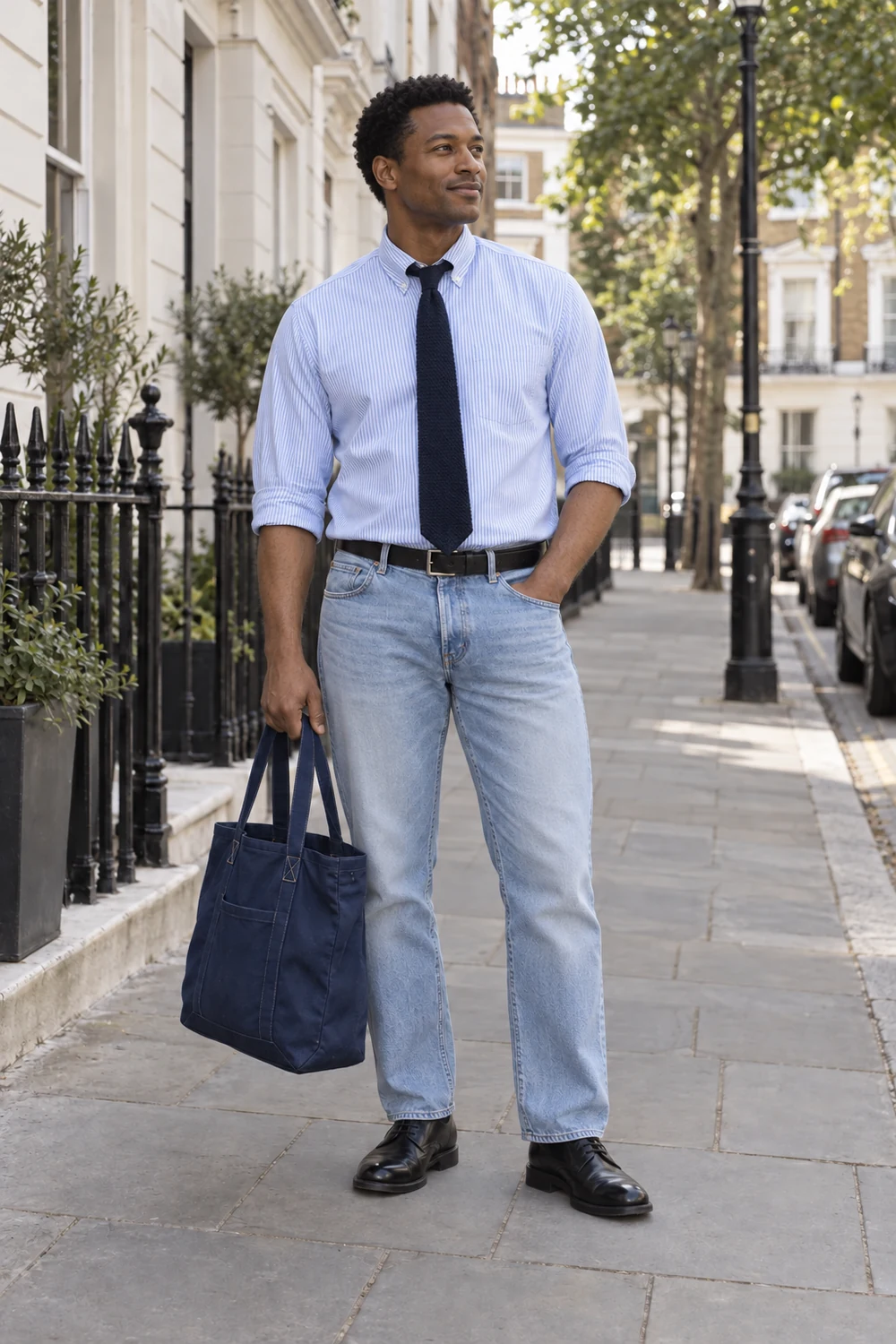
Mix a striped Oxford shirt and knitted tie with straight denim and sturdy black lace-ups.
Bring a navy suit into a relaxed setting with a fine knit and simple white trainers.
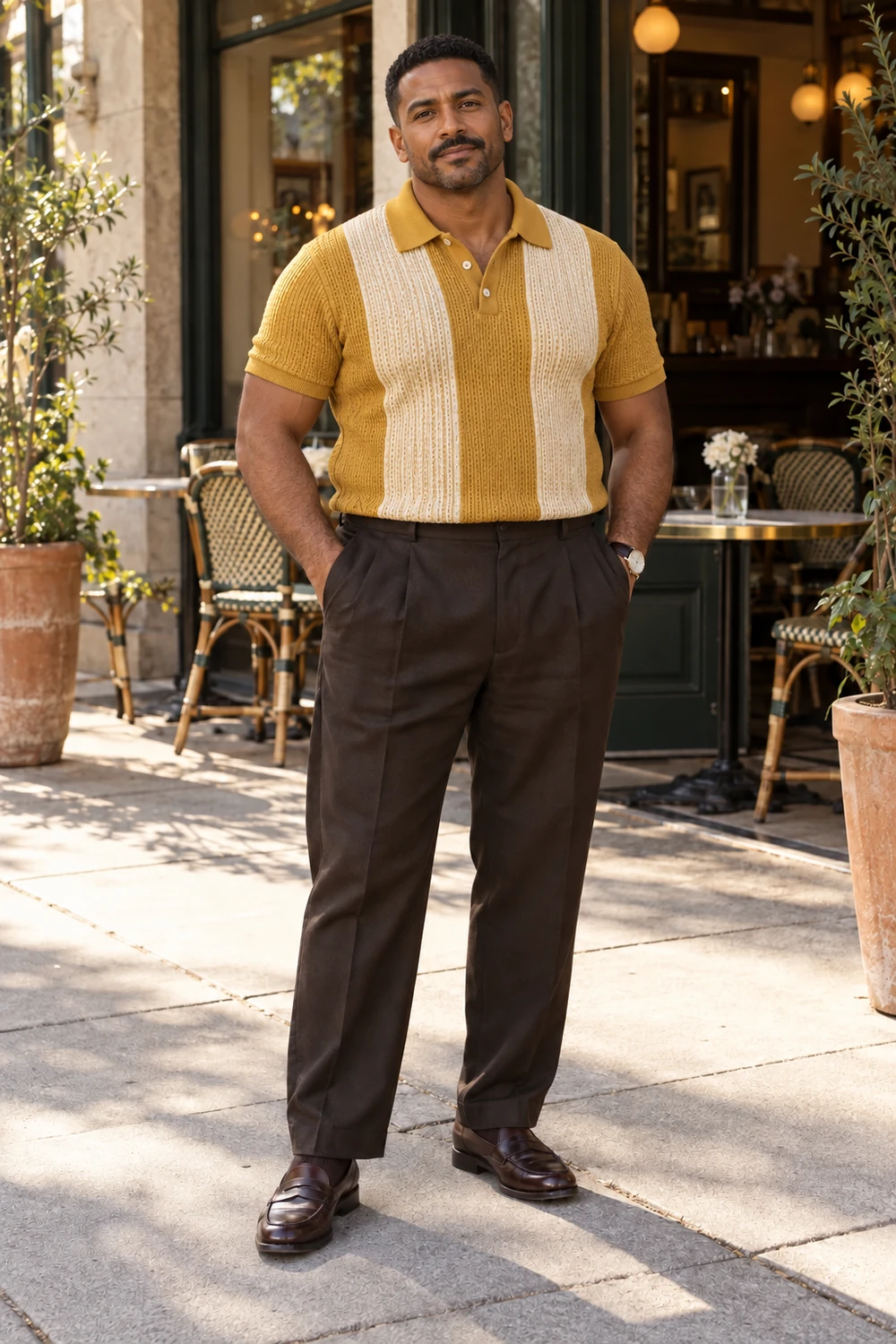
Use a textured mustard-and-cream polo with chocolate trousers for a relaxed dinner outfit.
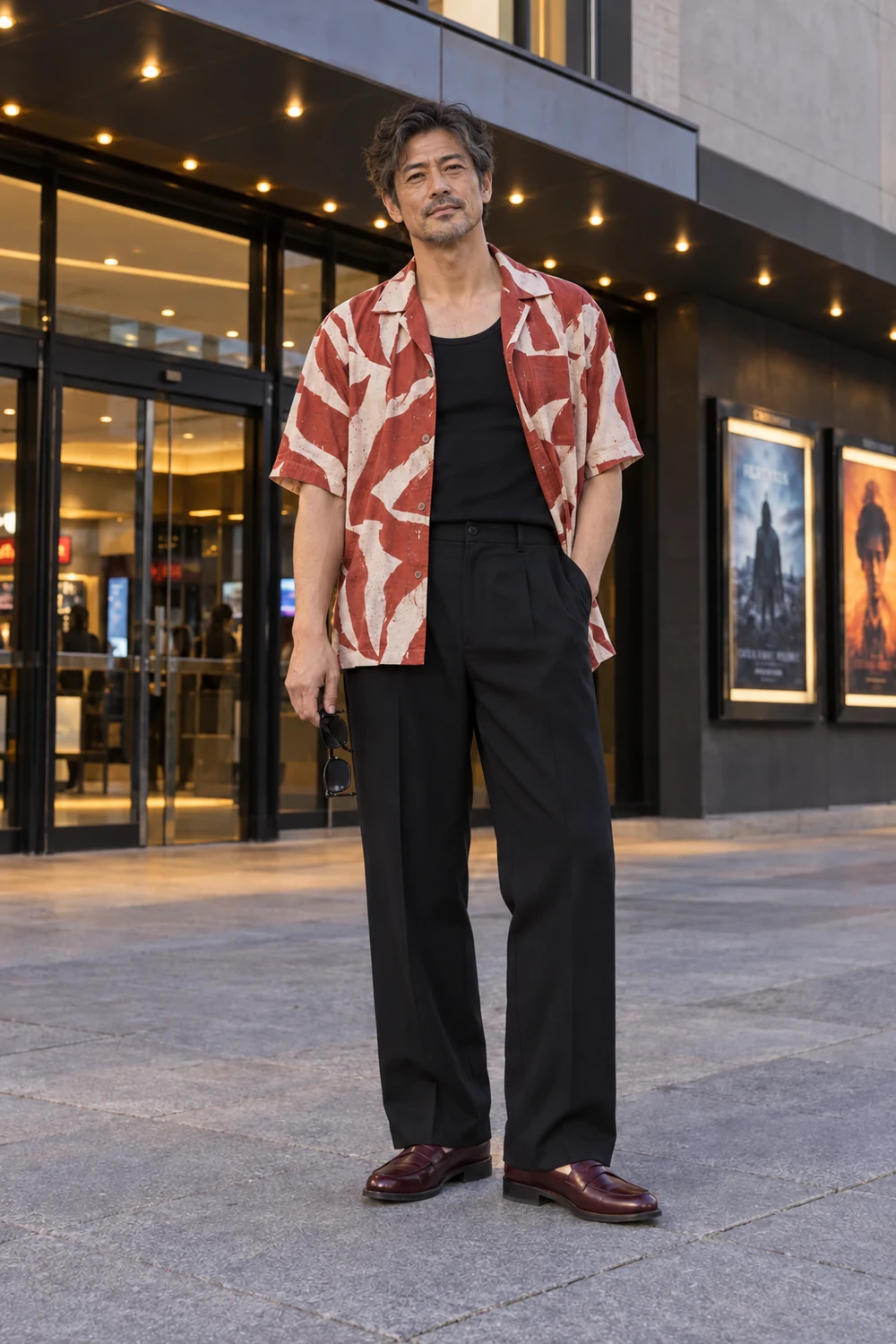
Give a brick-and-cream printed shirt space to stand out against a black base and burgundy loafers.
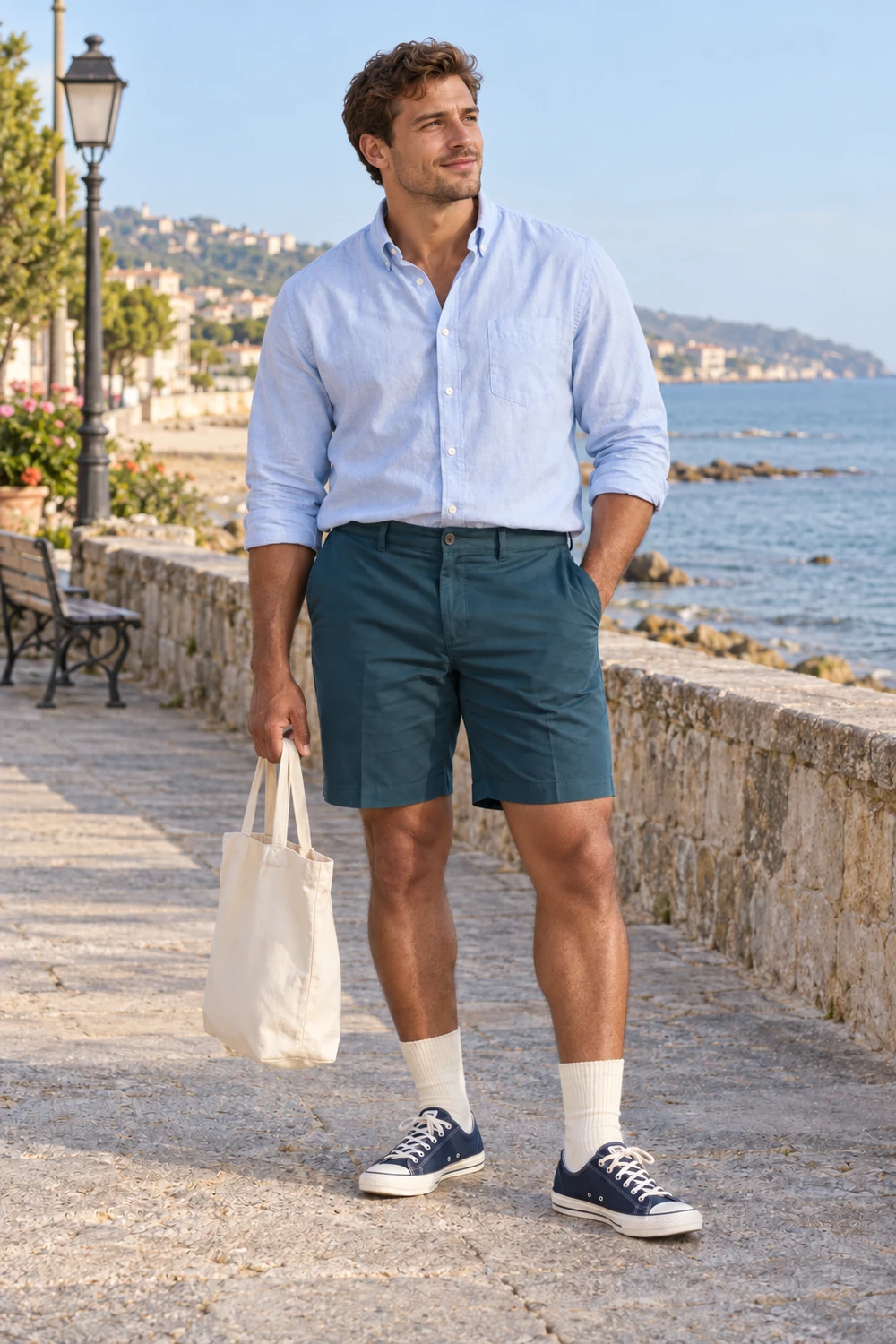
Combine a pale Oxford shirt, teal shorts and canvas trainers, choosing the inseam for your comfort.
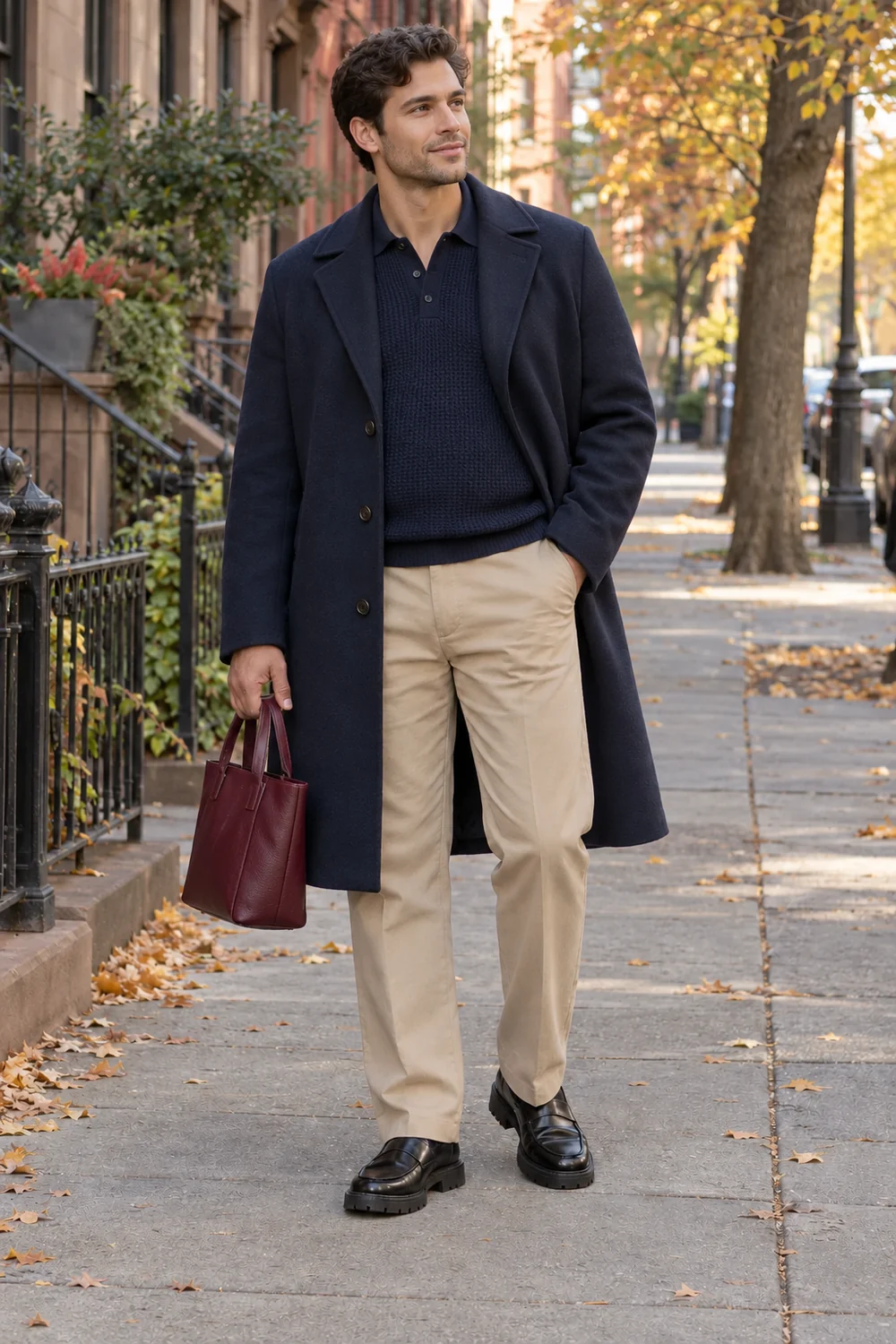
Layer a textured navy polo beneath a roomy city coat, with sand trousers and substantial loafers.
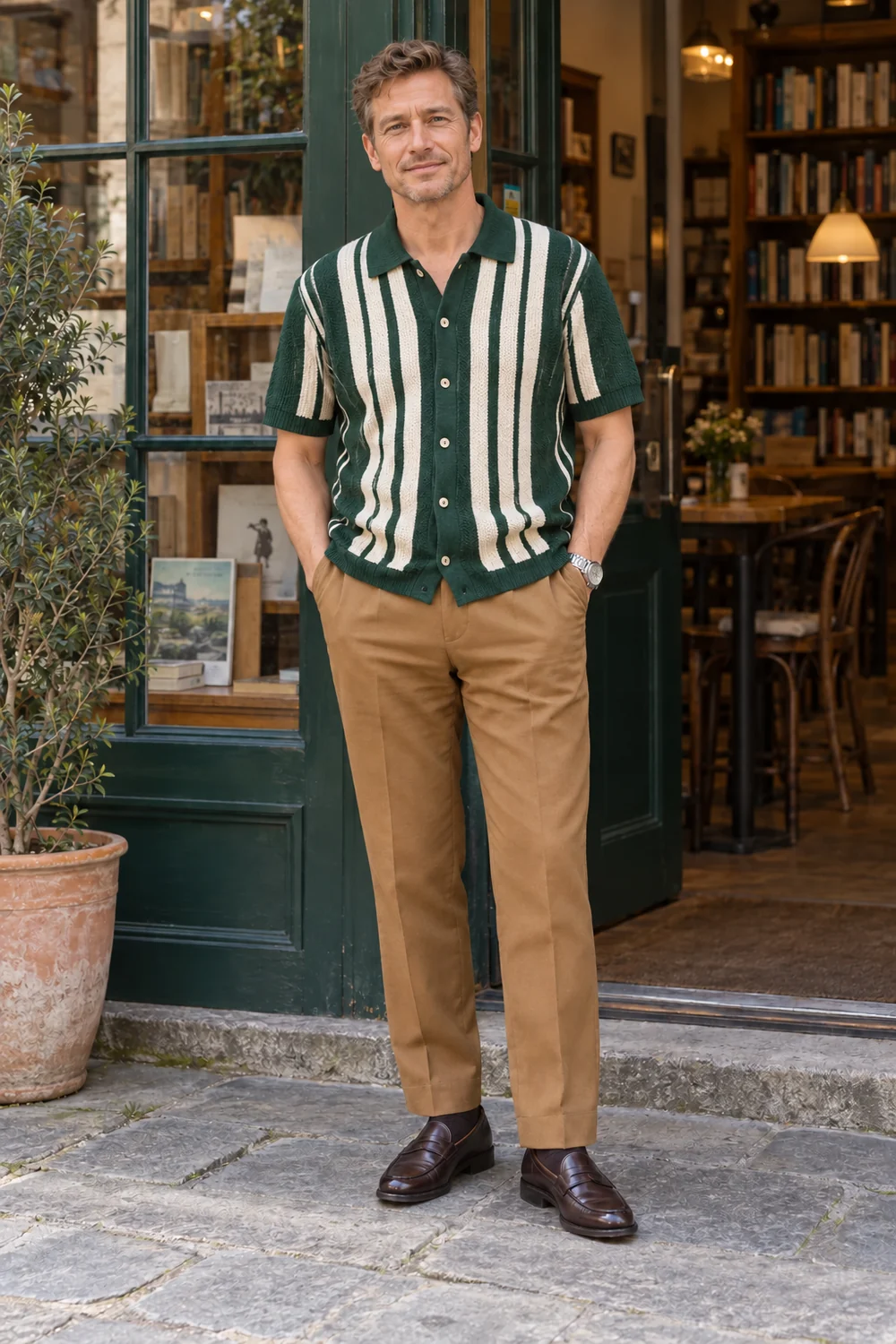
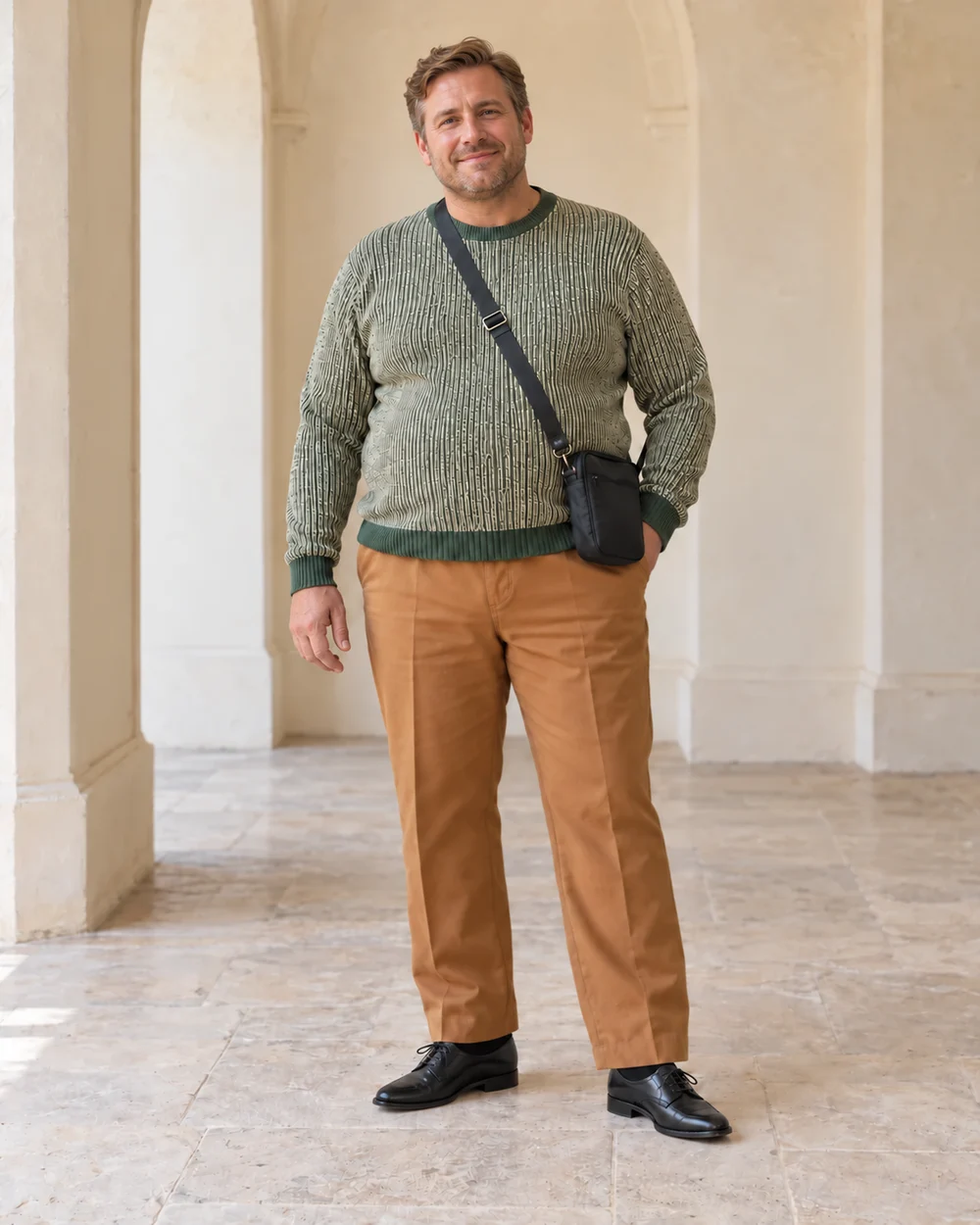
Give a full-button green-and-cream knit a relaxed finish with caramel trousers and brown loafers.
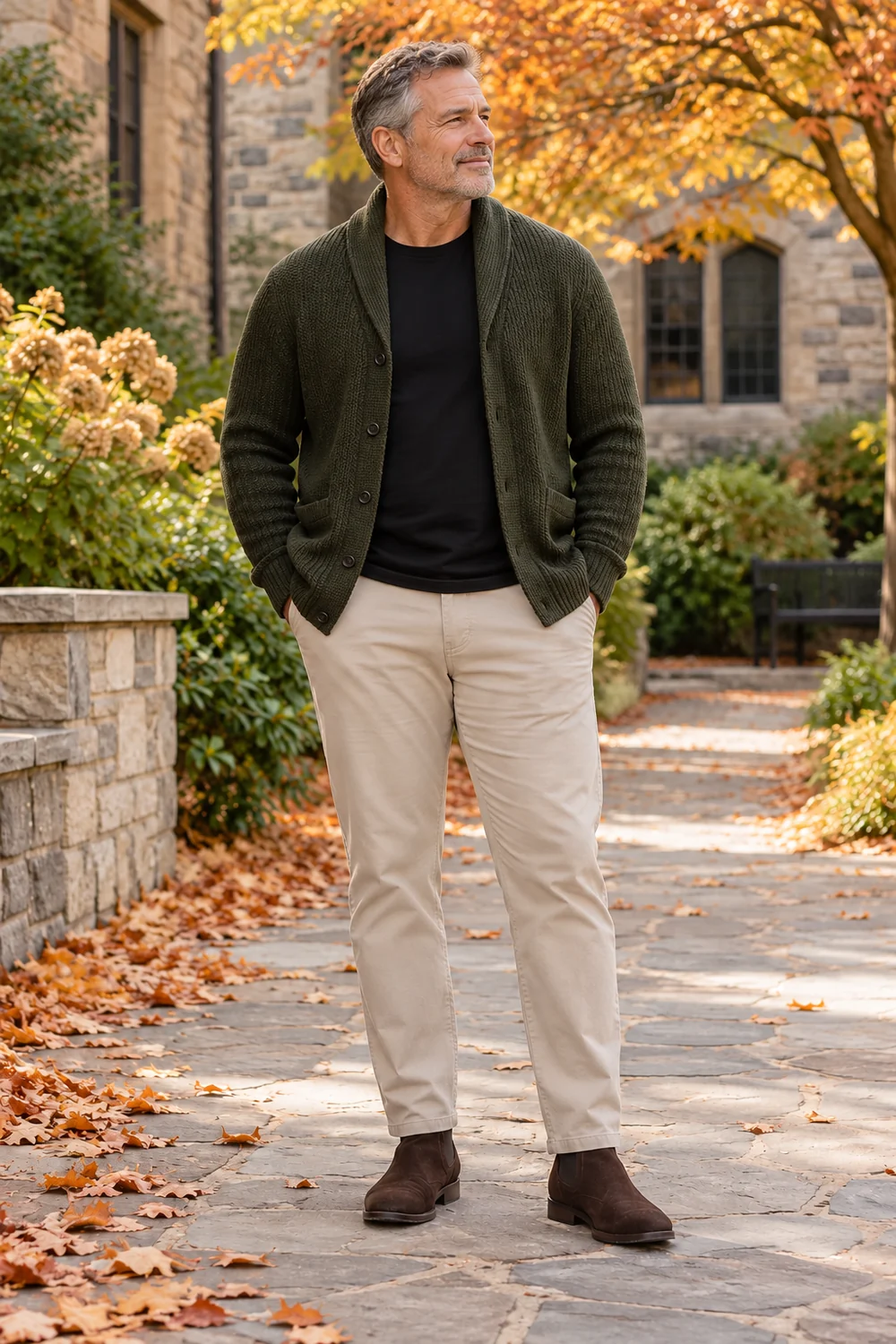
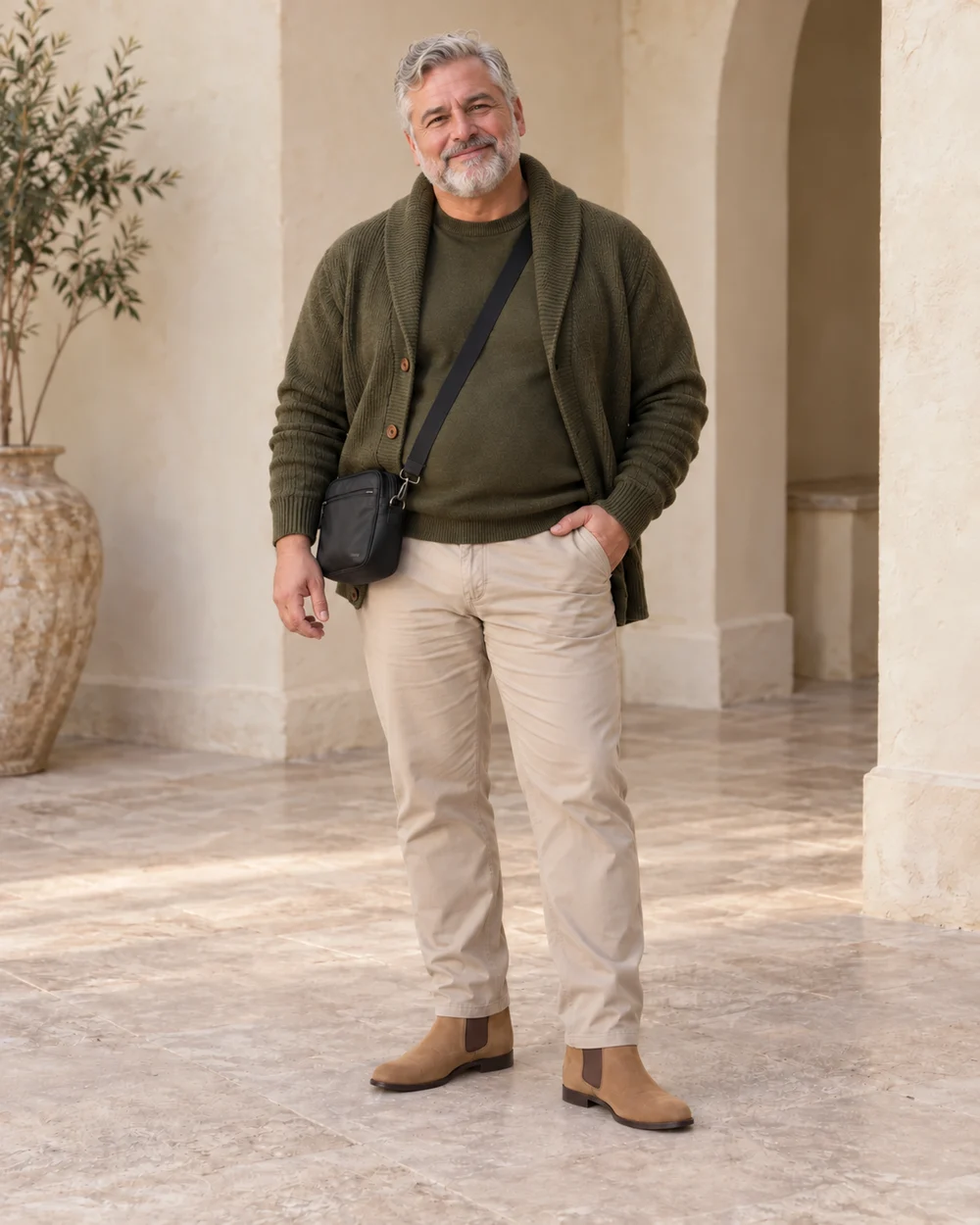
Use a dark olive shawl cardigan over black, with stone chinos and brown ankle boots.
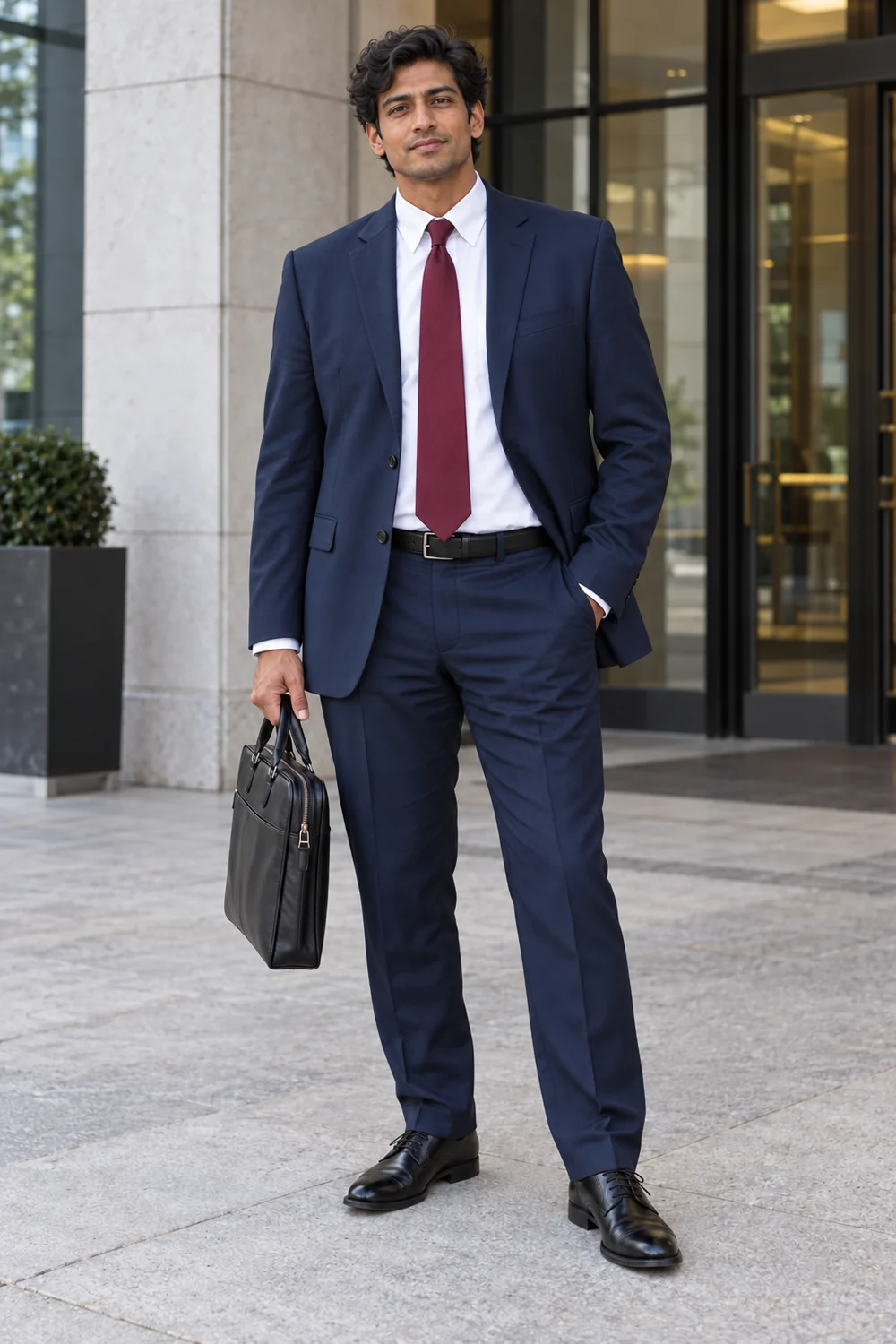
Build a considered work outfit around a navy suit, white shirt and burgundy tie, with fit checked seated and moving.
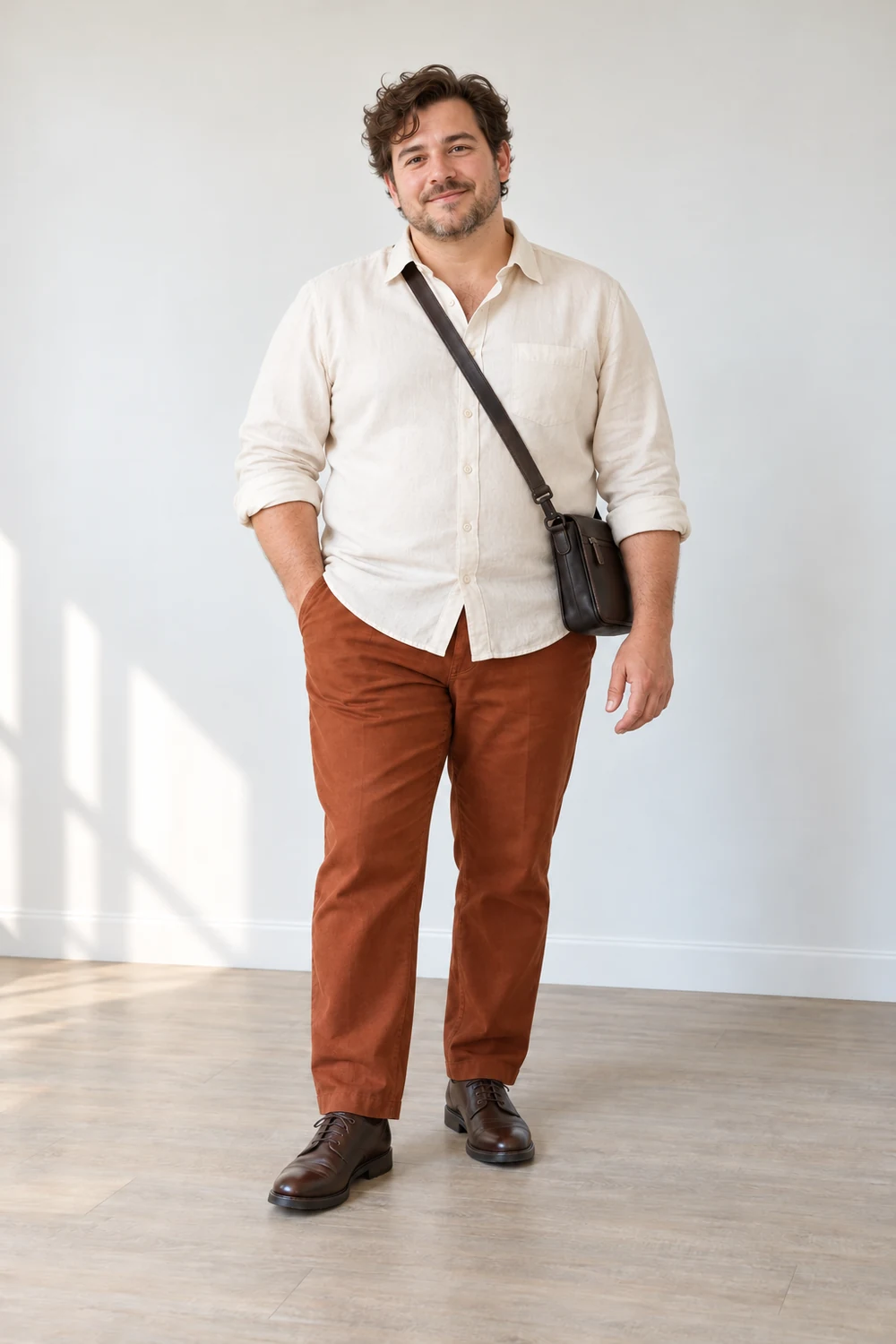
Choose the ivory-and-rust light outfit or its colour-block cardigan version, then compare Derby shoes and white trainers for the actual invitation.
Navy and khaki keep their relaxed relationship in a knit polo outfit, with an overshirt and two black footwear routes.
Keep one plum knit and charcoal trousers useful across a trip, adding the grey overshirt only when it serves a real job.
Find whether a striped shirt problem comes from the collar, sleeve or waistband before adding the navy cardigan or changing shoes.
Practise reaching in a navy blazer over the grey polo, then compare loafer and trainer hems without changing the base.
Let the cream polo supply one mustard detail, then set chocolate trouser length with both Derby shoes and white trainers.
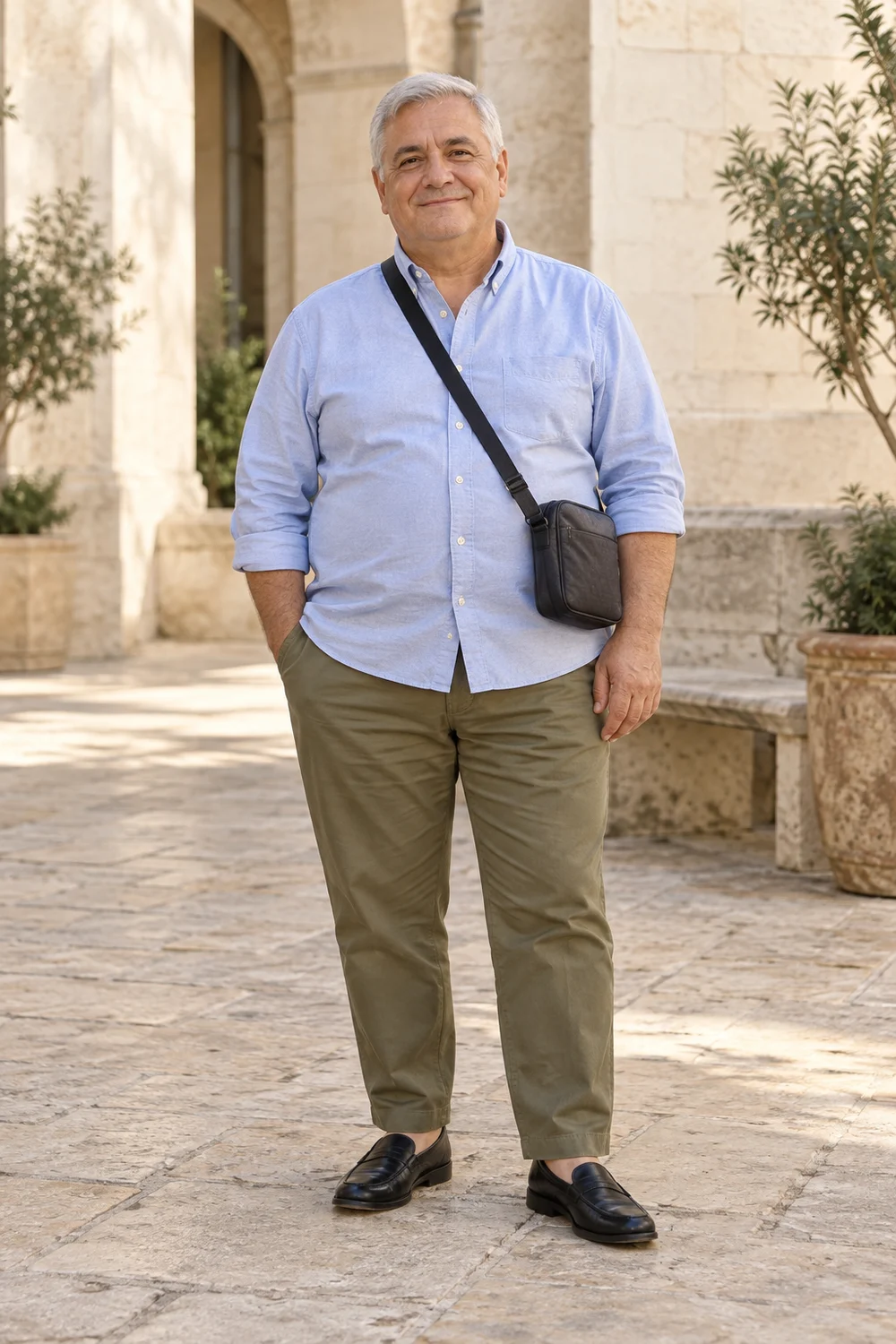
Build around olive chinos, a pale-blue Oxford and a secure black shoe, with the navy jacket as a separate optional frame.
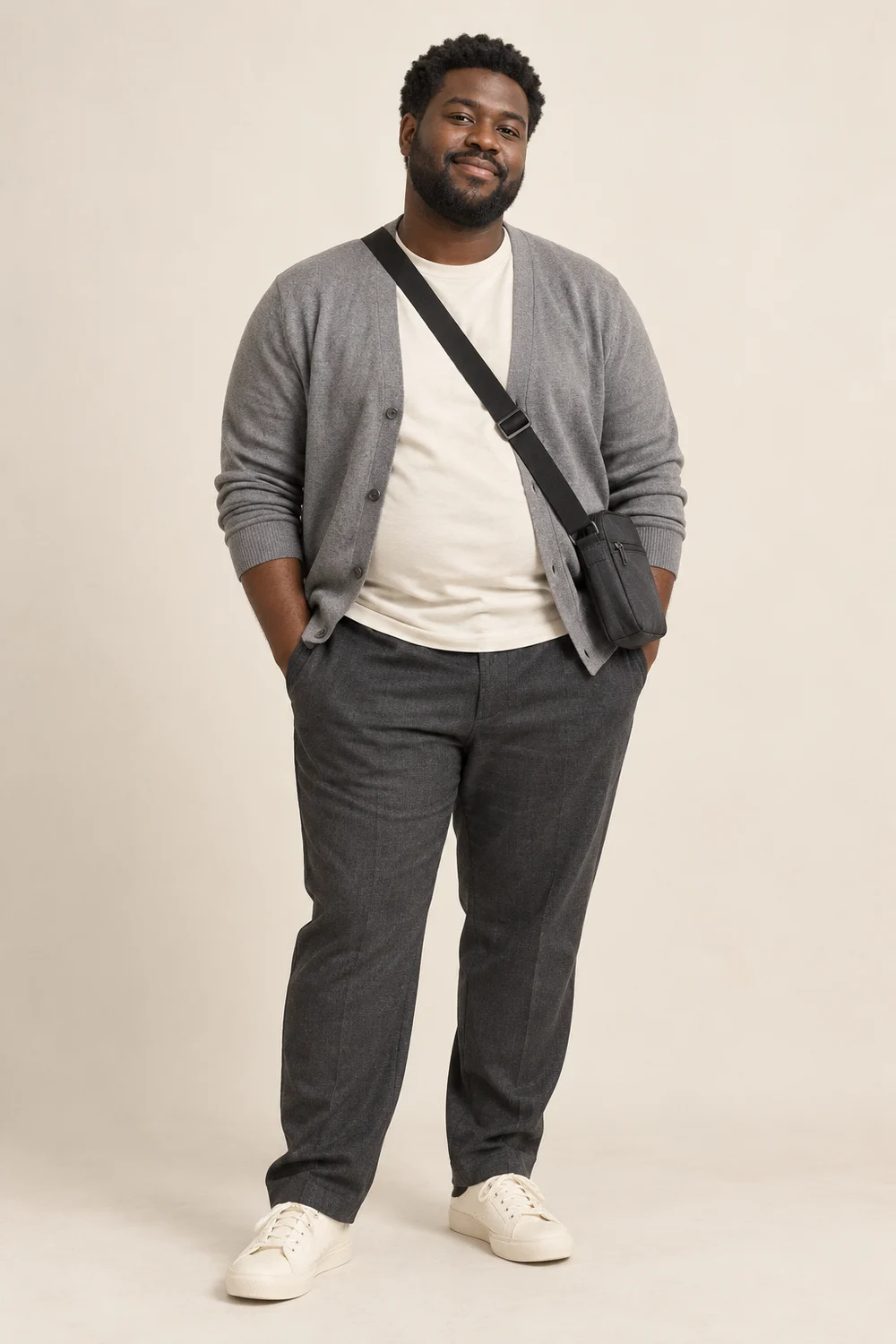
Give charcoal flannel a clear ivory centre, then choose burgundy loafers or cream trainers before adding the grey cardigan.
Choose the navy shoe for the actual route, then decide whether a tan jacket adds something useful to tobacco trousers and a navy shirt.
Let burgundy sit clearly above pale stone trousers, with tan loafers or white trainers and a separate navy overshirt option.
Keep the grey tailoring only if it serves both the black-tee base and the optional jacket version, then choose one useful shoe route.
Separate collar crowding from sleeve restriction when layering a cream collared knit and brown knitted jacket over indigo jeans.
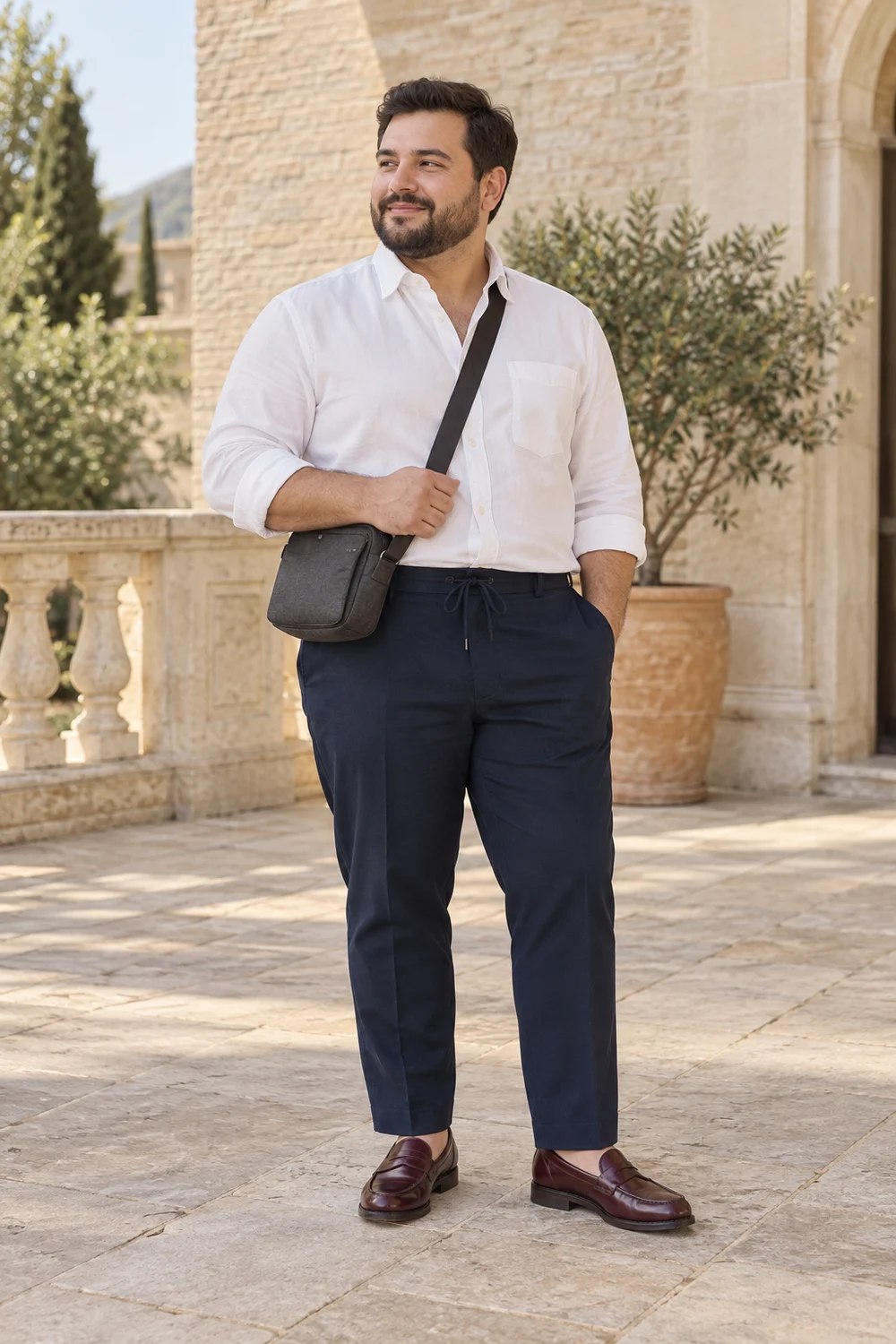
Practise one comfortable drawstring setting before arranging the white shirt, adding the olive overshirt or comparing shoes.
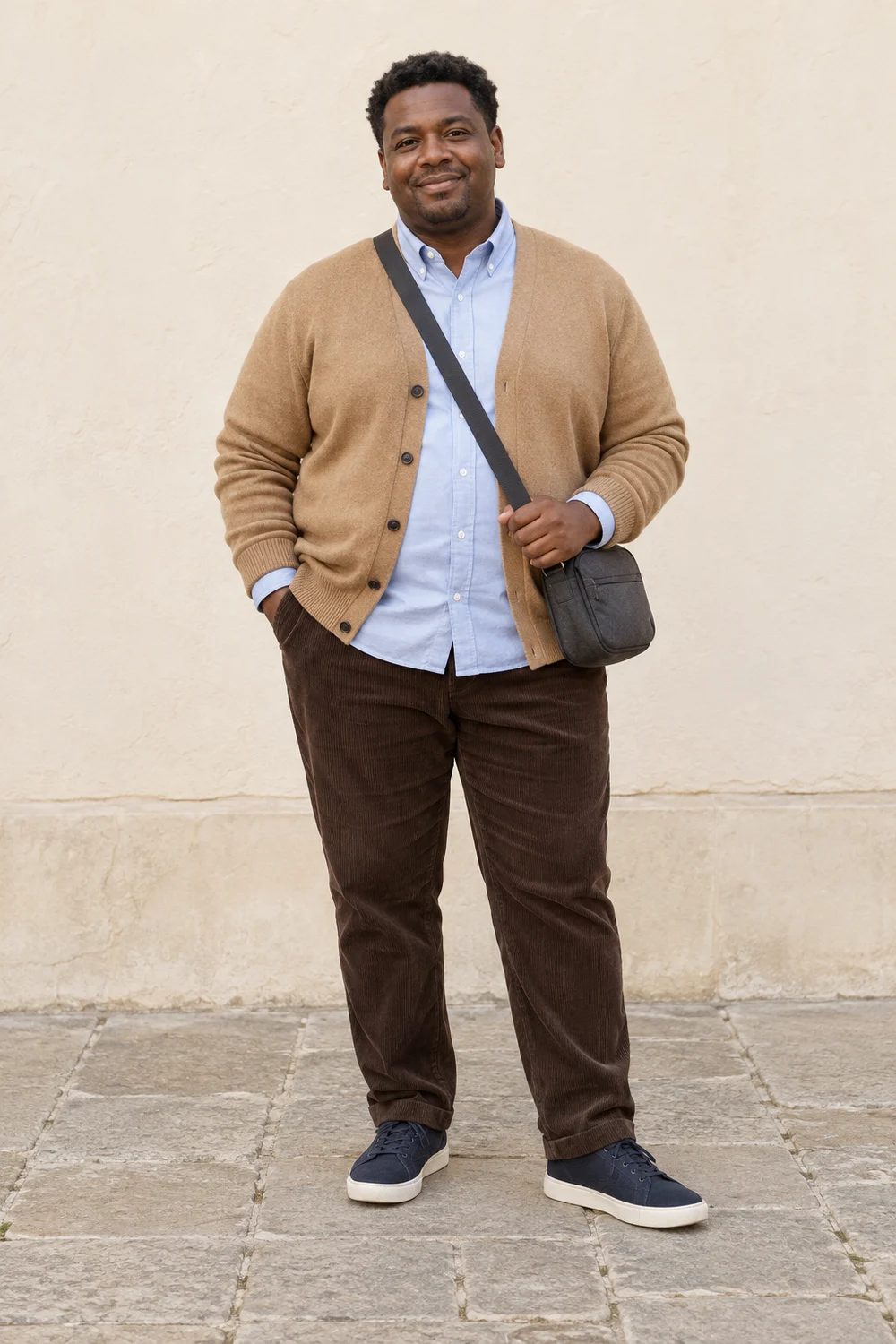
Check corduroy trousers seated and in both actual shoes, then let pale blue and an optional camel cardigan finish the outfit.
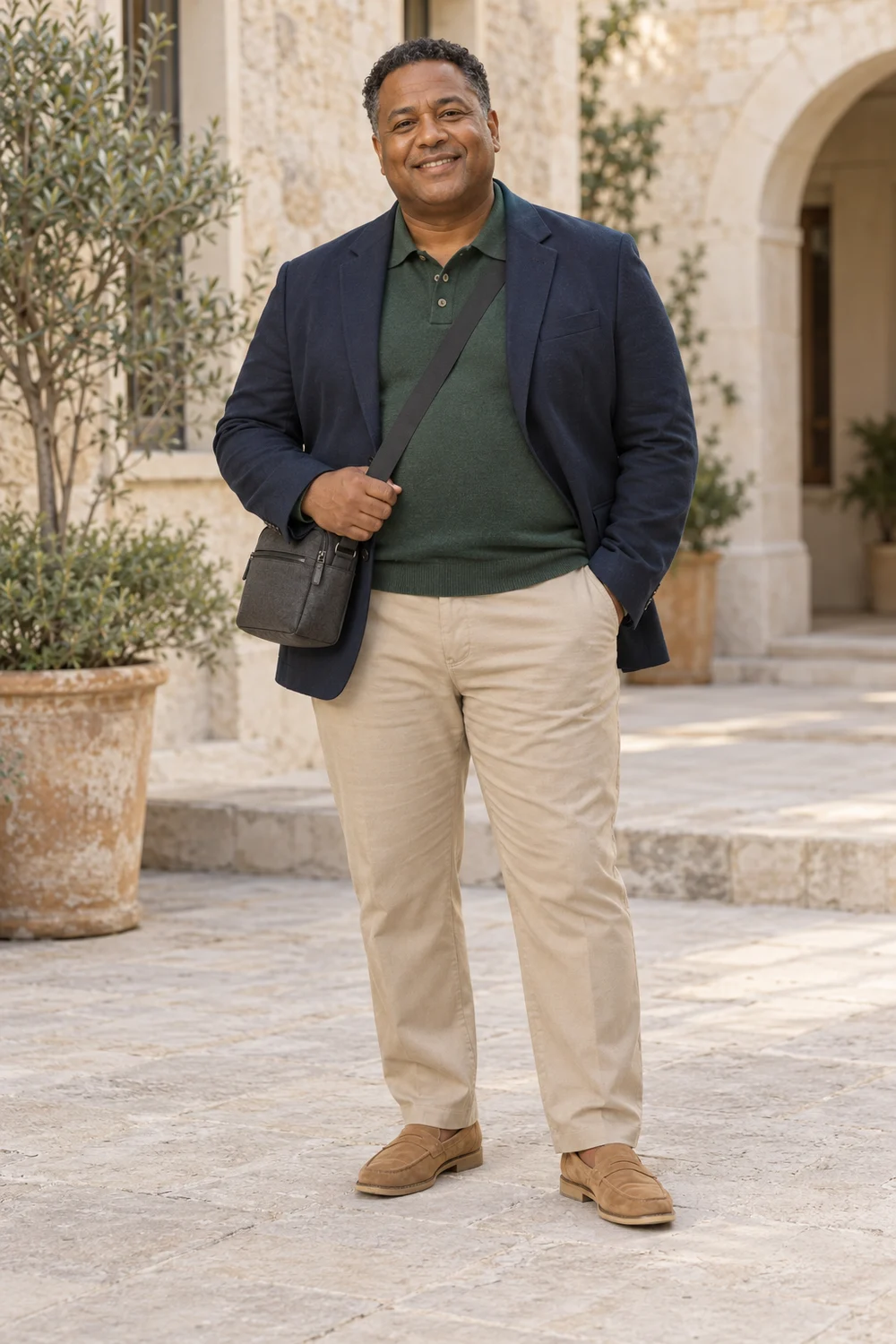
Use sand trousers, forest green and a secure shoe as the anchors, then give the navy blazer its own movement check.
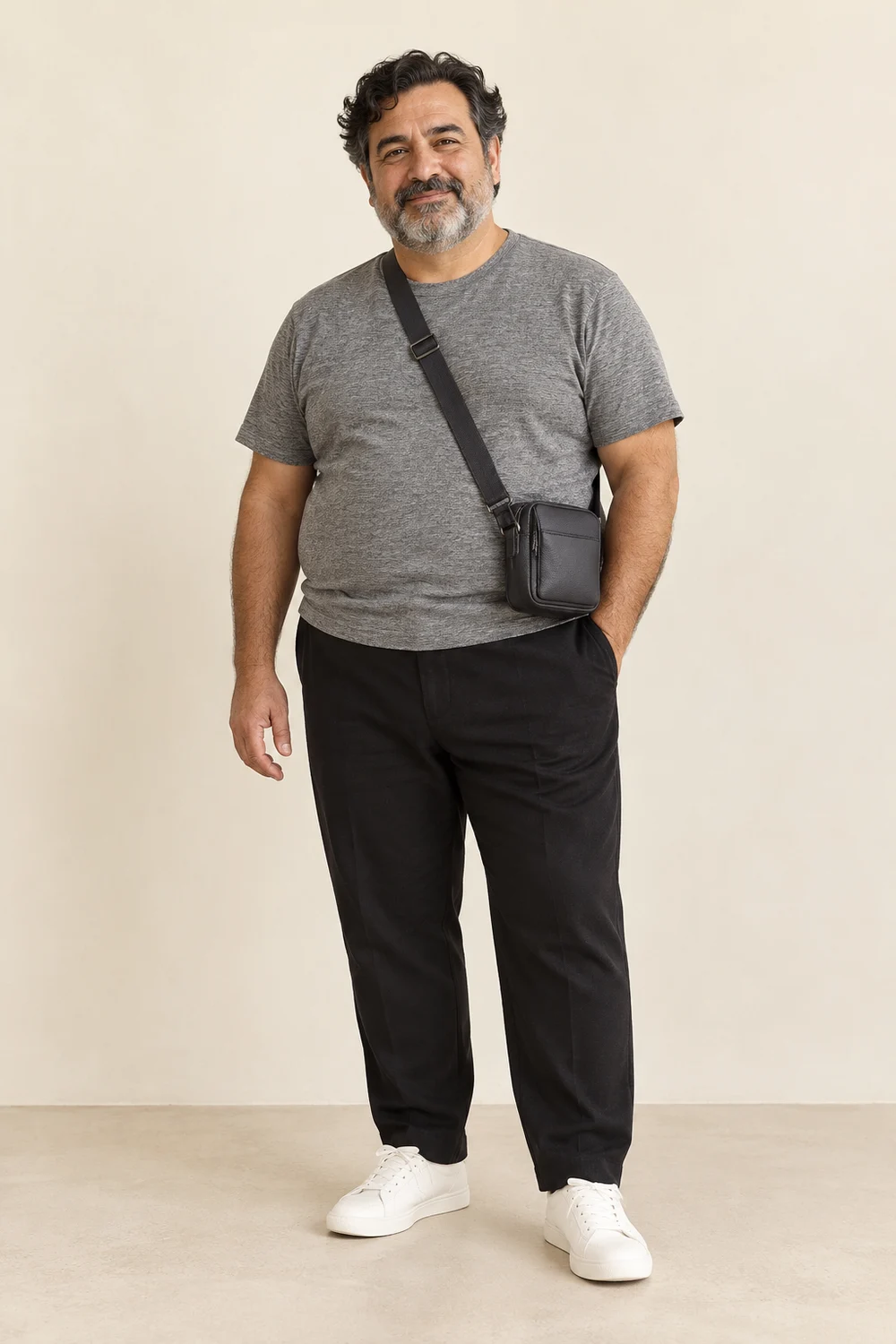
Use grey texture as the quiet centre of black trousers, with brown Derbies adding warmth or white trainers adding light.
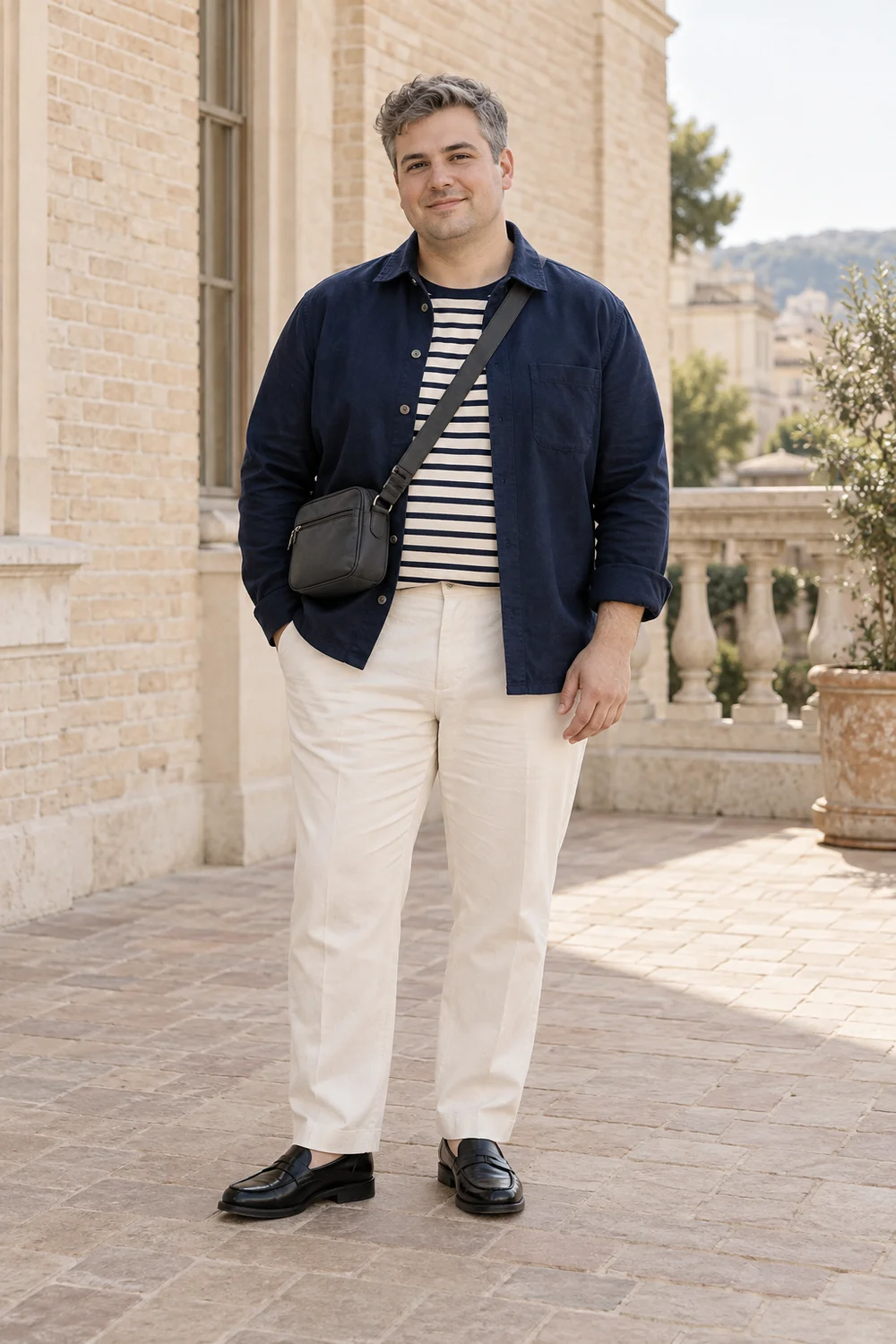
Choose cream trousers for actual coverage and comfort, then compare black loafers and trainers without changing the navy-striped base.
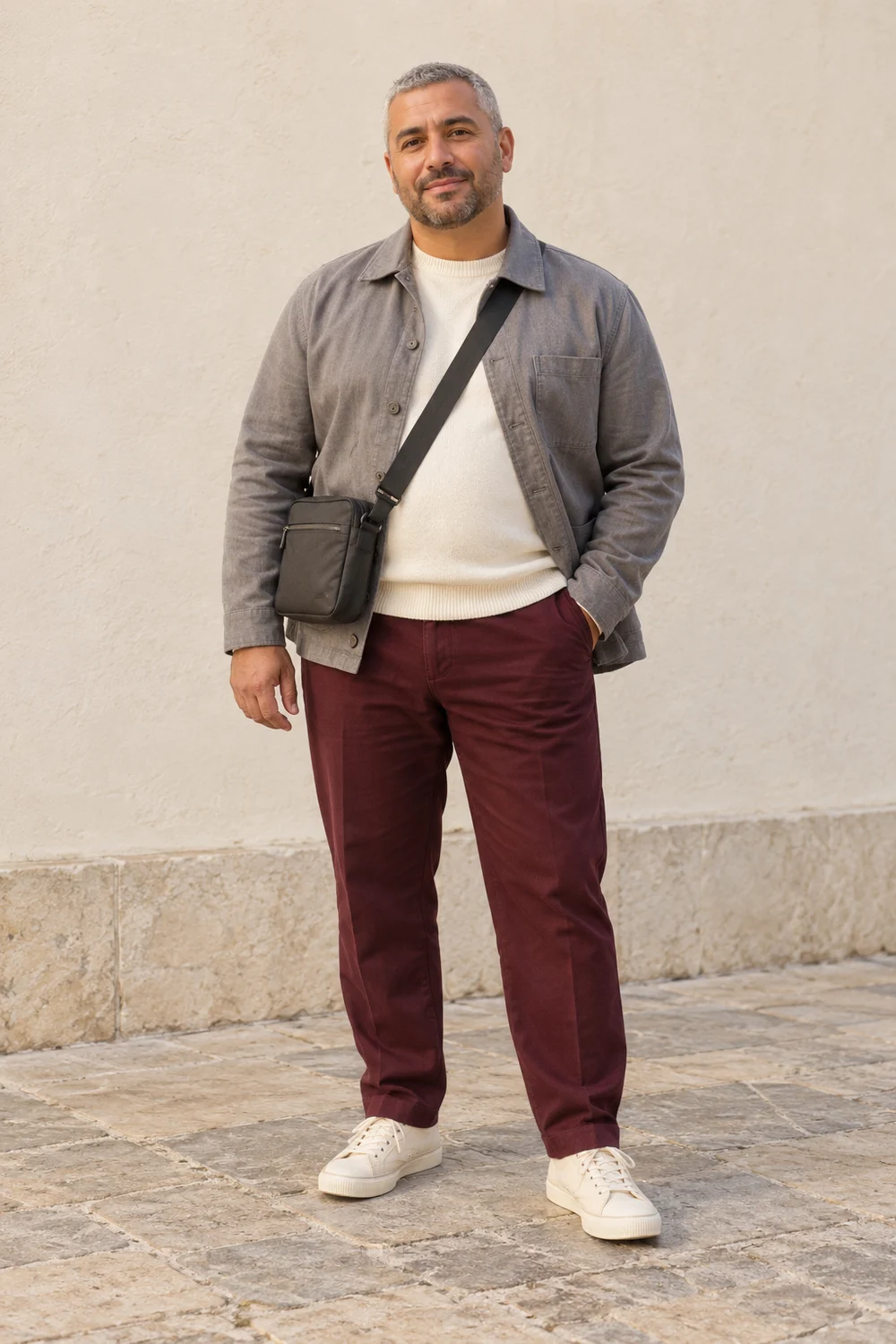
Put burgundy on the trousers and leave ivory and grey quiet above it, with loafers or cream trainers deciding the lower finish.
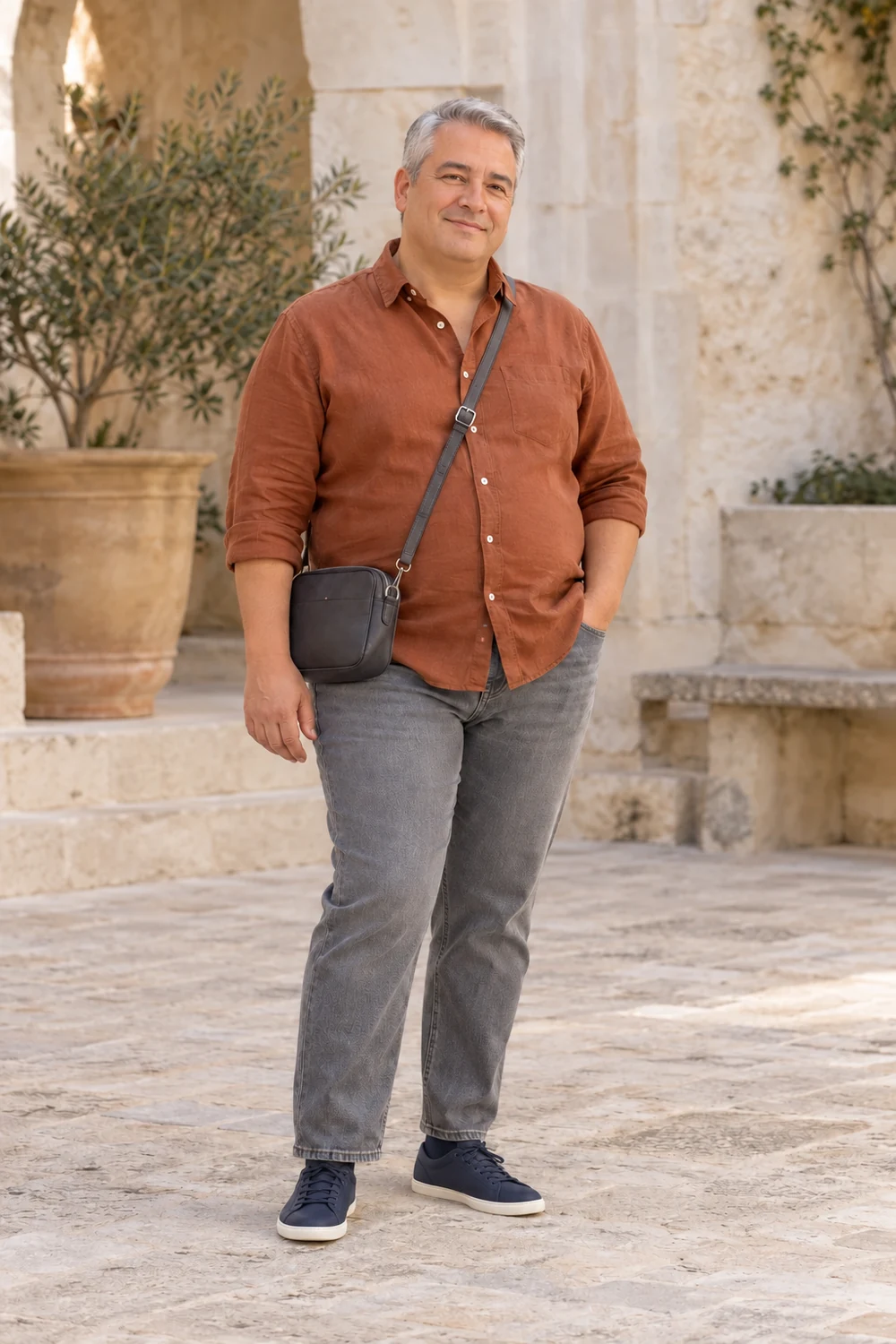
Let grey denim and a rust shirt do the main work, adding the charcoal knit jacket and a second navy shoe only for a named job.
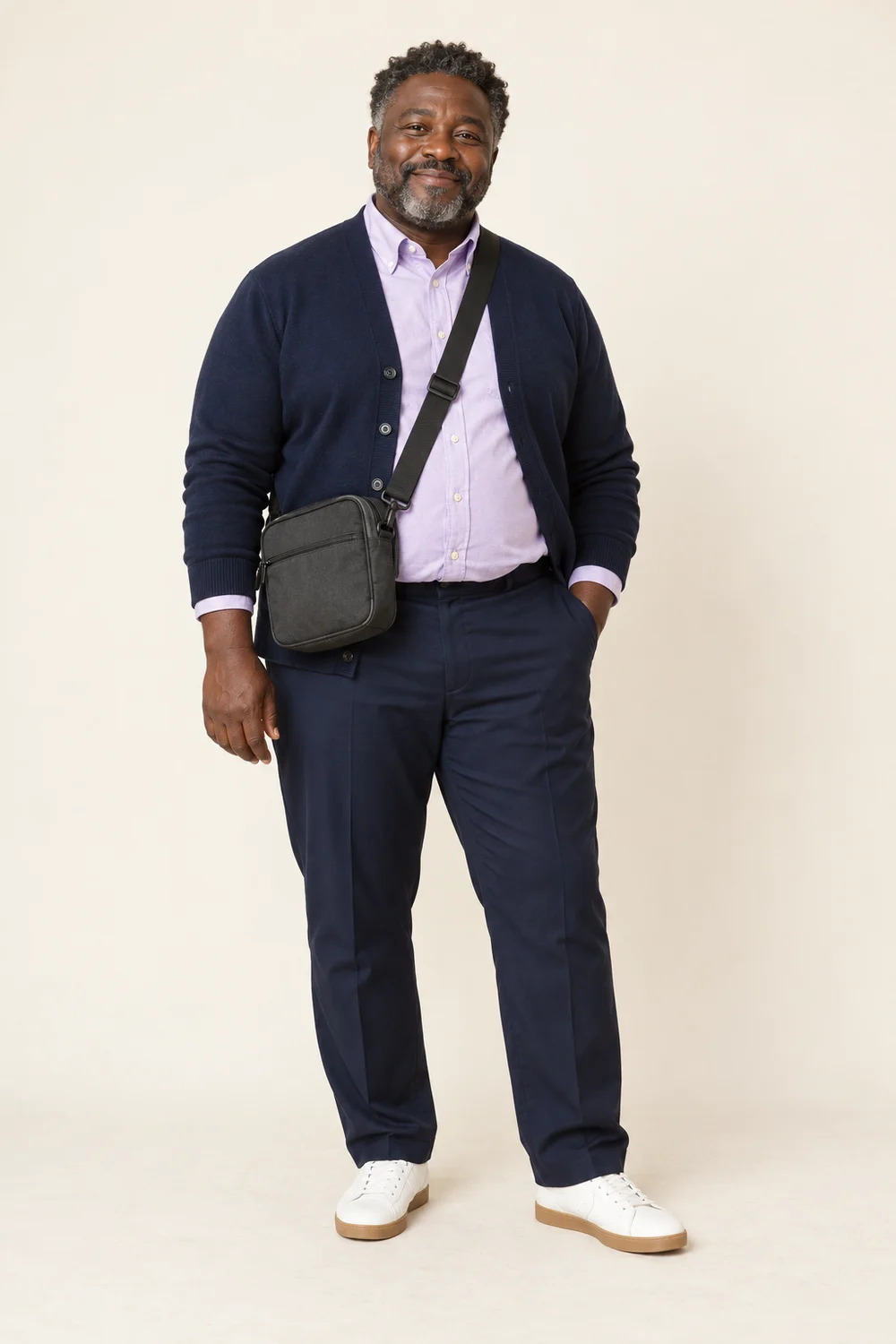
Find whether lilac-shirt pulling comes from the placket, sleeves or cardigan before changing the navy trouser outfit.
Rehearse sitting and reaching in the short black jacket over a crew knit, then compare brown Derbies and white trainers under khaki trousers.
Start with the light-grey trouser rise and blue polo fit, then compare black loafers and trainers before adding the navy blazer.
Use dark straight jeans, a burgundy shirt and one secure shoe as the anchors, then add navy only if the cardigan earns its place.
Let cream sit between olive trousers and a brown overshirt, checking the vest armholes before building the full layered palette.
Choose the shoe and jacket by their actual jobs, keeping stone chinos and a charcoal polo as the unchanged comparison.
Use the surface of blue chambray beside an ivory shirt, then let a navy knitted jacket and two shoe routes change the frame.
Keep copper at the centre of a black trouser outfit, with the overshirt and both shoe routes given separate jobs.
Separate a navy-coat reach problem from tan-polo fit, then check loafers and canvas trainers at the chino hem.
Practise mint-shirt opacity and upper-arm room separately before adding the grey blazer and choosing a navy shoe route.
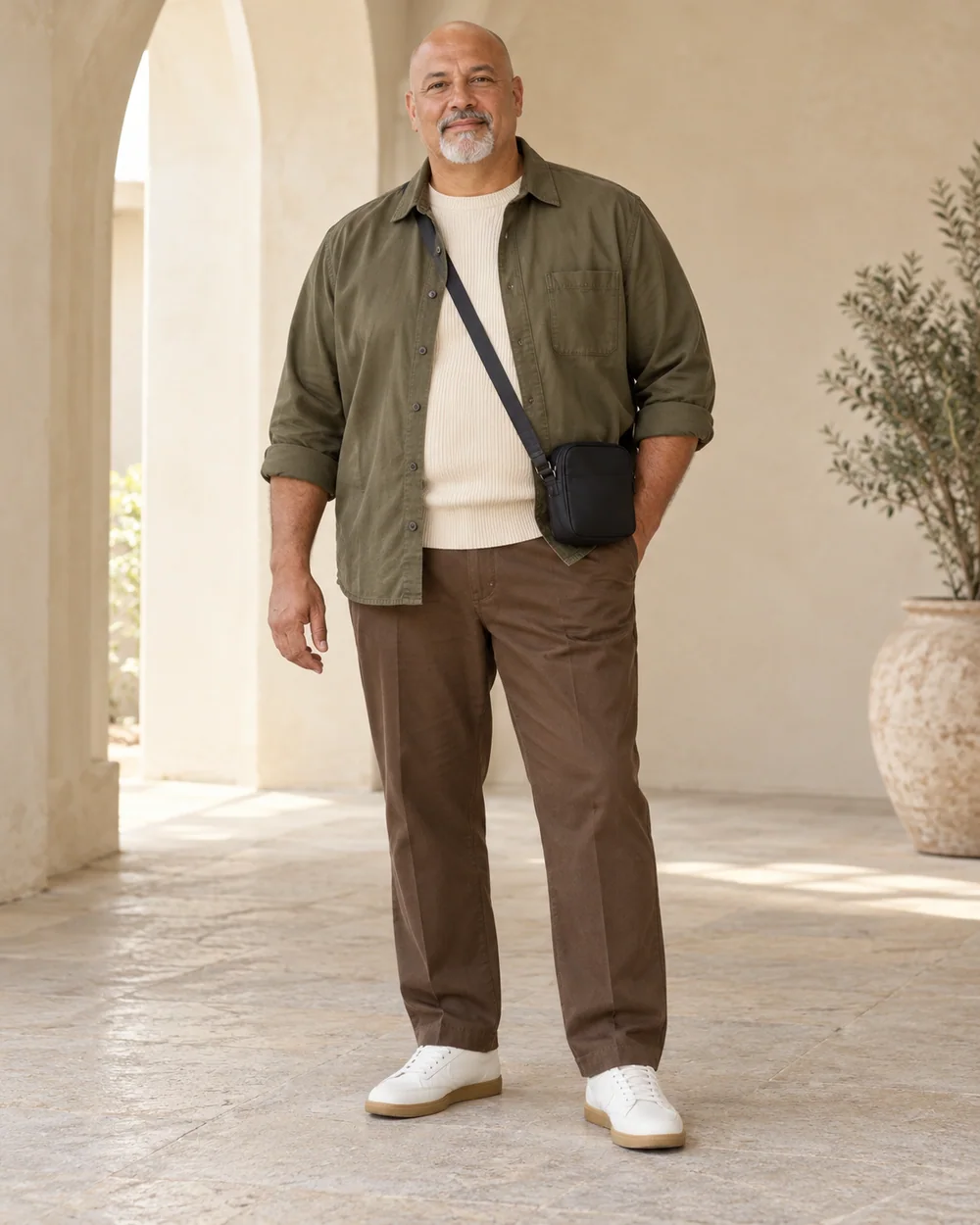
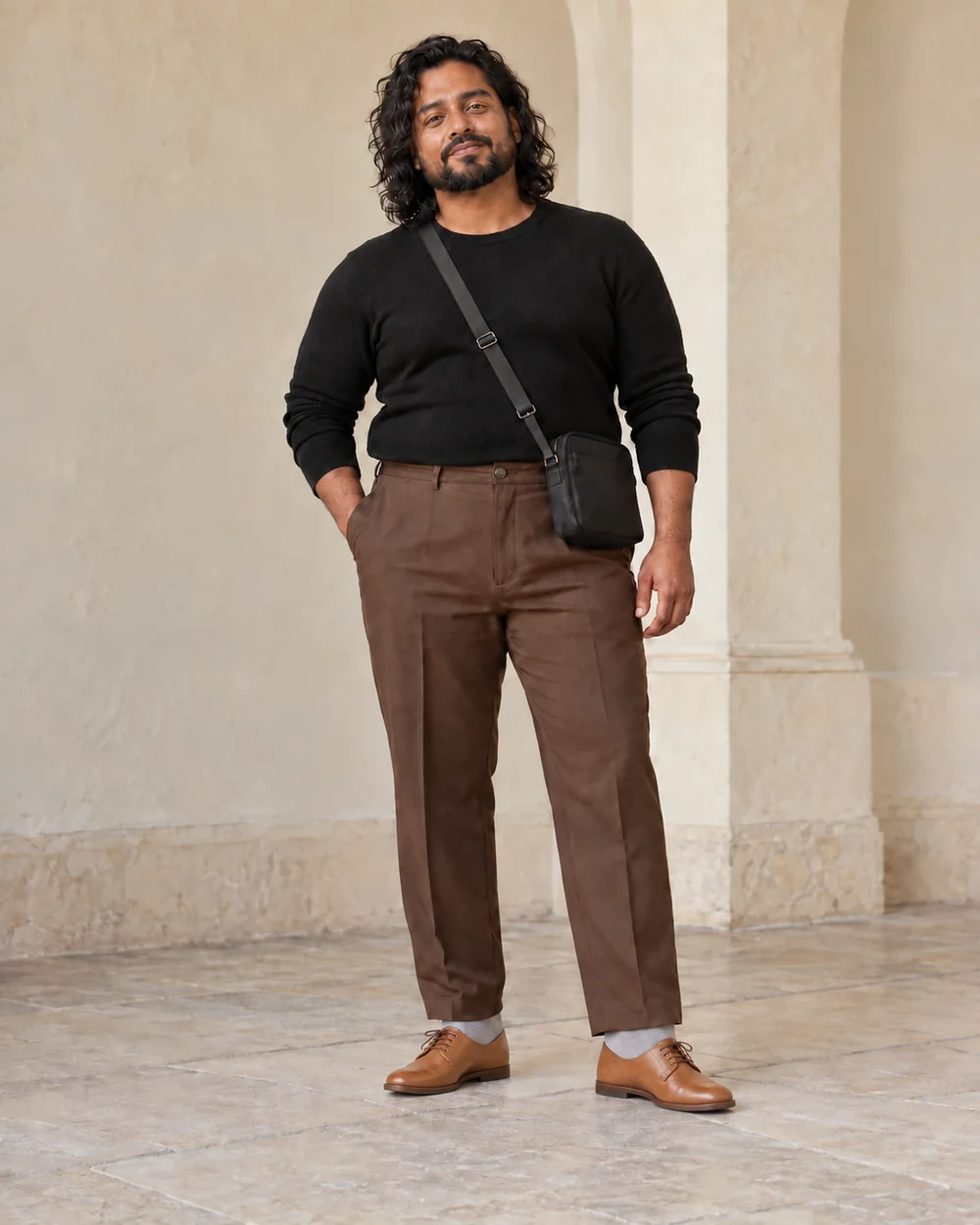
Brown trousers and ivory rib make the light base; an olive overshirt and two shoe choices complete the options.
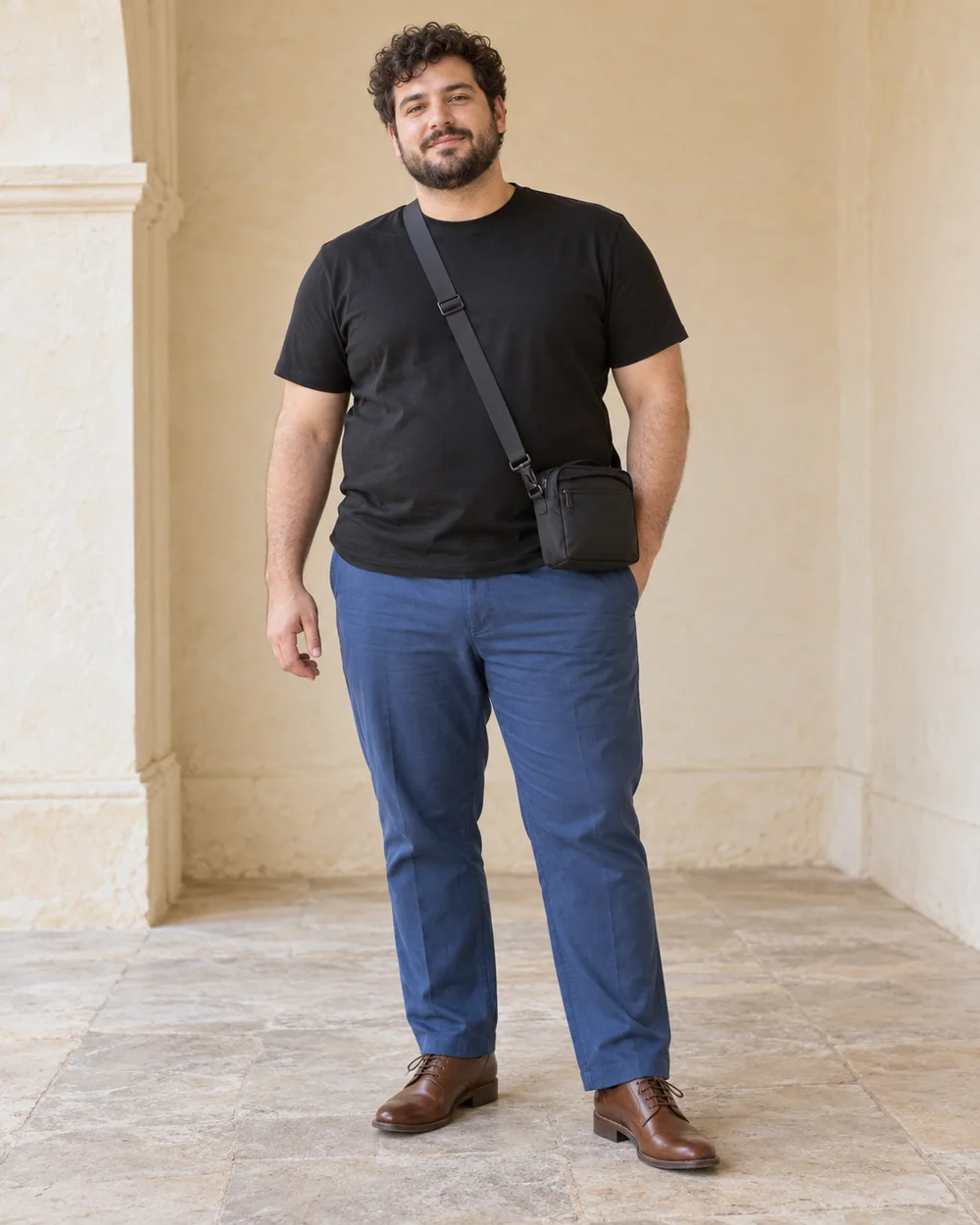
Blue trousers lead a simple black-top formula, with Derby shoes or white trainers and a removable black jacket.
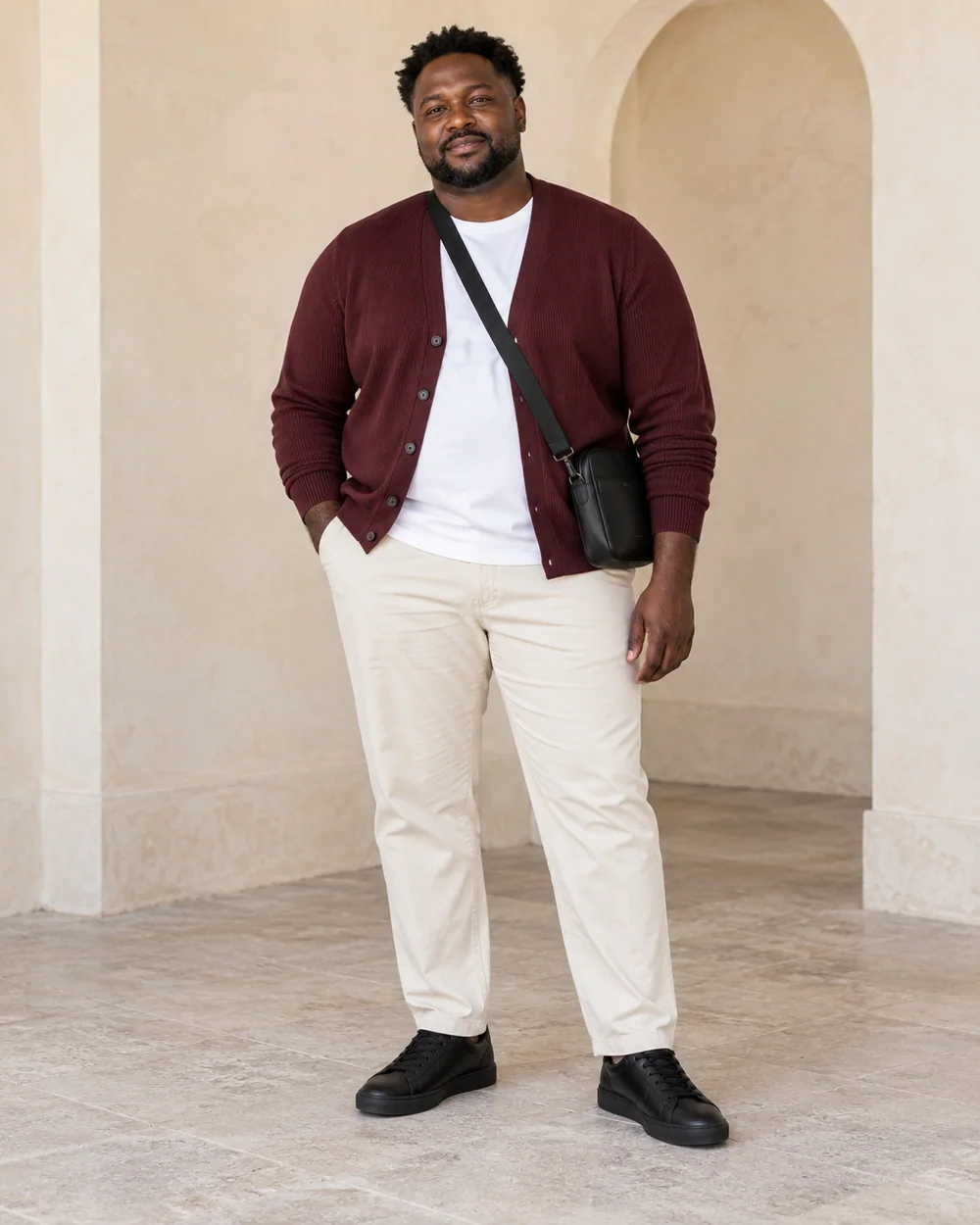
White and cream make the light base; burgundy supplies an optional darker frame, with two black shoe routes.
Choose a navy short-sleeved shirt alone or framed by the relaxed blazer, checking the sleeve join before either shoe route.
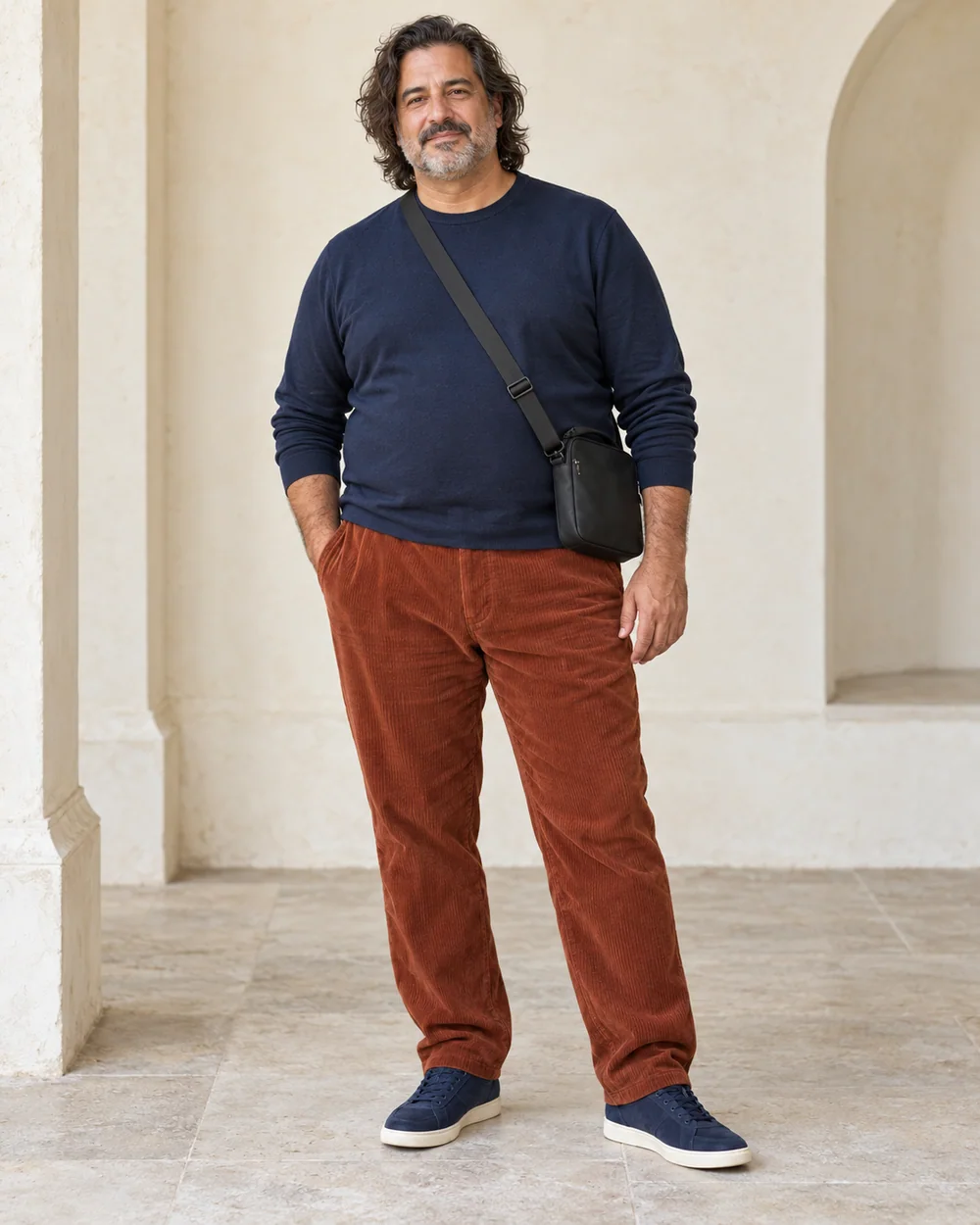
Rust corduroy supplies the texture while a smooth navy top and optional knitted jacket keep the upper half quieter.
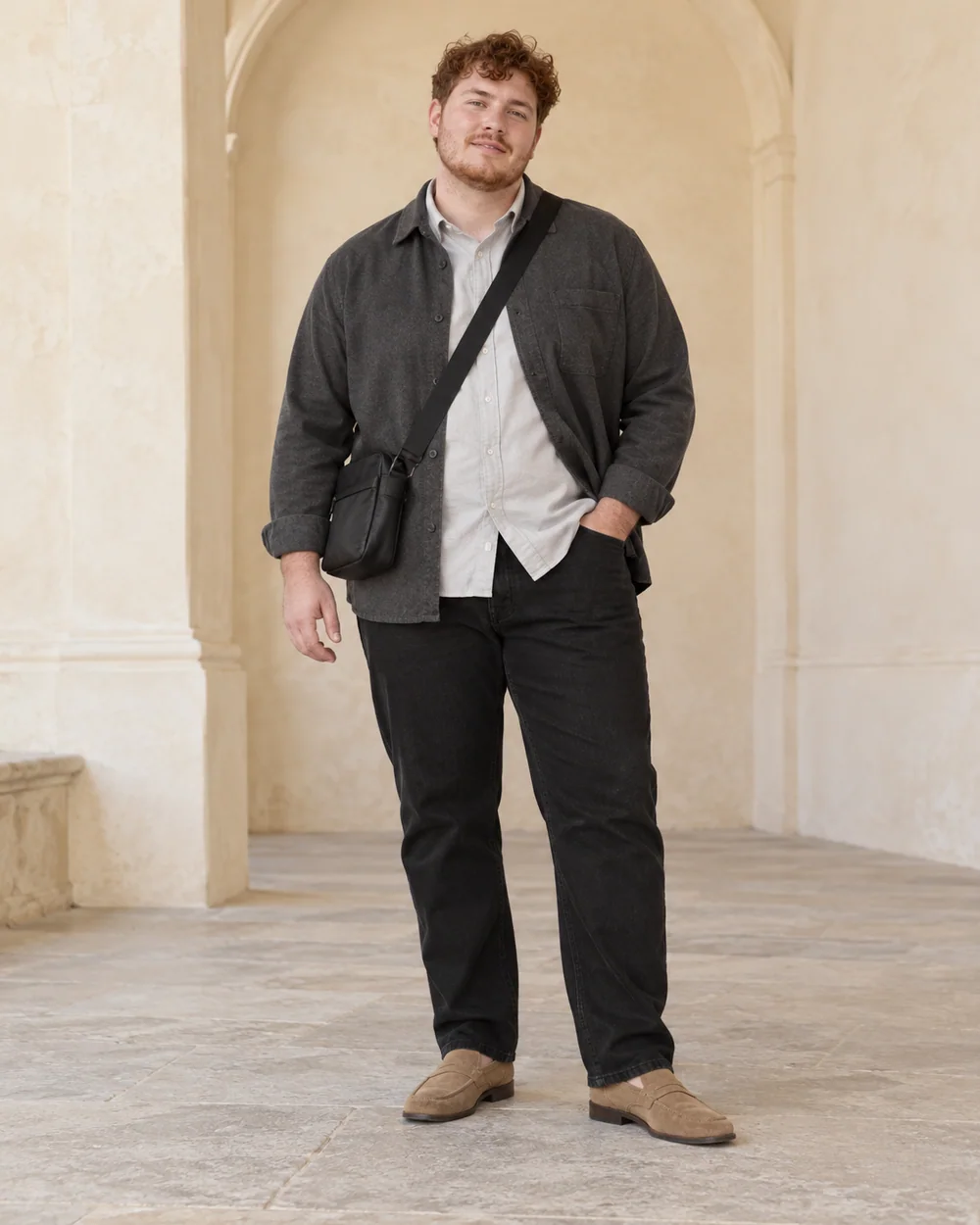
Keep black jeans, a stone Oxford shirt and one charcoal layer useful by fitting collar, cuffs and rise independently.
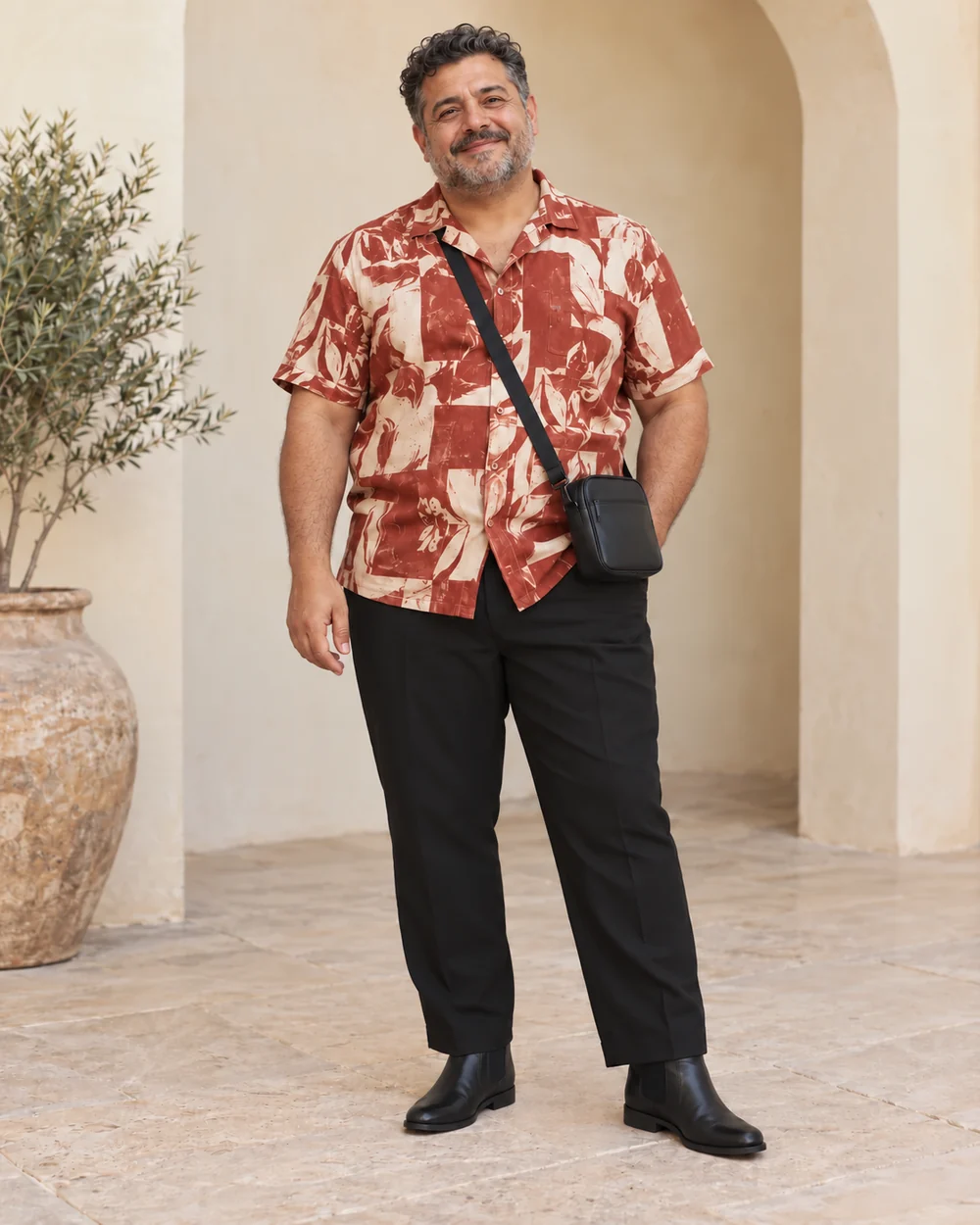
Keep a brick-and-cream print readable beside black trousers while checking shirt fit and two different shoe openings.
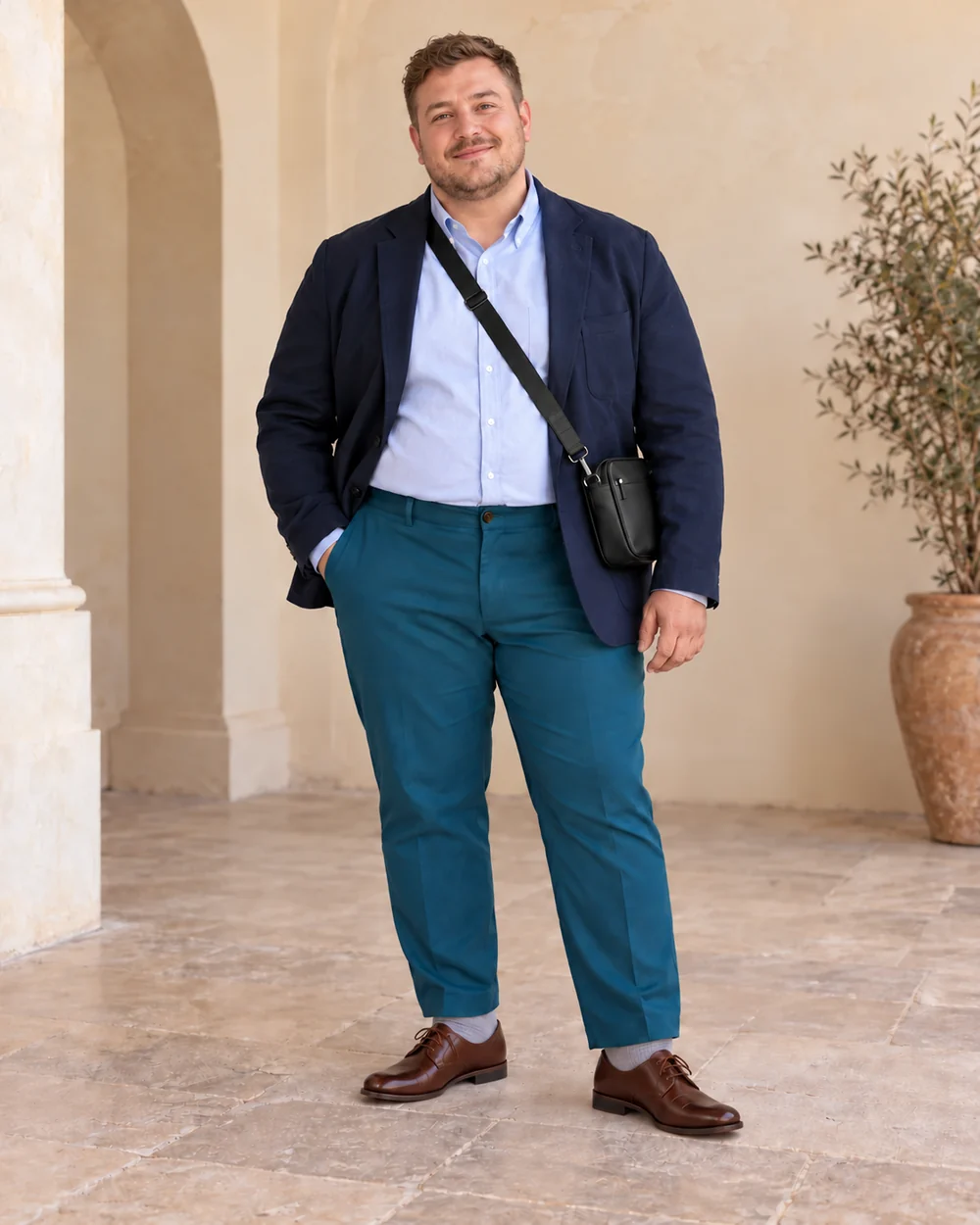
Practise a full-length teal trouser proportion with a pale-blue Oxford shirt, navy jacket and two low-profile routes.
Keep navy texture above sand trousers, then add the city coat and compare burgundy boots with Derby shoes.
Green and cream lead above caramel trousers, with a navy jacket and two black shoe shapes.
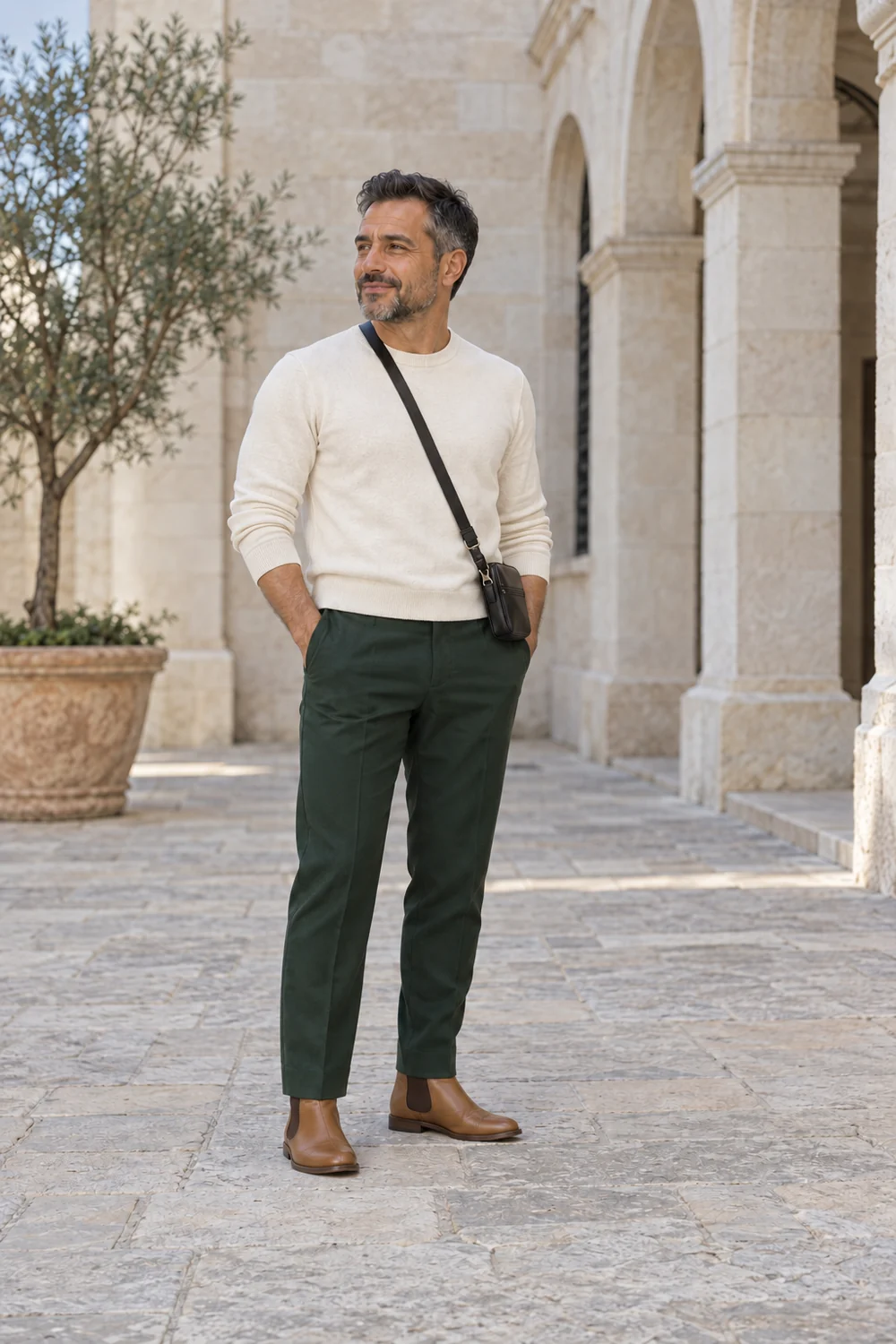
Olive occupies the indoor base and optional shawl cardigan, while stone trousers and tan footwear keep the palette distinct.
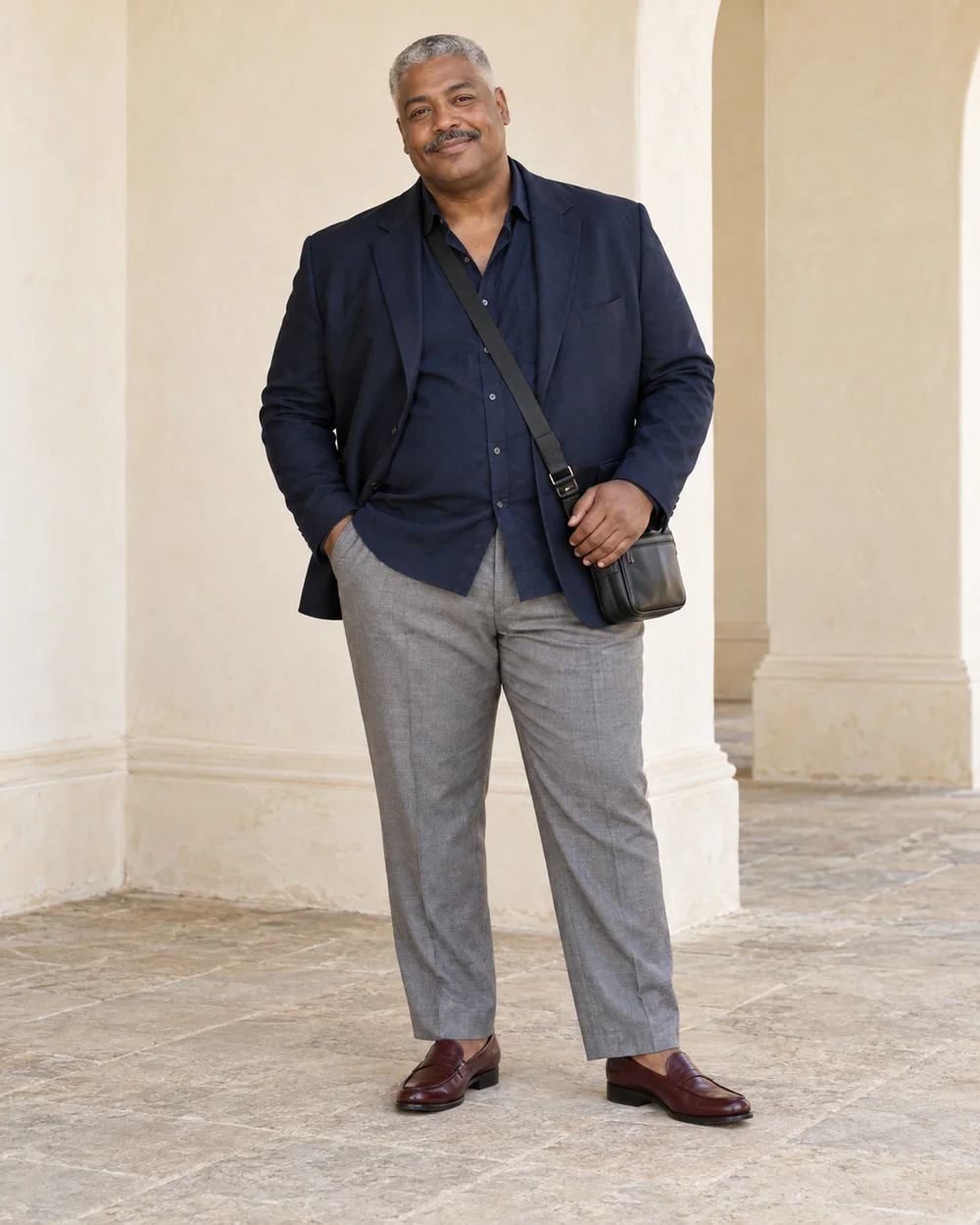
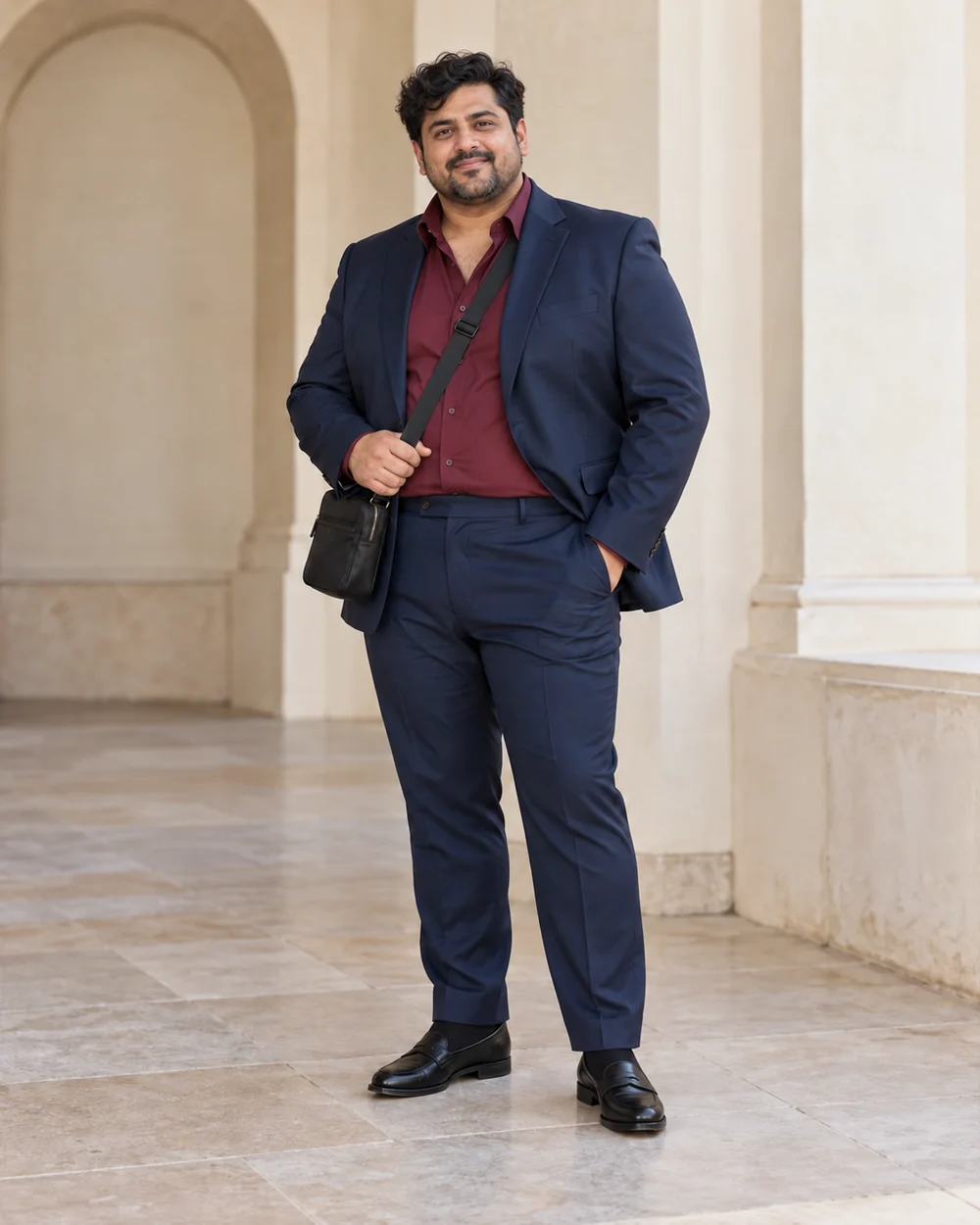
Choose an open burgundy neckline inside or outside a navy suit jacket, with penny loafers or Chelsea boots.
A silver-grey top supplies a quiet surface inside charcoal tailoring, with two brown low-profile finishes.
A plum shirt provides the colour inside black wide-leg trousers and optional velvet, with two burgundy-toned footwear routes.
Separate copper-shirt opacity and cuff crowding before changing the shine, then test two black footwear routes.
Practise distinguishing chocolate from black through the actual surfaces, then add the jacket and compare tan shoe shapes.
An ivory band-collar shirt and grey trousers form the base, with a charcoal collarless jacket and two black footwear routes.
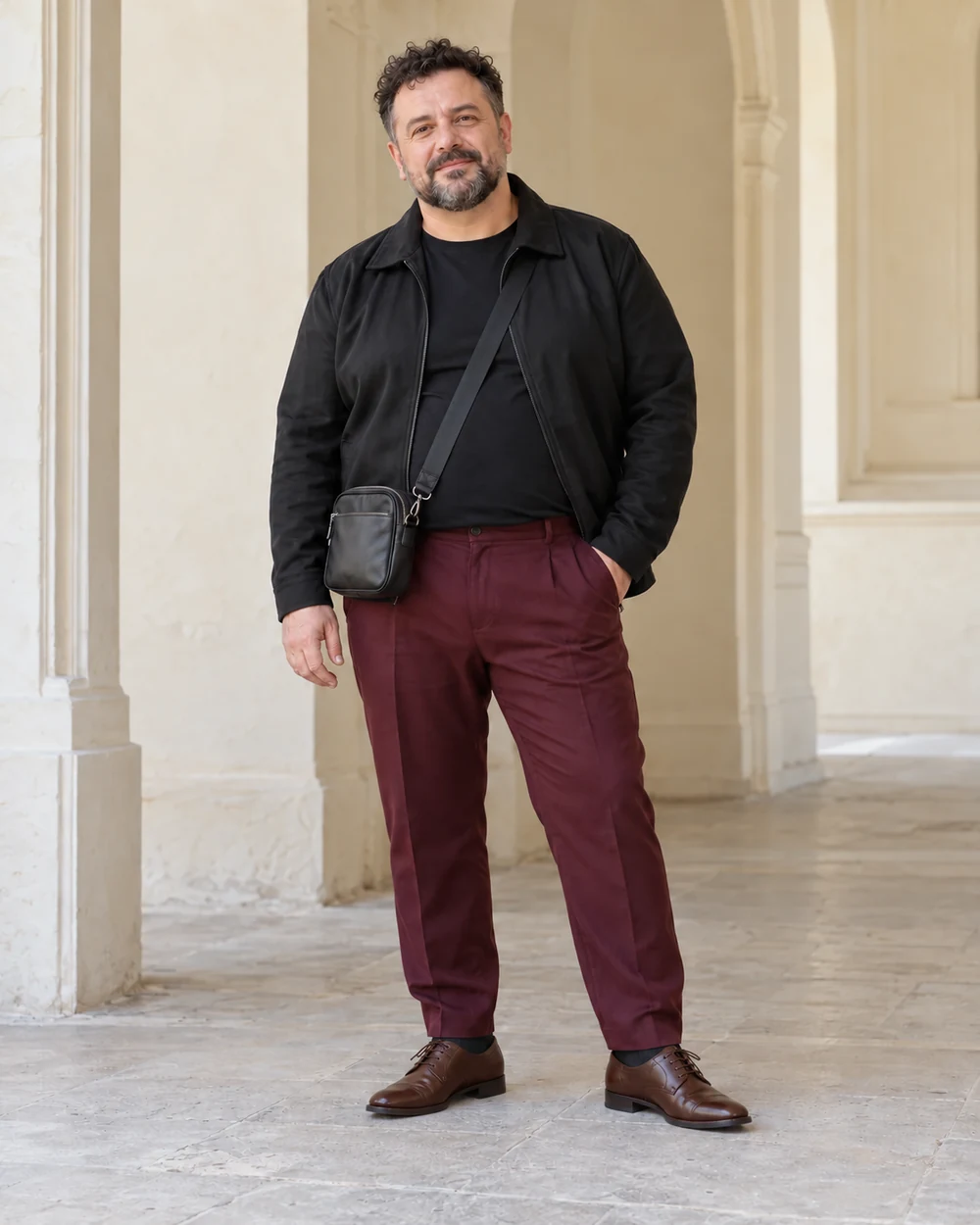
Burgundy trousers, a black tee and a removable short jacket make the anchors, with two brown low-profile routes.
Olive and cream form the light outfit, with an optional brown jacket and two burgundy footwear routes.
Compare a ankle boot and a low-cut Derby shoe below gently flared black trousers, then decide how much gold to frame.
Lilac makes navy tailoring less uniform, with separate collar, cuff, knee and shoe checks for a shorter fuller frame.
A rust fine-rib top and charcoal trousers can do the colour work alone; add a grey knitted jacket only for a use you can name.
If the navy jacket restricts a forest shirt, test the shirt alone before changing the whole outfit size.
Practise removing the burgundy jacket without making the black tee-and-trouser base feel incomplete, then compare two burgundy shoe shapes.
Check brown cords seated and their care needs, then use a navy shirt with an optional camel cardigan and two distinct black footwear routes.
A black knit polo, grey wide-leg trousers and tan shoes form the base; fit the knee and each hem before adding the grey blazer.
Ivory reflection sits inside a quieter indigo-and-navy frame, with black Chelsea boots or penny loafers finishing the same palette.
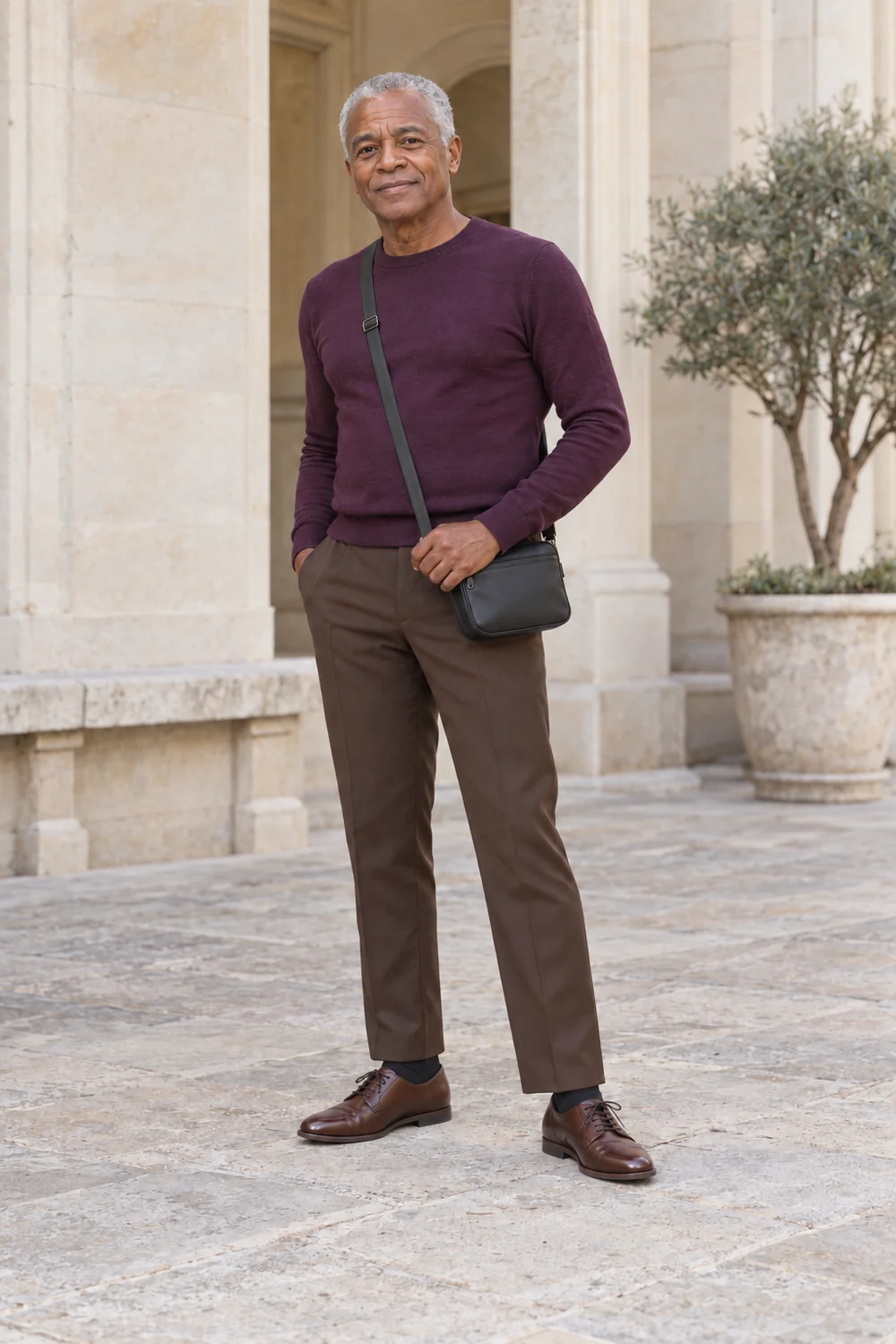
Choose the chocolate coat for usable closure and reach, then compare brown boots and Derby shoes around the same plum-knit base.
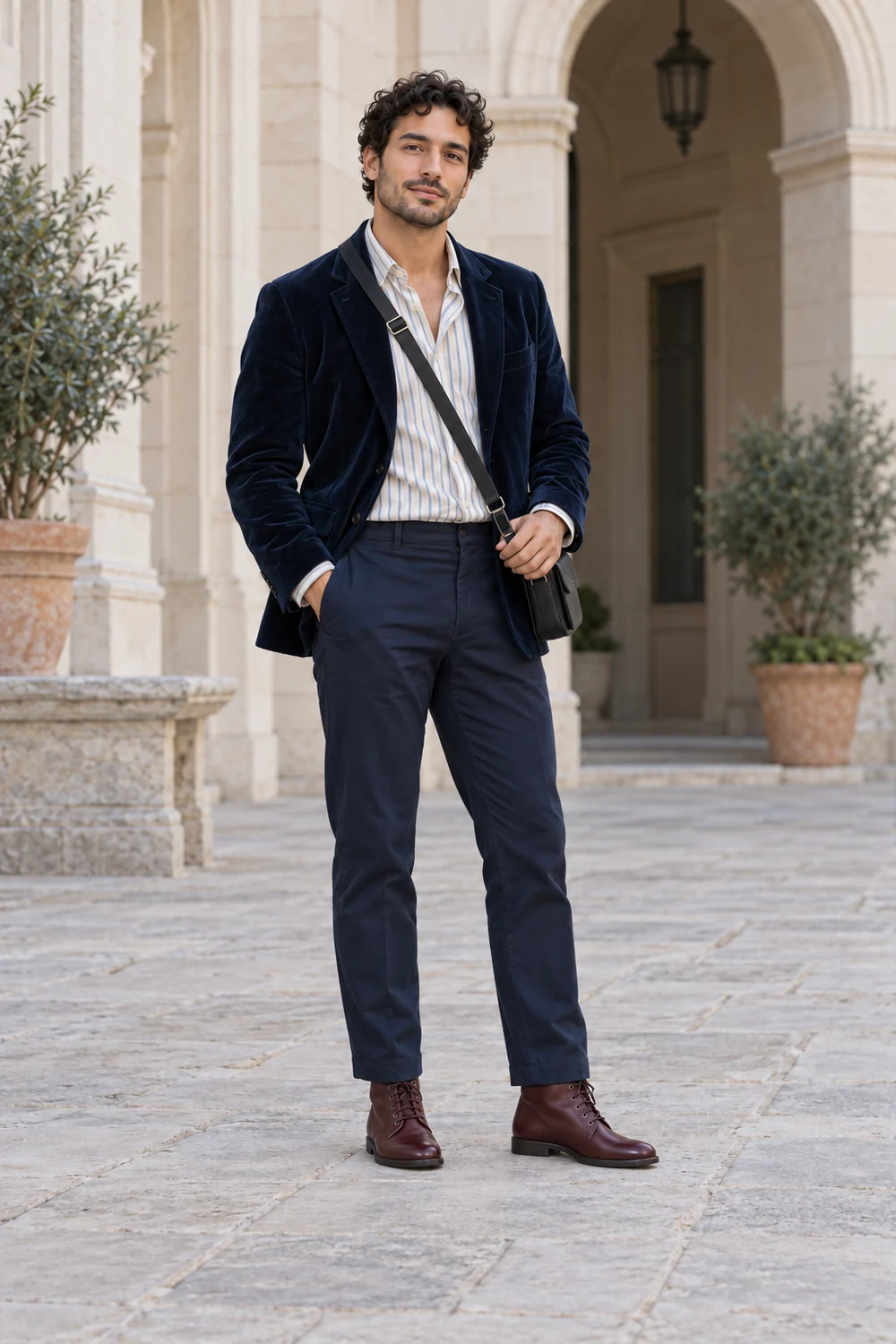
Soft stripes keep a navy velvet jacket connected to an ordinary shirt, with burgundy boots or Derby shoes changing the lower detail.
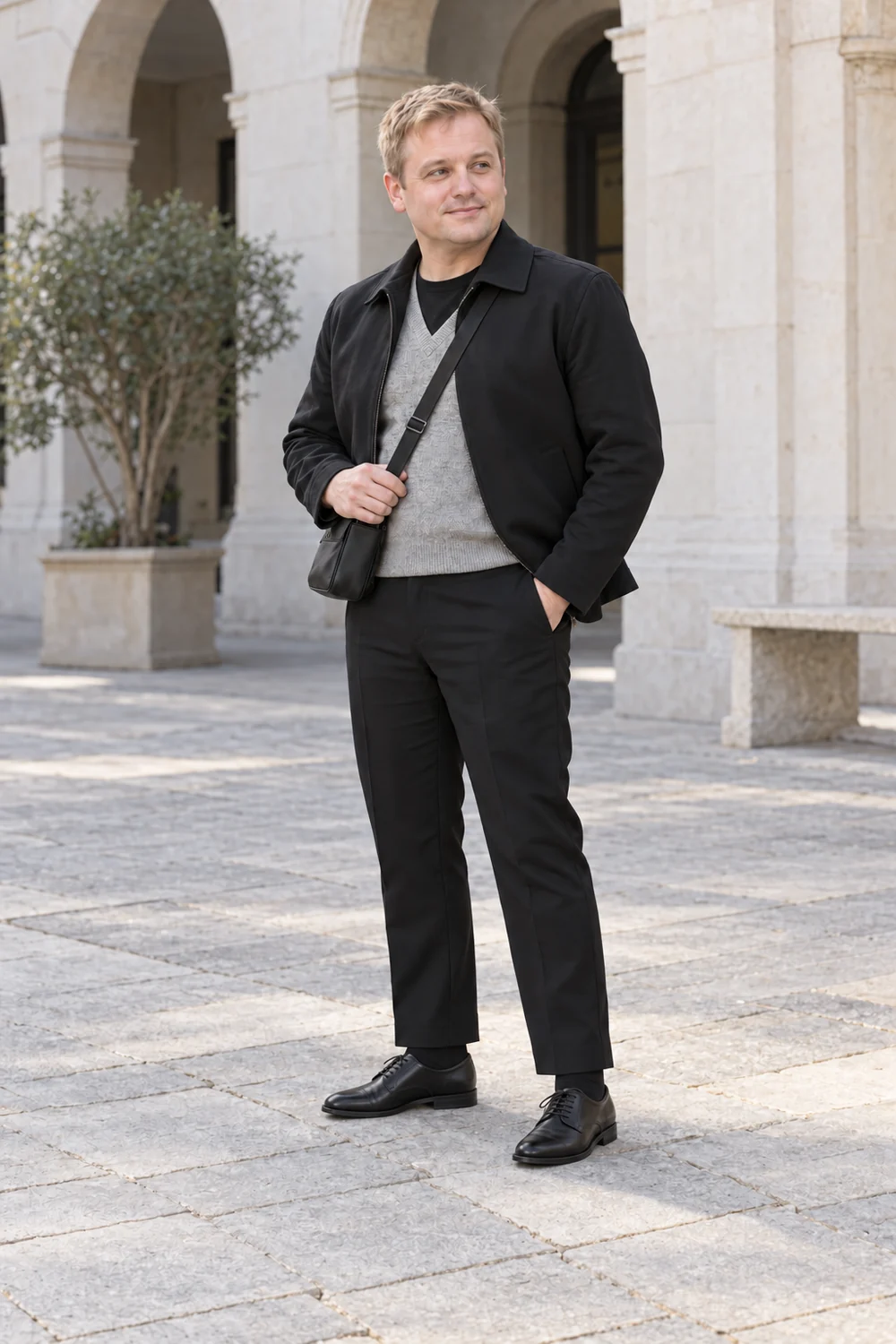
A black tee and silver knitted vest form the light base; add the short jacket only after the armholes and sleeves work together.
If changing from tan boots to Derby shoes disturbs the trouser line, compare the actual opening and hem before changing the whole outfit.
Practise one fit decision at a time: rust trouser rise, charcoal shirt buttons, then the blazer sleeve and black footwear route.
Keep the warm-grey rib top complete without its navy knit layer, then compare brown Chelsea boots and Derby shoes.
Black straight jeans, a plum Oxford and burgundy shoes make the base; an unstructured black jacket adds a separate version.
One amber centre warms charcoal trousers and a black frame, with two complete black footwear routes.
Choose the amount of brown above pale stone trousers, then compare tan ankle boots with low-cut Derby shoes.
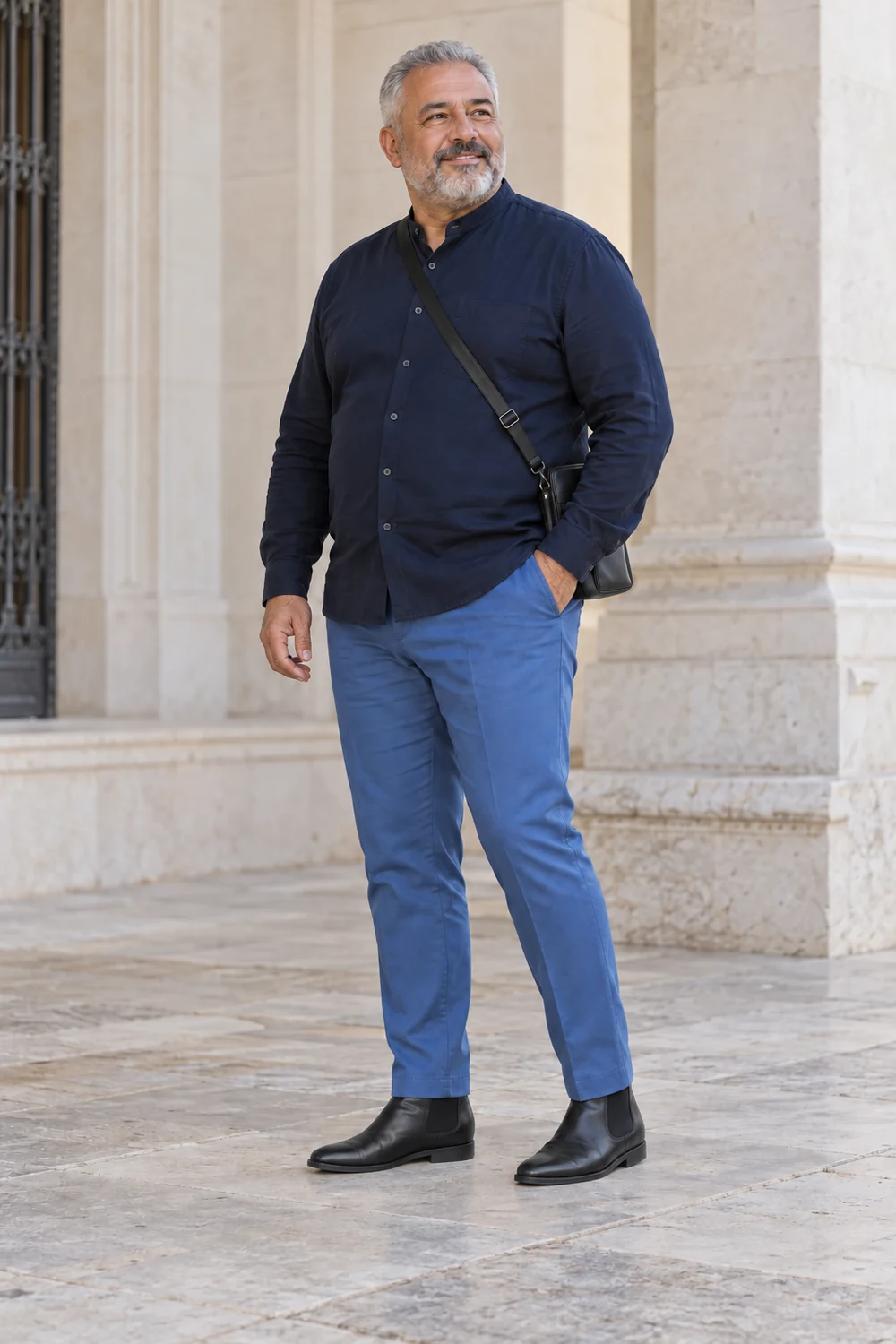
Two blues stay distinct through depth: a navy band collar above blue trousers, with an optional short jacket and two black footwear routes.
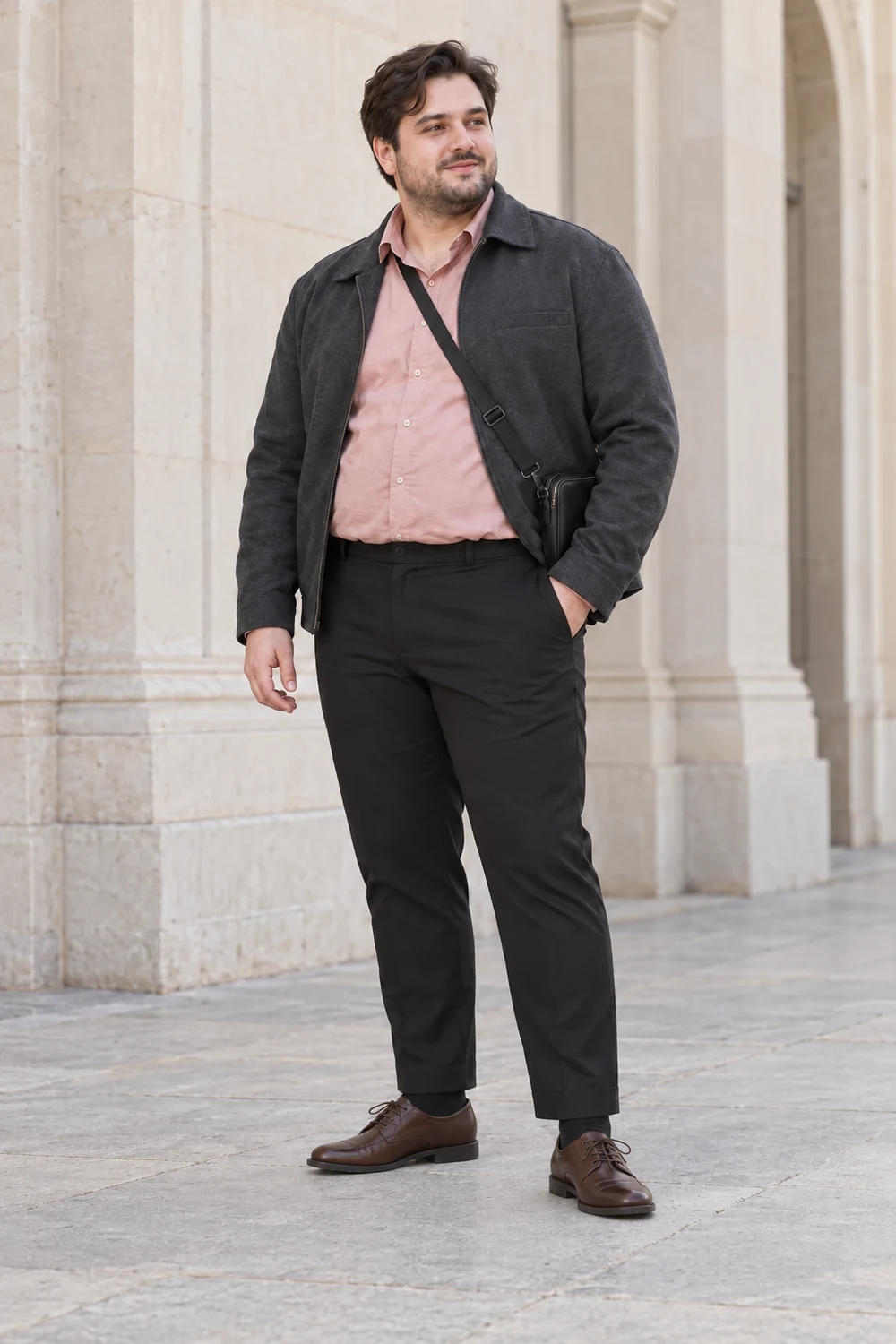
Check muted rose beside the actual charcoal jacket before adding another shirt; brown shoes finish the complete black-trouser base.
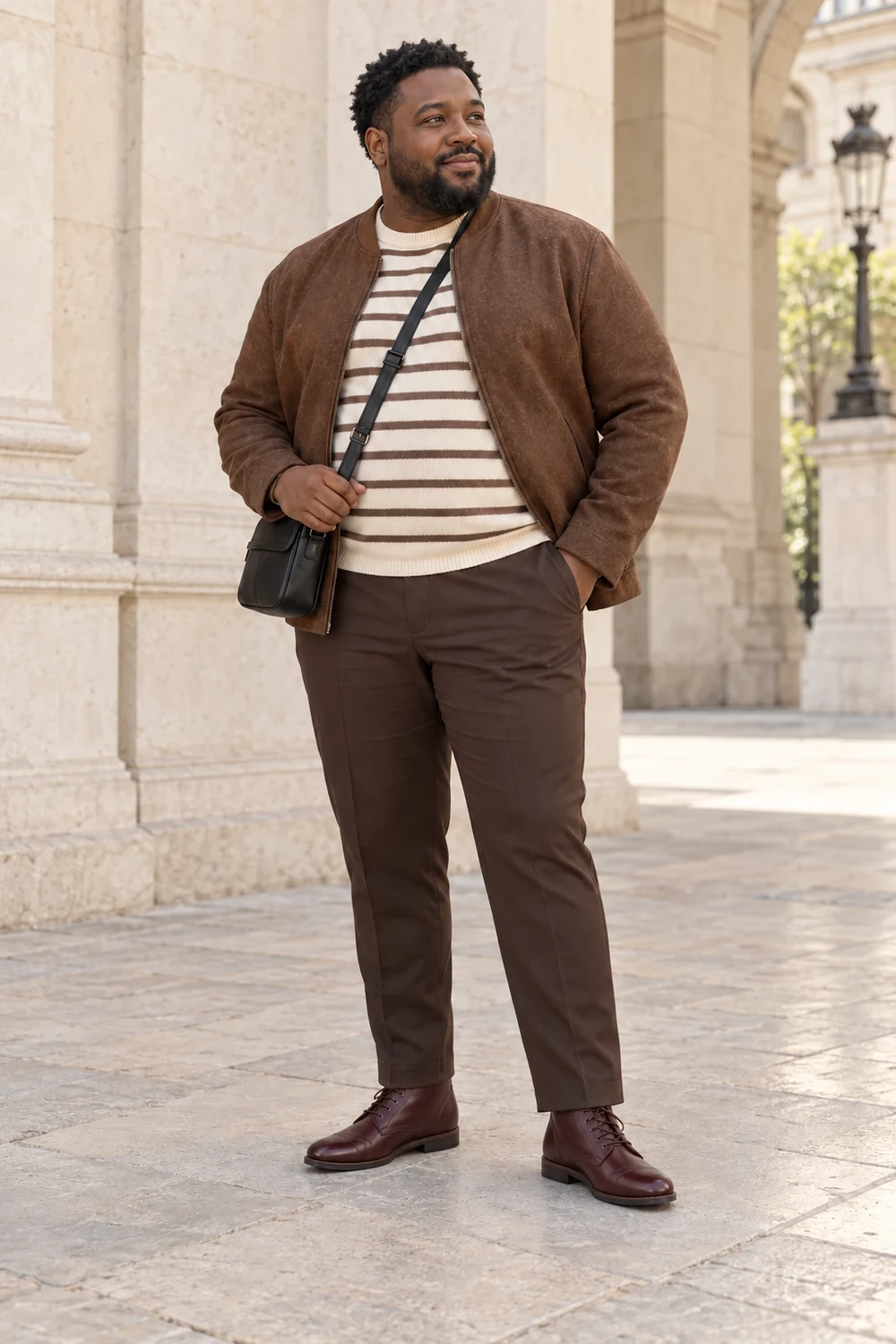
If a striped knit pulls under the brown jacket, separate pattern preference from the sleeve construction that needs changing.
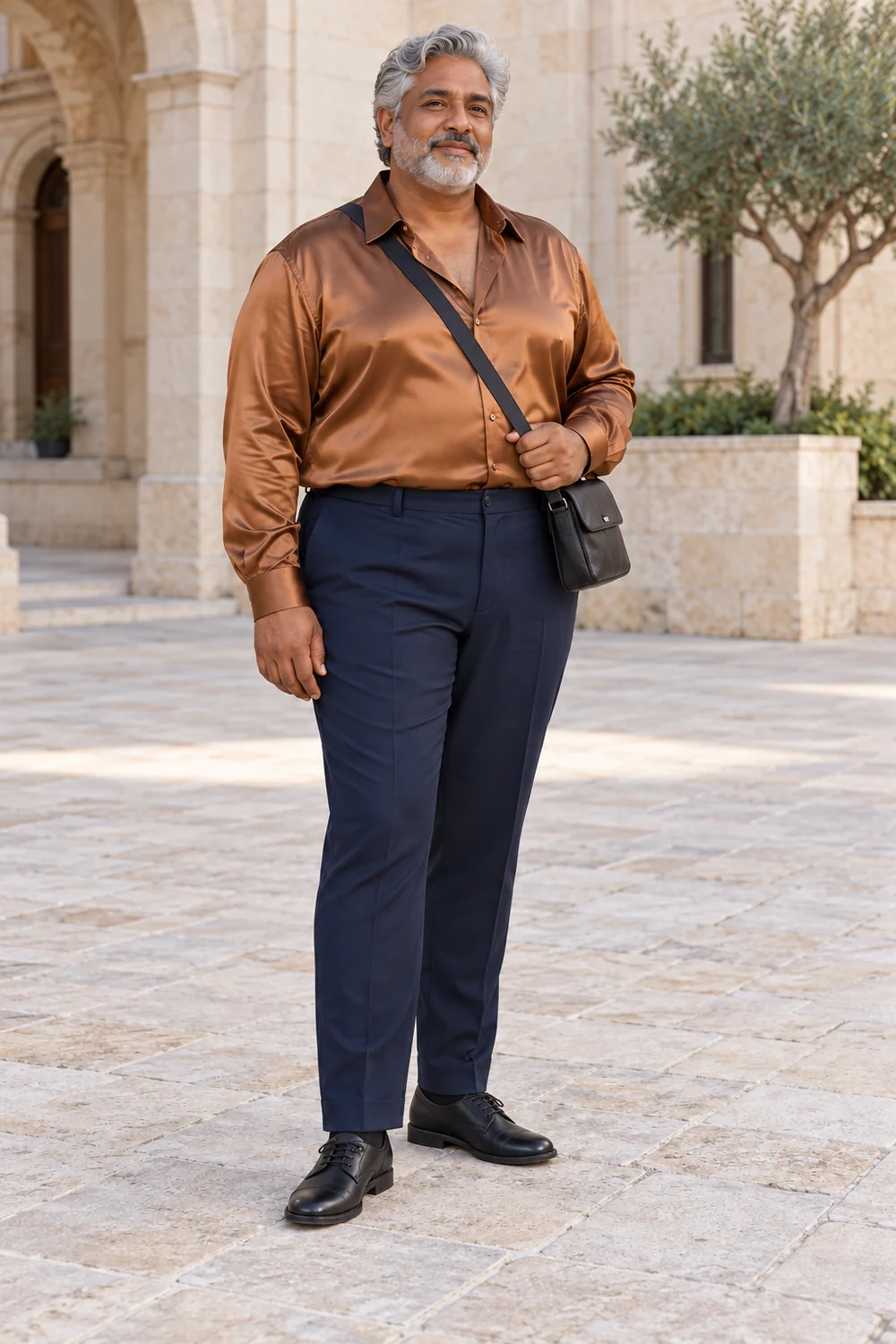
Practise keeping bronze as the main reflective area, with navy trousers, an optional velvet jacket and two black footwear routes.
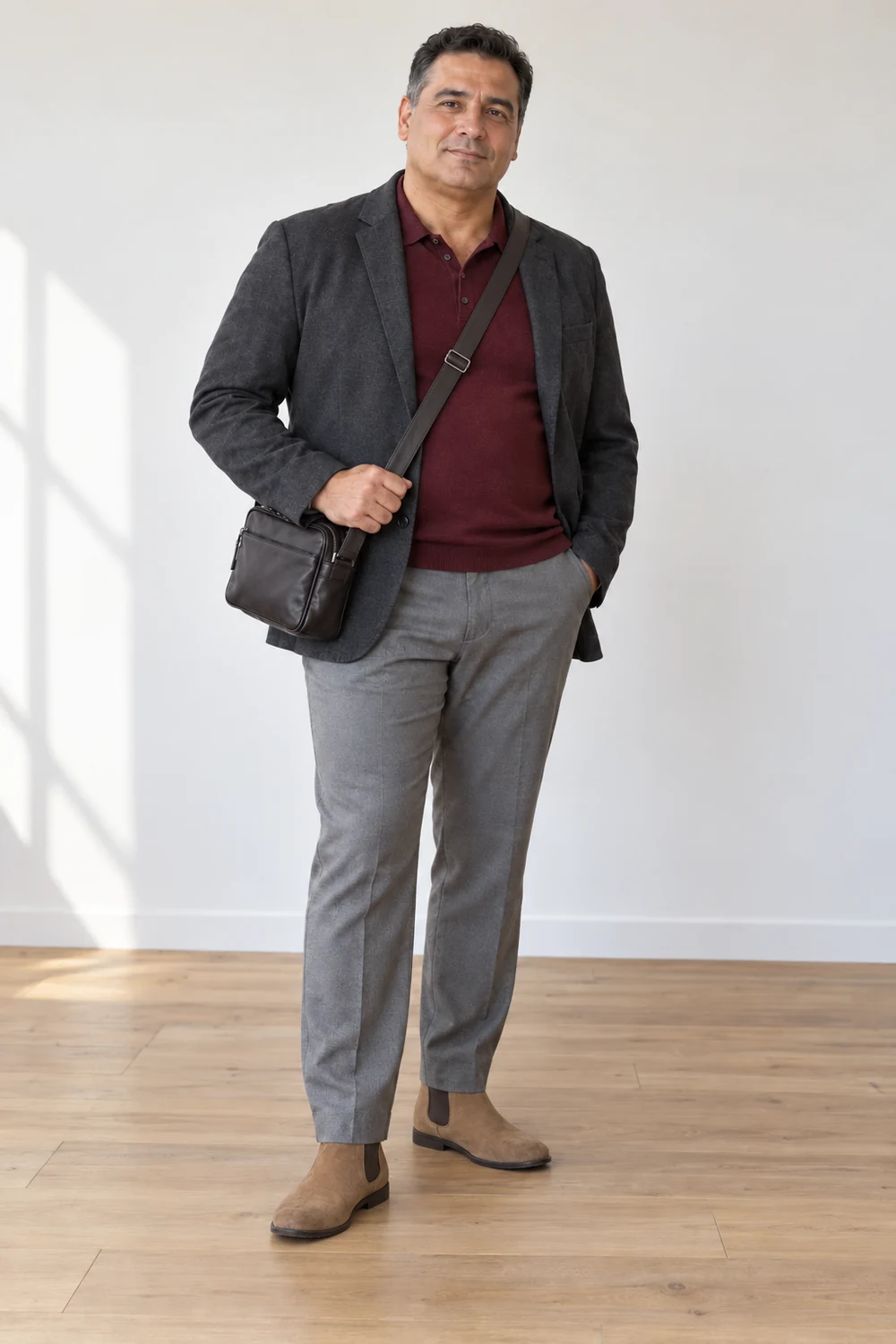
Keep the burgundy polo collar free inside the charcoal blazer, then compare tan boots and low-cut Derby shoes under grey trousers.
Try a shorter phrase or clear a filter to see more guides.