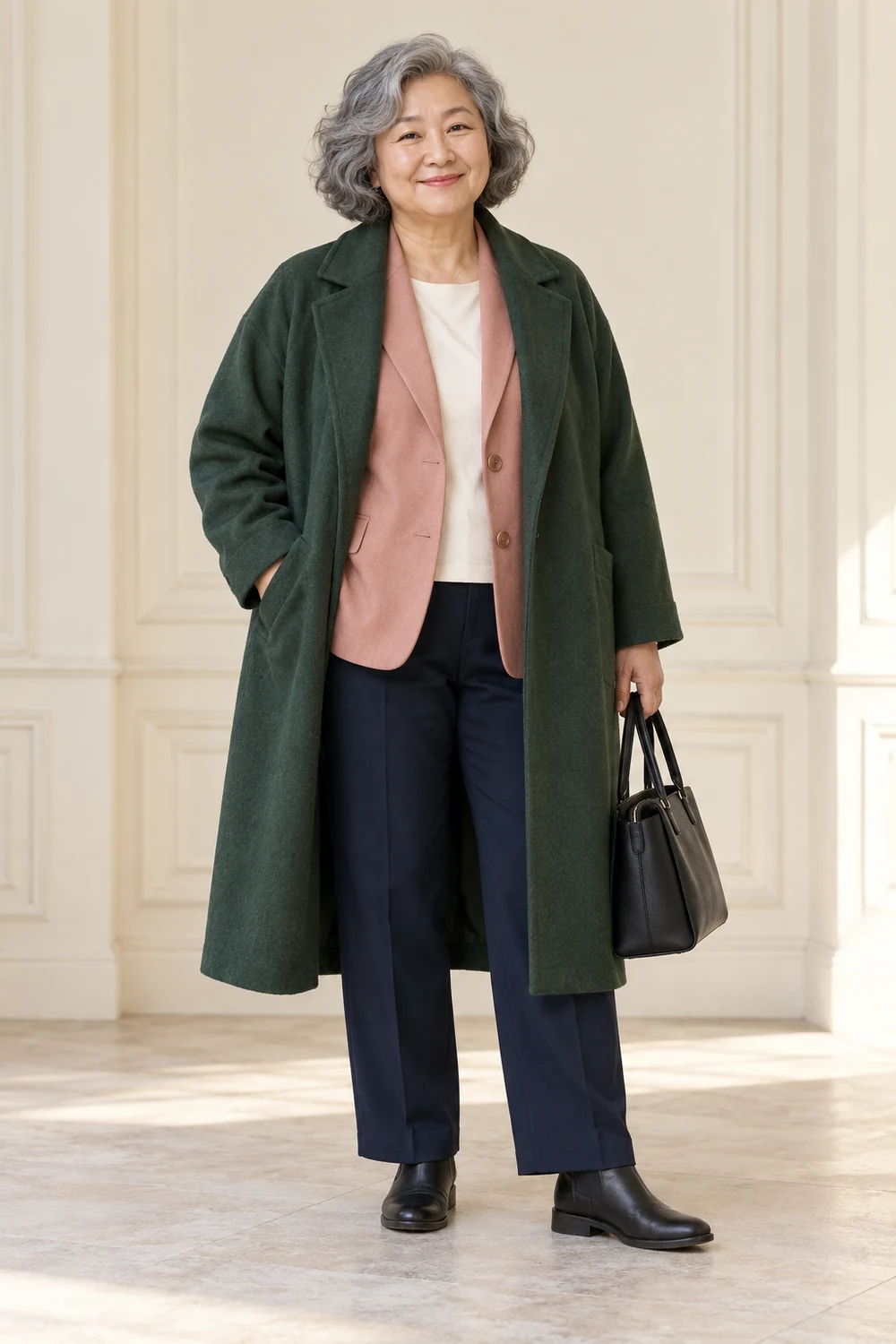
Keep the plum shirt for colour, black wide-leg trousers for the lower shape and the velvet jacket only for the frame you want. A small practical dark bag can serve both shoe routes. The kit does not need another black layer just because the trousers have a wider leg.
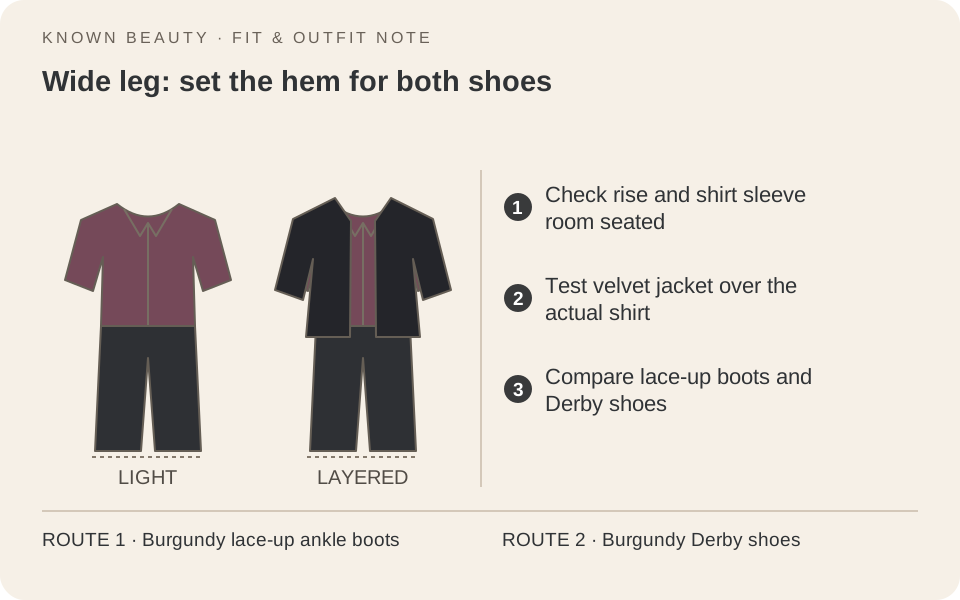
Keep the two-piece light outfit useful
Try the plum soft shirt with its collar and buttons arranged as intended. Check chest, back, shoulder and upper-arm room while seated and reaching. For petite plus-size proportions, inspect its torso length separately from width. A shorter hem will not improve a collar or arm opening that sits in the wrong place.
The black wide-leg trousers need their own rise, seat and knee-position check. Walk and take a normal step before planning length. Choose the width you enjoy without an instruction that a shorter, larger body must either avoid or always wear volume. A small smooth tuck may reveal the waistband; leaving the shirt outside is useful when its own length gives a deliberate overlap. Check opacity over your chosen underlayers in ordinary light. Shirt, trousers and bag form the complete light version.
Make the velvet earn its place
The pictured layered outfit adds the black velvet jacket. Try shoulder, upper-arm and cuff room over the actual shirt, then fasten, reach and sit. Compare the jacket hem with the waistband and the visible plum. If two sleeves form a ridge at the wrist, address that join before adding another accessory.
Removing the jacket should leave a shirt you want to wear alone. Velvet describes a surface; inspect the actual fibre, lining, care and weight before assigning it a practical use. It has not been assessed for weather protection, and another black texture is not a compulsory purchase.
Give burgundy two useful openings
Burgundy lace-up ankle boots supply the covered-ankle route. Adjust the lacing, flex the ankle and check whether the trousers release over the shaft after a step. Burgundy Derby shoes supply the low-cut alternative: adjust their lacing, check toe room and heel grip, then repeat the walk and turn. Both use ordinary low-profile soles and a conventional low broad heel. Compare the rear hem with each actual sole before altering it.
Take the kit to the actual plan
Everyday: for a café and appointments, use boots if their actual fit suits the route or Derby shoes after their own walking check. Keep the shirt’s tested waistband arrangement and leave the velvet layer optional indoors.
Work: for a creative workplace permitting expressive tailoring and the chosen shoes, use the jacket with Derby shoes or boots within its expectations. Sit at the desk and reach forwards to check the shirt sleeves and jacket together, keeping the bag load out of pockets.
Wedding: choose this for a relaxed or creative event allowing the shirt-and-wide-trouser combination. Derby shoes give the laced opening; boots belong where the invitation and venue welcome them. Keep the velvet frame if useful, and choose another guide for a formal requirement this kit does not meet.
Fit before the five-minute assembly. Add another item only when the shirt, trousers, layer or shoes leave a named job undone.
Use the outfit as a starting point. Adjust the fit, coverage and footwear to your preferences and plans.