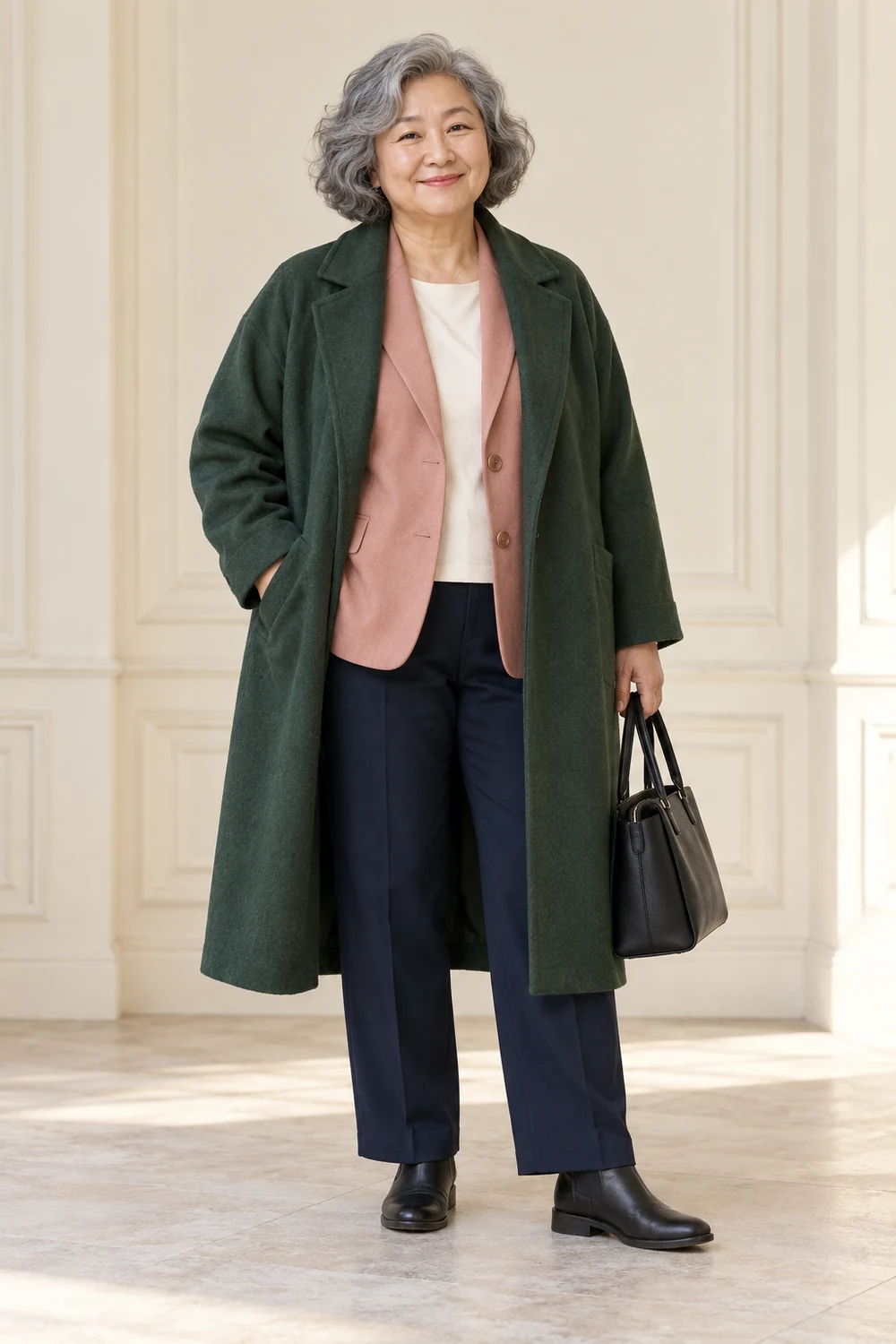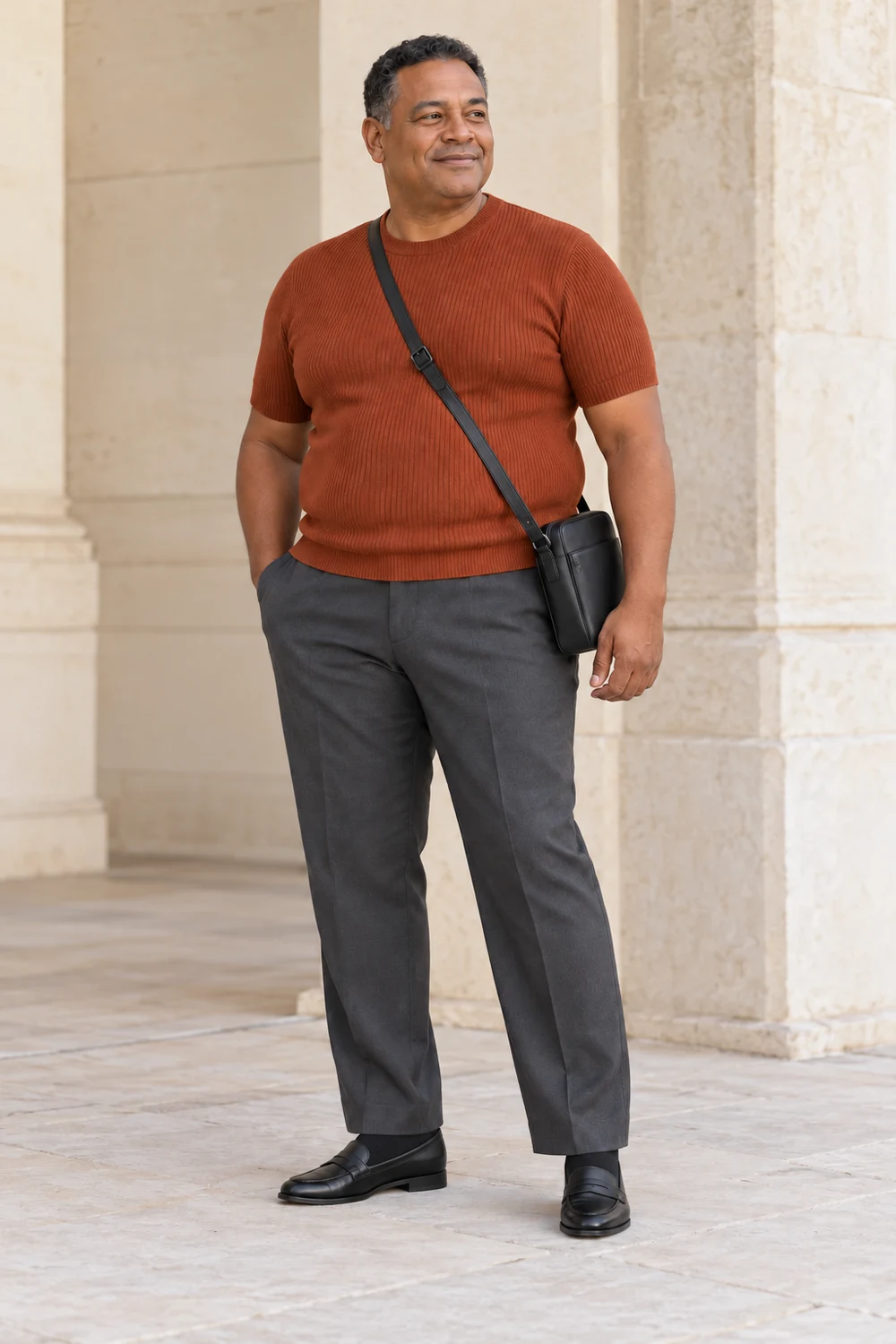
Lilac changes the space inside a navy jacket. The suit keeps its darker outline, while the shirt makes a quiet colour choice at the centre. Tan below the trousers can be an ankle boot or a low-cut Derby shoe; the pale warm finish is the same idea in two different shapes.
Fit the vertical positions separately on a shorter, fuller frame. A navy trouser can have enough waist room and still place its knee shaping too low. A shirt can have a comfortable collar and an overlong cuff. A hem alteration does not move either knee or shoulder. Start seated in the trousers, checking rise and seat room, then walk before deciding length.
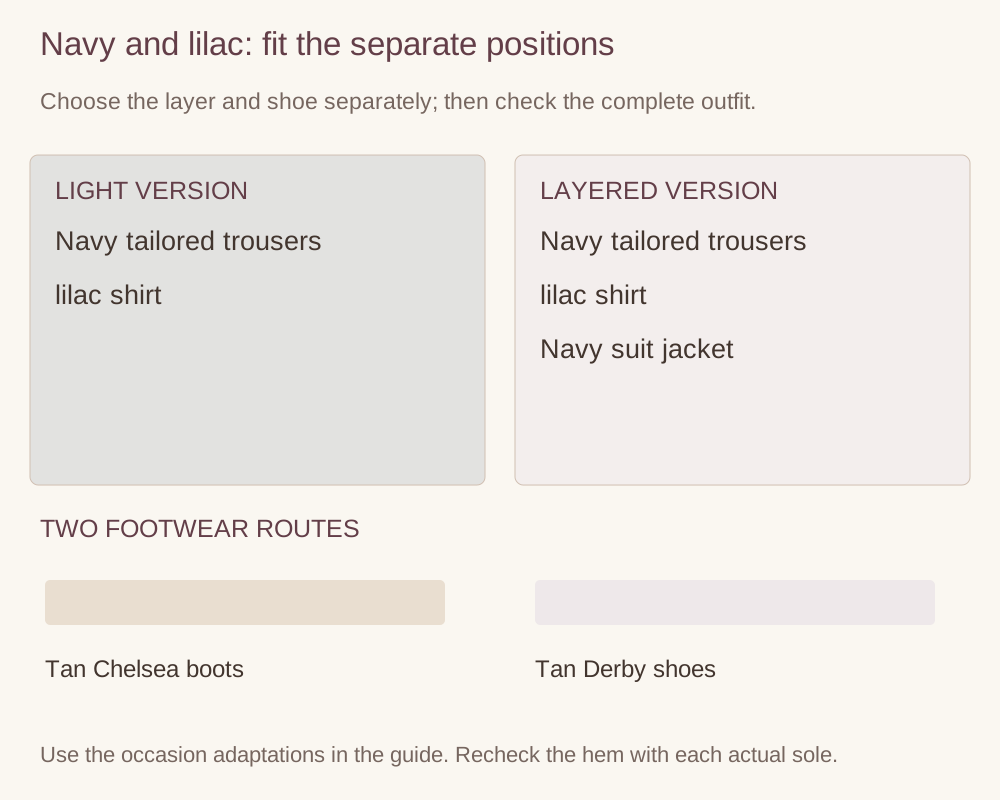
Lilac without the jacket
The light version is navy trousers, lilac shirt, tan shoes and the dark practical bag. Check the shirt’s own opacity, collar opening and sleeve coverage with your intended underlayers. Sit and reach to inspect the button line and upper arms. Choose a tuck or untucked arrangement only if that actual shirt length works with the waist and remains comfortable.
Add the navy suit jacket as the layered version. Compare jacket and trousers together in ordinary light: if you want an actual matching suit, inspect both fabrics rather than relying on the same colour name. Test shoulders, back and upper arms over the real shirt, then closure while seated. Compare cuff and jacket-hem length after the movement. Remove it and leave the lilac base complete.
Tan, with and without an ankle shaft
Tan Chelsea boots put a shaft inside the trouser opening. Check ankle movement, toe space and intended socks, then whether the cloth clears the shaft through a stride. Tan Derby shoes give a lower lace-up opening; adjust the lacing, test heel grip and repeat the walk and turn. Use ordinary low-profile soles and a conventional low broad heel in both pairs. Compare the real trouser break over the selected sole; the same colour does not make the two shapes interchangeable. Keep the same complete base, optional layer and dark bag with either pair. Check intended socks inside the actual shoe before settling its fit.
Everyday: for an appointment and lunch, use the lilac-and-navy light base indoors and carry or wear the jacket if wanted. Choose low-cut shoes for that opening or boots for the shaft after checking the actual walking route; neither shoe type proves comfort.
Work: in an office where this suit and footwear fit the expectations, wear the jacket for meetings and remove it at the desk. Boots and Derby shoes remain distinct alternatives subject to the actual dress rules. Check the seated waist and bag access before leaving.
Wedding: for a daytime guest invitation accepting navy tailoring and a coloured shirt, use the complete jacket version and the low-cut shoes if they suit the venue. Boots need separate agreement with the dress code. A black-tie or otherwise specified uniform calls for the clothing it names, rather than a stronger claim for these pieces.
About five minutes estimates familiar-piece assembly after fitting; first cuff, knee and hem comparisons need longer. Keep lilac visible when the jacket opens, and let each garment position fit its own job.
Use the outfit as a starting point. Adjust the fit, coverage and footwear to your preferences and plans.