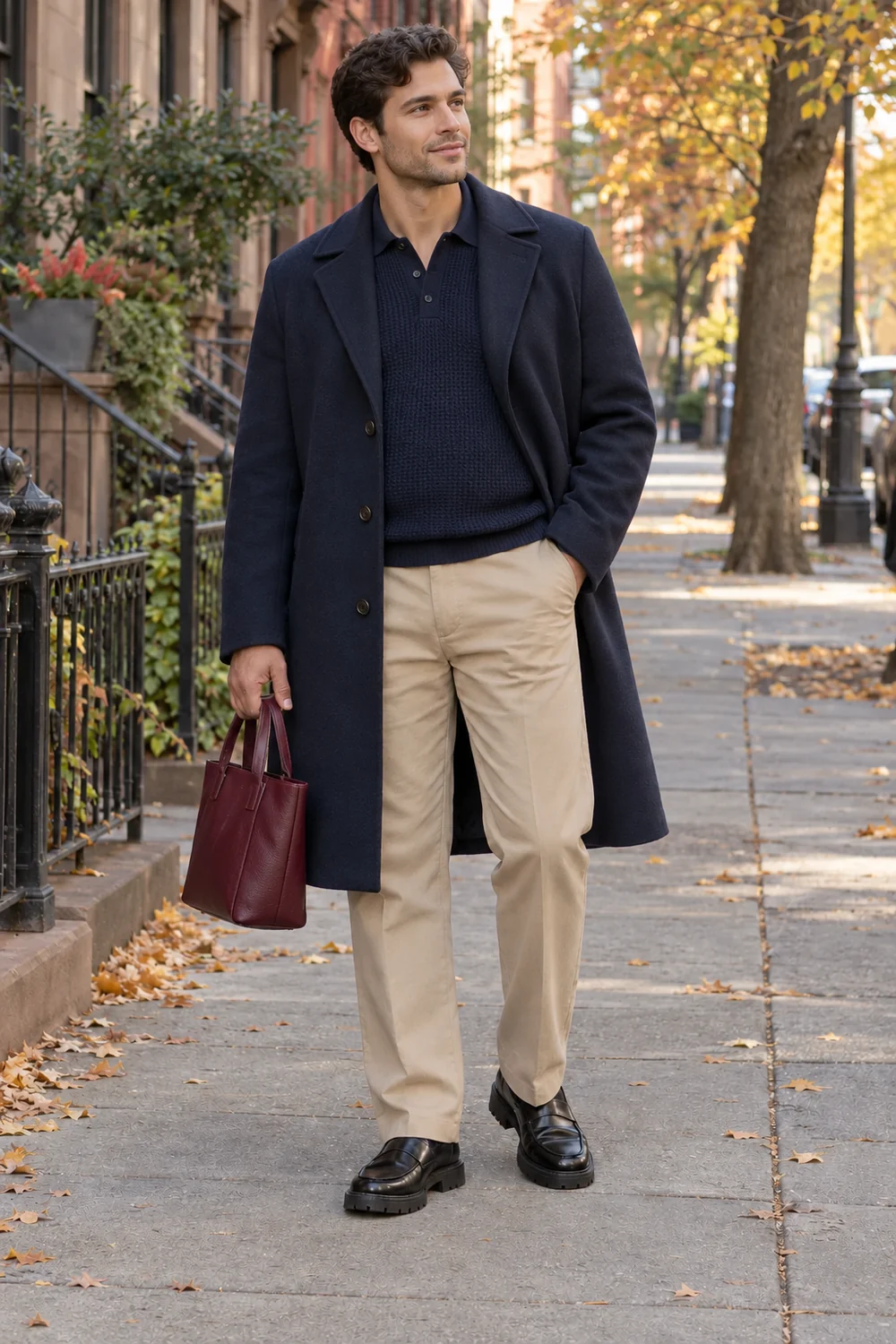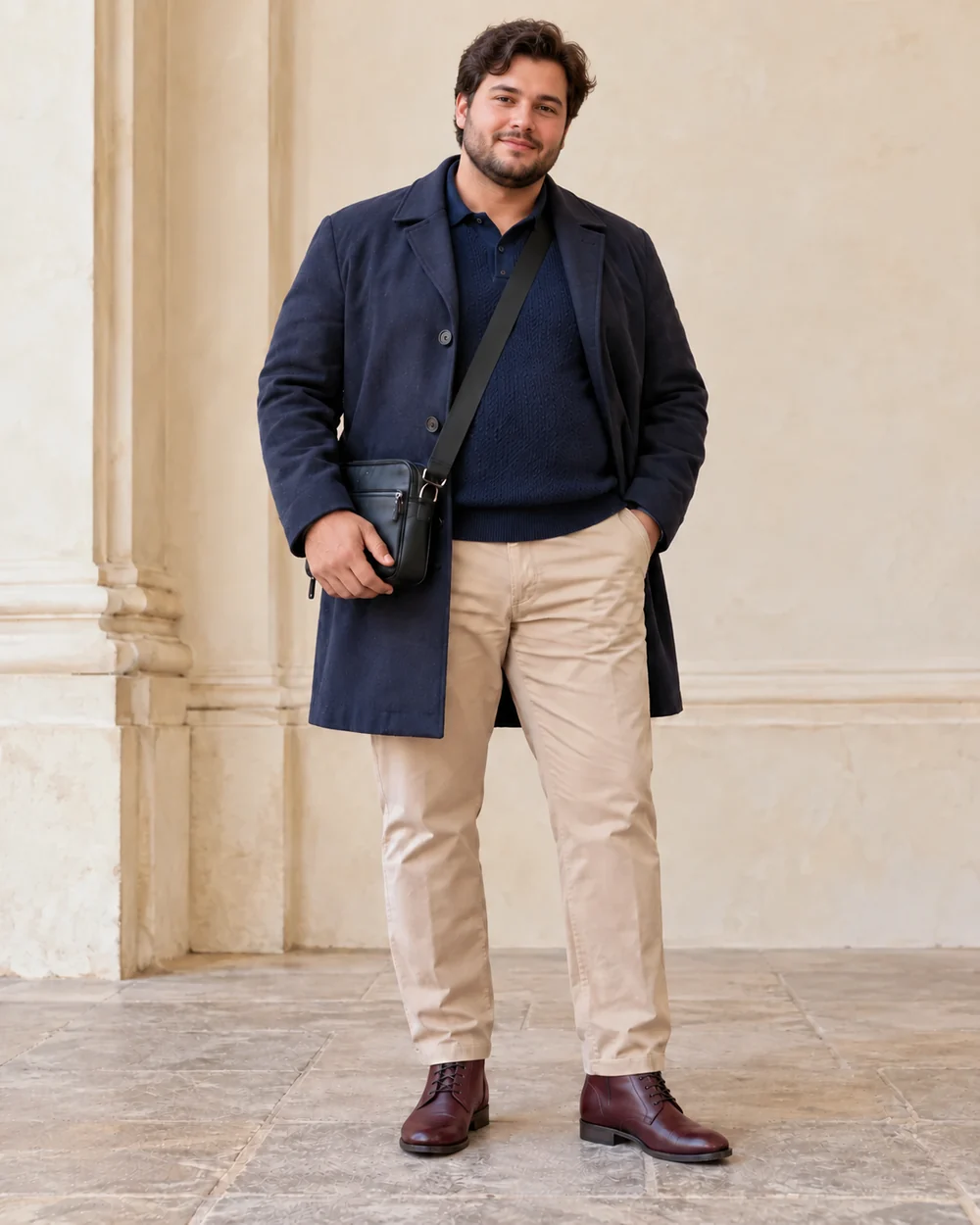
Wear sand straight trousers with a navy textured knit polo. Add the navy city coat for the layered version, then choose burgundy lace-up ankle boots or burgundy Derby shoes. This new version of our Jacob Elordi-inspired knit reference keeps navy texture as the cue, with its own garments and fit choices for petite plus-size proportions.
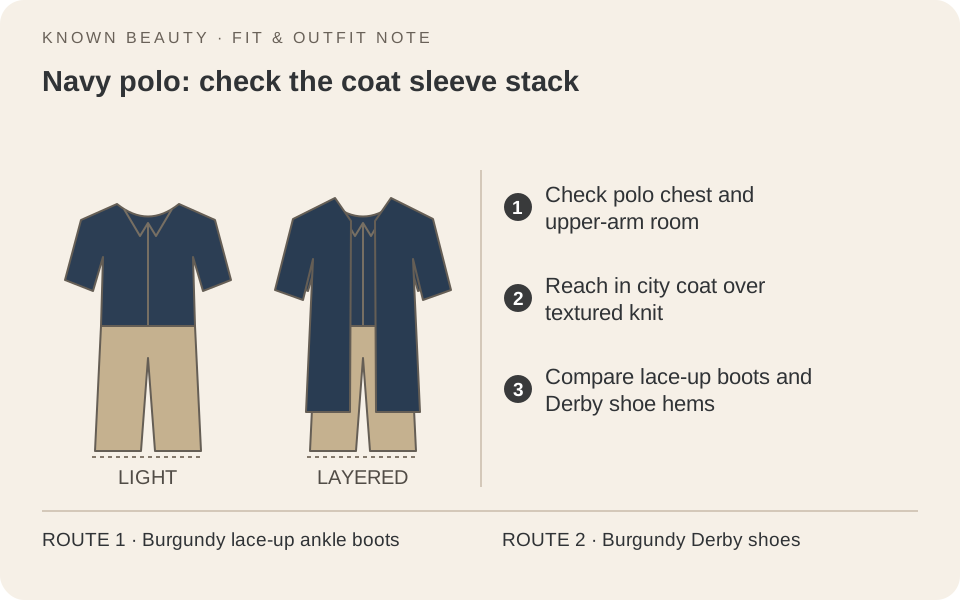
Make the light version useful
Try the polo with its collar and opening arranged as you intend. Check chest, shoulder and upper-arm room while reaching forwards and bending the elbows. A knit texture does not guarantee stretch or a comfortable sleeve band. Compare the actual cut if the band restricts movement; do not expect a larger coat to solve it.
The sand trousers need their own rise, seat and knee-position check while seated. A shorter hem will not relocate shaping that sits too low. Compare another cut or a shorter-proportion option before altering, keeping width separate from length. Arrange the polo outside the waistband when its own hem gives the relationship you like, or tuck lightly if that remains smooth.
Check opacity over your intended underlayers in ordinary bright light. A practical dark bag and the selected shoes finish this light version; the polo should be a top you enjoy without a coat over it.
Add the coat over the actual texture
The pictured layered outfit uses the navy city coat. Try shoulder, upper-arm and closure room over the polo, then sit and reach for the bag. Notice whether the two sleeves stack comfortably at the elbows and cuffs. Compare coat length and belt or button placement on your own torso rather than using a universal short-coat rule.
Remove the coat and check the base again. Its navy colour can differ slightly from the knit. The actual material and construction need assessing for coverage and care; the city-coat name does not establish weather protection.
Give burgundy two useful openings
Burgundy lace-up ankle boots supply the covered-ankle route. Adjust the lacing, flex the ankle and check whether the trousers release over the shaft after a step. Burgundy Derby shoes supply the low-cut alternative: adjust their lacing, check toe room and heel grip, then repeat the walk and turn. Both use ordinary low-profile soles and a conventional low broad heel. Compare the rear hem with each actual sole before altering it.
Use the compact core differently
Everyday: for a café and appointments, choose boots if their actual fit suits your route, or Derby shoes for the laced opening after their own walking check. Use the light polo-and-trouser version indoors and take the coat only when useful.
Weekend: for a gallery and relaxed lunch, try Derby shoes with the navy texture left clear and the same small bag. Boots give a more covered alternative. Test seated coat closure if you expect to keep it on between stops.
Holiday: for a city-break museum and supper plan, use the shoe route you have assessed for the walk: boots or Derby shoes, with hems checked for each. Pack the coat only when its actual coverage and care earn the space.
Fit before the five-minute assembly. Stop when the sleeves, seated waist and chosen shoe work together.
Use the outfit as a starting point. Adjust the fit, coverage and footwear to your preferences and plans.