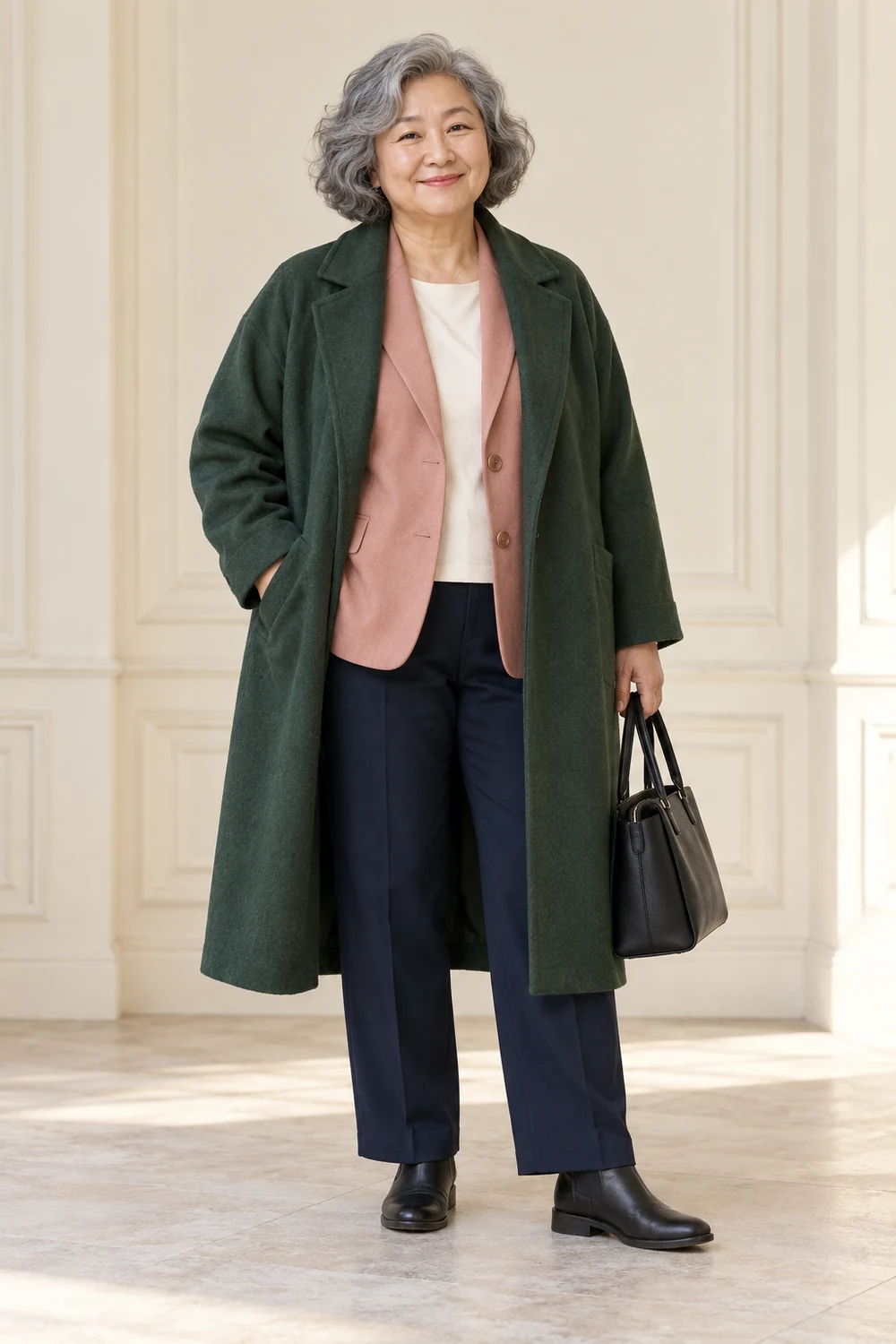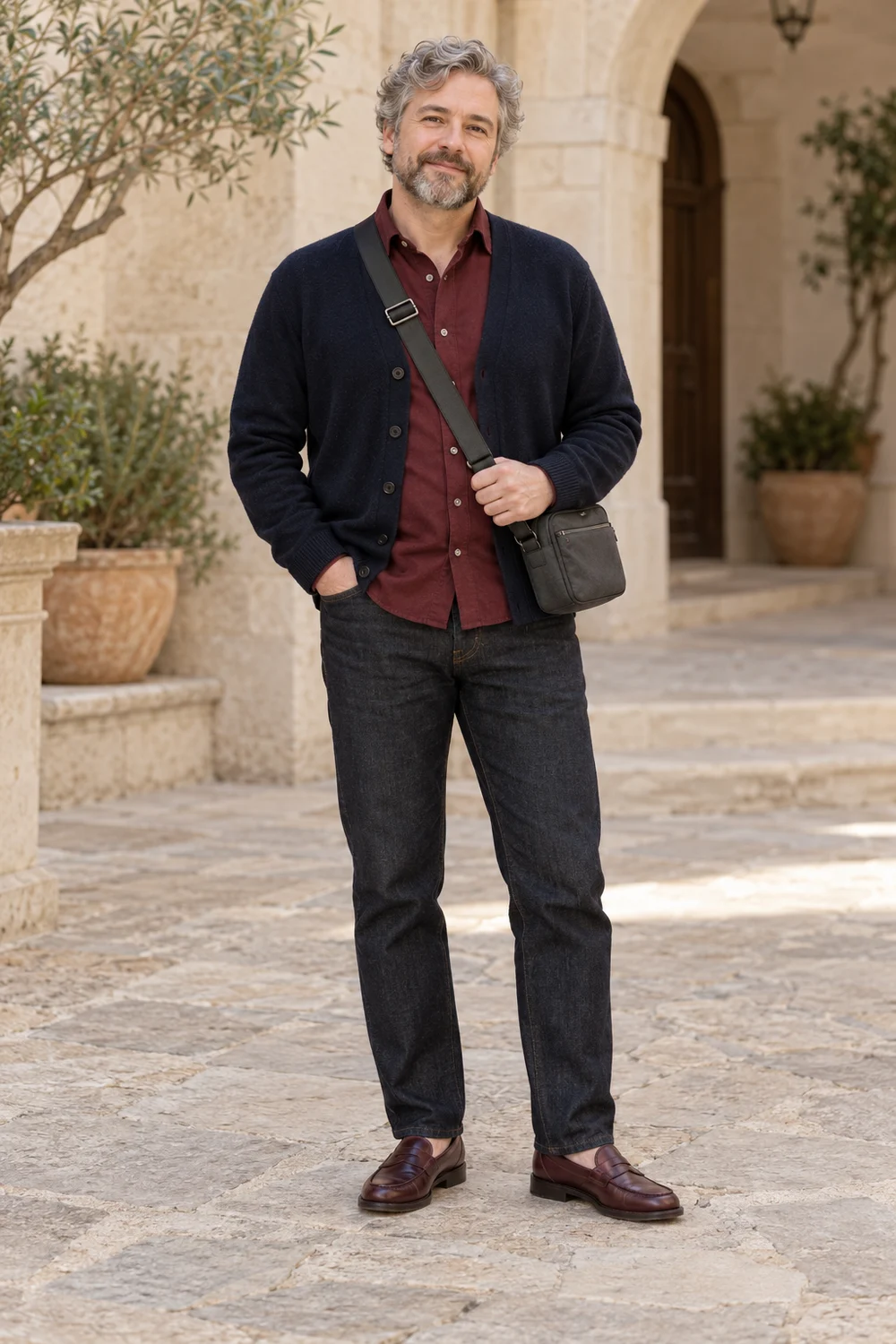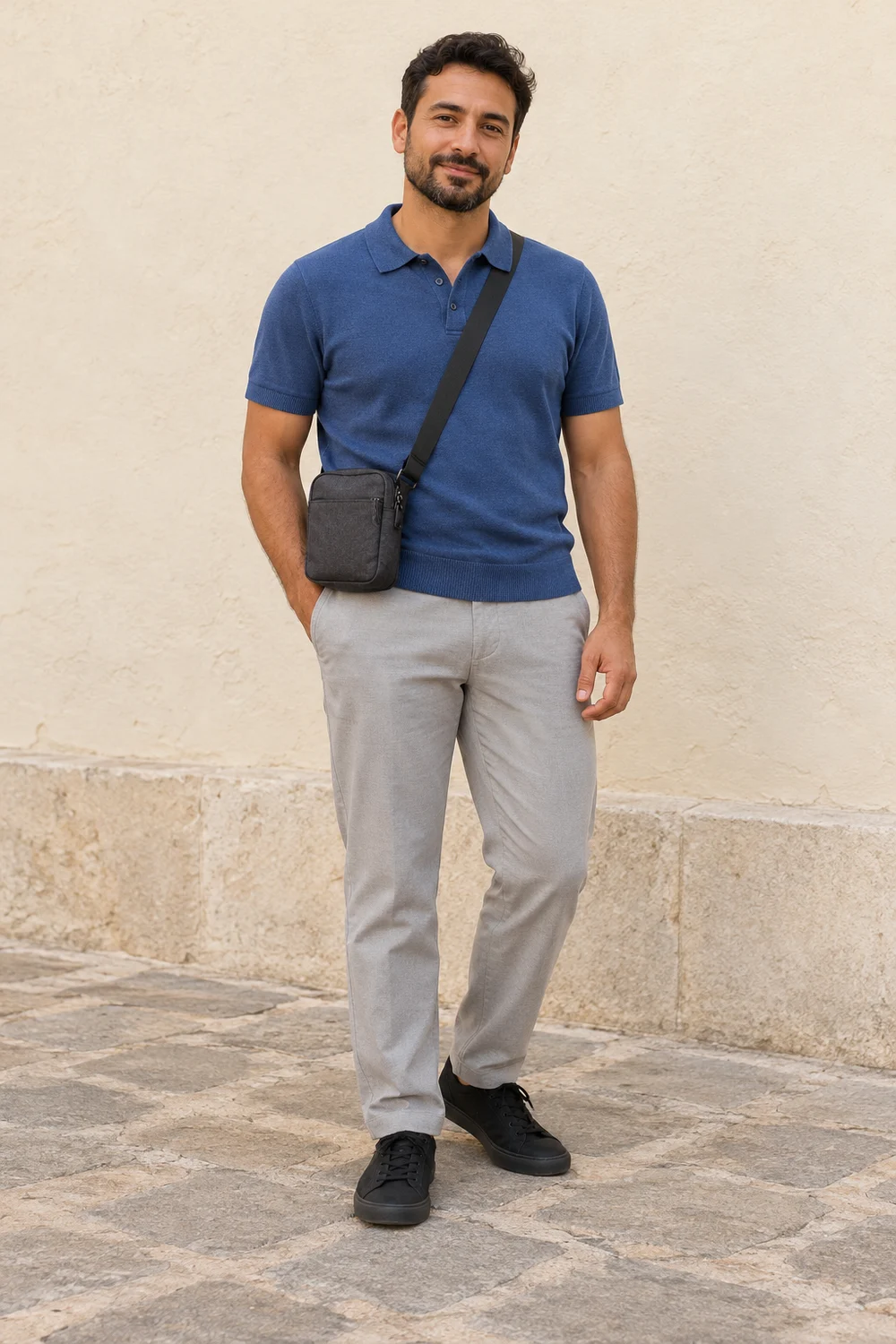
Get the light-grey trousers comfortable seated, then check their hem in both actual shoes. Add a blue knit polo and a dark bag; the navy blazer is optional. Black loafers give one low finish and black trainers give another. For petite proportions, less length is only one fit question, separate from rise, shoulder and upper-arm room.
Check the two anchors first
Sit, stand and take a long step in the light-grey trousers. Compare waist, rise and thigh room before deciding how much hem to remove. A shorter inseam won’t relocate pockets or change a rise that pulls. If the upper fit works, pin a proposed hem with both shoes. If not, another grey trouser cut can preserve the colour idea.
Put on the blue knit polo and check collar position, upper arms and opacity with the underlayers you intend to use. Try its hem outside first, then tucked only if the knit stays comfortable seated without a ridge. An existing blue top can fill the colour job; you don’t need to match the exact shade in the image. Load the compact dark bag so bulky essentials stay out of the trouser pockets.
Name the light and layered versions
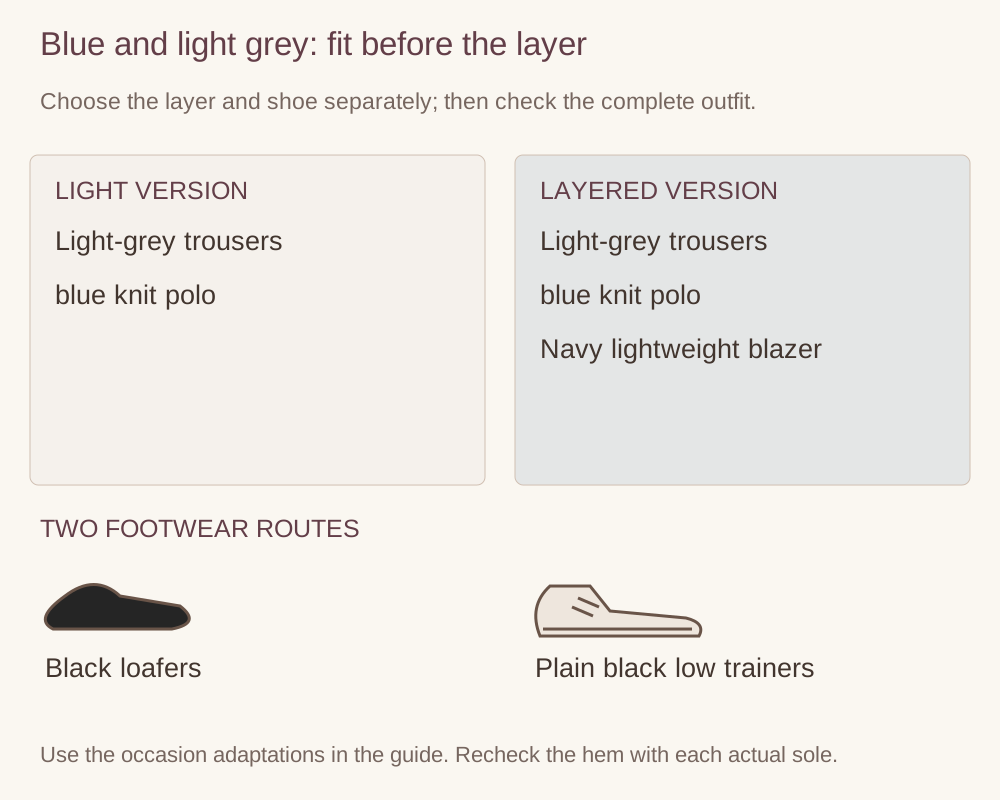
The light version, pictured with black trainers, is the blue polo, light-grey trousers and dark bag. Check it without relying on a jacket to frame the neckline or hold a strained top in place. The layered version adds the navy lightweight blazer. Try it open, then closed if wanted, over the actual polo sleeves.
Reach forward and check back and upper-arm room before cuffs and hem. A shorter jacket isn’t automatically a more suitable jacket. If it binds, compare another cut or keep the complete light version. Test the loaded bag strap across the lapel and polo collar; it shouldn’t drag either when you reach inside. Lightweight describes the intended layer, not proof of weather protection.
Compare the actual black shoes
Black loafers need secure heel retention and toe room with your intended socks. Inspect the rear trouser hem through a turn. For plain black low trainers, try the socks you mean to wear and compare actual sole and collar heights with the loafers. Check a step before altering. Keep the dark bag and either blazer choice for both; one hem must clear the lower actual sole. A category label doesn’t establish how either shoe feels on your route.
Three uses, with their limits
Everyday: for errands and a café, choose trainers and the light polo-and-trouser version. For a short nearby lunch, choose loafers and add the navy blazer open if wanted. Walk with the loaded bag during the final check so its position is realistic.
Work: for a relaxed office, wear loafers and the layered version for a seated meeting day. Where trainers are accepted for standing or moving between rooms, choose the black pair and either top-half arrangement. Check the desk position and actual dress code; a business-formal setting may require another outfit.
Wedding: for an expressly relaxed daytime wedding that welcomes a knit polo and separates, choose loafers and the navy blazer, removing it indoors if wanted. Where trainers are explicitly accepted, use the black pair with either layer version. Ask about the casual polo as well as shoes; a formal or suit-required invitation needs a different guide.
If the hem catches, fix the length or use the other actual shoe. If the rise or polo pulls, compare its cut rather than adding another layer. Stop when sitting, reaching and walking need no adjustment. Blue and light grey already provide the outfit’s colour relationship.
Use the outfit as a starting point. Adjust the fit, coverage and footwear to your preferences and plans.