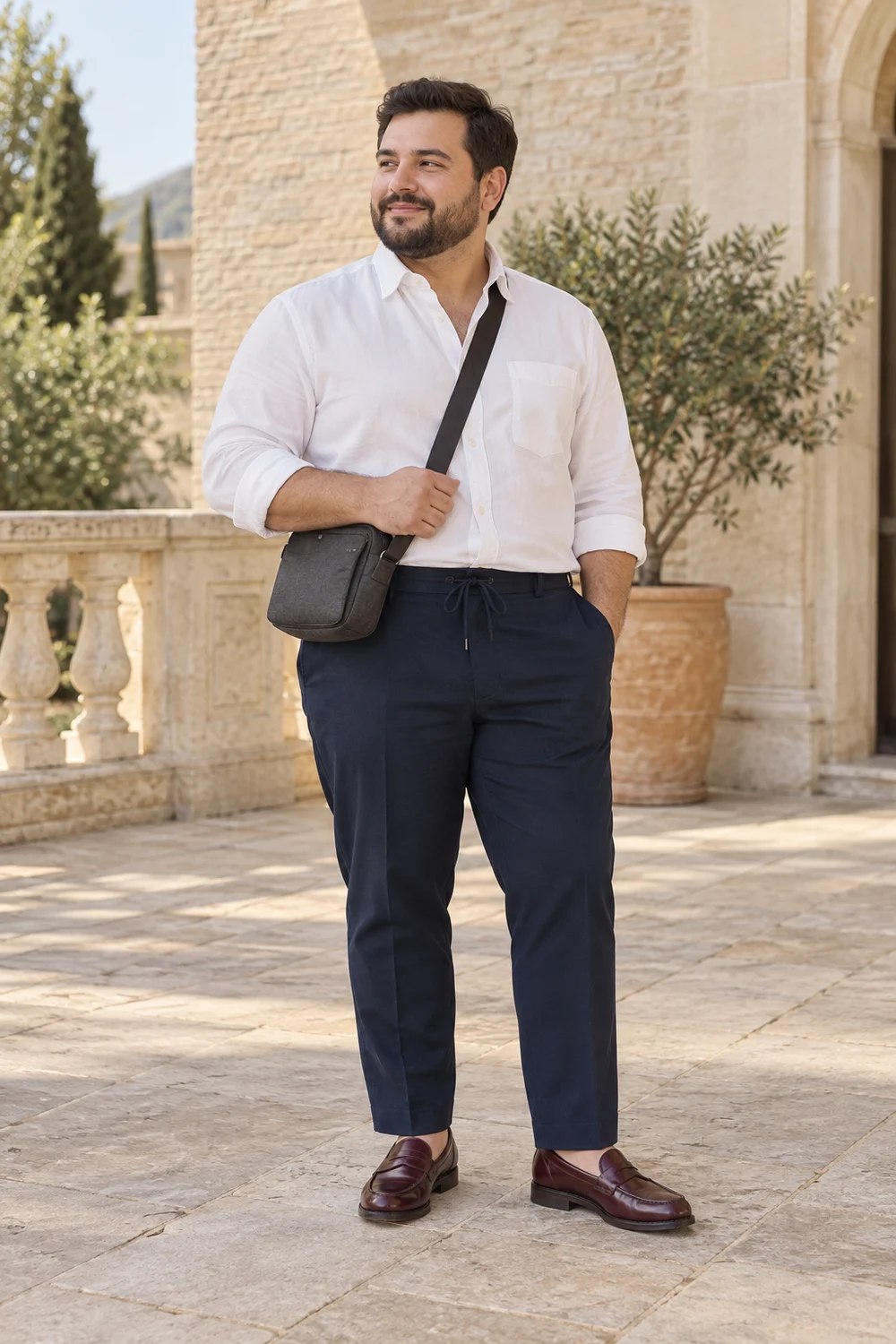
Practise setting the drawstring while seated, then leave it alone while testing the rest of the outfit. Navy tailored drawstring trousers and a white shirt make the base; the olive overshirt is optional. The goal is a waist setting that remains comfortable through sitting and walking, not a tight knot that holds an unsuitable trouser cut in place.
Set one position you can repeat
Put on the navy trousers with your intended underlayers and sit. Adjust the drawstring only enough for the waistband to feel secure without pressing. Stand, walk and sit again. If you need very different tension for each position, compare the waist construction, rise and available ease rather than repeatedly tightening the cord. Another waistband style can be the more useful substitute.
For a short plus-size adult frame, assess vertical positions and circumference separately. A shorter inseam doesn’t guarantee that the rise suits you. Check hip and thigh room with a full step before deciding the hem. Record or remember a comfortable setting only after those movements work; the knot is not a fit correction for the rest of the garment.
Keep the shirt as the next single variable
Add the white shirt, burgundy loafers and loaded dark compact bag. This is the light version. Check actual opacity, button spacing and upper-arm room. Try the shirt untucked first, reach forward and sit without rearranging it. Then compare a loose tuck only if you want that appearance. If it crowds the waistband or catches the cord, return to the untucked version or try a different shirt length.
The bag keeps bulky objects out of the trouser pockets while you assess the waist. Check its strap across the white collar and reach inside. Don’t retighten the drawstring because a loaded pocket changes the trouser balance; transfer the contents and repeat the same movement.
Add the olive layer, then compare shoes
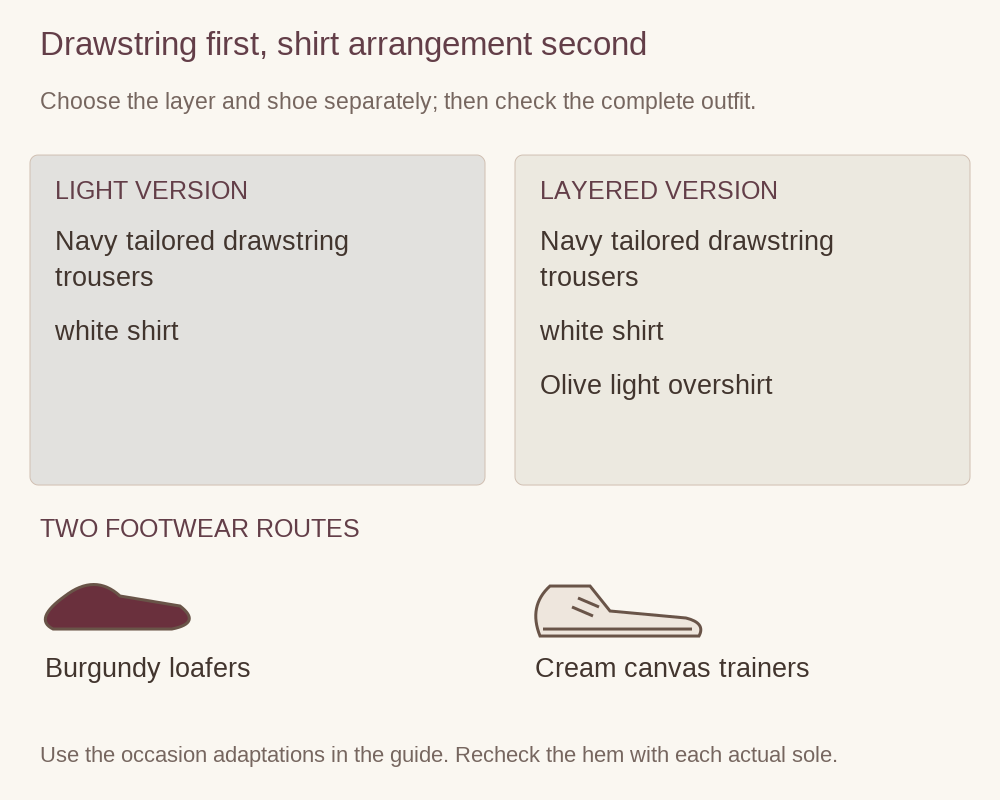
The layered version adds the olive light overshirt. Try it open over the actual white sleeves, then test closure if wanted. Reach across the body and check back and upper-arm room. Compare its hem with the drawstring waist and shirt hem without forcing all three to end together. If it binds or makes the waist cumbersome, use another cut or retain the complete light version.
Burgundy loafers add a deep colour detail below the navy. Check heel retention and toe room with the intended socks. Now try cream canvas trainers and their actual socks, repeating the same short walk and step. Compare sole and collar height before pinning a hem. Keep the dark bag and either layer version; the lowest actual sole still needs clearance.
Rehearse a specific plan
Wedding: for a deliberately relaxed daytime wedding that welcomes drawstring tailoring and shirt layers, choose loafers with the white shirt and olive overshirt open, removing the layer indoors if desired. Where trainers are explicitly permitted, use the cream pair and either layer version. Confirm the waistband style and casual overshirt meet the invitation; a formal or suit-required event needs another outfit.
Evening: for an informal restaurant, use loafers and the light white-shirt version, with the overshirt available if useful. For a casual standing arts event, choose trainers and the olive layer open or removed. Recheck the seated waist setting before leaving and follow the venue’s actual dress expectations.
Holiday: for a city-break museum day, use trainers, the light version and dark bag. For a nearby relaxed dinner, use loafers and the olive overshirt. Test the dinner walk before packing the second pair; choose clothing for actual conditions separately from the colour plan.
Finish when the same waist setting survives sitting, reaching and walking comfortably. Next time repeat that setting before changing one shirt or shoe. If it still needs constant tension changes, compare another trouser construction rather than practising a tighter knot.
Use the outfit as a starting point. Adjust the fit, coverage and footwear to your preferences and plans.