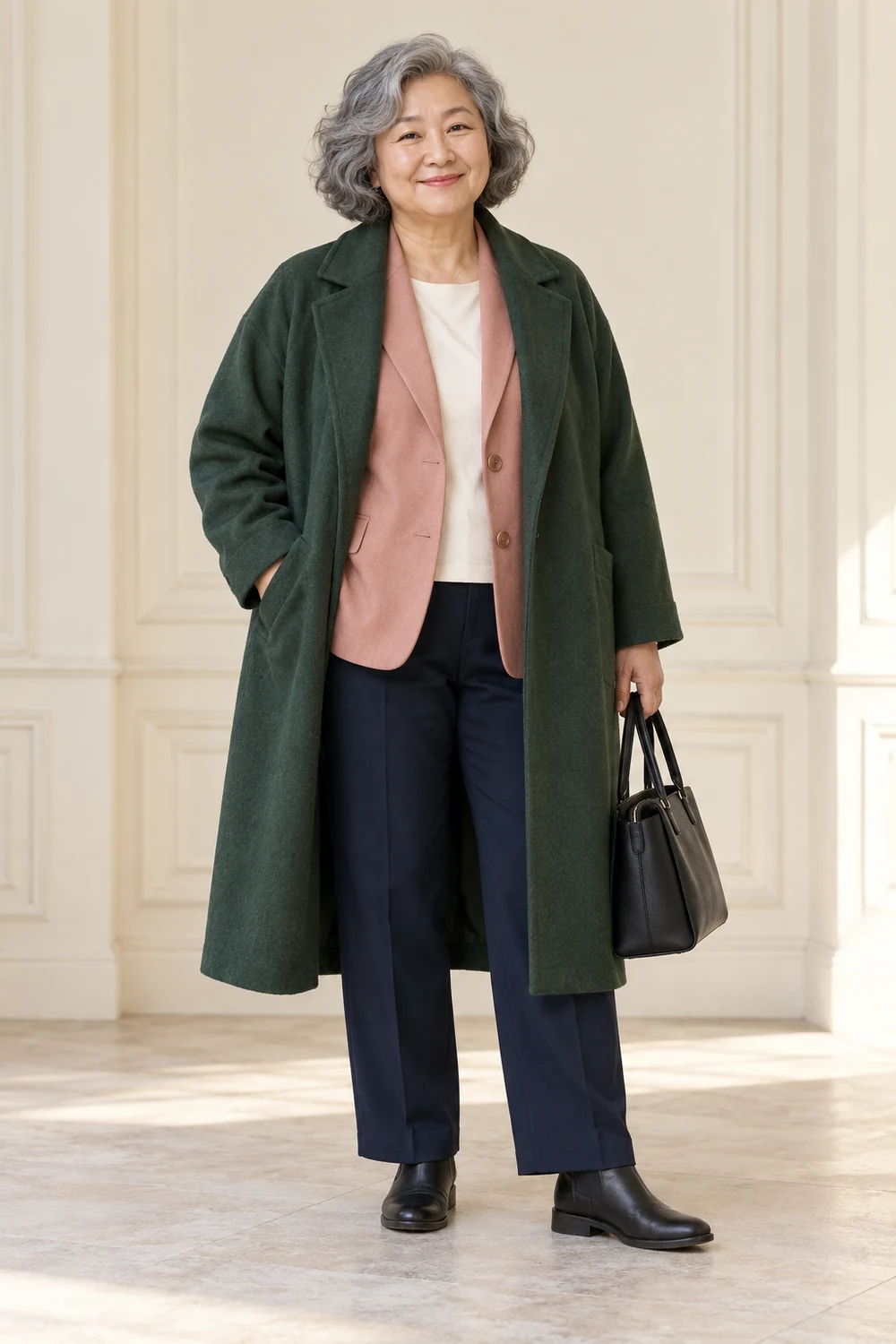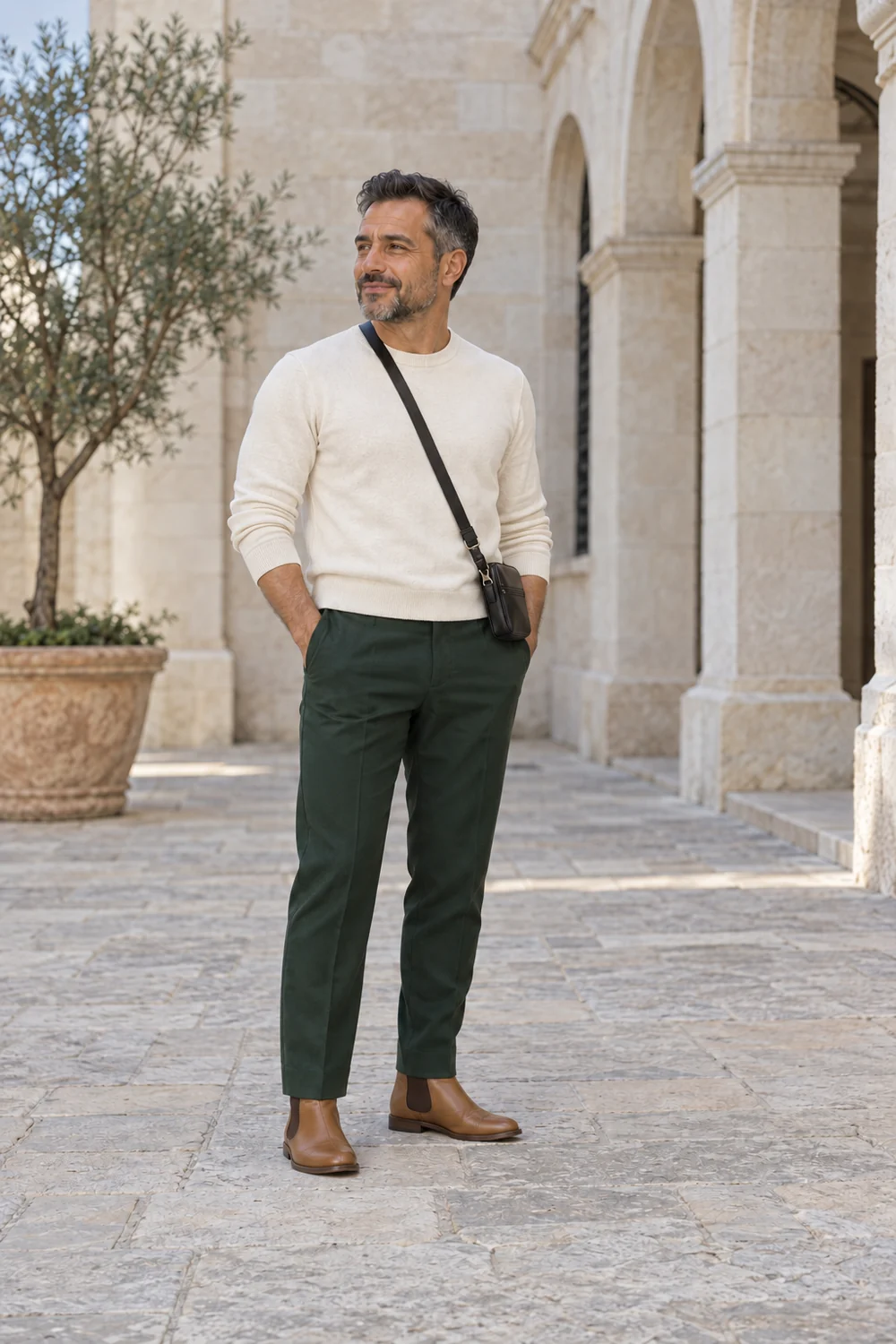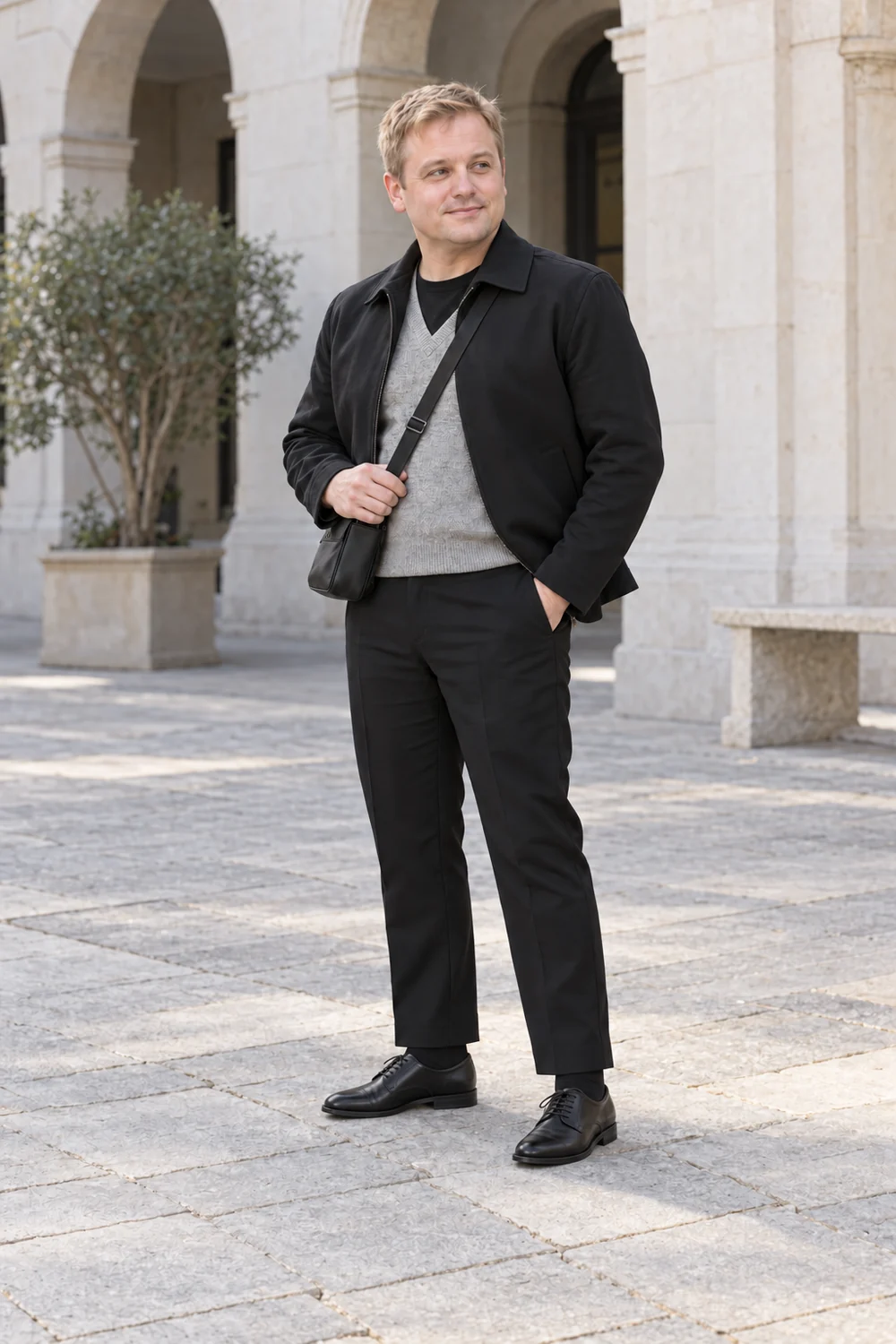
Keep the silver vest only if it can share the tee’s sleeves comfortably. The light version here already has three clothing jobs: black tailored trousers, an opaque black tee and the silver fine knitted vest. A black short jacket is the extra layer, not the item making a sleeveless knit wearable.
Make the two inner pieces earn their space
Try the black tee with your intended underlayers. Check its opacity, neckline and sleeve room while reaching. Add the silver vest over that actual tee and repeat the movement. Notice whether its armholes catch the sleeves or drag the neckline. On a petite frame, compare shoulder position, armhole depth and torso length separately; shortening the lower hem will not raise an armhole that is too deep for the outline you want.
Choose the silver surface beside the black rather than by a colour name alone. It can be quieter or more reflective according to the knit you enjoy. Check the fibre and care label for the actual item. An existing vest that does the job is enough; a second silver accessory is not required to explain it.
What the additional layer must allow
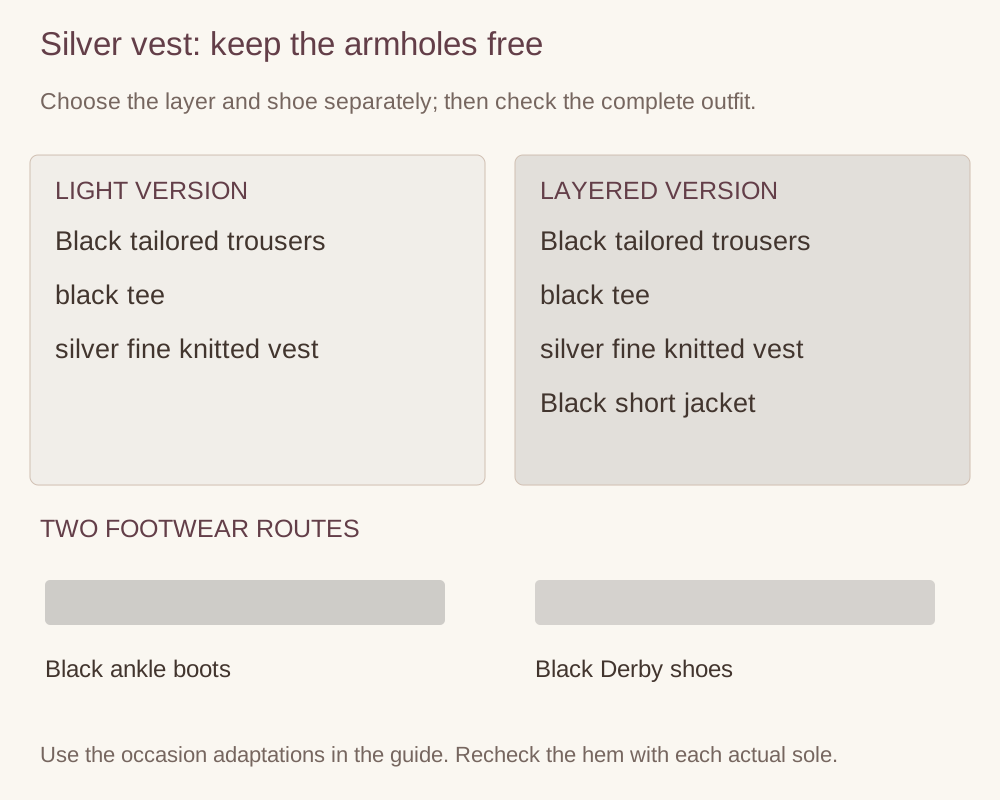
Check the trousers seated for waist, rise and seat room before knee placement and length. With tee, vest, shoes and dark bag, the base is complete. Add the black short jacket over both upper pieces, testing shoulders, back and upper arms before its hem. Try closure and reaching. If it crowds the vest armhole, compare a roomier cut or leave the jacket out rather than choosing an inner tee you cannot move in.
Black ankle boots add a shaft inside the trouser leg. Check the opening with the ankle flexed, toe space and whether the cloth falls back after walking. Black Derby shoes remove the shaft and give an adjustable low lace-up opening; check their lacing and heel grip, then repeat the same walk. Both pairs use ordinary low-profile soles with a conventional low broad heel. Compare the actual rear hem with each pair separately. Keep the same complete base, optional layer and dark bag with either pair. Check intended socks inside the actual shoe before settling its fit.
Pack for the outfit you will use
Everyday: for lunch and appointments, use the complete tee-and-vest base indoors. Choose the low-cut shoes or boots according to the actual walking plan, adding the jacket only for its second outline.
Weekend: for a gallery followed by a cafe, test the vest and jacket seated with the loaded bag nearby. Both shoe routes keep the same black and silver; choose for actual fit on the floor rather than treating a shoe category as a comfort promise.
Holiday: for a city-break dinner, pack the light base and one checked shoe route. Bring the jacket if its version earns the space, and check the vest’s care requirements before making it a travel staple. Boot-shaft and low-shoe sole clearances remain separate.
Five minutes estimates familiar-piece assembly after fitting. First armhole comparisons need longer. Buy only when you can name the missing job: a sleeve opening, a useful jacket or a secure shoe. Otherwise, the silver vest already has its place.
Use the outfit as a starting point. Adjust the fit, coverage and footwear to your preferences and plans.