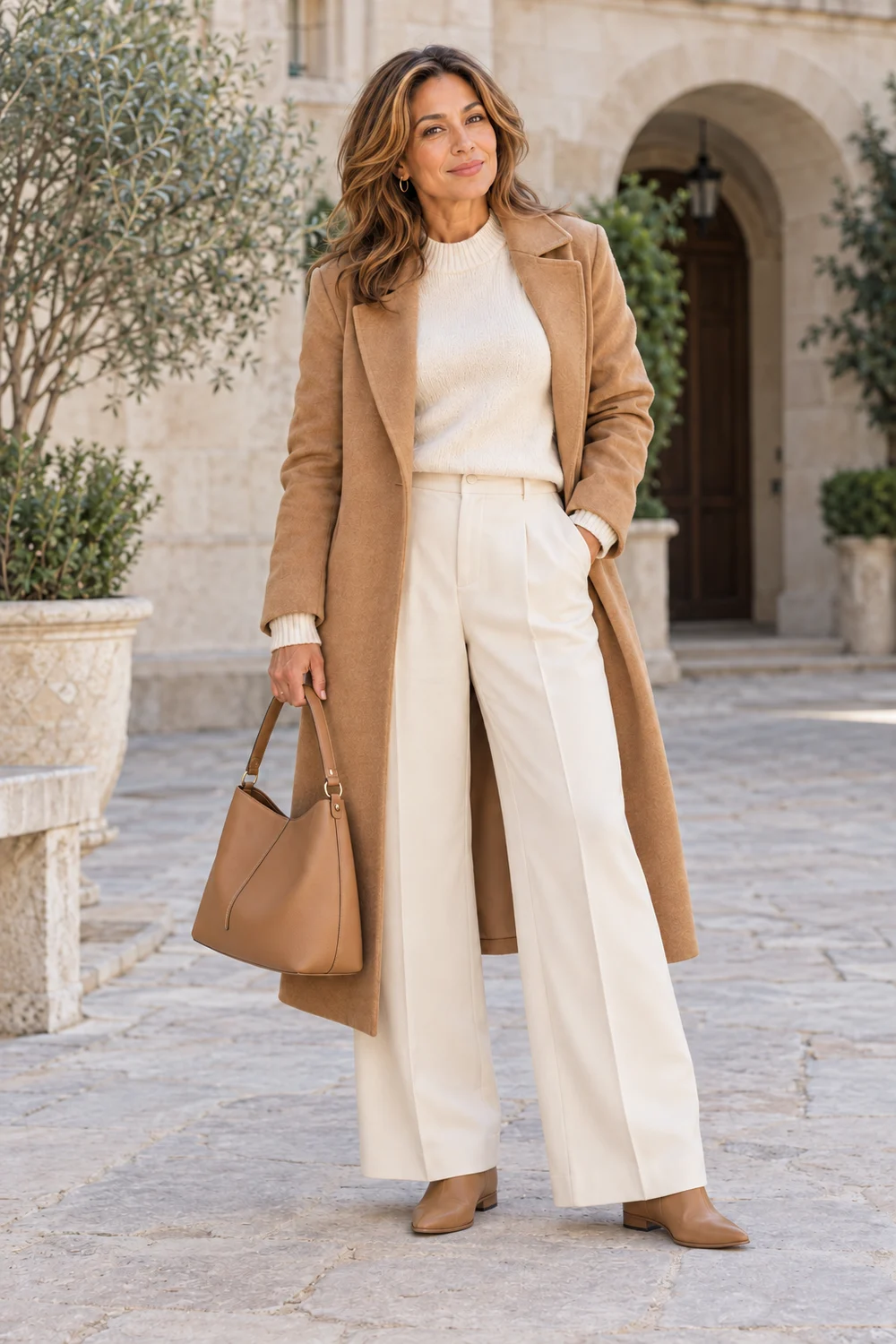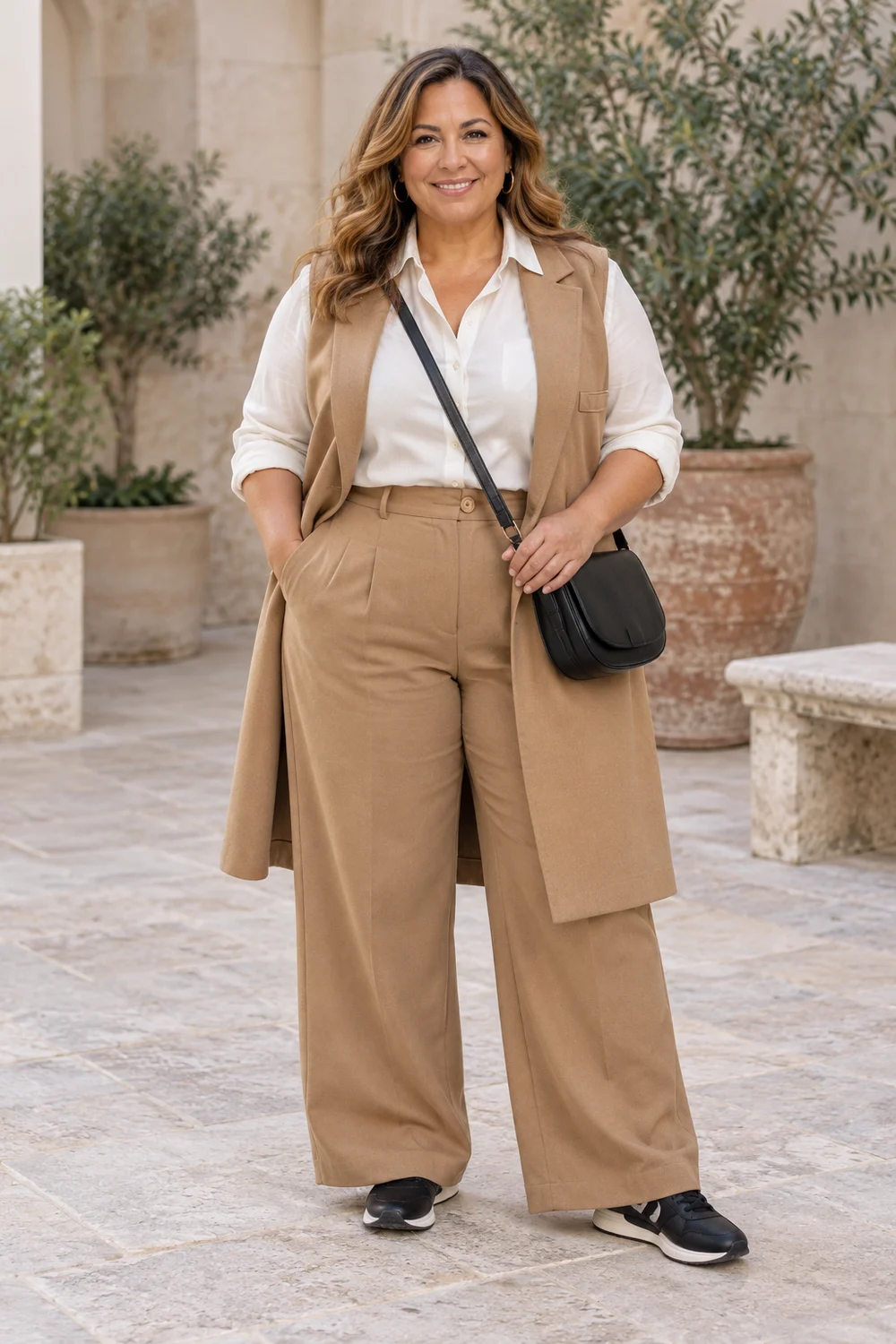
The ivory shirt is the pause between two camel pieces. It separates the wide trousers from the long waistcoat so their proportions remain visible, even when their colours are close. The Jennifer Lopez-inspired cue is an open camel frame around lighter separates; this version uses a sleeveless layer instead of a coat. Black shoes and a compact black bag give the pale centre a definite edge.
There is room here for a short, full adult frame without trying to make it appear longer or narrower. The useful questions are concrete: where does the shirt button, how does the trouser rise sit, and can the waistcoat’s long panels move when you sit? Answer those before deciding how much of the ivory to tuck away.
The shirt should earn its place alone
The light version is ivory shirt, camel wide-leg trousers, black bag and either named shoe. Check the shirt’s opacity with the underlayers you want, then reach forward and sit. A button opening that pulls needs more room or a different cut. Tucking a strained shirt doesn’t repair the fit. Try it untucked first; if you prefer a tuck, keep enough ease to move without the hem lifting every time.
Check the trousers’ waist, rise and thigh room before length. On petite plus-size proportions, the right circumference can still come with the wrong vertical positioning. Compare the garment’s actual measurements and the location of its shaping. An alteration may help the hem, but it can’t always relocate the rise or pockets. Choose a less expansive leg if this particular width keeps catching your shoes.
A long layer with space to move
The layered version, pictured with black trainers, adds the long camel waistcoat. Wear it open to preserve the ivory centre, then test closure if you want that option. Check the armholes over the shirt’s sleeves and reach across the body. Sit on a chair and see whether the long panels bunch underneath you or pull at the back. A different waistcoat cut may solve that more effectively than sizing up every piece.
Compare the two camel fabrics in daylight. They may differ in warmth, texture and depth; close colours don’t have to pretend to be a suit. Keep a distinction you enjoy. The black bag strap should sit without dragging the waistcoat opening across the shirt. Its loaded weight matters more than where it falls in a still photograph.
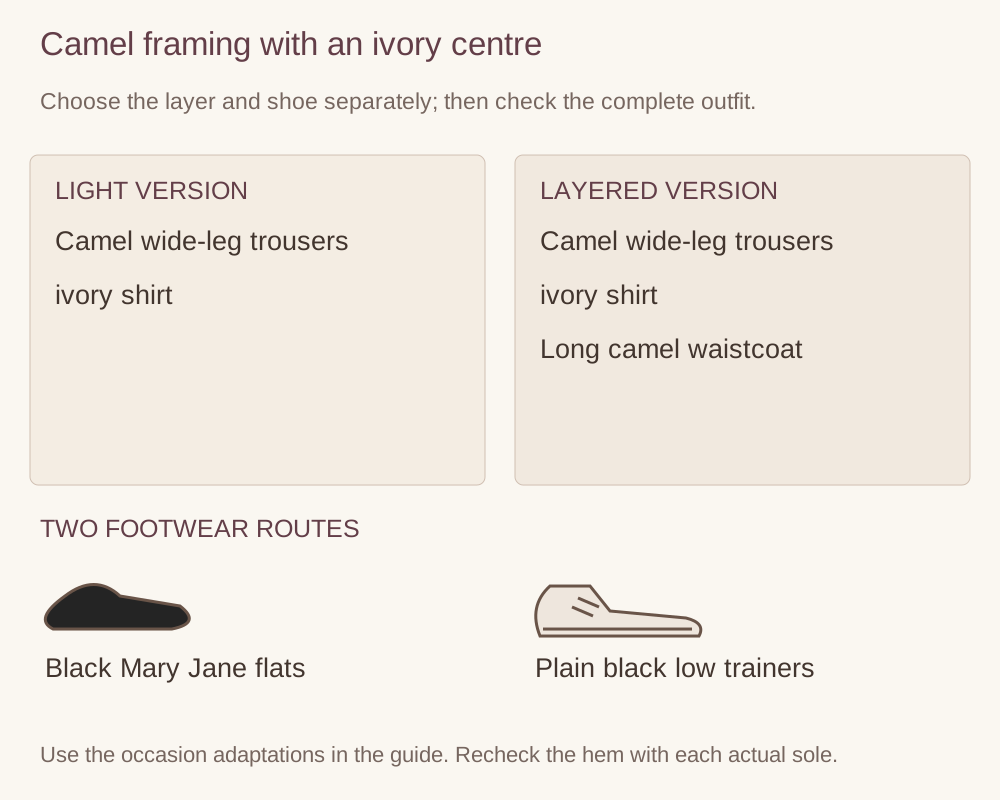
Black Mary Jane flats bring a strap detail beneath the trouser hem. Check toe room and strap pressure while standing, then confirm the rear hem stays clear as you walk. Plain black low trainers produce a more solid casual base. Try the intended socks and compare their actual sole height with the flats before pinning an alteration. Keep the black bag and either top-half version for both routes; the lowest sole sets the clearance if one hem must serve both.
Where the camel pieces can go
Work: for a relaxed creative office, wear the shirt and trousers with Mary Janes, adding the waistcoat for a meeting if you want that frame. Where trainers are permitted for moving between rooms, choose the black pair and either keep the waistcoat open or use the light version. Test seated button comfort and carry essentials in the black bag rather than filling trouser pockets.
Celebration: for an informal birthday restaurant lunch, choose Mary Janes and the long waistcoat over the ivory shirt. For a casual gathering with standing and walking, use the trainers and light version, bringing the waistcoat only if wanted. Check the actual invitation: pale tailoring alone doesn’t make a relaxed shoe appropriate everywhere.
Holiday: for a city-break museum morning, choose the trainers with the light shirt-and-trouser version. The Mary Janes and waistcoat form a separate nearby dinner option with the same black bag. Rehearse how the long layer fits on a dining chair and pack it only if that second use earns its space.
The most useful finish is the moment the shirt stays comfortable after sitting and the trouser hem clears the shoe after standing. Keep the ivory visible at the centre; the rest of the outfit already has its frame.
THE COMPLETE LOOK
Wear it together.
Keep the outfit and its makeup interpretation in one collection, with a combined checklist.

Use the outfit as a starting point. Adjust the fit, coverage and footwear to your preferences and plans.