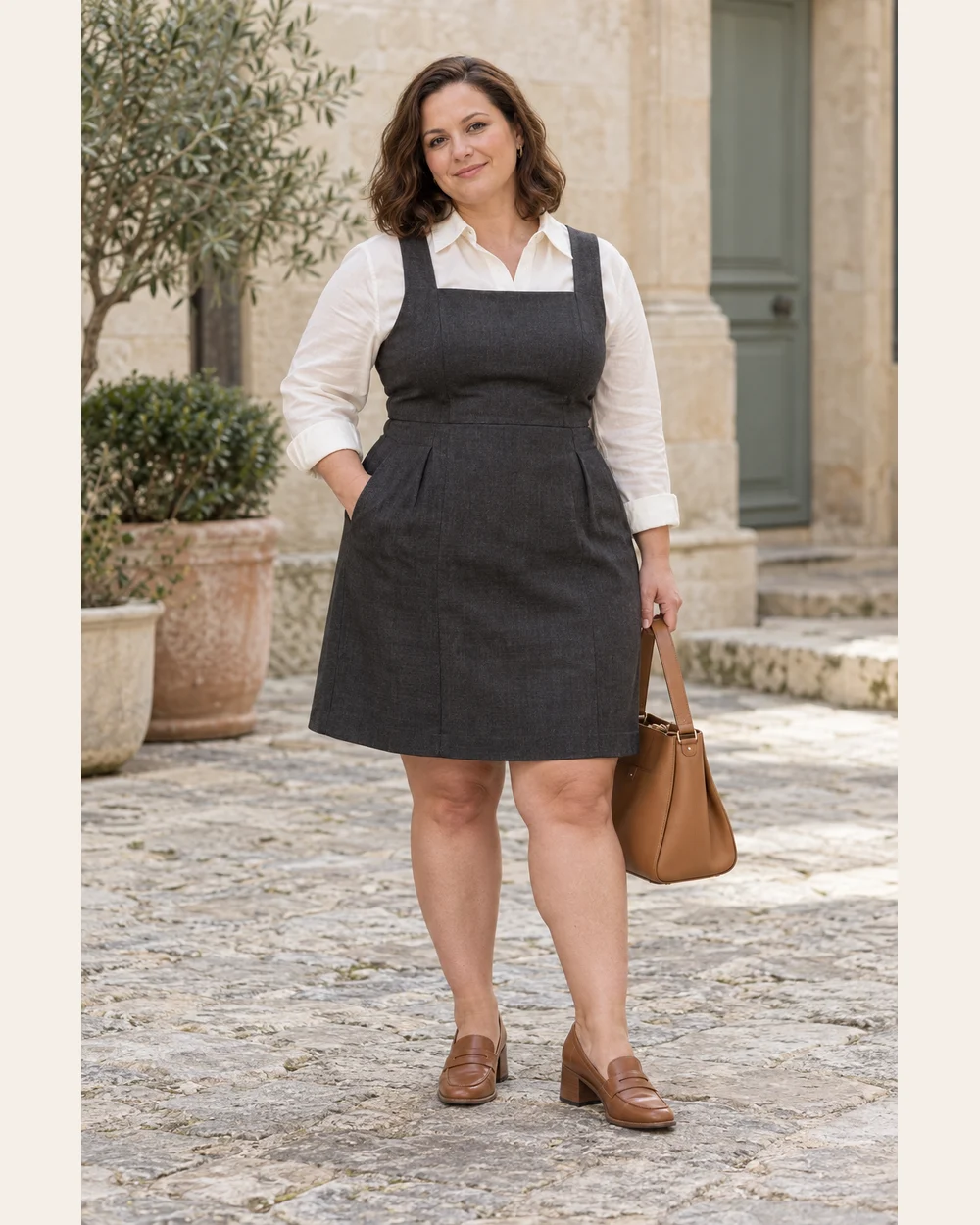
A pinafore kit has to account for the shirt inside it. Keep the charcoal dress for its tailored structure, the ivory shirt for the neckline and sleeves, and the tan shoes for a warmer small detail. This new combination develops the jacket-led tailoring in our Natalie Portman-inspired wardrobe edit, rather than identifying pieces she wore.
The two essential garment jobs
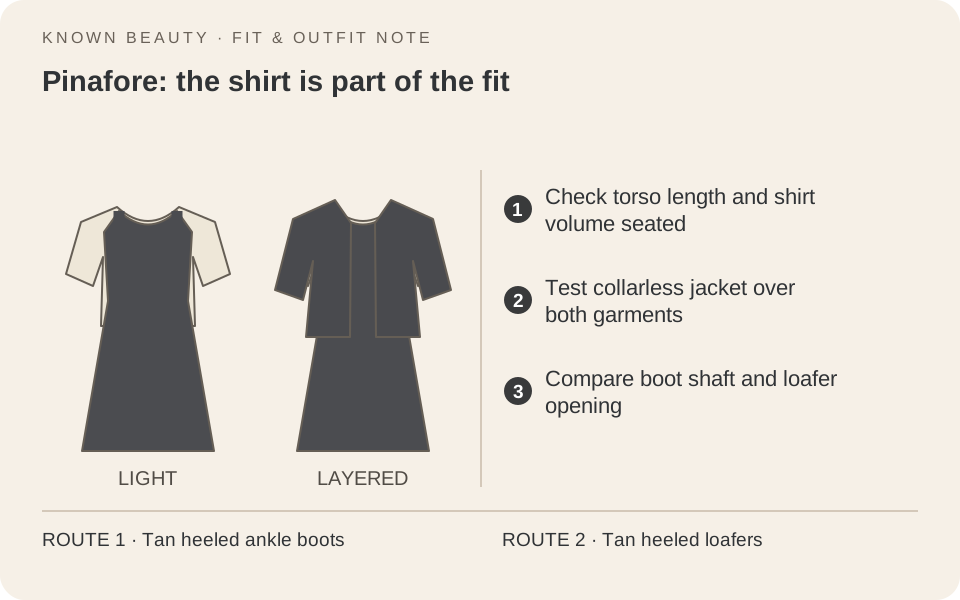
Try the charcoal tailored pinafore dress over the actual ivory shirt. On petite plus-size proportions, inspect the dress torso length, bib position and arm openings as well as waist and hip room. Sit and reach forwards. If the shirt collar is pulled back or its sleeves gather painfully at the arm opening, compare how the two garments fit together before shortening the skirt.
The shirt needs its own bust, shoulder and upper-arm room. Choose the amount of sleeve and collar you want visible without relying on a tight dress to hold excessive fabric flat. Check both garments over your intended underlayers in ordinary bright light and while seated. A lining or different shirt construction can do a useful opacity job; an ivory name does not guarantee it.
With a compact tan bag and the chosen shoes, dress and shirt make the complete light version. The photograph uses tan heeled loafers. A new belt, brooch or second shirt does not have a required role.
The jacket is a separate fit purchase
The layered version adds the charcoal collarless jacket over both pieces. Check its shoulder and upper-arm room with the shirt and pinafore actually underneath, then fasten, reach and sit. Compare its hem with the pinafore waist seam so the two structured edges do not catch at a position you dislike. Removing the jacket leaves the light outfit complete; it should not be needed to hide a shirt fit you have not settled.
Choose the tan shoe job you need
Tan heeled ankle boots give a shaft beside the skirt hem. Try the socks you intend and check the actual heel, sole, toe room and clearance while stepping. Tan heeled loafers remove the shaft and show a different opening across the foot; test heel retention without requiring a tight upper to hold them on. Repeat the dress’s stride and seated checks in both pairs, with any hosiery you plan. The bag and collarless jacket stay with either route.
Pack the pieces for an actual plan
Everyday: for a café and appointments, use the light dress-and-shirt version with loafers if their fit suits the route. Boots give a more covered alternative. Take the charcoal jacket only when useful and test accessing the loaded bag without dragging the shirt collar sideways.
Weekend: for a museum and lunch, choose boots or loafers after the actual walking check. Arrange the shirt cuffs neatly and keep the same small bag. The jacket can add a frame for the later lunch, but the indoor light version needs no replacement top.
Holiday: for a city-break gallery and supper, pack tan ankle boots when their actual fit earns the space for your route, with tan heeled loafers as a separate dinner option; reverse that priority when the loafers better suit your plans. Recheck skirt clearance with both pairs. The collarless jacket adds coverage by preference; its shape does not establish weather protection.
Fit these relationships before a five-minute assembly. Buy another item only when you can name the job that the dress, shirt, jacket or shoes cannot yet do.
THE COMPLETE LOOK
Wear it together.
Keep the outfit and its makeup interpretation in one collection, with a combined checklist.

Use the outfit as a starting point. Adjust the fit, coverage and footwear to your preferences and plans.

