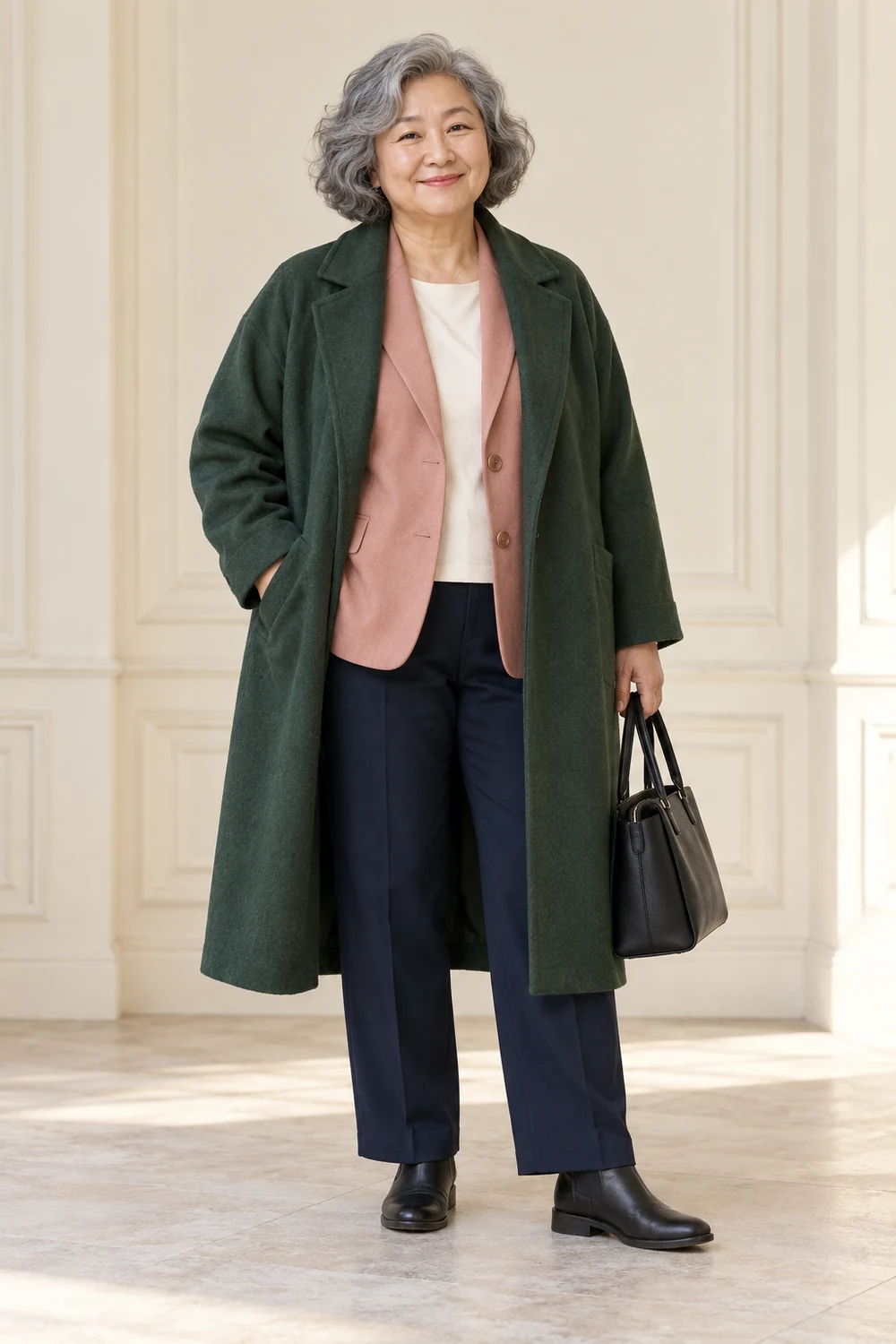
Olive gives the lower half a muted colour; cream makes a softer broad area above it. Brown can frame the pair without becoming another matching task, while burgundy adds a darker warm detail at the feet. Keep the shirt volume you enjoy rather than assuming the palette needs a compulsory tuck.
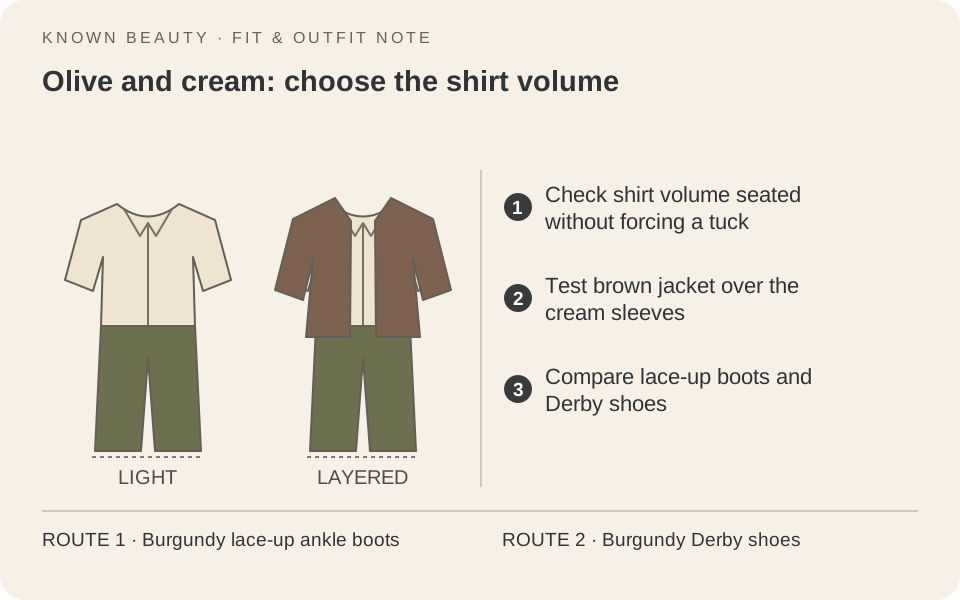
Let cream keep a deliberate amount of space
The pictured light version uses olive straight trousers, a cream soft shirt, burgundy lace-up ankle boots and a practical dark bag. Start with the shirt outside the waistband and see where its actual hem falls. Sit and reach, then compare a small smooth tuck only if it gives a relationship you prefer. More fabric at the waist is not automatically more relaxed or more polished; it is a garment arrangement to test.
For petite plus-size proportions, check collar, chest, back and upper-arm room independently from torso length. Assess opacity over your chosen underlayers in ordinary bright light. If a sleeve or button pulls, compare that part of the shirt’s cut rather than solving it with a tighter trouser waistband.
The olive trousers need their own rise, seat, pocket and knee-position check while seated. Walk before planning length; a shorter hem will not move low shaping. A turn-up, if you enjoy it and the fabric permits it, needs its own bulk and clearance check rather than being a rule for a shorter leg.
Put brown around the light palette
The layered version adds the brown unstructured jacket. Try it over the actual cream shirt, checking shoulder, upper-arm and cuff room. Fasten, sit and reach, then compare the jacket hem with the waistband and shirt edge. Leave a deliberate amount of cream visible according to the balance you enjoy.
Remove the jacket and check that the light outfit remains complete. The three colours do not have to share one fabric surface. Unstructured does not establish stretch or weather protection; inspect the actual garment and care directions for its practical use.
Give burgundy two useful openings
Burgundy lace-up ankle boots supply the covered-ankle route. Adjust the lacing, flex the ankle and check whether the trousers release over the shaft after a step. Burgundy Derby shoes supply the low-cut alternative: adjust their lacing, check toe room and heel grip, then repeat the walk and turn. Both use ordinary low-profile soles and a conventional low broad heel. Compare the rear hem with each actual sole before altering it.
Keep the palette through the plan
Wedding: use this for a relaxed or creative event whose invitation accepts soft separates and the chosen footwear. Derby shoes give the laced opening; boots belong where the venue and dress code welcome them. Add the brown jacket if useful and choose another guide for a stricter formal requirement.
Evening: for a relaxed restaurant dinner, choose Derby shoes for the lower opening or boots for a covered alternative accepted by the venue. Keep the cream shirt volume already tested and the brown jacket optional. Sit and reach the loaded bag without pulling the collar sideways.
Holiday: for a city-break museum and supper day, use boots or Derby shoes after checking the actual route and fit, with hems reset for each. Pack the jacket when its coverage and care earn the space, keeping the complete light base for indoor plans.
Fit before the five-minute assembly. Keep olive below, cream in the volume you chose and no extra layer merely to make the colours agree.
Use the outfit as a starting point. Adjust the fit, coverage and footwear to your preferences and plans.