Style · 3 min read
Poetcore without a costume: blouse, waistcoat and skirt
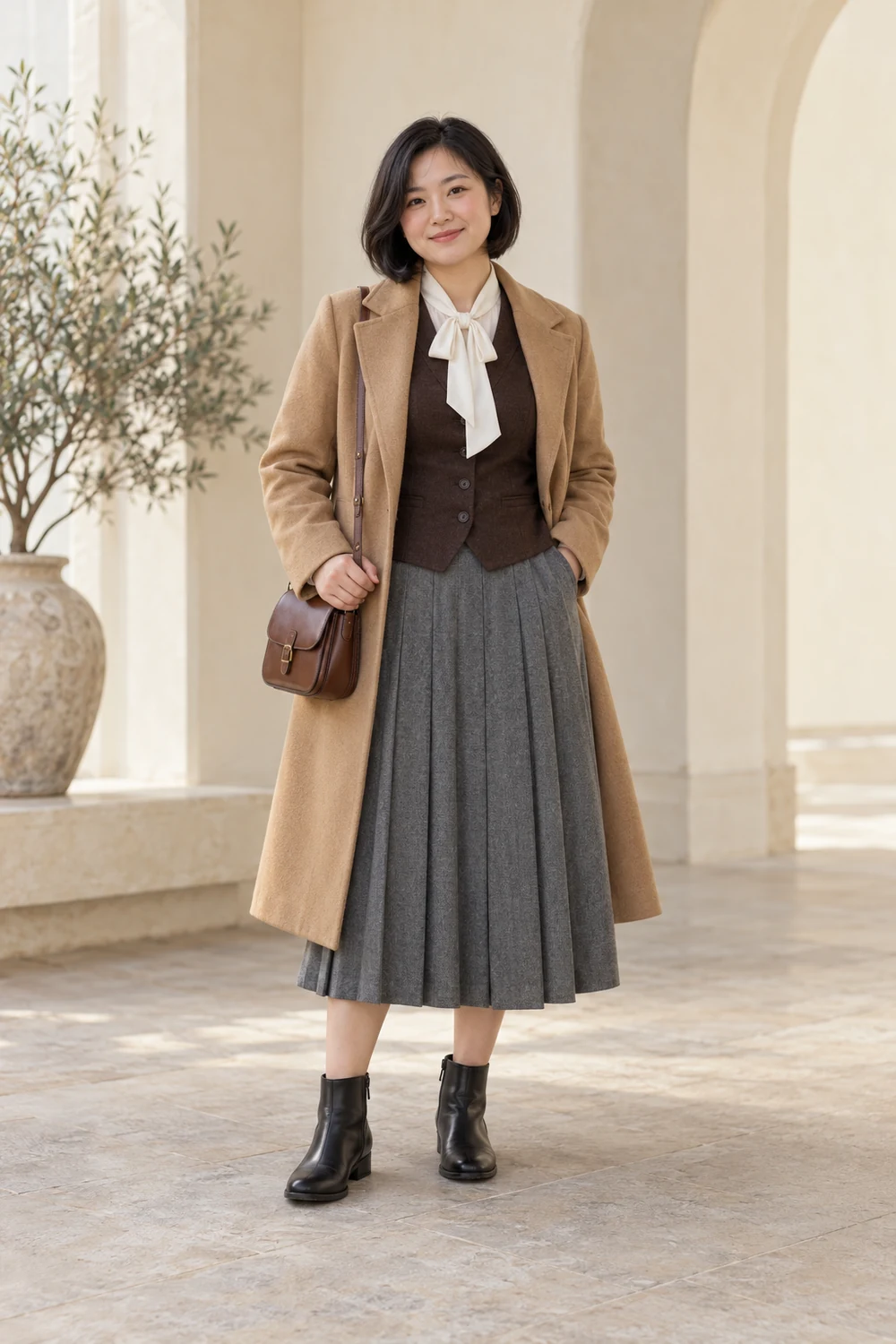
Use one romantic detail with ordinary layers: an ivory tie-neck blouse, a brown waistcoat and a grey skirt.
Outfit guide
THE KNOWN BEAUTY LIBRARY
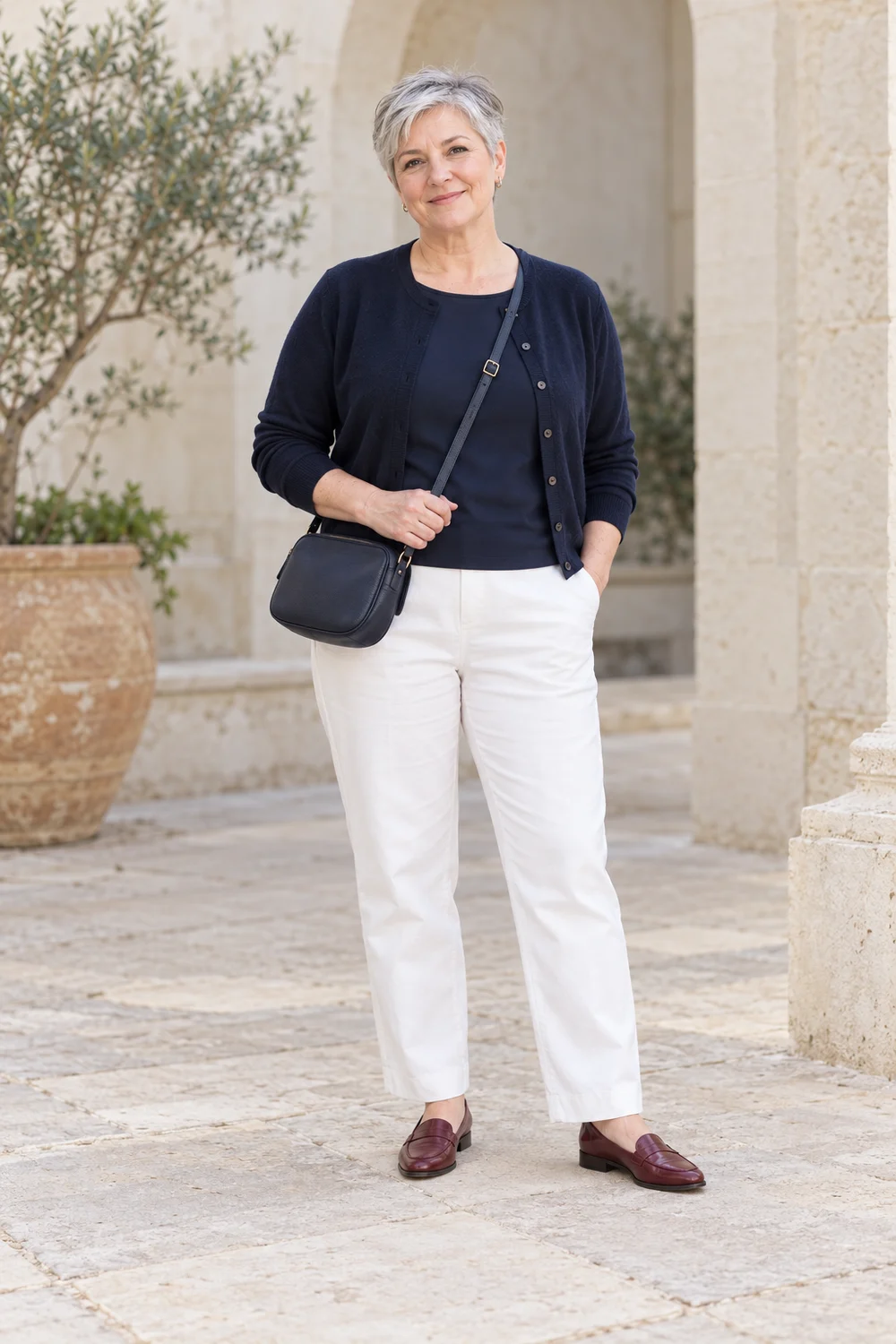
Outfits on petite fictional adults, including petite plus-size models. Compare shoulder placement, rise, knee position and hem length rather than assuming that shortening a hem solves every fit issue.
Use one romantic detail with ordinary layers: an ivory tie-neck blouse, a brown waistcoat and a grey skirt.
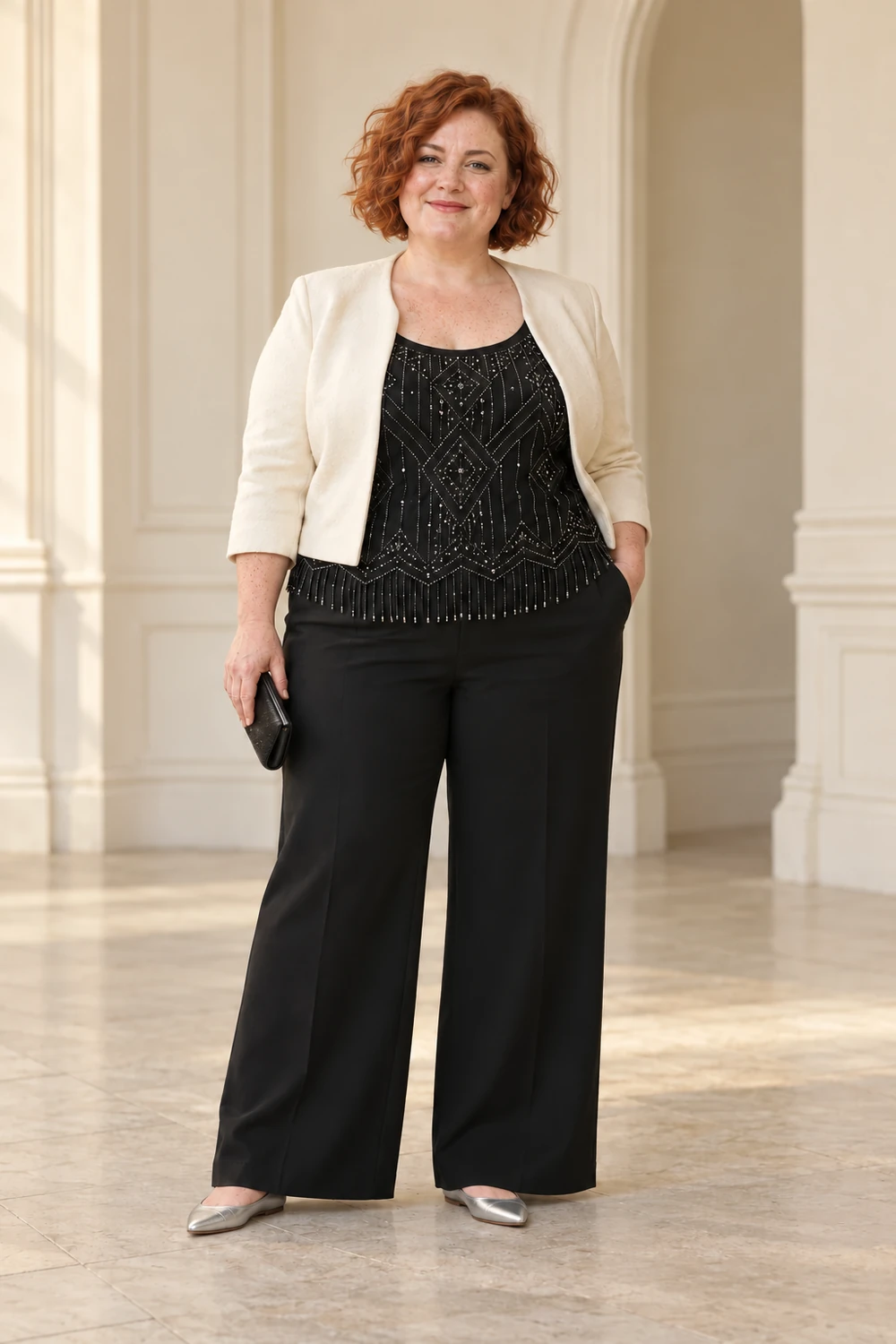
Keep one Art Deco reference in the top, then use plain trousers, a short jacket and flats.
Check rise, pocket position and leg shaping before paying for a shorter hem.
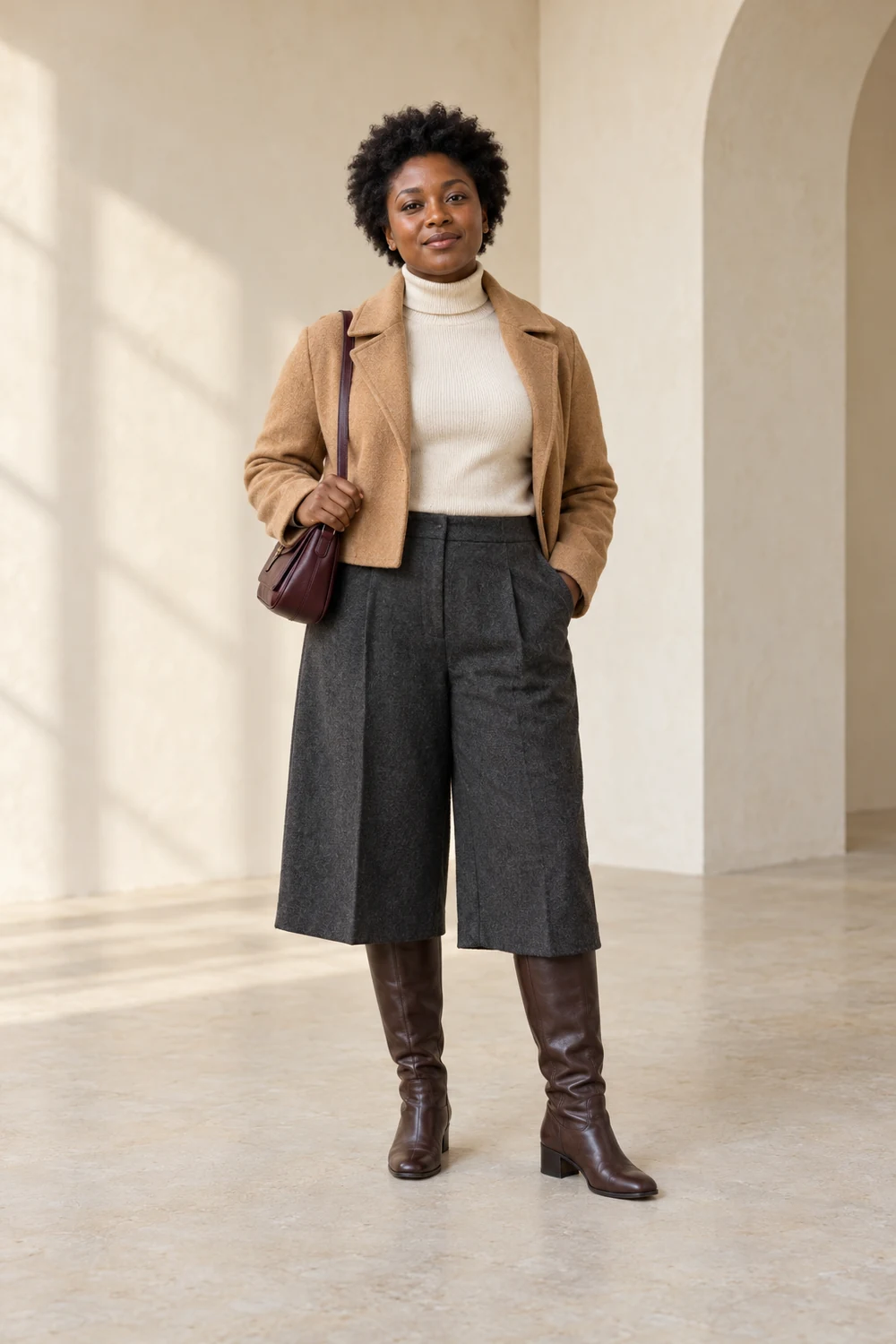
Choose the culotte hem and boot shaft together.
Choose a complete travel outfit first, then pack a small set of tops and one extra lower half that work with it.
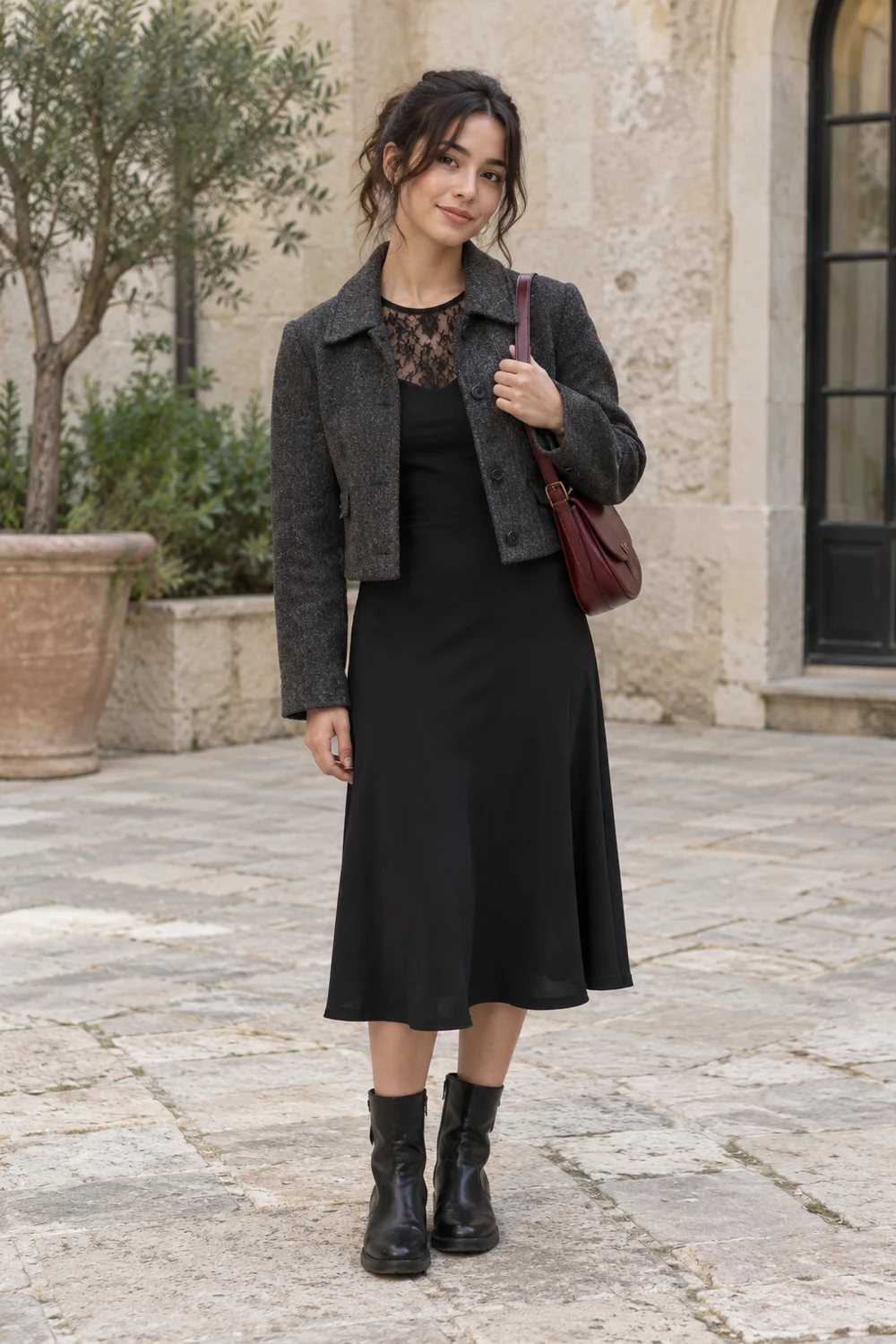
Build this outfit around an opaque black midi dress, a short charcoal jacket and comfortable flat ankle boots. Check the dress waist, sleeve length and walking space before choosing accessories.
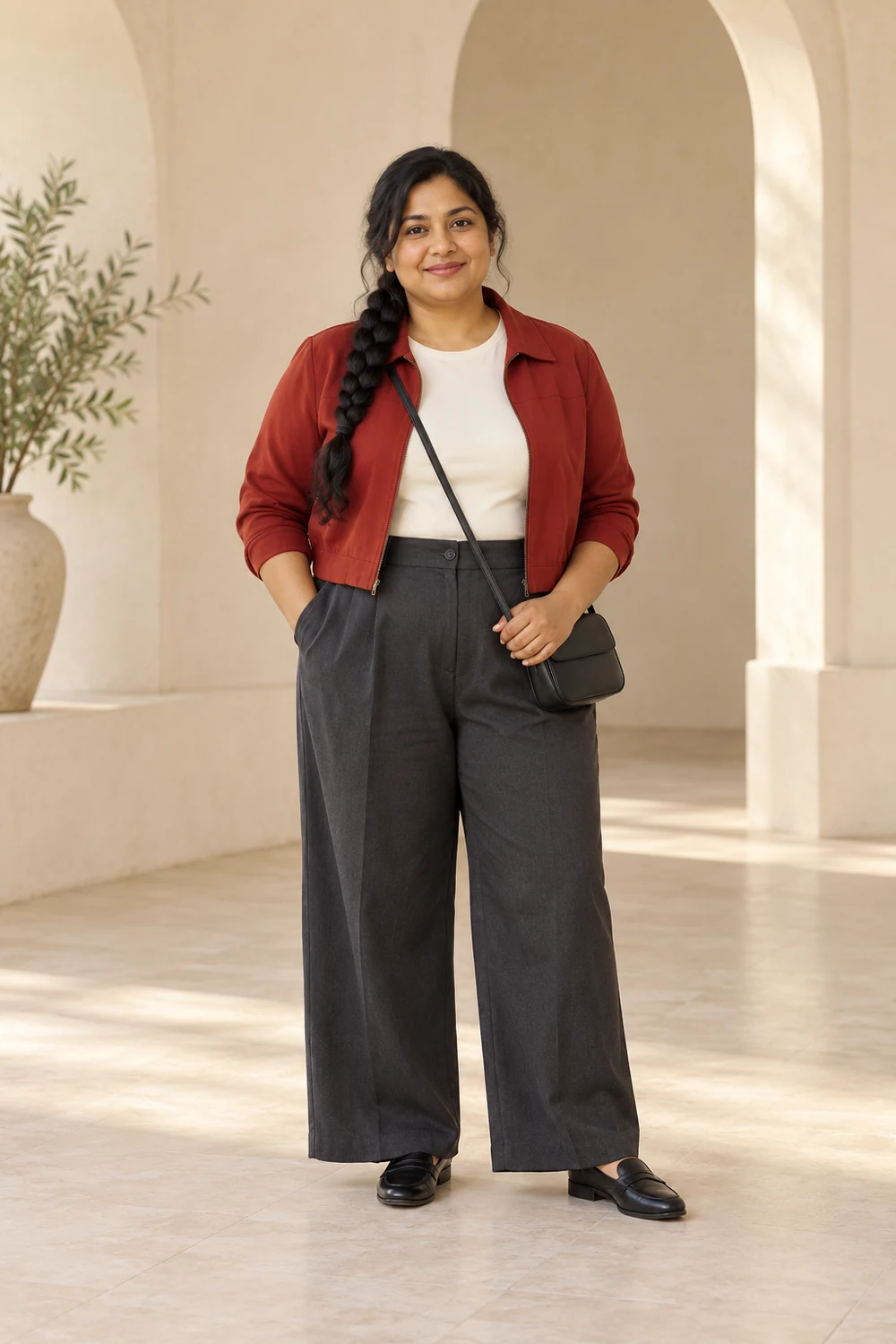
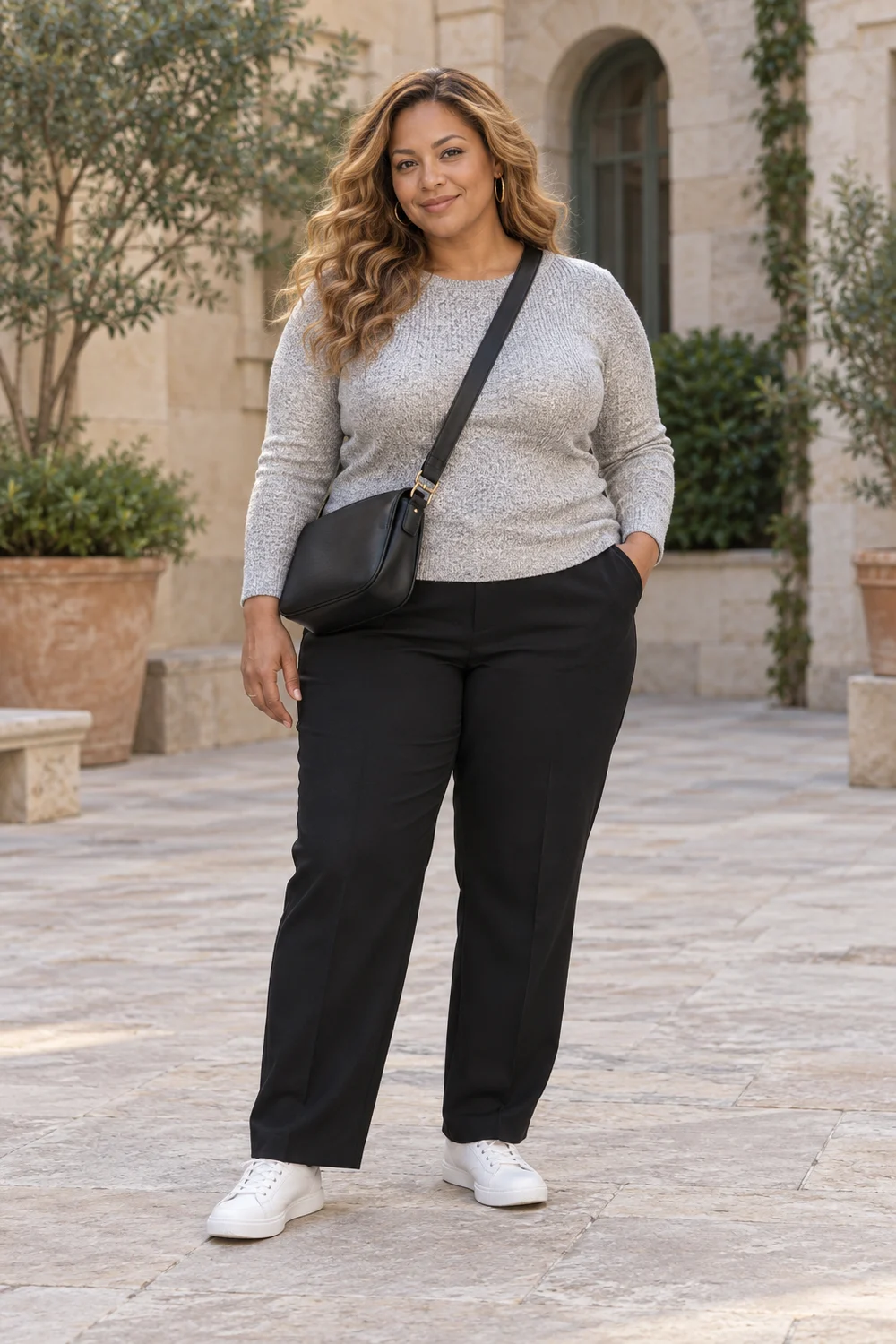
Pair straight charcoal trousers with an ivory blouse and a short collarless jacket. Fit the rise and knee position before shortening the hem, then check the outfit with flat Mary Janes.
Choose a blue-and-white cotton shirtdress with a comfortable waist tie, then add white low trainers and a useful ivory bag. Check button spacing and the position of the waist before altering the length.
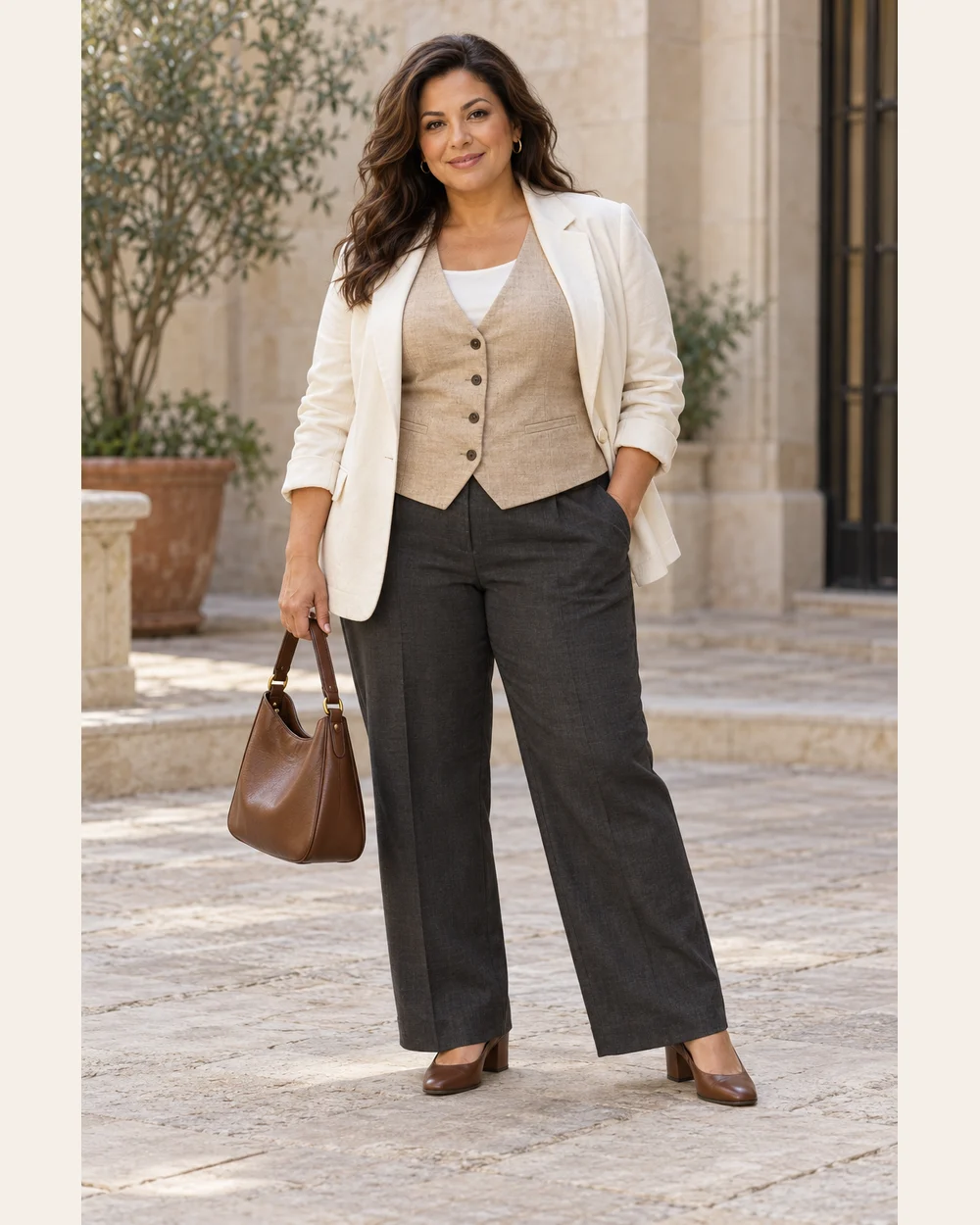
Build a sand waistcoat-and-trouser outfit over a fine ivory top, then add dark-brown loafers and a bag. Check the waistcoat buttons, trouser rise and knee position while sitting and moving.
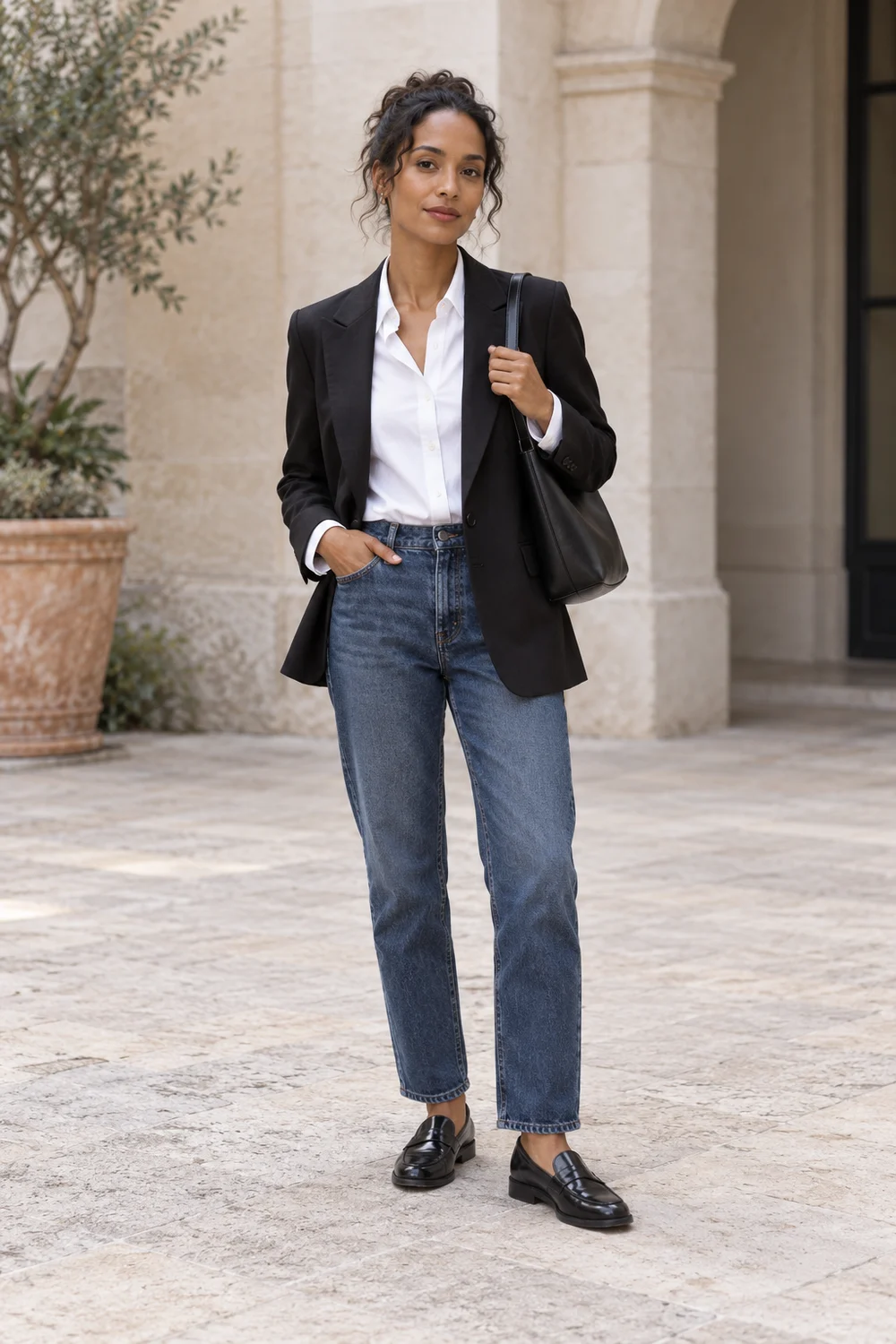
Combine a white Oxford shirt, straight indigo jeans, a short black blazer and flat loafers. Fit the shirt and denim separately, then check the jacket shoulder and hem over both.
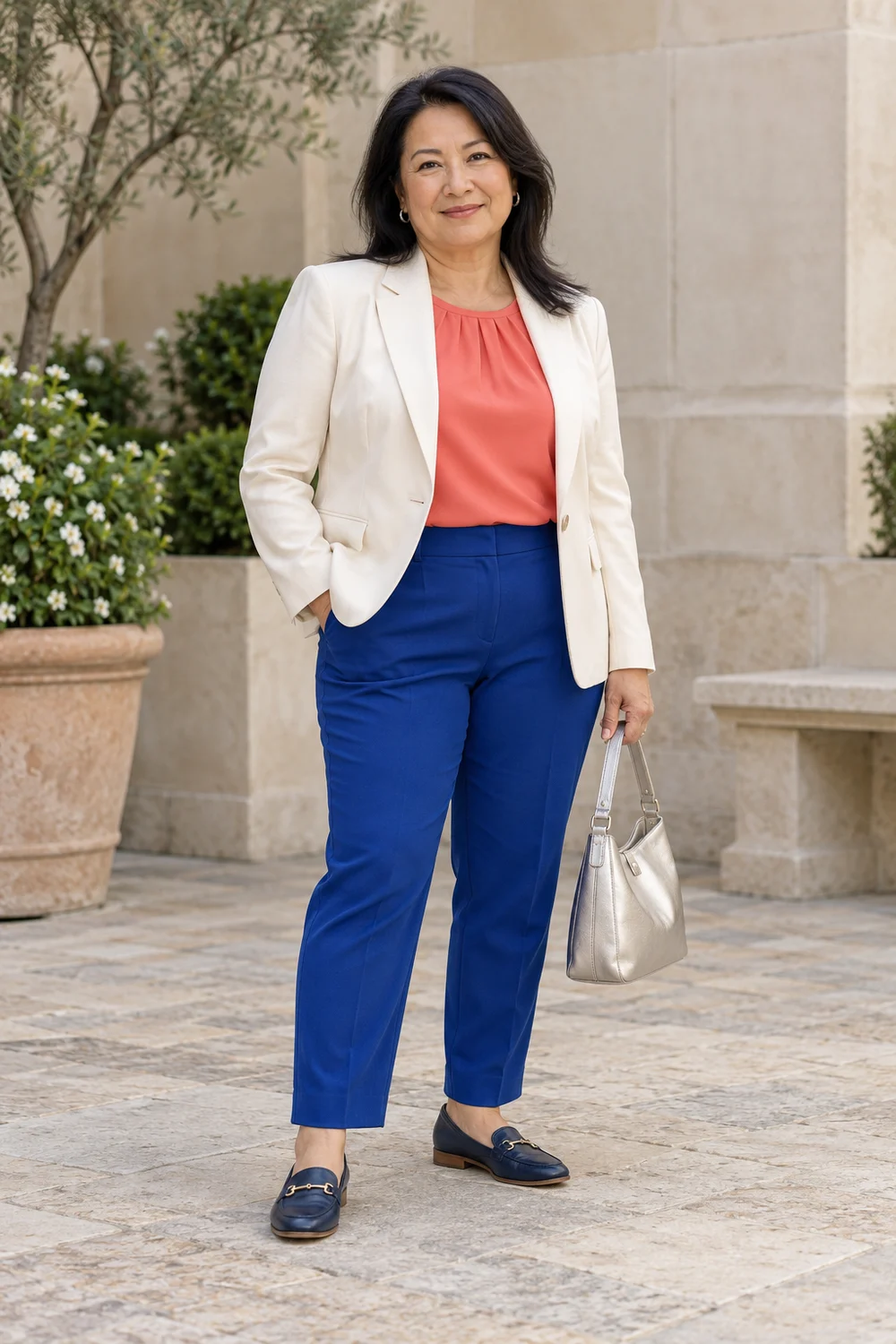
Pair a fluid coral blouse with cobalt straight trousers and an open ivory blazer. Fit the blouse and trousers for sitting comfort, then choose a hem that clears your navy flats.
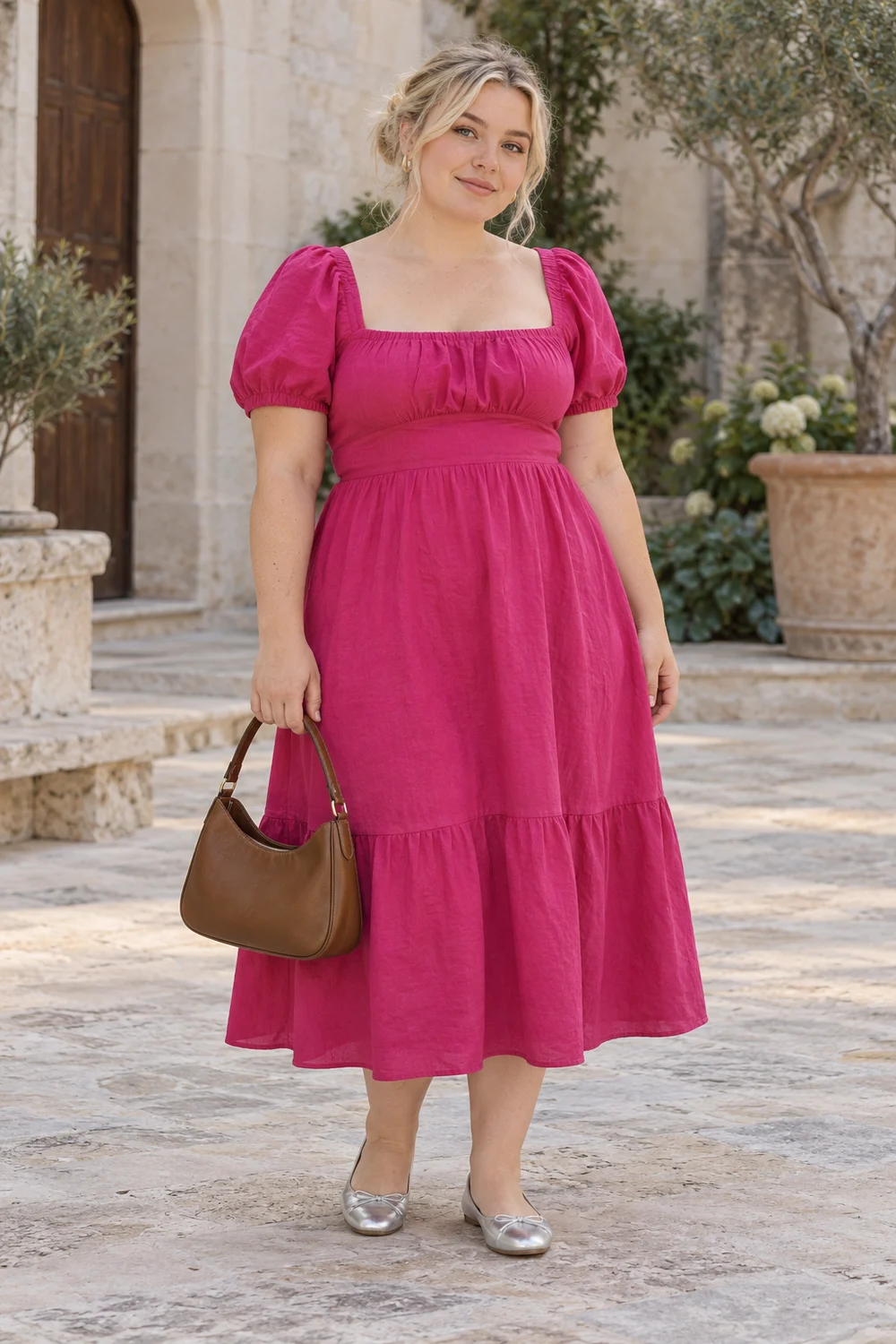
Let one fuchsia midi dress lead the outfit, with silver flats and a useful compact bag. Fit the bust, shoulder and waist seam first, then choose the hem while wearing your actual shoes.
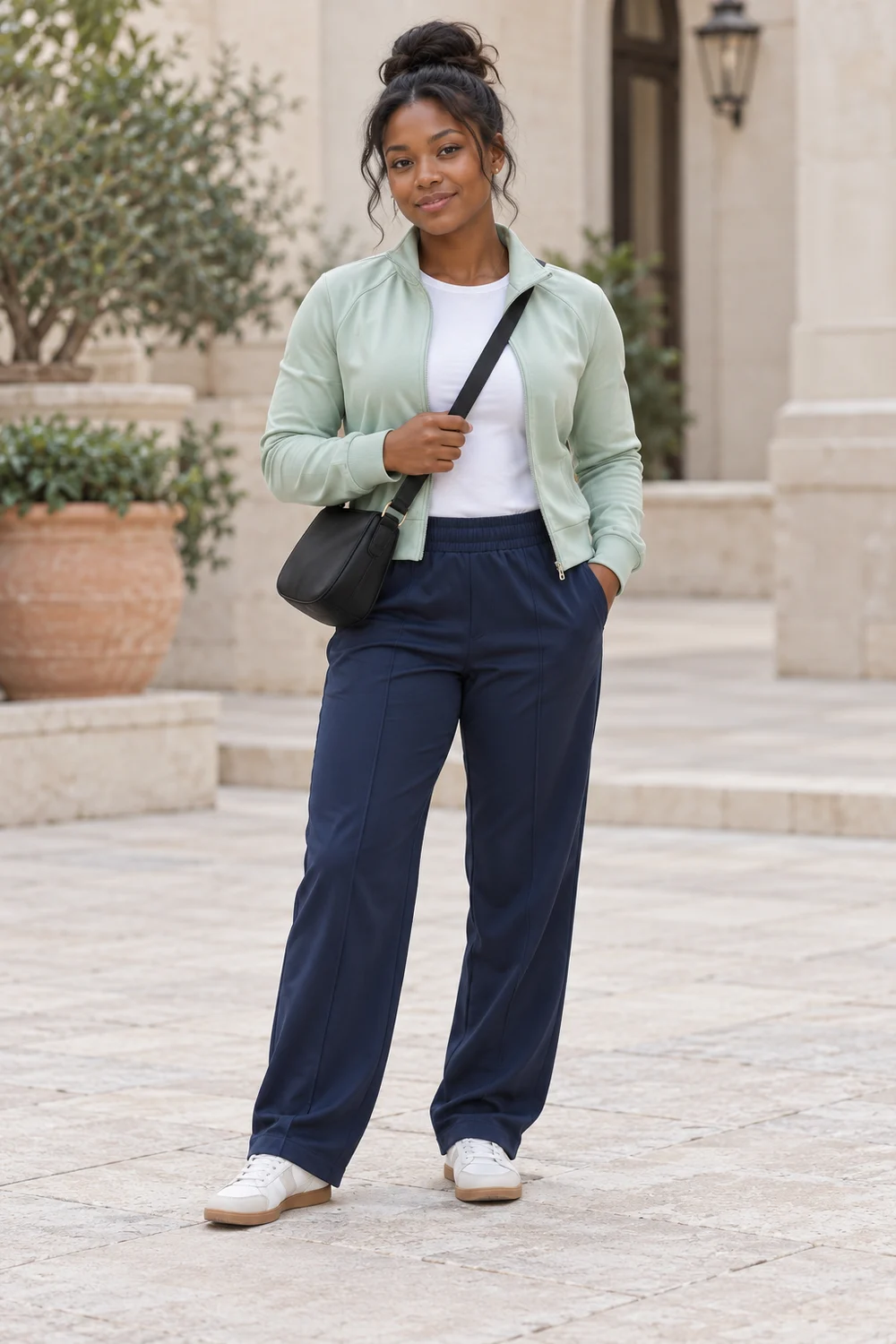
Wear a mint zip jacket over a plain white T-shirt, add ink straight track trousers and comfortable trainers, then test the waistband, knee position and hem through normal movement.
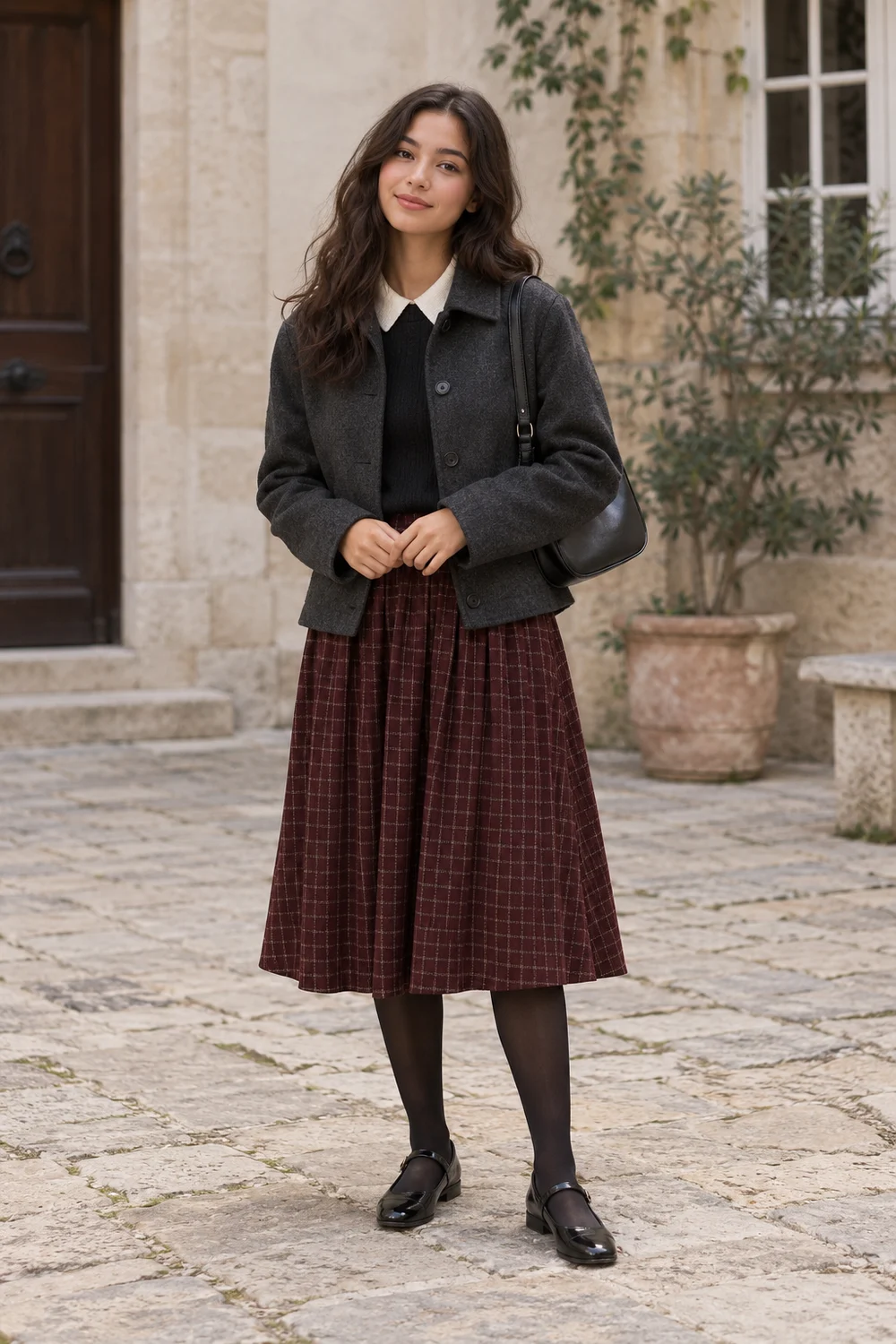
Let an oxblood-and-black checked skirt lead, with a black knit, small cream collar and flat Mary Janes. Fit the skirt waistband and jacket separately, then check the hem with the tights and shoes you will wear.
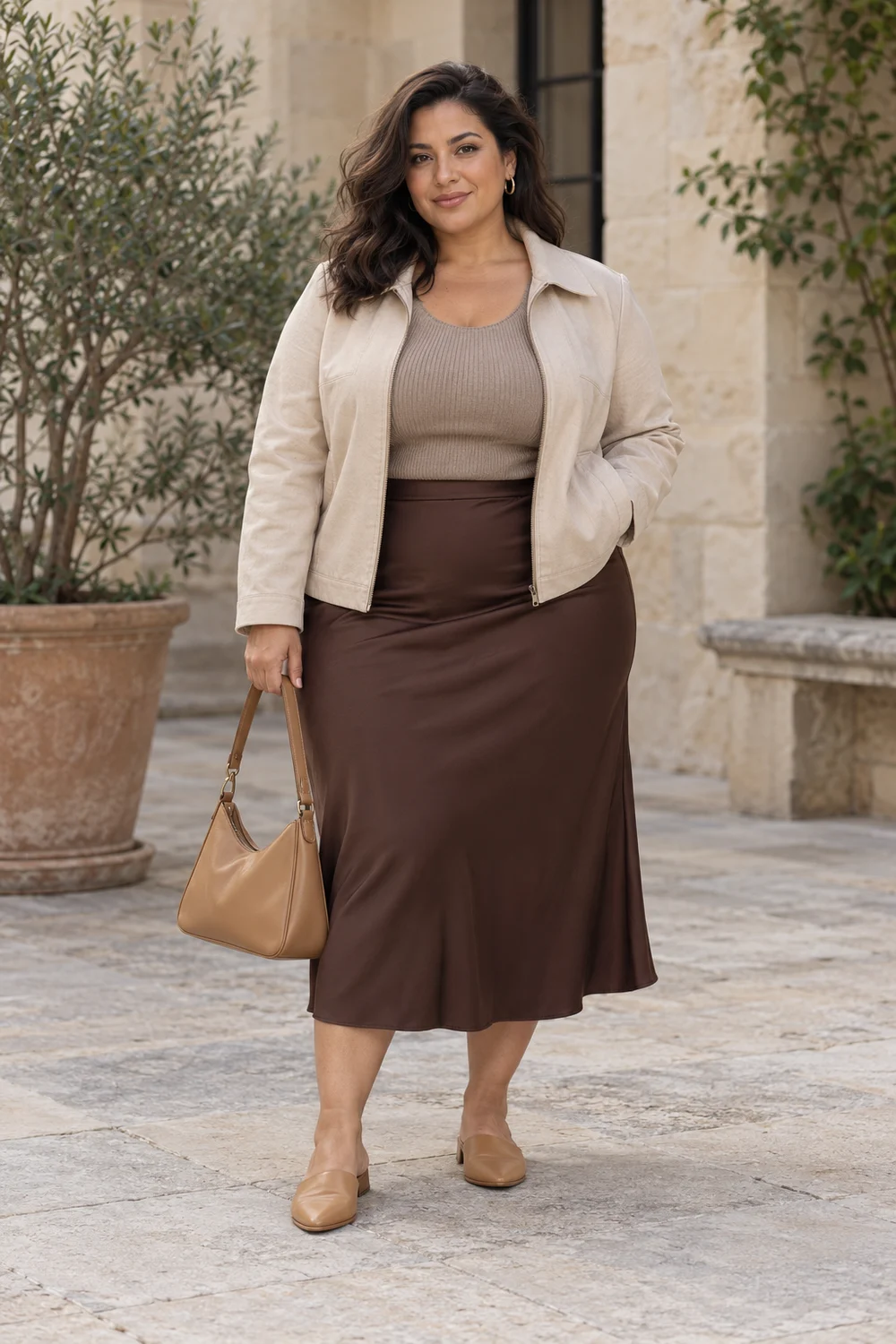
Pair a taupe knit T-shirt with a chocolate midi skirt and a stone jacket. Fit the skirt for sitting and walking, then check the waistband, vent and hem with your comfortable tan flats.
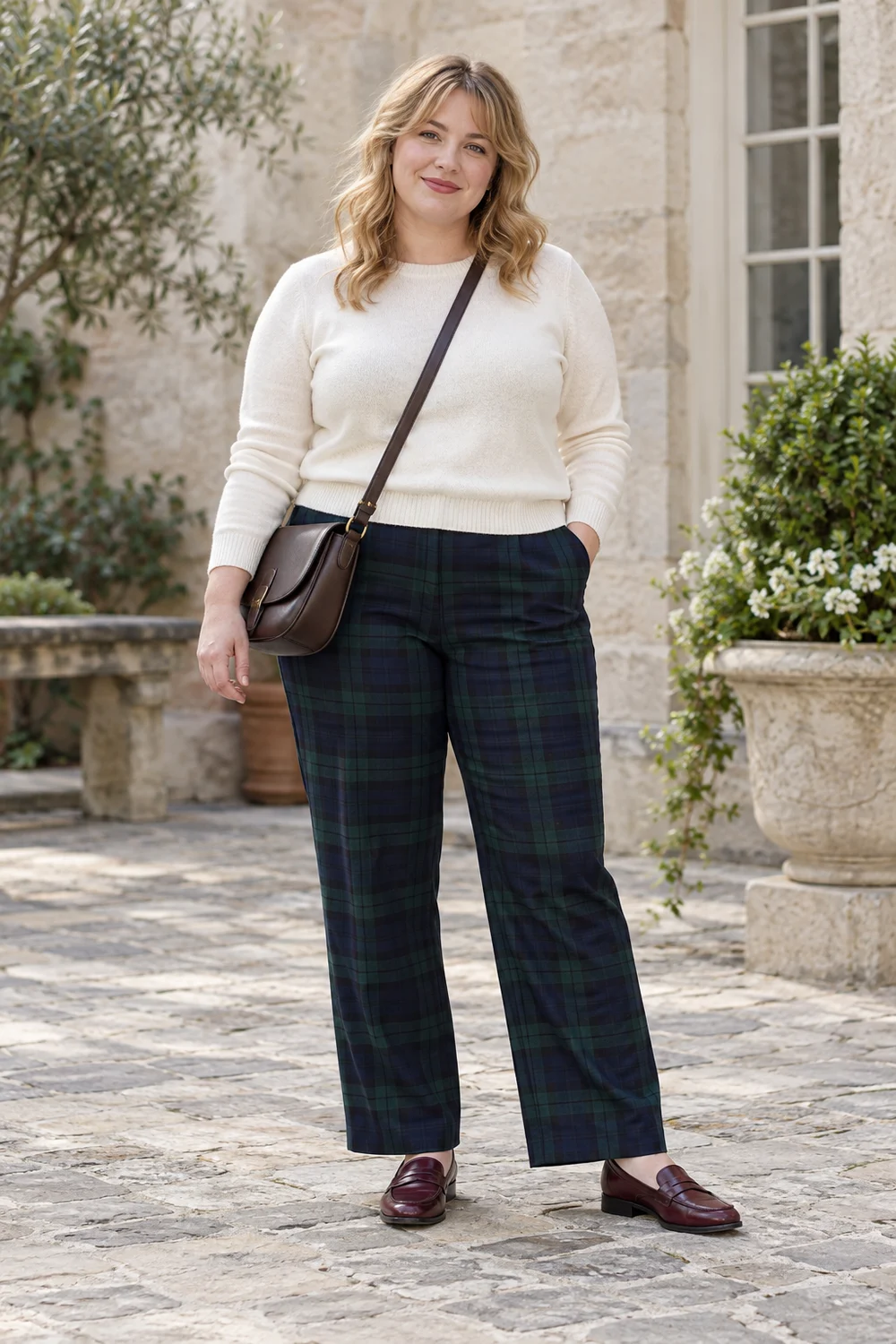
Build around checked trousers and an ivory knit, then choose a camel layer and either loafers or trainers after checking the actual rise and hem.
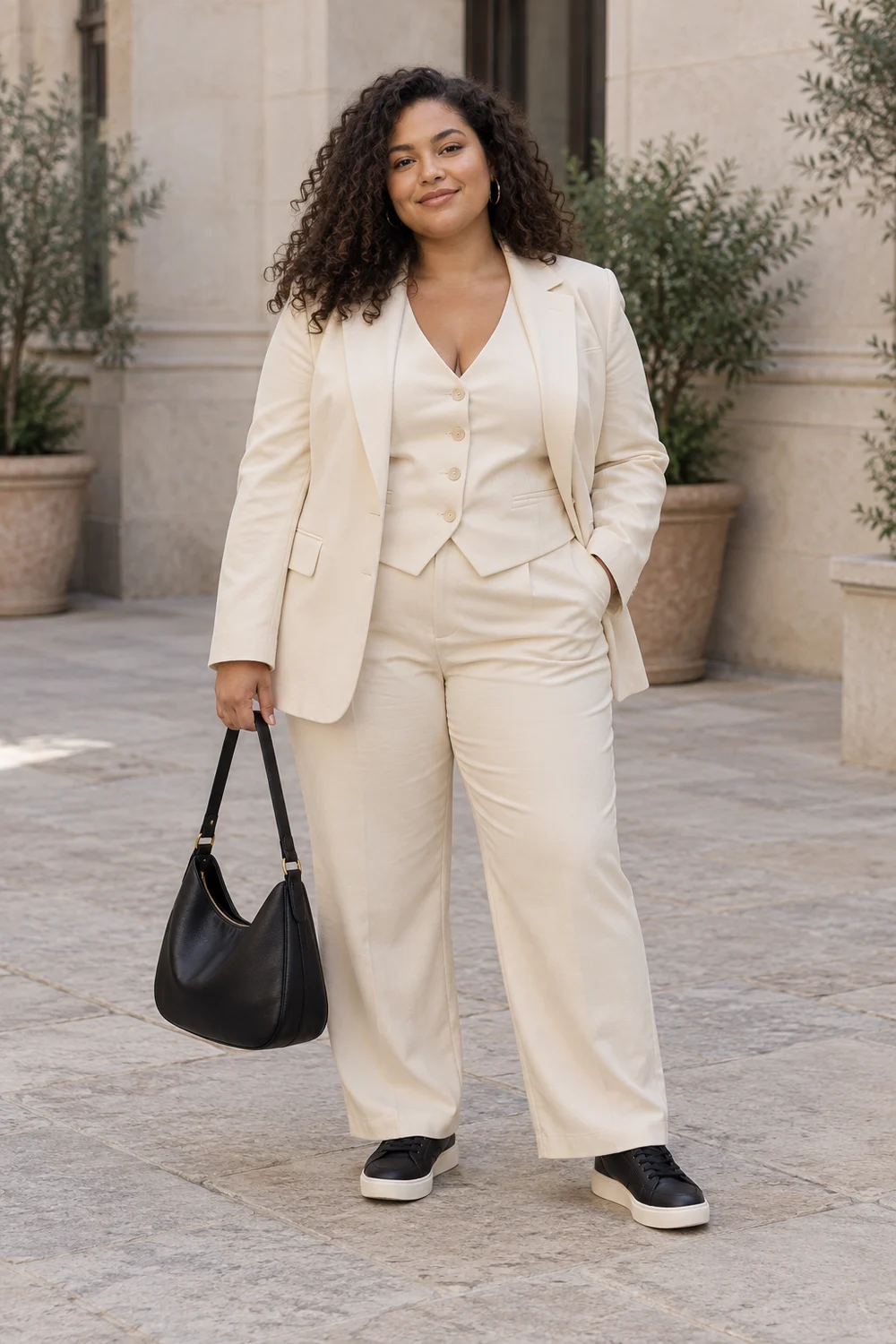
Let cream carry the main shape and black give it a clear base; compare the waistcoat alone with its blazer, then choose flats or low trainers.
Choose the denim skirt for seated room and a normal stride, then decide whether a tan mule or cream trainer serves the day better.
Let chocolate and stone create the calm centre, then use a taupe blazer or a small silver shoe accent to change its purpose.
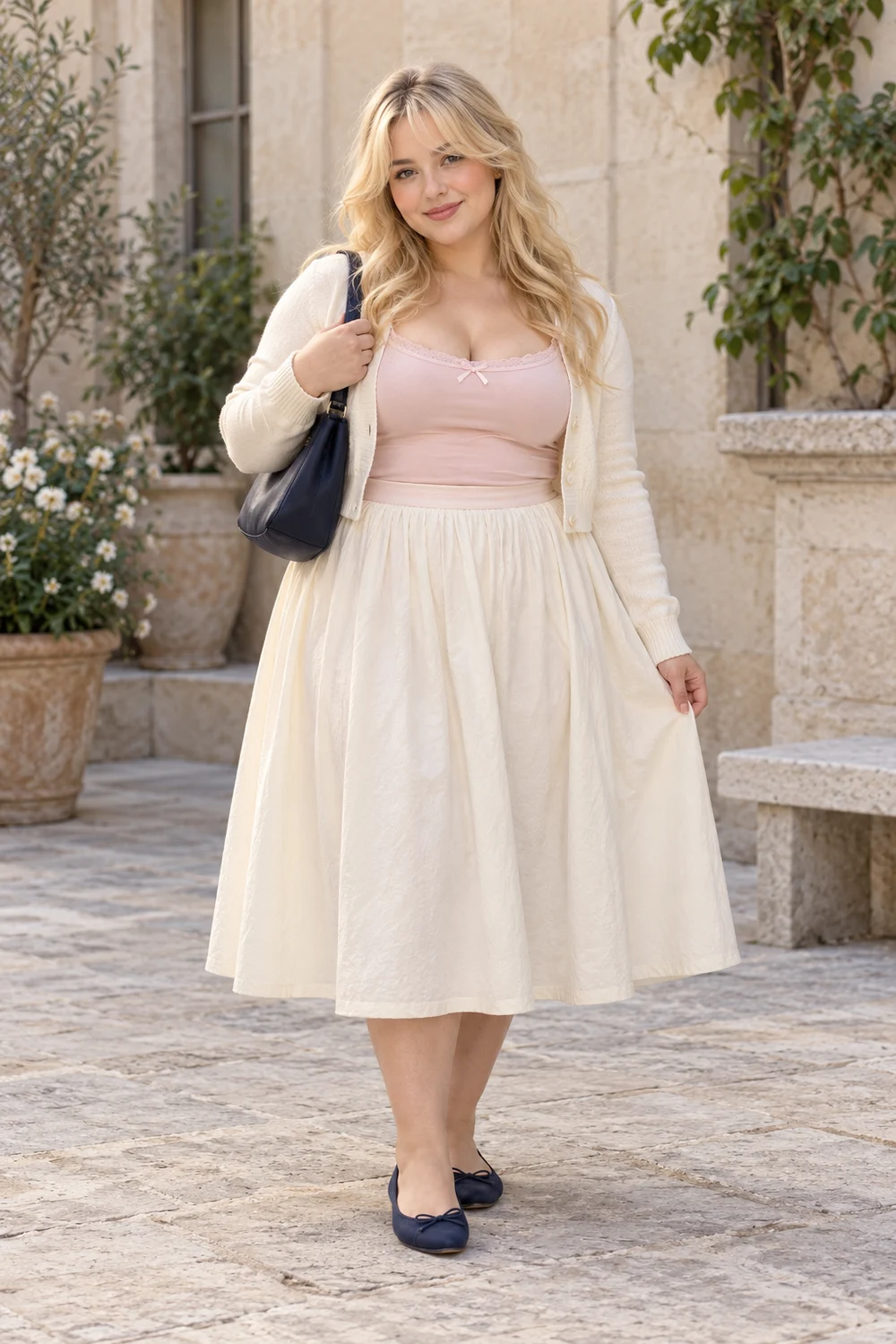
Edit a pastel skirt outfit around comfortable fullness, a short optional cardigan and two clearly different shoe routes.
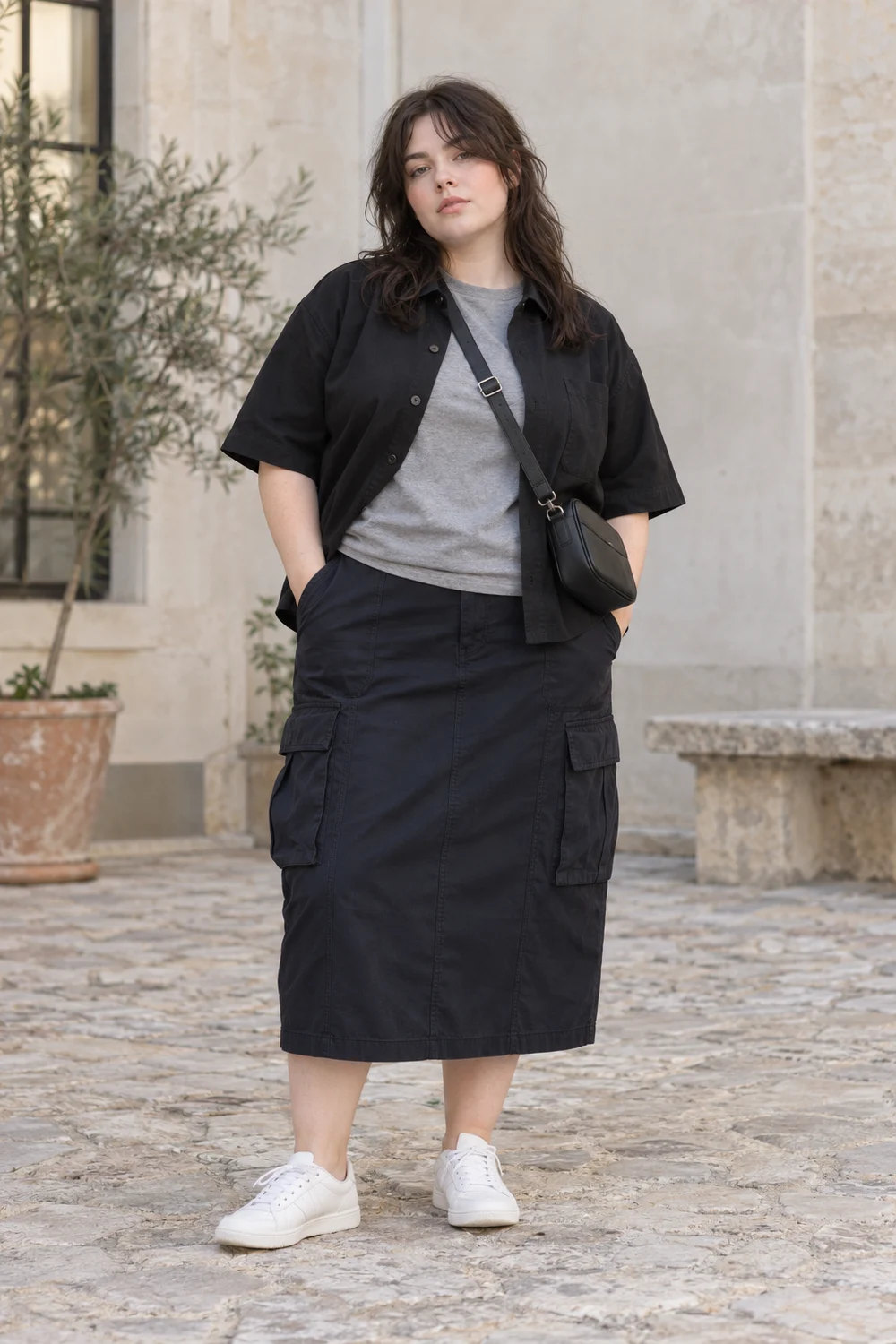
Keep a cargo skirt and boxy tee relaxed by fixing pocket bulk, hem collisions and overshirt fit one at a time.
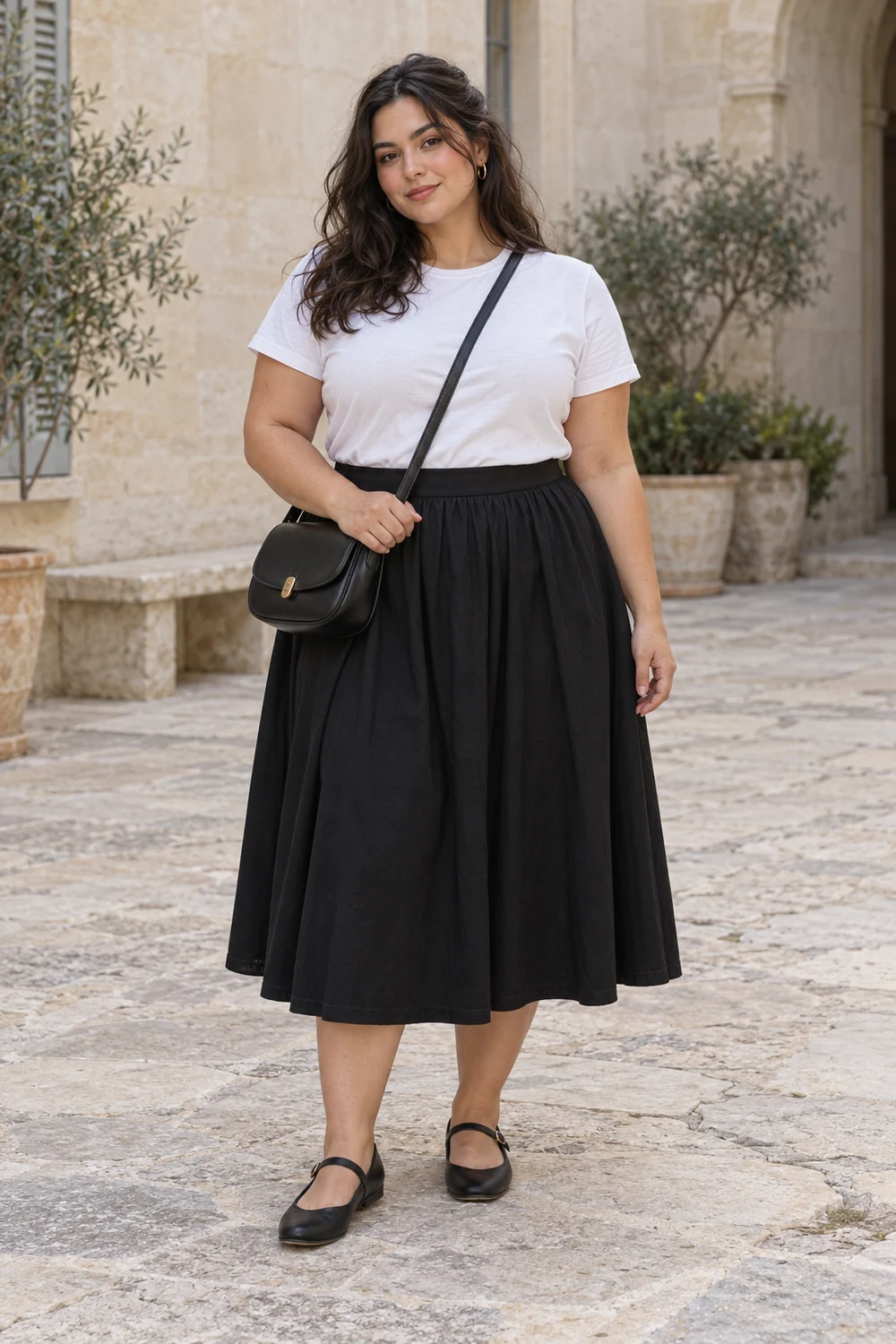
Rehearse the jacket sleeve and skirt movement, then choose a black Mary Jane or trainer finish for the actual invitation.
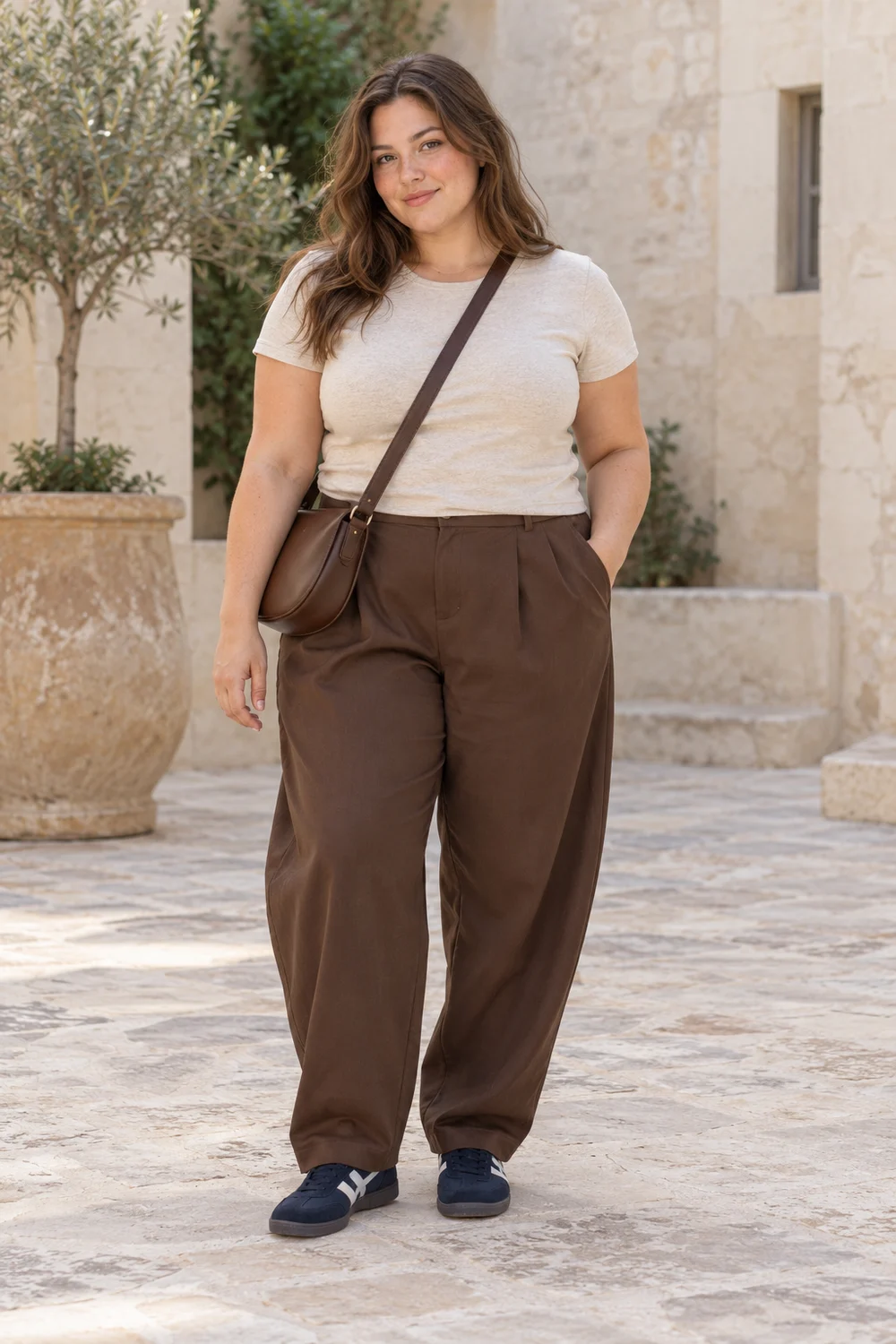
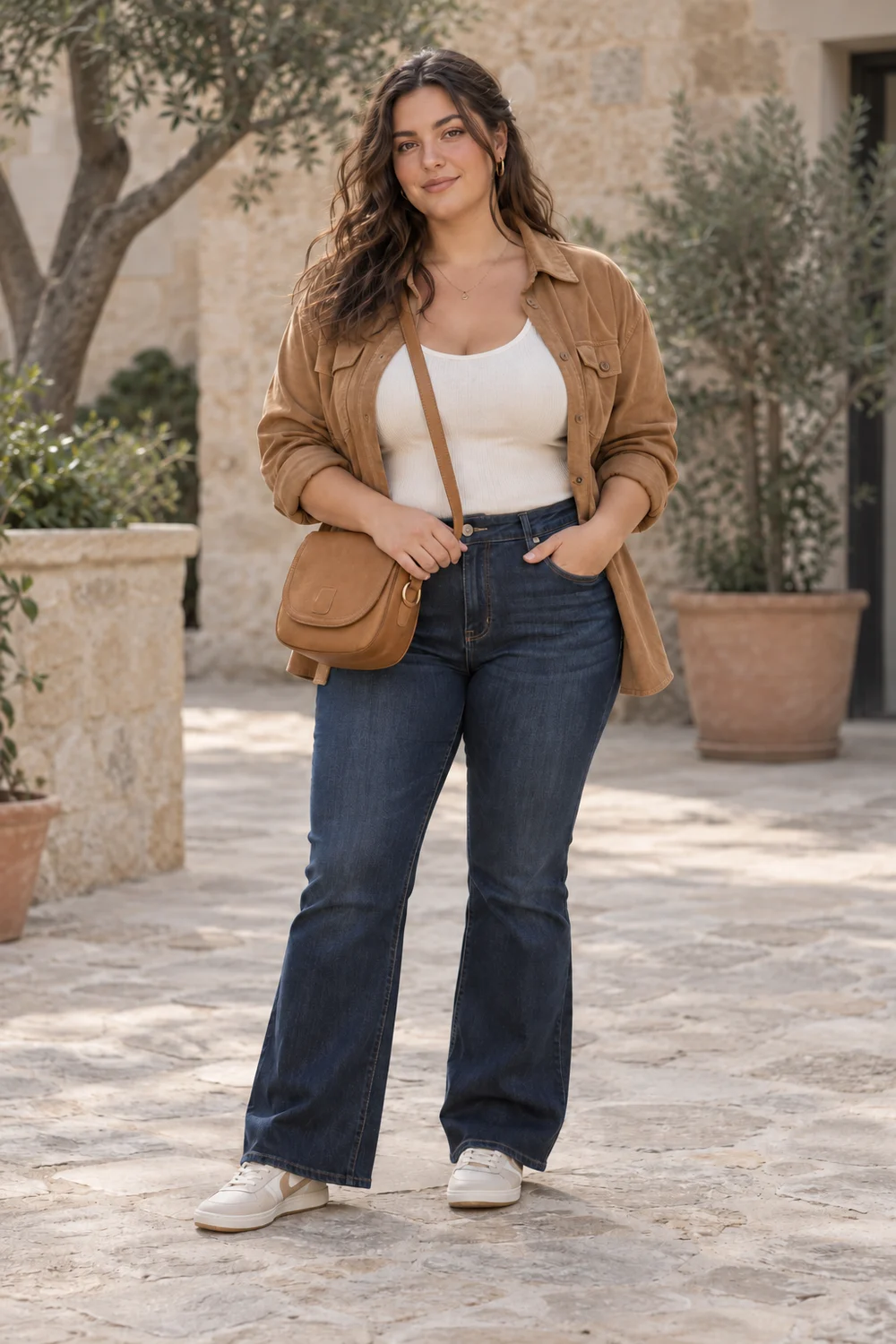
Set dark bootcut jeans for the lower of your two actual soles, then add an ivory vest and an optional tan overshirt.
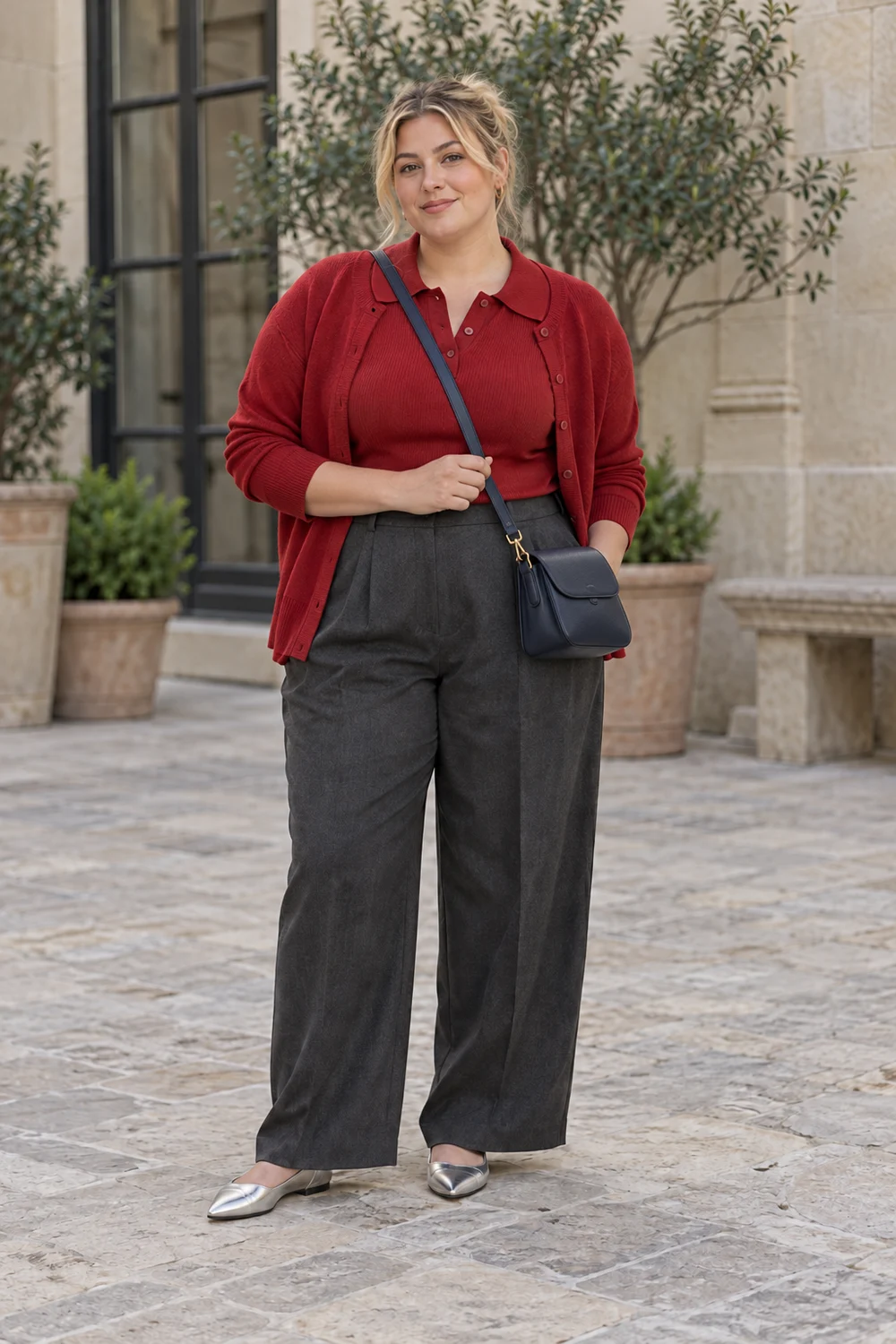
Give a red knit polo and charcoal pleats a clear shape, then choose silver flats or navy trainers without losing the trouser line.
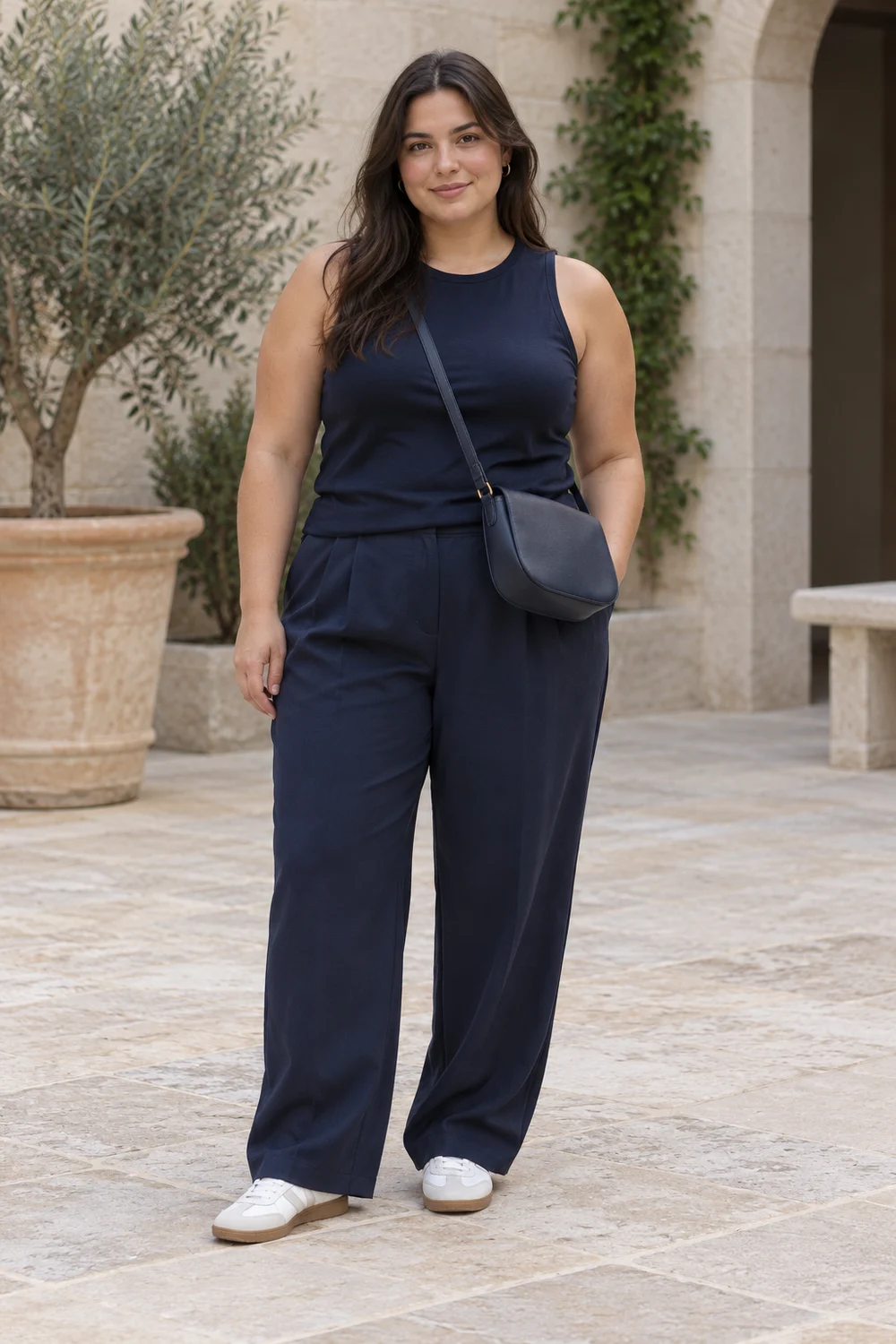
Let navy carry the main shape and cream mark the optional layer, with ballet flats or white trainers changing the lower contrast.
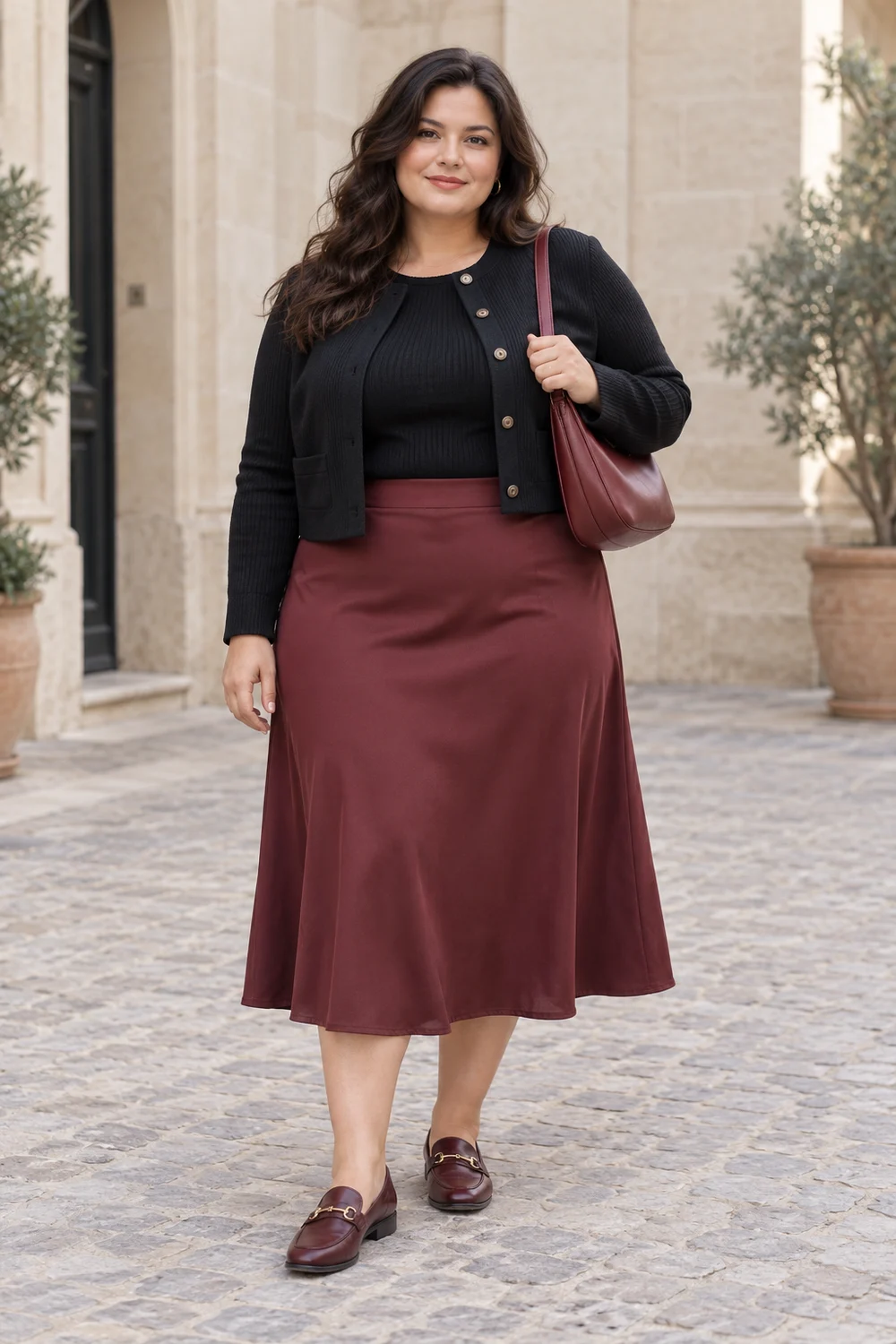
Choose between a burgundy loafer finish and a white trainer finish after checking how the lined bias skirt moves over your underlayers.
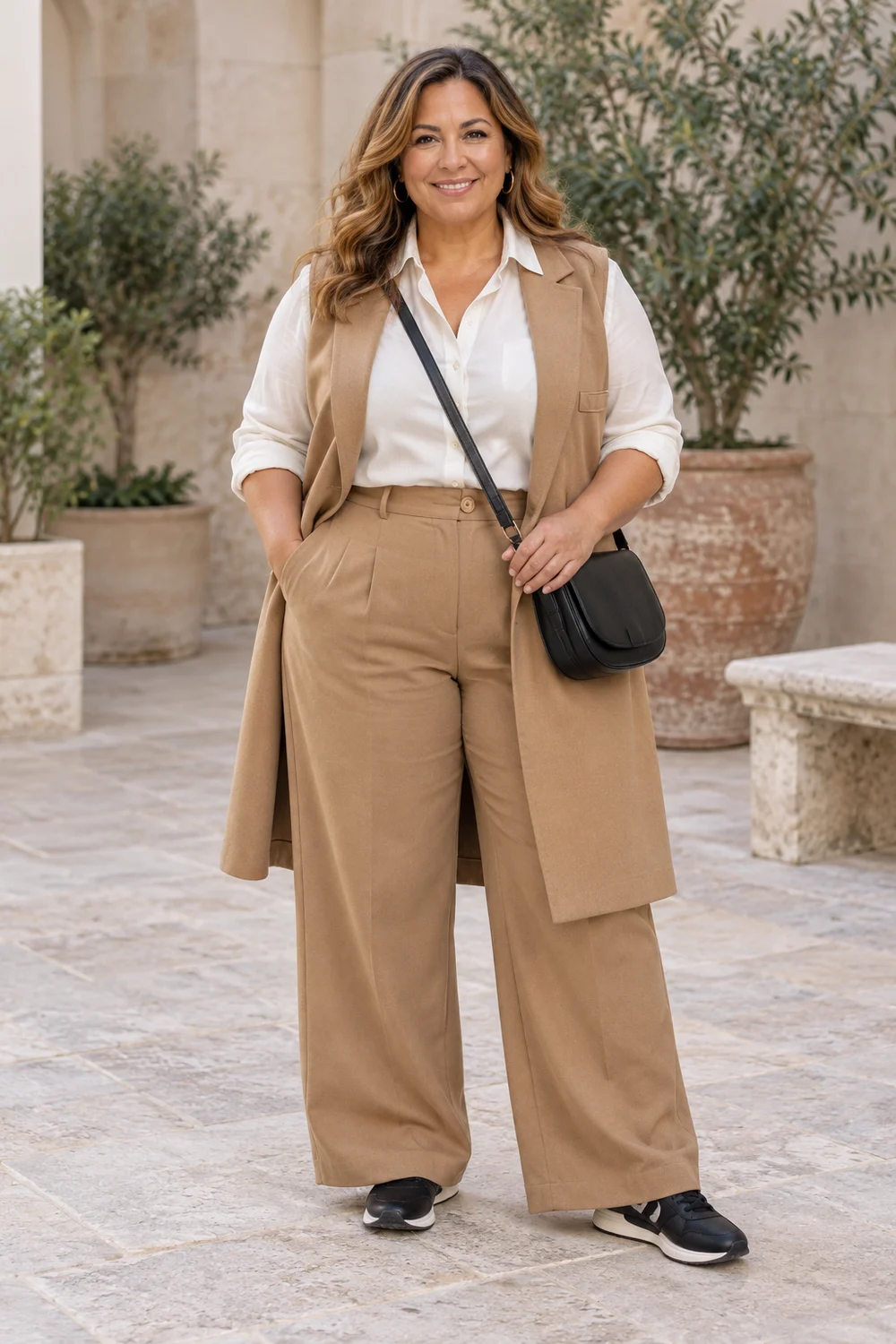
Use an ivory shirt to separate camel trousers from a long optional waistcoat, with black shoes anchoring either version.
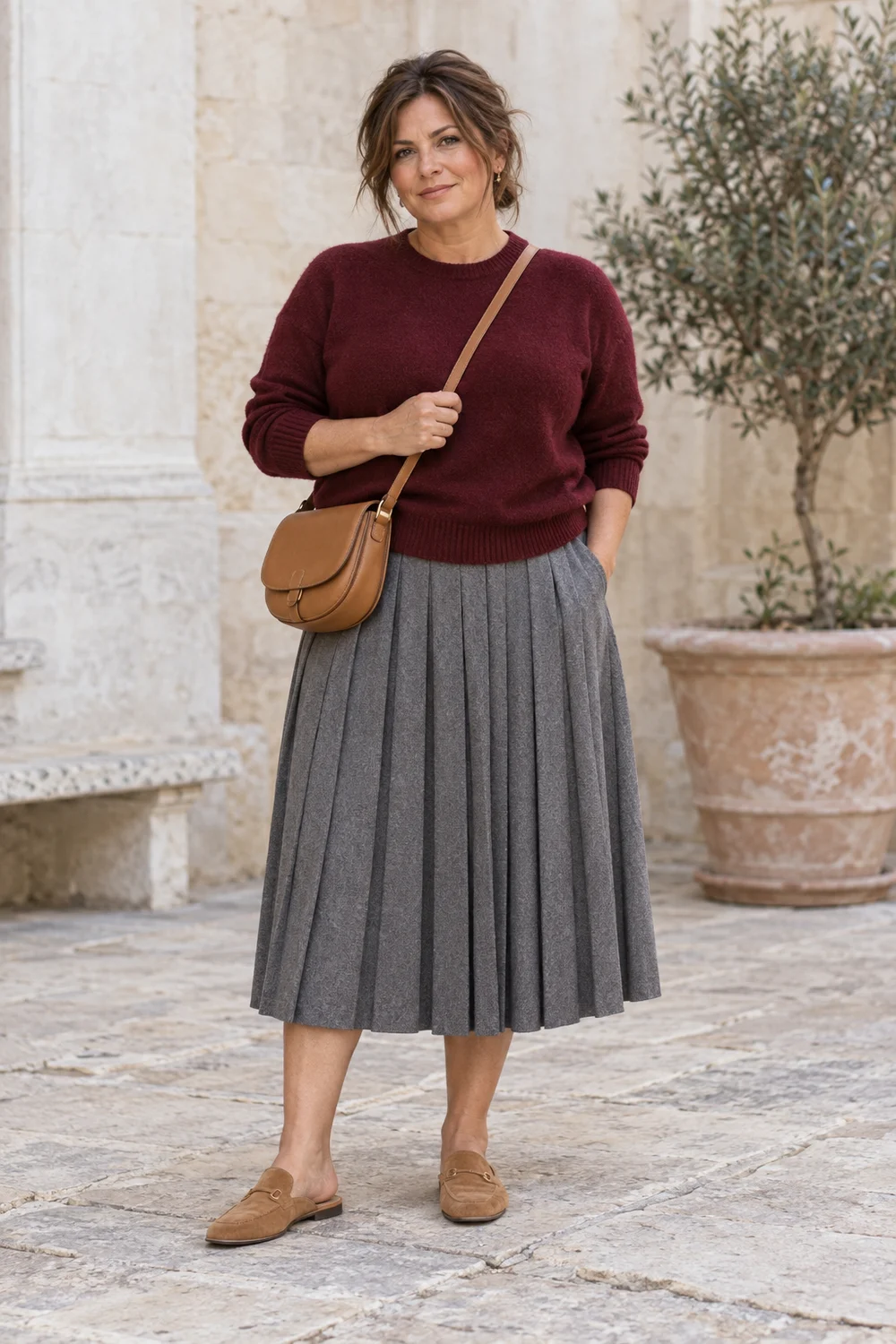
Prioritise the pleated skirt, fine burgundy knit and one secure shoe before adding a grey blazer or a second pair.
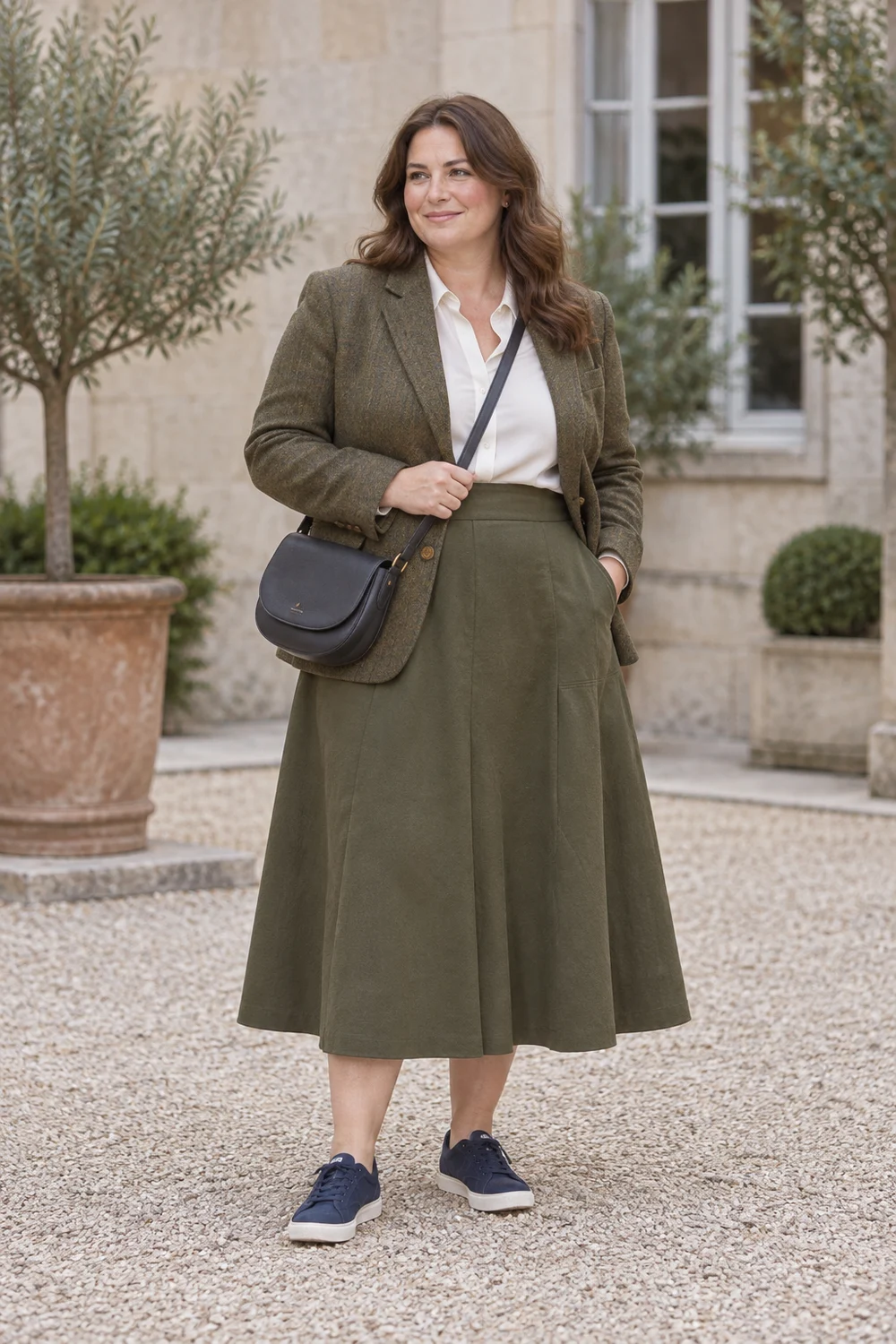
Separate a tweed sleeve problem from a blouse or skirt problem, then finish the olive outfit with silver flats or navy trainers.
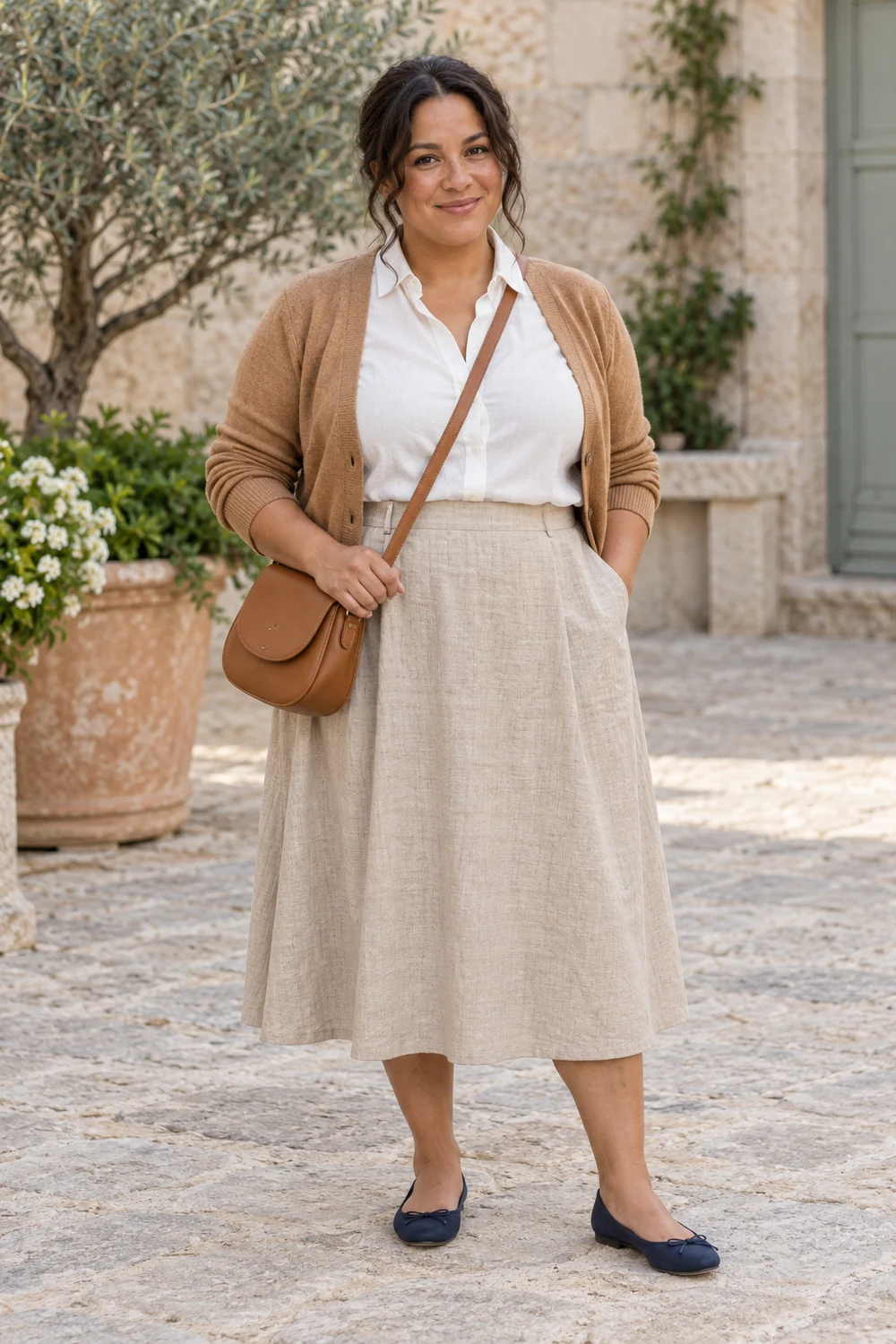
Practise one stable shirt hem with a sand linen skirt, then repeat the check with the cardigan and both shoe routes.
Keep silver to one knit top, ground it with black trousers and choose burgundy loafers or white trainers before adding the cropped jacket.
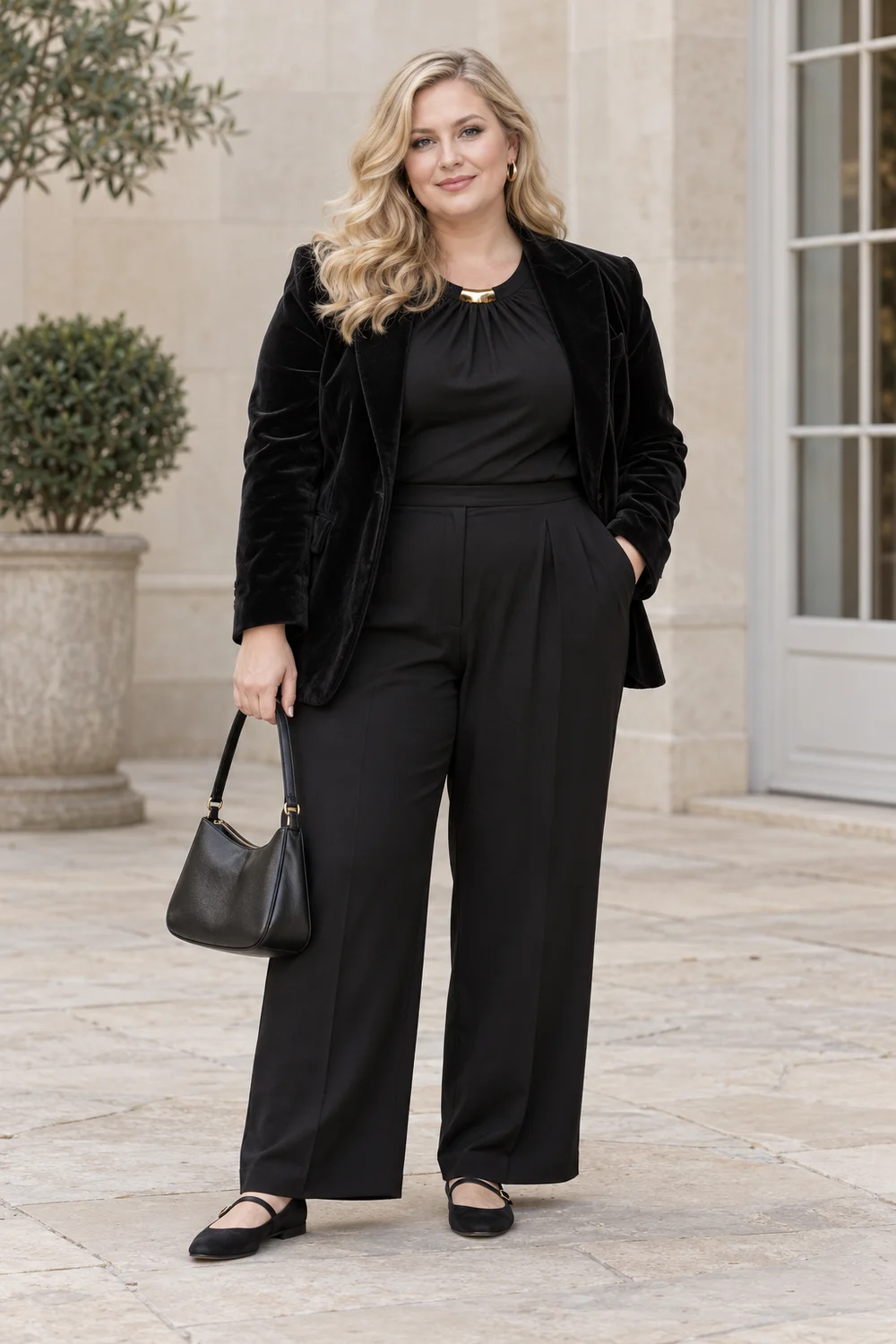
Build a comfortable black trouser outfit around one gold neckline detail, keeping the velvet jacket optional and the hem clear in both shoes.
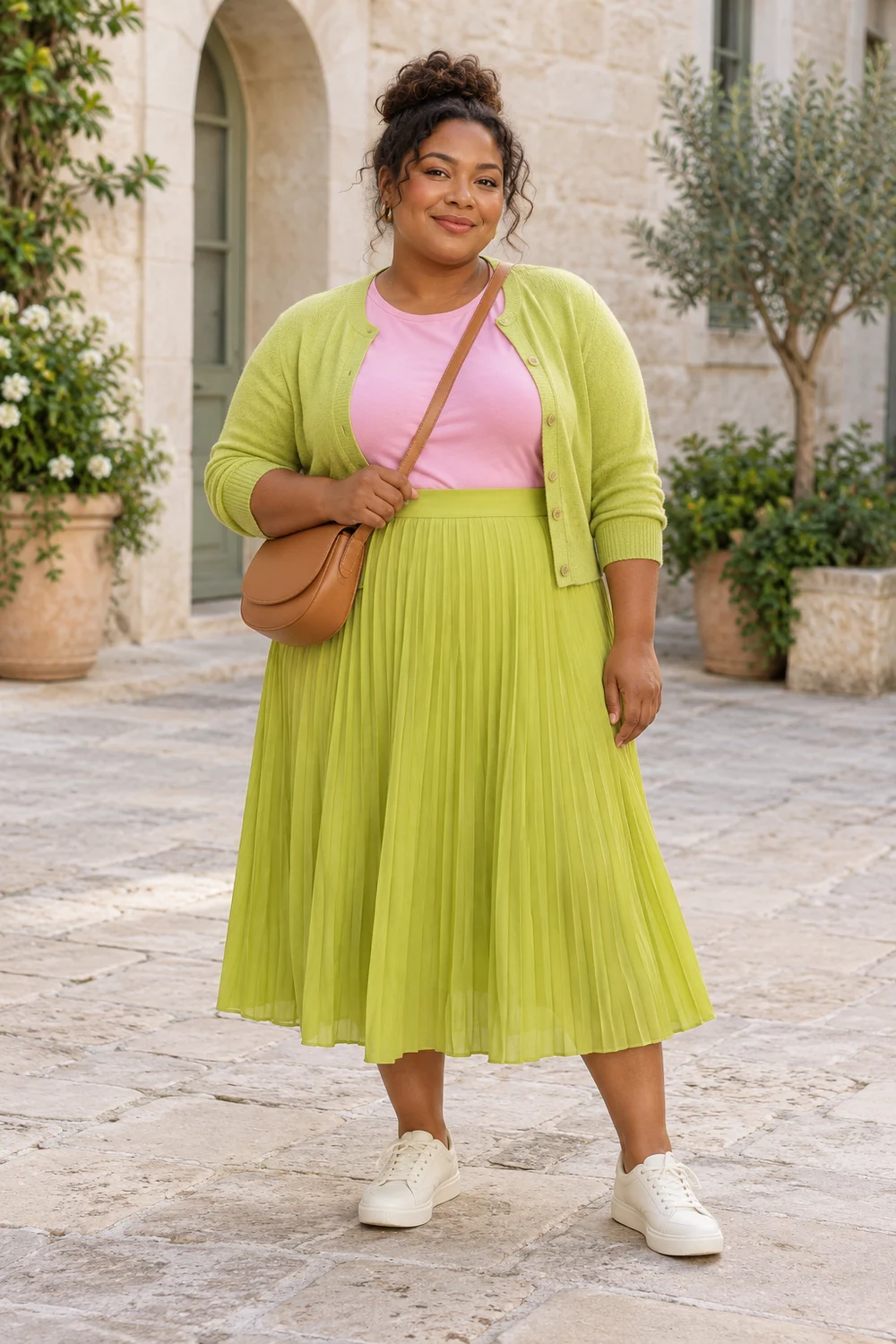
Use lime as the main colour and pink as its clear interruption, then choose tan mules or cream trainers to change the finish.
Choose the jumpsuit only after testing torso length, fastening access and both shoes; the rust shirt is a separate optional layer.
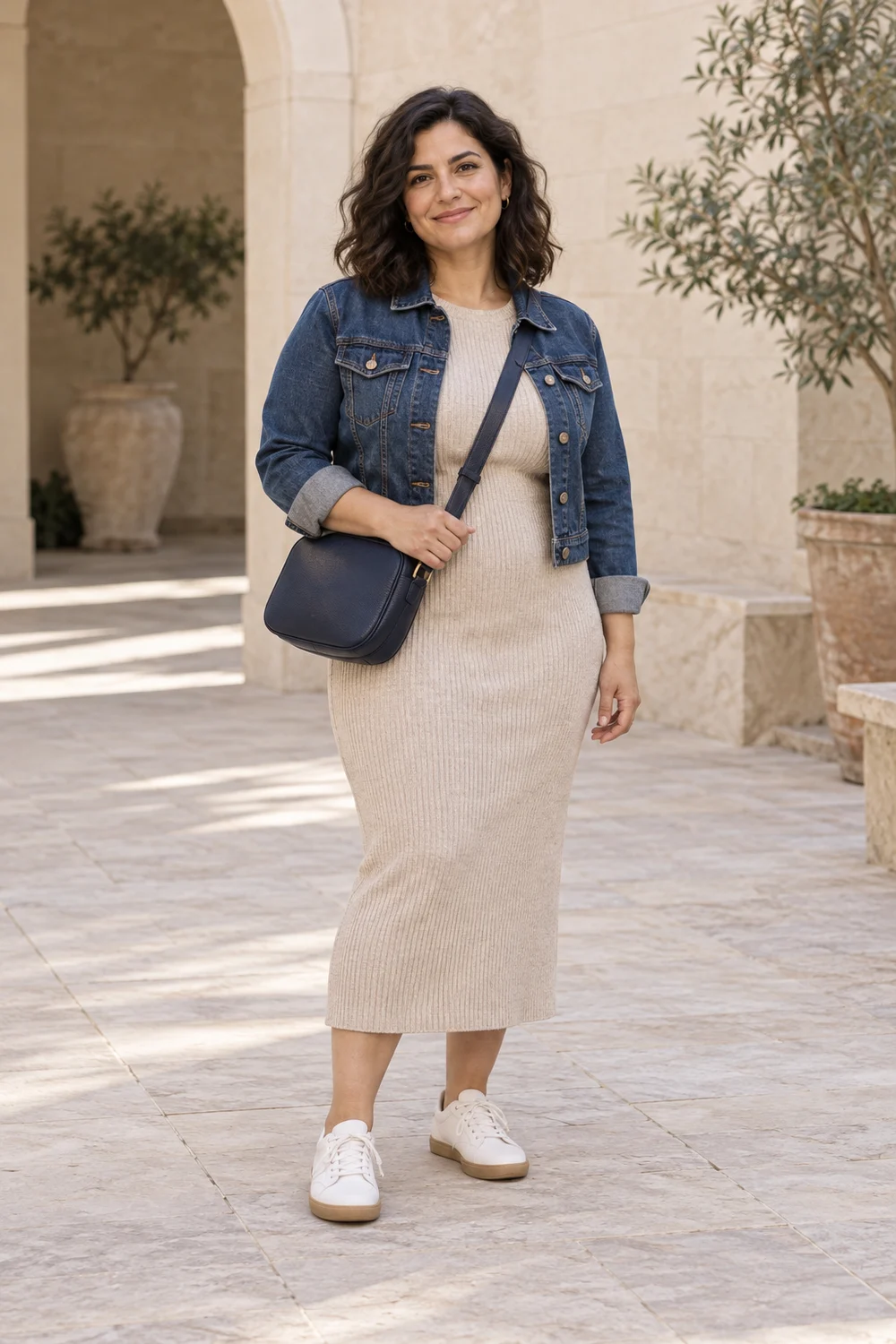
Let an oatmeal knit dress provide the complete base, with indigo denim and two shoe routes changing the weight around it.
Make white-trouser opacity and seated fit the priorities, then use a navy shell, optional cardigan and one secure shoe route.
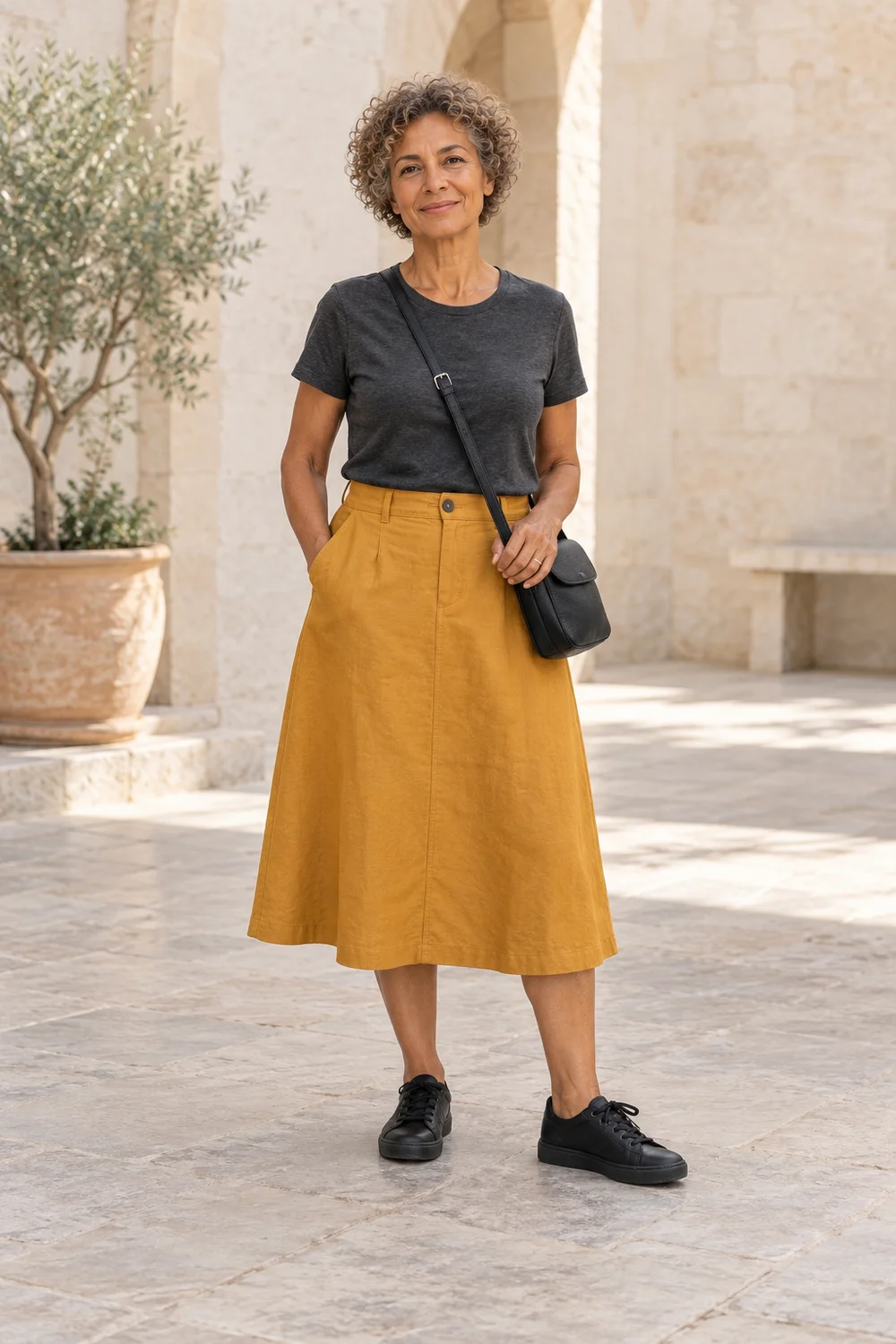
Fix the meeting point of a charcoal tee and saffron skirt before adding a collarless jacket or changing the shoe.
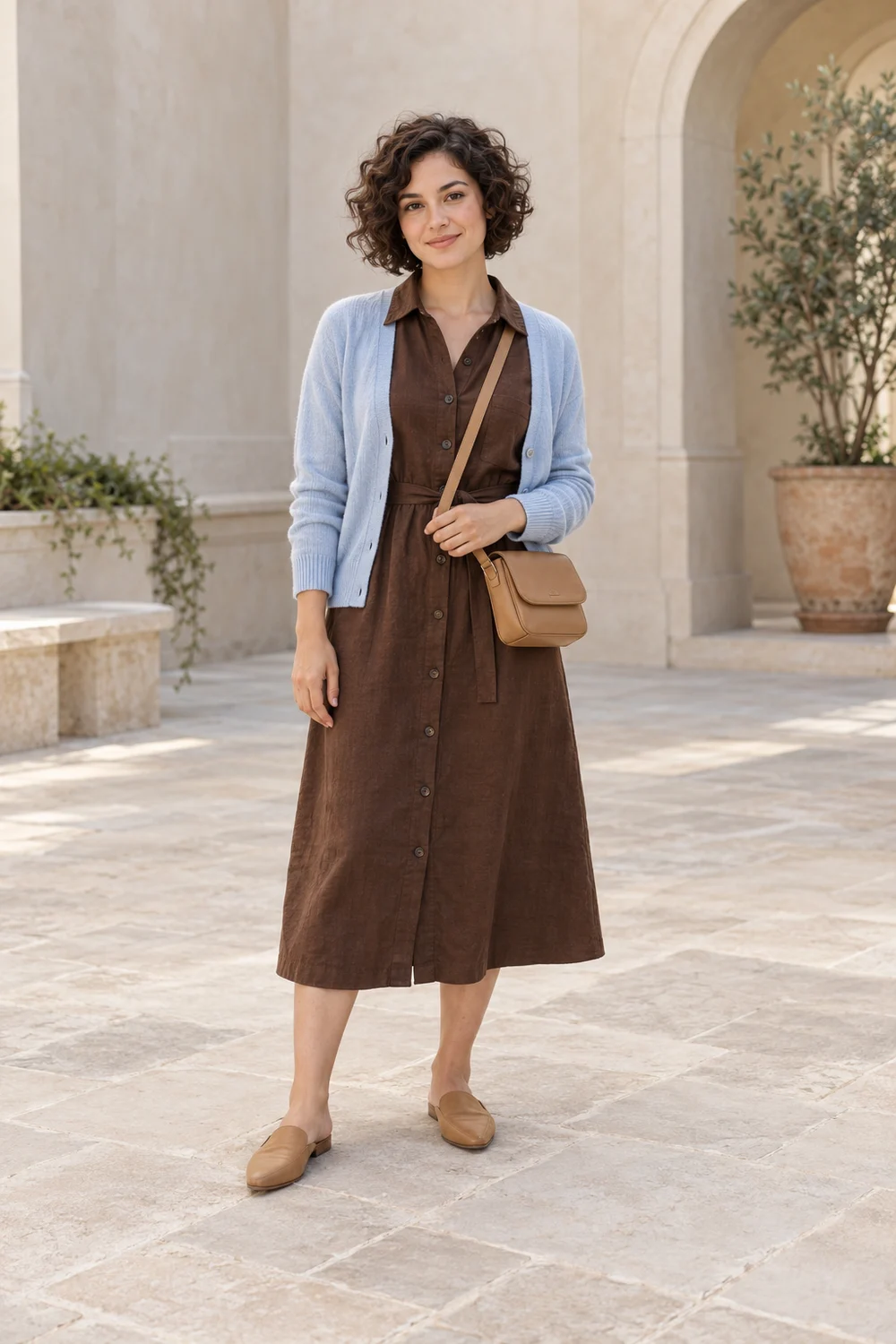
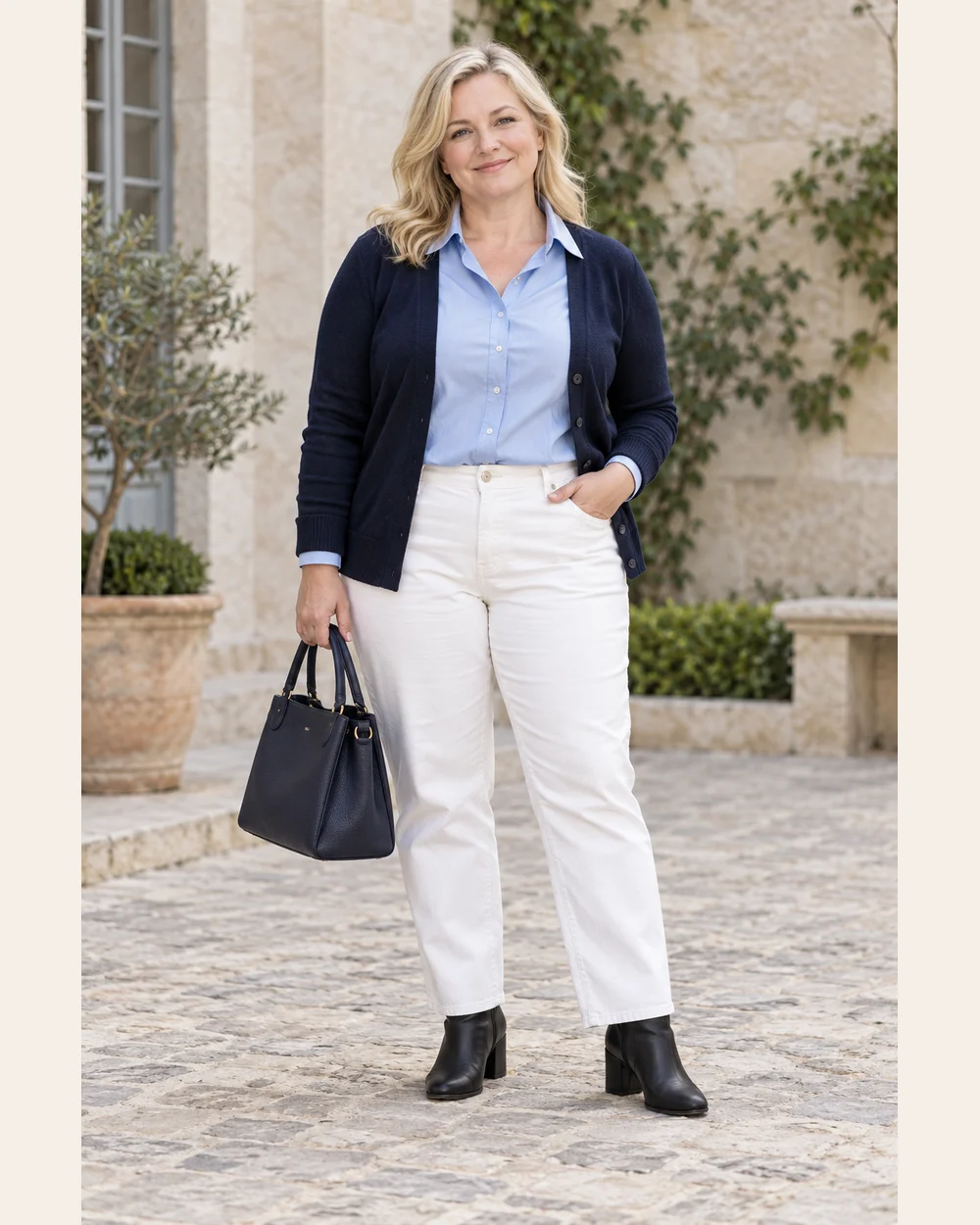
Rehearse a shirt dress through sitting, reaching and walking before deciding whether to add the pale-blue cardigan or switch shoes.
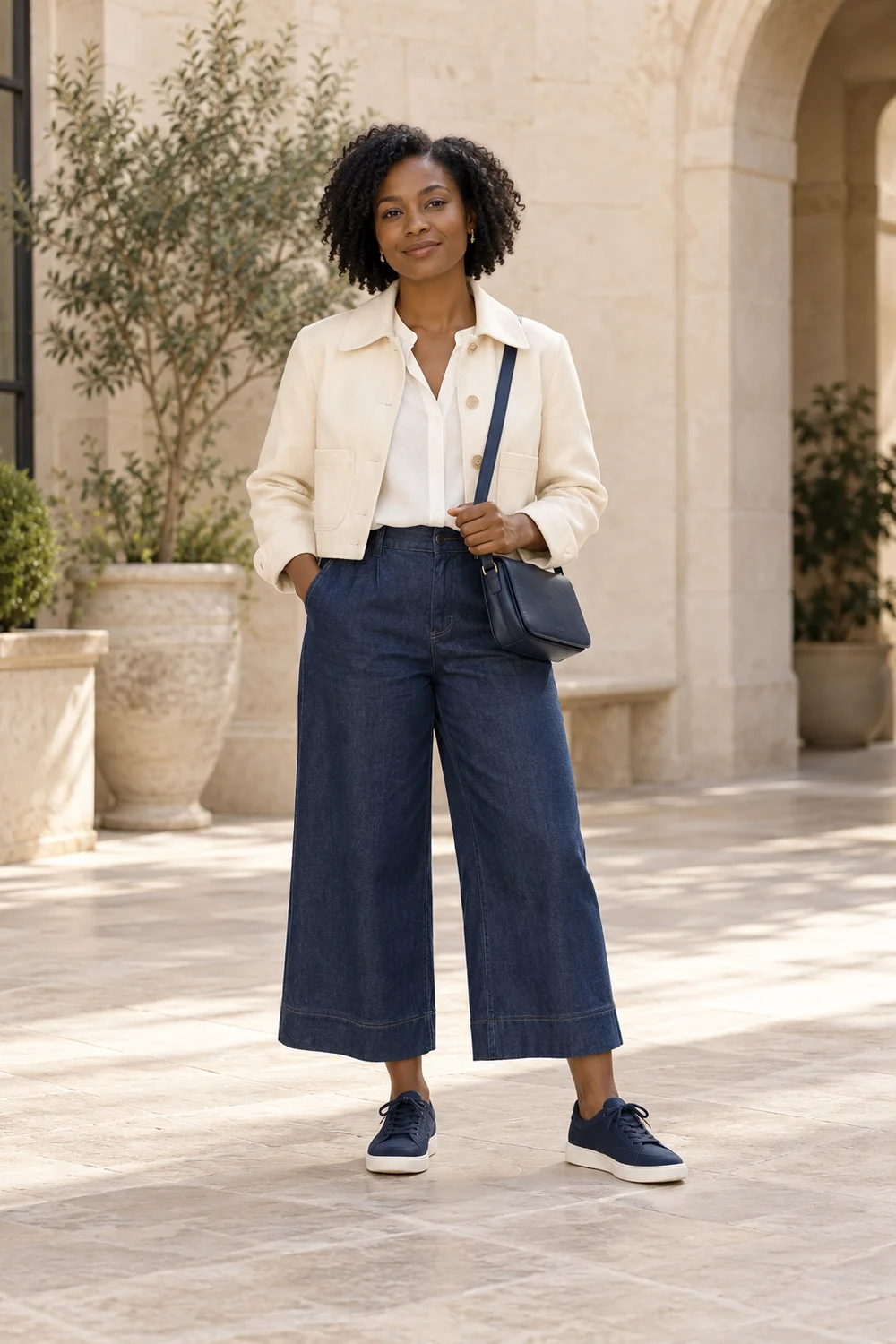
Choose culotte length with the actual shoe collar in view, then keep cream on the blouse and optional short jacket.
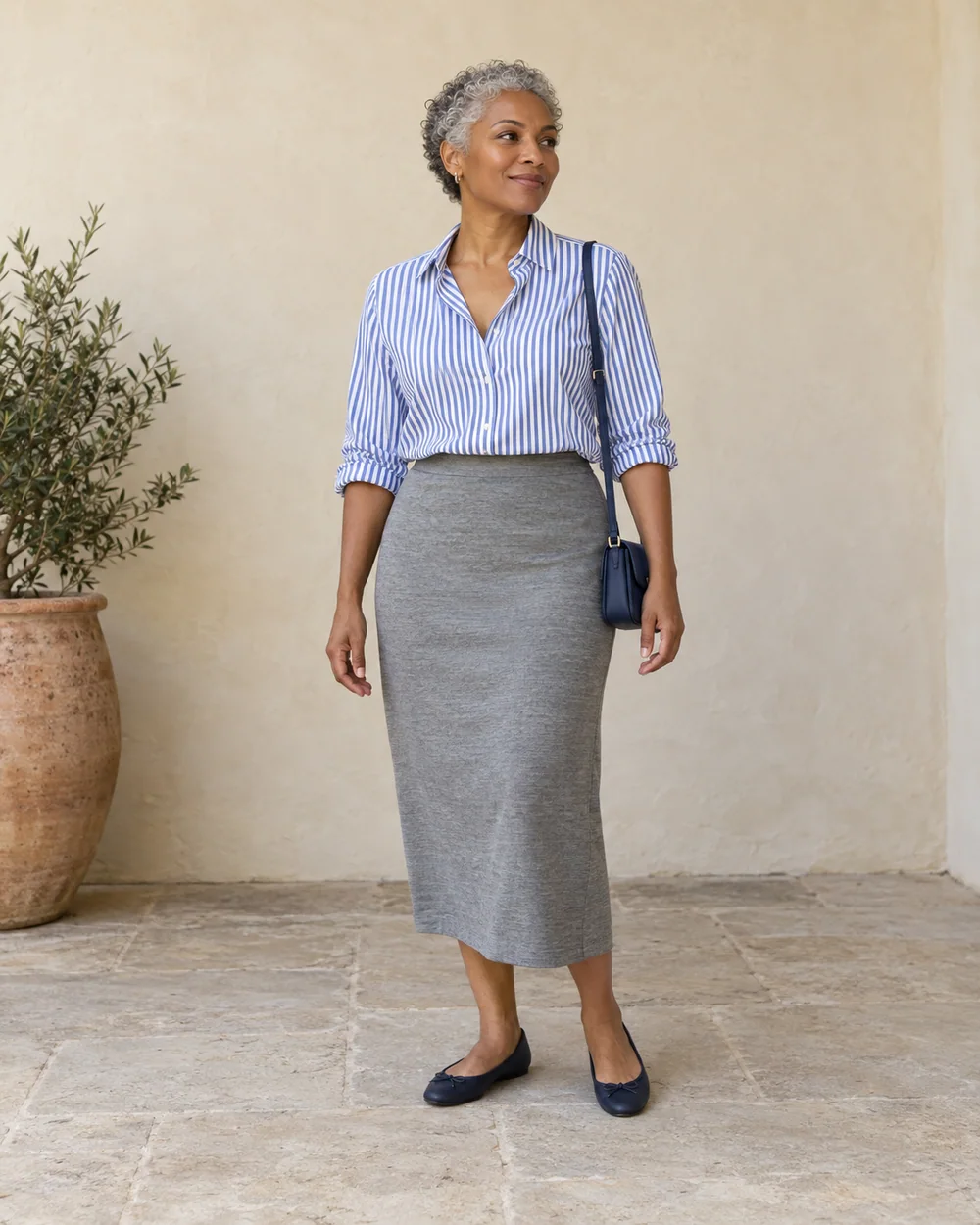
A striped shirt, grey jersey midi skirt and navy flats make the light version; a knitted jacket and trainers offer two deliberate changes.
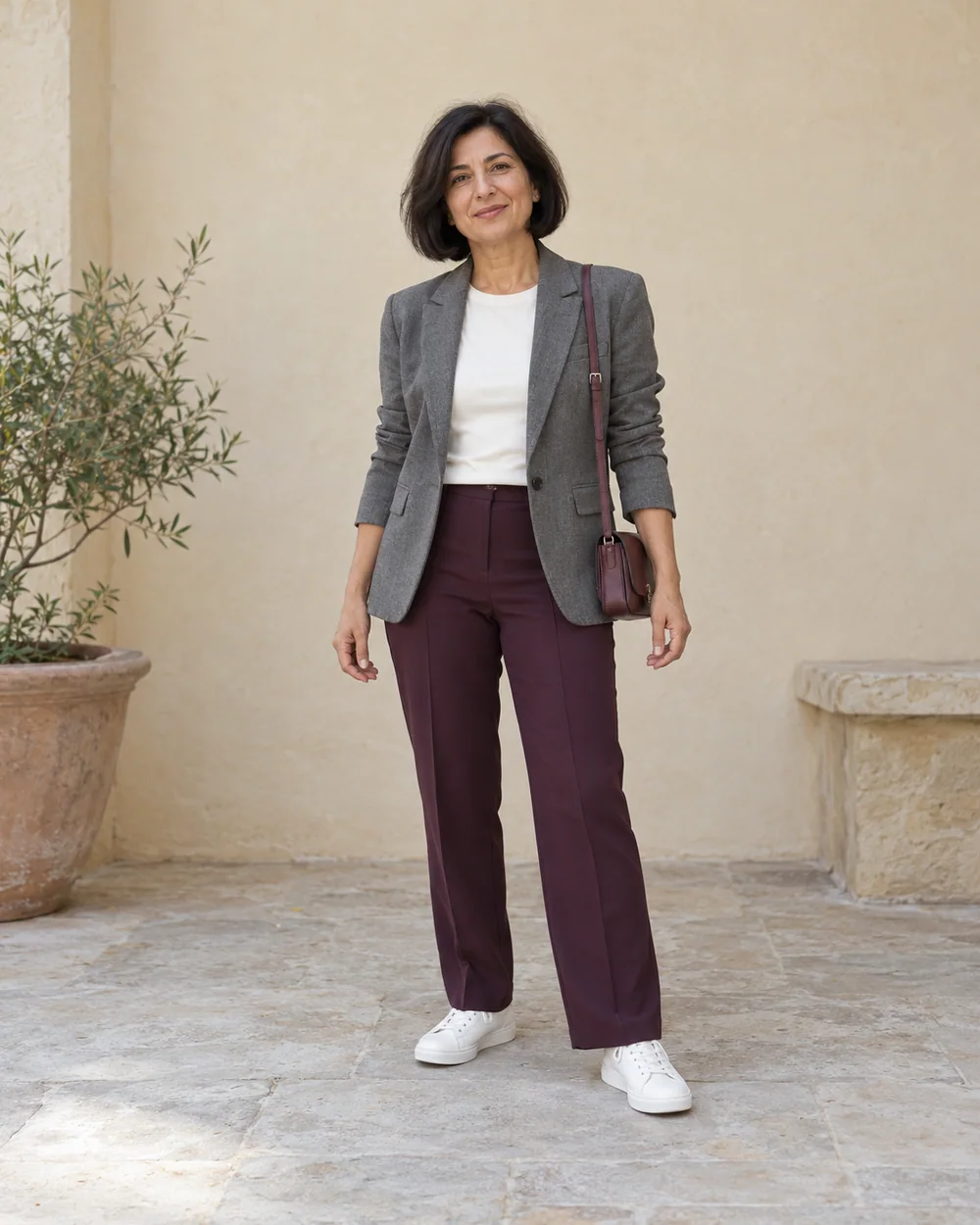
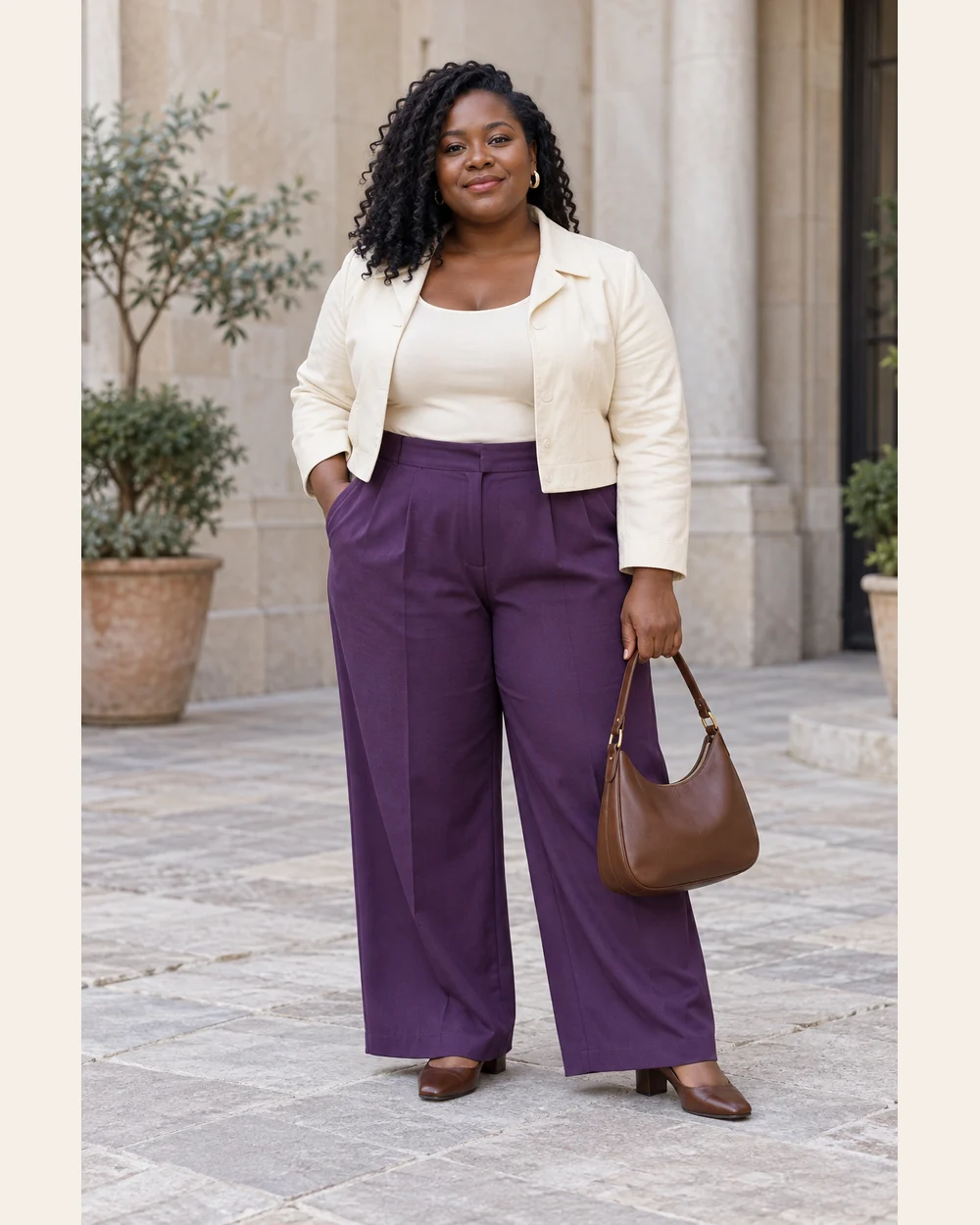
Plum trousers carry the colour, while ivory, grey and two shoe routes change how the outfit reads.
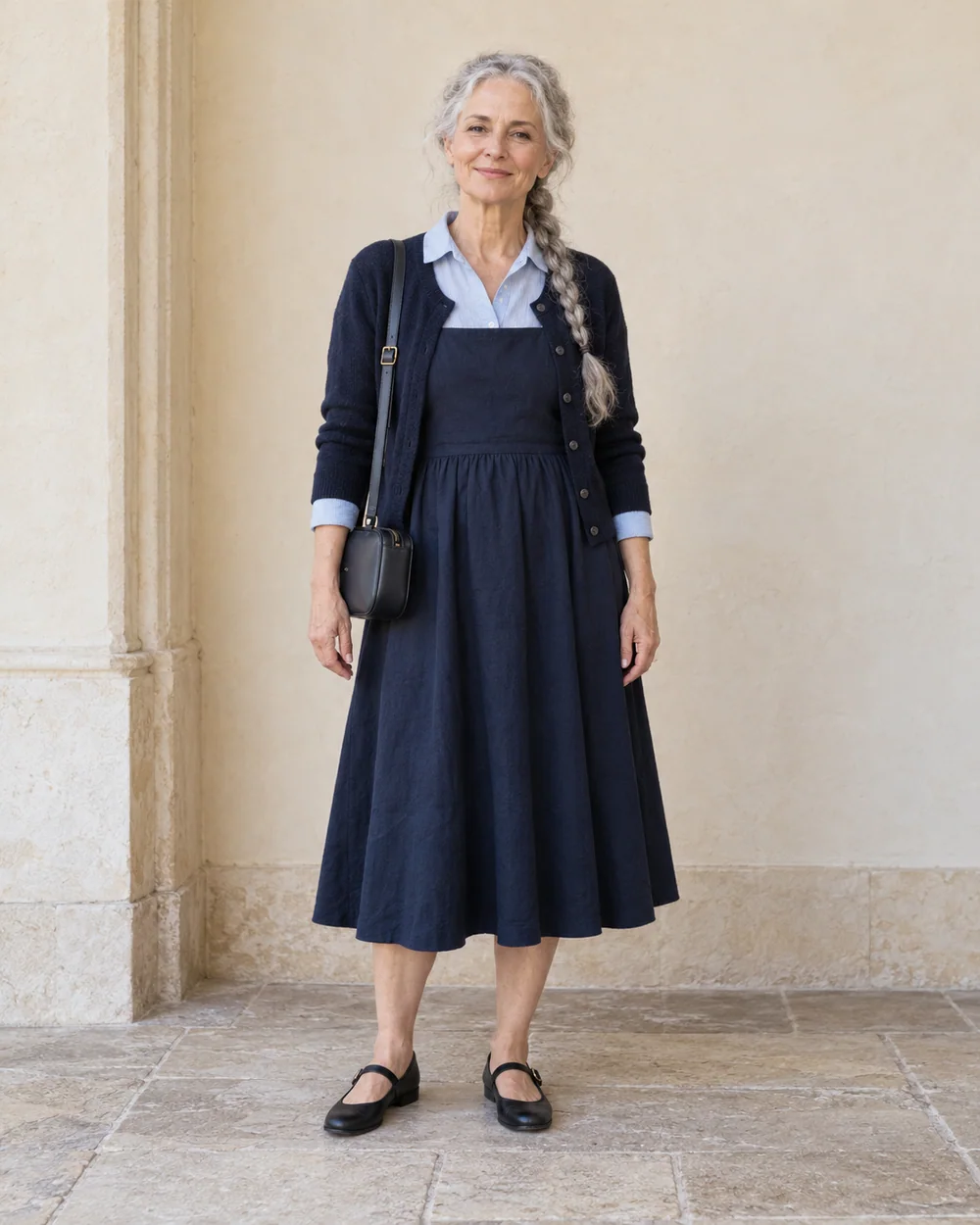
Choose a light pinafore-and-shirt outfit or add the short navy cardigan, then compare Mary Janes with low trainers.
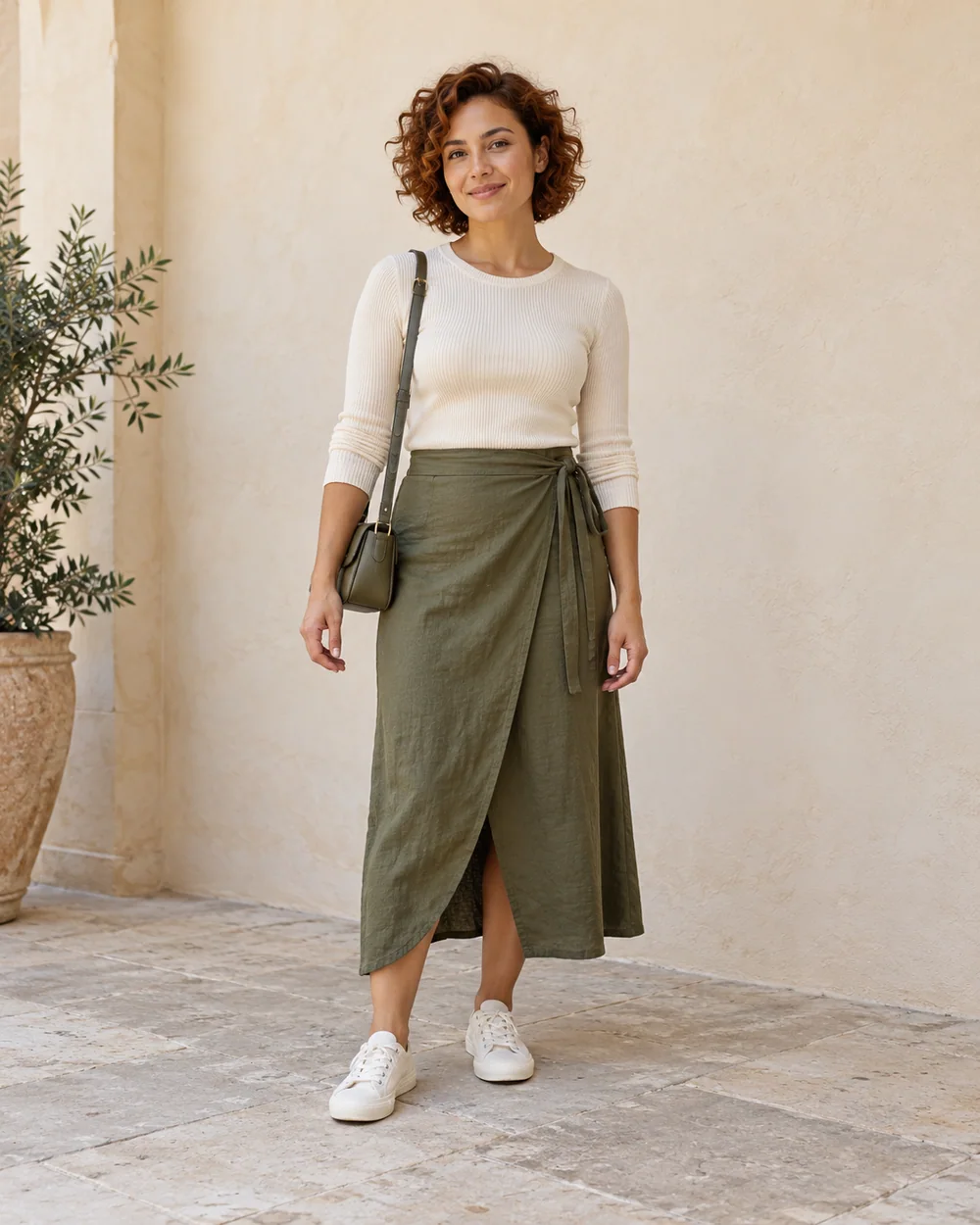
Olive and cream keep a wrap skirt expressive, with overlap and footwear checked as carefully as colour.
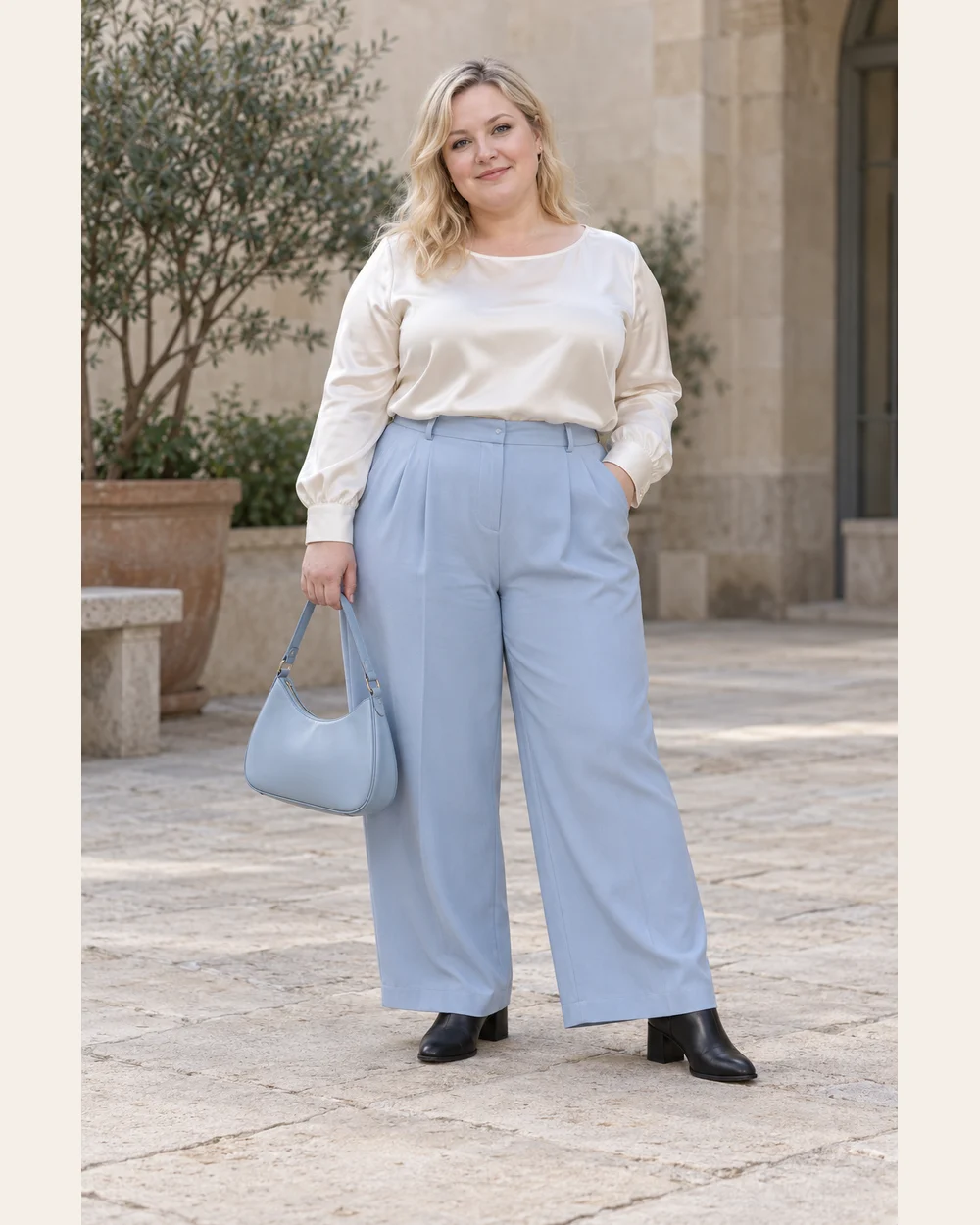
Pale-blue trousers and ivory satin provide a new soft-colour interpretation, with boots or pumps and an optional longline jacket.
Purple trousers carry the occasion colour; a cream shell and short jacket make a small, purposeful outfit kit.
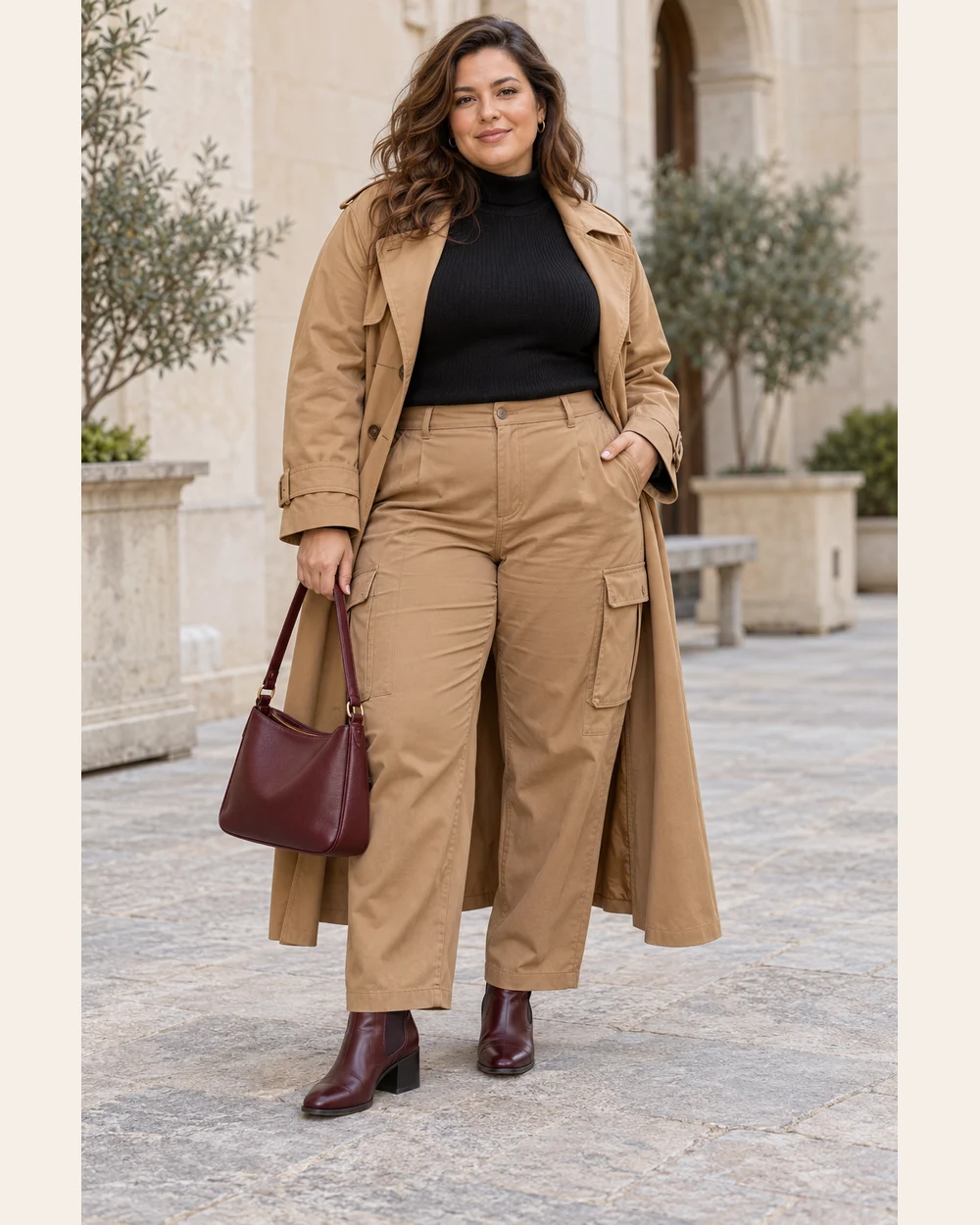
Separate a cargo-trouser fit problem from a trench-layer problem, keeping camel and black as the deliberate palette.
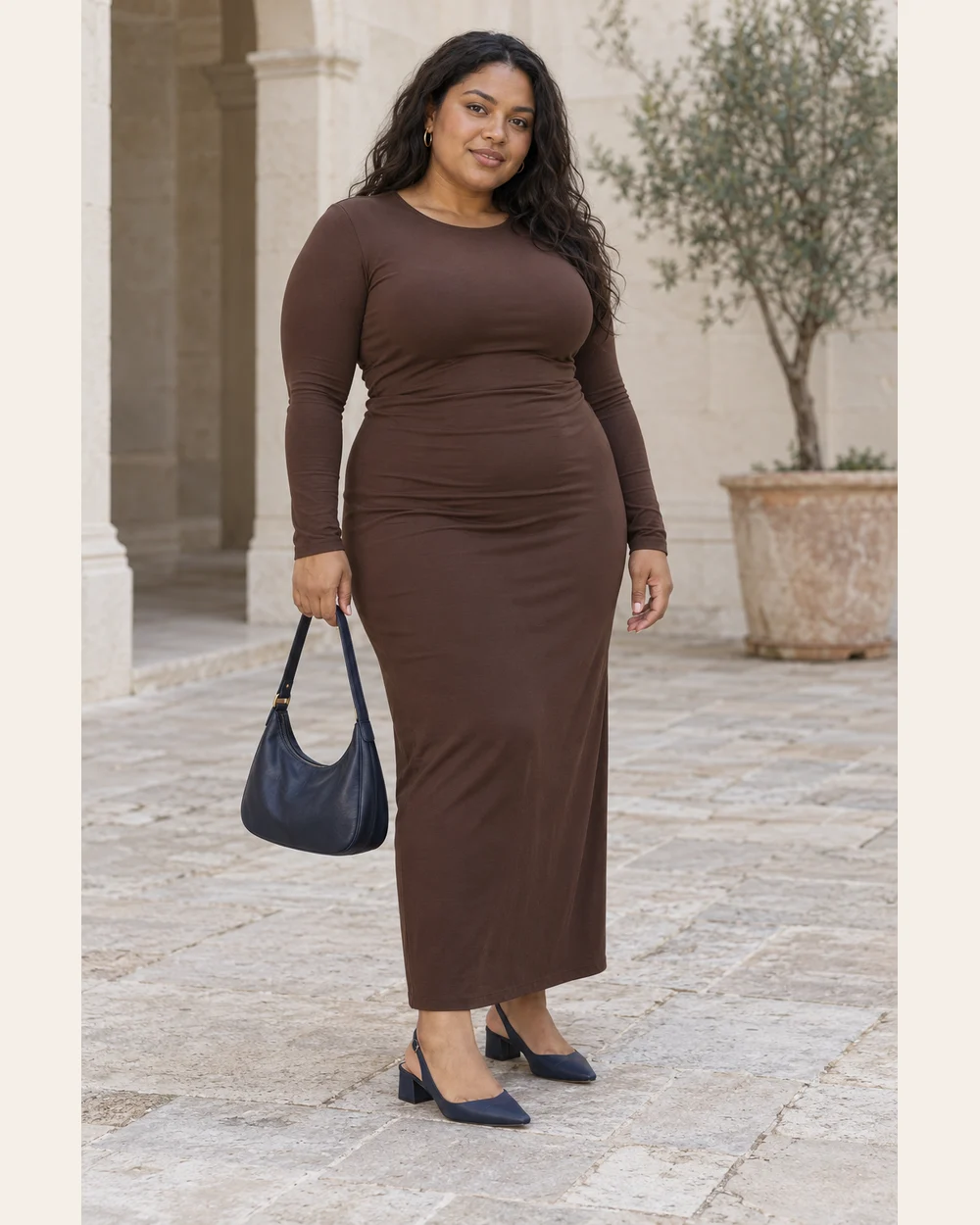
Practise the chocolate dress on its own, then add the ivory waistcoat and test either navy shoe route.
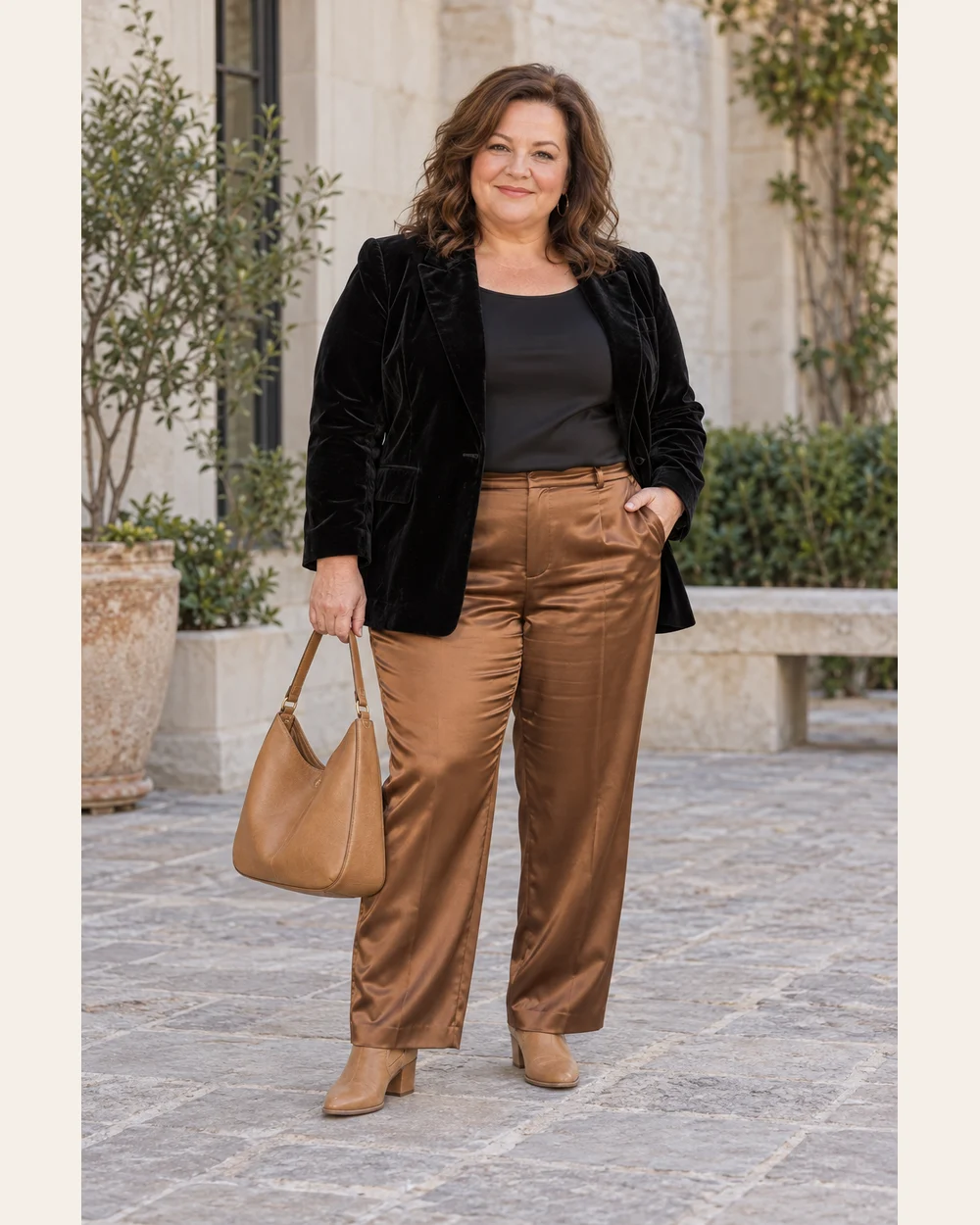
Bronze satin trousers and a black top form the base; velvet and two tan shoe options give the finish.
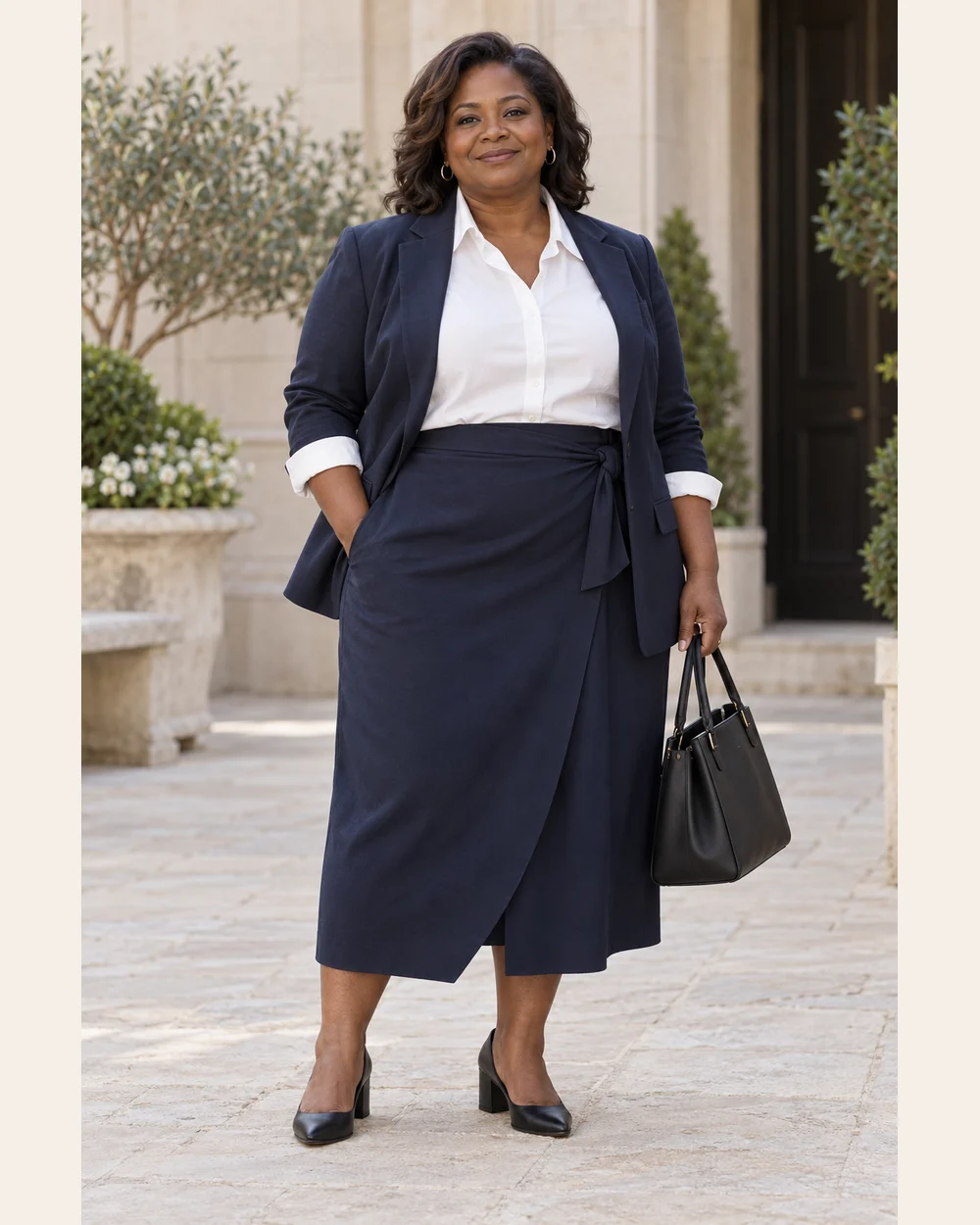
A navy wrap skirt, white shirt and relaxed blazer create a new tailored formula, with boots or pumps checked separately.
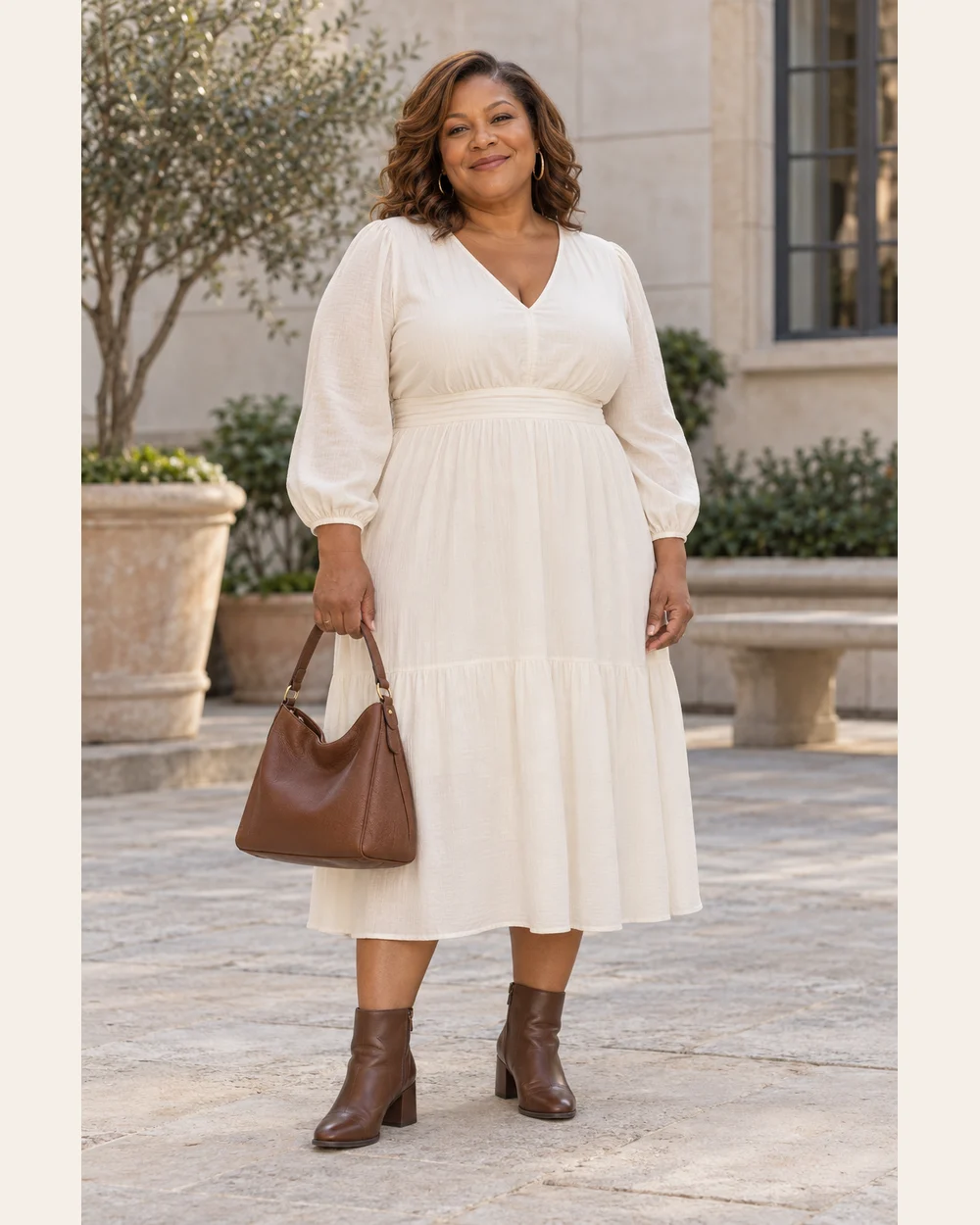
Ivory and cream form a pale tonal outfit with brown shoes; use the wedding variation only when the hosts explicitly request the palette.
Choose how much cream to show between a black rib top and relaxed jacket, with two burgundy-toned shoe options.
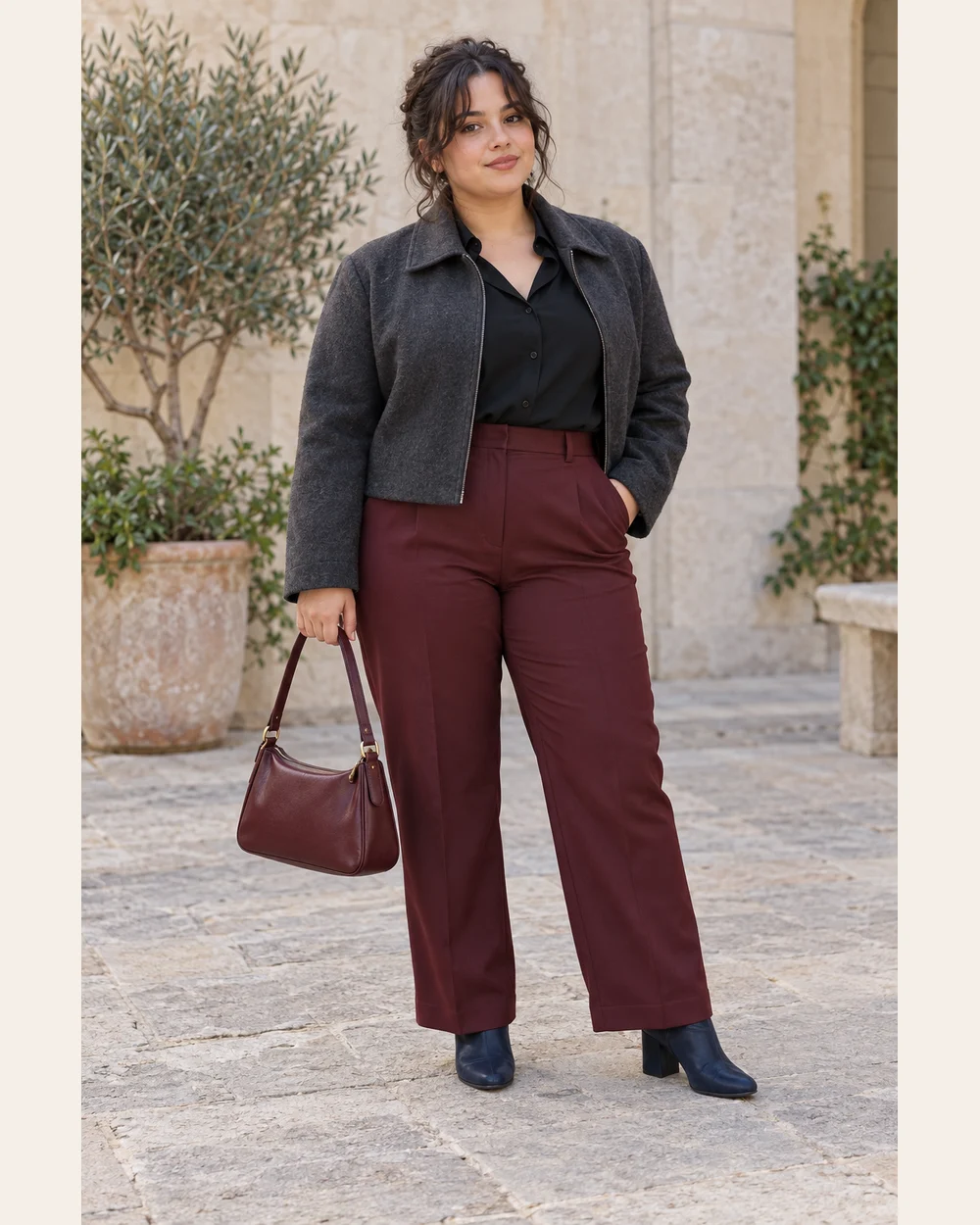
Oxblood trousers give a dark palette colour, with a black blouse, charcoal jacket and navy shoe alternatives.
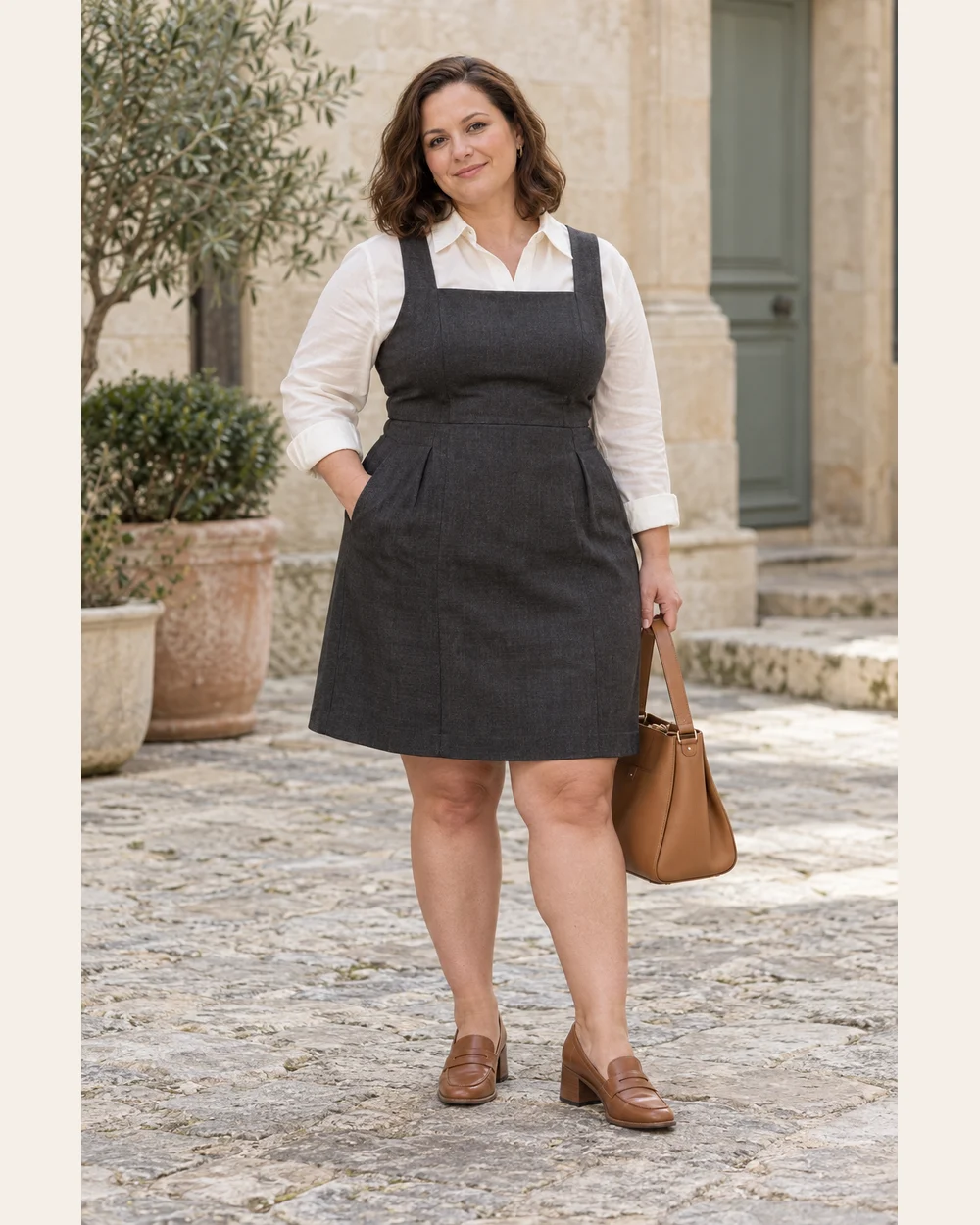
Fit a charcoal pinafore over its actual ivory shirt before adding a collarless jacket or choosing between tan shoes.
Solve white-trouser opacity and blouse collar space separately, then test a navy cardigan and both black shoe routes.
Practise waistcoat closure, trouser movement and the ivory jacket as three separate checks, with two brown shoe routes.
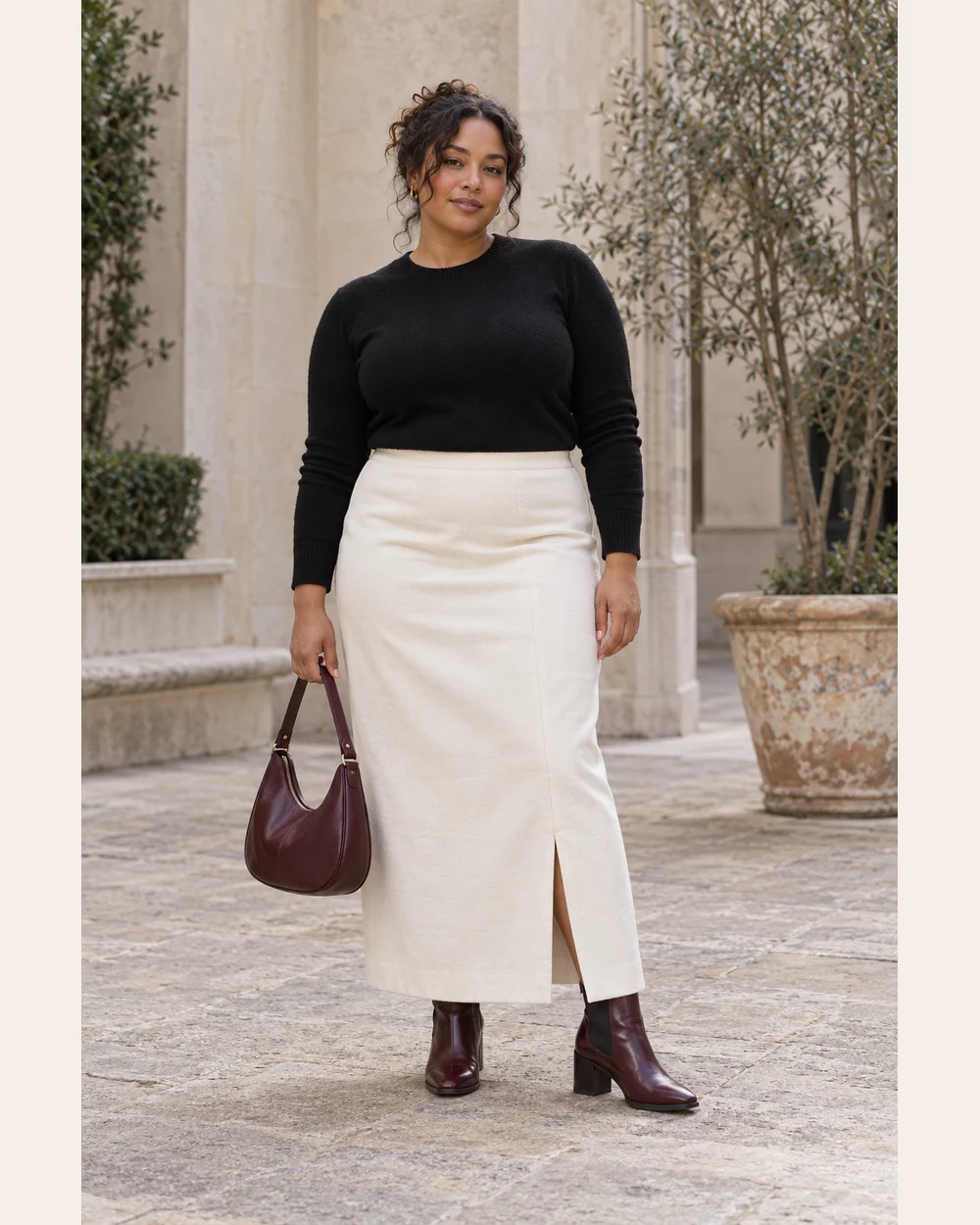
Check the ivory column skirt's walking vent and the volume of an optional white shirt, then choose oxblood boots or burgundy Mary Janes.
A coral wrap dress, cobalt short jacket and two navy shoe routes, with neckline and overlap checks for petite plus-size fit.
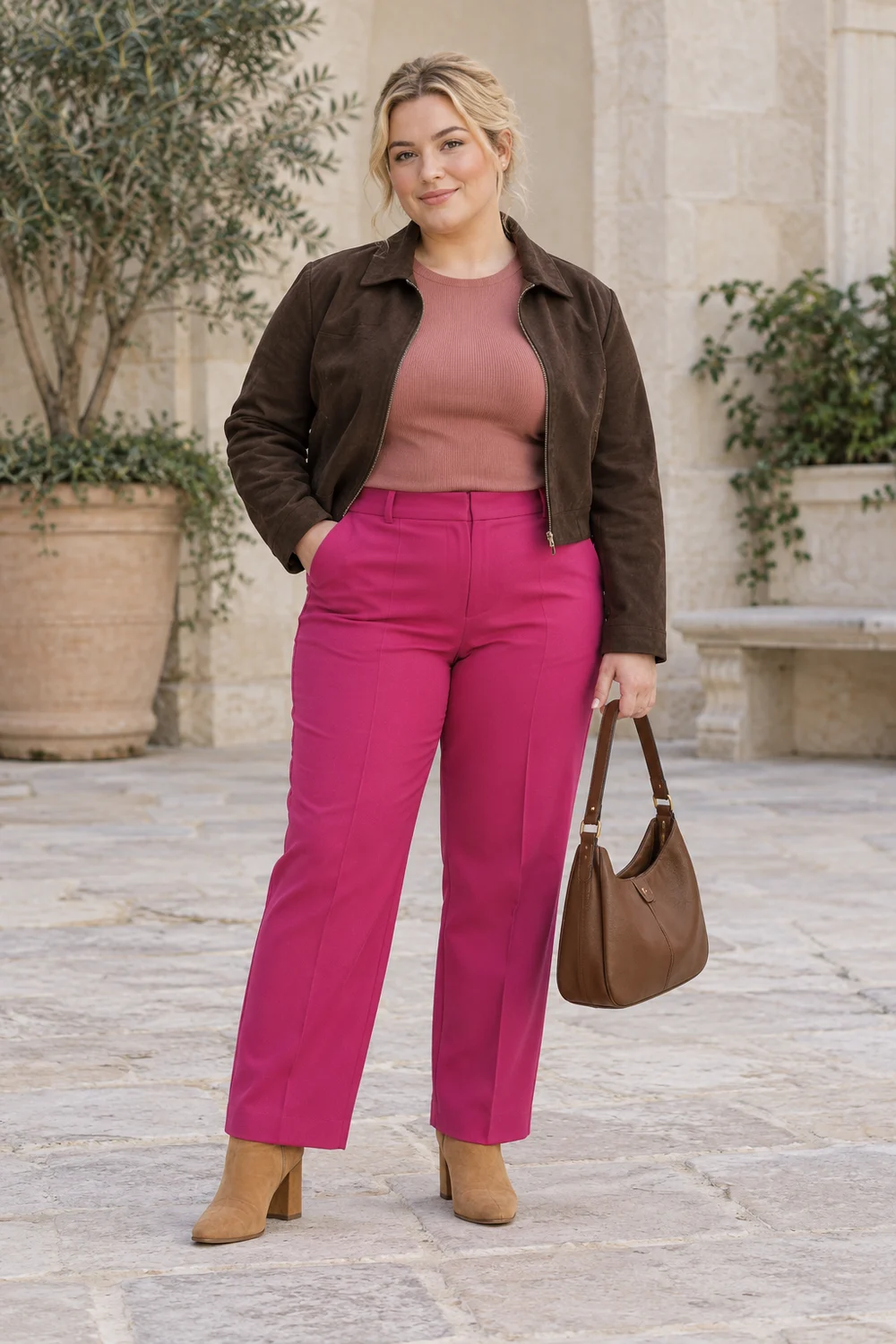
Fuchsia trousers and a muted rose top share the colour work; brown and tan give two complete shoe and layer routes.
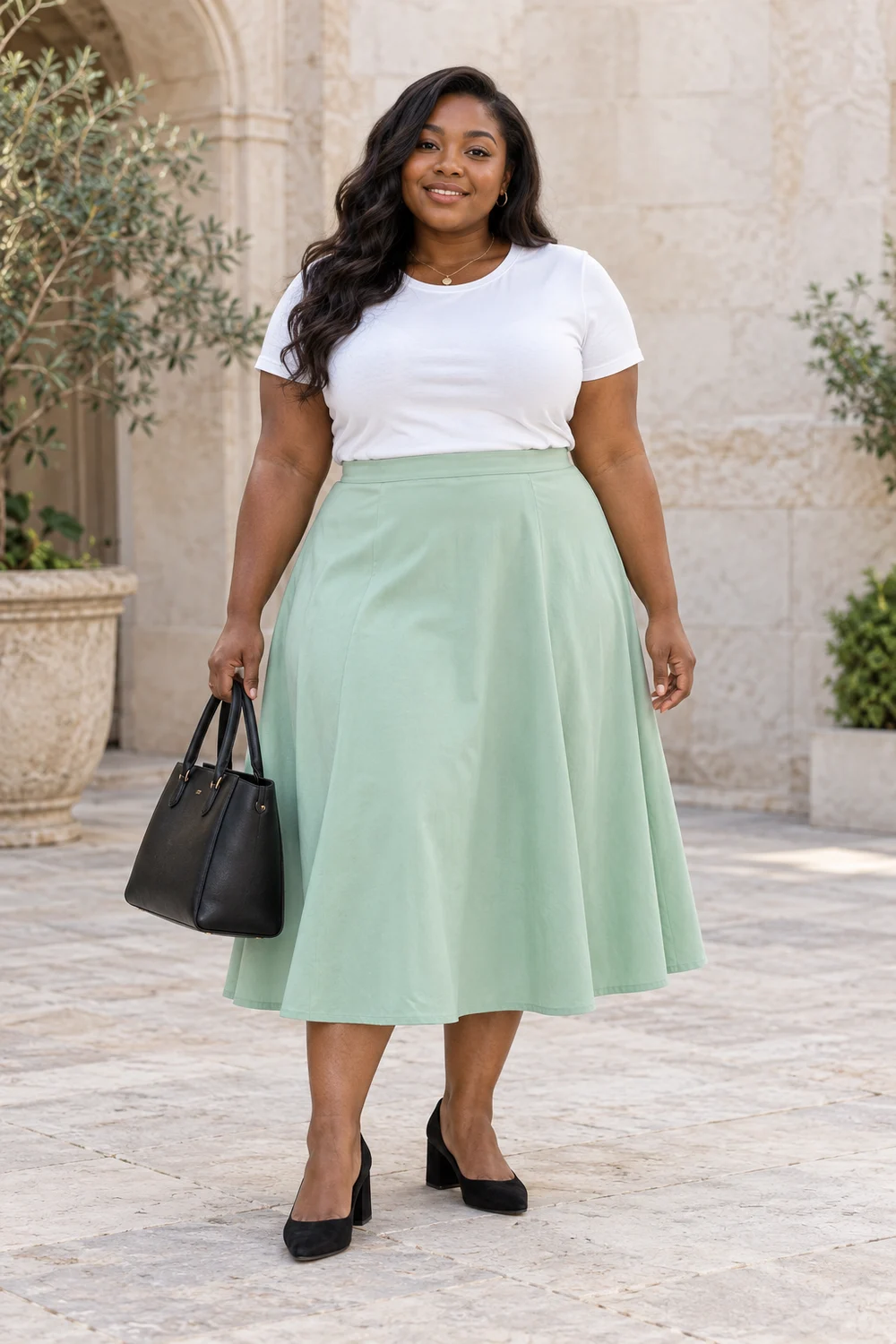
Choose how much sport detail to keep around a mint midi skirt, with a complete light base and two black shoe options.
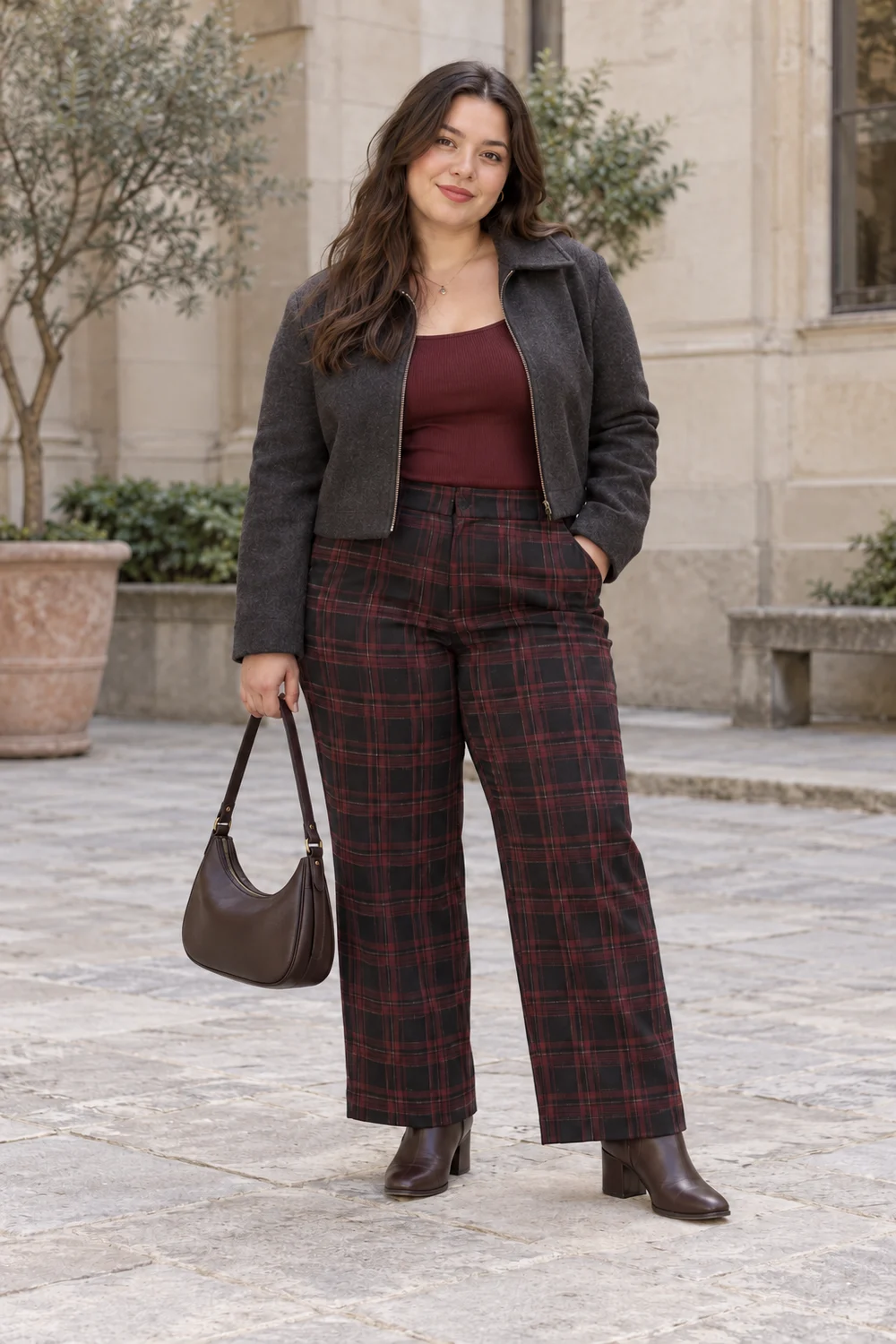
Checked trousers carry the pattern while an oxblood top and charcoal short jacket keep the outfit grounded.
An opaque chocolate knit dress can stand alone; add the stone jacket and choose between oxblood boots and burgundy Mary Janes.
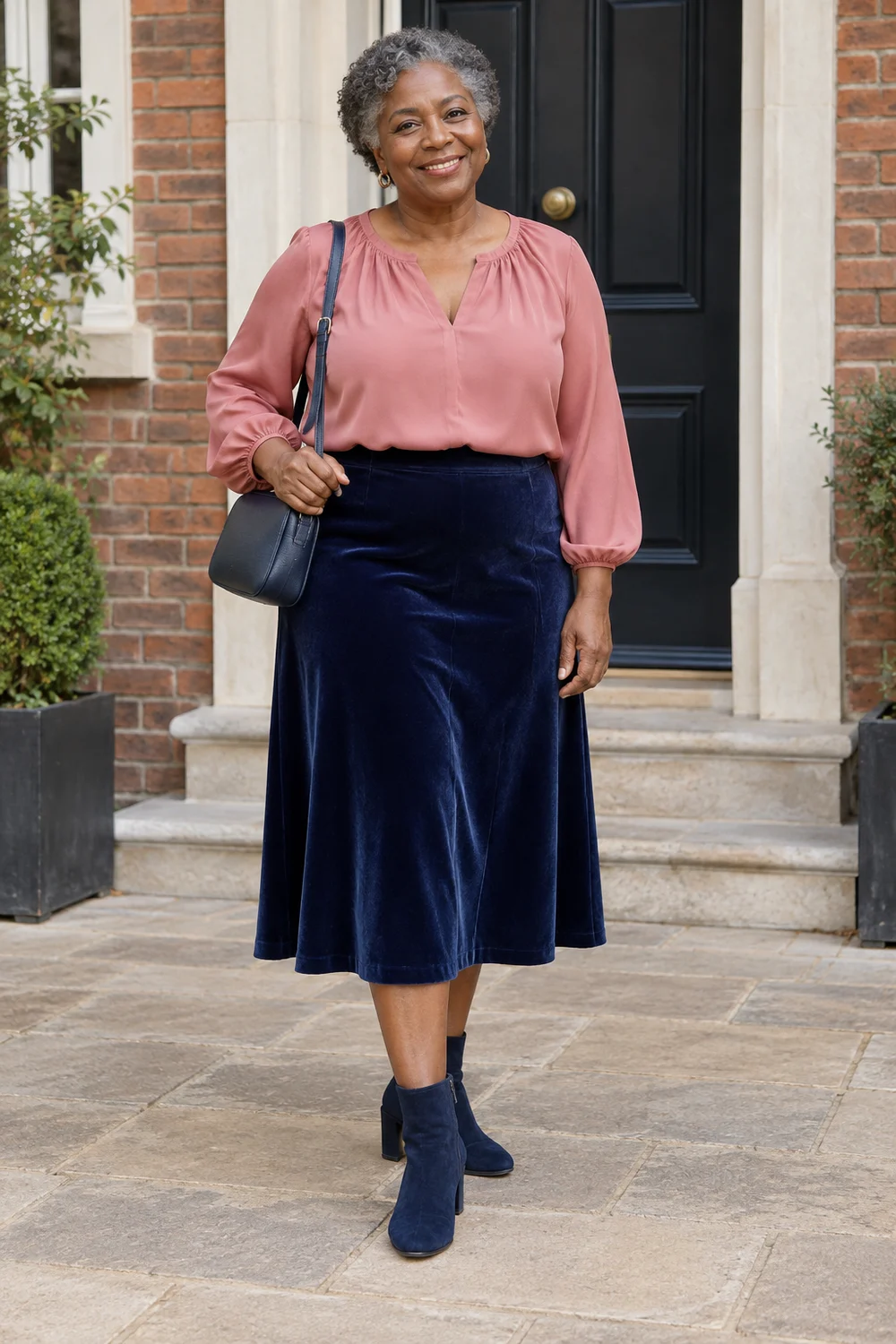
If a velvet skirt looks uneven or catches a layer, inspect the actual surface, lining and fit before changing the outfit.
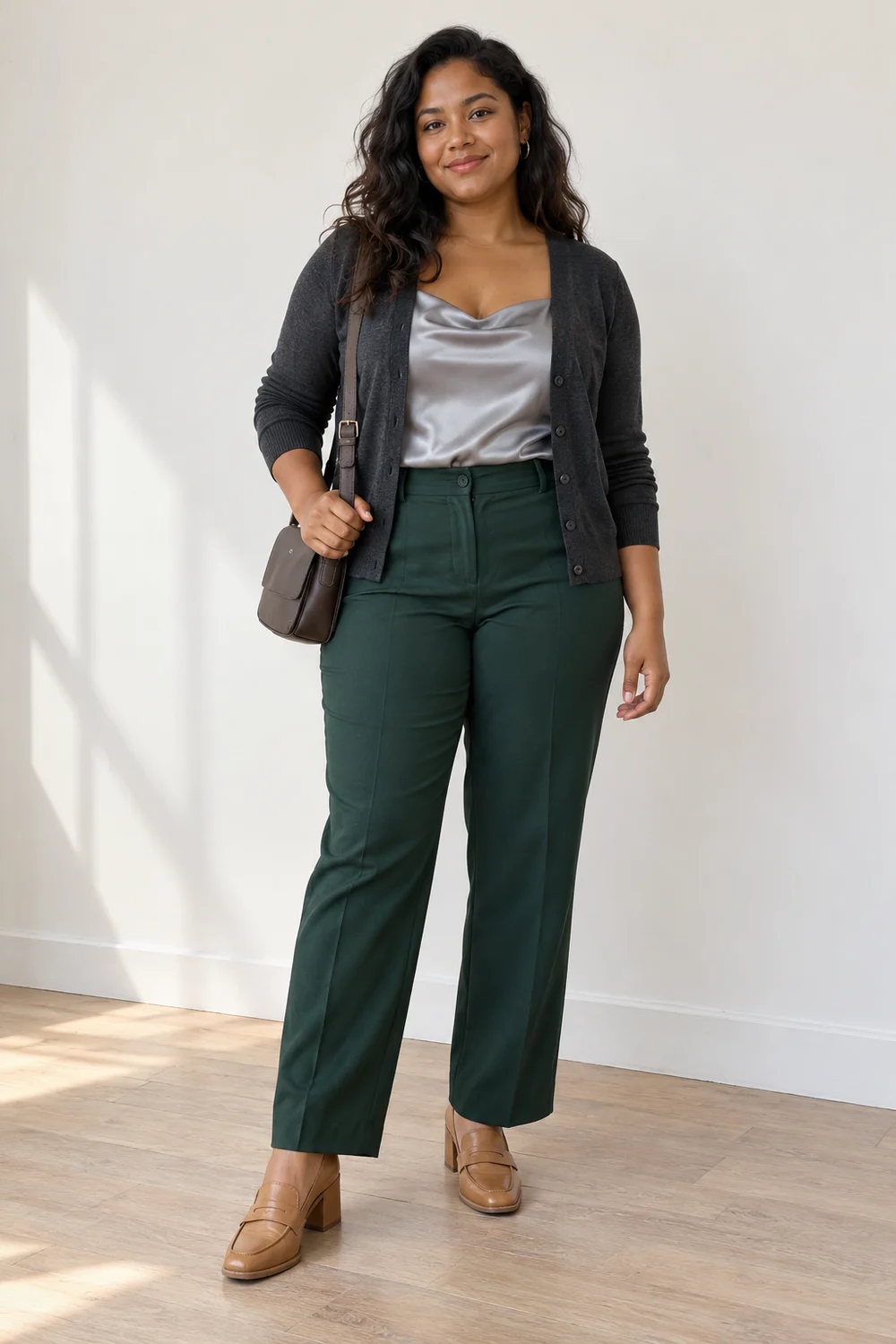
Practise one useful comparison: keep the silver-grey neckline visible, then add a charcoal cardigan without changing the forest trousers.
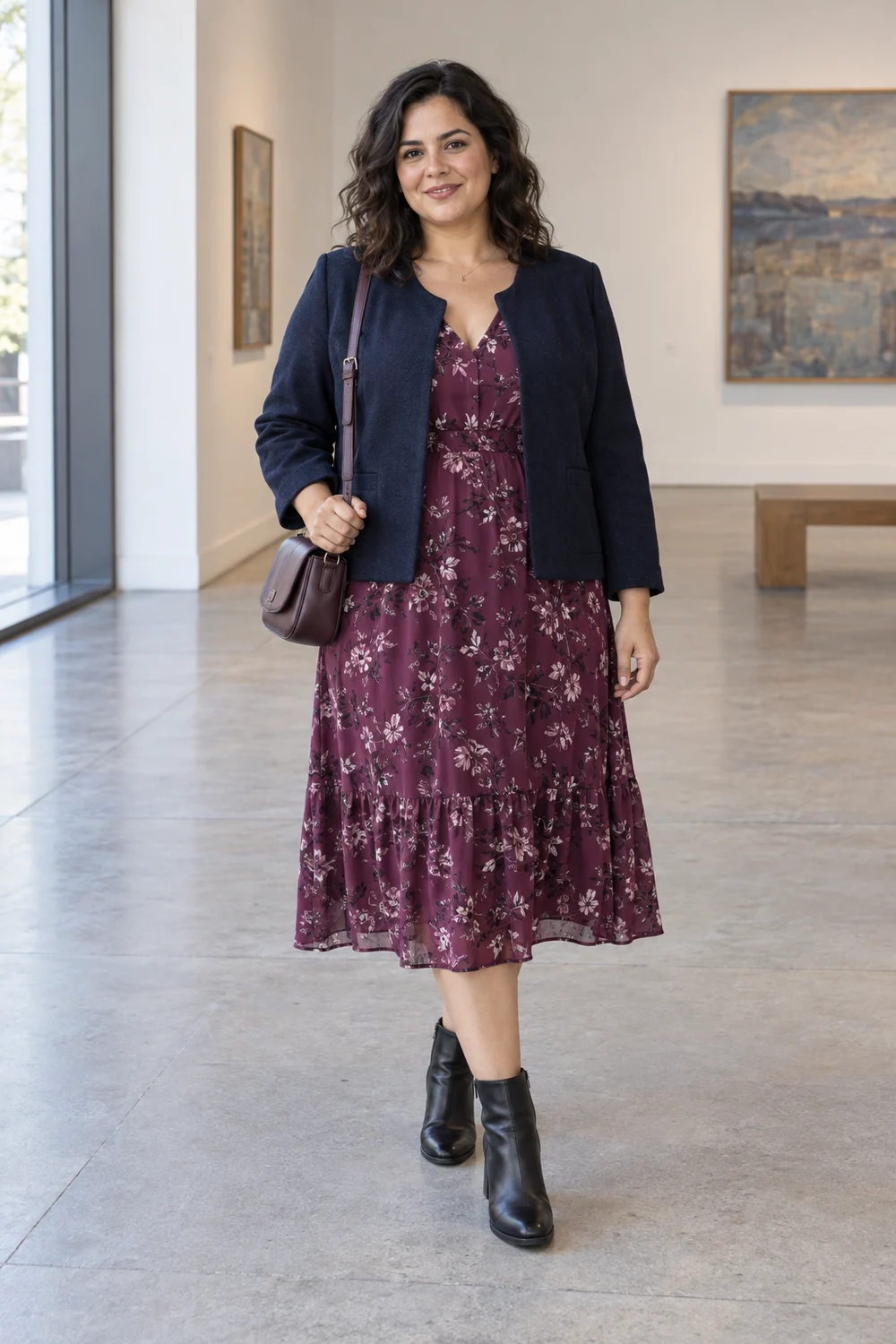
A plum printed dress can be a complete light outfit; add an ink collarless jacket and choose boots or pumps without changing the print.
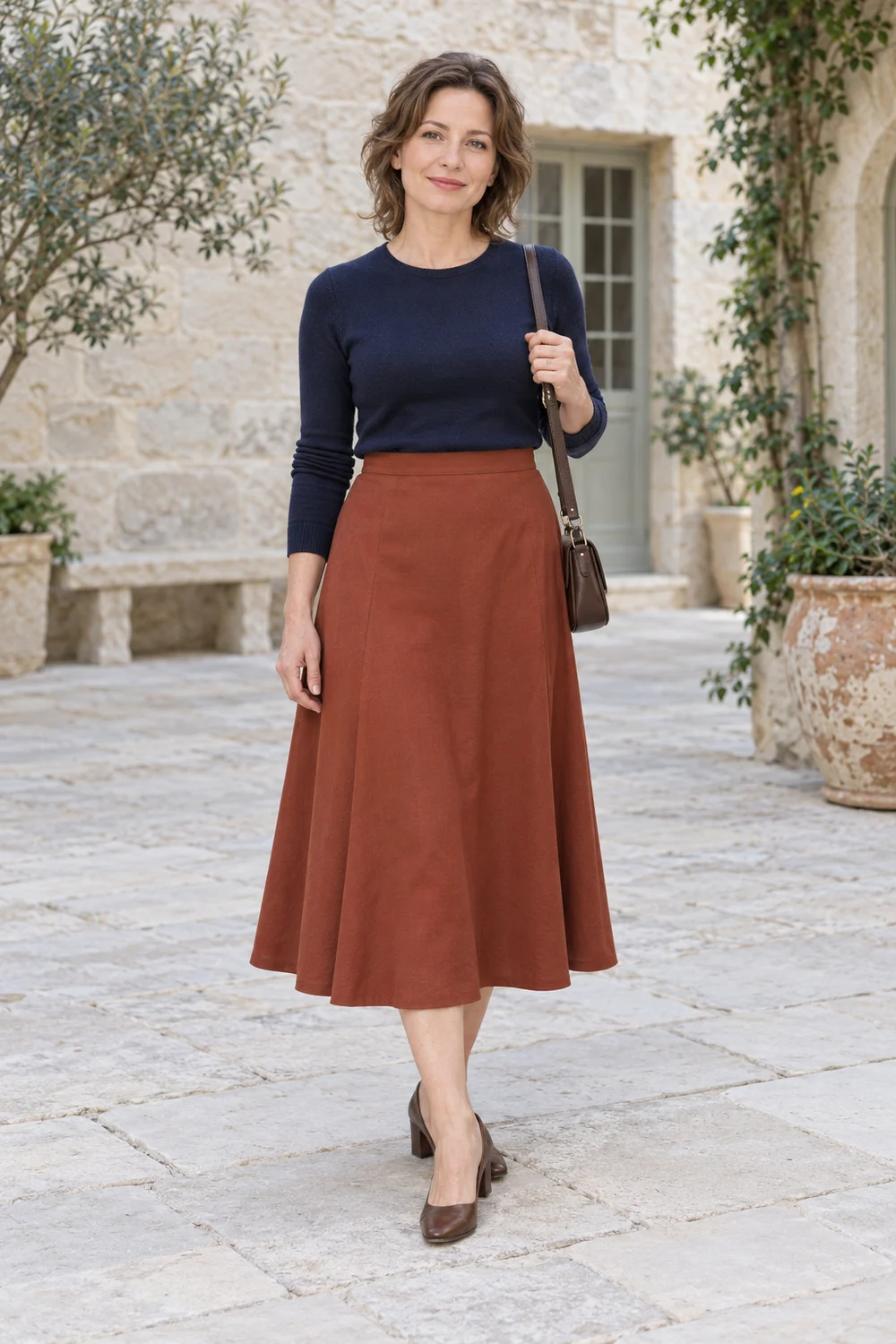
A rust A-line midi, navy fine knit and two brown shoe routes, with a practical hem comparison before alterations.
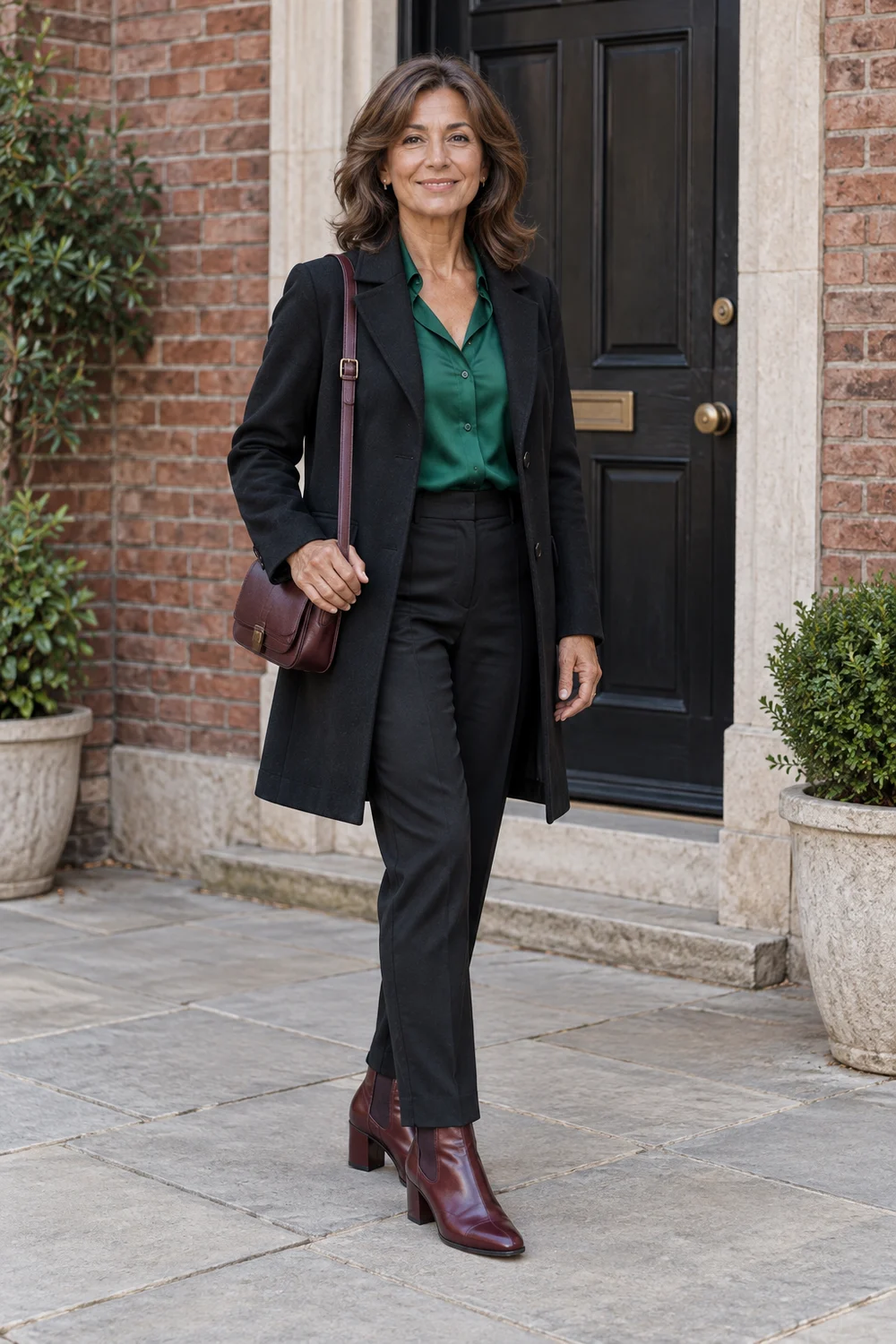
Emerald gives black trousers a focal colour; oxblood boots or burgundy Mary Janes change the foot shape while the light coat stays optional.
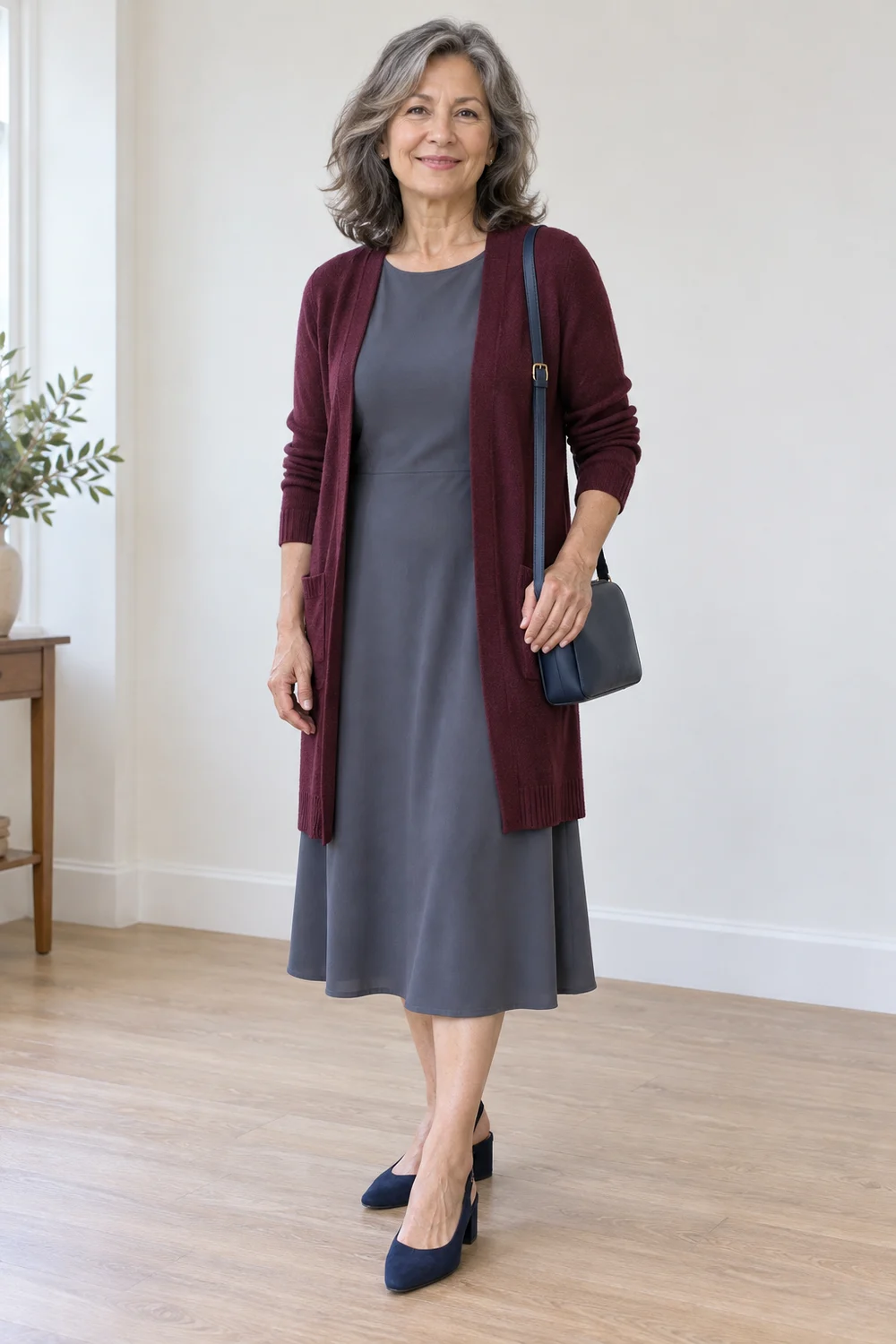
Choose whether a slate dress needs the burgundy cardigan, then compare navy boots with slingbacks before adding a belt.
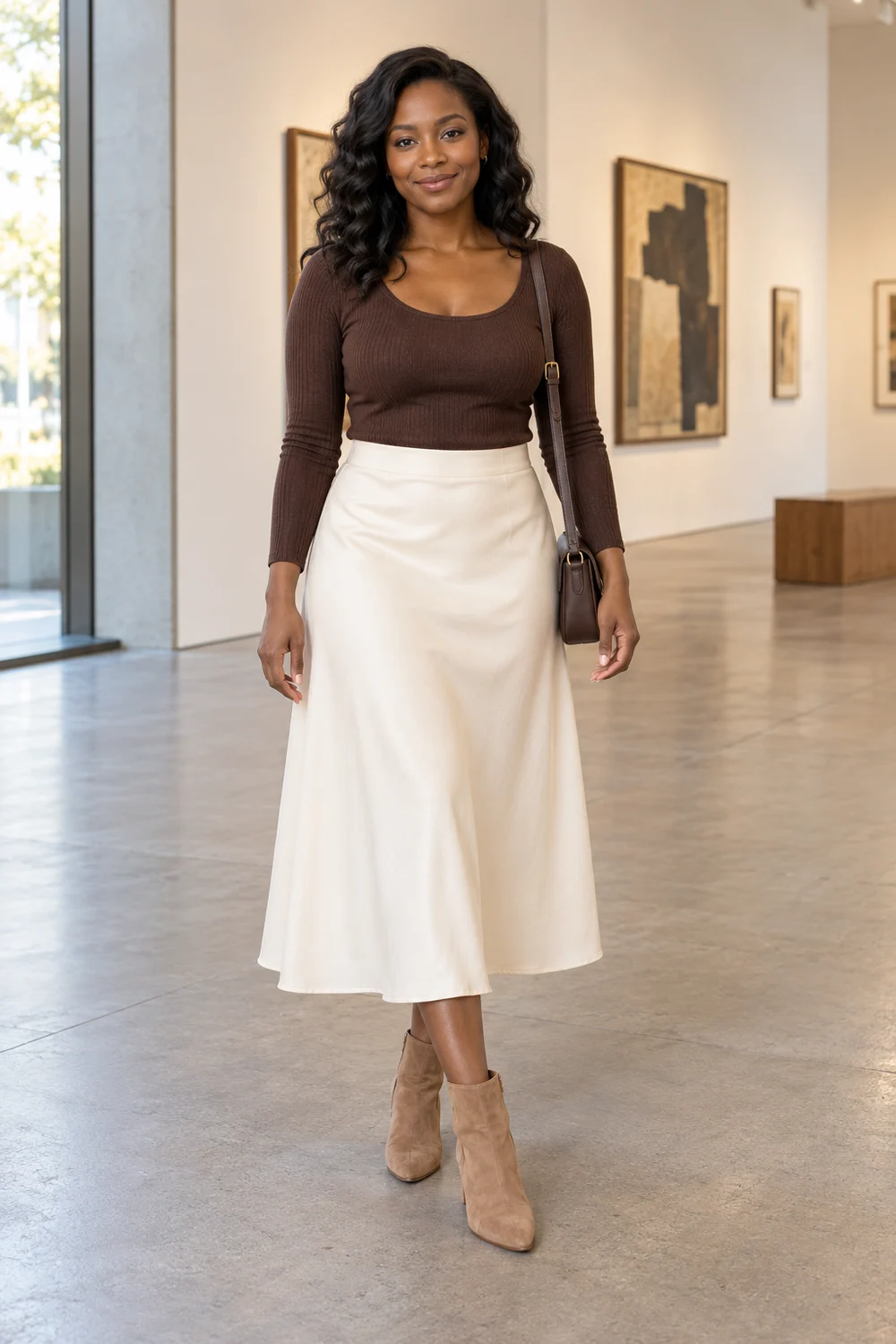
A cream skirt and chocolate top can stand alone; the relaxed cream blazer makes a second version without making fit a matching-size exercise.
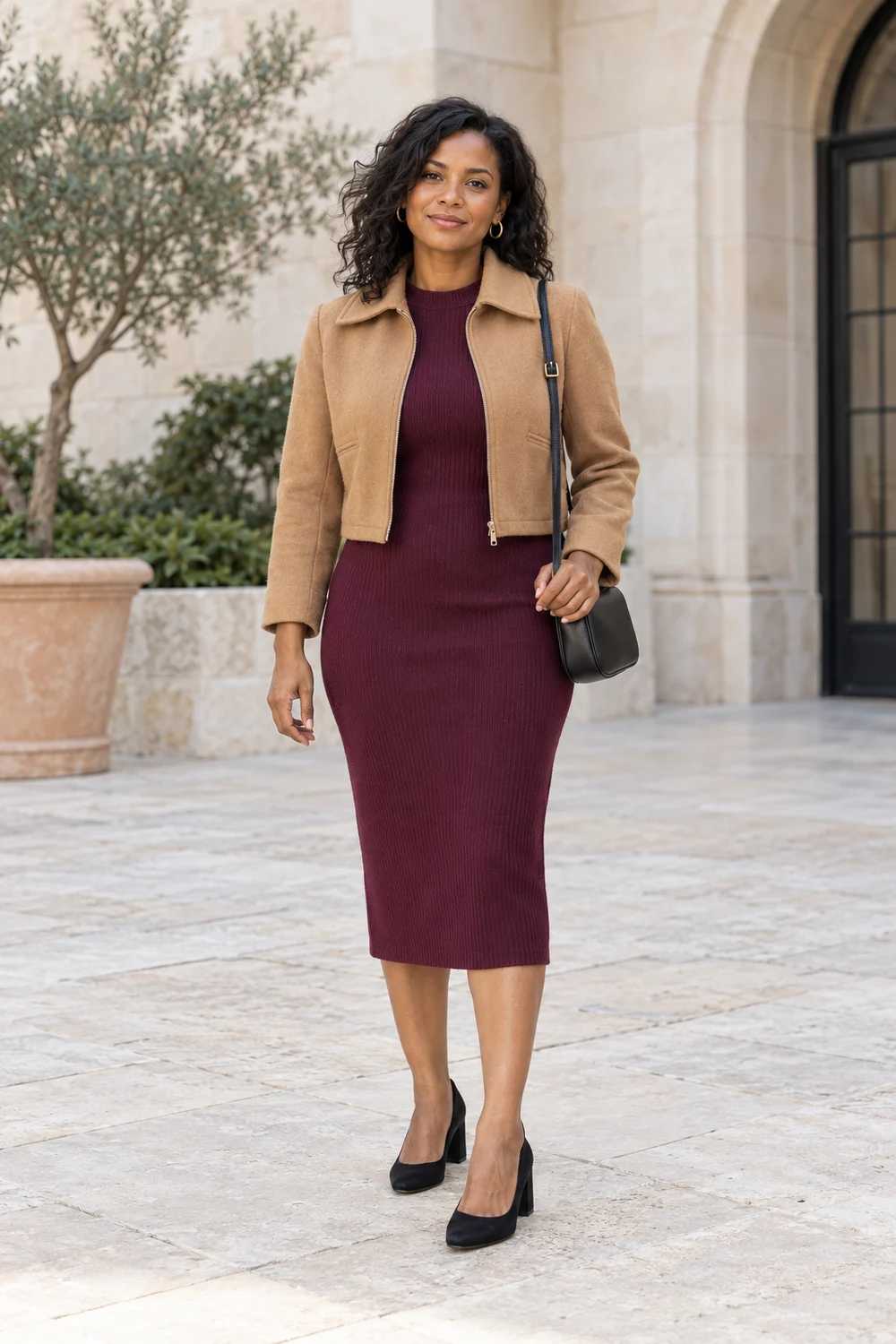
Keep the berry dress that works seated, then decide whether a camel cropped jacket and either black shoe solve a real outfit job.
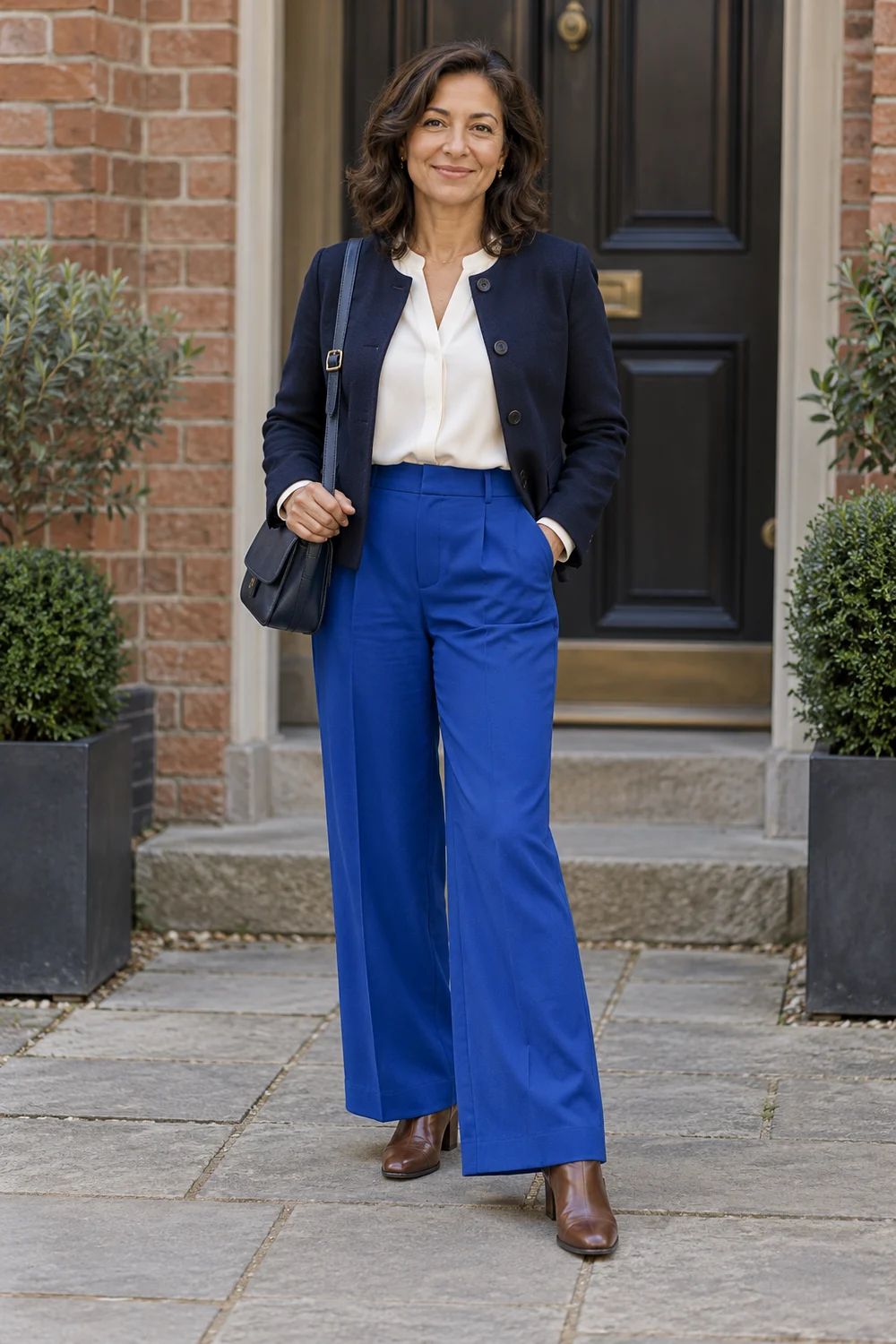
When cobalt wide legs catch the shoe or drag, separate rise, stride and each heel-specific hem before altering.
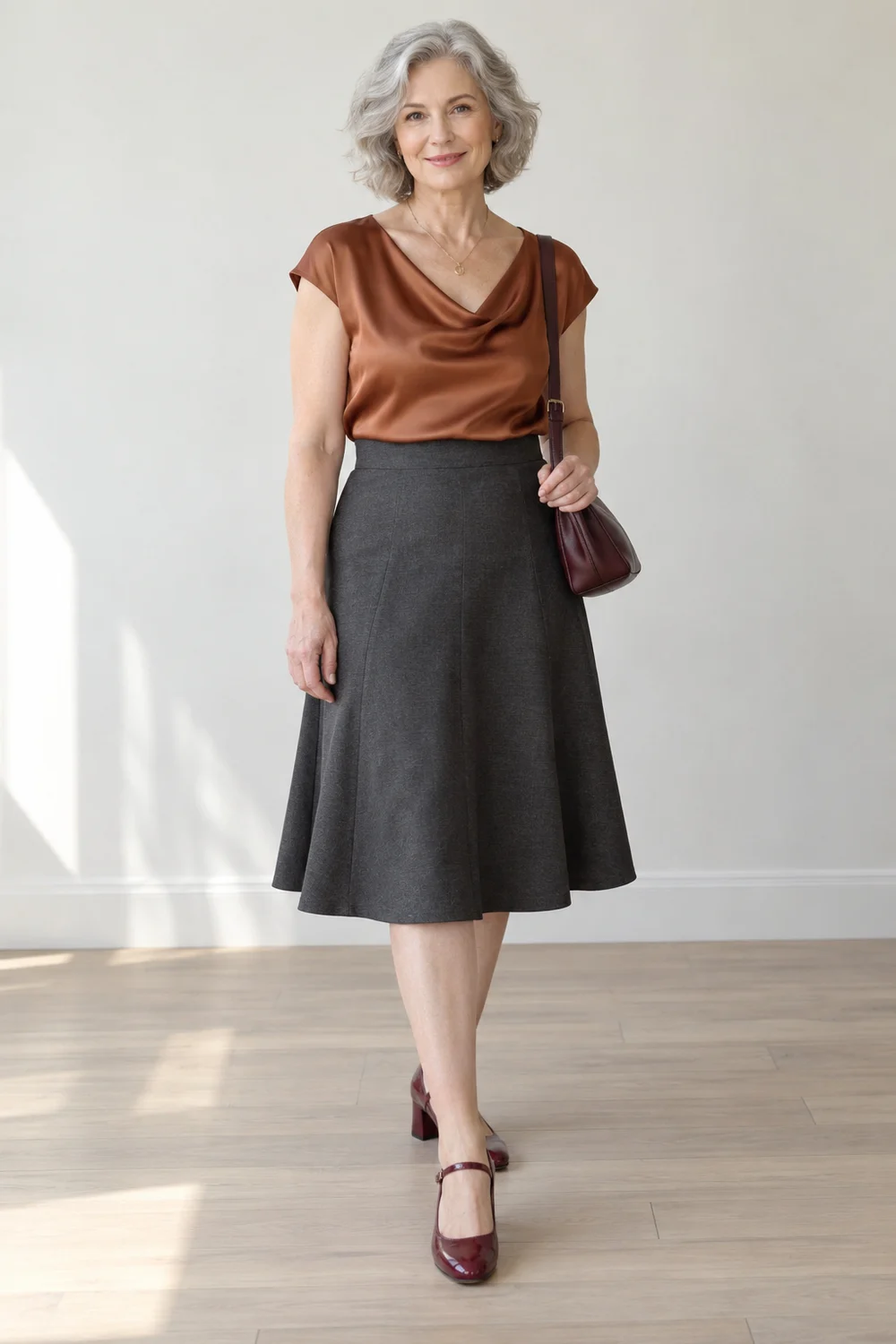
Practise keeping copper at the neckline while a charcoal A-line skirt and grey cardigan supply two complete versions.
Try a shorter phrase or clear a filter to see more guides.