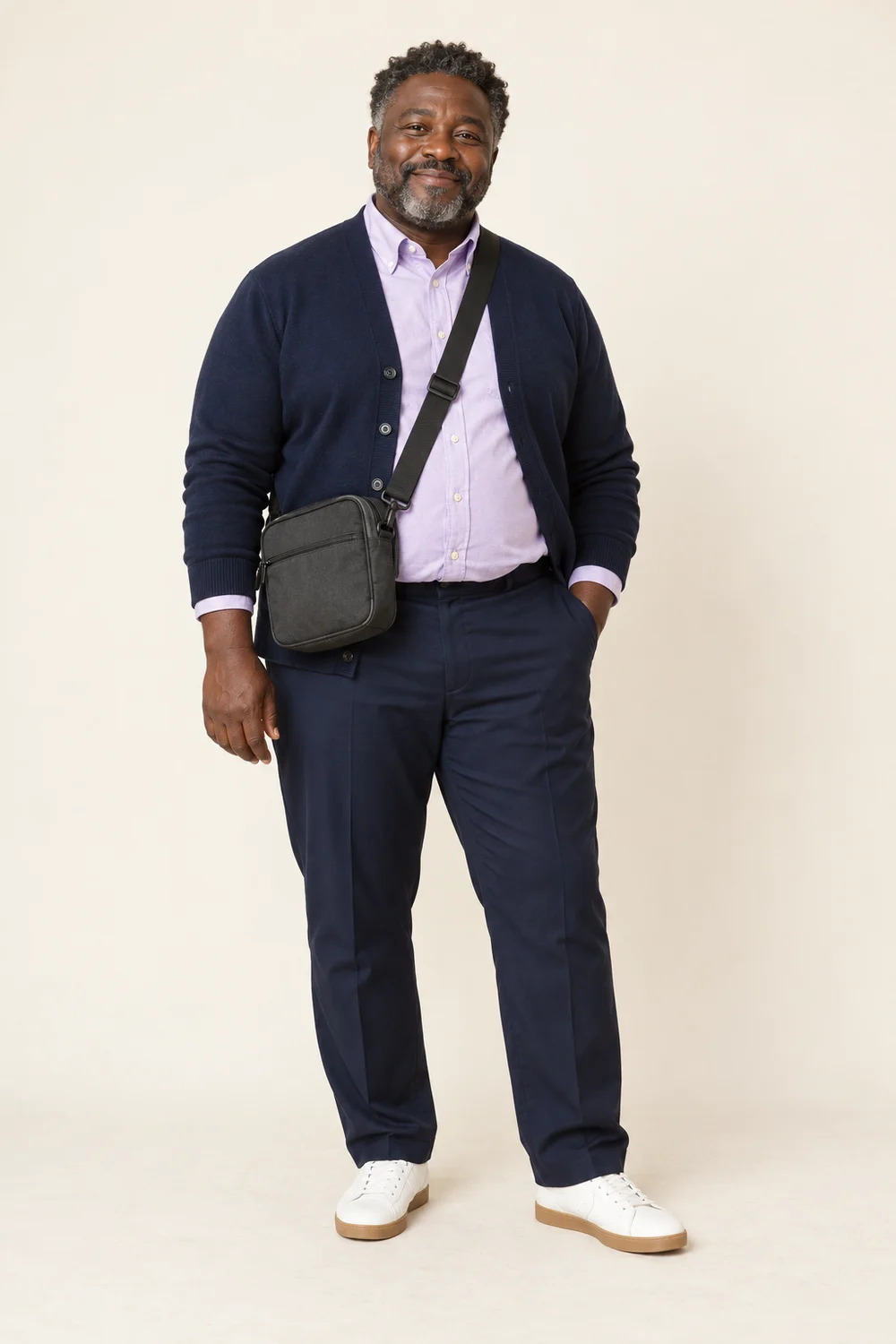
If the lilac shirt pulls beneath the navy cardigan, remove the cardigan and repeat the movement. A strained button line, tight upper arm and loaded bag strap pulling the collar are three different observations. Make the smallest correction that addresses the one you can see. The navy trousers and two shoe routes can stay while you investigate.
The shirt pulls without the cardigan
Wear the lilac Oxford alone, sit and reach forward. Check the buttons across the torso and the room at the shoulder and upper arm. If those restrict you, compare another cut with room where needed. Tucking harder or fastening a cardigan over the opening doesn’t create ease. If only the shirt hem lifts, compare length and your chosen tuck separately.
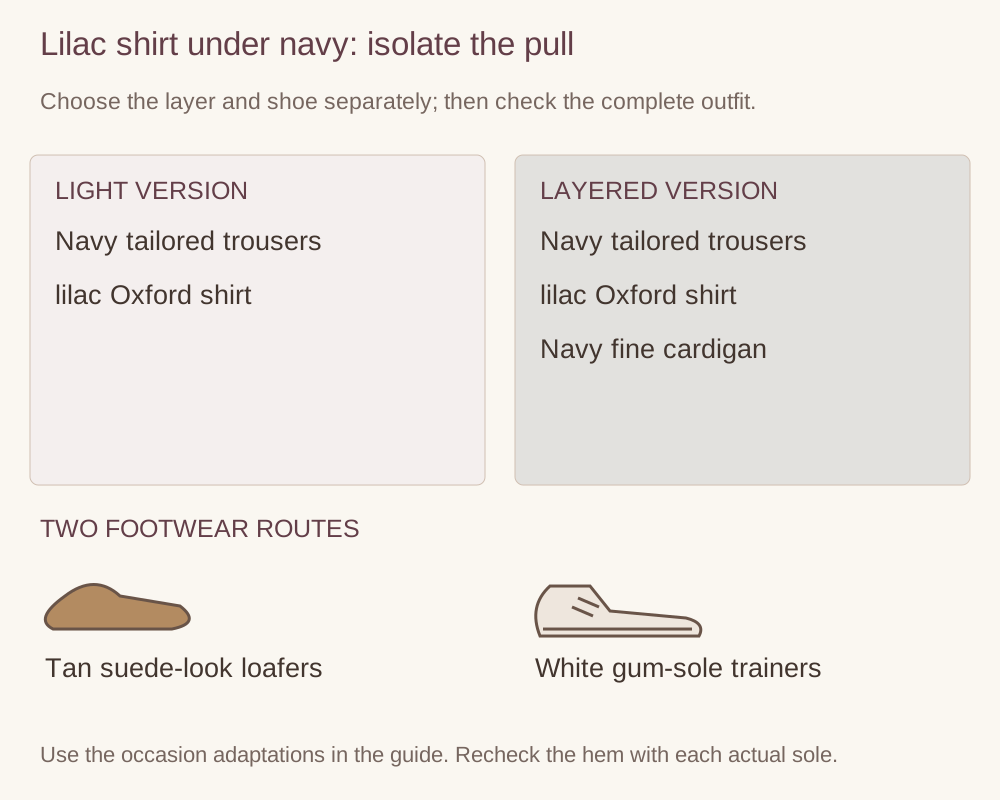
The light version is the lilac shirt, navy tailored trousers, compact dark bag and either shoe. Check the shirt’s opacity and preferred neckline opening with your intended underlayers. Try the hem outside first. A shorter shirt can be useful when an untucked hem is cumbersome; a tighter shirt isn’t automatically the right solution.
Only the second sleeve creates resistance
The layered version, pictured with white trainers, adds the navy fine cardigan. Put it over the comfortable shirt and test reaching first open, then fastened if wanted. If the shirt alone moves but the cardigan stops it, compare the knit’s upper-arm and back room. Do not remove necessary shirt ease to fit an unsuitable outer sleeve.
Compare cuffs and the cardigan hem separately. For a short plus-size frame, less length and more room can be needed at the same time. A cuff alteration doesn’t create upper-arm ease, and shortening a garment won’t relocate all its shaping. Ask an appropriate alterations specialist about this actual construction if the rest fits. Load the bag and check whether its strap is dragging the collar inward.
The waist or hem is another problem
Sit in the navy trousers and check rise, waist and thigh room before looking at length. A pulling rise needs another fit comparison, not a shorter hem. For tan suede-look loafers, check heel retention and toe room with your intended socks, and consult the actual care label for the upper. For white gum-sole trainers, try the actual socks and compare sole and collar height with the loafers. Keep the dark bag and either top-half version, pinning one hem to clear the lower actual sole.
Use the corrected version
Wedding: for an explicitly relaxed daytime wedding that welcomes an Oxford and knit layer, choose loafers and the navy cardigan, removing it indoors if wanted. Where trainers are expressly permitted, use the white pair with either layer choice. Confirm the casual knit finish meets the couple’s guidance; a formal or suit-required invitation needs another outfit.
Evening: for an informal restaurant, choose loafers and the light shirt-and-trouser version, keeping the cardigan available if useful. For a casual standing arts event, choose trainers and the cardigan open or removed. Check the actual route and dress expectations before deciding either shoe is appropriate.
Holiday: for city-break indoor sightseeing, choose trainers, the light version and dark bag. For a nearby relaxed dinner, choose loafers and the cardigan. Test the dinner walk and the two garments’ care requirements before packing a second pair or knit layer.
Keep the correction that removed the pull and leave the other variables alone. If a seam still restricts you, change the cut or ask what an alteration can achieve. Stop when reaching, sitting and bag access no longer require retucking or rebuilding the collar.
Use the outfit as a starting point. Adjust the fit, coverage and footwear to your preferences and plans.