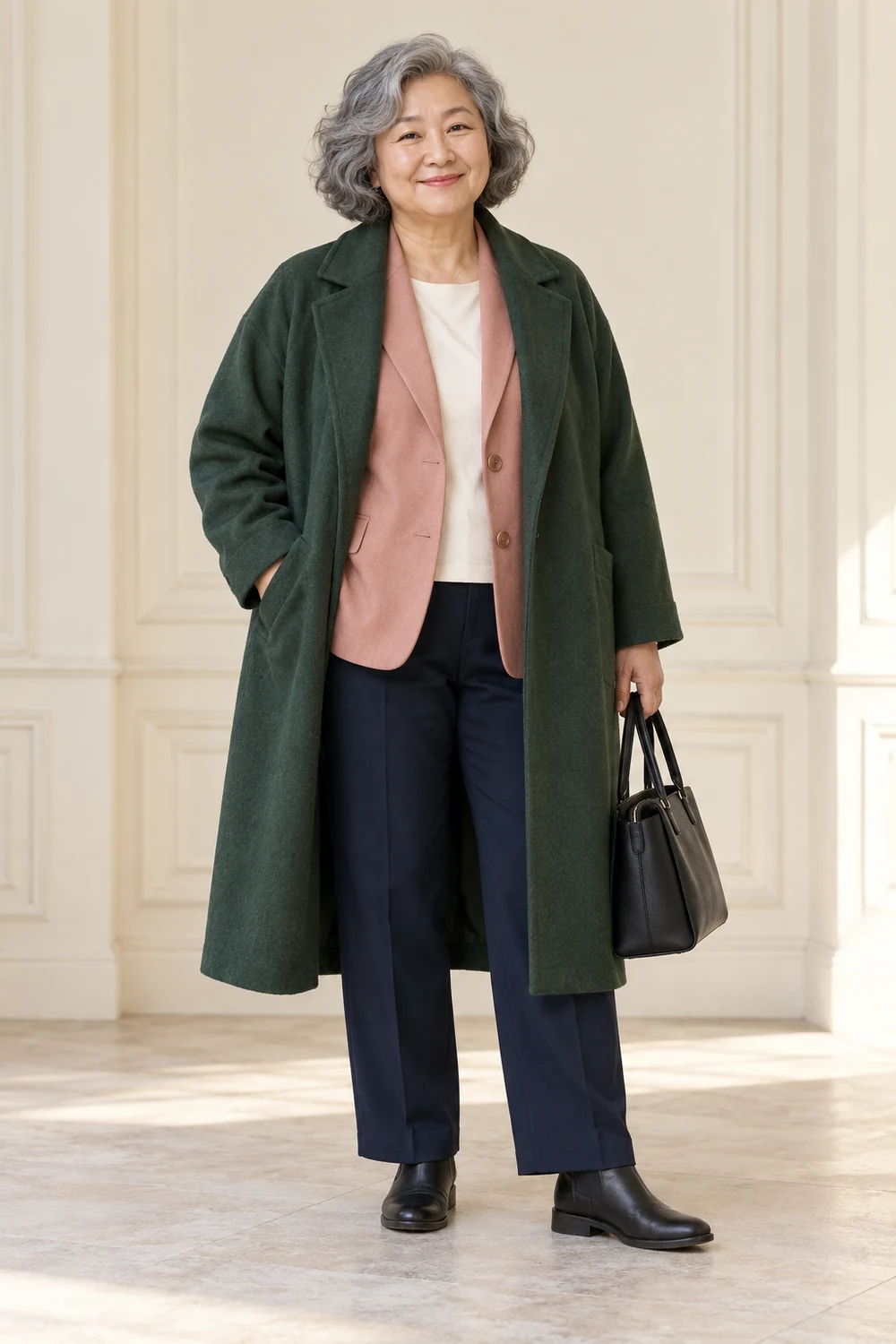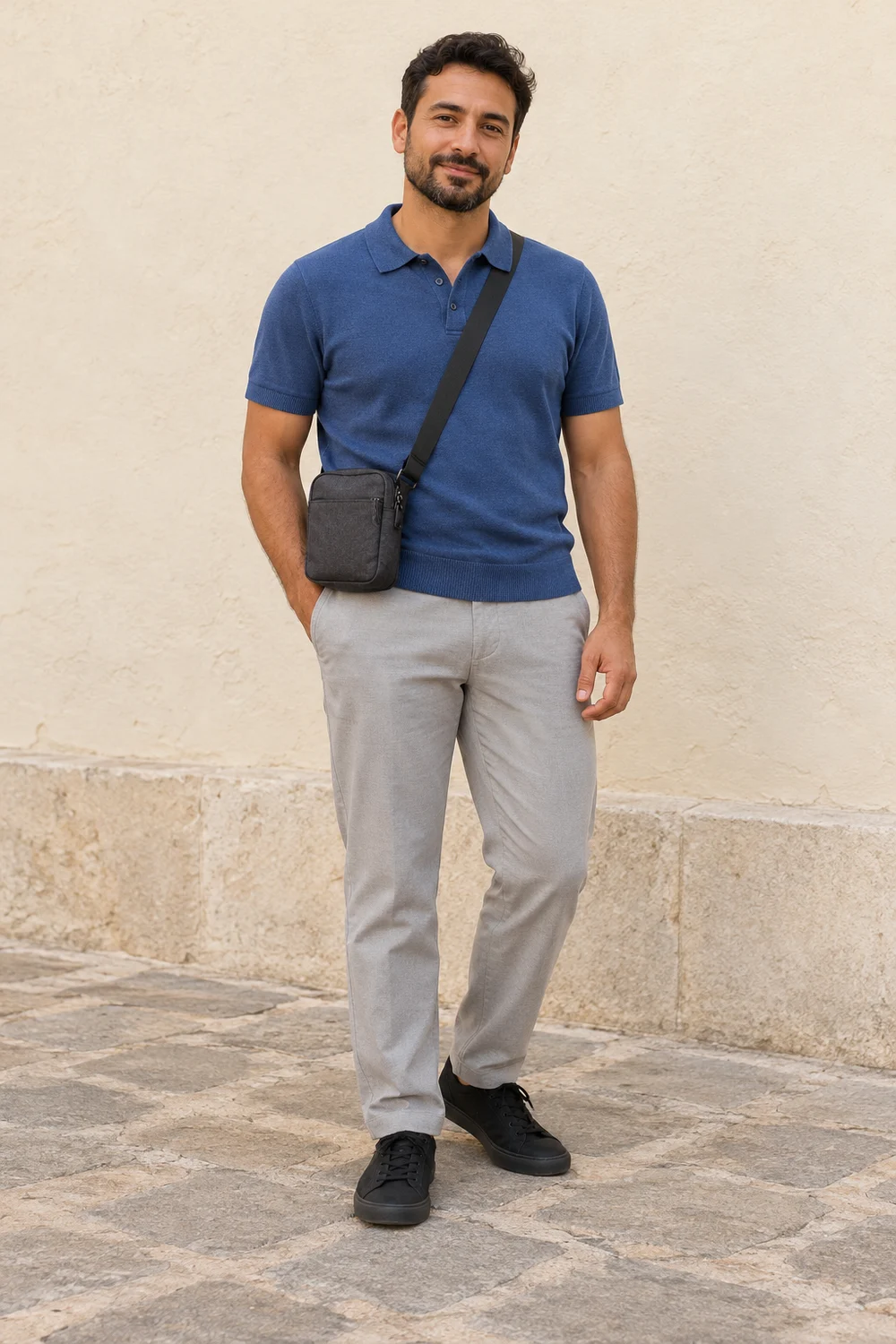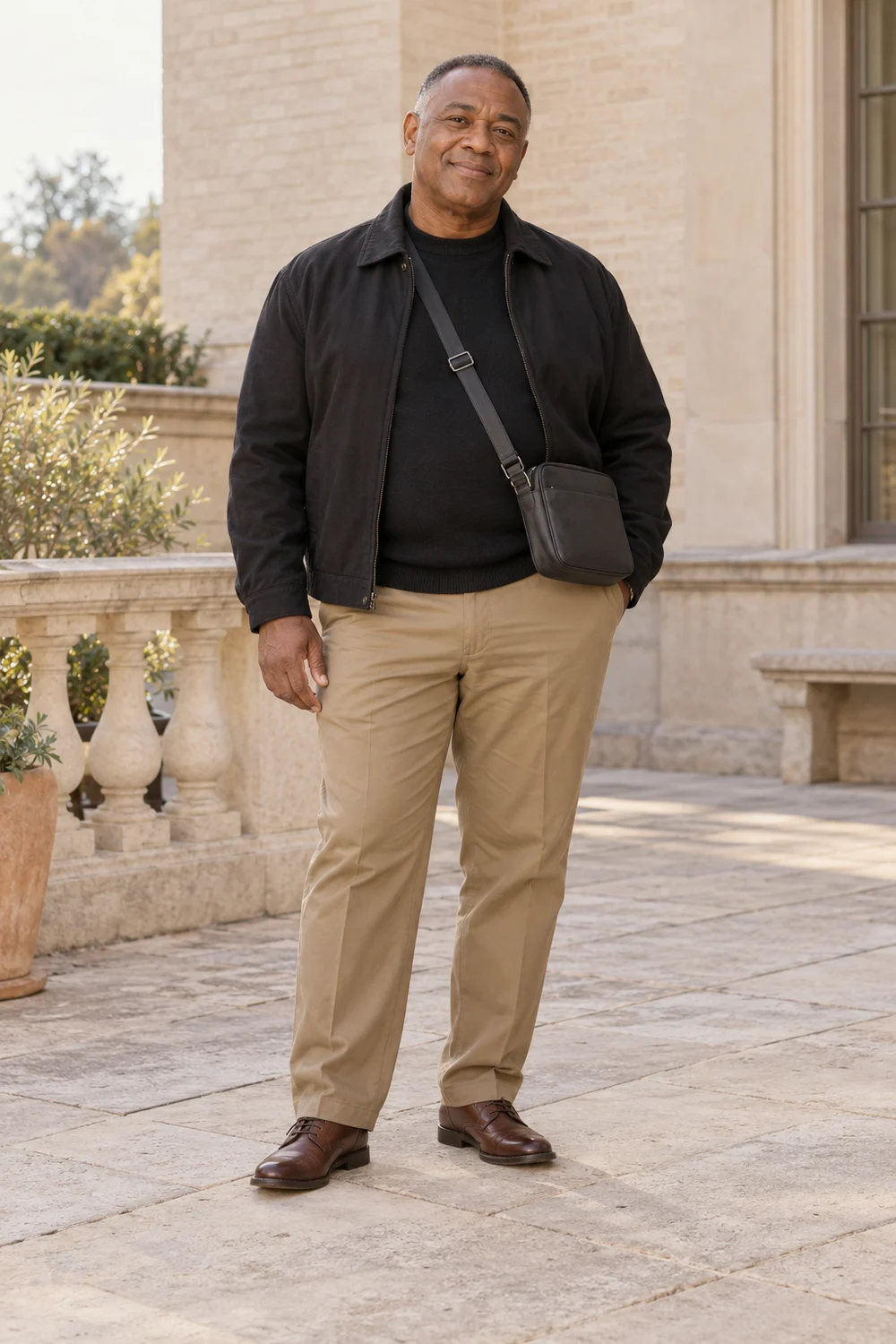
Practise closing the black jacket, sitting and reaching without the crew knit pulling at the neckline. Keep the khaki trousers and one shoe unchanged for the first round. A short jacket can give the outfit a clear edge, but its length alone doesn’t establish how it will move on a short plus-size adult frame.
Set up a comfortable control
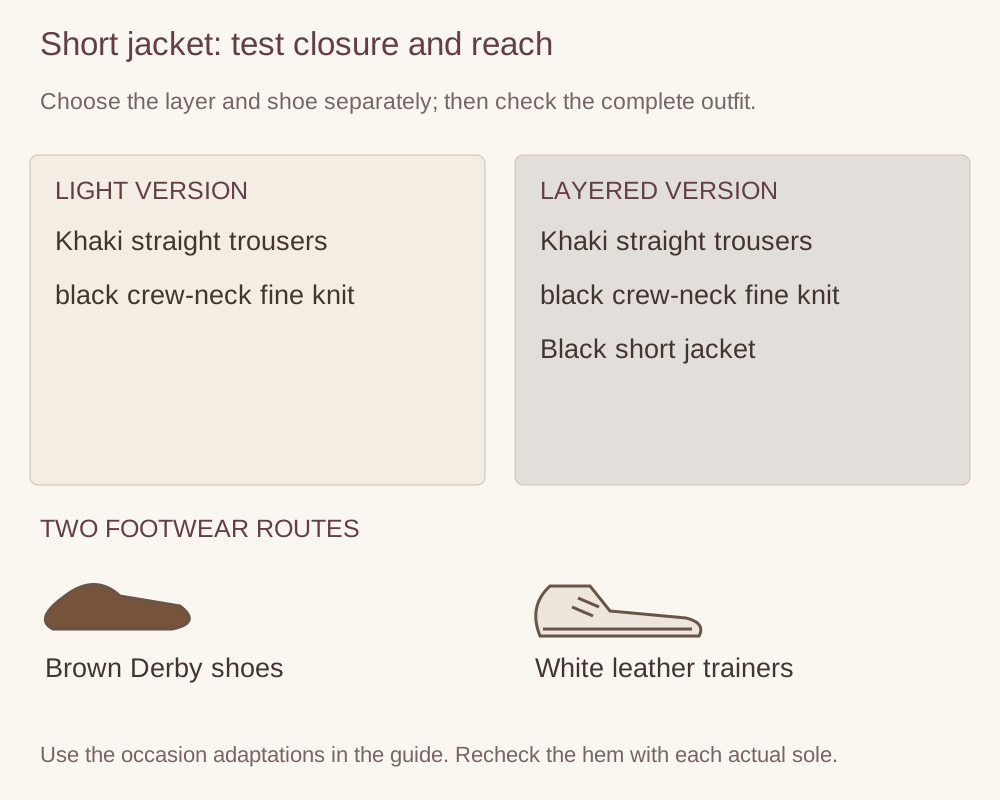
Wear the khaki straight trousers, black crew-neck fine knit and brown Derby shoes. Add the loaded dark compact bag. This is the light version. Sit, stand and reach for something on a table. Check trouser waist, rise and thigh room, then the knit’s upper arms and neckline. If one already restricts the movement, compare its fit before introducing a jacket.
Assess the trousers’ vertical shaping separately from circumference. A shorter inseam won’t move pockets or correct a rise that pulls. Try the knit outside the waist first, then tucked only if it stays comfortable seated. The hem arrangement you choose should settle acceptably after reaching, without being pulled into place after every movement.
Add the closure, not another size assumption
The layered version, pictured, adds the black short jacket. Repeat the movement open, then closed if you want that option. Look at the back and upper arms over the actual knit. If the jacket stops a movement the knit allowed, compare another cut with room in the right area. A tighter inner knit or larger trouser waist won’t repair a restrictive sleeve.
Check where the jacket hem sits when you sit. It can meet the trouser waist at a point you enjoy without requiring a universal crop. If it catches there, compare a different length or keep it open when that serves the plan. Examine cuffs separately; an alteration may change length if the construction permits, but it won’t create back room. Test the bag strap against the closure and reach inside.
Repeat the same route in the other shoe
Brown Derby shoes make a warm low lace-up route. Adjust the actual lacing and check toe room and heel retention with your intended socks. Now try white leather trainers and their socks, repeating the same walk and step. Compare actual sole, heel and collar heights before pinning a trouser hem. Keep the dark bag and either jacket choice. If one length must serve both pairs, it must clear the lower actual sole.
Rehearse the plan, not just the mirror
Wedding: for an expressly relaxed daytime wedding that welcomes a crew knit and casual jacket, choose Derbies and the layered version, removing the jacket indoors if wanted. Where trainers are explicitly permitted, use the white pair with either top-half arrangement. Ask about the knit and short jacket as well as footwear; a formal or suit-required invitation needs another outfit.
Celebration: for an informal birthday restaurant lunch, wear Derbies, the black knit and jacket. For a casual party with standing or walking between stops, choose trainers and the light version or jacket open. Test the actual floor and route rather than assuming either shoe category guarantees comfort.
Weekend: for a gallery and café, choose trainers and the light version, taking the jacket only if useful. For a short nearby lunch, use Derbies and the layered version. Check the seated waist and jacket hem on a chair with the loaded bag beside you.
Finish when the seated check, reach and step can be repeated without moving the knit or jacket back into place. Keep that combination as next time’s control. Change one jacket cut or shoe first; being able to reproduce the comfortable movement is the useful result.
Use the outfit as a starting point. Adjust the fit, coverage and footwear to your preferences and plans.