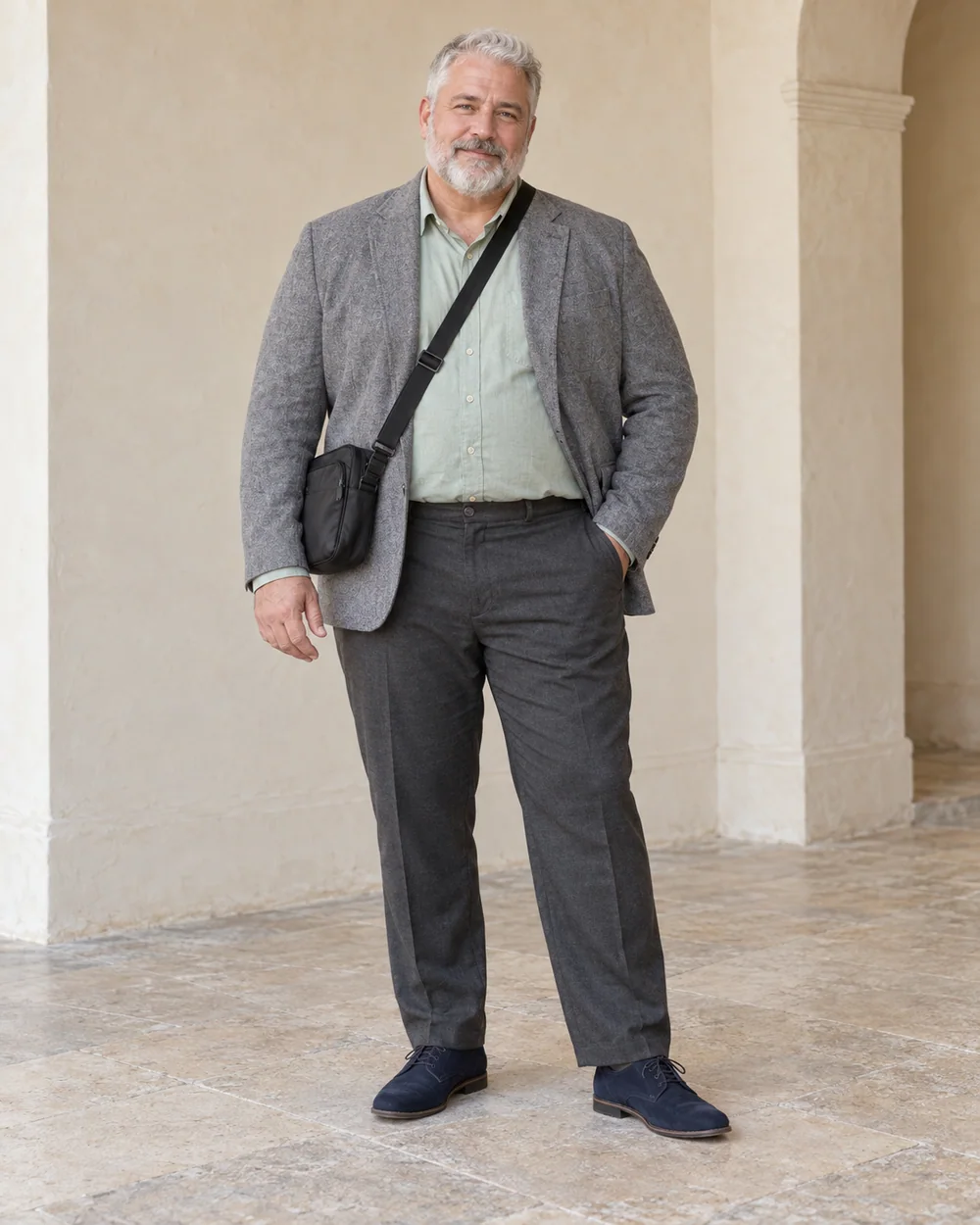
Practise two observations separately: how opaque the mint shirt is over your chosen underlayers, and how freely its upper arms move. A grey blazer can frame the colour, but it should not be needed to hide a shirt you cannot comfortably wear alone. The charcoal trousers and small dark bag complete the base.
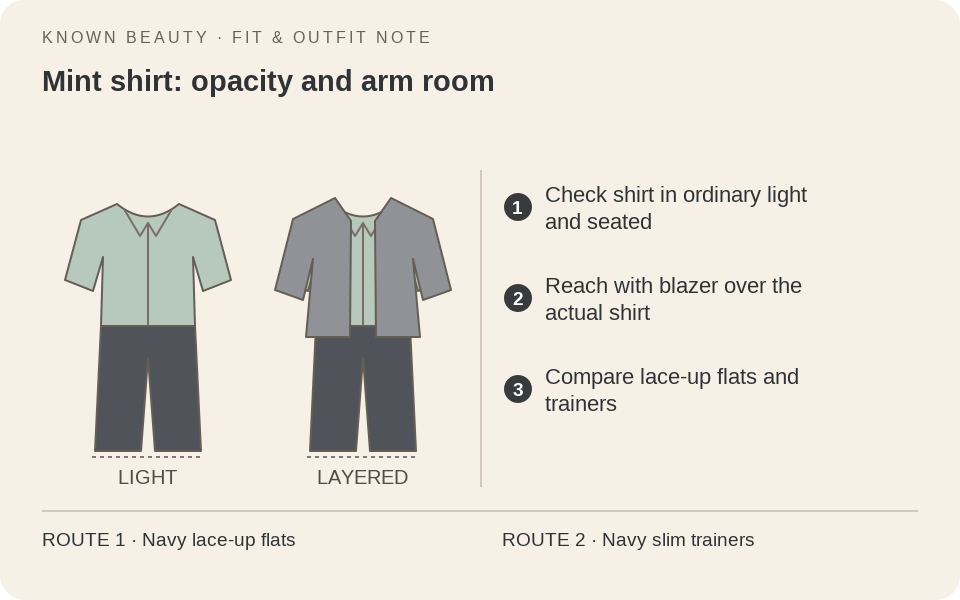
First round: inspect the light outfit
Put muted mint with charcoal straight trousers. In ordinary bright light, look at the shirt over the underlayers you intend, then sit and reach. Decide what coverage you actually want rather than expecting a pale colour name to establish opacity. If a pocket or seam shows differently from the rest, compare the construction of that area instead of adding a second tight layer automatically.
Check chest, back and upper-arm room with the shirt fastened as intended. For a plus-size fit, those areas need their own comparison; a single larger label may also move a shoulder or collar. Keep the amount of definition you enjoy. The shirt can be tucked smoothly in a small amount or left outside when its length makes a useful overlap.
Second round: add charcoal’s lower-half fit
Sit in the trousers and check rise, seat and thigh room, then walk before deciding the hem. Use the bag rather than loading a pocket that distorts the front. Opacity and room are separate checks here too. A loose leg is not proof that a waistband will feel right when seated.
Third round: add the blazer and compare shoes
The pictured layered version adds the grey unstructured blazer over mint. Check shoulder and upper-arm room over the actual shirt, then fasten, reach and sit. Compare its hem with the waistband and shirt edge. Removing it should restore the complete light outfit; unstructured describes a garment choice, not a guarantee of stretch, comfort or weather protection.
Navy lace-up flats give a distinct low-shoe opening with adjustable lacing. Test the actual toe room and heel retention rather than tightening laces to rescue an unsuitable size. Navy slim trainers make the outfit more casual. Assess their sole and intended socks, then walk and recheck charcoal hem clearance with both pairs. Keep the dark bag and grey blazer with either route; any hosiery needs its own fit check.
Repeat for the day you have
Everyday: for errands and lunch, use navy trainers if their actual fit suits the route and keep the mint shirt arrangement you already tested. Lace-up flats offer a quieter finish for a shorter or seated plan. Add the blazer only if you want that frame and can reach the loaded bag with it on.
Work: for a workplace that accepts soft tailoring, choose the blazer with navy lace-up flats. Trainers are another route only where the dress expectations permit them. Sit at the desk and reach towards a shelf to check both upper-arm layers together.
Wedding: choose this for a relaxed daytime or creative event allowing tailored separates. Lace-up flats supply the quieter route; trainers require explicit casual permission. Keep the blazer if useful and choose another guide for a formal requirement.
Repeat the same two observations next time. Fit before a short assembly, keeping the correction that answered the actual question.
Use the outfit as a starting point. Adjust the fit, coverage and footwear to your preferences and plans.