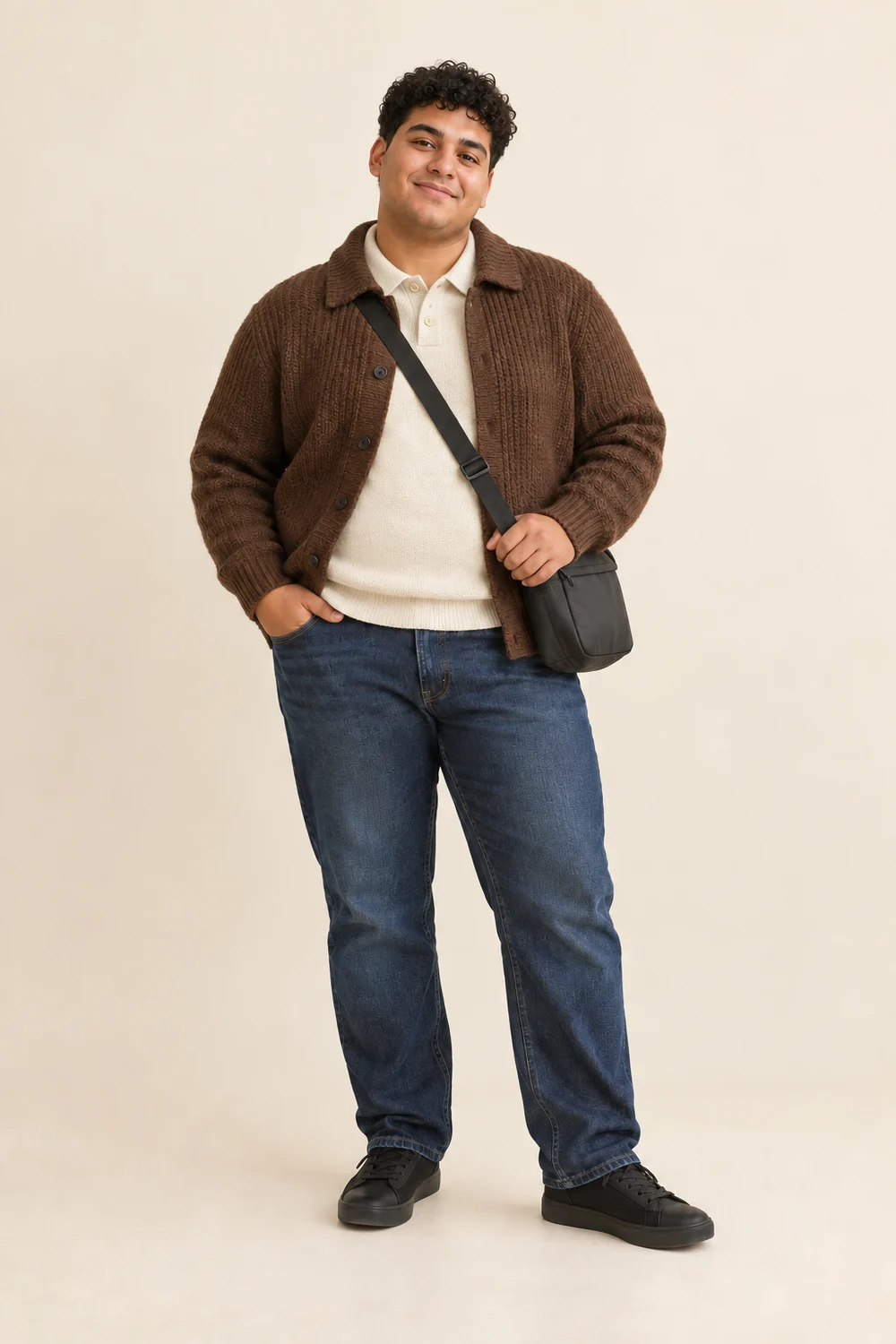
If the cream collar keeps folding under the brown jacket collar, first release the bag strap and open the jacket. Collar crowding is different from a sleeve that stops your reach. This outfit uses indigo straight jeans, a cream collared knit and an optional brown knitted jacket. Find the point of interference before changing the whole outfit’s size.
The collars compete but the body fits
Wear the cream collar knit alone and arrange its fold and short opening as you want. Reach forward and let it settle. If it remains comfortable, add the brown jacket open and keep the cream collar inside or above the outer collar in the arrangement you enjoy. Test the loaded dark bag strap: it may be pulling one collar inward. Reposition the strap once and repeat before blaming the knit.
If two thick collars continue to crowd each other, use the light version: cream collared knit, indigo jeans, dark bag and either shoe. A brown collarless cardigan can provide another layer without repeating the same neckline construction. A different piece is more useful than having to rebuild the collar every time you turn your head.
The sleeve binds when both knits are on
The layered version, pictured, adds the brown knitted jacket. Check movement over the actual cream knit, first open and then fastened if wanted. If the cream knit alone moves but the jacket stops it, compare upper-arm, shoulder or back room in another jacket cut. A tighter inner knit isn’t the necessary price of wearing the outer one.
Look separately at cuffs and jacket hem. A shorter sleeve may help excess length, subject to the garment’s construction, but it won’t create upper-arm ease. For a short plus-size frame, keep the room you need while comparing vertical positions. Ask a knitwear alteration specialist what this actual garment permits rather than assuming every knitted cuff can simply be shortened.
The jeans bunch below an otherwise good fit
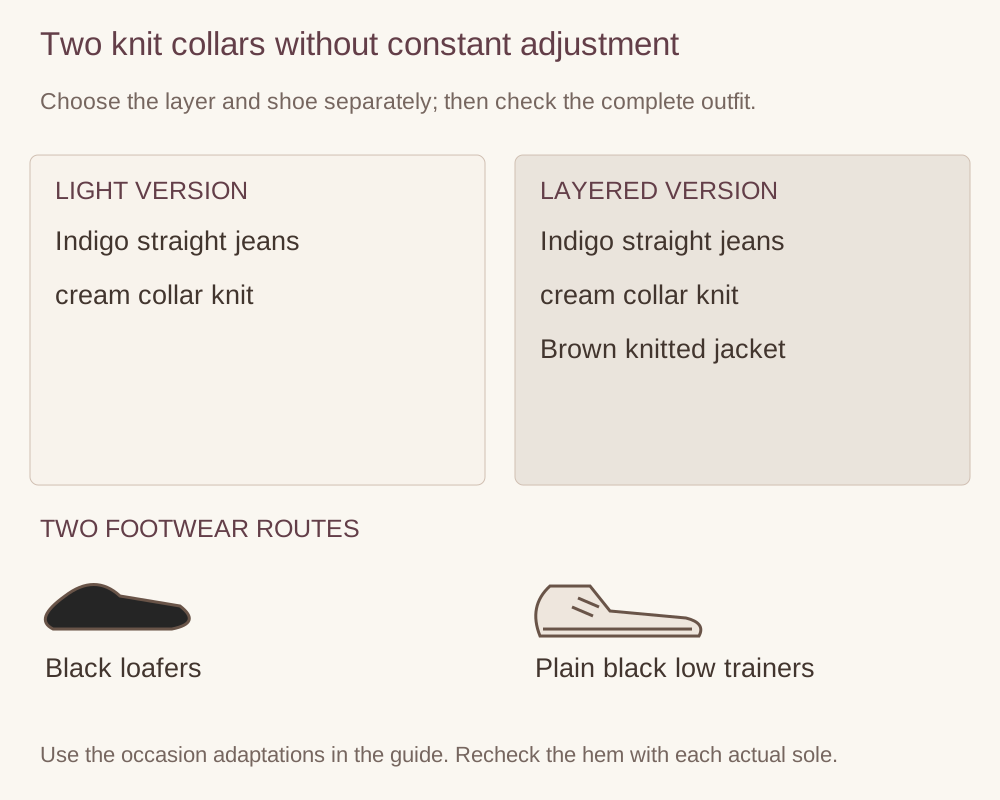
Sit in the indigo straight jeans and check waist, rise and thigh room first. If those work, compare the hem in black loafers and plain black low trainers. Loafers need secure heel retention and toe room with your intended socks. Trainers have their own collar and sole height; test a step and check the rear jean hem. Keep the dark bag and either knit version for both routes. Pin a proposed length with both shoes so it clears the lower actual sole.
If the rise itself pulls, a hem alteration won’t fix it. Compare another jean cut, keeping the indigo colour if you enjoy it. Don’t automatically cuff a thick hem repeatedly if it becomes cumbersome around the shoe.
Use the corrected combination
Work: in a workplace that permits denim, choose loafers and the layered version for a seated creative-office day. Where trainers are accepted for standing tasks, choose the black pair and the light knit version or jacket open. Check the collar again with the loaded bag and follow the actual dress code; this isn’t business-formal clothing.
Celebration: for an informal birthday lunch, use loafers and the brown jacket open. For a casual party involving walking between venues, use trainers with either knit version. Check whether denim is welcome rather than assuming a collared top supplies every kind of formality.
Holiday: for a city-break gallery day, choose trainers and the light cream-knit base. For a nearby relaxed dinner, use loafers and add the brown jacket. Test the second route and care requirements before packing another shoe and knit layer.
Keep the one change that removes the interference: strap position, collar construction or jacket cut. Follow each care label separately. Stop when turning, reaching and sitting leave the neckline comfortable without another adjustment.
Use the outfit as a starting point. Adjust the fit, coverage and footwear to your preferences and plans.