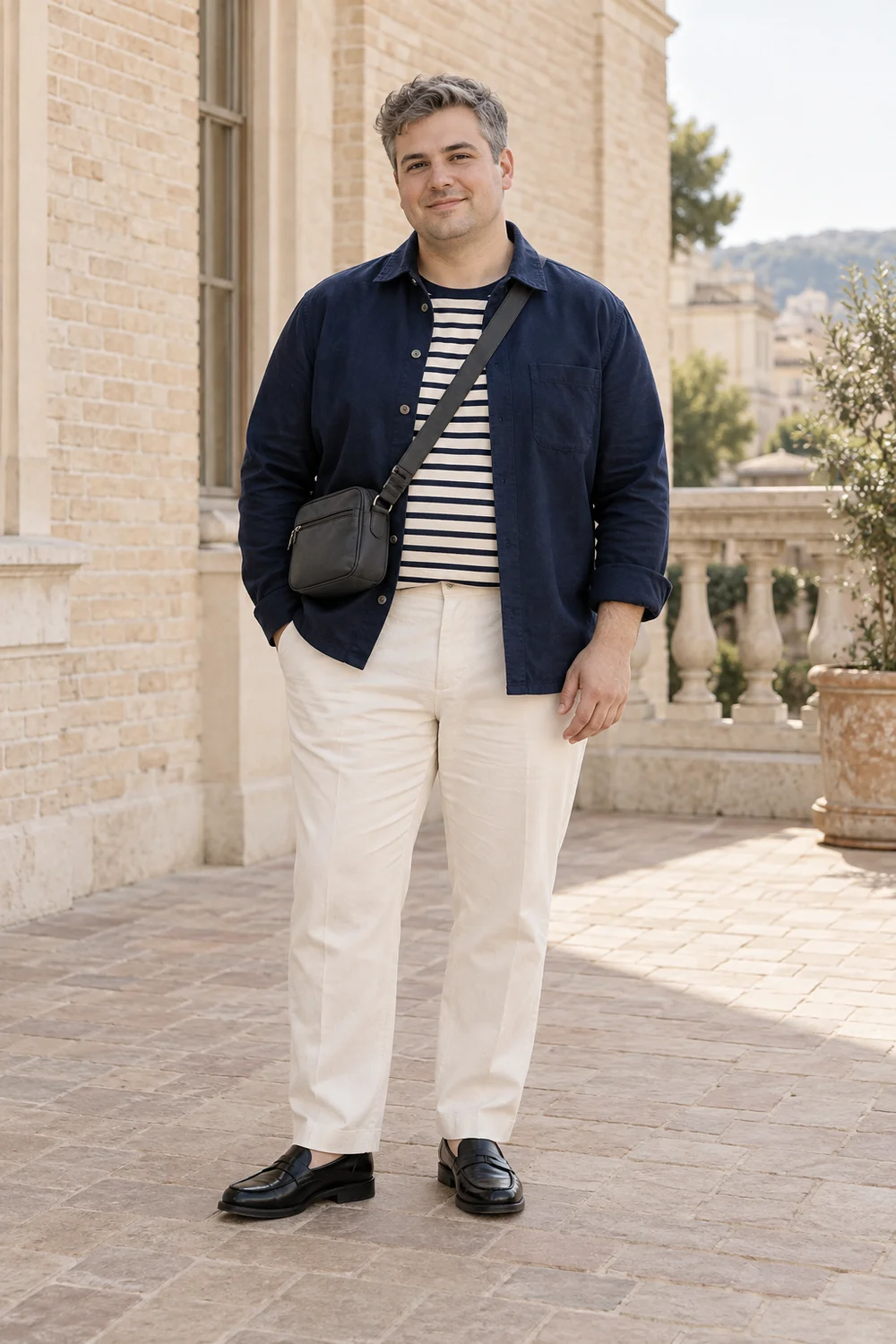
Choose the cream trousers for coverage and movement before choosing the shoe. Navy-and-cream stripes and a black low shoe create a clear outfit, but they can’t repair fabric that is more transparent than you want or a rise that pulls. Once the trousers work, compare black loafers with black trainers on the same route. The navy overshirt remains a separate layer decision.
What the cream label cannot tell you
Try the opaque cream trousers with the underlayers you intend to use, checking the actual fabric in daylight and seated. Look at pocket visibility and lining construction separately. Opaque in a checklist is the job to find, not proof that every cream product offers your preferred coverage. If the fabric isn’t suitable, compare another construction rather than adding more layers by default.
Check waist, rise and thigh room, then take a long step. For a short plus-size frame, circumference and vertical positions need separate assessment. A shorter inseam won’t change a pulling rise or relocate the pockets. If the upper fit works, pin a proposed hem with both shoes; if it doesn’t, compare another cut first.
Two black shoes, compared fairly
| Route | What to compare |
|---|---|
| Black loafers | Heel retention and toe room with the intended socks; rear trouser hem through a turn. |
| Plain black low trainers | Actual sole and collar height, sock edge and rear hem on a step; the same test walk. |
Keep the dark bag and navy-striped tee unchanged while comparing. A loafer isn’t automatically formal and a trainer isn’t automatically comfortable. Choose the actual pair for the surface and plan. One hem serving both pairs must clear the lower actual sole; pin before altering rather than judging a still pose.
Stripes alone or navy around them?
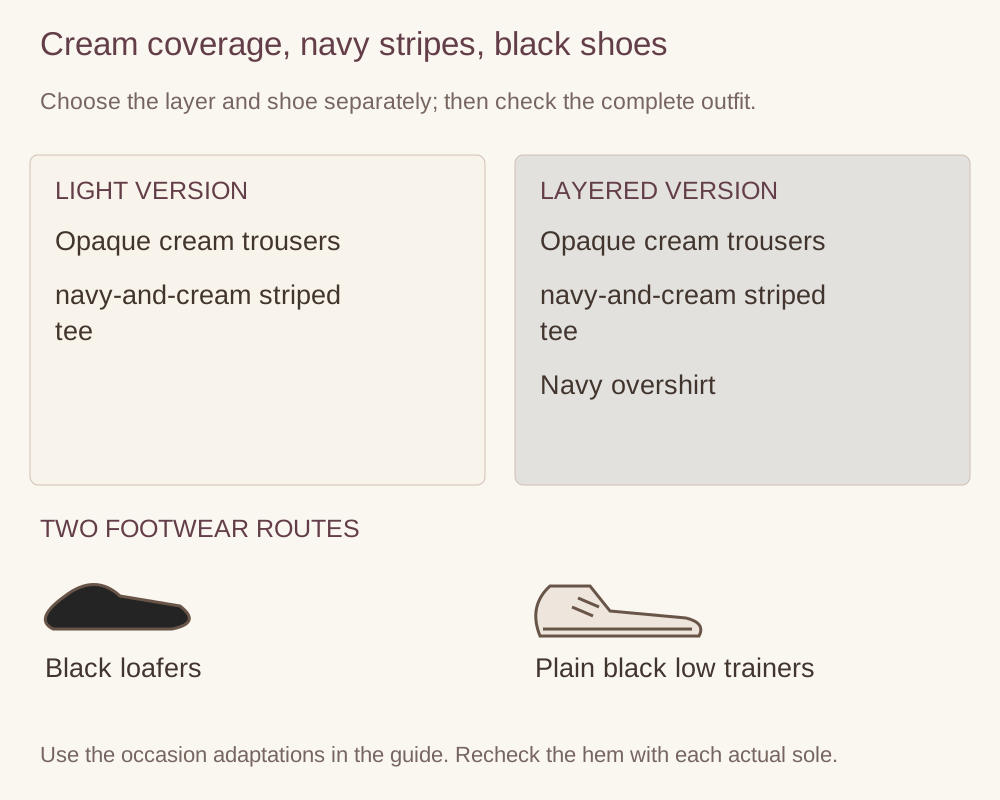
The light version is the navy-and-cream striped tee, cream trousers, dark compact bag and either shoe. Check the tee’s opacity, neckline and upper arms as you reach. Try its hem outside before tucking and keep the comfortable arrangement. Stripes are part of the pattern you enjoy, not a body-correction device.
The layered version, pictured with loafers, adds the navy overshirt. Wear it open so the stripe remains visible, then try closure if wanted. Check back and upper-arm room over the actual tee. Compare cuffs and hem independently; if the overshirt catches at the waistband, use another cut or keep the light version. Load the bag and make sure its strap doesn’t pull the collar across the stripe.
Make the choice for three plans
Everyday: for errands and a café, choose trainers and the light version. For a short local lunch, choose loafers and add the navy overshirt open. Test the loaded bag during the walk so you can judge its real position and capacity.
Weekend: for a gallery visit, use trainers with the light tee-and-trouser base, taking the overshirt only if useful. For an informal restaurant lunch, use loafers and the layered version. Check seated waist comfort and whether the overshirt hem catches on the chair.
Holiday: for city-break indoor sightseeing, use trainers, the light version and the dark bag. For a nearby relaxed dinner, use loafers and add the navy overshirt. Check the care labels and rehearse the dinner route before packing a second pair; choose clothing for the actual destination’s conditions separately.
Keep the cream trousers only when their coverage and upper fit suit you. Then use the secure shoe and layer arrangement that serve the day. An existing striped tee can finish the palette; another pale trouser or navy shirt is useful only when it fills a specific missing job.
Use the outfit as a starting point. Adjust the fit, coverage and footwear to your preferences and plans.