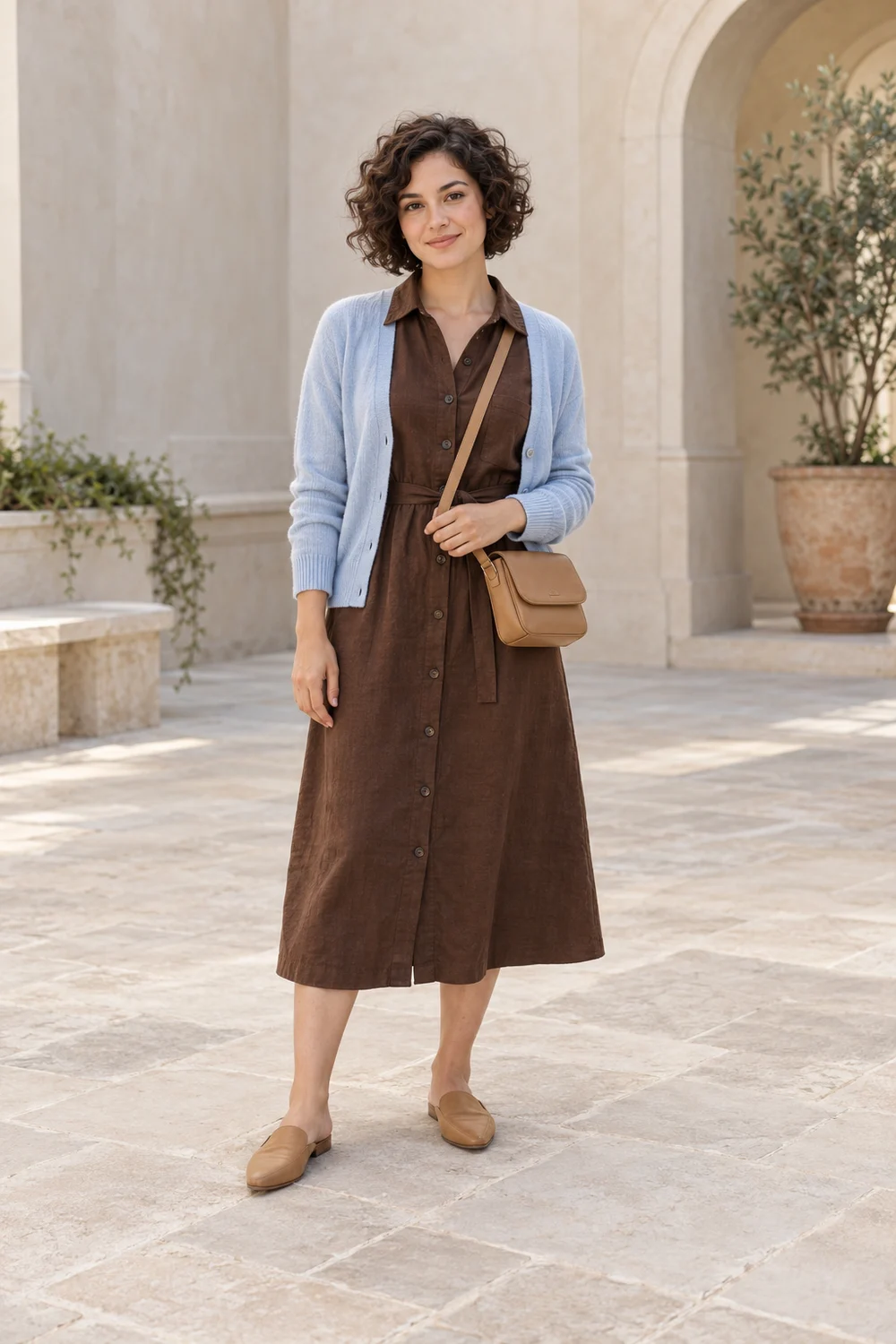
Practise one check: the cocoa shirt dress should stay comfortable along its button line when you sit, reach and walk. A neat standing outline isn’t enough information. Set the pale-blue cardigan aside first so you can see the dress clearly. The goal is a repeatable fit check, not a particular waist size or one standard hem for every petite reader.
First round: let the dress work alone
Put on the cocoa button-front shirt dress with the underlayers you want. Wear tan flat mules and load the tan compact bag. This is the light version. Check the neckline opening and opacity in daylight. If the dress has a belt, begin without tightening it to change the fit; its button line and seams need room before any optional styling detail.
Sit on a chair, reach to a table and stand. Look separately at the bust, waist and hip portions of the fastening. If one button area pulls or opens, compare more ease or another cut there. Closing an extra button, adding the cardigan or pulling the belt tighter doesn’t create room. Check where the waist shaping falls on your own torso: shortening the hem can’t move it.
Second round: walk and turn
Take a long step, turn and climb a step if comfortable. Notice the lower opening and any vent. If the dress restricts your stride, compare a cut with more movement; don’t assume undoing a button gives the coverage you want. Check that the bag strap doesn’t drag the placket sideways and that the loaded bag is easy to reach.
Now assess the tan flat mules themselves. The open heel needs to hold without toe gripping. Try the actual route for a short walk, and use secure tan flats if the mules slip. Keep the dress and tan bag unchanged so you can tell whether the issue belongs to the shoe or dress.
Third round: add one variable
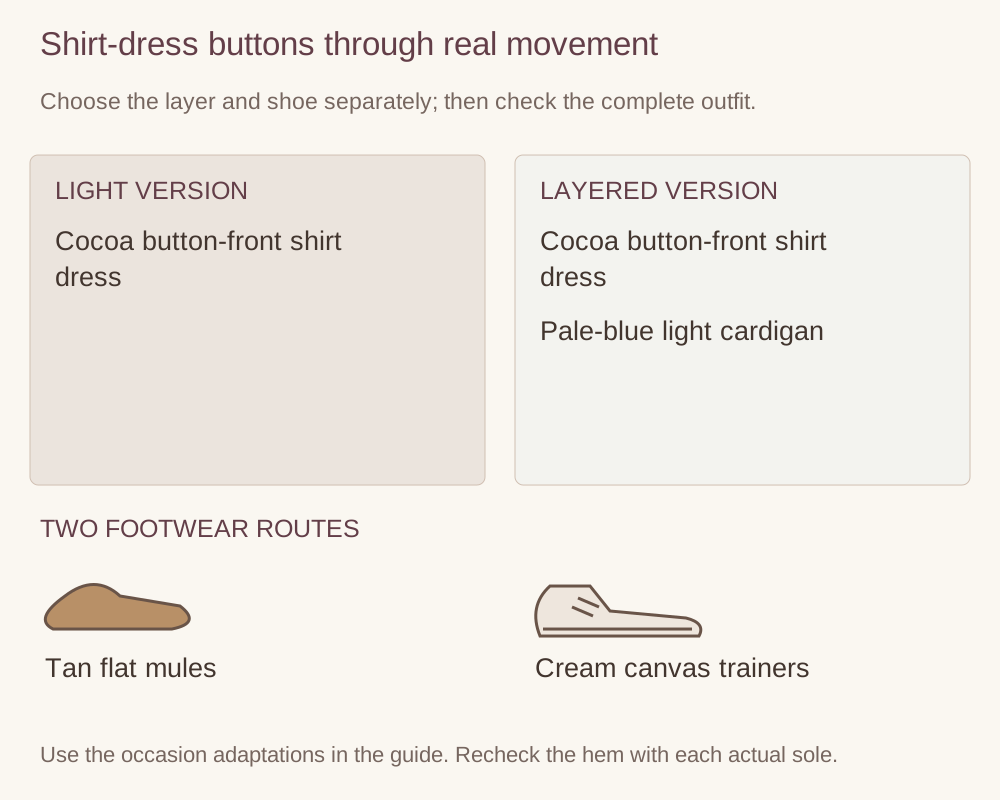
For the layered version, pictured, add the pale-blue light cardigan. The cool blue makes a separate border around the cocoa. Try it open, then fastened if wanted; repeat the reach and seated checks over the dress sleeves. Look for upper-arm restriction or a cardigan hem that catches at the dress waist. Compare another cardigan cut if necessary rather than making the dress tighter to fit beneath it.
For the cream canvas trainers route, change only the shoes and intended socks first. Walk the same short route and check the dress clears the actual collar and sole on a step. Keep the tan bag and either cardigan choice. Trainer is a category, not a guarantee of comfort; use the pair that passes your own movement check.
Repeat with the actual plan
Everyday: for errands and a café, use cream trainers with the light dress version. For a nearby lunch with little walking, choose tan mules and add the pale-blue cardigan open. Carry the loaded bag during the final test so the strap’s effect on the placket is realistic.
Evening: for an informal restaurant dinner, choose mules and the layered version, then remove the cardigan at the table if preferred. For a casual standing arts event where trainers suit the venue, use cream trainers with the light version or cardigan open. Rehearse the sitting or standing you will actually do rather than declaring one route universally dressier.
Celebration: for an informal birthday lunch, choose mules, the cocoa dress and pale-blue cardigan, checking the open heel on the venue’s surface. For a casual gathering with walking between stops, use trainers and either layer version. Keep the tan bag and follow any actual invitation requirements; no extra accessory is needed to compensate for an unsuitable shoe.
Finish when you can repeat sitting, reaching and walking without pulling the button line back into place. If the opening still strains, choose another cut or fastening, or ask an alterations specialist about the garment. Repeat the same checks after care using the actual labels, before the next planned wear.
Use the outfit as a starting point. Adjust the fit, coverage and footwear to your preferences and plans.