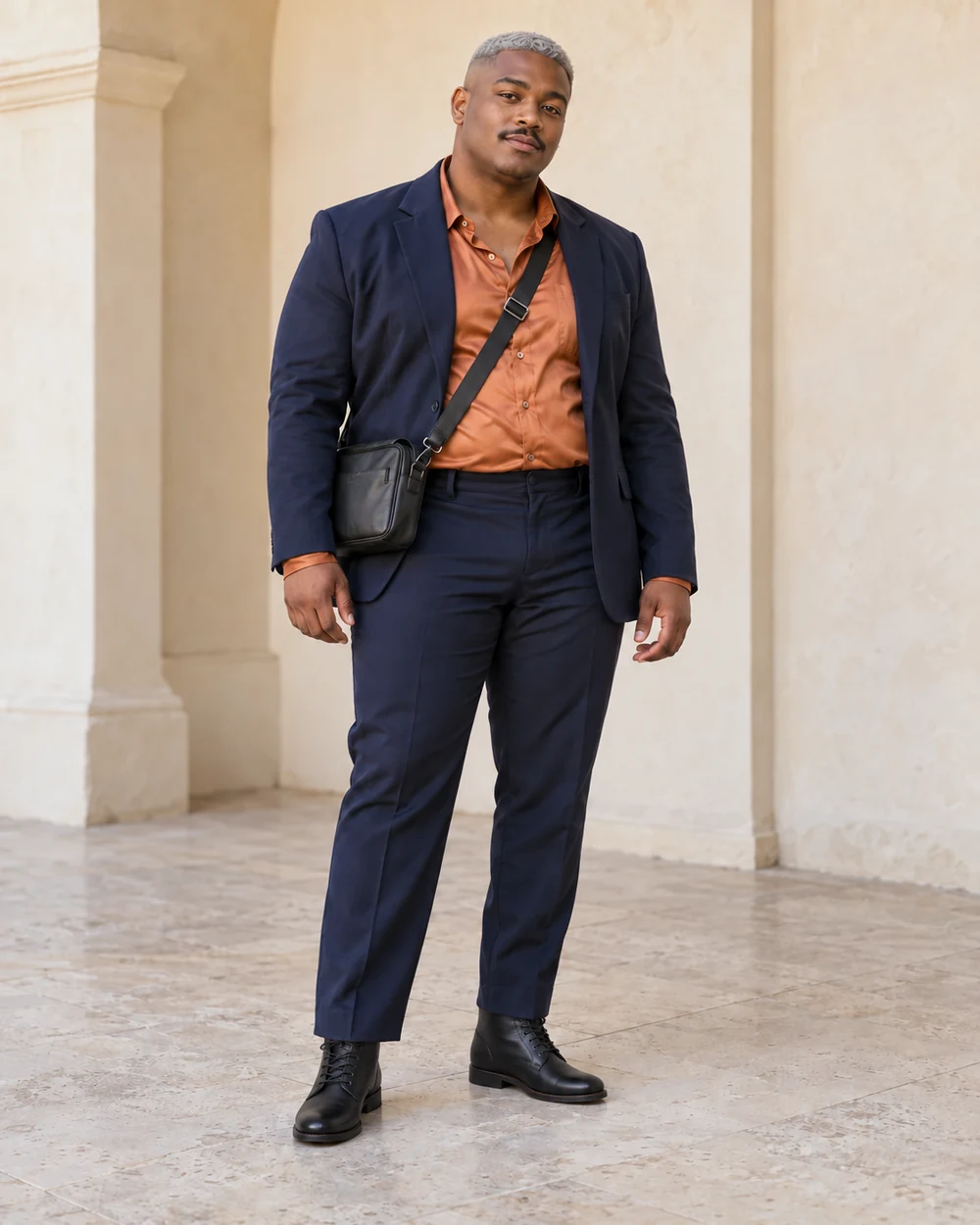
If a copper shirt looks too transparent and its cuffs bunch under the blazer, solve those observations separately. More shine is not a repair for either. Navy straight trousers, a copper satin-finish shirt and an optional navy unstructured blazer keep the colour relationship clear while the garments get their own fit checks.
When the copper does not give your chosen coverage
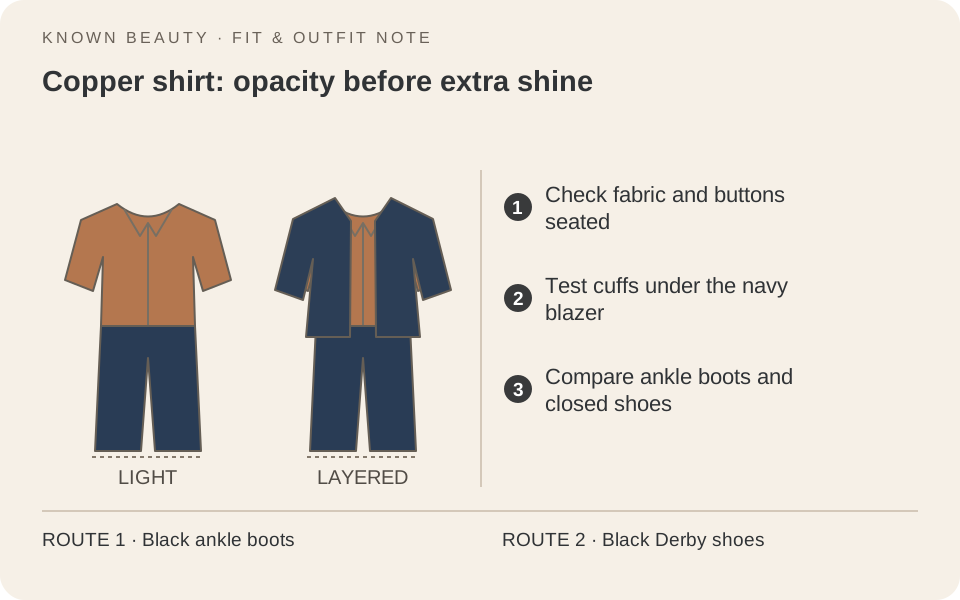
Try the light shirt-and-trouser version over the underlayers you intend in ordinary bright light. Sit, reach and look at the actual fabric. Notice whether transparency is general, local around a seam, or created by tension across the front. Compare construction, a suitable underlayer or better room in that area rather than assuming a darker copper will solve everything.
Satin finish describes the surface, not a guaranteed fibre or opacity. For petite plus-size proportions, inspect collar, chest, shoulder, upper arms and torso length independently. A smooth small tuck can show the waistband; leaving the shirt out works when its actual length gives a useful overlap. Fit the navy trousers’ rise, seat and knee position while seated before hemming. A short alteration will not relocate low shaping.
When two cuffs make the problem
The pictured layered outfit adds the navy unstructured blazer. Try it over the actual shirt and compare cuff and sleeve lengths, shoulder and upper-arm room. Fasten, sit and reach. If a sleeve gathers into a thick roll at the wrist, adjust the garment join or compare another sleeve shape rather than pushing both layers further up the arm.
Compare the blazer hem with the waistband and shirt edge, then remove it. The copper shirt should leave a complete light outfit with the small dark bag. Unstructured does not establish stretch or weather protection; check the actual material and care for that job.
Compare the black shoes and boots
Black ankle boots add a shaft inside the trouser leg. Check the opening with the ankle flexed, toe space and whether the cloth falls back after walking. Black Derby shoes remove the shaft and give an adjustable low lace-up opening; check their lacing and heel grip, then repeat the same walk. Both pairs use ordinary low-profile soles with a conventional low broad heel. Compare the actual rear hem with each pair separately.
Use the correction somewhere real
Everyday: for lunch and appointments, use boots if the actual pair suits the route or closed shoes for a more open foot line after their own walking check. Keep the light shirt arrangement that lets you reach and sit comfortably, with the blazer optional.
Evening: for a relaxed restaurant dinner, frame the copper with the navy blazer and choose closed shoes or boots accepted by the venue. Sit at a table and reach the loaded bag to check that neither cuff nor waistband needs constant rearrangement.
Celebration: for a creative birthday meal, let copper supply the reflective colour rather than adding another satin accessory. Choose boots or Derby shoes within the invitation and floor conditions. Keep the same dark bag and the jacket closure you already tested.
Fit before a short assembly. Keep the change that answered the actual opacity or sleeve problem, then leave the amount of shine alone.
Use the outfit as a starting point. Adjust the fit, coverage and footwear to your preferences and plans.