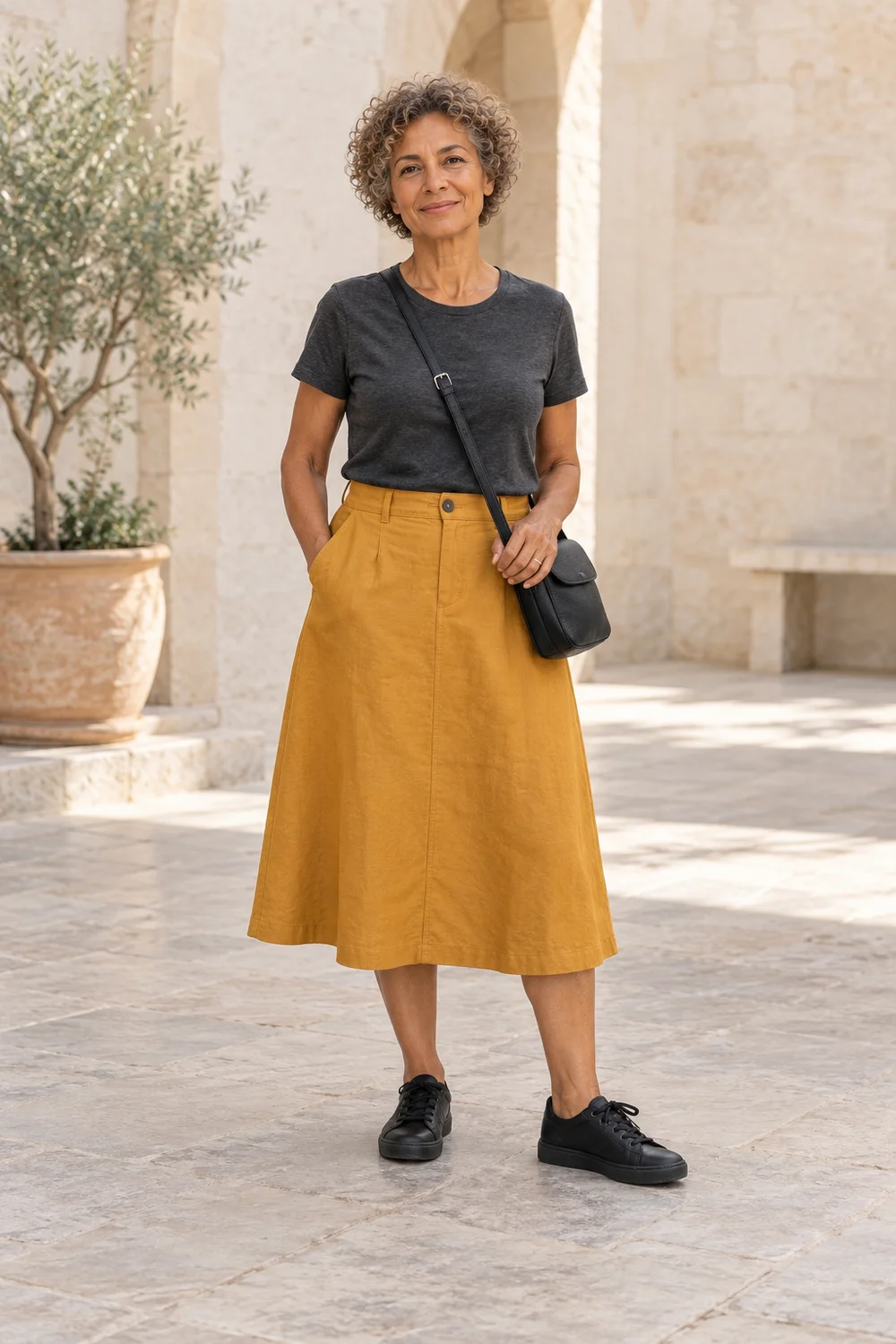
If the charcoal tee makes a ridge at the saffron skirt’s waist, don’t start by adding the jacket. First work out whether the tee is too long for your chosen tuck, the waistband is pressing or the two fabrics simply pile up together. The smallest useful correction is at that meeting point. Petite proportions call for checking the clothes’ vertical positions, not choosing one compulsory hemline.
The waistband is comfortable but the tuck is bulky
Release the tuck and let the charcoal tee settle outside the saffron A-line skirt. Reach forward, sit and stand without rearranging it. Compare the natural hem position with a loose front tuck. If neither feels useful, a shorter charcoal top can preserve the colour relationship without filling the waistband. Don’t keep tightening the skirt to hold fabric in place.
Check the skirt’s opacity with your actual underlayers and test a long step. The light version, pictured with black trainers, is already complete: charcoal tee, saffron skirt, black compact bag and either shoe. Check the neckline and sleeve coverage without relying on a layer to frame them. Load the bag so you can assess its real strap position rather than putting the day’s weight in pockets.
The waistband presses even without a tuck
Assess the skirt seated. Compare its waist construction, rise to the hip and available ease with another cut. Removing tee fabric cannot fix a waistband that still hurts or restricts breathing comfortably. If the waist and hip fit but the skirt is longer than you enjoy, assess the hem separately. Altering the bottom won’t move all the shaping above it. A comfortable saffron skirt with more ease can replace this exact A-line cut.
The jacket creates a second crowded line
The layered version adds the charcoal collarless jacket. Try it over the tee after the base works. Reach across the body, then close it if wanted and sit. Check upper-arm and back room, cuff position and the jacket hem separately. If the hem catches at the skirt waistband, compare another length or wear it open. A short jacket is an option, not a height rule; keep the version that stays comfortable without repeated tugging.
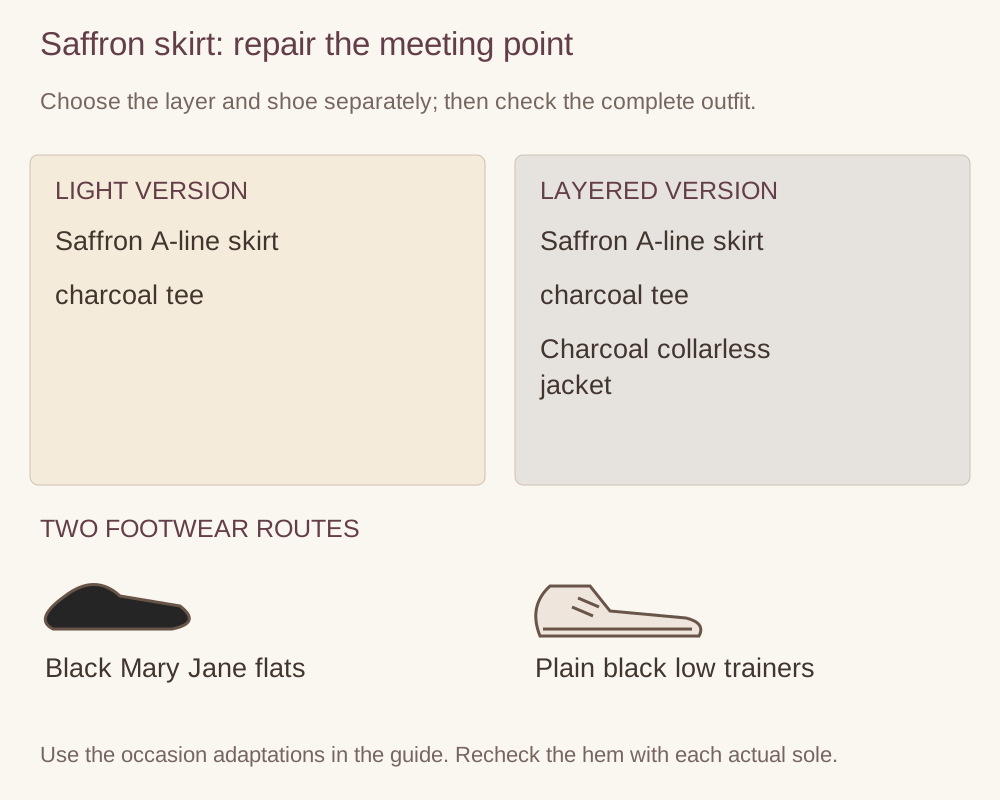
Black Mary Jane flats bring a clear strap detail below the skirt. Test strap pressure, toe room and heel retention through turns. Keep the black bag and either layer version. Plain black low trainers make the casual route. Try the intended socks and check the skirt clears the collar and actual sole on a step. If a shoe slips or pinches, use a secure alternative; moving the skirt hem can’t repair the shoe.
Choose the corrected version for the day
Everyday: for errands and a café, use trainers and the light tee-and-skirt version. For a shorter lunch with little walking, choose Mary Janes and the jacket open. Keep the black bag and make sure its strap doesn’t pull the jacket front across the tee.
Work: for a relaxed office, use Mary Janes, the charcoal jacket and the comfortable tee arrangement for a seated meeting day. Where trainers are accepted for standing tasks, use the low black pair and either layer version. Test at a desk, including reaching for the bag, before deciding the waistband fix is complete.
Wedding: for an explicitly relaxed, creative daytime wedding, choose Mary Janes with the saffron skirt, charcoal tee and collarless jacket. If trainers are expressly welcomed, the low black pair forms the second route; the light version can be worn indoors when the jacket is removed. Confirm the casual tee and colour fit the invitation. For formal guestwear, choose another outfit.
Keep the change that solved the visible problem and leave the other variables alone. If the garment needs its construction changed, ask an alterations specialist what is possible. Stop when sitting and reaching no longer require you to rebuild the waistband arrangement.
Use the outfit as a starting point. Adjust the fit, coverage and footwear to your preferences and plans.