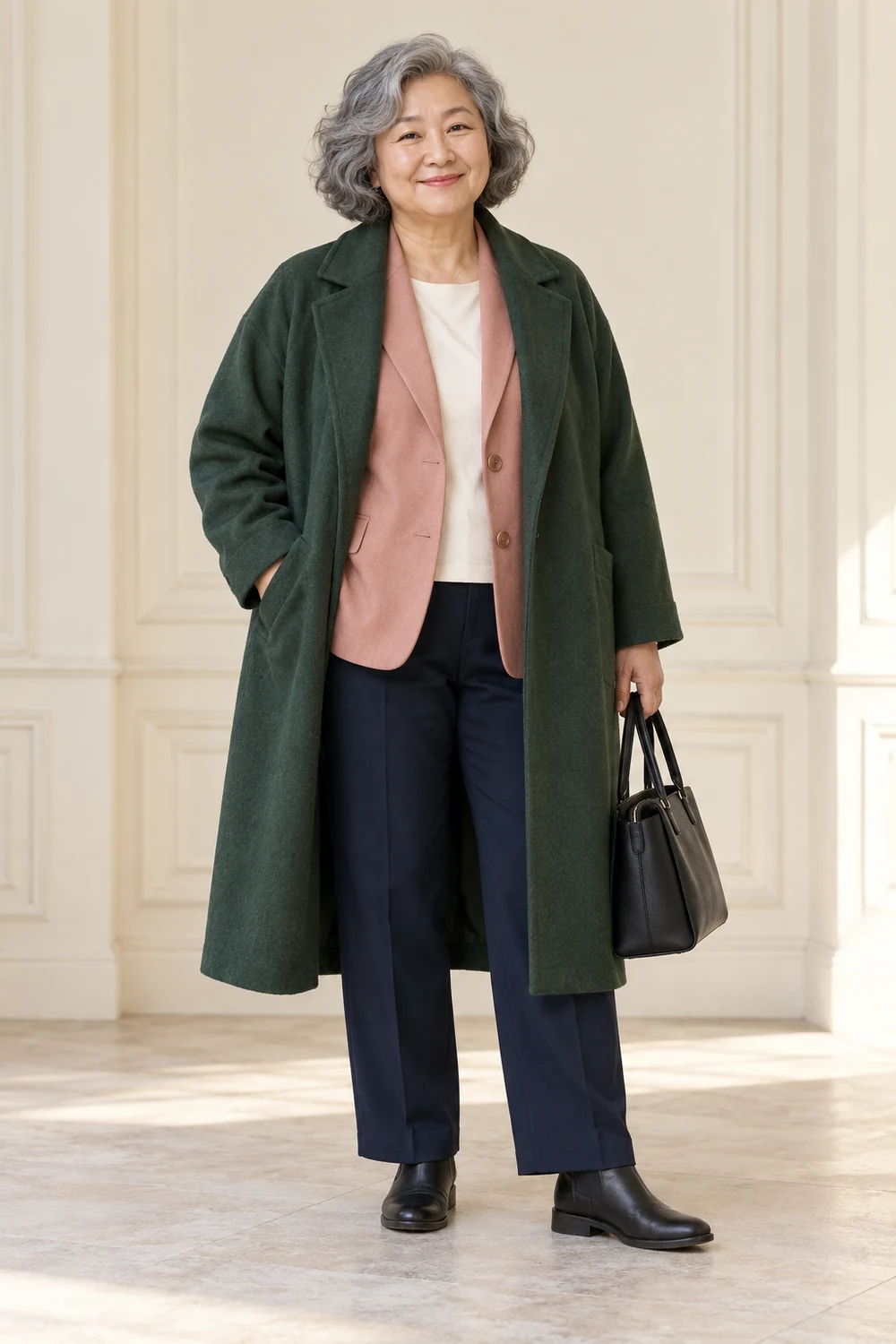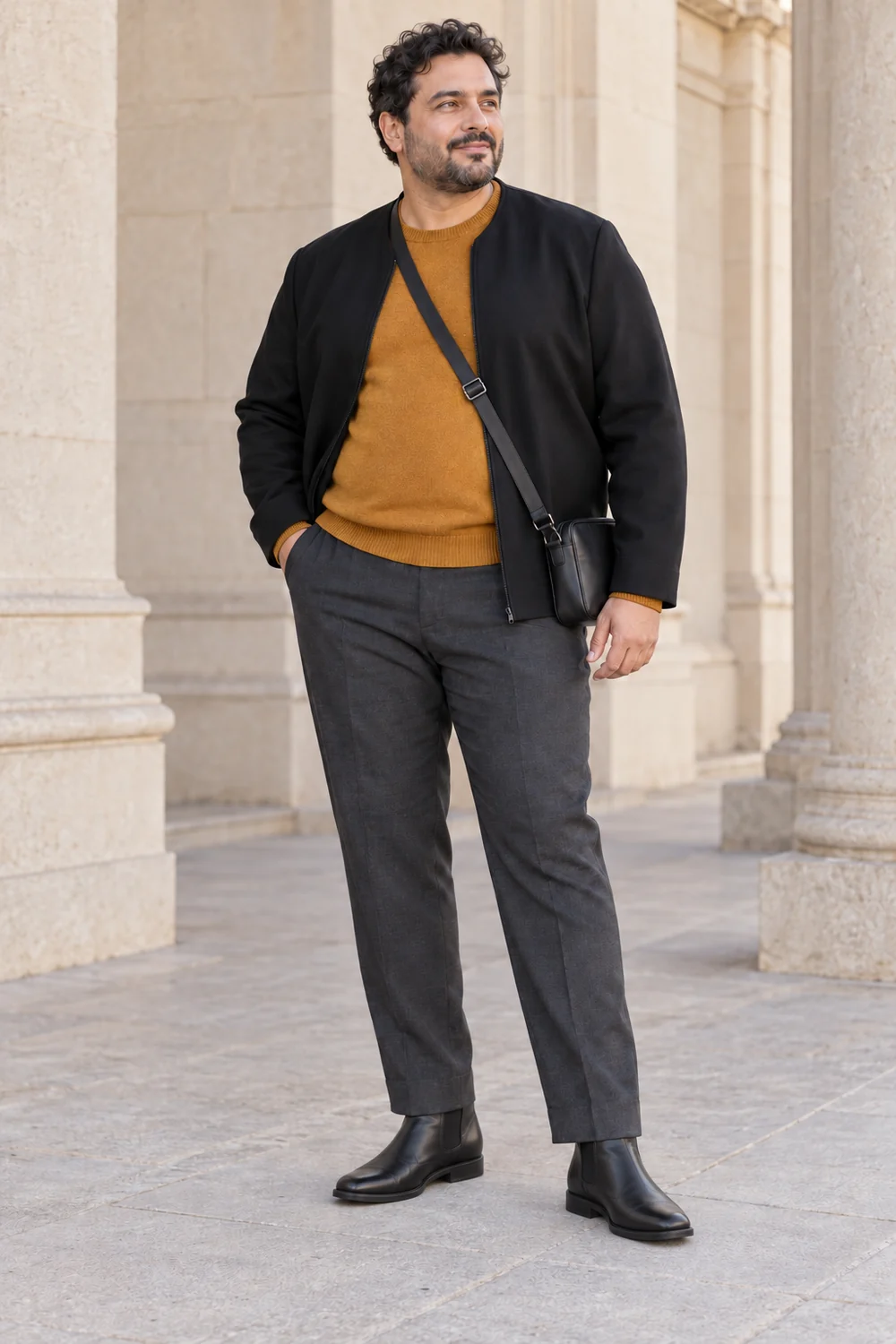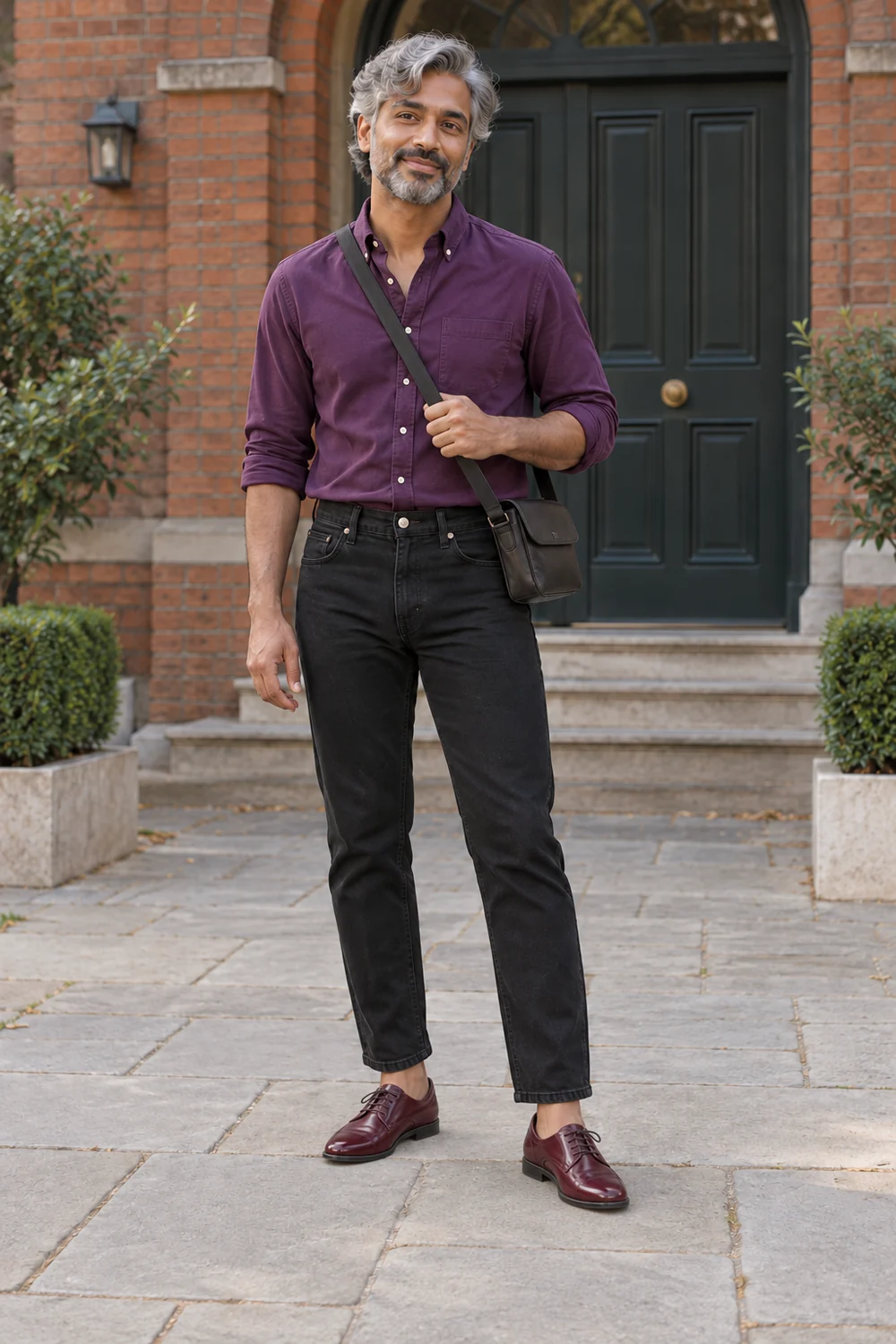
The anchors are black straight jeans, a plum Oxford and burgundy footwear. The colour relationship is deliberate while the denim stays familiar. A black unstructured jacket adds a second outline around the shirt, leaving the complete light version underneath.
Fit the familiar piece again
Try the jeans with your intended underlayers and sit before deciding their length. Check waist, rise and seat room, then take a full stride. Petite fit involves vertical positions as well as circumference: shortening the lower leg will not move a rise or knee that lands where you do not want it. Compare another cut if that is the actual problem.
Check the plum Oxford’s button line, collar and upper arms while reaching. Try a tuck or untucked length according to the actual shirt and waistband rather than treating visible waist as compulsory. Check opacity and your preferred neckline without the jacket. The light base is shirt, jeans, chosen shoes and the dark practical bag.

Two burgundy routes below black
Burgundy lace-up ankle boots supply the covered-ankle route. Adjust the lacing, flex the ankle and check whether the trousers release over the shaft after a step. Burgundy Derby shoes supply the low-cut alternative: adjust their lacing, check toe room and heel grip, then repeat the walk and turn. Both use ordinary low-profile soles and a conventional low broad heel. Compare the rear hem with each actual sole before altering it. Keep the same complete base, optional layer and dark bag with either pair. Check intended socks inside the actual shoe before settling its fit.
Compare both actual soles before a hem alteration. A repeated cuff is a separate styling choice, not an automatic fix if it becomes cumbersome around the shoes. Socks or hosiery are optional, tried with the shoe opening or boot shaft rather than assumed to fit equally.
For the layered version, add the black unstructured jacket over the real Oxford sleeves. Test shoulders, back and upper arms before cuffs, then closure and the hem seated. Remove it without rebuilding the collar. Keep the same dark bag with both layer and shoe routes, checking its loaded strap across shirt and jacket.
Give the formula an actual use
Wedding: reserve this denim outfit for an invitation that explicitly welcomes jeans and expressive footwear at a casual daytime celebration. Choose Derby shoes with the jacket if wanted, or the boot route only where the couple and venue accept it. A formal or suit-required invitation needs another outfit; a plum collar does not turn denim into formalwear.
Celebration: for an informal birthday meal where denim is welcome, use the light base indoors and add the black jacket for its second outline. The low-cut Derby shoe or laced boot can stay with the same bag after an actual standing-and-walking check.
Weekend: for a gallery and cafe plan, compare the complete shirt base with the jacket on before leaving. Choose the shoe opening you enjoy and can move in on the actual route, rechecking the jean hem with that sole.
Five minutes estimates assembling familiar fitted pieces. First comparisons take longer. Finish by sitting with the jacket on, walking with the bag loaded and removing the layer once; the plum shirt should still settle comfortably.
Use the outfit as a starting point. Adjust the fit, coverage and footwear to your preferences and plans.