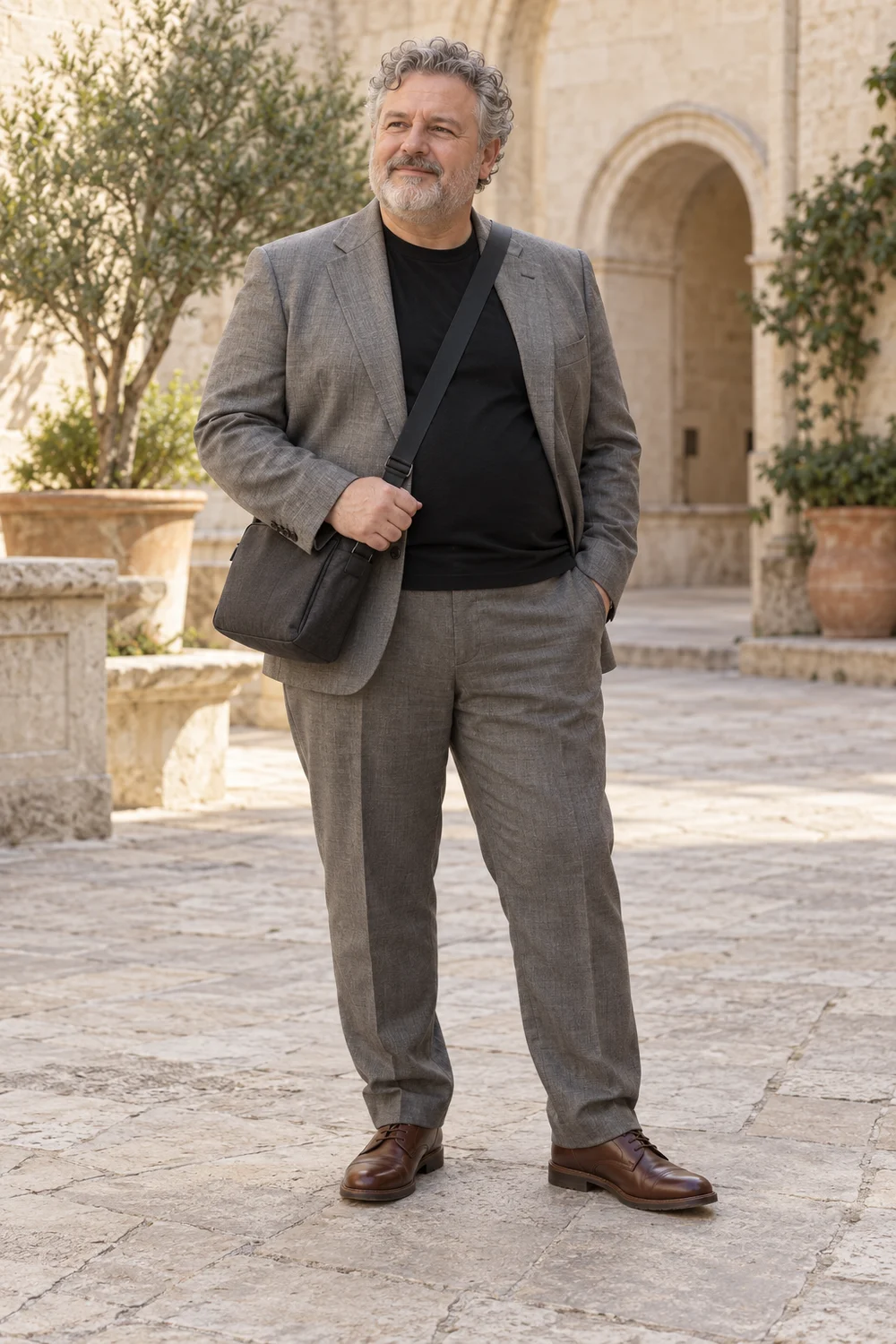
A grey suit earns its space when the trousers work without the jacket as well as with it. Start with a black tee and one comfortable shoe. The second shoe and jacket can wait until the diary names a job for them. This edit treats tailoring as usable clothing rather than a reason to buy every matching accessory.
Keep the trousers that work seated
Check the grey tailored trousers at the waist, rise, hip and thigh before their length. Sit, stand and take a full step. For a short plus-size frame, compare the vertical cut with circumference: a shorter inseam doesn’t guarantee suitable pocket or rise positions. If those are uncomfortable, compare another cut before paying for a hem. If the upper fit works, pin the length with both proposed shoes.
The black opaque tee makes the separate-trouser outfit possible. Check the actual fabric in daylight with your intended underlayer, then reach forward. Try its hem outside first; tuck only if it stays comfortable seated without a ridge. A suitable black tee already owned can fill this job. The compact dark bag should carry essentials without stretching the trouser pockets, so load it before judging capacity.
Decide whether the jacket has a job
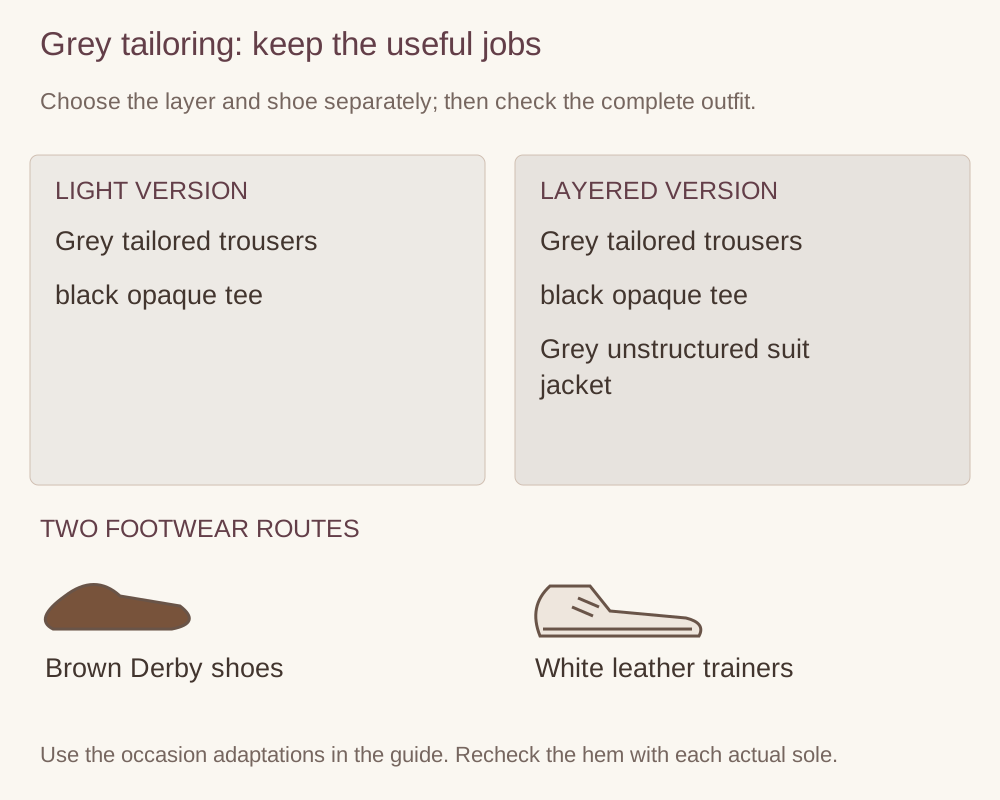
The light version is grey trousers, black tee, dark bag and either shoe. The layered version, pictured with brown Derbies, adds the grey unstructured suit jacket. Compare jacket and trousers together in daylight, including their surfaces; closely named greys aren’t guaranteed to match. A deliberate separate is fine, but check it before buying as a suit.
Test the jacket over the tee, open and closed, while reaching and sitting. Look at the back and upper arms before cuff or hem length. If it binds there, compare a different cut. An open-only jacket is useful only when that serves your plans; if closure matters, don’t assume it will become comfortable later. Check the loaded bag strap against the lapel and use each garment’s actual care instructions.
Buy one shoe job at a time
Brown Derby shoes provide a low lace-up route. Adjust the actual lacing and check toe room and heel retention before inspecting the rear trouser hem. White leather trainers make the second, more casual route. Try the intended socks and compare actual sole and heel heights with the Derbies. Keep the dark bag and either jacket arrangement; a hem serving both must clear the lower sole. Neither category is evidence of comfort on your route.
Which appointments justify the extra pieces?
Work: for a relaxed office that permits a plain tee, choose brown Derbies and the jacket for a seated meeting day. Where trainers are accepted for moving between rooms, use the white pair and the light version or jacket open. Test the desk position before relying on the outfit; a business-formal workplace may require another top or a different guide.
Evening: for an informal restaurant, choose Derbies and the layered version, removing the jacket at the table if desired. For a casual standing arts event, use trainers and the light version or open jacket. Check the actual venue’s expectations rather than assuming a grey jacket makes every shoe suitable.
Weekend: for a gallery and café, choose white trainers, the black-tee base and dark bag. For a short nearby lunch, choose Derbies and add the jacket if you want that frame. Pack or carry it only when you can name that use, not to complete an imaginary suit requirement.
A new tie, belt and second grey top can wait. Rehearse the appointments with the clothes you own. Buy when the missing job is specific—comfortable trouser rise, a moving jacket sleeve or a secure shoe. If all are covered, the small grey wardrobe is complete.
Use the outfit as a starting point. Adjust the fit, coverage and footwear to your preferences and plans.