If a satin skirt clings or rides, check fit, lining and the layers touching it before trying a new treatment. Change one variable and follow the garment’s care instructions.
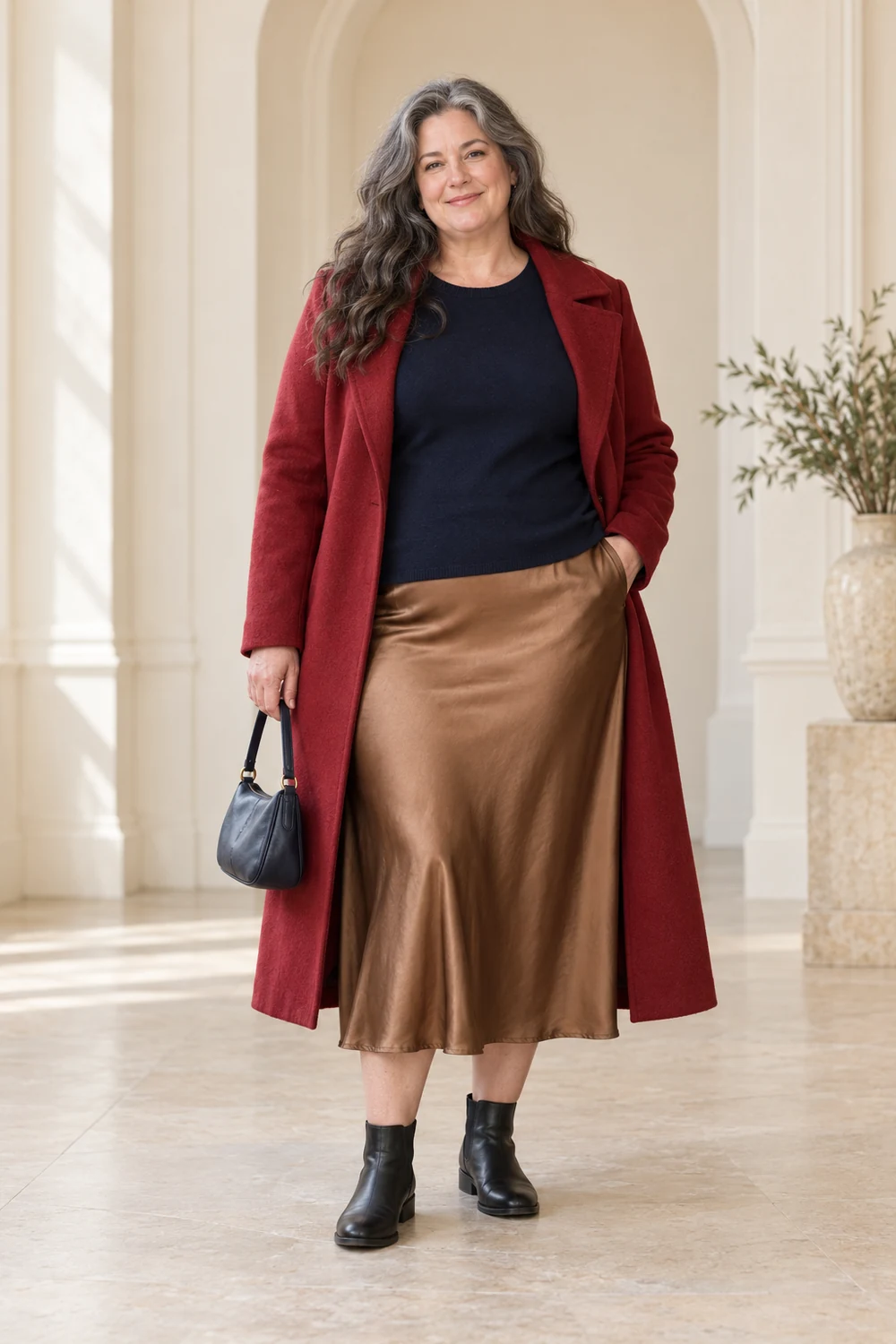
A liquid-looking skirt can behave differently once tights, knitwear and a coat are involved. British Vogue’s current satin-skirt edit supplies the seasonal reference. This troubleshooting guide uses an original bronze-and-navy combination on a fictional plus-size adult. Check the actual fibre, lining and care label; the word satin alone does not tell you how a garment will behave or should be cleaned.
If the skirt catches across the lap
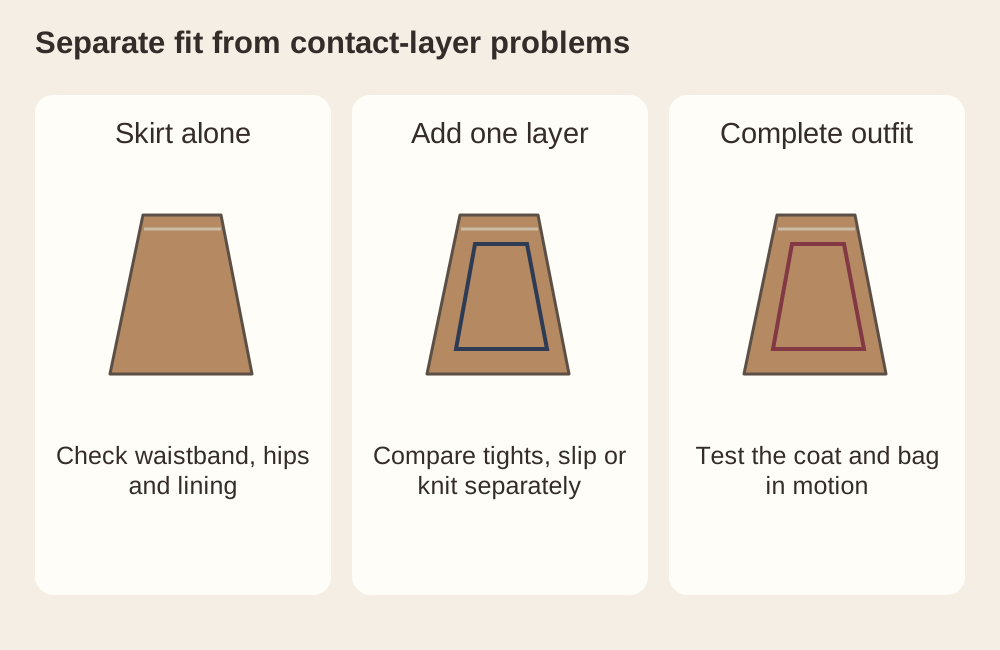
Sit in the skirt with your usual underwear before adding tights or an outer layer. Check the waistband, hip room and lining length. If the fabric is already pulled taut or the lining restricts your movement, try another size, cut or construction. Pulling the skirt down repeatedly does not add the room it needs. An A-line or straighter woven skirt can retain the colour without the same drape.
If clinging appears after another layer
Change one contact layer at a time: remove the coat, then compare the tights or slip if you are comfortable doing so. Notice when the fabric begins to catch. A smooth, correctly sized lining or familiar slip may change the way layers move, but it is not a universal fix. Assess comfort, opacity and garment fit together rather than assuming every cling problem has the same cause.
Do not improvise a spray, washing treatment or hot iron from a styling tip. Follow the garment and product instructions for any treatment, or ask a competent cleaner when they are unclear. Check how a slip or tights fit while sitting and walking. Another layer is only useful if it does not create a new tight waistband, visible bunching or an uncomfortable temperature.
If the knit and skirt hems fight each other
The illustrated navy crew-neck is worn untucked. Let its hem settle, then walk and sit before trying a tuck. A tight rib can catch at the skirt waist; a different knit length or looser hem may be more useful than forcing thick fabric inside. A plain blouse or finer top is an alternative when the skirt already supplies the surface detail you want.
Rebuild the whole outfit
Bronze is the warm reflective area, navy is the quiet centre and a deep-red coat supplies a larger colour contrast. You can keep an existing neutral coat instead. Try its lining over the skirt and choose a length that moves freely with it. Black ankle boots ground the look; check that the skirt hem clears the shaft and does not limit your usual stride.
A small navy bag repeats the knit, though a practical brown or black bag can do the same job. Check the bag against the skirt when seated or wearing it crossbody. Before leaving, take the coat off once and assess the indoor outfit in daylight. Keep the combination whose layers move comfortably and whose coverage you enjoy; change the skirt construction if solving one symptom simply creates another.
Use the outfit as a starting point. Adjust the fit, coverage and footwear to your preferences and plans.