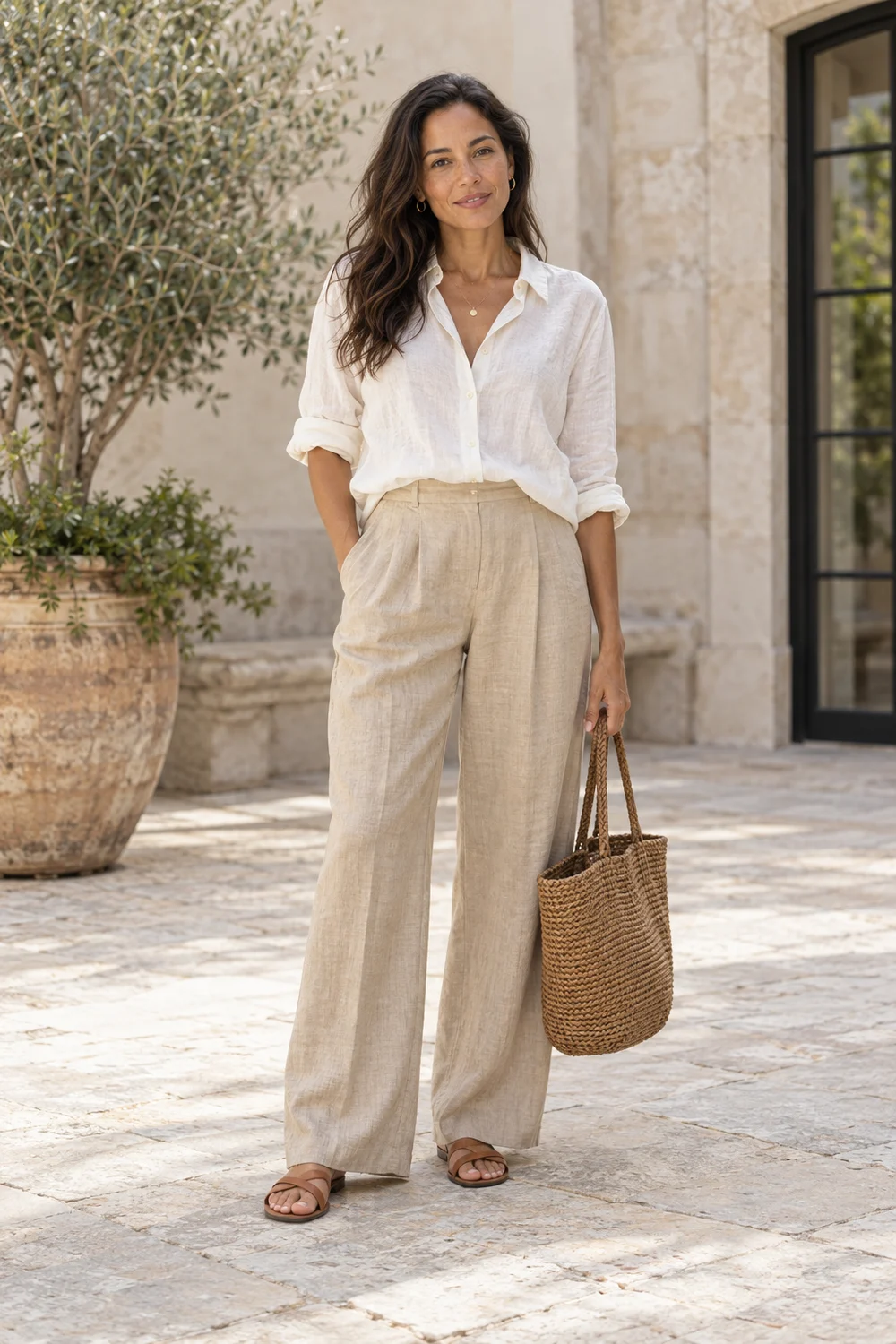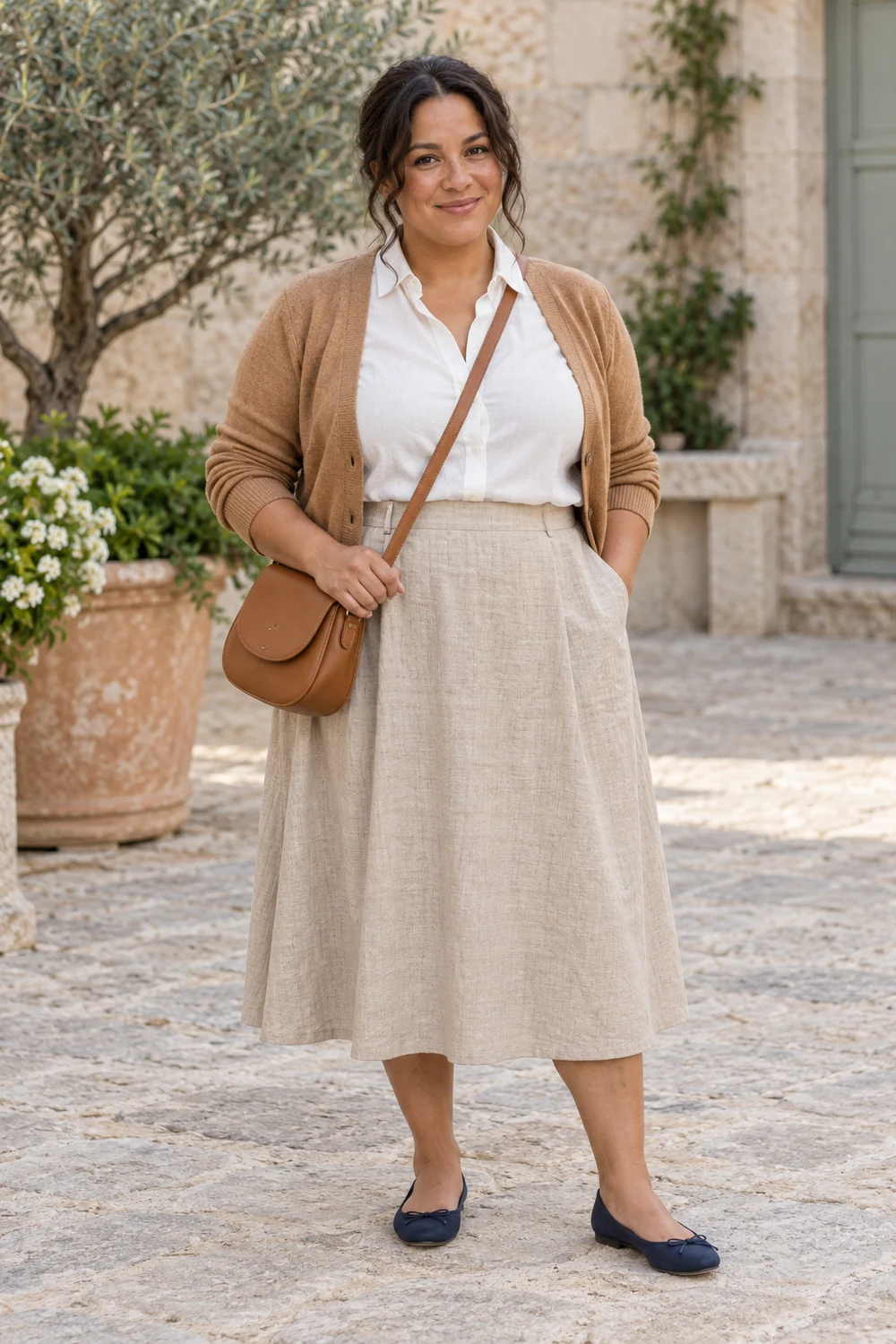
Practise getting the ivory shirt’s hem to stay where you want it. The rest of the outfit is a sand linen midi skirt, a compact tan bag and one of two flat shoe routes. The Meghan Markle-inspired starting point is an ivory shirt beside sand linen; this interpretation uses a skirt and a separate tan cardigan. There is no single tuck or hem position required by petite plus-size proportions.
Set up the base without the cardigan
Wear the ivory relaxed shirt and sand skirt with the underlayers you intend to use. Check the skirt in daylight, seated and walking: the weave, lining and cut matter more than a pale colour name. Then check the shirt’s button line and upper-arm room. If either garment pulls before you arrange the hem, compare its fit first. Styling isn’t a substitute for the room to sit or take a full step.
Put the essentials in the tan bag and wear the navy ballet flats. This is the light version. Leave the shirt untucked, reach to a shelf, sit and stand. Look at where the shirt settles naturally relative to the skirt waist. Don’t pull it into an ideal position after every movement; the useful observation is what it does on its own.
Compare one alternative arrangement
Try a small, loose front tuck if that is a shape you enjoy. Keep the back free, then repeat exactly the same reach and seated check. If it makes a thick ridge or pulls on the skirt waist, release it and return to the untucked version. A shorter shirt can be a useful substitute when the untucked hem feels cumbersome. Choose between actual comfortable arrangements, rather than making the fabric stay with a tight belt.
Notice the skirt waistband while seated. If it rolls or presses, compare the waist construction and fit; don’t keep adjusting the shirt to conceal discomfort. Assess a hem alteration separately from the skirt’s waist-to-hip length. A shorter adult frame may need a different vertical cut as well as a shorter hem.
Add the layer, then repeat
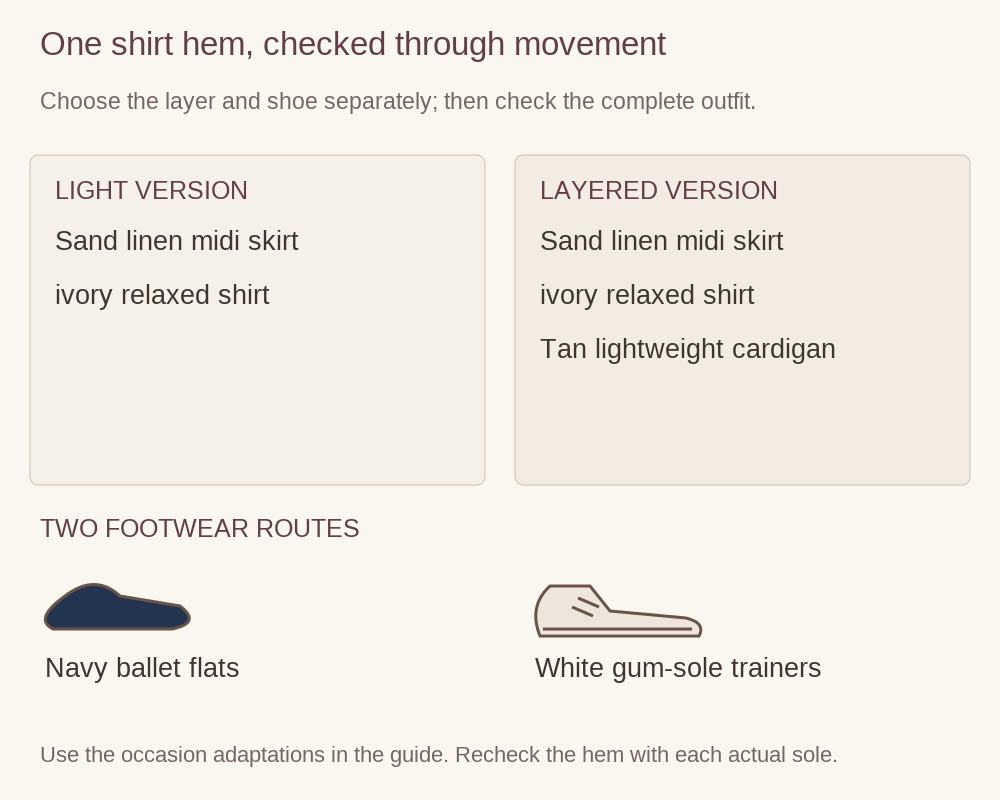
For the layered version, pictured, put the tan lightweight cardigan over the chosen shirt arrangement. Try it open, then fasten it if wanted and repeat the reach. Check the upper arms over the shirt sleeves, the button line and the cardigan hem against the skirt waist. If the two sleeves bind, compare a roomier cardigan cut rather than reducing the shirt’s necessary ease. Keep the tan bag and test its strap over both layers.
The navy ballet-flat route adds a dark edge under the pale skirt. Check heel retention and toe room in a turn; a secure strap flat can replace a slipping pair. For the white gum-sole trainers route, change only the shoe and intended socks first. Check the skirt clears the actual sole on stairs. The tan bag and either layer version stay, so the footwear comparison is clear.
Rehearse the version you will use
Everyday: for errands and a café, choose trainers with the light shirt-and-skirt version. For a shorter local lunch, use navy flats and add the cardigan open. Carry the loaded tan bag during the final walk; its pull can change the shirt arrangement.
Work: for a relaxed office, use navy flats, the light version and the cardigan available for a meeting. Where trainers are accepted for standing tasks, wear the white pair and the cardigan open if wanted. Test seated waist comfort at a desk and make sure the chosen shirt hem doesn’t require constant retucking.
Wedding: reserve this pale shirt-and-linen-skirt combination for an explicitly relaxed daytime invitation that welcomes those colours. Use navy flats with the tan cardigan, removing it indoors if desired. Where trainers are expressly permitted, use the white pair and either layer version. Ask about the pale palette and casual finish; a formal wedding needs different guestwear.
Your success criterion is simple: the shirt remains comfortable and settles acceptably after reaching, sitting and walking. Follow the actual garments’ care labels, then repeat this same check after cleaning rather than assuming their dimensions or surface stay unchanged.
THE COMPLETE LOOK
Wear it together.
Keep the outfit and its makeup interpretation in one collection, with a combined checklist.

Use the outfit as a starting point. Adjust the fit, coverage and footwear to your preferences and plans.