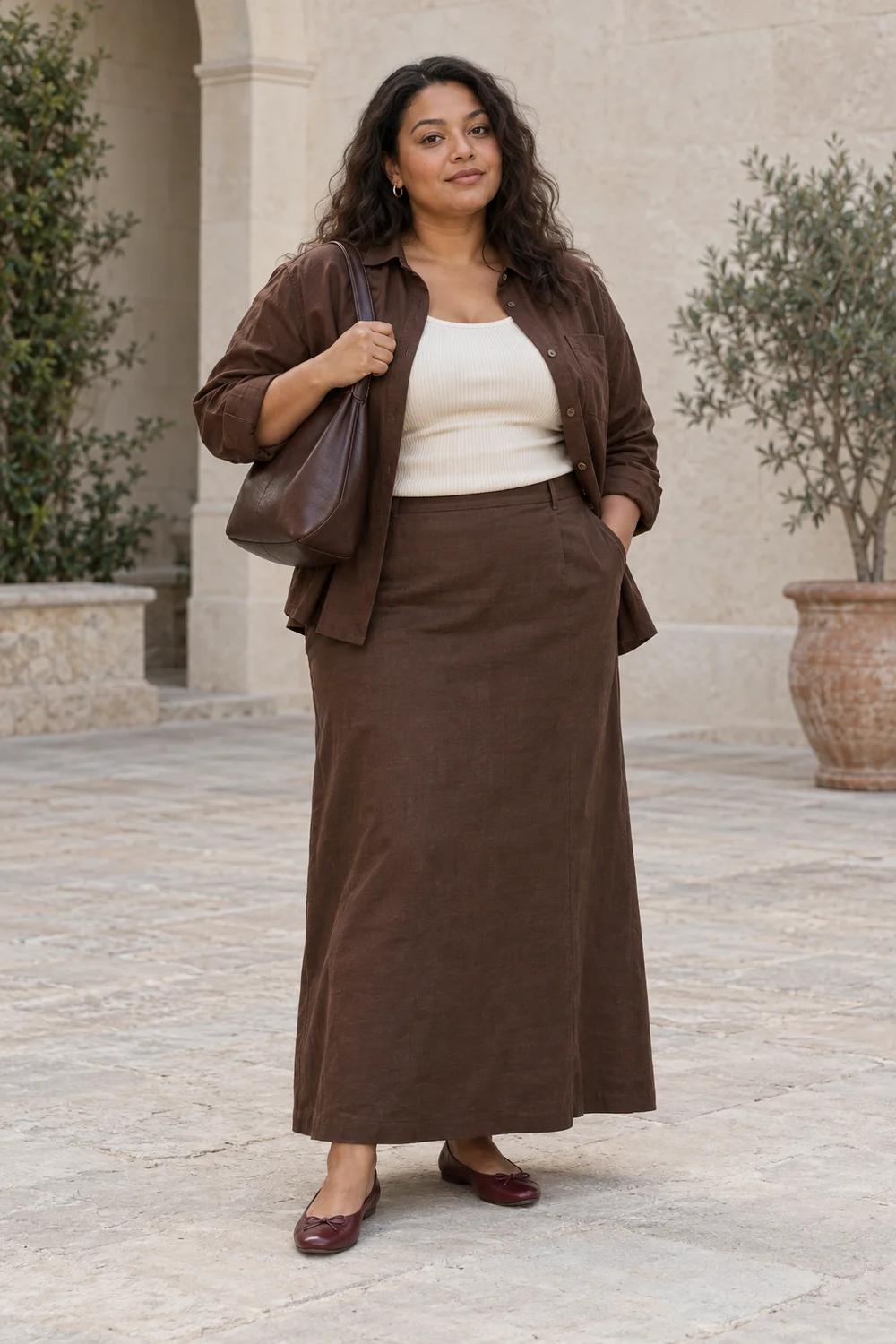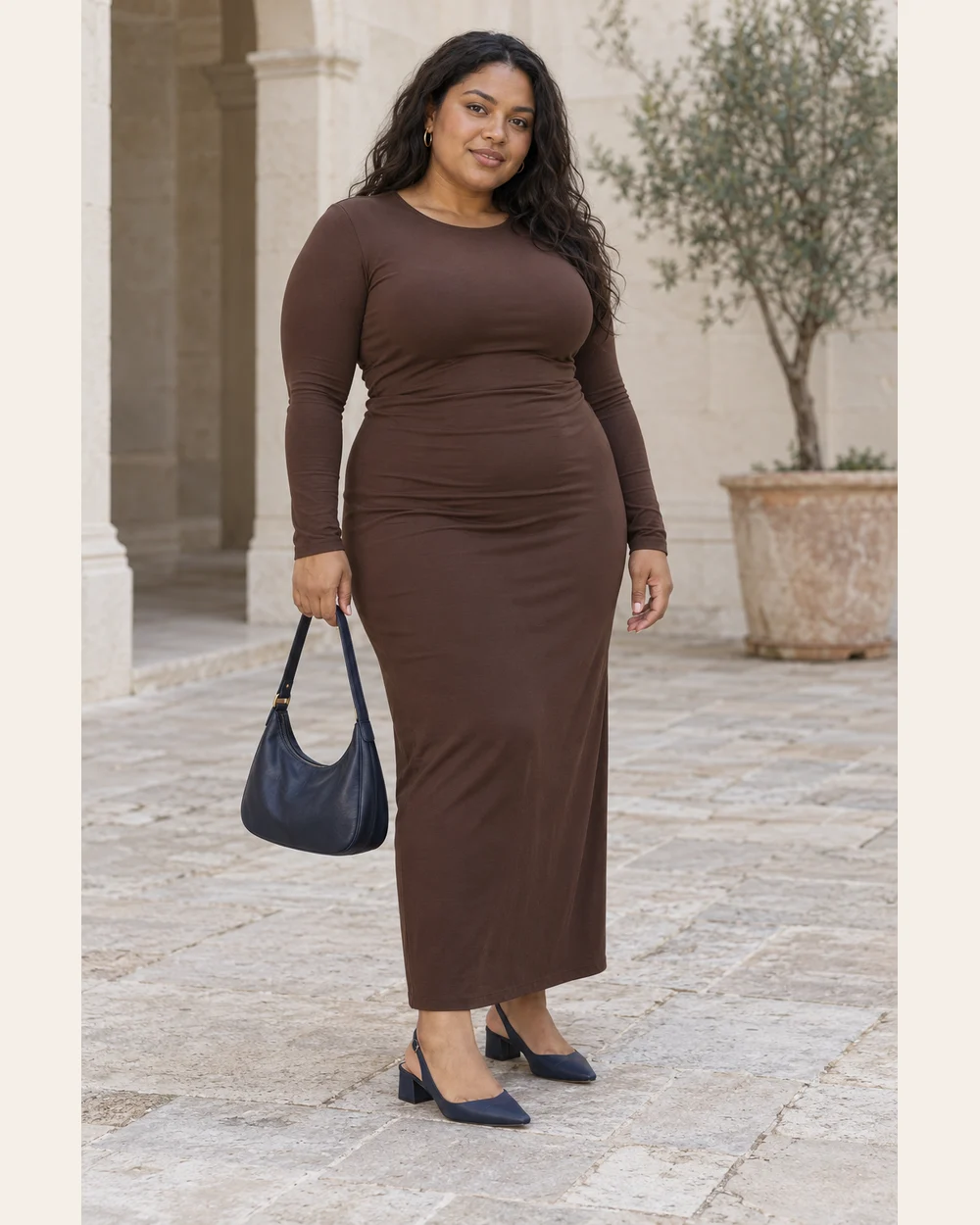
Practise one relationship at a time: the chocolate column dress, then an ivory waistcoat, then the navy shoes. This new combination develops the drape-and-layering idea in our Paloma Elsesser-inspired edit. The dress and waistcoat are our own garment choices, with fitting attention given to petite plus-size proportions.
Round one: the dress without its frame
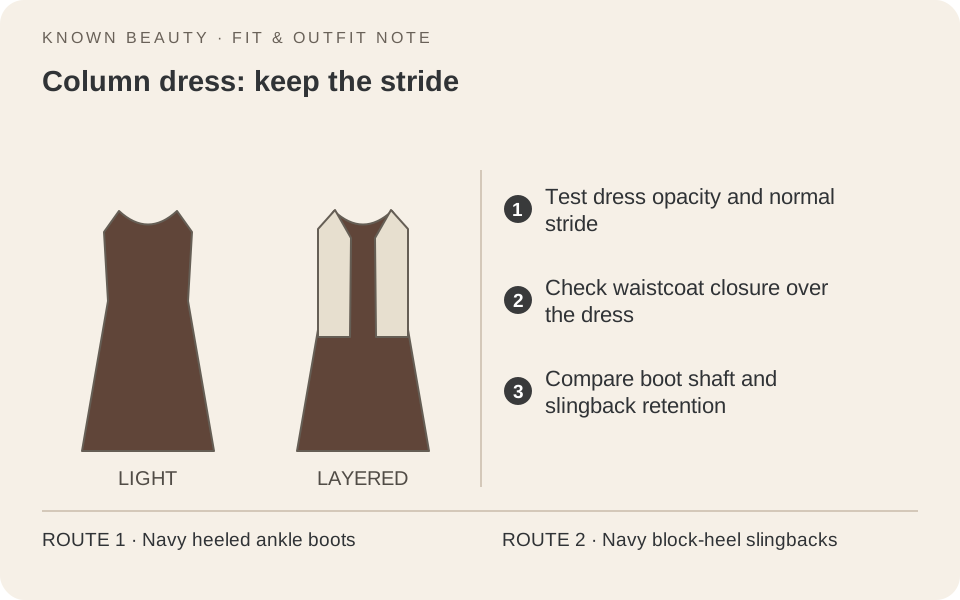
The pictured light version is a chocolate opaque column dress, navy block-heel slingbacks and a compact navy bag. Check the dress over your chosen underlayers in ordinary bright light, then sit, reach and take a normal longer step. A column should give the movement you need through its actual cut or vent; a close outline is not a reason to accept a shortened stride.
Check torso length, neckline and arm openings separately from the hem. If the waist shaping sits below where you want it, a shorter skirt alone will not move it. Compare another cut or a petite option, allowing width and length to be independent fit decisions. Choose the amount of body definition you enjoy rather than a requirement to make the dress skim every area in one prescribed way.
Round two: add ivory
The layered version adds the ivory waistcoat over the dress. Test its shoulder, arm openings and closure while seated and reaching. Compare its lower edge with the dress’s waist shaping; the waistcoat can have a different length without forcing two seams to sit exactly together. If it pulls over the bust or catches at the hips, compare its own fit rather than resizing the dress automatically.
A brown blazer is an optional further layer, kept separate from the core waistcoat version. If you want it, try shoulder and upper-arm room over both garments, then fasten and sit. Remove the blazer and waistcoat in turn: the dress should remain a complete light outfit. No layer here has been assessed for weather performance.
Round three: repeat the movement in both shoes
Navy heeled ankle boots give a covered ankle; check shaft clearance, intended socks and the actual heel and sole. Navy block-heel slingbacks leave the ankle more open. Adjust the strap and test heel retention, toe room and a normal step. Recheck the dress hem and any vent with both shoes, including intended hosiery. The navy bag and ivory waistcoat stay with either pair; the optional brown blazer does too if its own fit test passed.
Repeat for the actual plan
Work: for a workplace that accepts a column dress and waistcoat, use slingbacks if they meet its shoe expectations or boots where accepted. Keep the ivory layer’s closure comfortable at a desk and test reaching the loaded bag. The brown blazer is optional only after the extra-layer check.
Evening: for a relaxed restaurant dinner, try the light dress with slingbacks and add the waistcoat for the arrival if useful. Boots give a covered-foot alternative suitable to the venue. Sit with each chosen layer before deciding which closure position to keep.
Weekend: for a gallery and lunch, choose boots or slingbacks according to their actual fit and your route. The light dress can stand alone indoors; the ivory waistcoat adds a deliberate frame without needing the blazer too. Keep the compact navy bag.
Once the outfit passes the same sit-and-stride check twice, its assembly can be short. Keep that repeatable relationship before adding another layer.
THE COMPLETE LOOK
Wear it together.
Keep the outfit and its makeup interpretation in one collection, with a combined checklist.

Use the outfit as a starting point. Adjust the fit, coverage and footwear to your preferences and plans.