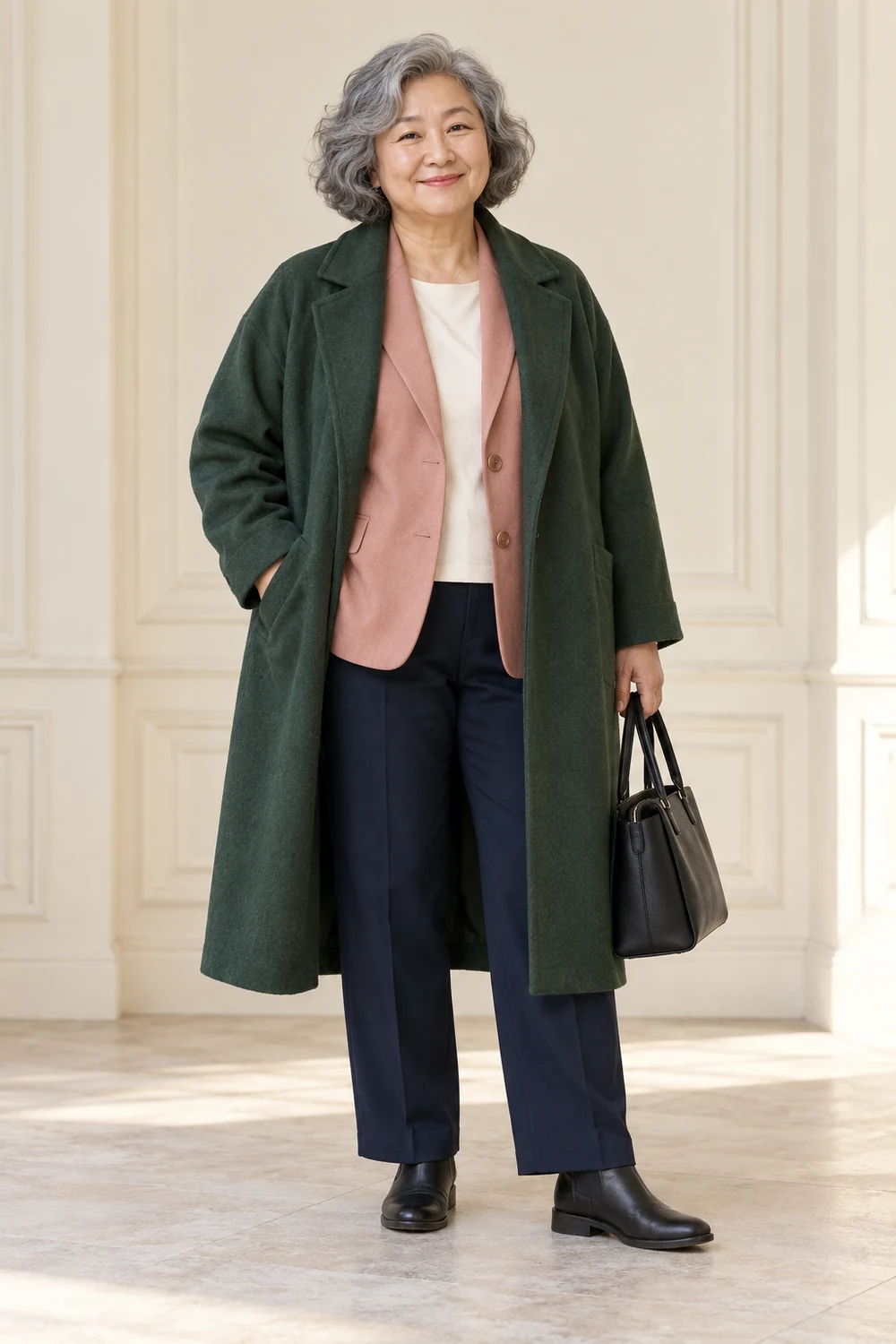
Oatmeal knit and indigo denim have different edges. The dress is soft and continuous; the cropped jacket adds seams, a collar and a darker frame. White trainers make another clear edge at the feet. Navy ballet flats quieten it. This outfit starts with a dress that is comfortable alone, so taking off the denim doesn’t leave an unfinished base.
On a petite plus-size frame, the useful questions concern this dress’s length, shaping and ease. A knit needn’t cling, and a relaxed cut needn’t overwhelm your hands or stride. Choose the amount of room you enjoy, then check what happens when you move. The body’s size isn’t a fault for the garment to correct.
A dress with no jacket to rely on
The light version is the oatmeal opaque knit midi dress, navy compact bag and either shoe. Try the dress with your chosen underlayers in daylight. Its name is a shopping description, so check actual opacity while standing and seated. Reach forward, sit, then walk and see whether the hem and neckline settle acceptably. If they keep riding into an uncomfortable position, compare more ease or a different cut rather than pulling the dress down repeatedly.
Check the waist shaping and sleeve or armhole placement as well as the hem. Shortening the bottom can’t relocate shaping higher in the garment. A different knit or an oatmeal woven dress can preserve the quiet colour idea if the actual knit feels unsuitable. The bag should hold essentials without pulling at the neckline; test its loaded weight against the dress.
Give the denim its own room
The layered version, pictured with white trainers, adds the indigo cropped denim jacket. Try it over the actual dress, first open and then closed if you want that option. Reach across the body and check upper-arm and back room. A stiff sleeve that binds over the knit calls for another cut, not a dress that is tighter than you want.
Compare the jacket hem with the dress’s waist shaping while seated. A crop can sit above, near or below that point; choose the relationship that feels intentional to you and doesn’t catch. Check the care labels separately rather than treating denim and knit as one laundry job. The layer supplies shape, but its name doesn’t establish weather performance.
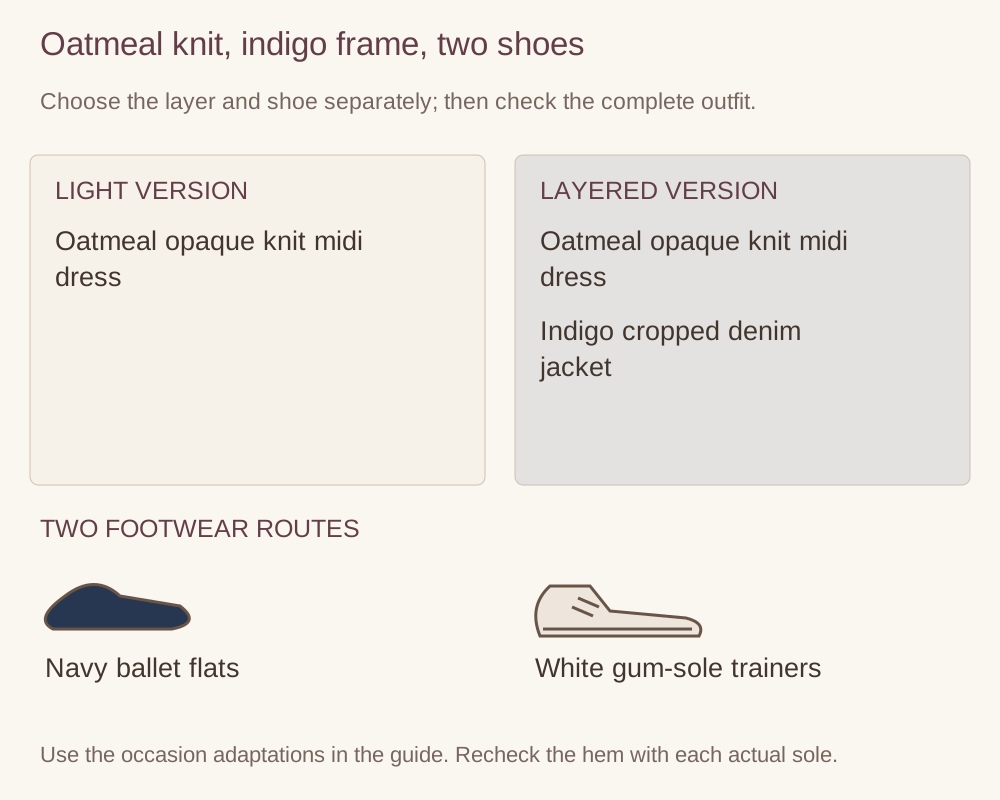
Navy ballet flats connect to the bag and leave a quieter lower edge. Test heel retention, toe room and walking in the actual pair; a secure strap flat is a useful substitute if a ballet shape slips. White gum-sole trainers add a lighter, more solid finish. Try the intended socks, check the dress clears the collar and sole on a step, and keep the navy bag and either jacket version. Choose the actual shoe for the planned route, rather than assuming either category guarantees comfort.
Let the setting change the edges
Wedding: for an expressly relaxed daytime wedding that welcomes an oatmeal dress and casual layers, choose navy flats with the dress and denim jacket open, removing it indoors if desired. Where trainers are explicitly welcome, use the white pair with either layer version. Ask about the pale colour and denim as well as the footwear; this is not a formal guestwear option.
Evening: for an informal local restaurant, wear navy flats and the light dress version, adding denim for arrival only if wanted. For a casual standing arts event, choose white trainers and the jacket open or removed. Check the venue’s actual dress expectations and your comfort standing before relying on the route.
Holiday: for a city-break gallery visit, use white trainers, the light dress version and navy bag. For a nearby relaxed dinner, wear navy flats and the cropped jacket. Test how the knit packs and follow its own care label; take the second shoe only if that low-walking dinner is part of the actual plan.
Keep the neckline, hem and jacket sleeves free to settle after movement. When the dress feels complete alone, the indigo becomes a choice you can put on or take off. That is the useful part of the contrast.
Use the outfit as a starting point. Adjust the fit, coverage and footwear to your preferences and plans.