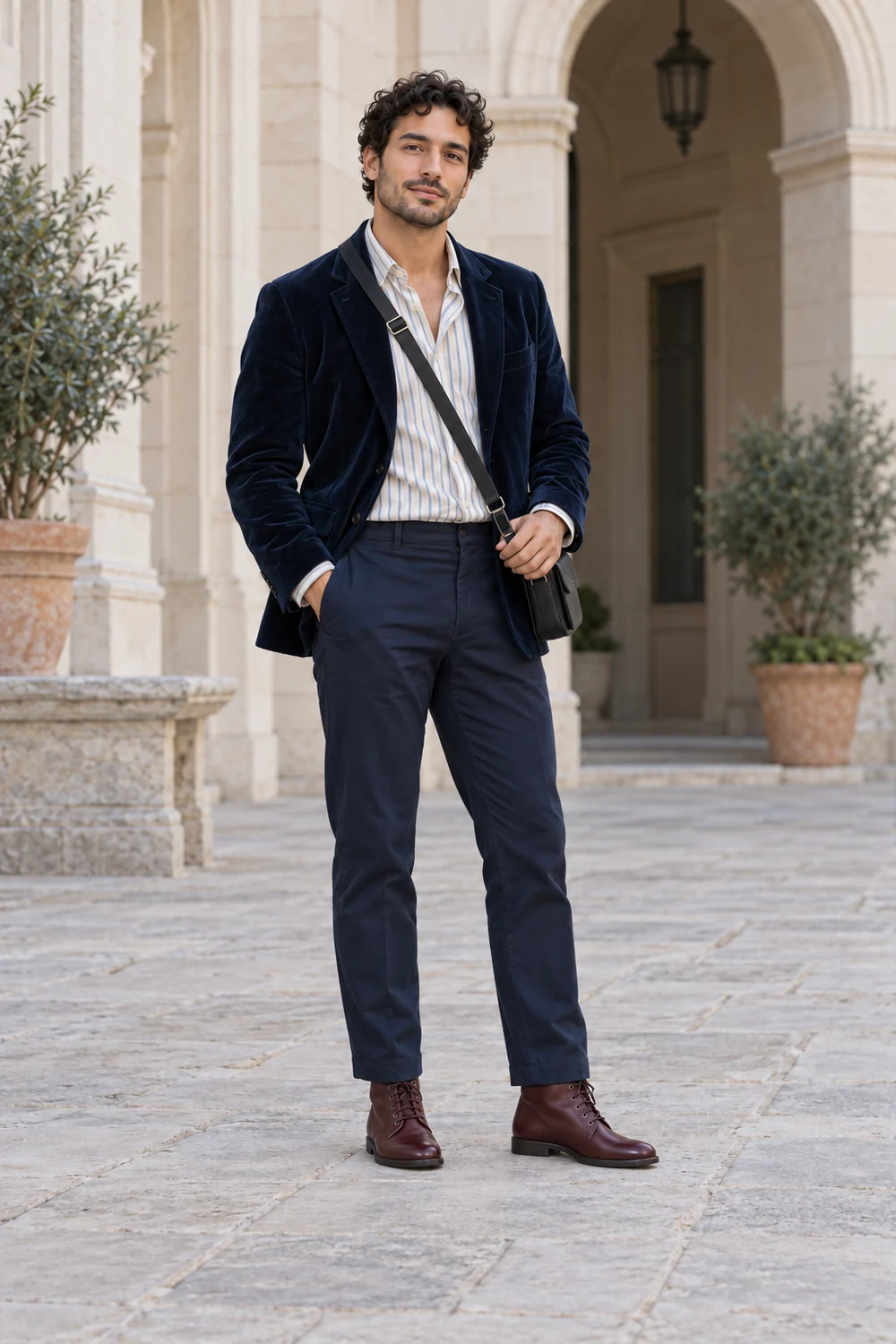
Velvet changes a navy jacket before a brighter colour is added. Beside a softly striped ivory-and-blue shirt, that surface can feel deliberate without demanding a formal tie. Burgundy footwear is the smaller warm detail below the navy trousers. The complete shirt-and-trouser base remains useful when the velvet comes off.
Start with the shirt’s collar and sleeves rather than its pattern scale. Choose stripes because you enjoy them; petite proportions do not require a prescribed narrow stripe. Sit and reach to check button spacing, shoulder and upper-arm room. Compare torso and cuff length separately. A shorter cuff does not repair a sleeve that stops the movement higher up.
Let velvet add a surface, not a restriction
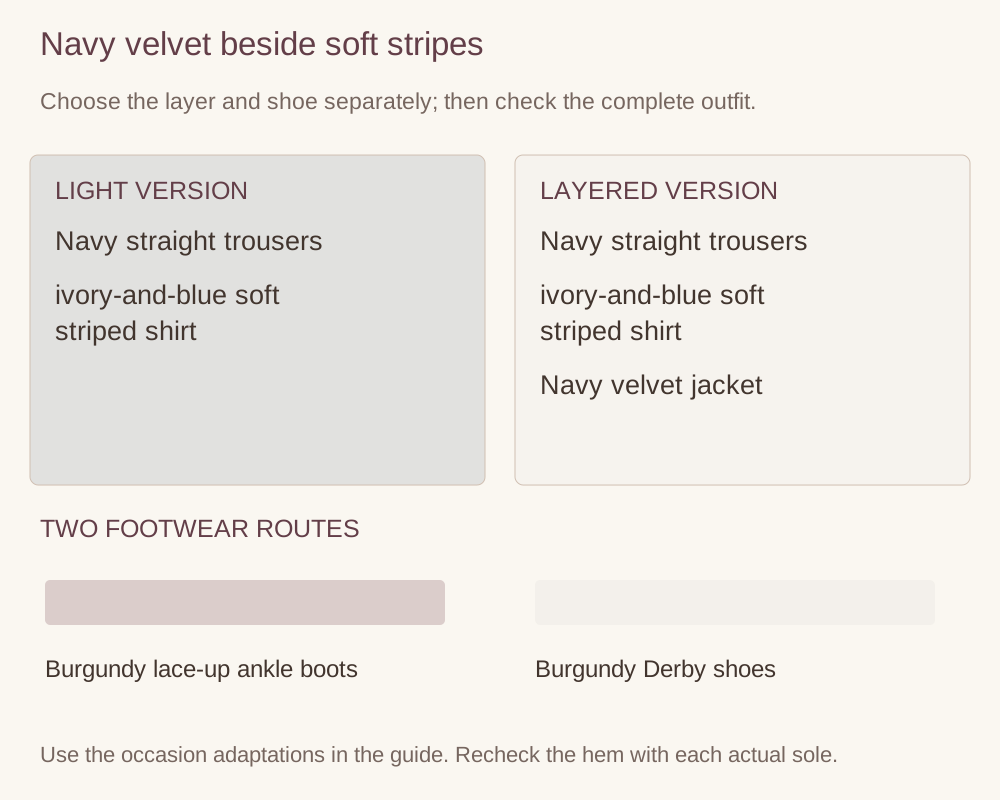
Check the navy trousers seated for waist, rise and seat room, then knee position and length. Add the striped shirt, burgundy shoes and dark practical bag for the light version. Choose a tuck or untucked hem that fits the actual shirt construction and your seated comfort. Its neckline and coverage should work without a jacket.
Put the navy velvet jacket over the real sleeves for the layered version. Test its shoulders, back, upper arms and closure, then sit and compare the hem. Inspect the actual lining and care label; velvet is not a single promise about how a jacket moves or should be cleaned. Remove it without rebuilding the striped collar. That is the usable difference between a texture you can wear and a pose you can hold.
Burgundy can have two shapes
Burgundy lace-up ankle boots supply the covered-ankle route. Adjust the lacing, flex the ankle and check whether the trousers release over the shaft after a step. Burgundy Derby shoes supply the low-cut alternative: adjust their lacing, check toe room and heel grip, then repeat the walk and turn. Both use ordinary low-profile soles and a conventional low broad heel. Compare the rear hem with each actual sole before altering it. Keep the same complete base, optional layer and dark bag with either pair. Check intended socks inside the actual shoe before settling its fit.
Everyday: for lunch and an appointment, use the complete striped light base indoors and the velvet layer when you want that surface. Boots or Derby shoes can both retain the same colours after an actual walking check; neither shoe type proves comfort.
Evening: for an informal restaurant and performance, arrive with the velvet jacket and remove it if preferred at the table. Choose the laced shaft or low-cut Derby shoe after checking the venue floor and seated trouser hem.
Celebration: for a birthday supper, let velvet be the main texture and burgundy the smaller detail. Both shoe routes can accompany the light or layered version when the actual invitation permits them. A stricter formal event may need different pieces.
About five minutes estimates assembling familiar fitted clothes. First sleeve and care comparisons take longer. Keep the stripes comfortable when the velvet leaves; the jacket has already supplied its occasion.
Use the outfit as a starting point. Adjust the fit, coverage and footwear to your preferences and plans.