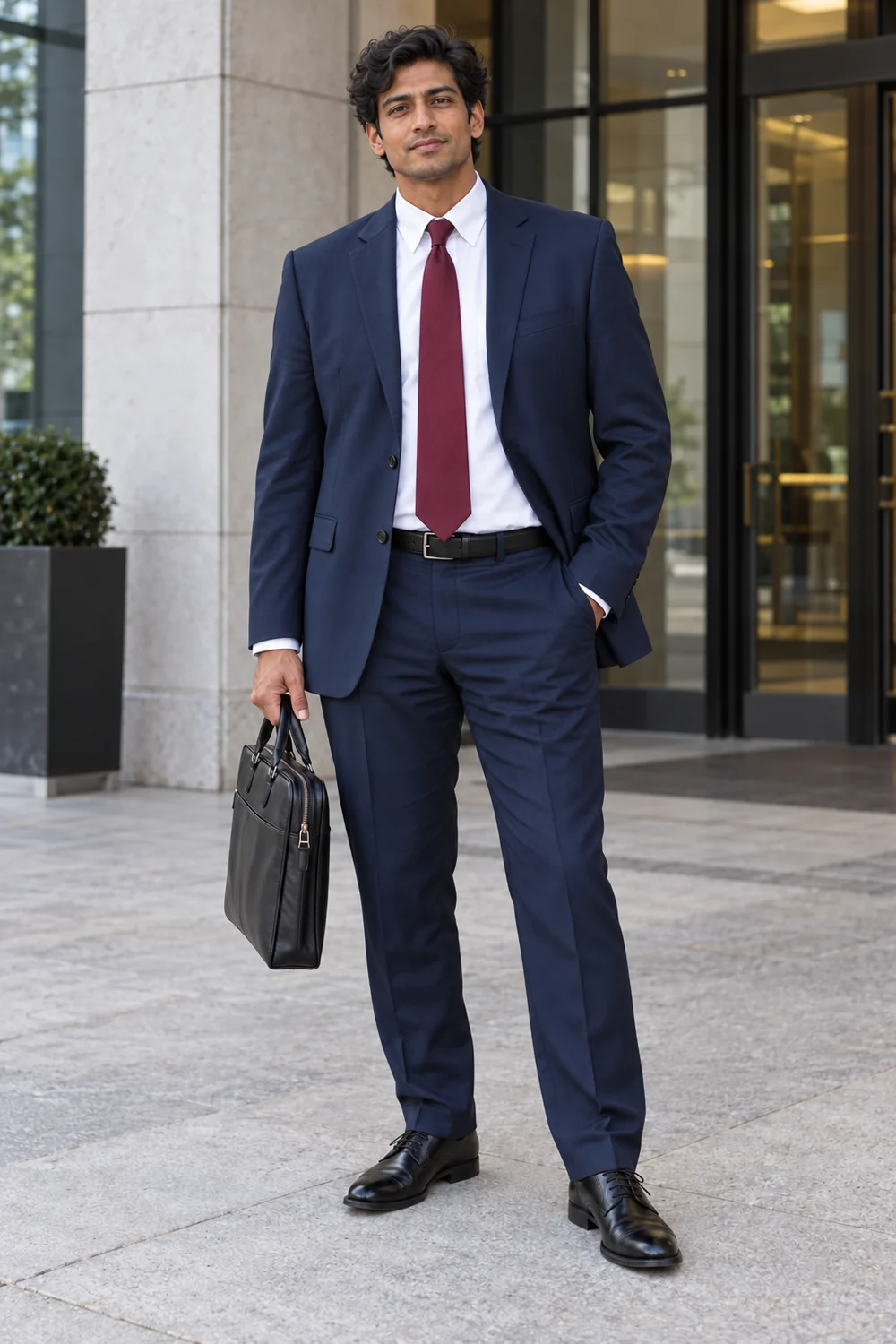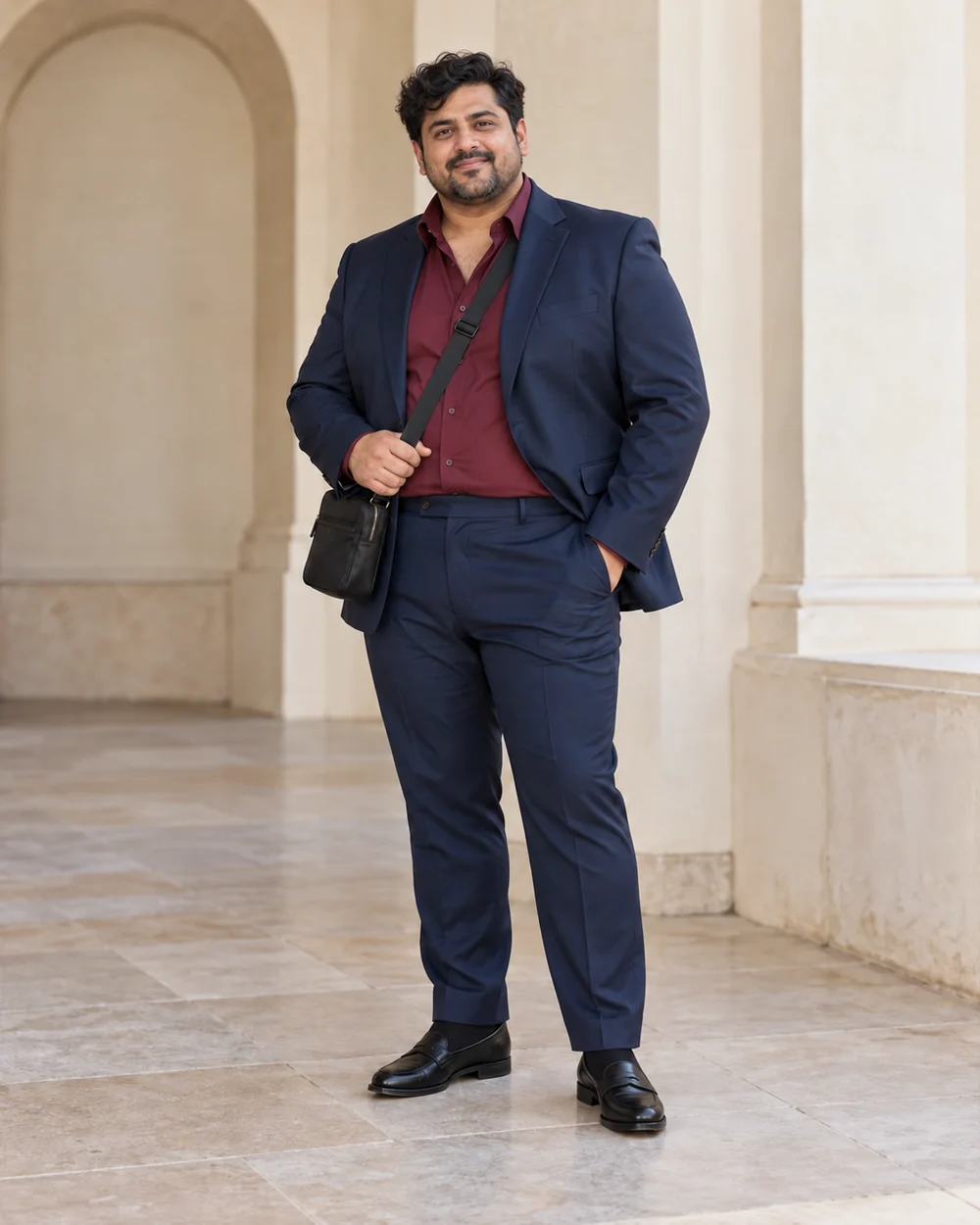
Choose the light burgundy-shirt version when you want the neckline clear, and the navy suit jacket when you want a tailored frame. This new interpretation develops the navy screen-suit reference in our Dev Patel-inspired edit, replacing the earlier tie-led idea with our own burgundy open-collar shirt. It is not a claim about his personal wardrobe.
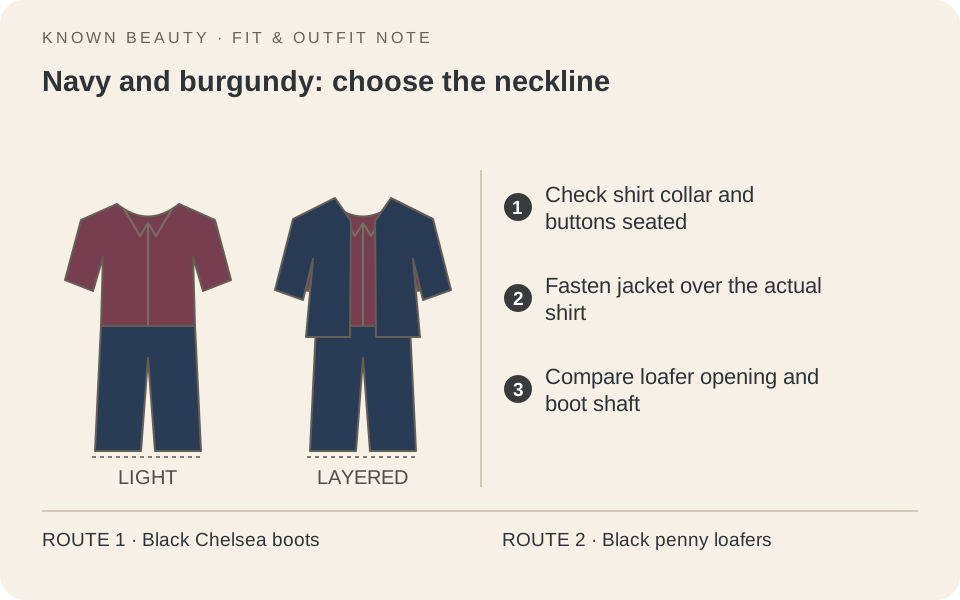
Choose the light route for the actual collar
Put a burgundy soft shirt with navy tailored trousers and a practical dark bag. Arrange the shirt opening to the coverage you want, then sit and reach with the remaining buttons fastened. Check neck, chest, back and upper-arm room without forcing a fixed amount of open collar. A different collar construction may be more useful than a larger opening if the neck itself feels crowded.
For petite plus-size proportions, check shirt body length separately from width. A small smooth tuck can show the waistband; leaving the shirt outside is useful when its actual hem makes a deliberate overlap. Assess opacity over your intended underlayers in ordinary light. Check the trousers’ rise, seat, pocket and knee position while seated before setting the hem. A shorter hem will not relocate shaping that sits low.
Choose the jacket only after the base works
The pictured layered version adds the navy suit jacket. Try its shoulder, upper arms and closure over the actual shirt, then fasten, reach and sit. Check where the lapel sits beside the burgundy collar and whether two fabric edges compete or bunch. Compare the jacket hem with the trouser waistband and shirt length.
Removing the jacket should leave the complete light outfit. A suit jacket can differ slightly in navy from the trousers if that is your chosen separates route; do not assume two independently bought pieces match from their names. Inspect actual fabric and care, with no weather performance established here.
Choose a boot shaft or a loafer opening
Black Chelsea boots put an ankle shaft inside the trouser leg. Check the elastic opening, toe room and ankle movement, then whether the cloth falls back after a stride. Black penny loafers give the lower opening: check the instep, toe space and heel grip while walking. Use ordinary low-profile soles and a conventional low broad heel in either pair. Compare the real rear hem over both soles; a loafer and a boot need their own clearance.
Let the invitation narrow the choice
Wedding: use this for a daytime or creative celebration whose invitation permits the open-collar suit interpretation and footwear. Penny loafers give the lower opening; boots belong when the venue and dress code welcome them. Keep the jacket for the tailored route and choose another guide when a tie or different formal dress is required.
Evening: for a restaurant or theatre visit, use loafers with the burgundy collar arranged comfortably and the jacket if useful. Boots are a covered alternative accepted by the venue. Sit and reach the loaded bag before settling the closure.
Holiday: for a city-break dinner, use the light shirt-and-trouser version with boots or loafers after checking the route and actual fit. Recheck hems with each. Pack the jacket only when its coverage and care earn the luggage space.
Fit before a short assembly. Keep the neckline you chose rather than opening another button merely to copy a photograph.
Use the outfit as a starting point. Adjust the fit, coverage and footwear to your preferences and plans.