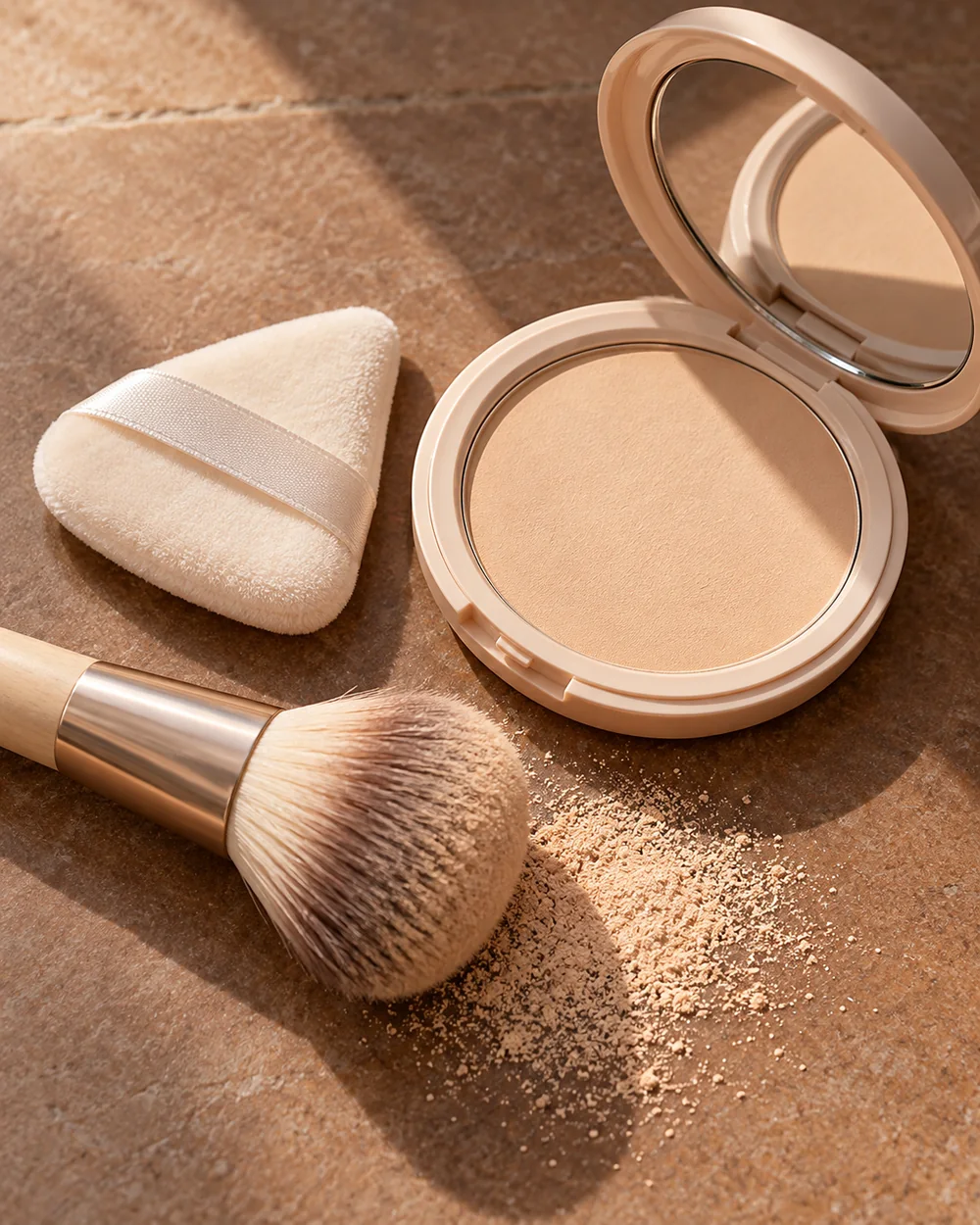
The job is to place a little powder on a chosen patch, not to cover the whole face because the tool is in your hand. A small puff and a small brush can both do that. Decide which motion you prefer and how precisely you need to reach the area before buying another applicator.
Press or sweep?
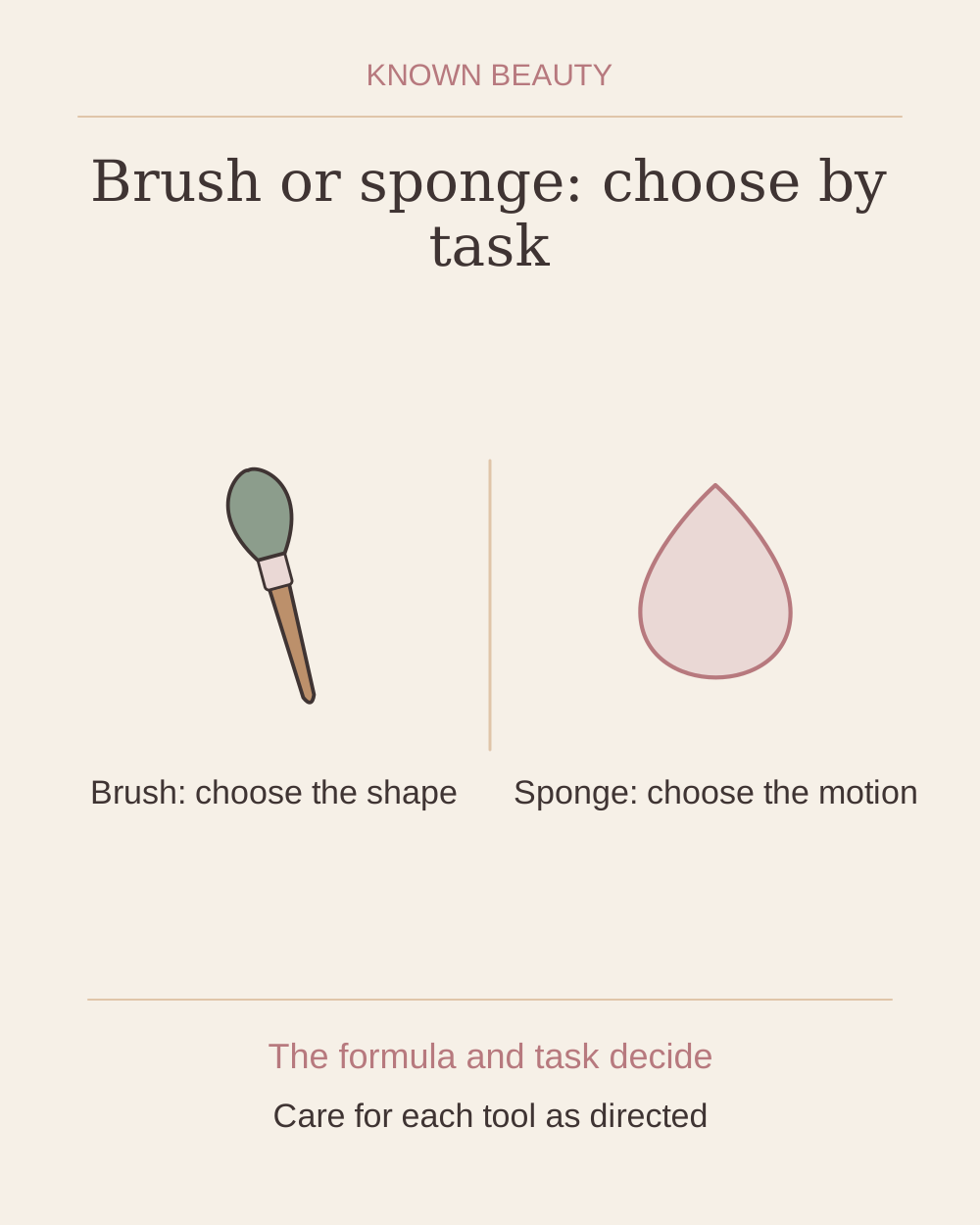
A puff gives a contact surface you can place and lift. A brush offers bristles that can lightly touch or sweep. Either can apply too much if heavily loaded. A large fluffy brush is not automatically delicate, and a small puff is not automatically heavy; loading and pressure remain part of the choice.

Charlotte Tilbury’s manufacturer directions include tapping excess powder off its puff and gently pressing. A controlled amount is the useful starting principle. You can use a small amount without leaving a thick layer to sit on the face.
Give your existing tool a fair comparison
Apply your familiar base as usual and let it settle according to its directions. Identify one small area where you want less reflection or more setting. Load a little powder, remove visible excess and place it only there. Check at normal distance before repeating. If that solves the problem, the tool already in your bag may be enough.
With a puff, use a smaller clean corner or edge where the construction allows. Press and lift rather than dragging across fresh base. With a brush, choose a head small enough to avoid the areas you want to leave reflective. Use a light movement and resist travelling over the same patch simply because powder remains on the bristles.
Buy for a named gap
A small puff may be useful when you prefer a stable pressing motion or want to reach beside the nose. A small brush may suit a softer perimeter or quick selective application. If you find a tool difficult to grip, test the handle, strap or shape before deciding that the whole category is unsuitable.
For the under-eye area, begin with very little and only if powder is useful in your routine. A visible crease does not mean the entire area needs a heavier layer. The concealer-creasing guide covers that separate decision. Keep powder out of the eyes and follow its intended-use directions.
Care is part of the kit
A reusable puff is practical only if its cleaning and drying routine fits your week. Follow the maker’s care directions and let it dry fully before enclosing it. Keep brushes clean too; repeatedly using an applicator coated with old base makes a controlled comparison harder. Replace a tool whose surface or construction has deteriorated.
Keep the applicator that gives you the placement you wanted with a manageable amount. Add another when it changes a specific task, not because a new finish name makes the old tool obsolete.
Choose tools and products for the job you need. Check the directions, care information and any compatibility guidance for your own items.