If your makeup looks right when finished, you do not need to add two products simply to complete a routine. Setting powder and setting spray may both appear in tutorials, but their names alone do not tell you which you want. Begin with a specific observation: visible shine in one area, a finish you dislike or a preference to try a labelled setting product.
Separate the formats from the promises
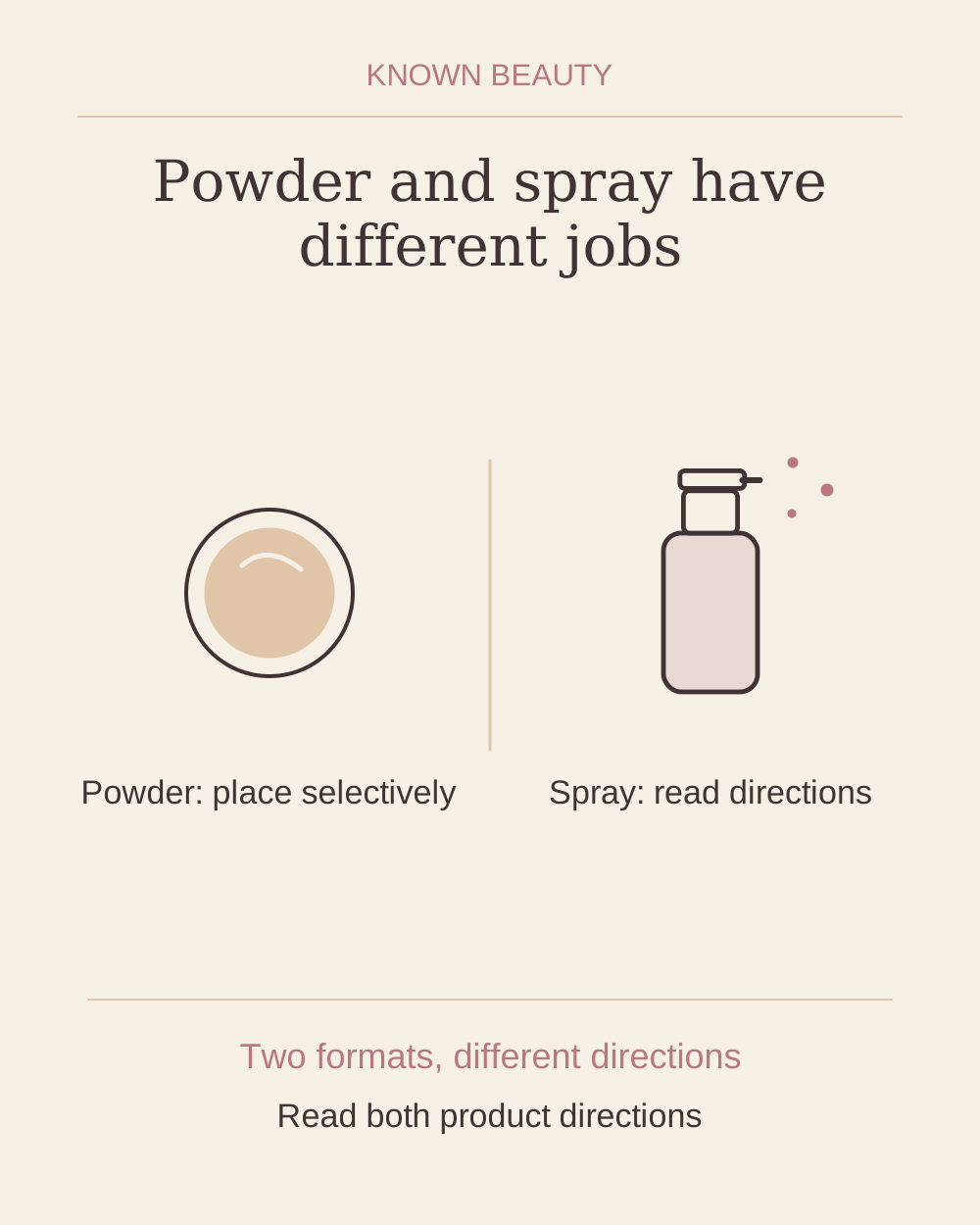
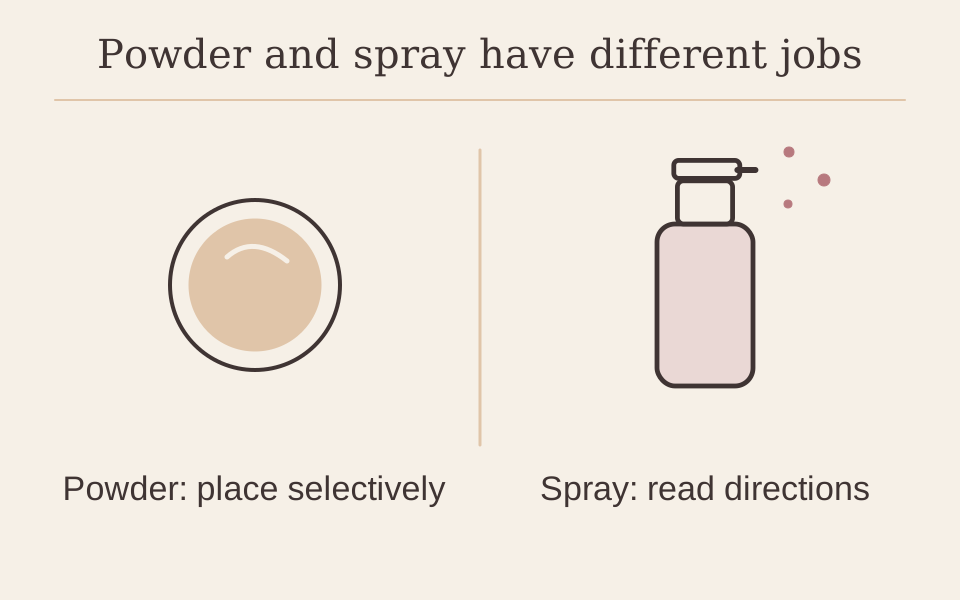
A setting powder is a powder product applied with an appropriate tool, often to selected areas. A setting spray is a liquid mist with instructions specific to its formula. Manufacturers describe different finishes and uses within both categories. A refreshing face mist is not automatically a setting spray. Check what the product is designed to do.
| Your question | Powder comparison | Spray comparison |
|---|---|---|
| Where will I apply it? | You can target a small area using a suitable tool. | Follow the spray’s stated distance, method and precautions. |
| What finish do I want? | Check the actual shade and finish, including whether it changes your base colour. | Check whether the actual formula is described as matte, radiant or another finish. |
| Will it extend wear? | Do not assume a universal duration from the category. | Read the specific claim and conditions; no guarantee is supplied here. |
| Do I need both? | Try the smallest useful powder step first if that matches your aim. | Try only if you have a reason and its directions fit your routine. |
A controlled way to choose
- Describe the observation. “The centre of my forehead looks shinier than I want” is more useful than “my makeup needs setting”. “The base looks heavier after powder” is a different issue. Look in ordinary light at your normal viewing distance before deciding. You may prefer the existing finish and choose to stop without adding anything.
- Read the actual product. Check intended use, warnings and application directions. Do not copy another bottle’s number of sprays or distance. If instructions say to close eyes or take other precautions, follow them. Directions and wear claims belong to the exact product you use.
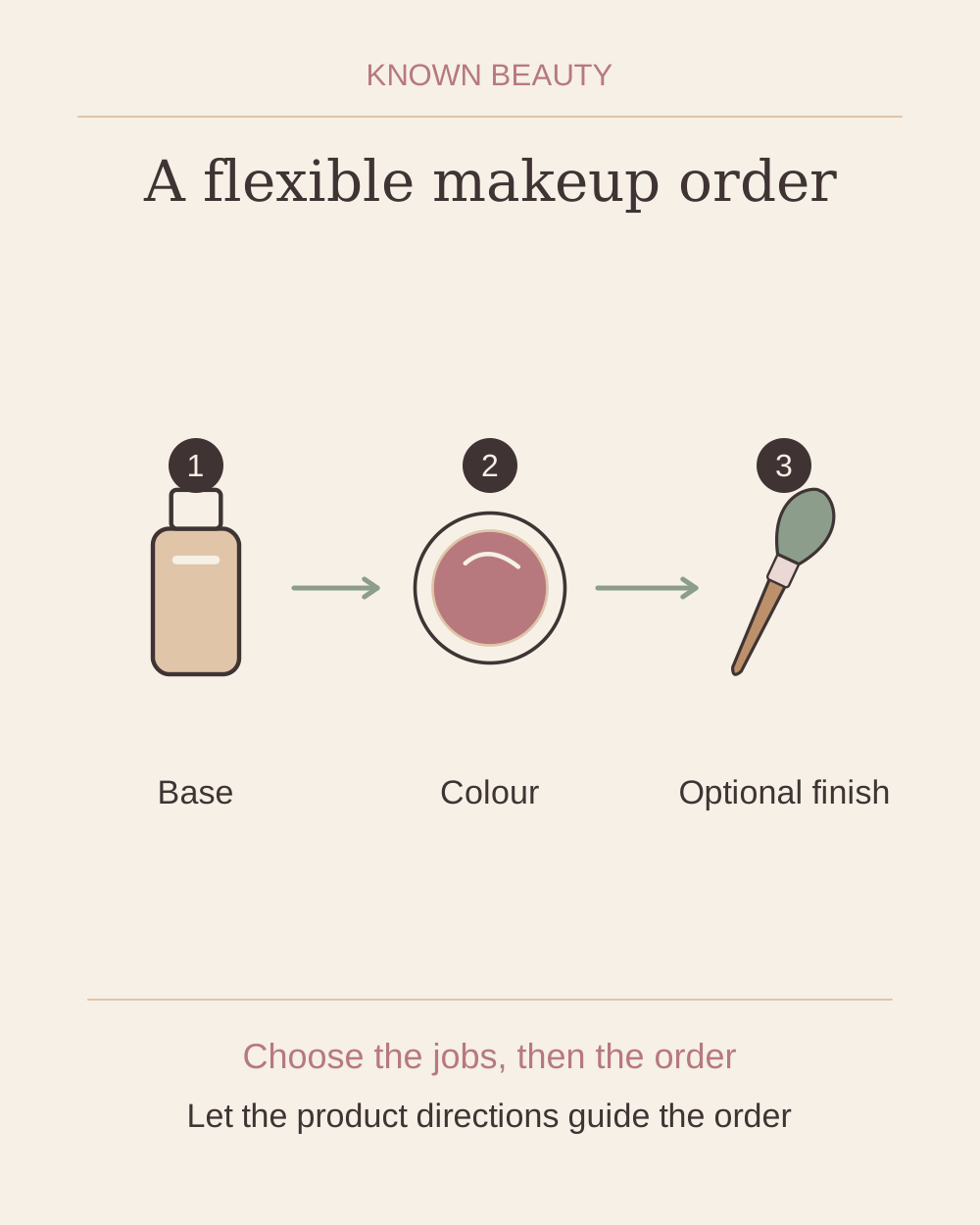
- Try one change first. For a powder experiment, begin with a light amount on the area you identified, using the recommended type of clean tool. For a spray experiment, follow its directions over the routine specified. Do not add several new finishing layers at once if you want to understand which one creates a finish you prefer.
- Inspect the result before more layers. Compare colour, reflection and how visible the product looks. If the finish is heavier than intended, repeated powder may complicate that observation. If spray leaves visible droplets, check the actual application directions rather than rubbing everything immediately. Stop and identify the local issue before adding more foundation to the entire face.
- Record the useful version. Note what you used, where and whether you preferred the result later in your usual day. This is a personal comparison, not a controlled verification of a wear claim. If nothing improved for your needs, omit that step next time. A shorter routine is a successful outcome when it gives you the finish you enjoy.
When your finish looks different
If powder changes the base colour, compare its shade and amount rather than adding a brighter concealer everywhere. If a spray changes the finish more than expected, check its stated purpose and whether you followed the method. If neither addresses your original concern, return to the base application rather than continuing to stack finishing products.
Questions you might have
Does spray replace powder?
Not automatically. They are different formats with formula-specific uses; choose for the particular job.
Does every spray make makeup waterproof?
No category-wide claim follows from the name. Check the actual product evidence and directions.
Can either prevent all concealer creasing?
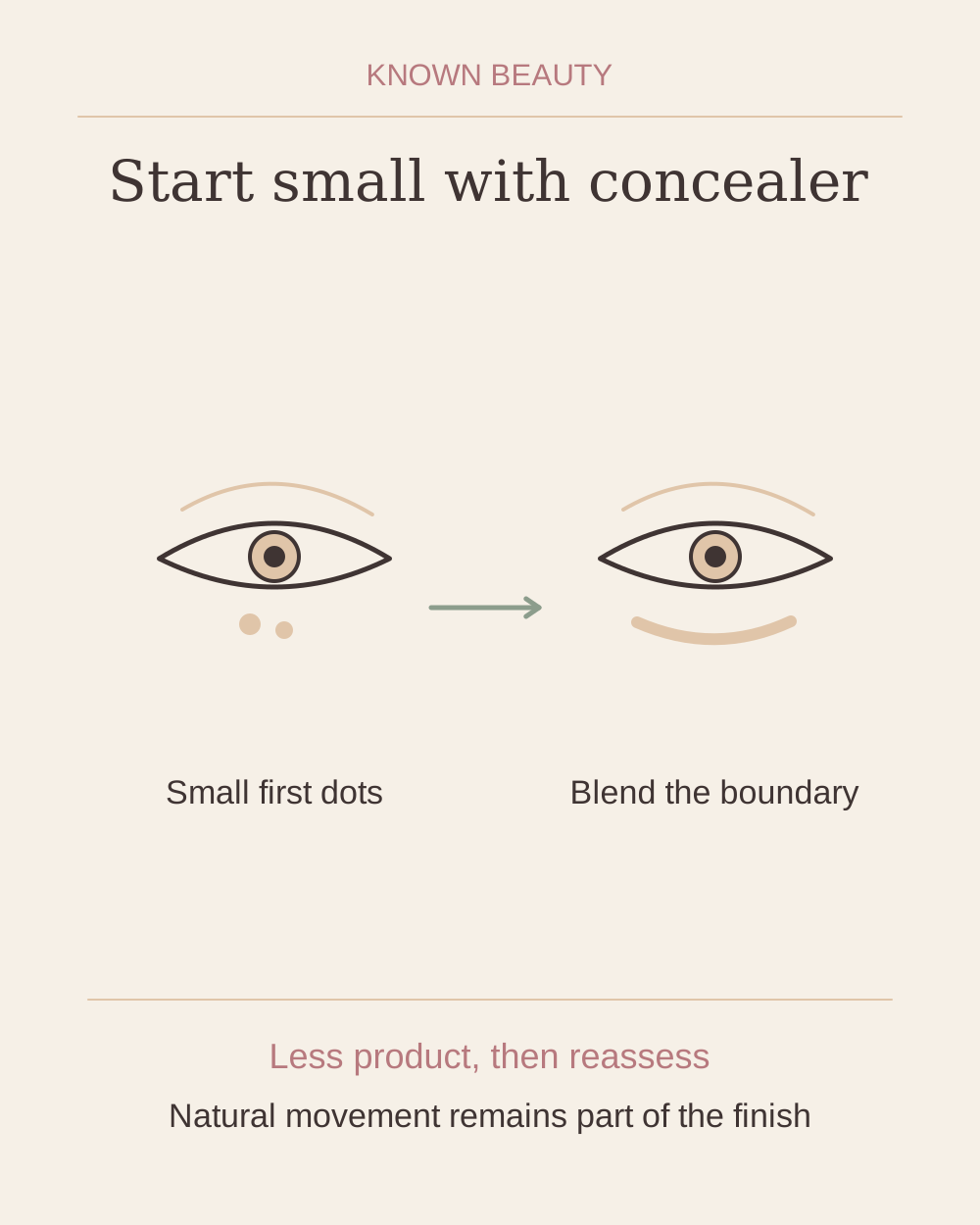
No universal result is promised. The concealer guide starts with amount and placement before optional finishing.
Makeup placement and colour are personal choices; adjust the steps to suit you. Follow the directions on your own products.