Choose how much light you want the makeup to return before choosing how much coverage you want. A sheer base can look matte; a fuller base can look reflective. Cloud and dewy are descriptions of the surface you see, not fixed formulas and not opposing instructions for entire skin types.
Cloud skin appears in Pinterest’s October 2026 report, while Beautylish’s September editorial discusses softer matte finishes. Choose between the reflections by looking at the areas you actually want to change.
Compare the same parts of the face
| Decision | Cloud direction | Dewy direction |
|---|---|---|
| Main visual job | A quieter, softly reflective surface | More obvious light on chosen areas |
| Where to begin | Reduce a shiny patch selectively | Leave a reflection you already enjoy |
| Common overcorrection | Powdering every area equally | Adding glow wherever there is space |
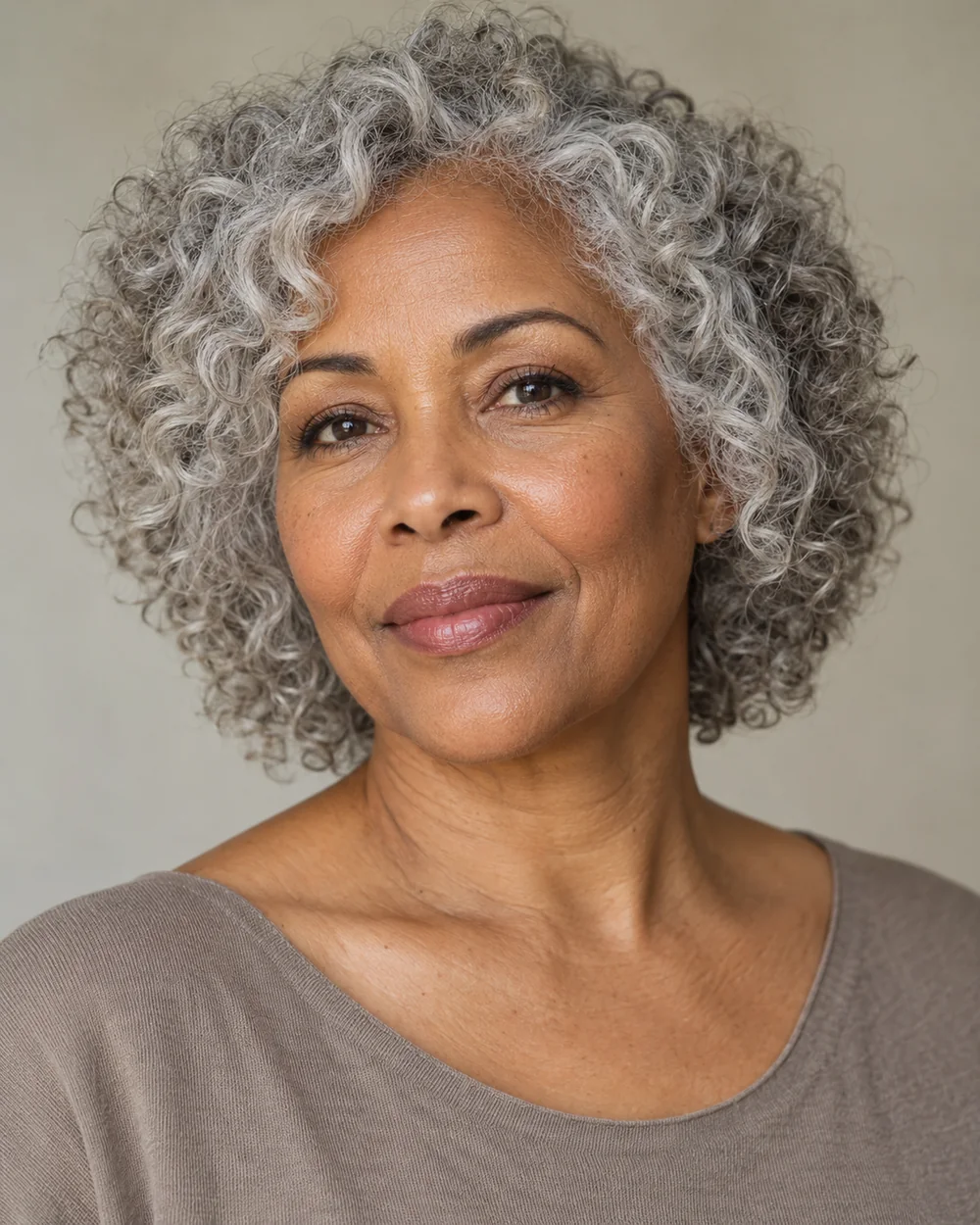
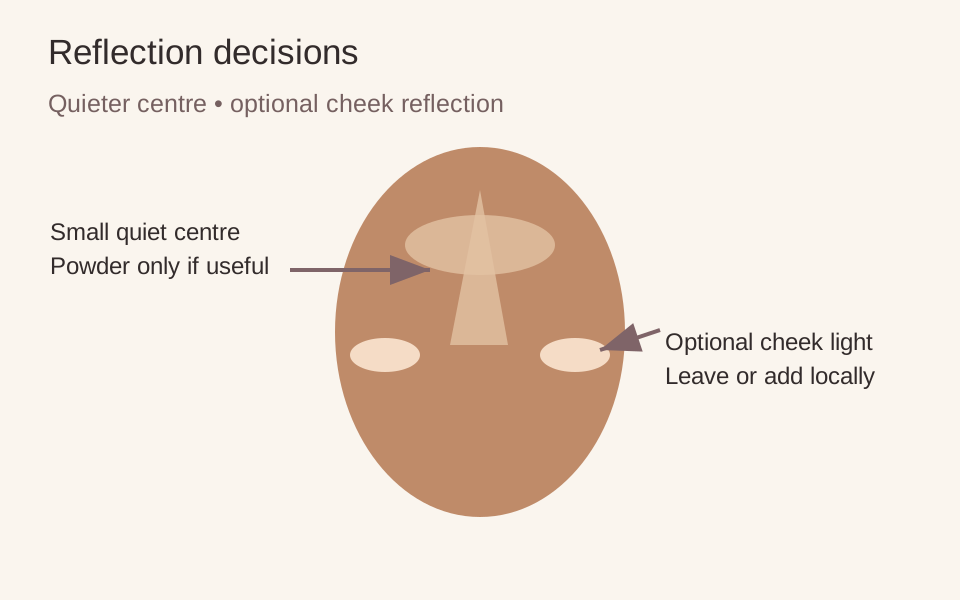
The fictional mature model illustrates a middle route: satin through the centre, with some reflection on the cheek. The contrast keeps the face softly reflective without treating every area equally.
Try the quieter route
Finish your familiar base first, if you use one. Look straight ahead and turn a little. Identify the reflection you actually want to reduce, such as a particular patch on the forehead or beside the nose. Load a small amount of compatible powder, remove excess and press or lightly place it on that patch. Check again before moving to another area.
The manufacturer directions for Charlotte Tilbury’s powder puff include tapping excess away and gently pressing. That is a product-specific example of controlled application, not a requirement to bake or use that puff. Keep a comfortable amount of natural skin reflection if it helps the surface look the way you like.
Try the more reflective route
Begin by leaving a reflection you already like rather than adding another product. If you want more, use a face-intended product in a small area, following its directions and checking compatibility with the base. The upper cheek may be a useful starting place. Do not assume that the whole forehead, nose and chin need the same treatment.
Test the result with your actual glasses, hairstyle and lighting. A reflection visible in a bathroom mirror can look different beside a window or under venue lights. No finish guarantees a particular photograph; a quick reference picture can help you choose your own balance.
Make a local decision
If one area looks heavy, adding shine over it may simply create a shiny heavy area. Remove or reduce the excess locally first. If glow looks oily to you in one place but beautiful in another, powder only the place you dislike. Mature skin, deeper skin and textured skin do not each require one prescribed finish. Choose the amount of reflection you enjoy, then stop altering the parts already doing their job.
Makeup placement and colour are personal choices; adjust the steps to suit you. Follow the directions on your own products.