A minimal dewy look combines a little coverage with selected areas of reflection. The useful decision is where the glow begins and ends. You might enjoy it along the cheekbones with a quieter centre of the face, or prefer a soft overall sheen without a separate highlighter. Neither version depends on having smooth, unmarked skin, and neither promises to change your skin itself.
Choose two textures before you start
Hold your proposed base and cheek product together and consider their finishes. If your tint already looks reflective, you may need only blush. If it looks satin or matte, a small amount of highlighter can create a clearer contrast. Decide on that relationship before layering several glow products and trying to reduce them afterwards.
Use familiar skincare as you normally would and follow its directions before starting the makeup. These steps are about colour and reflection; they do not replace sunscreen instructions or a skincare routine. For colour products, follow their stated application areas rather than assuming every cream can go everywhere.
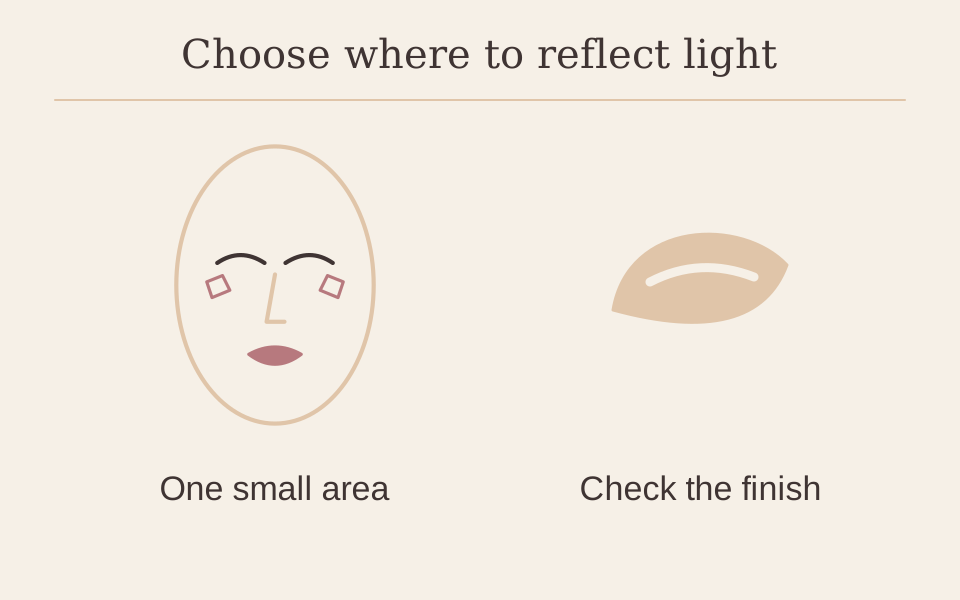
A placement-led sequence
- Start with the smallest coverage area. Apply a little concealer or tint where you want it. Blend towards bare skin and pause before adding a second layer. You are looking for a finish you enjoy in your mirror, not trying to remove every variation in colour.
- Keep the cheek colour contained. Place a small amount of blush on the area you want to emphasise. Blend the boundary without pulling it over the whole cheek. Check both sides looking straight ahead; the two patches can relate without being geometrically identical.
- Find the natural reflection. Turn your head slightly towards the light and notice where the cheek catches it. If you want extra reflection, start with a tiny amount of face highlighter on a small part of that area. Blend its perimeter with a clean tool.
- Check from two angles. Look ahead, then turn each way. A bright stripe that appears only at one angle may need less product or a softer boundary. Avoid judging only in the position where the reflection looks strongest.
- Keep the eye uncomplicated. Use mascara if you like it, or leave the lashes as they are and tidy your usual brow shape with makeup. If you add shadow, choose an eye-safe product. A quiet eye gives the cheek finish room to be the main feature.
- Balance with the lip. Try a sheer satin lip for a softer overall effect, or gloss if you enjoy more reflection. Check the entire face once before adding anything else. The lip does not have to repeat the exact texture of the cheek.
Choose your approach
A satin base with a light-catching cheek
Keep the centre of the face as you prefer it and reserve stronger reflection for a small cheek area. The contrast makes the placement easy to see.
An all-over soft sheen
Use a familiar sheer base with the finish you like and skip separate highlighter. Add colour through blush and lip rather than another reflective layer.
If the result is not what you wanted
| What you notice | Try this |
|---|---|
| Everything looks equally shiny | Choose one area to keep reflective. Reduce the glow products in the next application; adding more colour over the top will not restore a clear placement plan. |
| The highlighter forms a visible stripe | Blend just the perimeter with a clean tool. If the stripe remains stronger than you want, remove that small area with suitable remover and rebuild with less. |
| The base moves when adding blush | Try a lighter pressing motion and less product. Test the combination on a small area next time; changing several products at once makes the cause harder to identify. |
Questions you might have
Can I still use powder?
Yes. A dewy look can include powder wherever you prefer less shine. Apply a little to the chosen area and preserve the reflection elsewhere.
Does dewy mean glittery?
No. A fine sheen and visible reflective particles create different effects. Look at the actual product in useful light and choose the texture you enjoy.
What is the smallest version?
Use selective coverage, one cheek colour and a sheer lip. Leave the highlighter out if the existing products already give you the finish you want.
For your next attempt, change one variable: either the amount, the placement or the finish. This makes it easier to find a repeatable balance than switching the entire kit after one result.
If the base colour is distracting from the finish, compare shade depth and undertone first. For a shorter routine, start with the five-minute everyday look.
Makeup placement and colour are personal choices; adjust the steps to suit you. Follow the directions on your own products.