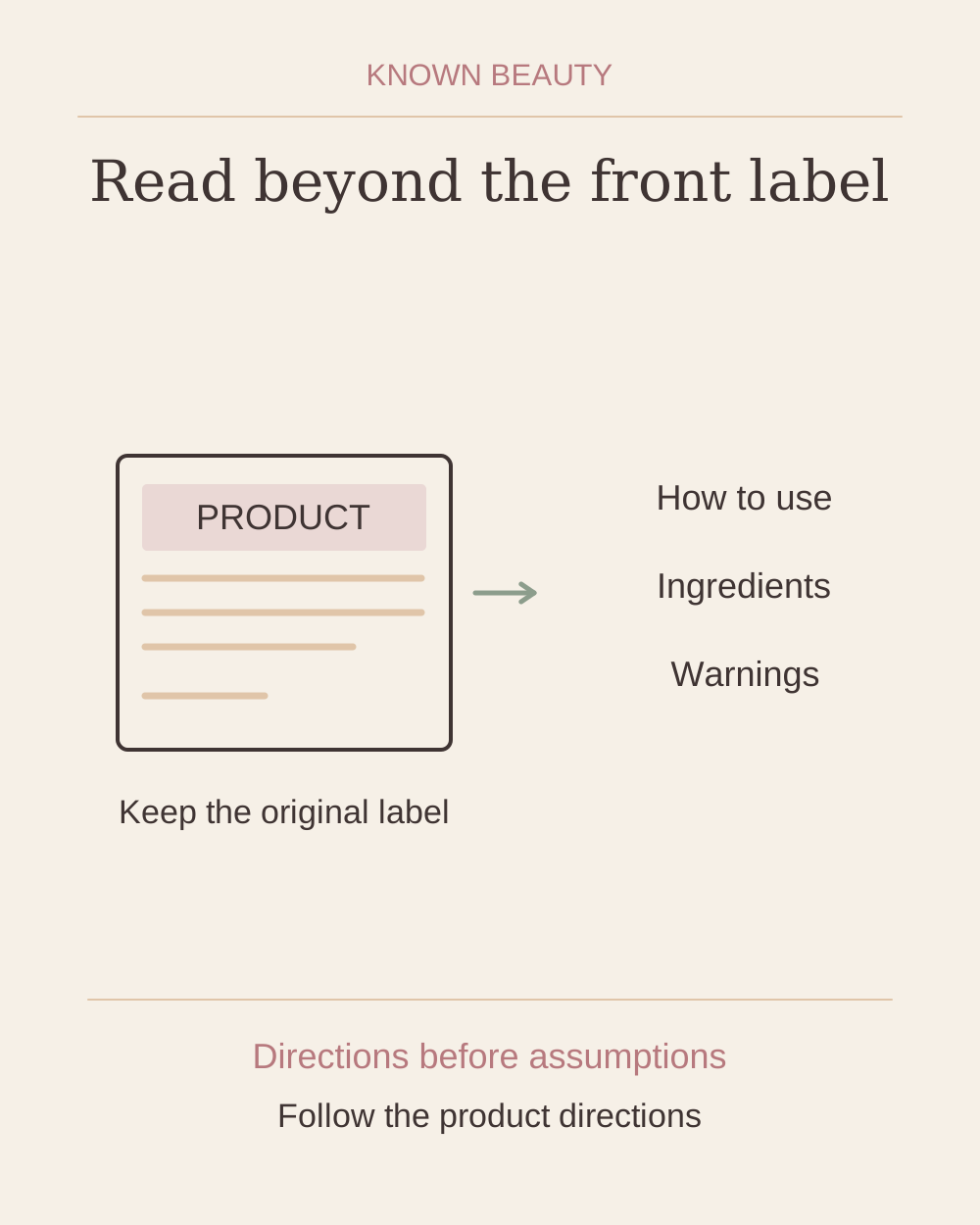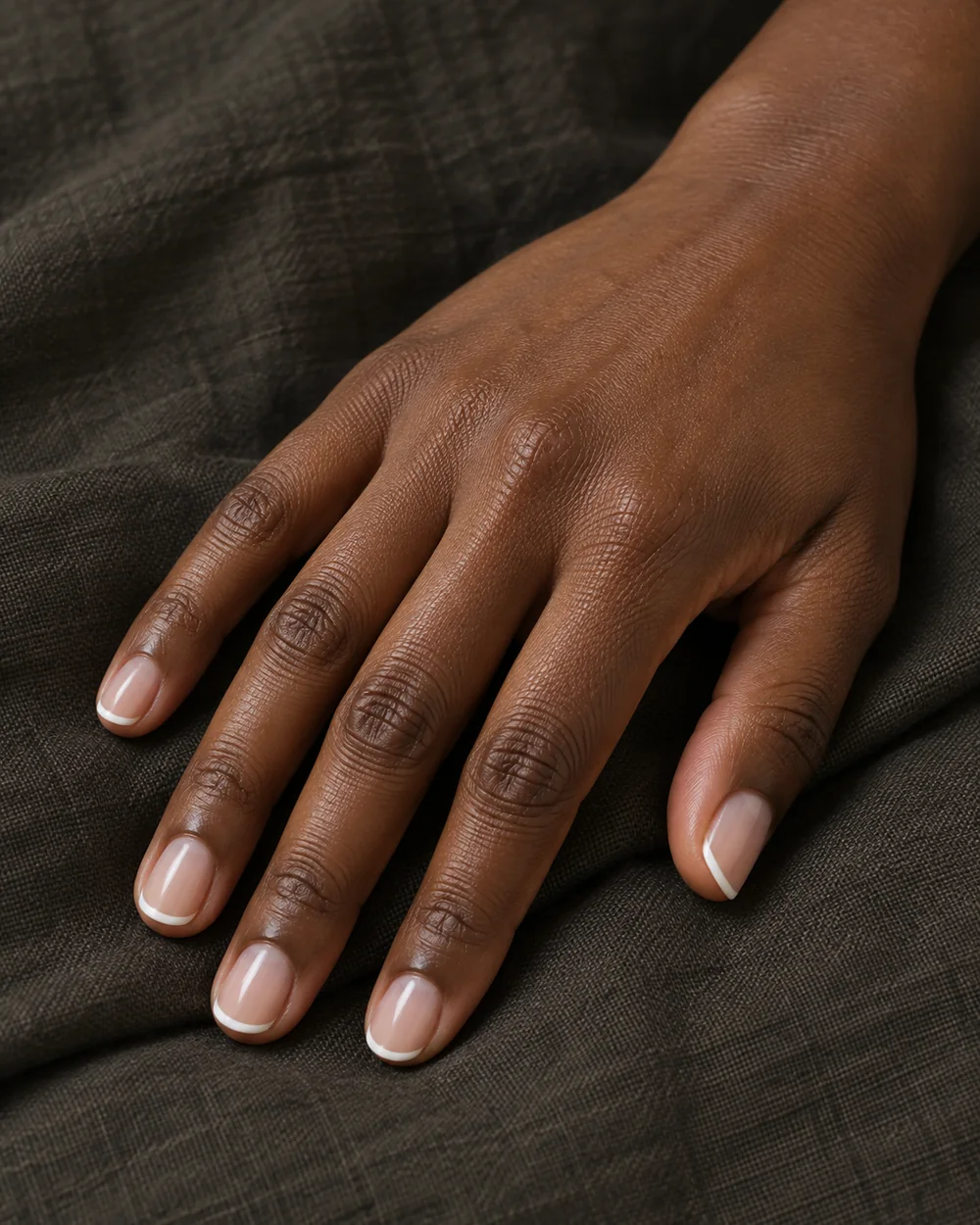
Keep the tip narrow and follow the curve of the short nail you already have. You do not need extensions or an almond shape. The illustrated ivory edge shows the small proportion to aim for.
Google’s April 2026 spring report highlighted French-tip searches. Here is a simple version using ordinary air-drying polish.
Prepare, trace, check
Follow your base-coat and colour directions, letting each stage dry as required. A sheer neutral base is optional; choose the tint you like on your own nails. Work with ventilation, away from heat and flames, and keep polish clear of skin and eyes, following FDA nail-product guidance.
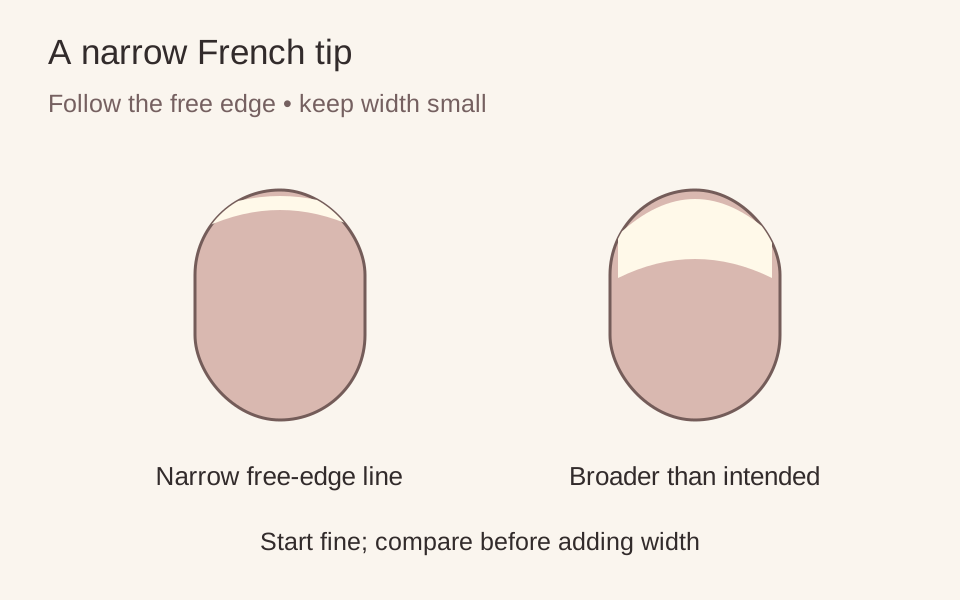
Rest the hand on the table. Load a fine nail-art brush lightly with ivory or white polish. Start at one side of the free edge and trace a short curve towards the middle. Meet it from the other side. This can be easier to control than one long stroke with the finger unsupported.
Essie’s original tutorial describes the fine-brush smile line and a narrow micro-tip. Keep the first line finer than you think you need. Look at it from normal distance before adding width; a comparable impression across the fingers matters more than identical measured curves.
A sheer ivory makes a quieter edge; opaque white creates more contrast. Choose one and keep that decision steady while learning the brush movement. When the tips are dry as directed, add a compatible ordinary top coat if wanted and allow its stated drying time.
If the line becomes too broad
Use suitable remover and an appropriate cleanup tool according to their directions, avoiding surrounding skin as far as practical. Do not keep thinning and repainting wet polish until the whole base is disturbed. Restarting that one nail can be simpler.
If the less confident hand makes it difficult, practise on one accent nail or a separate practice tip. Plain colour elsewhere is a finished option. This method needs no cuticle cutting, curing lamp or gel system. Stop when the tip reads as a narrow edge rather than a broad block.
Adapt the design, nail length and colours to your preferences. Follow the directions on your own nail products.