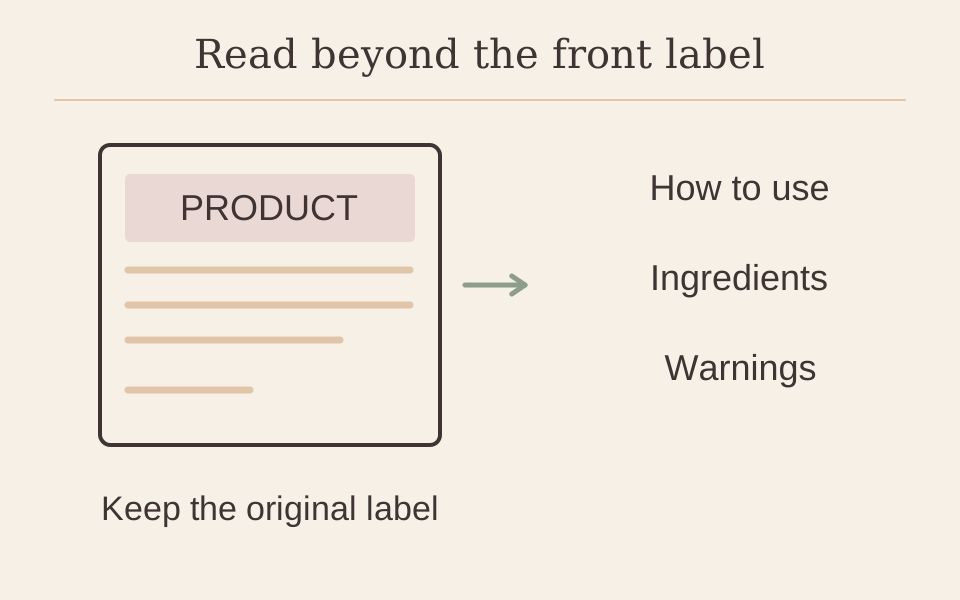
A makeup label has several jobs. It helps identify the product, tells you how it is intended to be used and gives information you may need later. The shade name and large promise on the front are only part of that picture. Use this reading sequence when buying something unfamiliar, especially when a small online photograph makes the rest of the packaging difficult to inspect.
Read the pack in this order
- Identify what the product is for. Find its function and intended application area. A pencil’s shape does not tell you whether it is a lip product or an eye product. Do not substitute a product around the eyes merely because its colour looks suitable.
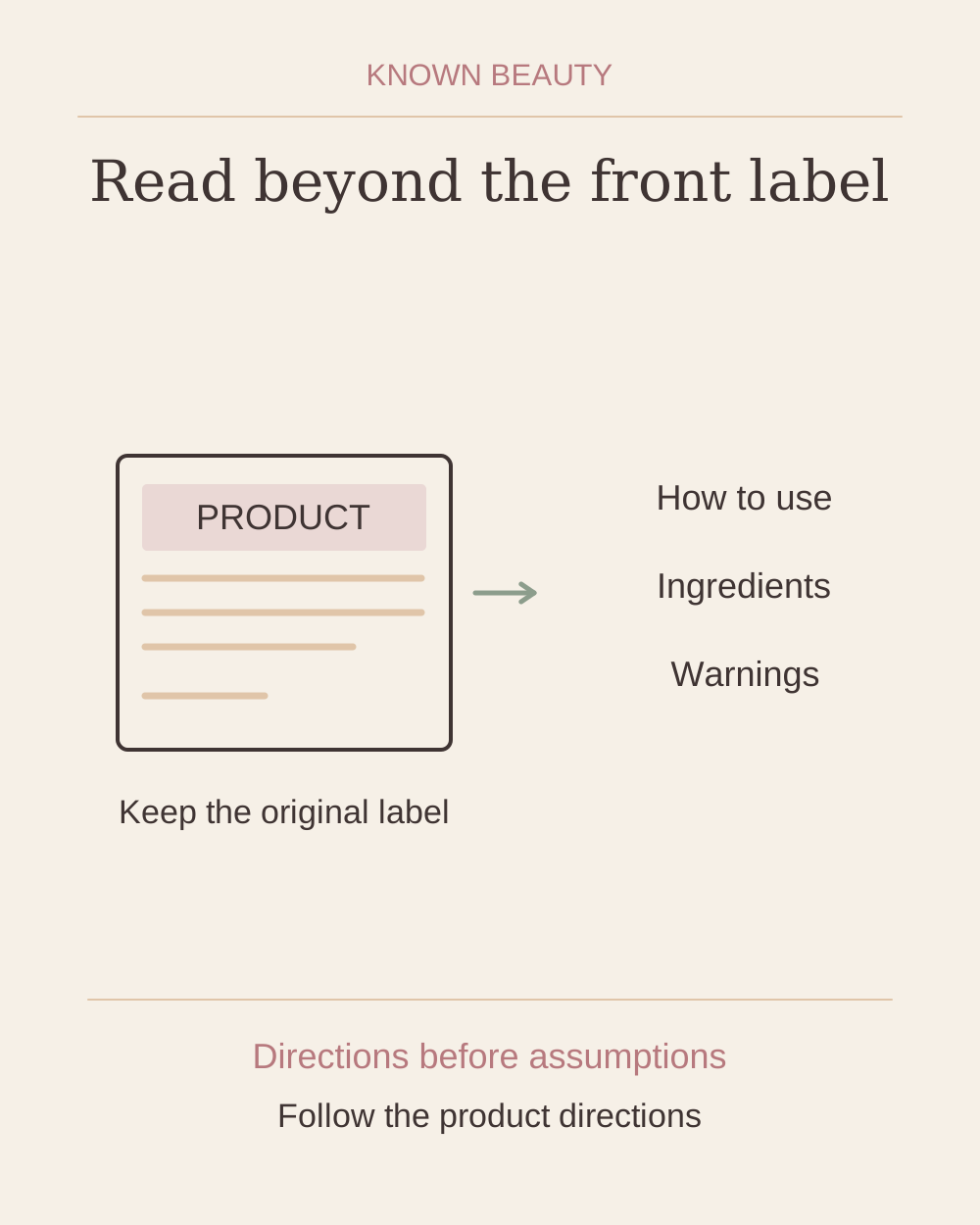
- Read directions and precautions. Look at the back, base and any leaflet. Check how to apply and remove it, where it may be used and any warnings. A short social clip does not replace those directions.
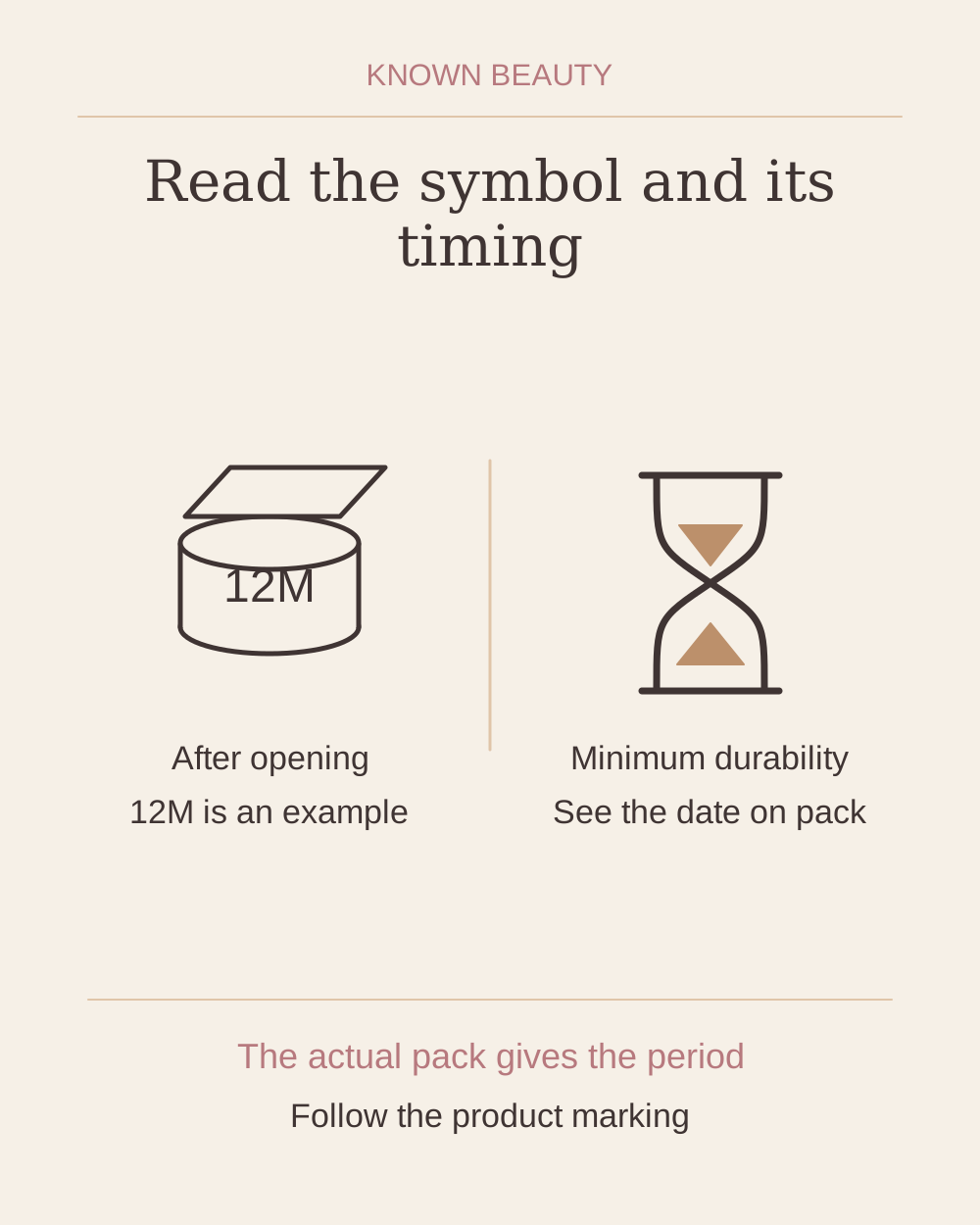
- Find durability and storage information. Look for the best-before or period-after-opening marking and associated instructions. Keep a record of opening when relevant; our PAO guide explains the distinction.
- Keep the product identity. Record the exact name, shade and batch reference. A batch number is particularly useful if you later ask the brand a question about an item; the colour name alone may identify several versions.
- Read the ingredients in context. Use the list to identify ingredients you have been told to avoid or to discuss a specific concern with an appropriate professional. Do not decide that an unfamiliar name proves danger, or that a short list guarantees suitability.
- Check who stands behind it. Find the responsible business details and a usable contact route. If key information is missing, ask before purchasing or using it instead of assuming the missing details will arrive later.
Separate useful information from a promise
| What you find | It helps answer | It does not prove |
|---|---|---|
| Ingredients | What is listed in the formula? | How the finished product will perform on you. |
| Directions and warnings | How is it intended to be used? | That another product can be used in the same way. |
| Shade name or number | Which option is this? | An exact match to your skin from a screen image. |
| A long-wear claim | What benefit is being advertised? | That every wearer will get the same result. |
| Batch reference | Which production batch is identifiable? | When you first opened the container. |
What the official consumer guidance covers
The Office for Product Safety and Standards lists information consumers should find on cosmetic containers and packaging in Great Britain, including precautions, responsible-person details, batch identification and ingredients; ingredients may be on the packaging. Its consumer page also explains symbols for further information, best-before and period after opening. Space limitations can mean checking a leaflet. These are useful reasons to retain the full pack until you have read it, rather than judging compliance from one small panel.
If a label is difficult to use
| Problem | Next step | Keep this detail |
|---|---|---|
| The text is too small to read comfortably | Take a sharp photo and zoom in, or request accessible information | The product name and version. |
| Online images show only the front | Ask for the directions, ingredients and full pack information before buying | A record of the listing and seller. |
| The leaflet is missing | Request the current instructions from the manufacturer | The batch reference and pack photograph. |
| A shade looks different online | Seek an appropriate sample or compare the actual product as directed | Your preferred depth, colour and finish. |
Make one useful note after reading
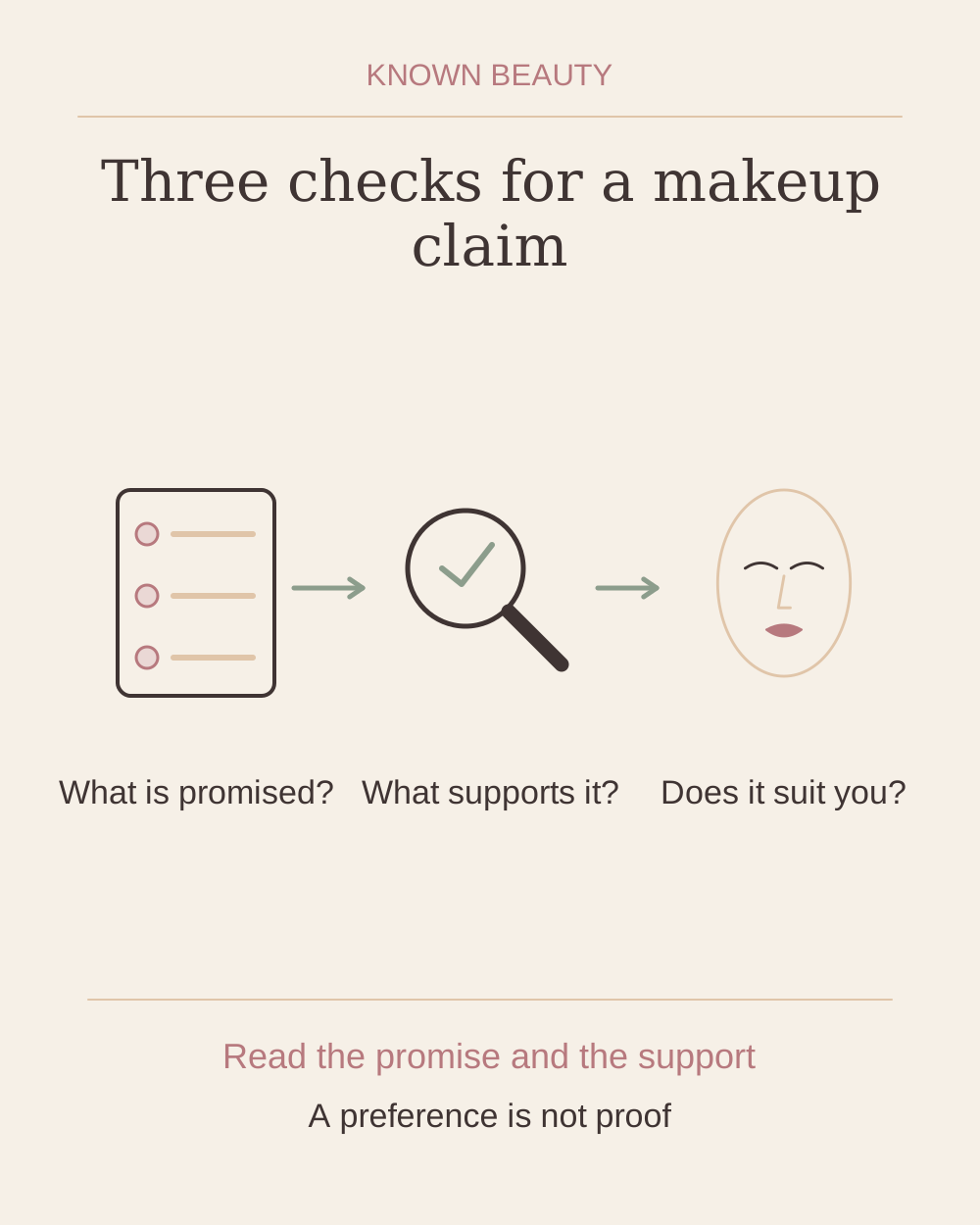
Write a short line that changes your routine: for example, where the product may be used, how its applicator should be cleaned, or when you opened it. Avoid copying a whole ingredient list into a vague good-or-bad score. If you are comparing a claim with your own needs, the marketing-claims checklist gives you better questions to ask. Keep personal preference separate from a safety or legal conclusion.
Questions worth asking
Is “natural” a reason to skip the instructions?
No. Read the same directions, warnings and ingredient information whatever descriptive language appears on the front. A marketing word does not tell you where a product is intended to be applied.
Can I throw the box away?
Once you have read and kept the information you need, decide how to store it conveniently. A clear photo can preserve a batch reference or tiny directions, provided you can tell which product it belongs to.
Does this guide check an individual product’s legality?
No. It is a consumer reading routine. If something appears to lack essential information, ask the seller or responsible business, rather than treating this article as a compliance certificate.
Choose tools and products for the job you need. Check the directions, care information and any compatibility guidance for your own items.