
The practice goal is a graphite line you can still recognise after softening its edge. Keep it short and external, then let raspberry provide the separate colour note at the mouth. Use a familiar eye-intended pencil and lip colour after your usual preparation. This five-minute core is for movements you already control, with the final open-eye check included in the budget.
First pass: connect short sections
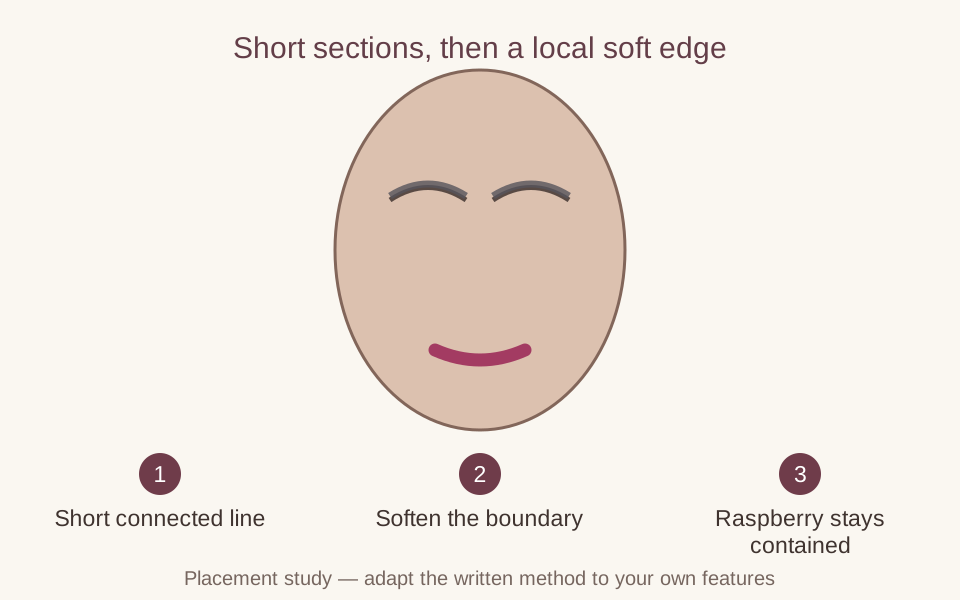
Rest your working hand comfortably and look at the external upper-lid area with the eye relaxed. Sketch short connected sections where you can see the pencil’s contact point, following its intended-use directions. Keep the product away from the inner rim and do not extend it into an unfamiliar wing simply because a pointed shape is visible in another look.
Use a clean small appropriate eye brush to soften the outer boundary locally. Work with the colour already there before adding another line. Open the eye and decide whether the shape is distinct enough. If you want a little more depth, replace it inside the existing area rather than drawing the softened edge progressively wider.
Second pass: give raspberry a contained shape
Apply a thin connected layer of raspberry lip colour within the outline you enjoy. Relax the mouth between checks and inspect the corners. Choose enough depth to distinguish the colour on your own lips without requiring a pale base underneath. Keep cheeks and brows familiar so the eye and mouth remain the two decisions you can judge.
Step back from the detail mirror. The graphite should read as definition, the raspberry as colour. If both are clear enough, keep the rest of the five-minute allowance for a small correction rather than adding another cosmetic category.
Practise for three ordinary contexts
Everyday. Use the shortest graphite area and a thin raspberry layer beside a familiar casual top. Keep the method repeatable rather than aiming for a new eye shape every morning. Leave out the next optional step when the core already looks deliberate.
Work. Compare the lip depth and line beside your actual work clothes and the formality of your workplace. The quieter version keeps the raspberry transparent while retaining the narrow graphite definition. Choose the amount you can comfortably maintain through your own day.
Wedding. Practise the chosen line before the event rather than testing an unfamiliar wing under time pressure. Follow the hosts’ dress code and check the raspberry beside the intended neckline. Carry the familiar lip colour for a local refresh if you want one, without assuming the pencil establishes a wear-time result.
A correction should make the shape smaller
If the eye edge spreads farther than you wanted, reset that local area with a suitable eye remover used as directed and finish the cleanup before replacing less. Keep tools away from the eyeball and leave the step out if you cannot work comfortably. If the lip is uneven, correct the actual missing or excessive patch rather than darkening an intact outline.
Repeat the short line you can see and the raspberry amount you enjoy. A useful practice result is a controlled shape, not a larger one.
Makeup placement and colour are personal choices; adjust the steps to suit you. Follow the directions on your own products.