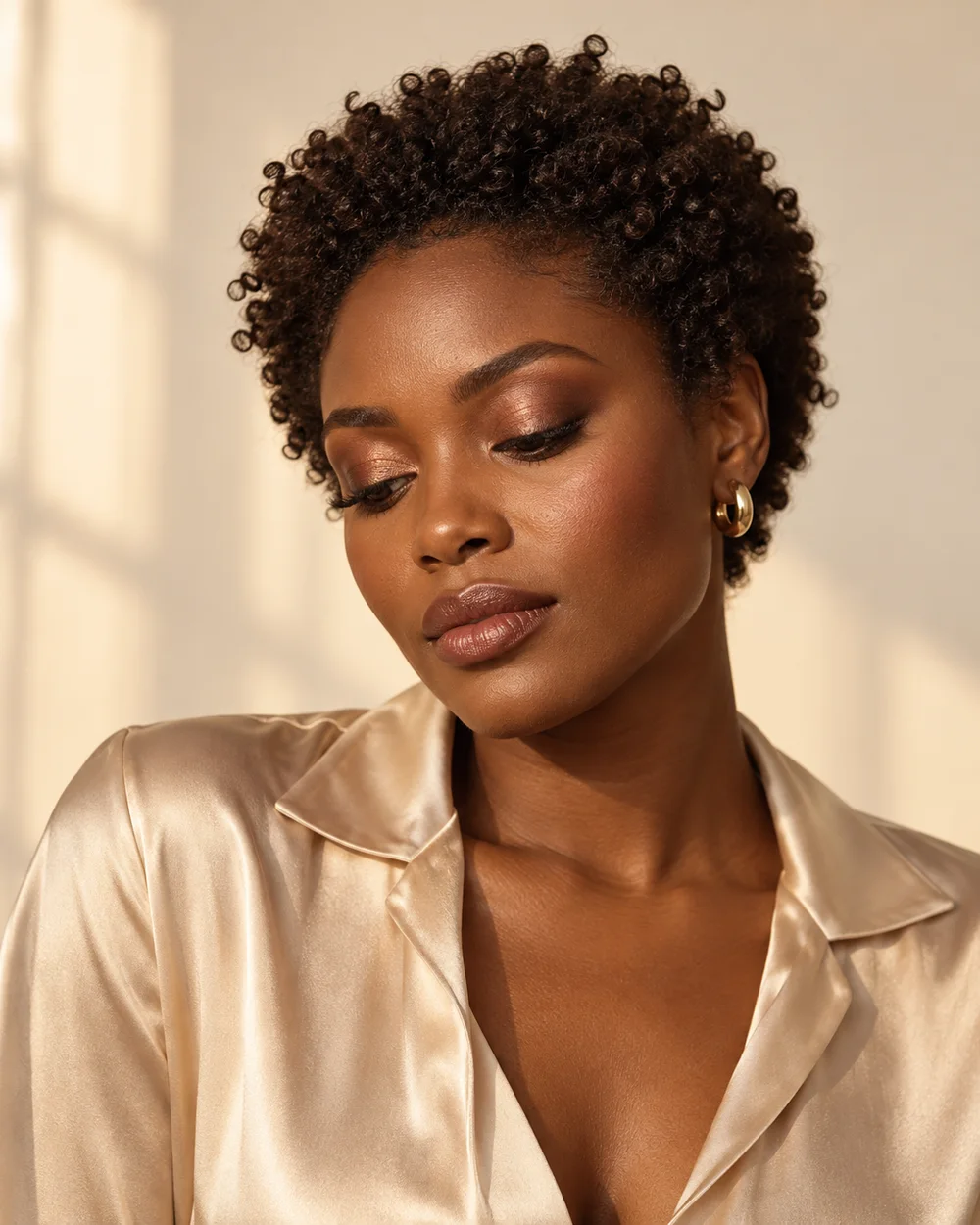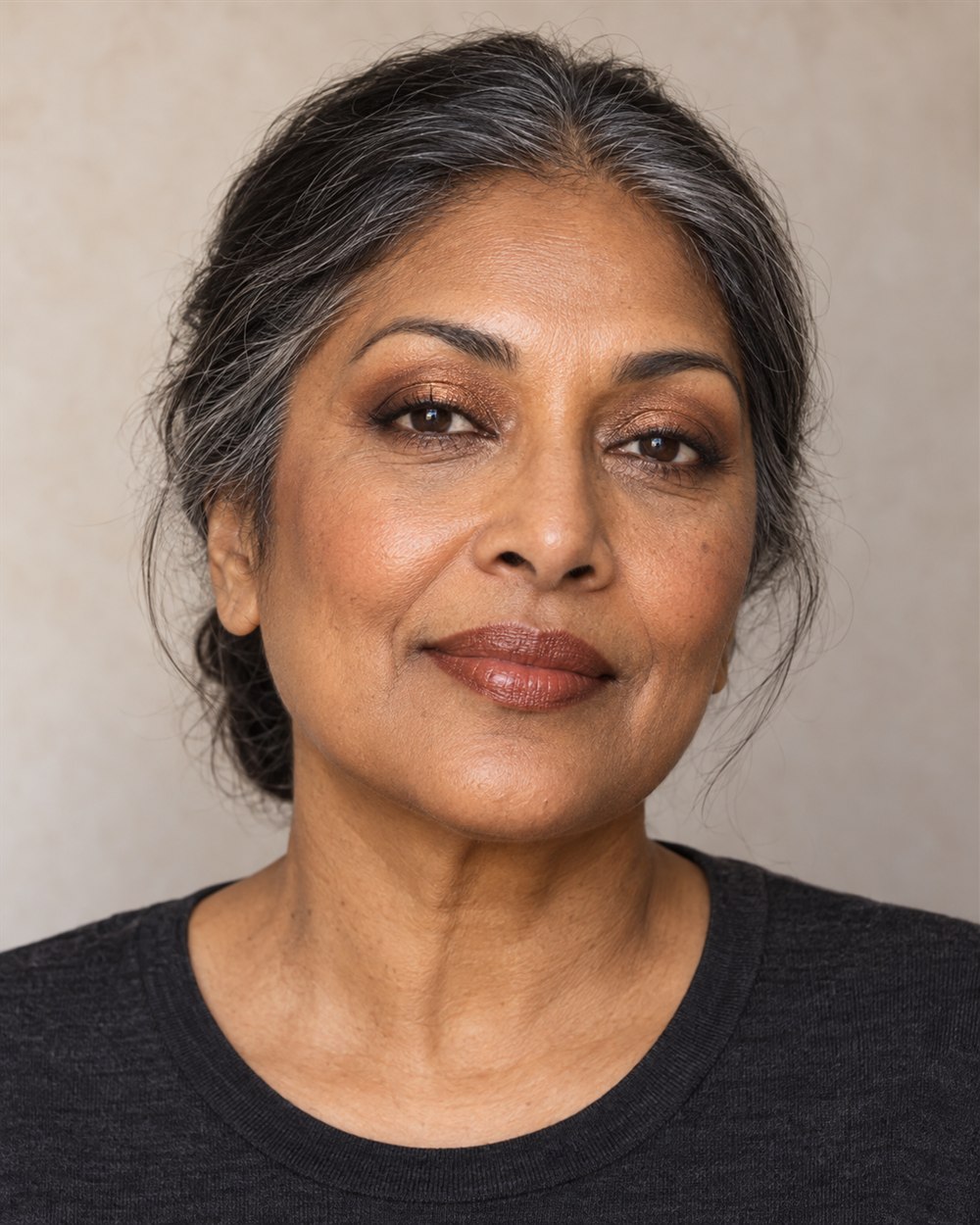
This bronze-eye look has three parts: a darker outer shape, a smaller reflective bronze area and a narrow boundary near the upper lashes. Keeping those jobs separate helps identify what to adjust if everything becomes one broad patch. It is a more defined cousin of the soft bronze evening look. Keep some matte colour visible around the bronze accent so the contrast remains clear.
Choose contrast before extra colours
Pick a bronze you like beside a matte neutral and a deeper lash-line shade. The neutral need not be pale and the bronze need not be orange. Compare actual products rather than screen swatches. Use products intended for eyes, and reserve one clean brush for softening boundaries. That brush should not carry the darkest colour around the entire lid each time you blend.
Keep three areas readable
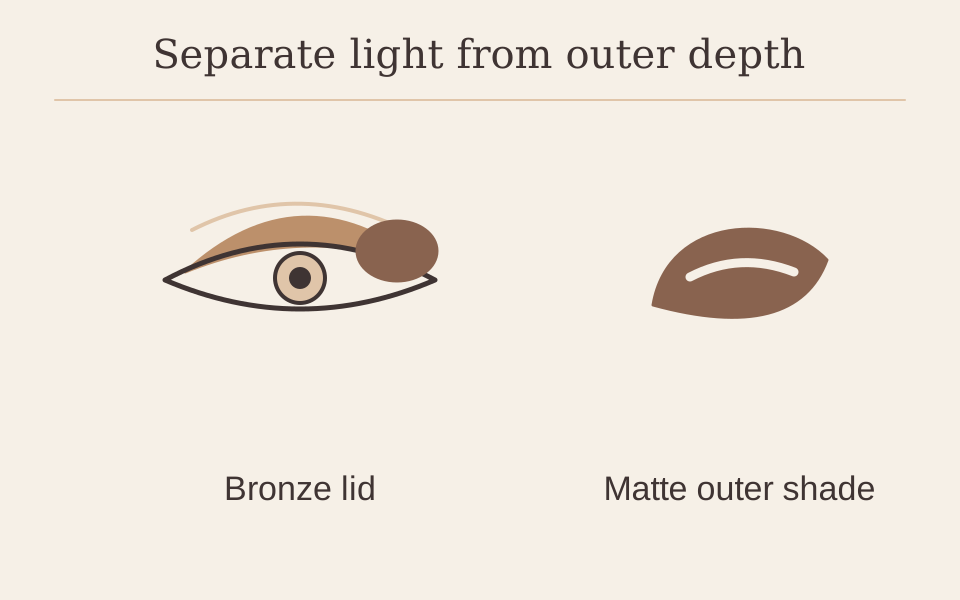
- Mark the outer shape lightly. With eyes open and brow relaxed, place a little matte mid-tone on a small outer area you can see. Blend its boundary before adding depth. Compare both eyes, then decide whether the colour should travel farther across the visible lid or remain concentrated outside. Avoid committing to a large dark shape in the first pass.
- Add depth inside that boundary. Use a smaller brush to place deeper matte colour near the outer upper lashes, occupying less space than the first shade. Return to the clean brush to soften the join. You should still distinguish the deepest area from its gentler surrounding edge. If not, pause before adding another shade to the same broad area.
- Place bronze as a smaller accent. Apply a light layer on the visible part of the lid where you want reflection. Follow the formula’s directions about tools and application. Leave matte colour visible around it. Turn slightly in the light before adding more: the reflective patch can look different as your viewing angle changes, without needing a larger shape.
- Define the upper lash line. Use a narrow pencil line or a little deep shadow close to the external upper lashes. Keep an outward extension short so it supports the shadow instead of creating a second large feature. Add familiar mascara if wanted. If that gives enough definition without a wing, the look is complete at this stage.
- Give the eye room in the full look. Use your preferred base and softly blended blush. Compare a quieter lip with a stronger one, choosing the balance you enjoy. Both features can be bold. Look at the whole face from a distance, checking that bronze and matte remain distinct rather than adding colour automatically whenever you return to the close mirror.
Choose your approach
Bronze as a fine accent
Keep reflection small and let matte shadow do most of the defining. The shape can then feel more noticeable than its shine.
A brighter bronze centre
Build the reflective area a little more while leaving the outer edge matte. Keep the first layer light so intensity and size remain separate decisions.
Keep the colours separate
| What you notice | Check first | Try next |
|---|---|---|
| The lid looks muddy | Has one brush mixed bronze and dark colour? | Use a clean brush at the join; remove a small section before reapplying if necessary. |
| Shimmer hides the shape | Look at the size of the reflective patch. | Keep bronze smaller next time rather than adding a wider dark border. |
| The dark edge is abrupt | Find the boundary outside the deepest colour. | Use light pressure with a clean soft brush along that join only. |
Use an open-eye checkpoint
Pause after every colour and look ahead. This matters more than copying the position in a closed-eye diagram. If your fold covers most of the lid, choose one visible bronze accent and keep the dark shape modest. The hooded-eye guide explores this decision without prescribing one placement for every eye.
Questions you might have
Do I need several palettes?
No. Bronze and one or two neutrals cover the colour plan. Choose by separate jobs rather than product count.
Can the lip also be bold?
Yes. Judge the contrast you enjoy. A quieter lip emphasises the eye but remains an option.
Does sculpted mean contouring?
Here it describes a light-and-depth arrangement, not a change to anatomy or a requirement for face contouring. A smaller version with fewer colours is valid.
Makeup placement and colour are personal choices; adjust the steps to suit you. Follow the directions on your own products.