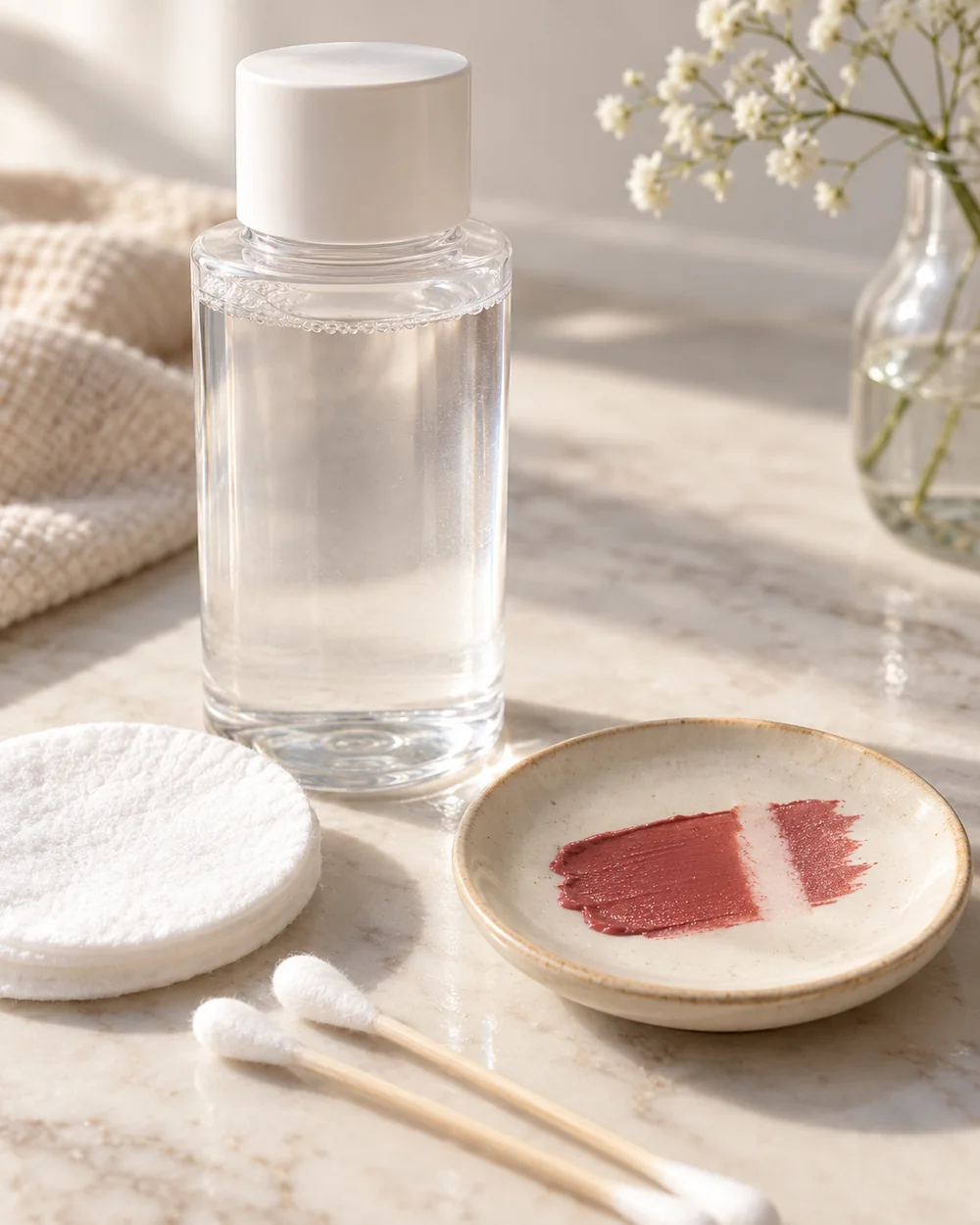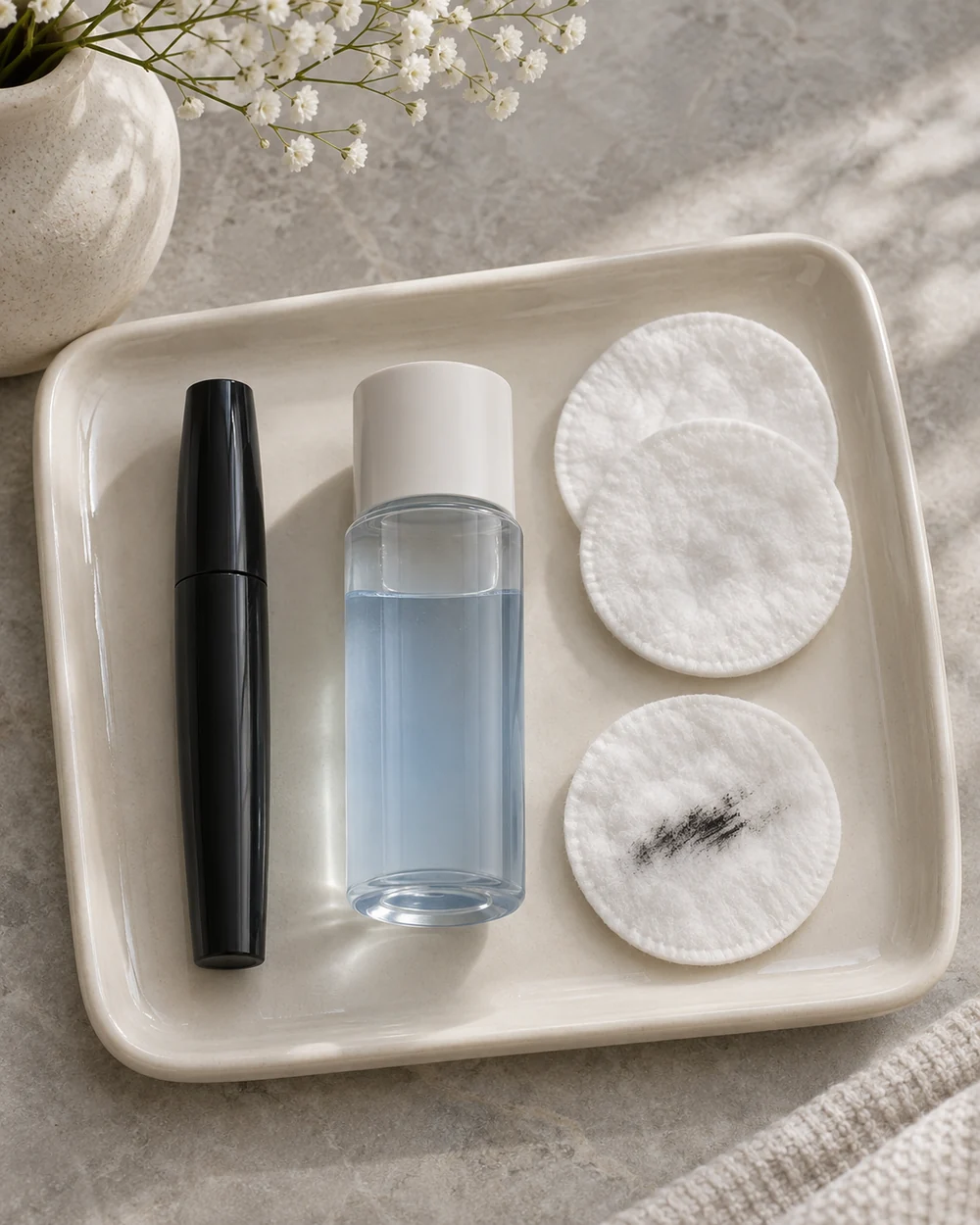
Use the removal method stated for your mascara, with a remover intended for that formula and the eye area. If it uses a soaked pad, give the product its directed contact time before wiping. Repeatedly rubbing a dry pad over the same lashes is a reason to pause and check the method.
Check the tube before choosing the remover
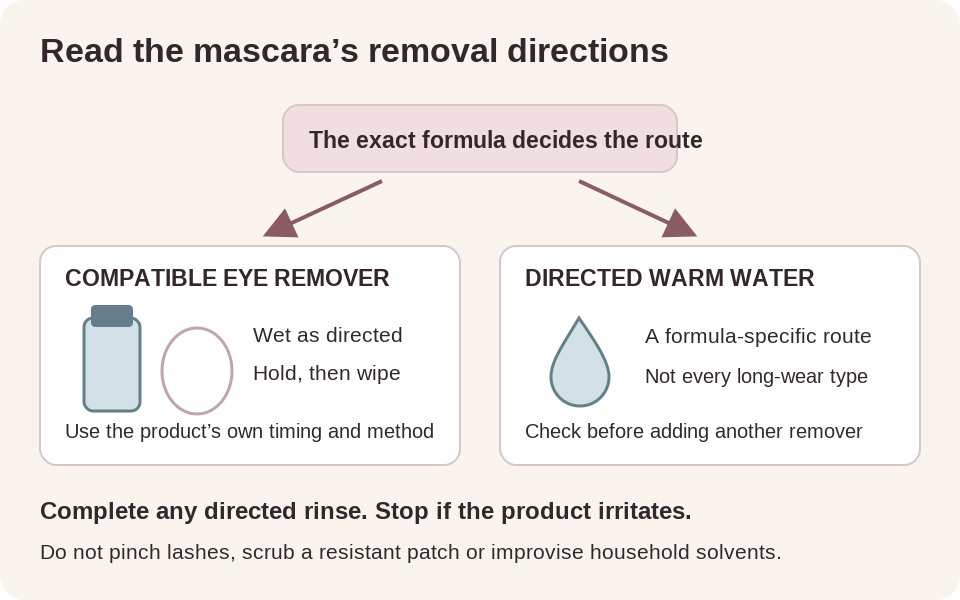
Waterproof, water-resistant and tubing descriptions do not give you one universal removal routine. Read the mascara’s own directions. Clinique’s High Impact Zero Gravity tubing formula, for example, specifies warm-water removal and does not recommend makeup remover for that product. That is a useful exception to check before assuming every long-wearing mascara needs the same solvent.
For a conventional waterproof formula, choose an eye-area remover whose directions cover that job. If the label does not settle compatibility, ask the maker. Do not improvise with household solvents or treat any oil in the kitchen as a directed eye remover.
Let the directed method do the work
Wash your hands and work somewhere still, with clean applicators. Close the eye when using a pad over the lashes, and keep the remover out of the eye itself. Shake or mix a two-phase product only when its instructions require it, then wet the pad or applicator by the stated method.
Clinique’s Take The Day Off liquid remover gives one specific example: its directions call for a saturated pad held over long-wearing makeup for ten seconds before wiping. That timing belongs to that formula. Follow the contact time and movement on your own remover rather than applying a universal stopwatch rule.
Gently wipe as directed, then use a clean part of the applicator for remaining pigment instead of spreading the same dissolved makeup back across the area. Do not pinch the lashes between fingernails or pull away a resistant piece. If the first pass has not loosened it, pause, recheck the products and repeat only within their instructions.
Finish the rinse, then stop
Complete any rinsing or cleansing the remover specifies. Clinique’s liquid directions, for example, call for a cool-water rinse before makeup is reapplied. Another formula may have a different sequence. Pat the surrounding skin gently with a clean towel if needed.
Stop if a product irritates, and seek medical advice if irritation persists. FDA eye-cosmetic guidance also stresses clean tools and care when removing makeup. A sore eye is not a reason to continue until the last visible speck has gone.
If removal stays difficult every evening, keep the next comparison small: check the exact mascara/remover match or choose a mascara with a removal routine you can comfortably manage. The aim is clean, comfortable completion, rather than making a new purchase after one difficult pass.
Makeup placement and colour are personal choices; adjust the steps to suit you. Follow the directions on your own products.