Reset the smallest area you can. A spread lipstick corner or a shadow patch that has grown too wide does not always require removing the whole look. Take away the part you dislike before covering it with another layer.
Remove, clean up, replace
Look at the mark with your face relaxed and choose a boundary. Keep the job small: a short lip edge, the outer end of shadow or a patch beside the nose. Use a remover intended for that area and suitable for the formula. Different mascaras can need different methods, so follow your product’s instructions.
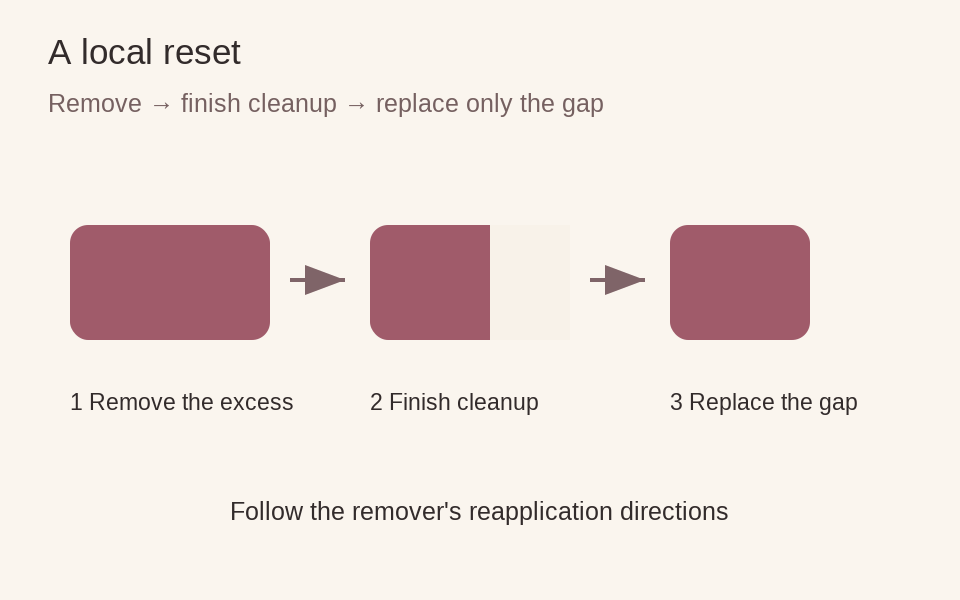
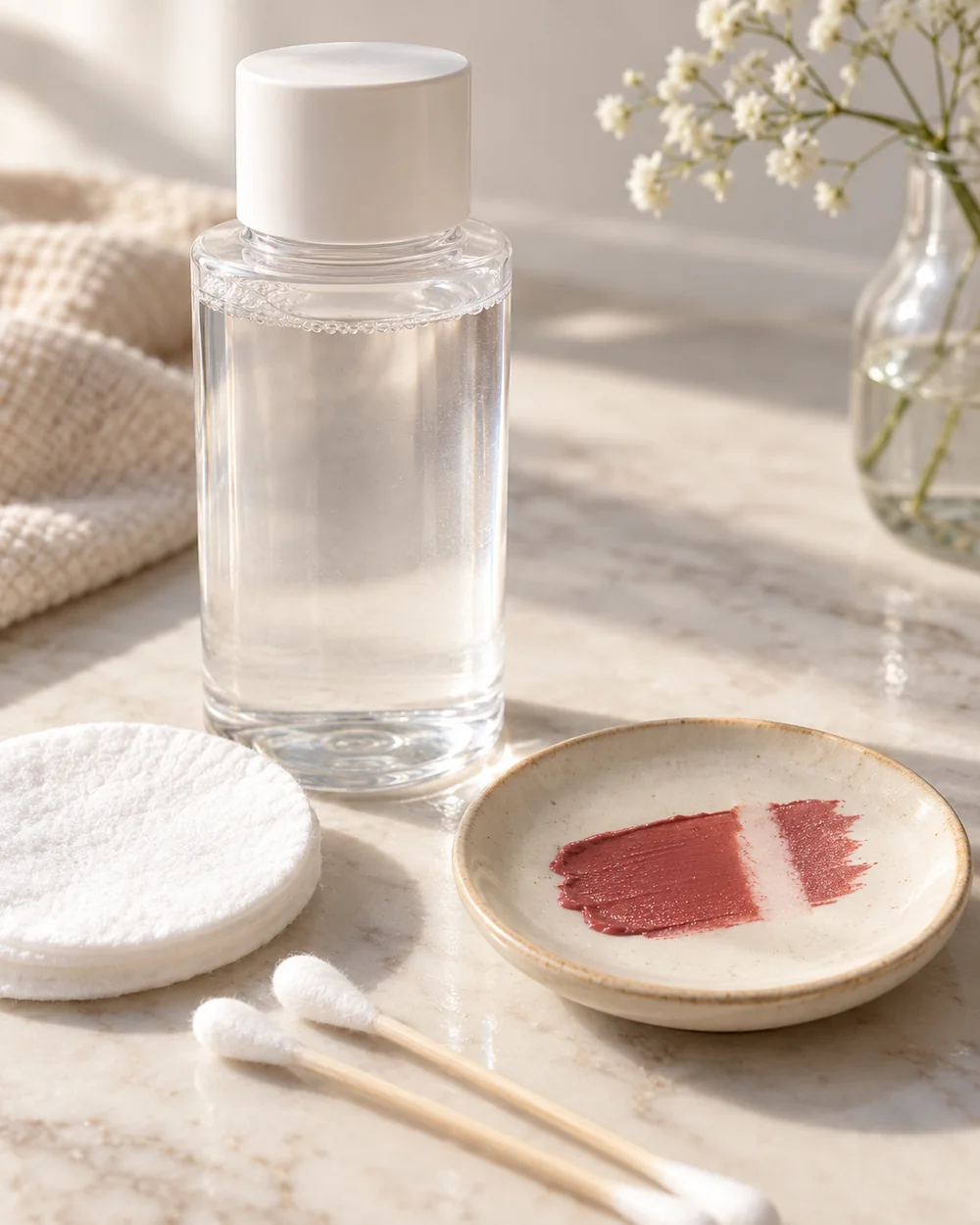
Apply remover to a clean pad as directed. Use a small controlled section of it, or a cotton bud on external skin if appropriate and comfortable. Keep the bud away from the eye itself and the waterline. Let the remover work, then gently lift the mark. Change to a clean surface rather than spreading dissolved colour back over the skin.
Complete any required rinsing or cleanup before reapplying. Clinique’s own directions for its lids, lashes and lips remover, for example, specify rinsing first. Follow your own remover’s directions rather than treating that as a universal timing rule.
Replace only the missing part. Reconnect a lip edge with a small brush, or tap a little base into the cleared patch. A shadow repair may need no replacement if the remaining shape is enough. If sunscreen was removed, restore it according to its directions before optional cosmetics.
If the repair keeps expanding
Stop covering it with larger patches. Remove that small section completely, finish the required cleanup and rebuild a simpler version. A sheer lip or familiar single shadow may be easier than recreating a detailed gradient under time pressure.
Do not keep rubbing a sore or irritated area. Keep tools clean and use eye products only as intended, in line with FDA guidance. Stop when the repaired area joins the surrounding makeup at ordinary distance. Fixing one mark does not oblige you to improve every other part of the face.
Makeup placement and colour are personal choices; adjust the steps to suit you. Follow the directions on your own products.