Eyes & Lips · 5 min read
Blurred lipstick edges: a controlled colour fade
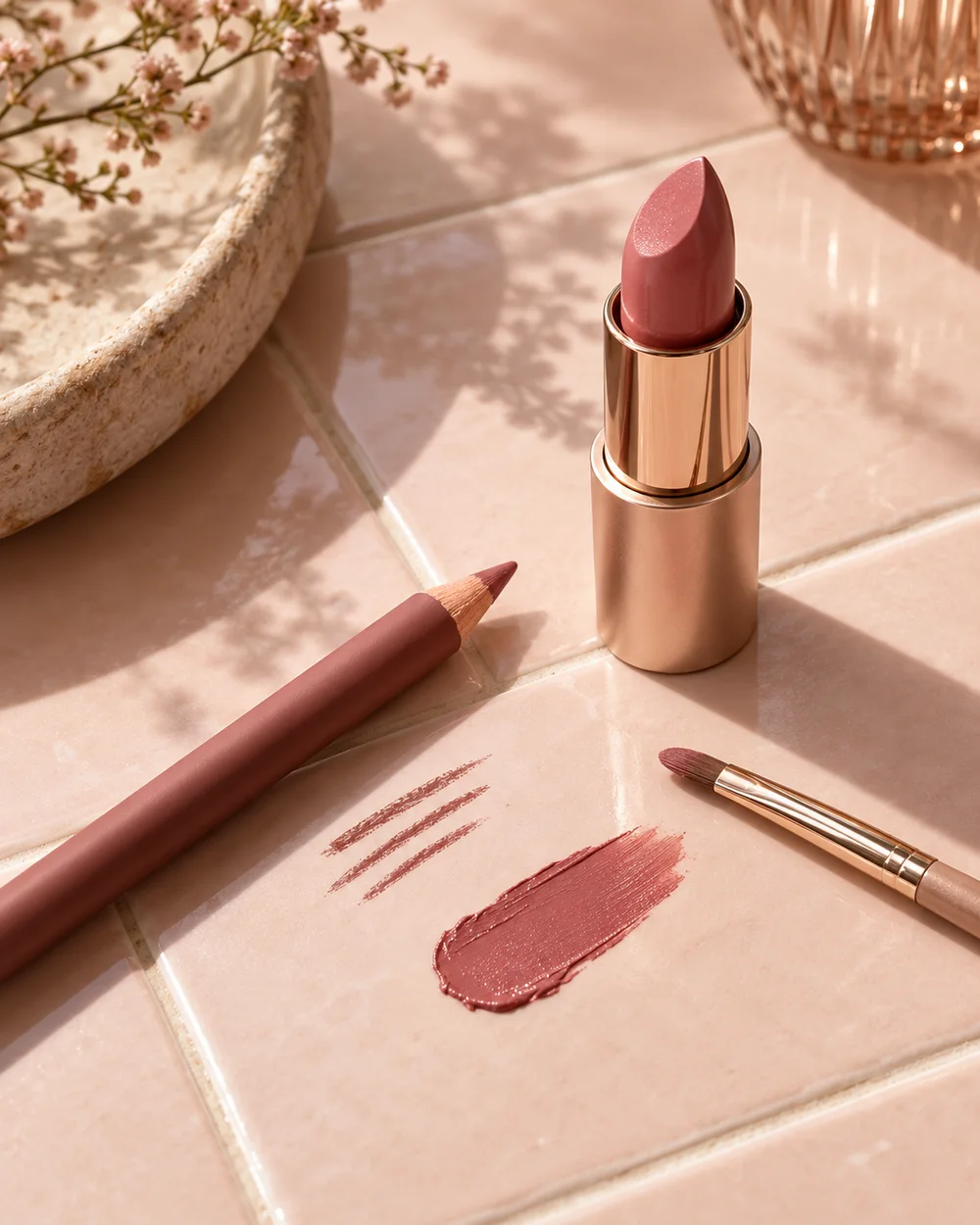
Apply colour within the lip first, then soften its perimeter with a nearly clean lip brush; keep the fade inside your natural outline.
Beginner
THE KNOWN BEAUTY LIBRARY
Practise one detail at a time: a small wing, a softer shadow edge or a deliberate lip finish. Diagrams explain the choices; your own features guide the placement.
Apply colour within the lip first, then soften its perimeter with a nearly clean lip brush; keep the fade inside your natural outline.
Start with a thin layer on a small lid area, follow your formula’s directions and check the shift from several angles before adding more.
Practise a narrow, soft shadow on the outer external lower lash line, keeping it clear of the waterline and checking the shape with your eyes open.
A short-wing practice method that starts with relaxed, open eyes and keeps corrections small.
Keep eyes relaxed and open to plan a small visible shadow area. Practise placement, blend the boundary and adjust each lid to its own fold.
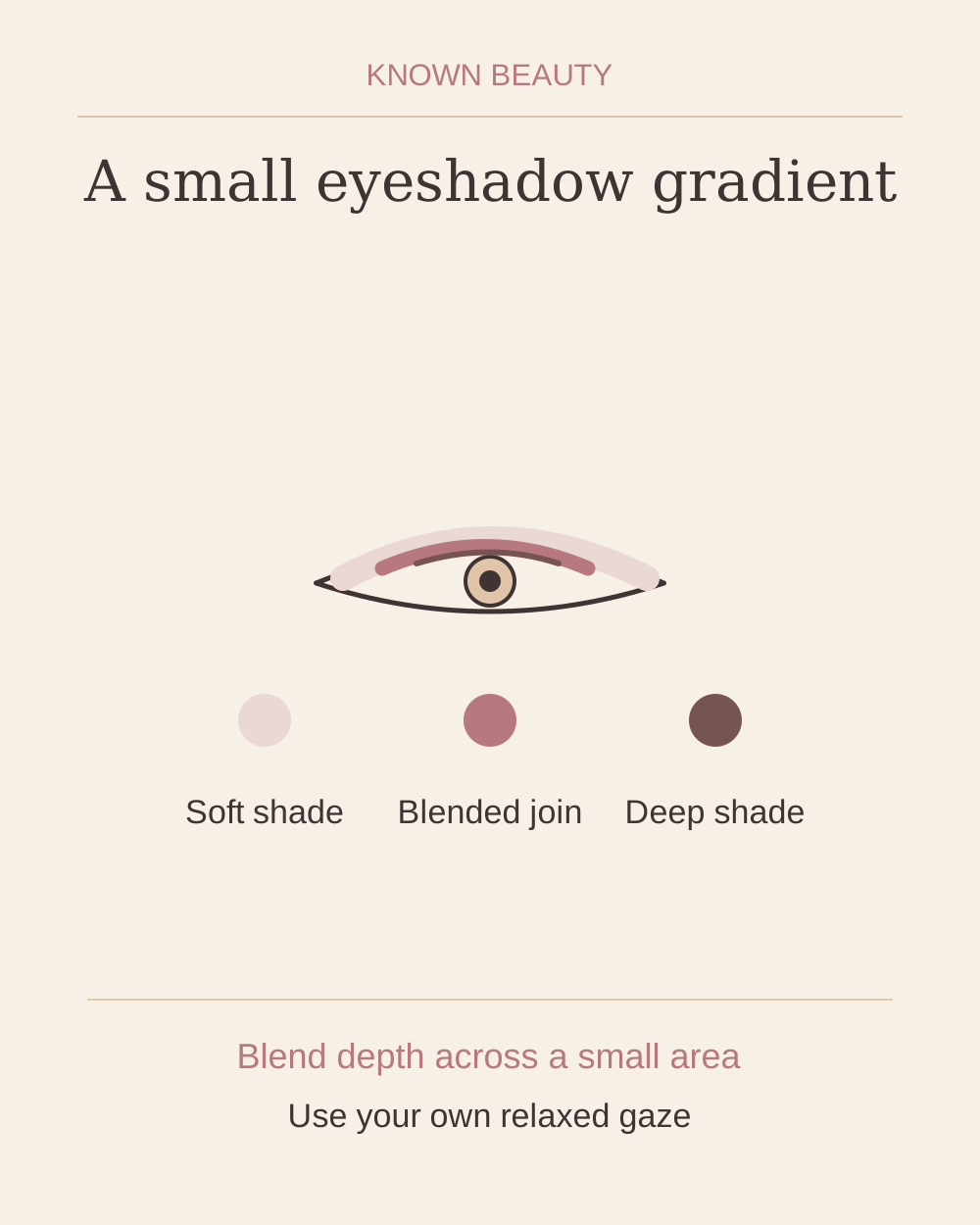
Build a visible lash-to-lid gradient with two shades, then soften its boundary in your normal open-eye view.
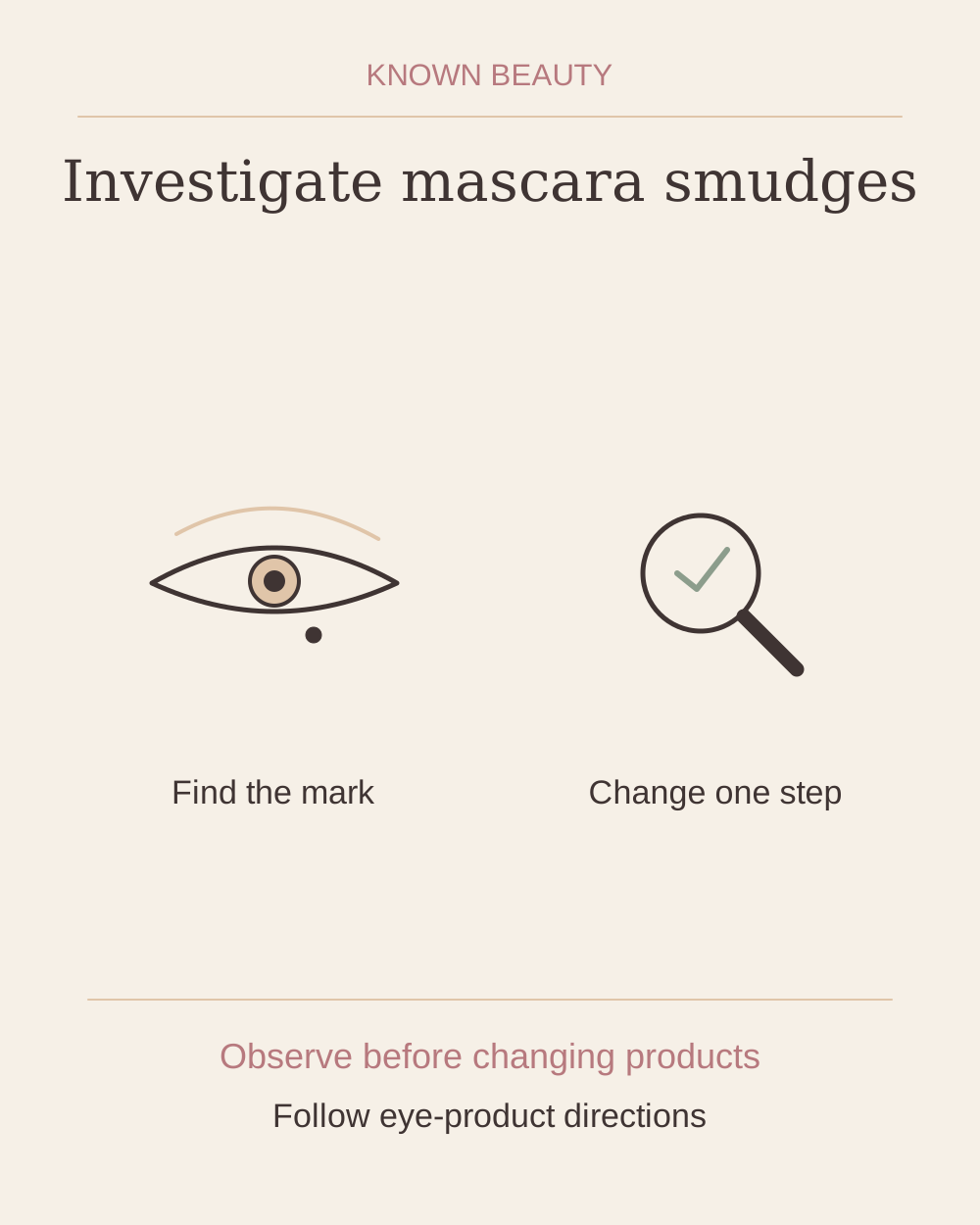
Use the location and timing of a mascara mark to choose one sensible adjustment, without rebuilding your whole routine.
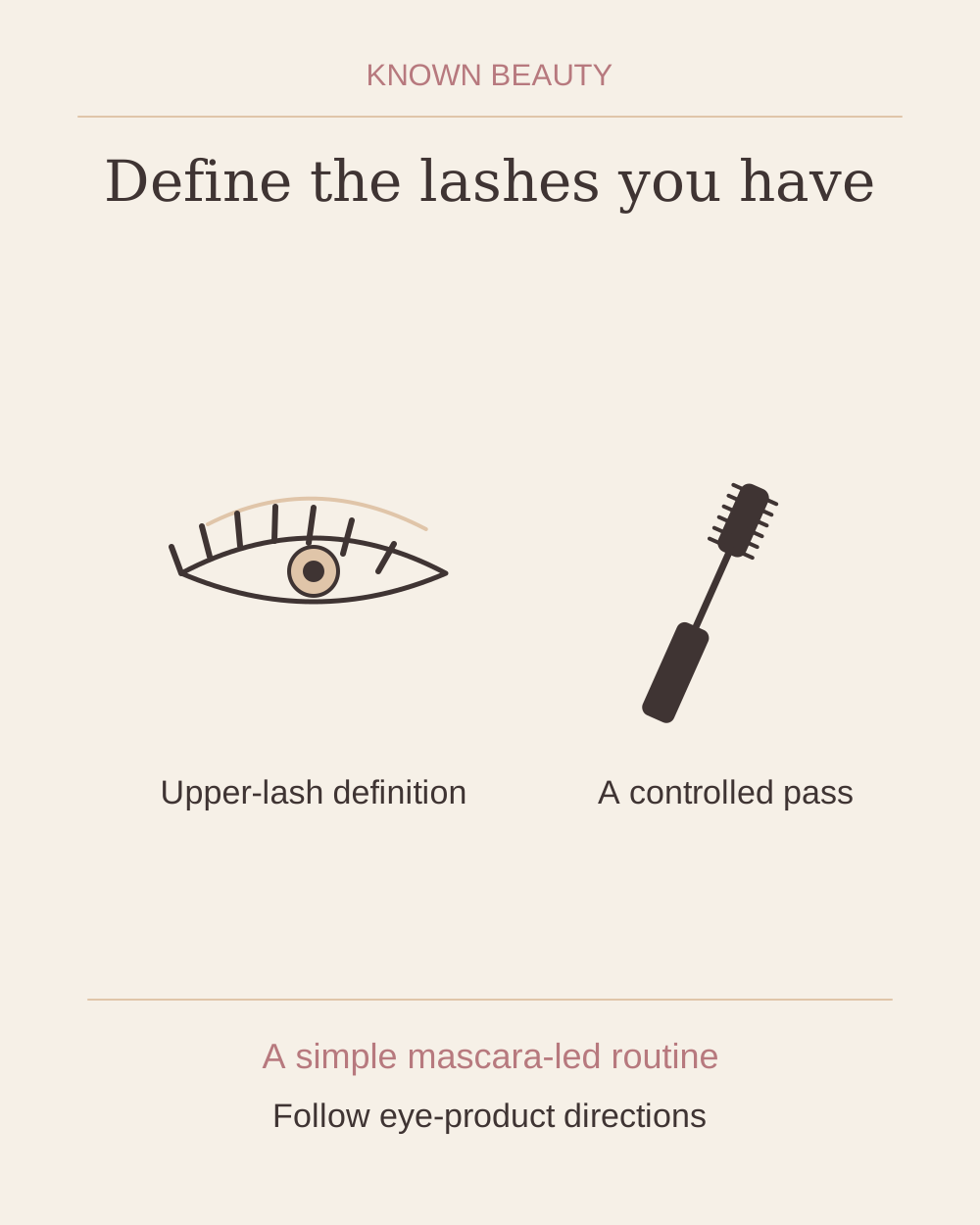
A small mascara routine built around visible separation and a considered finish, without adhesives or false lashes.
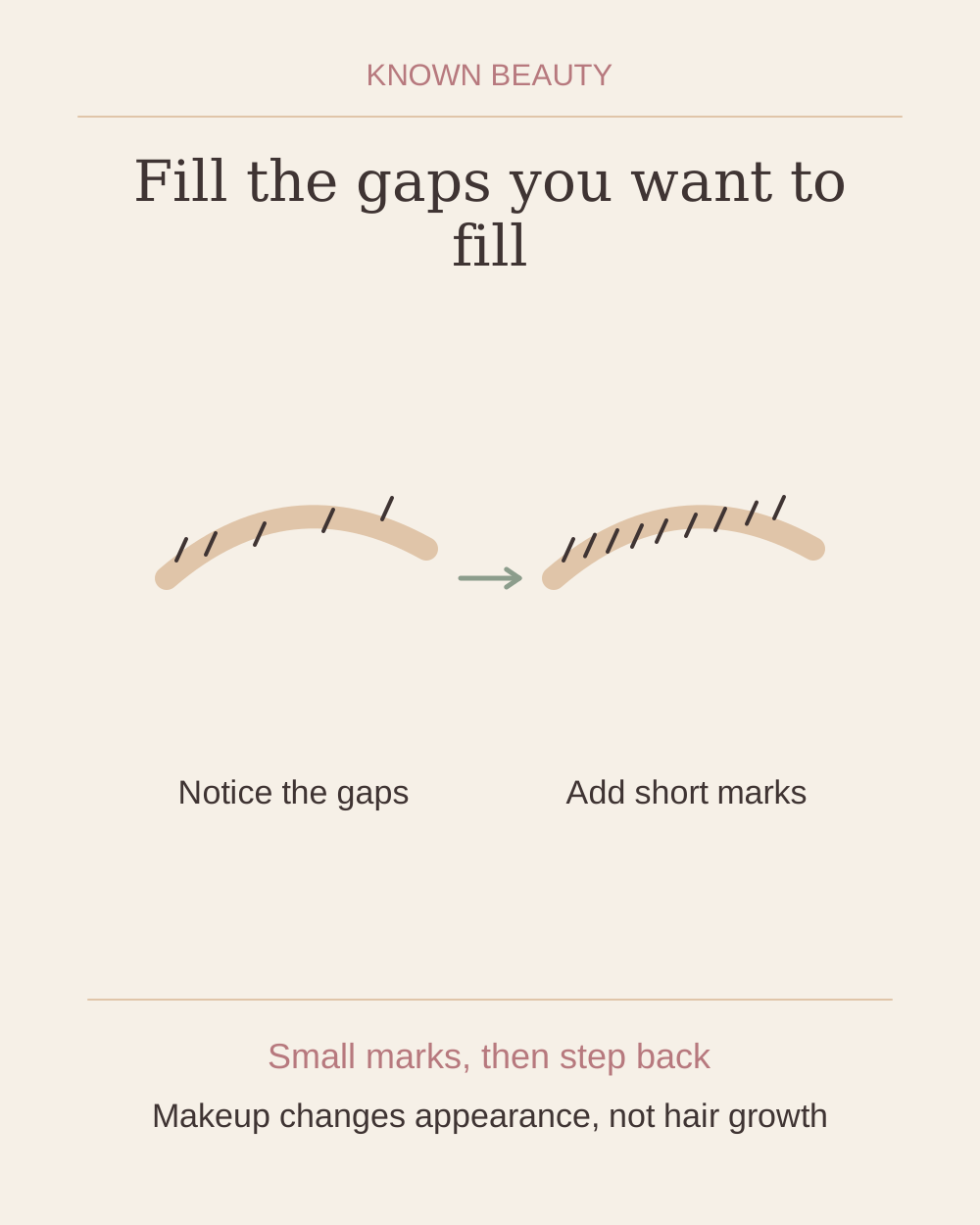
Add a little colour where you want a fuller-looking brow, while keeping the outline and individual gaps under your control.
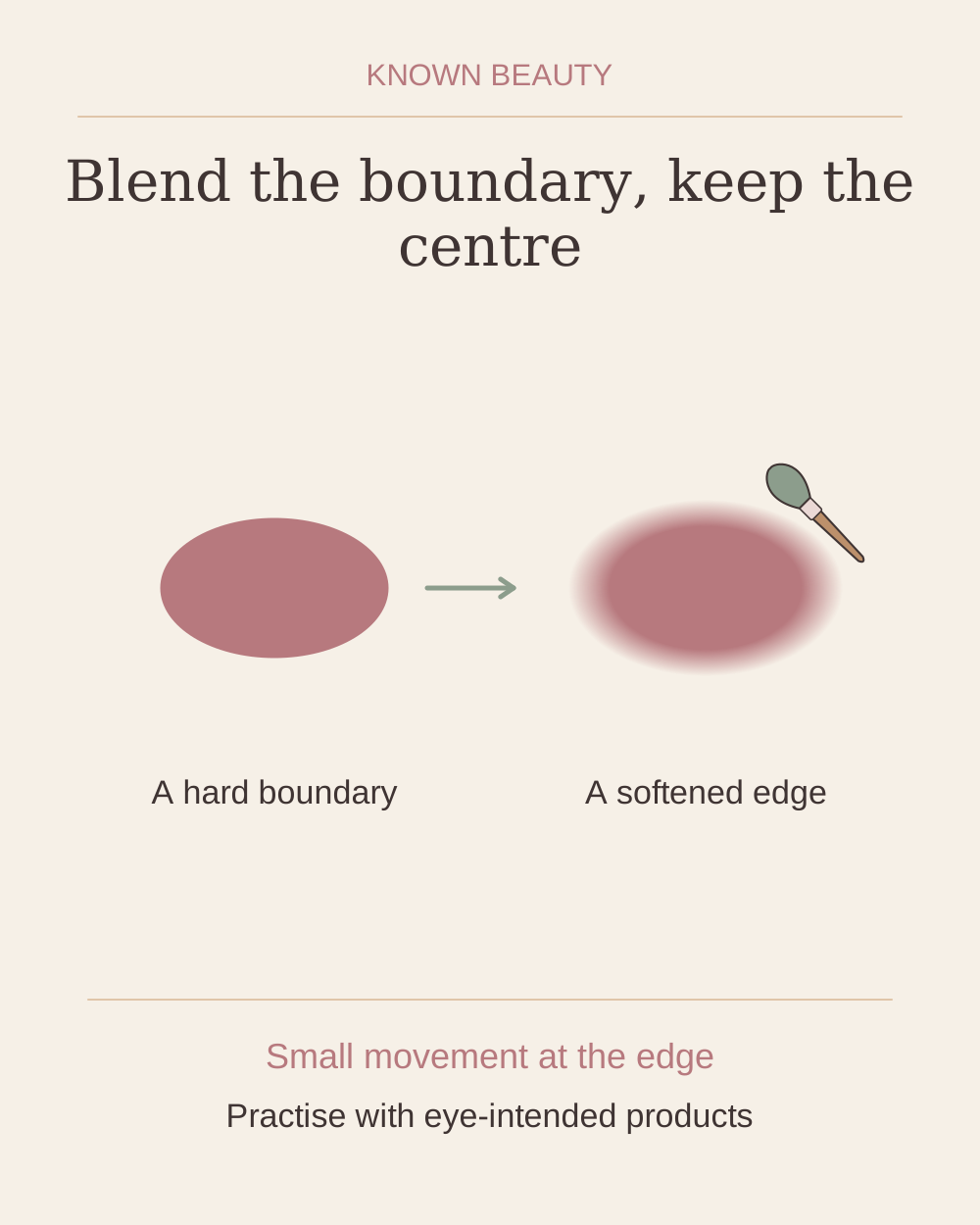
Soften the boundary of a shadow patch without moving the whole shape or blending every colour into one.
Choose a liner near your lip colour, join short strokes around a relaxed mouth and blend inward. Includes a simple way to tidy an uneven corner.
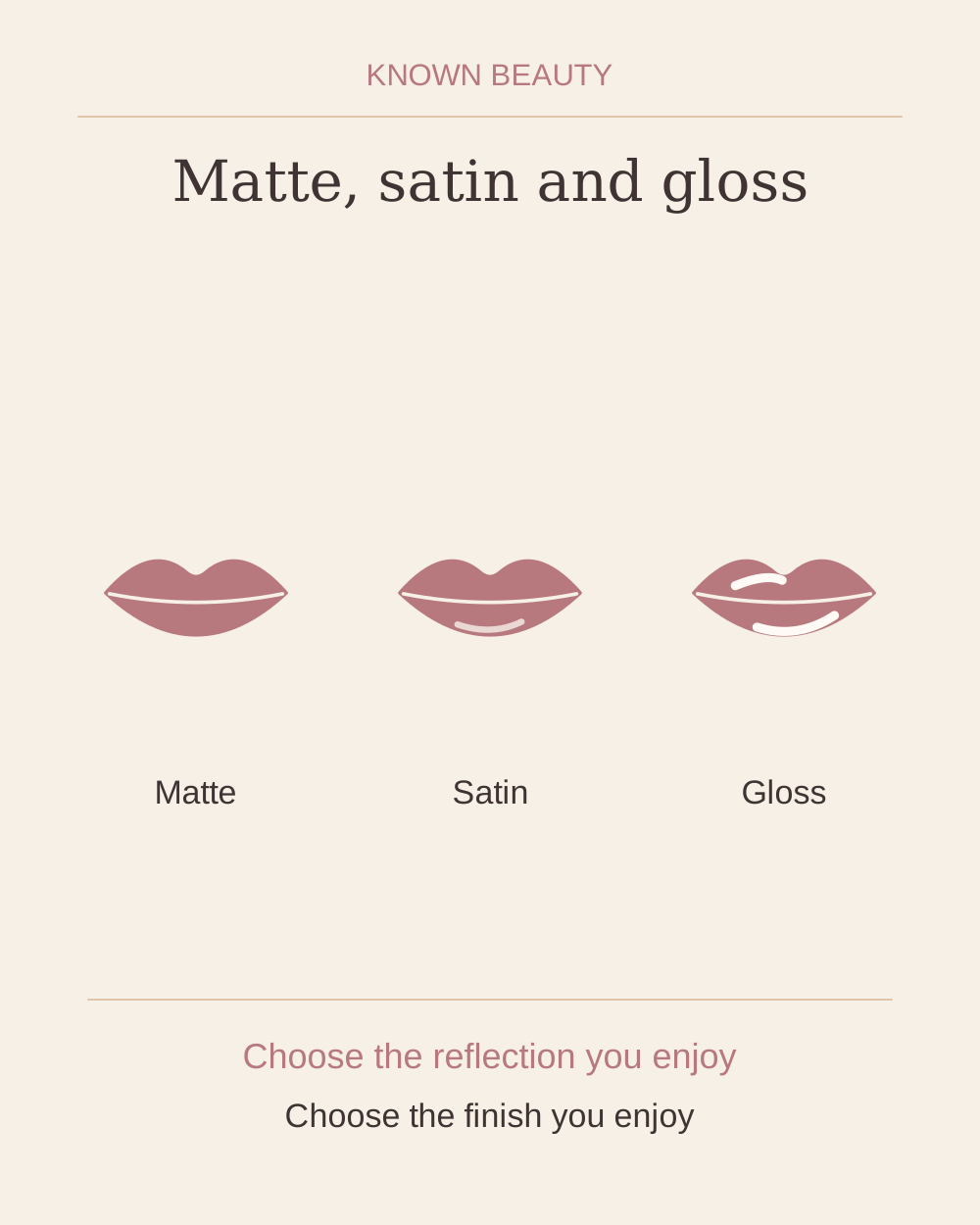
Compare the reflection of matte, satin and glossy lips, then plan application and touch-ups.
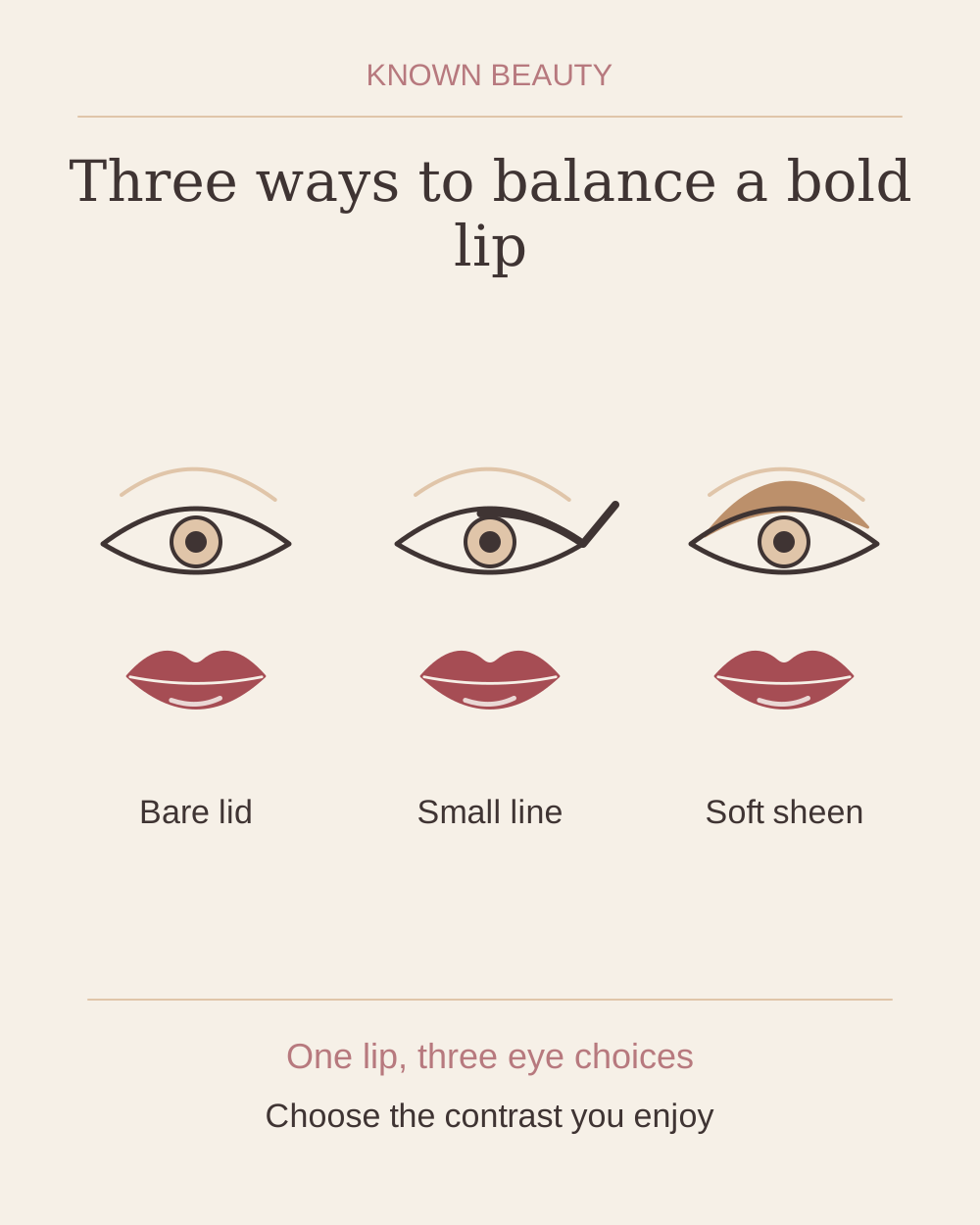
Choose one of three clear combinations, then control contrast, shape and shine without a rule that bold lips need bare eyes.
Try a shorter phrase or clear a filter to see more guides.