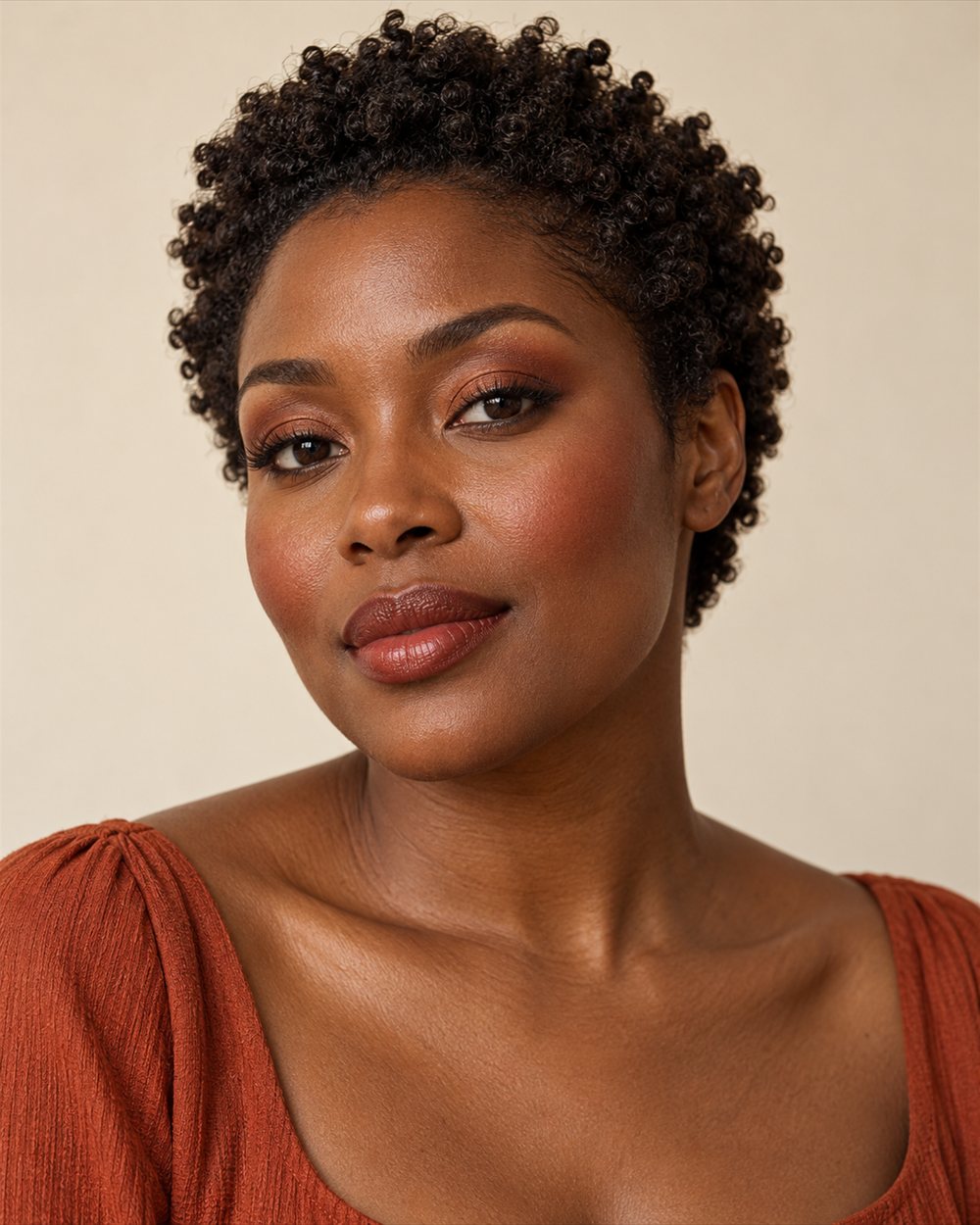
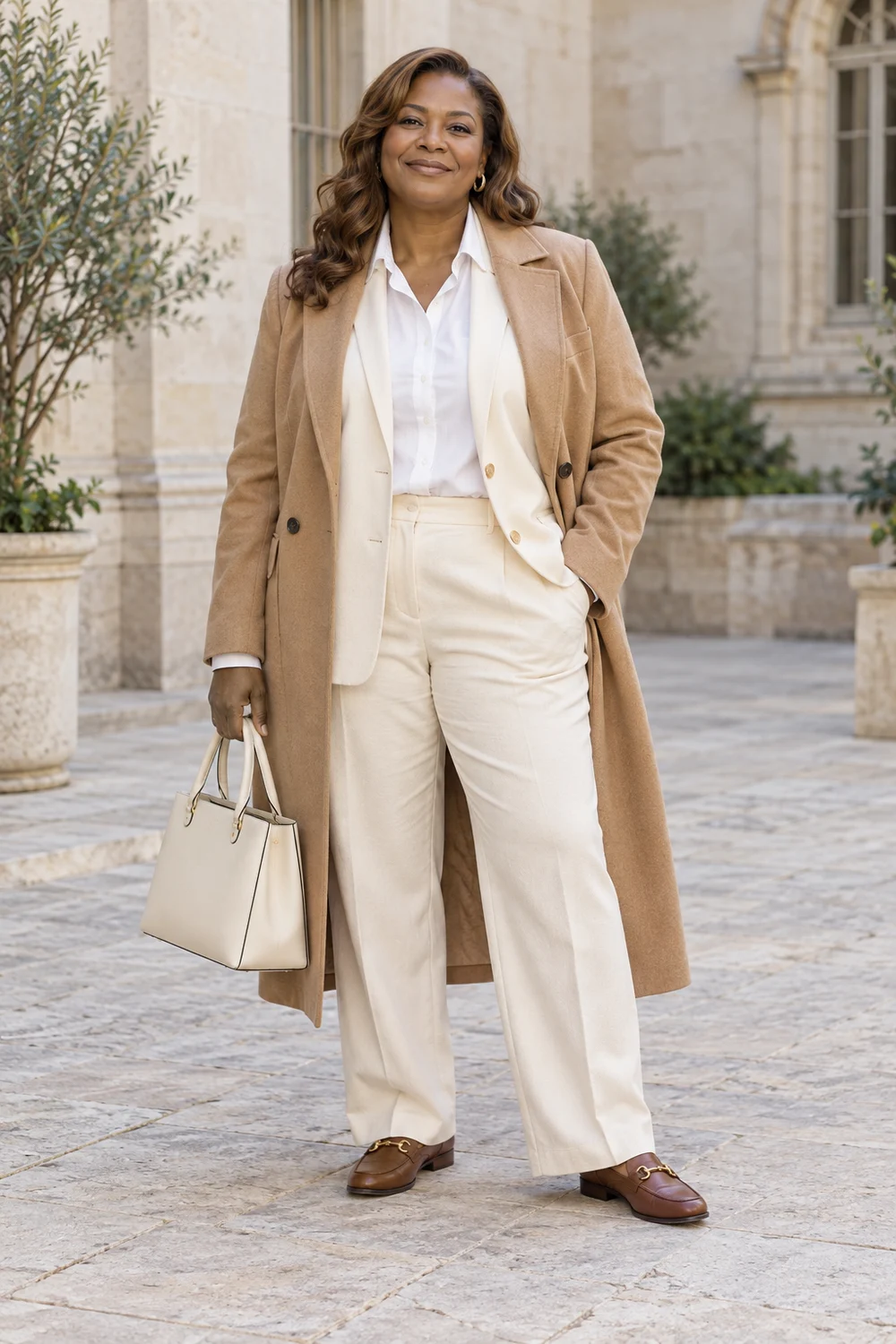
Queen Latifah’s considered coat layering provides the broad reference for the paired cream-and-tan outfit. Our gold and russet makeup is a separate colour choice, not her documented Met Gala application or products. The fictional plus-size model has brown waves and full facial proportions. Her features illustrate one version; neither age nor body size imposes a blush angle, contour step or lip shade.
Build the makeup in six steps
- Begin with familiar coverage. Use preparation and optional base you already find comfortable, applying it only where wanted. Blend the edges and let the layers settle. Leave natural skin texture visible if you enjoy it; the warm palette does not require a highly polished base.
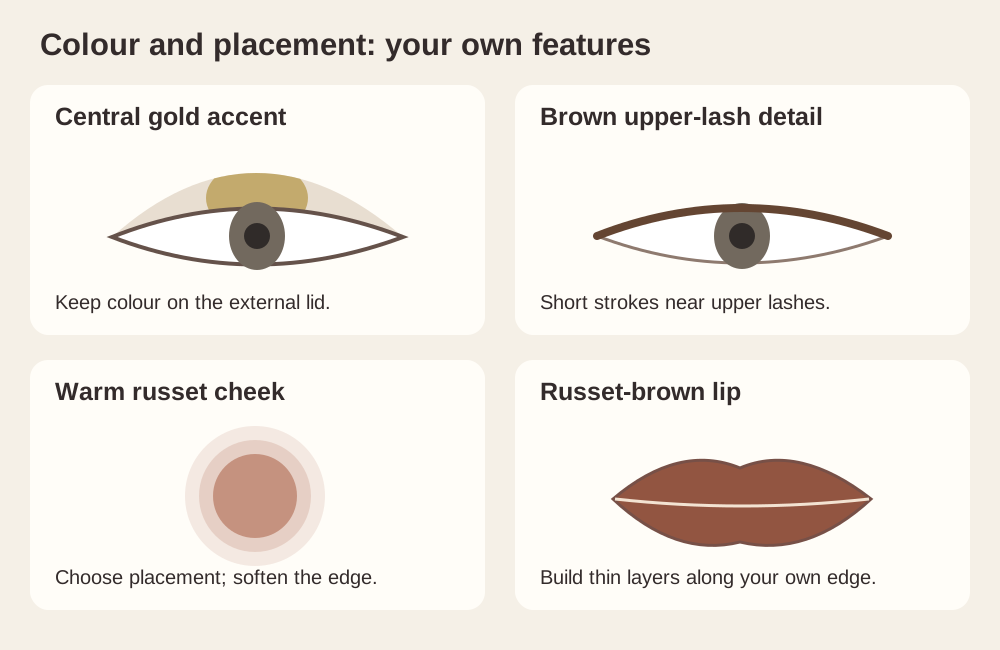
- Press gold onto the centre. Use a small brush to place gold eye colour on the central external lid. Choose a gold with enough depth to show on your skin. Start with a small amount and press rather than sweeping loose reflective particles widely across the eye.
- Soften the gold boundary. Use a clean brush around the edge while keeping most colour in the centre. Open your eyes and check the visible shape. If you have limited lid space, retain a smaller patch instead of moving reflection high towards the brow.
- Add brown upper-lash detail. Work in short strokes along the external upper lash line using an eye product intended for the area. Keep the line narrow enough that the gold remains visible. A short outer section is sufficient if you want a gentler result.
- Place russet cheek colour. Try a warm russet, terracotta-rose or reddish brown in a thin layer where you enjoy it. Blend the perimeter and check in daylight. Adjust pigment depth for your skin rather than copying a fixed number of brush strokes.
- Finish the russet-brown lip. Apply a muted satin russet-brown, following the natural lip edge. Use a compatible liner if it helps the boundary. Check the colour beside the cream neckline and warm cheek, then add optional mascara or leave the eye as it is.
Adapt it to your features and plans
For daytime, keep the lip sheer and the gold as a small accent. For a dinner, define the lip edge or deepen the brown lash line without making it wider. A warmer rose-brown can replace russet if you prefer less orange; the purpose is a warm coordinated palette, not an exact shade name.
If your skin looks dry under powder blush, try a familiar cream texture or use a thinner powder layer over settled preparation. If shimmer feels uncomfortable on the lid, a satin brown-gold can supply warmth. Those are skin and finish preferences, not rules associated with a fuller face.
| What you notice | Try this |
|---|---|
| Russet looks too orange | Try a browner or rosier version, removing excess before layering another shade. |
| Gold falls below the eye | Lift loose particles before finishing under-eye coverage; use less on the brush next time. |
| Cheek and lip look disconnected | Compare them together in daylight and soften one area before adding a third colour. |
Questions you might have
Must cheek and lip be the same product?
No. Use products intended for their labelled areas. Similar warm colours can coordinate without sharing a formula or exact shade.
Can I wear this without liner?
Yes. The gold wash and warm lip remain a complete colour idea. Optional mascara can provide another kind of definition if you enjoy it.
Use eye products as directed
Follow product directions, use clean applicators and stop if irritation occurs. External-lid placement is our choice.
THE COMPLETE LOOK
Wear it together.
Keep the outfit and its makeup interpretation in one collection, with a combined checklist.
Makeup placement and colour are personal choices; adjust the steps to suit you. Follow the directions on your own products.